2015-23-11 Recurring
final ruleAirworthiness Directives; The Boeing Company Airplanes
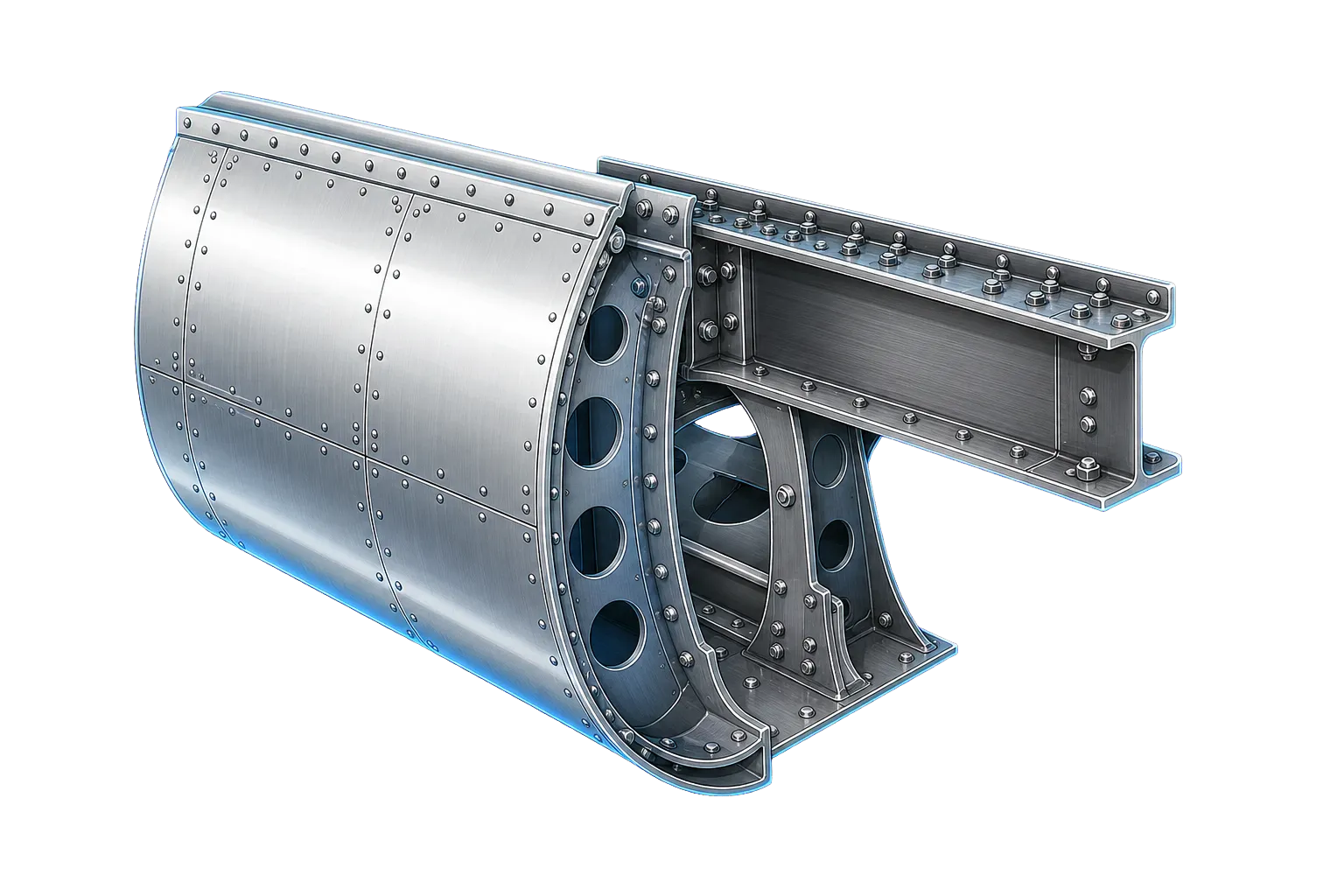
Unsafe Condition: Fuselage skin lap joints are subject to widespread fatigue damage (WFD), which could result in rapid depressurization of the airplane.
Browse ADs indexed for this model. Applicability depends on your aircraft configuration.
Check your aircraft configuration
Airworthiness Directives; The Boeing Company Airplanes
Unsafe Condition: Fuselage skin lap joints are subject to widespread fatigue damage (WFD), which could result in rapid depressurization of the airplane.
Airworthiness Directives; The Boeing Company Airplanes
Unsafe Condition: Skin cracks and subsequent findings of hidden corrosion on the mating surfaces between certain skin and stringers at circumferential skin splices, due to compromised fillet seals, which can result ...
Airworthiness Directives; The Boeing Company Airplanes
Unsafe Condition: Intermodal containers, when loaded as cargo in the offset method, can shift during flight gust loads and impact adjacent fuselage frames, leading to structural failure of the aft fuselage and poten...
Airworthiness Directives; The Boeing Company Airplanes
Unsafe Condition: Fuselage skin cracks at the lower forward corner of the main entry door (MED) 1 cutout.
Airworthiness Directives; the Boeing Company Airplanes
Unsafe Condition: Tension ties may become severed or disconnected from the frames, leading to reduced structural integrity and sudden decompression of the airplane in flight.
Airworthiness Directives; the Boeing Company Airplanes
Unsafe Condition: Installation of standard access doors instead of impact-resistant doors, and missing stencils and index markers on impact-resistant doors and adjacent wing skin, could lead to foreign object penetr...
Airworthiness Directives; The Boeing Company Airplanes
Unsafe Condition: Fatigue cracking of the BS 2598 bulkhead structure, which could adversely affect the structural integrity of the bulkhead and the horizontal stabilizer support structure, and result in loss of cont...
Airworthiness Directives; The Boeing Company Airplanes
Unsafe Condition: Multiple reports of uncommanded thrust reverser unlock events, which could lead to uncommanded thrust reverser deployment during takeoff or in flight, resulting in decreased airplane control and pe...
Airworthiness Directives; The Boeing Company Airplanes
Unsafe Condition: Wear damage and cracks of the fuselage skin in the interface area of the vertical stabilizer seal and fuselage skin, which could cause in-flight depressurization of the airplane.
Airworthiness Directives; The Boeing Company Airplanes
Unsafe Condition: Disbonded doublers, skin cracking, and cracked or missing fastener heads in section 41 of the fuselage.
Airworthiness Directives; The Boeing Company Airplanes
Unsafe Condition: Certain fuselage frames are subject to widespread fatigue damage, leading to fatigue cracks in the fuselage skin that can propagate and grow, resulting in reduced structural integrity and sudden de...
Airworthiness Directives; The Boeing Company Airplanes
Unsafe Condition: Worn or incorrectly assembled latches on main deck escape slides installed on airplane doors could result in a latch hook moving from closed to open, leading to incorrect deployment or unintended r...
Airworthiness Directives; The Boeing Company Airplanes
Unsafe Condition: Activation of the control column shaker during takeoff due to an erroneous angle of attack (AOA) sensor with a paddle type vane, which could result in runway overrun, failure to clear terrain or ob...
Airworthiness Directives; The Boeing Company Airplanes
Unsafe Condition: Cracking at the upper row of fasteners in the S-6 lap joint could result in a sudden loss of cabin pressurization and the inability of the fuselage to withstand failsafe loads.
Airworthiness Directives; The Boeing Company Airplanes
Unsafe Condition: The fuselage skin just above certain lap splice locations is subject to widespread fatigue damage, which could result in reduced structural integrity of the airplane and sudden loss of cabin pressure.
Airworthiness Directives; The Boeing Company Airplanes
Unsafe Condition: Burned BMS 8-39 urethane foam seals, with fire-retardant properties that deteriorate with age, may fail to maintain sufficient Halon concentrations in cargo compartments to extinguish or contain fi...
Airworthiness Directives; The Boeing Company Airplanes
Unsafe Condition: Cracks in the main entry door number 1 upper main sill outer chord, along the bend radius of the chord, which could result in loss of structural integrity of the airplane.
Airworthiness Directives; The Boeing Company Airplanes
Unsafe Condition: Loss of the engine fuel suction feed capability of the fuel system, which, in the event of total loss of the fuel boost pumps, could result in dual engine flameout, inability to restart the engines...
Airworthiness Directives; The Boeing Company Airplanes
Unsafe Condition: Corrosion damage to the end fittings of the wing landing gear (WLG) support beams, and subsequent cracking in the end fittings, which could result in separation of the fitting and damage to adjacen...
Airworthiness Directives; The Boeing Company Airplanes
Unsafe Condition: Electrical arcs at terminal 'A' of the electrically heated flight deck window 1, which could lead to smoke and fire in the cockpit, loss of visibility, and injuries to or incapacitation of the flig...
Airworthiness Directives; The Boeing Company Airplanes
Unsafe Condition: Cracking of the fuselage skin lap splice between body station (BS) 400 and BS 520 at stringers S-6L and S-6R, which could result in sudden loss of cabin pressurization and the inability of the fuse...
Airworthiness Directives; The Boeing Company Airplanes
Unsafe Condition: Fractured latch pins found in service, with cracking and subsequent fracture initiated by fatigue and propagated by a combination of fatigue and stress corrosion.
Airworthiness Directives; The Boeing Company Airplanes
Unsafe Condition: Loss of a No. 3 window in flight, which could result in consequent rapid loss of cabin pressure. Loss of the window could also result in crew communication difficulties or incapacitation of the crew.
Airworthiness Directives; The Boeing Company Airplanes
Unsafe Condition: Scribe lines found at lap joints and butt joints, around external doublers and antennas, and at locations where external decals had been cut can develop into fatigue cracks in the skin and cause su...
Airworthiness Directives; The Boeing Company Airplanes
Unsafe Condition: Rudder power control module (PCM) manifold cracking and separating in the area of the yaw damper cavity end-cap, leading to a hard-over of the rudder surface.