AD 64-12-03
Applicability
| Type | Manufacturer | Model | Details |
|---|---|---|---|
| aircraft | P. V. Shields | A-26B (Army) | Airworthiness Directives; DOUGLAS Models A-26B and A-26C |
| aircraft | P. V. Shields | A-26C (Army) | Airworthiness Directives; DOUGLAS Models A-26B and A-26C |
Unsafe Condition
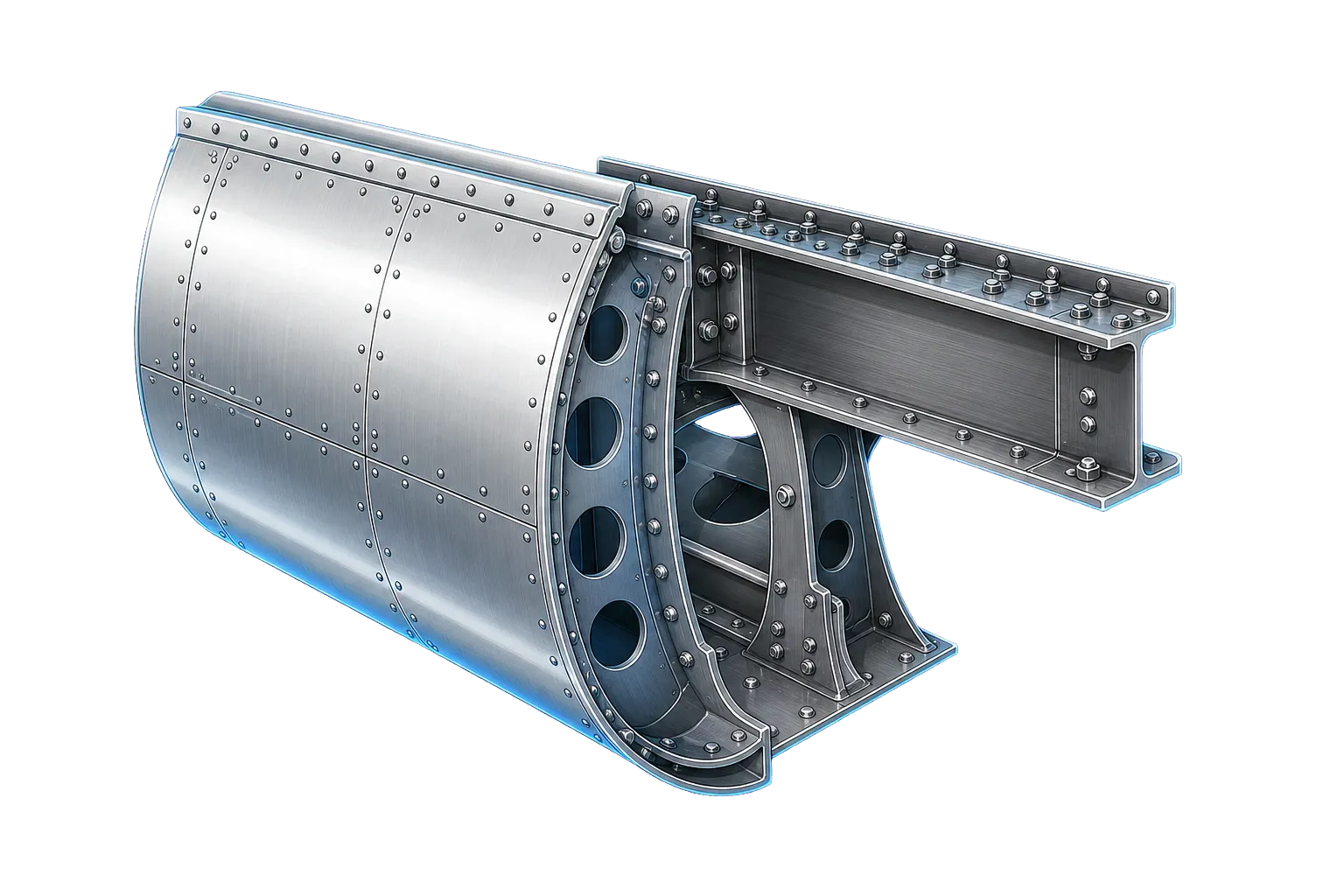
Failure of the wing rear spar caps in the vicinity of the flap inboard hinges and failure of the wing rear spar lower caps near the inboard end of the fore and aft flanges and the forward flange 3/8 inch bolt hole, as well as failure of the front spar lower caps in the vicinity of Wing Station 140 due to cracks in specified areas.
AI-generated summary from the source AD text. Verify against the official source before acting.
Required Actions
Inspect rear upper and lower spar caps using visual and dye penetrant methods for cracks near flap hinge bolt holes and surrounding areas. Remove wing-to-fuselage fillets and inspect flanges for cracks around bolt holes using penetrant inspection. Inspect front spar lower caps via removal of fittings and eddy current or radiographic methods. Replace or repair cracked spar caps before further flight. Discontinue inspections if modifications per approved technical data are made. Revise operating limitations for restricted category aircraft to restrict weight, speed, and areas of operation.
AI-generated summary from the source AD text. Verify against the official source before acting.
Compliance Time
Compliance required as indicated. Inspections under (a) must be conducted within 250 hours' time in service after the effective date (July 15, 1975) unless already done within the last 250 hours, and thereafter every 500 hours. Inspections under (b) have varying intervals based on military flight time: 250/500, 125/500, or 15/250 hours' time in service.
AI-generated summary from the source AD text. Verify against the official source before acting.
Affected Aircraft
Douglas Models A-26B (later USAF B-26B) and A-26C (later USAF B-26C) aircraft, including those certified under Part 8 of the Civil Air Regulations.
AI-generated summary from the source AD text. Verify against the official source before acting.
Federal Register Abstract
Wing Spar Caps
Applicability Source Text
Show captured applicability text from the source AD
AD Final Rules - DRS_64-12-03.html
Copy URL
Print/Save as PDF
Document Versions
 Feedback
Details
AD Number:
64-12-03
Document Type:
AD Final Rules
Docket Number:
Unknown
Subject Heading:
Airworthiness Directives; DOUGLAS Models A-26B and A-26C
Subject:
Wing Spar Caps
Status:
Current
Citation:
Federal Register: June 3, 1964
Citation Publish Date:
06/03/1964
Effective Date:
07/15/1975
Make:
P. V. Shields
Model:
A-26B (Army) | A-26C (Army)
Product Type:
Aircraft
Product Subtype:
Large Airplane
Affected AD:
Superseded AD:
Affected By:
Superseded By:
Service/Office:
Office of Primary Responsibility:
CFR Part Reference:
Part 39
Comments:
AIRWORTHINESS DIRECTIVES FINAL RULES: 64-12-03
CITATION:   [Federal Register: June 3, 1964]

PAGE NUMBER:

DOCKET NUMBER:   Unknown

AMENDMENT:   39-2258

AD NUMBER:   64-12-03

SUBJECT HEADING:   Airworthiness Directives; DOUGLAS Models A-26B and A-26C

ACTION:

SUMMARY:

DATES:   Effective July 15, 1975.

ADDRESSES:

FOR FURTHER INFORMATION CONTACT:

SUPPLEMENTARY INFORMATION:

REGULATORY TEXT:
64-12-03 DOUGLAS: Amdt. 741 Part 507 Federal Register June 3, 1964 as amended by Amendment 39-1291 and 39-1360 is further amended by Amendment 39-2258. Applies to All Models A-26B (Later USAF Designation B-26B) and A-26C (Later USAF Designation B-26C) Aircraft, Including Those Certificated Under Part 8 of the Civil Air Regulations.

Compliance required as indicated.

(a) To protect against failure of the wing rear spar caps in the vicinity of the flap inboard hinges, conduct the following inspection within 250 hours' time in service after the effective date of this AD, unless already accomplished within the last 250 hours' time in service and thereafter within 500 hours' time in service from the last inspection:

(1) Inspect the rear upper and lower spar caps, left and right wings, by means of visual and dye penetrant methods for cracks in the inboard flap hinge point bolts holes, the 1 3/4 inch diameter spotfaces, and the area surrounding the holes, 8 3/4 inches outboard of the wing-to-fuselage attach points. Pay particular attention to the bolt holes and edges of the holes. Remove any nonflexible type wing fuel cells installed at this location to permit accomplishment of this inspection.

(2) To protect against failure of the wing rear spar lower caps in the vicinity of the inboard end of the fore and aft flanges and the forward flange 3/8 inch bolt hole, conduct the following inspection within 50 hours' time in service after the effective date of this amendment, unless already accomplished within the last 450 hours' time in service and thereafter at the same 500 hour interval specified in Paragraph (a), above.

Remove the wing-to-fuselage fillets, left and right bottom, to gain access to the spar cap assemblies. Remove paint and thoroughly clean the cap fore and aft flanges from the inboard flap hinge points inboard to the flange end radius. Conduct a penetrant inspection of the flanges in that area for cracks, paying particular attention to the 3/8 inch bolt hole in the forward flange where the lower skin attaches, and the flange end radii. If no cracks are found, apply one coat of primer to the area from which the paint was removed.

(3) Any rear spar upper or lower cap showing evidence of a crack shall be replaced with a new part or be repaired or reworked in a manner approved by the Chief, Aircraft Engineering Division, FAA Western Region, before further flight.

(b) To protect against failure of the front spar lower caps in the vicinity of Wing Station 140, conduct inspections in accordance with paragraph (b)(4) at the following intervals:

(1) For aircraft with less than 500 hours military flight time regardless of the amount of civil hours' time in service unless accomplished within the last 250 hours' time in service inspect within 250 hours' time in service after the effective date of this AD and thereafter within 500 hours' time in service from the last inspection.

(2) For aircraft with from 500 to 2,000 hours military flight time unless accomplished within the last 375 hours' time in service, inspect within the next 125 hours' time in service after the effective date of this AD, and thereafter within 500 hours' time in service from the last inspection.

(3) For aircraft with more than 2,000 hours military flight time and for all aircraft on which the military flight time cannot be clearly established, unless already accomplished within the past 235 hours' time in service, inspect within the next 15 hours' time in service after the effective date of this AD, and thereafter within 250 hours' time in service from the last inspection.

(4) At the time specified in (b)(1), (2) or (3), inspect the front spar lower cap in accordance with one of the following:

(i) Remove the front spar fitting, P/N 4190305, and the nacelle fitting, P/N 4123165 at approximately Wing Station 140 left and right. Support the wings so as to remove all airplane weight from the landing gear, remove or properly support the engines and remove the oil tanks and adjacent fuel tanks to permit the removal of these fittings. By means of visual and dye penetrant methods, inspect for the evidence of any crack at the edges of the three large holes (nominal 1/2-inch diameter) in each front spar lower cap or adjacent to the edges of those holes.

(ii) Remove the three tension bolts (nominal 7/16-inch diameter) which pass through each front spar lower cap at approximately Wing Station 140 and front spar fitting, P/N 4190305, and nacelle attach fitting, P/N 4123165. Support the wings so as to remove all weight from the landing gear, remove or support the engines and remove the oil tanks. Thoroughly inspect the inner surface of each bolt hole by eddy current technique using the equipment and following the procedures described by Magnaflux Corporation Bulletin No. LA-002-RBW, "Operating Instructions for Magnatest ED-600" dated April 23, 1964, or Magnaflux Corporation Specification LA-RAE-7170, "Operating Instructions for Magnatest ED-520 for Bolt Hole Inspection," dated August 6, 1971. The changes in meter readings as described in Bulletin No. LA-002-RBW or in Specification LA-RAE-7170 shall be used to detect any evidence of cracking in any of the bolt holes, with particular attention being directed to both edges of each hole.

NOTE: Information regarding this bulletin and eddy current equipment is available from any local office of the Magnaflux Corporation.

(iii) Use radiographic inspection methods accomplished in a manner approved by the Chief, Aircraft Engineering Division, FAA Western Region. Such approval requires submittal of performance standards and technical qualifications which have been based upon positive proof of the ability to detect any crack in or immediately adjacent to the three large holes through the front spar lower cap.

(5) Any spar cap showing evidence of a crack shall be replaced with a new part or be repaired or reworked in a manner approved by the Chief, Aircraft Engineering Division, FAA Western Region, before further flight unless supplemental and more extensive inspections show that a crack does not exist.

(c) The repetitive inspections of the rear spar caps required by (a) may be discontinued when they have been modified in accordance with the technical data approved by the Chief, Aircraft Engineering Division, FAA Western Region.

(d) The repetitive inspections of the lower front spar caps required by (b) may be discontinued when they have been modified in accordance with the technical data approved by the Chief, Aircraft Engineering Division, FAA Western Region.

(e) The inspections required in (a) and (b) need not be conducted on any aircraft certificated in the restricted category if the operating limitations for such aircraft are revised to add limitations prohibiting operation:

(1) At a takeoff weight in excess of 30,000 pounds.

(2) At speeds in excess of 250 m.p.h. IAS.

(3) Over any congested area of a city, town or settlement, or over any open air assembly of persons.

(f) The operating limitations specified in (e) may be discontinued when both the rear spar caps and the lower front spar caps have been modified in accordance with the technical data approved by the Chief, Aircraft Engineering Division, FAA Western Region.

NOTE: Approved modifications are described by:

(1) Technical data listed in STC No. SA692WE, revised July 1, 1964, issued to the On Mark Engineering Company, Van Nuys, California.

(2) Technical data listed in STC No. SA1107WE, dated November 24, 1965, issued to the Rock Island Oil Refining Company, Hutchinson, Kansas.

Amendment 741 Part 507 Federal Register June 3, 1964 supersedes AD 64-9-4.

Amendment 741 Part 507 Federal Register June 3, 1964 become effective June 3, 1964.

Revised July 8, 1964.

Revised August 5, 1964.

Revised February 12, 1965.

Amendment 39-1291 became effective September 21, 1971.

Amendment 39-1360 became effective December 21, 1971.

This amendment 39-2258 becomes effective July 15, 1975.


FOOTER:
Document Text
Show stored source text (verify against official source)
AD Final Rules - DRS_64-12-03.html
Copy URL
Print/Save as PDF
Document Versions
 Feedback
Details
AD Number:
64-12-03
Document Type:
AD Final Rules
Docket Number:
Unknown
Subject Heading:
Airworthiness Directives; DOUGLAS Models A-26B and A-26C
Subject:
Wing Spar Caps
Status:
Current
Citation:
Federal Register: June 3, 1964
Citation Publish Date:
06/03/1964
Effective Date:
07/15/1975
Make:
P. V. Shields
Model:
A-26B (Army) | A-26C (Army)
Product Type:
Aircraft
Product Subtype:
Large Airplane
Affected AD:
Superseded AD:
Affected By:
Superseded By:
Service/Office:
Office of Primary Responsibility:
CFR Part Reference:
Part 39
Comments:
AIRWORTHINESS DIRECTIVES FINAL RULES: 64-12-03
CITATION:   [Federal Register: June 3, 1964]

PAGE NUMBER:

DOCKET NUMBER:   Unknown

AMENDMENT:   39-2258

AD NUMBER:   64-12-03

SUBJECT HEADING:   Airworthiness Directives; DOUGLAS Models A-26B and A-26C

ACTION:

SUMMARY:

DATES:   Effective July 15, 1975.

ADDRESSES:

FOR FURTHER INFORMATION CONTACT:

SUPPLEMENTARY INFORMATION:

REGULATORY TEXT:
64-12-03 DOUGLAS: Amdt. 741 Part 507 Federal Register June 3, 1964 as amended by Amendment 39-1291 and 39-1360 is further amended by Amendment 39-2258. Applies to All Models A-26B (Later USAF Designation B-26B) and A-26C (Later USAF Designation B-26C) Aircraft, Including Those Certificated Under Part 8 of the Civil Air Regulations.

Compliance required as indicated.

(a) To protect against failure of the wing rear spar caps in the vicinity of the flap inboard hinges, conduct the following inspection within 250 hours' time in service after the effective date of this AD, unless already accomplished within the last 250 hours' time in service and thereafter within 500 hours' time in service from the last inspection:

(1) Inspect the rear upper and lower spar caps, left and right wings, by means of visual and dye penetrant methods for cracks in the inboard flap hinge point bolts holes, the 1 3/4 inch diameter spotfaces, and the area surrounding the holes, 8 3/4 inches outboard of the wing-to-fuselage attach points. Pay particular attention to the bolt holes and edges of the holes. Remove any nonflexible type wing fuel cells installed at this location to permit accomplishment of this inspection.

(2) To protect against failure of the wing rear spar lower caps in the vicinity of the inboard end of the fore and aft flanges and the forward flange 3/8 inch bolt hole, conduct the following inspection within 50 hours' time in service after the effective date of this amendment, unless already accomplished within the last 450 hours' time in service and thereafter at the same 500 hour interval specified in Paragraph (a), above.

Remove the wing-to-fuselage fillets, left and right bottom, to gain access to the spar cap assemblies. Remove paint and thoroughly clean the cap fore and aft flanges from the inboard flap hinge points inboard to the flange end radius. Conduct a penetrant inspection of the flanges in that area for cracks, paying particular attention to the 3/8 inch bolt hole in the forward flange where the lower skin attaches, and the flange end radii. If no cracks are found, apply one coat of primer to the area from which the paint was removed.

(3) Any rear spar upper or lower cap showing evidence of a crack shall be replaced with a new part or be repaired or reworked in a manner approved by the Chief, Aircraft Engineering Division, FAA Western Region, before further flight.

(b) To protect against failure of the front spar lower caps in the vicinity of Wing Station 140, conduct inspections in accordance with paragraph (b)(4) at the following intervals:

(1) For aircraft with less than 500 hours military flight time regardless of the amount of civil hours' time in service unless accomplished within the last 250 hours' time in service inspect within 250 hours' time in service after the effective date of this AD and thereafter within 500 hours' time in service from the last inspection.

(2) For aircraft with from 500 to 2,000 hours military flight time unless accomplished within the last 375 hours' time in service, inspect within the next 125 hours' time in service after the effective date of this AD, and thereafter within 500 hours' time in service from the last inspection.

(3) For aircraft with more than 2,000 hours military flight time and for all aircraft on which the military flight time cannot be clearly established, unless already accomplished within the past 235 hours' time in service, inspect within the next 15 hours' time in service after the effective date of this AD, and thereafter within 250 hours' time in service from the last inspection.

(4) At the time specified in (b)(1), (2) or (3), inspect the front spar lower cap in accordance with one of the following:

(i) Remove the front spar fitting, P/N 4190305, and the nacelle fitting, P/N 4123165 at approximately Wing Station 140 left and right. Support the wings so as to remove all airplane weight from the landing gear, remove or properly support the engines and remove the oil tanks and adjacent fuel tanks to permit the removal of these fittings. By means of visual and dye penetrant methods, inspect for the evidence of any crack at the edges of the three large holes (nominal 1/2-inch diameter) in each front spar lower cap or adjacent to the edges of those holes.

(ii) Remove the three tension bolts (nominal 7/16-inch diameter) which pass through each front spar lower cap at approximately Wing Station 140 and front spar fitting, P/N 4190305, and nacelle attach fitting, P/N 4123165. Support the wings so as to remove all weight from the landing gear, remove or support the engines and remove the oil tanks. Thoroughly inspect the inner surface of each bolt hole by eddy current technique using the equipment and following the procedures described by Magnaflux Corporation Bulletin No. LA-002-RBW, "Operating Instructions for Magnatest ED-600" dated April 23, 1964, or Magnaflux Corporation Specification LA-RAE-7170, "Operating Instructions for Magnatest ED-520 for Bolt Hole Inspection," dated August 6, 1971. The changes in meter readings as described in Bulletin No. LA-002-RBW or in Specification LA-RAE-7170 shall be used to detect any evidence of cracking in any of the bolt holes, with particular attention being directed to both edges of each hole.

NOTE: Information regarding this bulletin and eddy current equipment is available from any local office of the Magnaflux Corporation.

(iii) Use radiographic inspection methods accomplished in a manner approved by the Chief, Aircraft Engineering Division, FAA Western Region. Such approval requires submittal of performance standards and technical qualifications which have been based upon positive proof of the ability to detect any crack in or immediately adjacent to the three large holes through the front spar lower cap.

(5) Any spar cap showing evidence of a crack shall be replaced with a new part or be repaired or reworked in a manner approved by the Chief, Aircraft Engineering Division, FAA Western Region, before further flight unless supplemental and more extensive inspections show that a crack does not exist.

(c) The repetitive inspections of the rear spar caps required by (a) may be discontinued when they have been modified in accordance with the technical data approved by the Chief, Aircraft Engineering Division, FAA Western Region.

(d) The repetitive inspections of the lower front spar caps required by (b) may be discontinued when they have been modified in accordance with the technical data approved by the Chief, Aircraft Engineering Division, FAA Western Region.

(e) The inspections required in (a) and (b) need not be conducted on any aircraft certificated in the restricted category if the operating limitations for such aircraft are revised to add limitations prohibiting operation:

(1) At a takeoff weight in excess of 30,000 pounds.

(2) At speeds in excess of 250 m.p.h. IAS.

(3) Over any congested area of a city, town or settlement, or over any open air assembly of persons.

(f) The operating limitations specified in (e) may be discontinued when both the rear spar caps and the lower front spar caps have been modified in accordance with the technical data approved by the Chief, Aircraft Engineering Division, FAA Western Region.

NOTE: Approved modifications are described by:

(1) Technical data listed in STC No. SA692WE, revised July 1, 1964, issued to the On Mark Engineering Company, Van Nuys, California.

(2) Technical data listed in STC No. SA1107WE, dated November 24, 1965, issued to the Rock Island Oil Refining Company, Hutchinson, Kansas.

Amendment 741 Part 507 Federal Register June 3, 1964 supersedes AD 64-9-4.

Amendment 741 Part 507 Federal Register June 3, 1964 become effective June 3, 1964.

Revised July 8, 1964.

Revised August 5, 1964.

Revised February 12, 1965.

Amendment 39-1291 became effective September 21, 1971.

Amendment 39-1360 became effective December 21, 1971.

This amendment 39-2258 becomes effective July 15, 1975.


FOOTER:
Source: Official FAA Source ↗
Retrieved: Apr 8, 2026
Rights: U.S. Government Public Domain
This site is not affiliated with or endorsed by the FAA. Always verify with official sources.
Related Airworthiness Directives
84-15-02
final ruleAirworthiness Directives; DOUGLAS A-26/B26 Series Airplanes
Unsafe Condition: Failure of a lower spar cap due to cracking or fretting in the area where the nacelle fairing upper edge contacts the lower spar cap surface.
61-11-05
final ruleAirworthiness Directives; DOUGLAS All Models A-26 (B-26) Series Aircraft
Unsafe Condition: Severe corrosion of the wing structure beneath the wing fuel tanks and deterioration of sponge rubber mats under fuel cells.
55-26-01
final ruleAirworthiness Directives; DOUGLAS A-26 Aircraft
Unsafe Condition: Explosion in the air due to potential fuel tank fumes ignition in the rear fuselage fuel tank compartment.
56-18-03
final ruleAirworthiness Directives; DOUGLAS All Models A-26B and A-26C Aircraft
Unsafe Condition: Cracks in the nose gear cross beam assembly at the inboard end of the trunnion journal.