AD 60-10-06
Applicability
| Type | Manufacturer | Model | Details |
|---|---|---|---|
| aircraft | Lockheed Aircraft Corporation | 1049-54 | LOCKHEED Model 1049 Series Aircraft |
| aircraft | Lockheed Aircraft Corporation | 1049B-55 (Navy R7V-1) | LOCKHEED Model 1049 Series Aircraft |
| aircraft | Lockheed Aircraft Corporation | 1049C-55 | LOCKHEED Model 1049 Series Aircraft |
| aircraft | Lockheed Aircraft Corporation | 1049D-55 | LOCKHEED Model 1049 Series Aircraft |
| aircraft | Lockheed Aircraft Corporation | 1049E-55 | LOCKHEED Model 1049 Series Aircraft |
| aircraft | Lockheed Aircraft Corporation | 1049F-55 (USAF C-121C) | LOCKHEED Model 1049 Series Aircraft |
| aircraft | Lockheed Aircraft Corporation | 1049G-82 | LOCKHEED Model 1049 Series Aircraft |
| aircraft | Lockheed Aircraft Corporation | 1049H-82 | LOCKHEED Model 1049 Series Aircraft |
Unsafe Condition
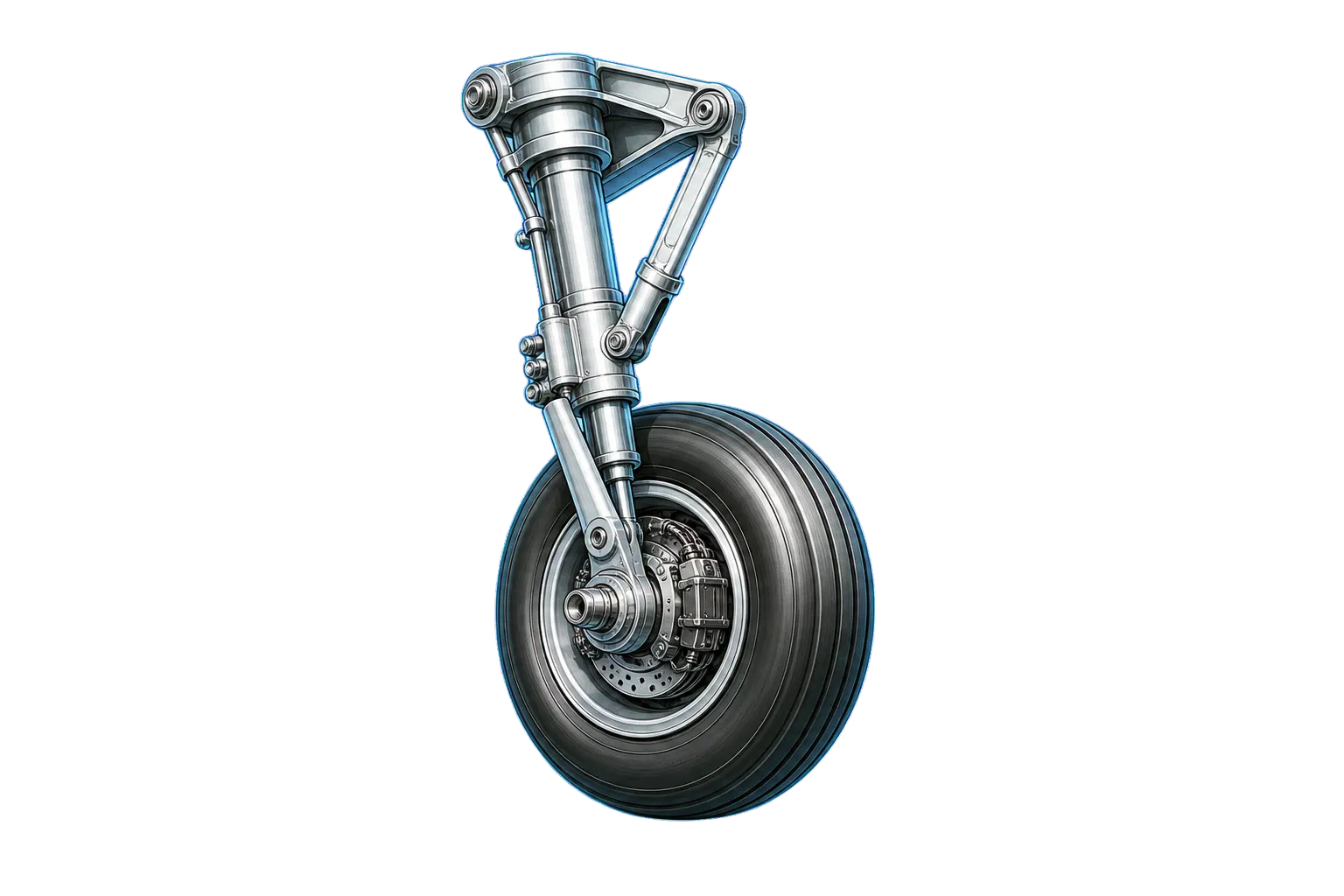
Failure of the main landing gear drag strut cylinder, P/N 471035-3, due to cracks in the root of the 6 5/16-inch diameter thread and thread relief area.
AI-generated summary from the source AD text. Verify against the official source before acting.
Required Actions
Inspect the root of the 6 5/16-inch diameter thread and thread relief area using dye penetrant, magnetic particle, or eddy current methods. If cracks are found, replace parts before further flight. If no cracks, reinspect every 1,000 or 5,000 hours' time in service depending on inspection method. Rework by remachining threads, cadmium plating, replacing nut with P/N 557466-1, and proof testing to 12,300 p.s.i. if required.
AI-generated summary from the source AD text. Verify against the official source before acting.
Compliance Time
Within the next 425 hours' time in service
AI-generated summary from the source AD text. Verify against the official source before acting.
Affected Aircraft
Lockheed Model 1049 Series Aircraft equipped with Drag Strut Assemblies with ground Acme threads, P/N 469080-5 and -6, Serial Numbers 6001 through 6363 and 10001 through 10036, manufactured by Sargent Engineering Corporation.
AI-generated summary from the source AD text. Verify against the official source before acting.
Federal Register Abstract
Landing Gear Drag Strut
Applicability Source Text
Show captured applicability text from the source AD
AD Final Rules - DRS_60-10-06.html
Copy URL
Print/Save as PDF
Document Versions
 Feedback
Details
AD Number:
60-10-06
Document Type:
AD Final Rules
Docket Number:
Unknown
Subject Heading:
LOCKHEED Model 1049 Series Aircraft
Subject:
Landing Gear Drag Strut
Status:
Current
Citation:
This information is not available.
Citation Publish Date:
Effective Date:
Make:
Lockheed Aircraft Corporation
Model:
1049-54 | 1049B-55 (Navy R7V-1) | 1049C-55 | 1049D-55 | 1049E-55 | 1049F-55 (USAF C-121C) | 1049G-82...Show more
Product Type:
Aircraft
Product Subtype:
Large Airplane
Affected AD:
Superseded AD:
Affected By:
Superseded By:
Service/Office:
Office of Primary Responsibility:
CFR Part Reference:
Part 39
Comments:
AIRWORTHINESS DIRECTIVES FINAL RULES: 60-10-06
CITATION:   This information is not available.

PAGE NUMBER:

DOCKET NUMBER:   Unknown

AMENDMENT:

AD NUMBER:   60-10-06

SUBJECT HEADING:   LOCKHEED Model 1049 Series Aircraft

ACTION:

SUMMARY:

DATES:

ADDRESSES:

FOR FURTHER INFORMATION CONTACT:

SUPPLEMENTARY INFORMATION:

REGULATORY TEXT:
60-10-06 LOCKHEED: Amdt. 150 Part 507 Federal Register May 13, 1960. Applies to All Model 1049 Series Aircraft Equipped With Drag Strut Assemblies With Ground Acme Threads, P/N 469080-5 and -6, Serial Numbers 6001 Through 6363 and 10001 Through 10036, Manufactured By Sargent Engineering Corporation.

Compliance required as indicated.

As a result of two failures of the main landing gear drag strut cylinder, P/N 471035-3, the following inspections and rework are required, unless already accomplished.

(a) Within the next 425 hours' time in service inspect the root of the 6 5/16-inch diameter thread and thread relief area in the cylinder, P/N 471035-3, for cracks using one of the following inspection methods:

(1) Dye penetrant method.

(2) Magnetic particle method (liquid suspension only).

(3) Eddy current method.

(b) If no cracks are found, reinspection is required as follows, except that such reinspection is not required if the parts are reworked in accordance with (c) or if inspection, in accordance with inspection method (a)(3), shows no indication of a heat-affected zone.

(1) If inspection method (a)(1) or (a)(2) is employed, reinspection is required every 1,000 hours' time in service.

(2) If inspection method (a)(3) is employed, reinspection is required every 5,000 hours' time in service.

(c) Rework instructions:

(1) Remove 0.020-inch material by remachining new Acme threads and new thread relief in the cylinder, taking care to prevent heating of the cylinder material which may affect its strength. Grinding or rolling processes must not be used for making the threads.

(2) Cadmium plate the machine surfaces in accordance with aircraft practices for heat-treated steel.

(3) A new nut, Lockheed P/N 557466-1, or equivalent, must be used to replace the existing nut.

(4) Reassemble the strut assembly and proof test to 12,300 p.s.i. (Lockheed 1049 Service Bulletin 3112 covers these rework instructions.)

(d) Parts found cracked must be replaced prior to further flight. Parts in which a heat affected zone is indicated by inspection method (a)(3) must be reworked in accordance with (c) within 1,000 hours' time in service.

(e) Upon request of the operator, an FAA maintenance inspector, subject to prior approval of the Chief, Engineering and Manufacturing Branch, FAA Western Region, may adjust the repetitive inspection intervals specified in this AD to permit compliance at an established inspection period of the operator if the request contains substantiating data to justify the increase for such operator.

(Lockheed Service Letter FS/240867L covers this same subject.)

Revised August 2, 1963.

Revised May 26, 1964.

FOOTER:
Document Text
Show stored source text (verify against official source)
AD Final Rules - DRS_60-10-06.html
Copy URL
Print/Save as PDF
Document Versions
 Feedback
Details
AD Number:
60-10-06
Document Type:
AD Final Rules
Docket Number:
Unknown
Subject Heading:
LOCKHEED Model 1049 Series Aircraft
Subject:
Landing Gear Drag Strut
Status:
Current
Citation:
This information is not available.
Citation Publish Date:
Effective Date:
Make:
Lockheed Aircraft Corporation
Model:
1049-54 | 1049B-55 (Navy R7V-1) | 1049C-55 | 1049D-55 | 1049E-55 | 1049F-55 (USAF C-121C) | 1049G-82...Show more
Product Type:
Aircraft
Product Subtype:
Large Airplane
Affected AD:
Superseded AD:
Affected By:
Superseded By:
Service/Office:
Office of Primary Responsibility:
CFR Part Reference:
Part 39
Comments:
AIRWORTHINESS DIRECTIVES FINAL RULES: 60-10-06
CITATION:   This information is not available.

PAGE NUMBER:

DOCKET NUMBER:   Unknown

AMENDMENT:

AD NUMBER:   60-10-06

SUBJECT HEADING:   LOCKHEED Model 1049 Series Aircraft

ACTION:

SUMMARY:

DATES:

ADDRESSES:

FOR FURTHER INFORMATION CONTACT:

SUPPLEMENTARY INFORMATION:

REGULATORY TEXT:
60-10-06 LOCKHEED: Amdt. 150 Part 507 Federal Register May 13, 1960. Applies to All Model 1049 Series Aircraft Equipped With Drag Strut Assemblies With Ground Acme Threads, P/N 469080-5 and -6, Serial Numbers 6001 Through 6363 and 10001 Through 10036, Manufactured By Sargent Engineering Corporation.

Compliance required as indicated.

As a result of two failures of the main landing gear drag strut cylinder, P/N 471035-3, the following inspections and rework are required, unless already accomplished.

(a) Within the next 425 hours' time in service inspect the root of the 6 5/16-inch diameter thread and thread relief area in the cylinder, P/N 471035-3, for cracks using one of the following inspection methods:

(1) Dye penetrant method.

(2) Magnetic particle method (liquid suspension only).

(3) Eddy current method.

(b) If no cracks are found, reinspection is required as follows, except that such reinspection is not required if the parts are reworked in accordance with (c) or if inspection, in accordance with inspection method (a)(3), shows no indication of a heat-affected zone.

(1) If inspection method (a)(1) or (a)(2) is employed, reinspection is required every 1,000 hours' time in service.

(2) If inspection method (a)(3) is employed, reinspection is required every 5,000 hours' time in service.

(c) Rework instructions:

(1) Remove 0.020-inch material by remachining new Acme threads and new thread relief in the cylinder, taking care to prevent heating of the cylinder material which may affect its strength. Grinding or rolling processes must not be used for making the threads.

(2) Cadmium plate the machine surfaces in accordance with aircraft practices for heat-treated steel.

(3) A new nut, Lockheed P/N 557466-1, or equivalent, must be used to replace the existing nut.

(4) Reassemble the strut assembly and proof test to 12,300 p.s.i. (Lockheed 1049 Service Bulletin 3112 covers these rework instructions.)

(d) Parts found cracked must be replaced prior to further flight. Parts in which a heat affected zone is indicated by inspection method (a)(3) must be reworked in accordance with (c) within 1,000 hours' time in service.

(e) Upon request of the operator, an FAA maintenance inspector, subject to prior approval of the Chief, Engineering and Manufacturing Branch, FAA Western Region, may adjust the repetitive inspection intervals specified in this AD to permit compliance at an established inspection period of the operator if the request contains substantiating data to justify the increase for such operator.

(Lockheed Service Letter FS/240867L covers this same subject.)

Revised August 2, 1963.

Revised May 26, 1964.

FOOTER:
Source: Official FAA Source ↗
Retrieved: Apr 8, 2026
Rights: U.S. Government Public Domain
This site is not affiliated with or endorsed by the FAA. Always verify with official sources.
Related Airworthiness Directives
93-14-12
final ruleAirworthiness Directives; ESSEX PB&R CORPORATION (formerly E.I. DuPont de Nemours and Company \\nIncorporated) PELS Model 4566M37B Crewmember Protective Breathing Equipment (PBE) Units
Unsafe Condition: Leakage of the PBE neck seal could compromise the crew's ability to combat an aircraft fire.
71-07-02
final ruleLOCKHEED Models 49, 149, 649, 749, 1049, and 1649 Series Airplanes
Unsafe Condition: Failure to provide an acceptable obstacle clearance profile when computing the takeoff flight path.
67-03-05
final ruleLOCKHEED Models 649, 749, and 1049 Airplanes
Unsafe Condition: Propeller vibratory stresses due to continuous ground running between 2,300 and 2,650 r.p.m. with propeller governing and continuous static ground running in a crosswind above 2,650 r.p.m.
64-13-03
final ruleLOCKHEED Models 49, 149, 649, 649A, 749, 749A, 1049-54, 1049C, 1049D, 1049E, 1049G, and 1049H Series Aircraft
Unsafe Condition: Cracks and failure in the nose landing gear retract cylinder rod terminal ends (P/N 404052 or 1005032) due to fatigue.