AD Amdt-39-9713
Applicability
| Type | Manufacturer | Model | Details |
|---|---|---|---|
| aircraft | Saab | SF340A 340B | Airworthiness Directives; Saab Model SAAB SF340A and SAAB 340B Series Airplanes |
Unsafe Condition
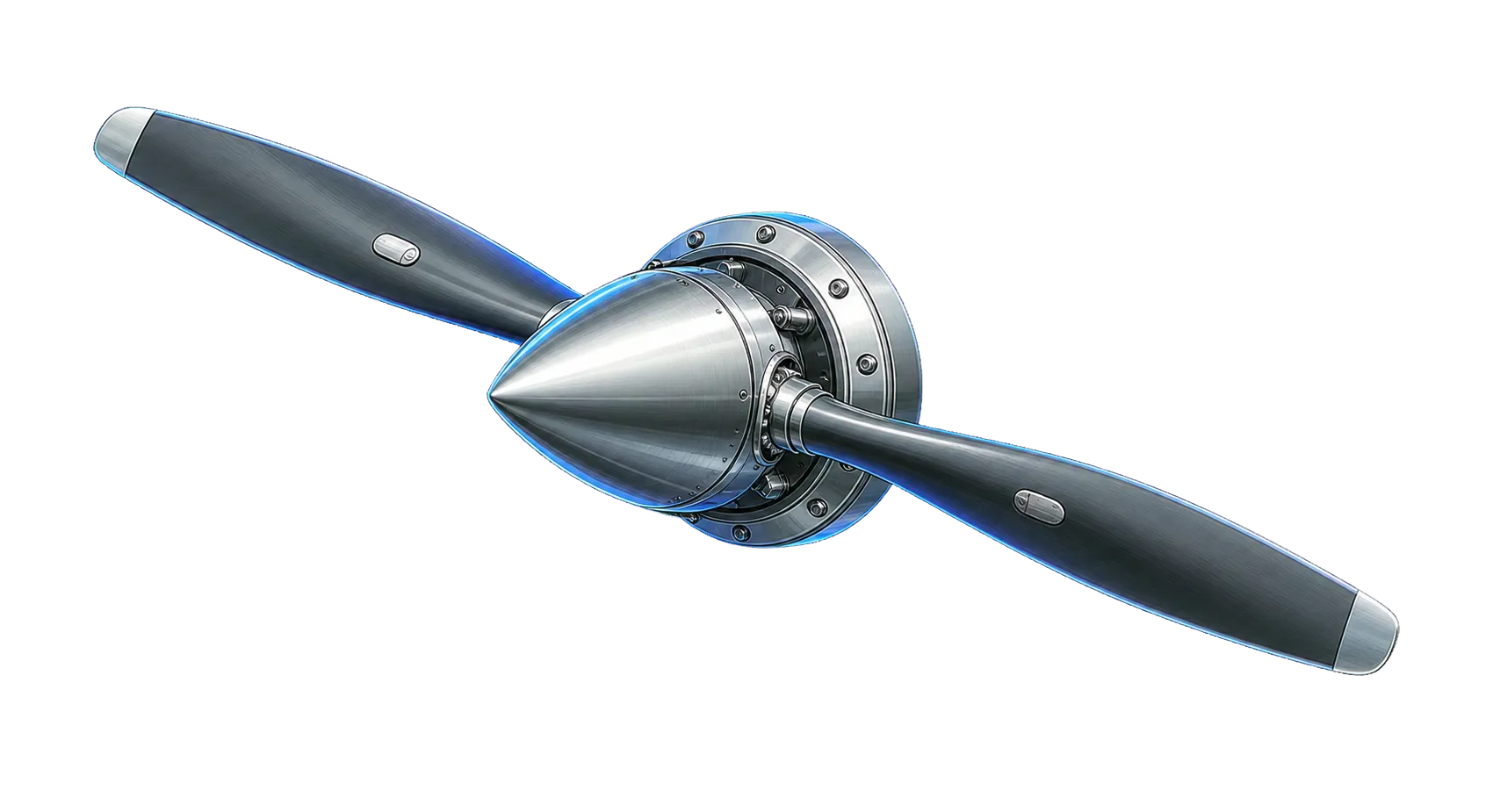
The means of protection against the selection of the ``beta'' range of propeller operation during flight has been reduced on certain modified control quadrants. Power levers on the control quadrant have been moved aft of the flight idle position during flight due to improper usage of the mechanical beta stop.
AI-generated summary from the source AD text. Verify against the official source before acting.
Required Actions
Install a mechanical flight idle stop on the control quadrant of the flight compartment. Revise the Airplane Flight Manual to ensure use of certain operating procedures after installation. Provide an optional terminating action for the AD requirements.
AI-generated summary from the source AD text. Verify against the official source before acting.
Compliance Time
Before further flight
AI-generated summary from the source AD text. Verify against the official source before acting.
Affected Aircraft
Saab Model SAAB SF340A and SAAB 340B series airplanes with certain modified control quadrants.
AI-generated summary from the source AD text. Verify against the official source before acting.
Federal Register Abstract
This amendment adopts a new airworthiness directive (AD) that is applicable to certain Saab Model SAAB SF340A and SAAB 340B series airplanes. This action requires the installation of a mechanical flight idle stop on the control quadrant of the flight compartment. This action also requires a revision of the Airplane Flight Manual to ensure the use of certain operating procedures after the mechanical flight idle stop is installed. Additionally, this action provides an optional terminating action for the requirements of this AD. This amendment is prompted by a report indicating that the means of protection against the selection of the ``beta'' range of propeller operation during flight has been reduced on certain modified control quadrants. Additionally, there have been reports indicating that power levers on the control quadrant have been moved aft of the flight idle position during flight due to improper usage of the mechanical beta stop. The actions specified in this AD are intended to prevent such movement of the power lever(s) during flight, which could result in propeller overspeed, engine damage, and loss of power to one or both engines.
Document Text
Show stored source text (verify against official source)
[Federal Register Volume 61, Number 161 (Monday, August 19, 1996)]
[Rules and Regulations]
[Pages 42773-42776]
From the Federal Register Online via the Government Publishing Office [<a href="http://www.gpo.gov">www.gpo.gov</a>]
[FR Doc No: 96-20672]


=======================================================================
-----------------------------------------------------------------------

DEPARTMENT OF TRANSPORTATION

Federal Aviation Administration

14 CFR Part 39

[Docket No. 96-NM-181-AD; Amendment 39-9713; AD 96-17-05]
RIN 2120-AA64


Airworthiness Directives; Saab Model SAAB SF340A and SAAB 340B
Series Airplanes

AGENCY: Federal Aviation Administration, DOT.

ACTION: Final rule; request for comments.

-----------------------------------------------------------------------

SUMMARY: This amendment adopts a new airworthiness directive (AD) that
is applicable to certain Saab Model SAAB SF340A and SAAB 340B series
airplanes. This action requires the installation of a mechanical flight
idle stop on the control quadrant of the flight compartment. This
action also requires a revision of the Airplane Flight Manual to ensure
the use of certain operating procedures after the mechanical flight
idle stop is installed. Additionally, this action provides an optional
terminating action for the requirements of this AD. This amendment is
prompted by a report indicating that the means of protection against
the selection of the ``beta'' range of propeller operation during
flight has been reduced on certain modified control quadrants.
Additionally, there have been reports indicating that power levers on
the control quadrant have been moved aft of the flight idle position
during flight due to improper usage of the mechanical beta stop. The
actions specified in this AD are intended to prevent such movement of
the power lever(s) during flight, which could result in propeller
overspeed, engine damage, and loss of power to one or both engines.

DATES: Effective September 3, 1996.
    The incorporation by reference of certain publications listed in
the regulations is approved by the Director of the Federal Register as
of September 3, 1996.
    Comments for inclusion in the Rules Docket must be received on or
before October 18, 1996.

ADDRESSES: Submit comments in triplicate to the Federal Aviation
Administration (FAA), Transport Airplane Directorate, ANM-103,
Attention: Rules Docket No. 96-NM-181-AD, 1601 Lind Avenue, SW.,
Renton, Washington 98055-4056.
    The service information referenced in this AD may be obtained from
SAAB Aircraft AF, SAAB Aircraft Product Support, S-581.88, Linkping,
Sweden. This information may be examined at the FAA, Transport Airplane
Directorate, 1601 Lind Avenue, SW., Renton, Washington; or at the
Office of the Federal Register, 800 North Capitol Street, NW., suite
700, Washington, DC.

FOR FURTHER INFORMATION CONTACT: Ruth E. Harder, Aerospace Engineer,
Standardization Branch, ANM-113, FAA, Transport Airplane Directorate,
1601 Lind Avenue, SW., Renton, Washington 98055-4056; telephone (206)
227-1721; fax (206) 227-1149.

SUPPLEMENTARY INFORMATION: The FAA has received a report from an
operator of a Model SAAB 340B series airplane indicating that, during
training, the flightcrew noticed a reduction in the protection
associated with movement of the power levers aft of the flight idle
position during flight. Moving the power lever settings aft of the
flight idle position (or ``below flight idle'') places the airplane in
the ``beta'' range of operation. ``Beta'' is the range of propeller
operation intended for use only during taxi, ground idle, or reverse
operations. If ``beta'' range is selected, either intentionally or
inadvertently, during flight, it could result in propeller

[[Page 42774]]

overspeed, engine damage, and loss of power to one or both engines.

Automatic Flight Idle Stop Modification

    The airplane involved in the incident referred to above was
equipped with a modified control quadrant. The installation of a new
control quadrant is described in Saab Service Bulletins 340-76-032 and
340-76-037, and is part of the modification necessary to install an
automatic flight idle stop system that will automatically prevent
movement of the power levers aft of flight idle during flight.
    The modification also entails the removal of a certain beta stop
protection device that was a basic original feature of the Saab Model
340 series airplanes. This original protection device featured
serrations in the power lever assembly that helped to prevent the
inadvertent movement of the power levers aft of the flight idle
position. The modified control quadrant does not provide these
serrations, however, and thus eliminates what would serve as a ``back-
up'' feature for beta stop protection. This is not an issue of concern
on airplanes where the automatic flight idle stop system has been
installed and activated. However, for airplanes on which the modified
control quadrant is installed, but the automatic flight idle stop
system is not yet activated, beta stop protection is even further
reduced.

Mechanical Flight Idle Stop Modification

    Some Saab Model 340 series airplanes have been modified with the
installation of a mechanical beta stop mechanism on the control
quadrant in accordance with Saab Service Bulletin 340-76-034.
(Procedures for installing a mechanical stop are also described in Saab
Service Bulletins 340-76-036 and 240-76-037.) This mechanical stop is
manually operated and, if used, prevents any power lever from being
unintentionally moved into beta range during retardation of the power
lever during flight. It is considered to be an interim improvement in
beta protection until the automatic flight idle stop system is
installed and activated.
    While this mechanical stop serves as a means of beta protection,
the FAA has received several reports indicating that the flight crew
did not use the mechanical stop, or used it improperly, and moved the
power levers into the beta range during flight.

Explanation of Relevant Service Information

    Saab has issued the following service bulletins that pertain to
beta protection devices:
    1. Saab Service Bulletin 340-76-034, dated January 4, 1995,
describes procedures for installation of a mechanical flight idle stop
on the control quadrant in the flight compartment. Accomplishment of
this installation is intended to prevent the power levers from being
moved aft of the flight idle stop during flight. The Luftfartsverket
(LFV), the airworthiness authority for Sweden, has classified this
service bulletin as mandatory and issued Swedish airworthiness
directive 1-067, dated January 9, 1995, in order to assure the
continued airworthiness of these airplanes in Sweden.
    2. Saab Service Bulletin 340-76-032, Revision 2, dated December 8,
1995; and Revision 3, dated March 25, 1996; describe procedures for
installation and activation of an automatic flight idle stop system on
the control quadrant in the flight compartment.
    The installation involves:

--Removing the mechanical beta stop (if installed),
--Removing the old control quadrant,
--Installing a new/modified control quadrant with an automatic flight
idle stop, and
--Accomplishing a functional test of the flight idle stop system.

    Accomplishment of this installation also will prevent the power
levers from being moved aft of the flight idle stop during flight.
Installation and activation of an automatic flight idle stop, if
accomplished, eliminates the need for installation of a mechanical
flight idle stop. The LFV classified this service bulletin as mandatory
and issued Swedish airworthiness directive 1-070, dated April 10, 1995,
in order to assure the continued airworthiness of these airplanes in
Sweden.
    3. Saab Service Bulletin 340-76-038, dated December 8, 1995,
describes procedures to reactivate the automatic flight idle stop
system for those systems that have been installed previously, but
deactivated in accordance with Saab Service Bulletin 340-76-036. If
accomplished, such reactivation also eliminates the need for
installation of a mechanical flight idle stop. The LFV has approved the
technical content of this service bulletin.

U.S. Type Certification of the Airplanes

    Saab Model SAAB SF340A and SAAB 340B series airplanes are
manufactured in Sweden and are type certificated for operation in the
United States under the provisions of section 21.29 of the Federal
Aviation Regulations (14 CFR 21.29) and the applicable bilateral
airworthiness agreement.

Explanation of Requirements of Rule

    Since an unsafe condition has been identified that is likely to
exist or develop on other airplanes of the same type design registered
in the United States, this AD is being issued to prevent movement of
the power lever(s) aft of the flight idle position during flight. That
situation could result in the overspeed of the propeller and power
turbine of the engines and consequent loss of power to one or both
engines, as well as severe engine damage.
    This AD requires the installation of the mechanical flight idle
stop on the control quadrant in the flight compartment in accordance
with Saab Service Bulletin 340-76-034, described previously.
    To prevent inappropriate usage of this mechanical stop, this AD
also requires that the FAA-approved Airplane Flight Manual (AFM) be
revised to ensure that the flight crews are advised of the specific
limitations necessary to address flight operations when the mechanical
flight idle stop is installed.
    Additionally, this AD provides for optional terminating action for
the requirements of this AD, as installation of the modified control
quadrant and activation of the automatic flight idle stop.

Determination of Rule's Effective Date

    Since a situation exists that requires the immediate adoption of
this regulation, it is found that notice and opportunity for prior
public comment hereon are impracticable, and that good cause exists for
making this amendment effective in less than 30 days.

Interim Action

    This AD is considered to be interim action. On March 15, 1996, the
FAA issued a notice of proposed rulemaking (NPRM), Docket 95-NM-243-AD
(61 FR 11591, March 21, 1996), to require installation and activation
of the automatic flight idle stop on certain Saab Model SAAB SF340A and
SAAB 340B series airplanes. However, the FAA has determined that the
mechanical flight idle stop, as required by this AD, must be provided
for certain airplanes in the interim until the automatic flight idle
stops are installed and activated.

Comments Invited

    Although this action is in the form of a final rule that involves
requirements affecting flight safety and, thus, was not preceded by
notice and an opportunity for public comment, comments are invited on
this rule. Interested persons are invited to comment on this rule by
submitting such written data, views, or

[[Page 42775]]

arguments as they may desire. Communications shall identify the Rules
Docket number and be submitted in triplicate to the address specified
under the caption ADDRESSES. All communications received on or before
the closing date for comments will be considered, and this rule may be
amended in light of the comments received. Factual information that
supports the commenter's ideas and suggestions is extremely helpful in
evaluating the effectiveness of the AD action and determining whether
additional rulemaking action would be needed.
    Comments are specifically invited on the overall regulatory,
economic, environmental, and energy aspects of the rule that might
suggest a need to modify the rule. All comments submitted will be
available, both before and after the closing date for comments, in the
Rules Docket for examination by interested persons. A report that
summarizes each FAA-public contact concerned with the substance of this
AD will be filed in the Rules Docket.
    Commenters wishing the FAA to acknowledge receipt of their comments
submitted in response to this rule must submit a self-addressed,
stamped postcard on which the following statement is made: ``Comments
to Docket Number 96-NM-181-AD.'' The postcard will be date stamped and
returned to the commenter.

Regulatory Impact

    The regulations adopted herein will not have substantial direct
effects on the States, on the relationship between the national
government and the States, or on the distribution of power and
responsibilities among the various levels of government. Therefore, in
accordance with Executive Order 12612, it is determined that this final
rule does not have sufficient federalism implications to warrant the
preparation of a Federalism Assessment.
    The FAA has determined that this regulation is an emergency
regulation that must be issued immediately to correct an unsafe
condition in aircraft, and that it is not a ``significant regulatory
action'' under Executive Order 12866. It has been determined further
that this action involves an emergency regulation under DOT Regulatory
Policies and Procedures (44 FR 11034, February 26, 1979). If it is
determined that this emergency regulation otherwise would be
significant under DOT Regulatory Policies and Procedures, a final
regulatory evaluation will be prepared and placed in the Rules Docket.
A copy of it, if filed, may be obtained from the Rules Docket at the
location provided under the caption ADDRESSES.

List of Subjects in 14 CFR Part 39

    Air transportation, Aircraft, Aviation safety, Incorporation by
reference, Safety.

Adoption of the Amendment

    Accordingly, pursuant to the authority delegated to me by the
Administrator, the Federal Aviation Administration amends part 39 of
the Federal Aviation Regulations (14 CFR part 39) as follows:

PART 39--AIRWORTHINESS DIRECTIVES

    1. The authority citation for part 39 continues to read as follows:

    Authority: 49 U.S.C. 106(g), 40113, 44701.


Sec. 39.13  [Amended]

    2. Section 39.13 is amended by adding the following new
airworthiness directive:

96-17-05 SAAB Aircraft AB:  Amendment 39-9713. Docket 96-NM-181-AD.

    Applicability: Model SAAB SF340A and SAAB 340B series airplanes
on which Saab Service Bulletin 340-76-034, dated January 4, 1995;
Saab Service Bulletin 340-76-036, dated December 8, 1995; or Saab
Service Bulletin 340-76-037, dated December 8, 1995, have been
accomplished; certificated in any category.

    Note 1: This AD applies to each airplane identified in the
preceding applicability provision, regardless of whether it has been
otherwise modified, altered, or repaired in the area subject to the
requirements of this AD. For airplanes that have been modified,
altered, or repaired so that the performance of the requirements of
this AD is affected, the owner/operator must request approval for an
alternative method of compliance in accordance with paragraph (d) of
this AD. The request should include an assessment of the effect of
the modification, alteration, or repair on the unsafe condition
addressed by this AD; and, if the unsafe condition has not been
eliminated, the request should include specific proposed actions to
address it.

    Compliance: Required as indicated, unless accomplished
previously.
    To prevent the movement of both power levers aft of the flight
idle stop during flight, accomplish the following:
    (a) For airplanes on which an automatic flight idle stop system
has been installed, but deactivated in accordance with Saab Service
Bulletin 340-76-036, dated December 8, 1995; or on which a control
quadrant in the flight compartment has been installed in accordance
with Saab Service Bulletin 340-76-037, dated December 8, 1995:
Within 7 days after the effective date of this AD, install a
mechanical flight idle stop on the control quadrant in the flight
compartment in accordance with Saab Service Bulletin 340-76-034,
dated January 4, 1995, and accomplish the requirements of paragraph
(b) of this AD.
    (b) For airplanes subject to paragraph (a) of this AD; and for
airplanes on which a mechanical flight idle stop has been installed
on the control panel in accordance with Saab Service Bulletin 340-
76-034, dated January 4, 1995, previous to the effective date of
this AD: Within 7 days after the effective date of this AD, revise
the Limitations Section of the FAA-approved Airplane Flight Manual
(AFM) to include the following operating limitations. This may be
accomplished by inserting a copy of this AD in the AFM.

``Mechanical Beta Stop Operating Limitations

--The stop must be in the beta open position during all ground
operations including takeoff run.
--The stop must be lifted and positioned fully forward and down in
the beta stop position during climb-out after take-off.
--The stop must remain in the beta stop position throughout the
remainder of the flight until after touchdown.
--The stop must be lifted and positioned in the beta open position
immediately after touchdown.
--Landing Field Lengths Required must be increased by 5% and 8% for
flap settings 35 and 20, respectively.''

    (c) Installation and activation of the automatic flight idle
stop system in accordance with Saab Service Bulletin 340-76-032,
Revision 2, dated December 8, 1995, or Revision 3, dated March 25,
1996; or reactivation of the system in accordance with Saab Service
Bulletin 340-76-038, dated December 8, 1995; constitute terminating
action for the requirements of this AD. Once the system has been
activated, the mechanical flight idle stop and the AFM revision
required by this AD may be removed.
    (d) An alternative method of compliance or adjustment of the
compliance time that provides an acceptable level of safety may be
used if approved by the Manager, Standardization Branch, ANM-113,
FAA Transport Airport Directorate. Operators shall submit their
requests through an appropriate FAA Principal Maintenance Inspector,
who may add comments and then send it to the Manager,
Standardization Branch, ANM-113.

    Note 2: Information concerning the existence of approved
alternative methods of compliance with this AD, if any, may be
obtained from the Standardization Branch, ANM-113.

    (e) Special flight permits may be issued in accordance with
sections 21.197 and 21.199 of the Federal Aviation Regulations (14
CFR 21.197 and 21.199) to operate the airplane to a location where
the requirements of this AD can be accomplished.
    (f) The installation of the mechanical flight idle stop shall be
done in accordance with Saab Service Bulletin 340-76-034, dated
January 4, 1995. The installation and activation of the automatic
flight idle stop system shall be done in accordance with Saab
Service Bulletin 340-76-032, Revision 2, dated December 8, 1995; or
Saab Service Bulletin 340-76-032, Revision 3, dated March 25, 1996.
The reactivation of the system shall be done in accordance with Saab
Service Bulletin 340-76-038, dated

[[Page 42776]]

December 8, 1995. This incorporation by reference was approved by
the Director of the Federal Register in accordance with 5 U.S.C.
552(a) and 1 CFR part 51. Copies may be obtained from SAAB Aircraft
AB, SAAB Aircraft Product Support, S-581.88, Linkoping, Sweden.
Copies may be inspected at the FAA, Transport Airplane Directorate,
1601 Lind Avenue, SW., Renton, Washington; or at the Office of the
Federal Register, 800 North Capitol Street, NW., suite 700,
Washington, DC.
    (g) This amendment becomes effective on September 3, 1996.

    Issued in Renton, Washington, on August 7, 1996.
Darrell M. Pederson,
Acting Manager, Transport Airplane Directorate, Aircraft Certification
Service.
[FR Doc. 96-20672 Filed 8-16-96; 8:45 am]
BILLING CODE 4910-13-P
Source: Official FAA Source ↗
Retrieved: Apr 6, 2026
Rights: U.S. Government Public Domain
This site is not affiliated with or endorsed by the FAA. Always verify with official sources.
Related Airworthiness Directives
2005-04-12 Recurring
final ruleAirworthiness Directives; Saab Model SAAB SF340A and SAAB 340B Series Airplanes
Unsafe Condition: Premature failures of the direct current (DC) starter generator prior to scheduled overhaul, which could cause a low voltage situation in flight and result in increased pilot workload and reduced r...
2004-12-03
final ruleAirworthiness Directives; Saab Model SAAB SF340A and SAAB 340B Series Airplanes
Unsafe Condition: Failure of the main landing gear (MLG) to extend during use of the emergency backup system due to broken wires and corroded connectors in the MLG's separation bolt harness.
Amdt-39-12576
final ruleAirworthiness Directives; Saab Model SAAB SF340A and SAAB 340B Series Airplanes
Unsafe Condition: Damage to the aluminum skin of the airplane, specifically the protective coat of bonding primer, which could result in a weakening of the structure of the airplane.
2001-23-12
final ruleAirworthiness Directives; Saab Model SAAB SF340A and SAAB 340B Series Airplanes
Unsafe Condition: Damage to the aluminum skin of the airplane, which could result from improper preparation for repainting, leading to weakening of the structure.