AD 73-19-11
Applicability
| Type | Manufacturer | Model | Details |
|---|---|---|---|
| aircraft | Kelowna Flightcraft R & D Ltd. | 340 | Airworthiness Directives; GENERAL DYNAMICS Models 340/440 and C-131E Airplanes |
| aircraft | Kelowna Flightcraft R & D Ltd. | 440 | Airworthiness Directives; GENERAL DYNAMICS Models 340/440 and C-131E Airplanes |
| aircraft | Kelowna Flightcraft R & D Ltd. | Military C-131E | Airworthiness Directives; GENERAL DYNAMICS Models 340/440 and C-131E Airplanes |
Unsafe Condition
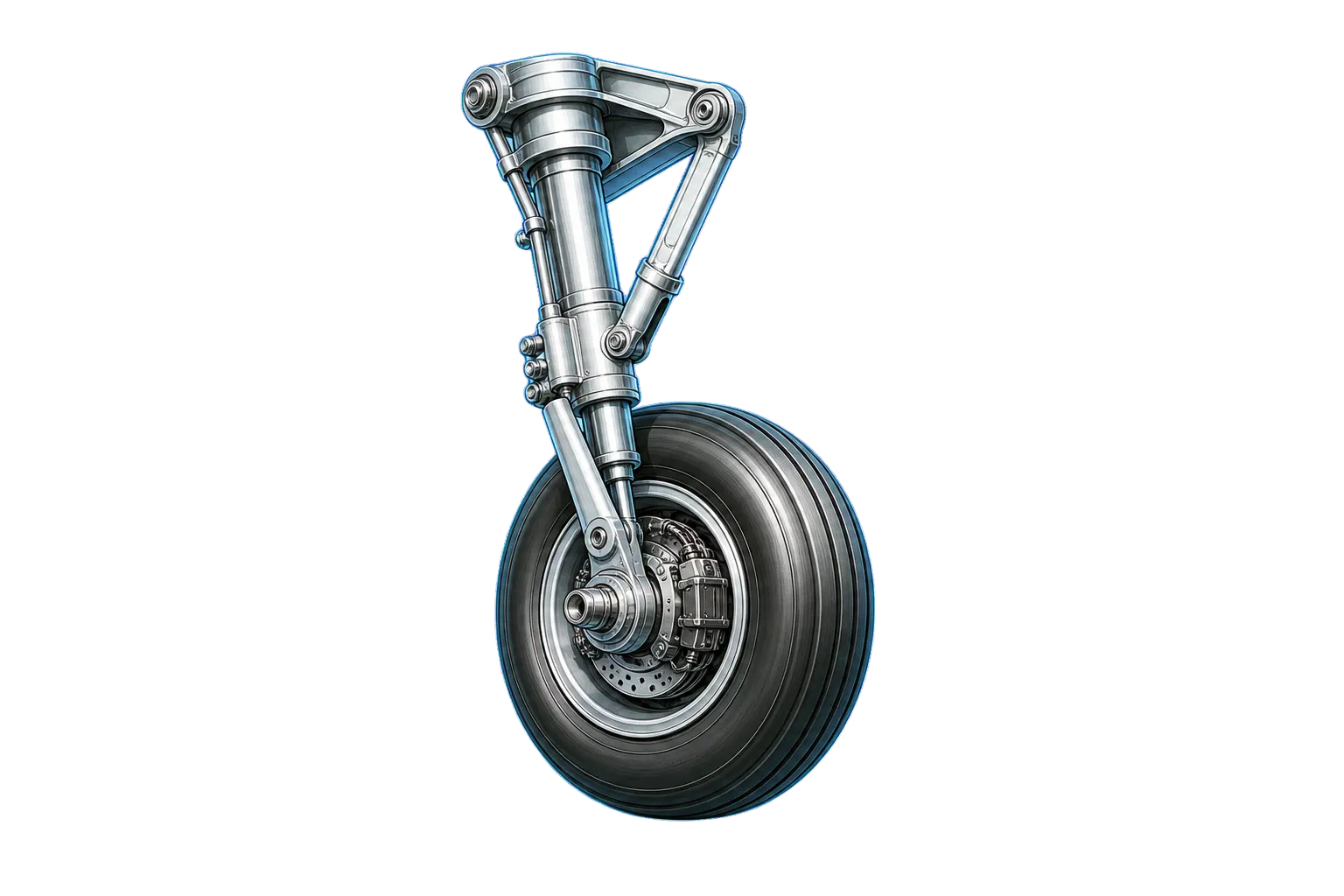
Cracks originating at the shearbolt bore in the nose landing gear drag strut could lead to landing gear failure.
AI-generated summary from the source AD text. Verify against the official source before acting.
Required Actions
Perform a disassembly inspection of the nose landing gear drag strut for cracks per Service Bulletin 32-8, modify the strut, and repeat inspections at intervals not exceeding 6000 landings. Replace the strut if cracks are found and follow re-inspection requirements based on strut configuration.
AI-generated summary from the source AD text. Verify against the official source before acting.
Compliance Time
Within 1200 landings after October 19, 1973, unless already accomplished within the last 4800 landings prior to this AD.
AI-generated summary from the source AD text. Verify against the official source before acting.
Affected Aircraft
General Dynamics Models 340/440 and C-131E airplanes certificated in all categories, including those converted to Turbo-propeller power.
AI-generated summary from the source AD text. Verify against the official source before acting.
Federal Register Abstract
Nose Landing Gear Drag Strut
Applicability Source Text
Show captured applicability text from the source AD
AD Final Rules - DRS_73-19-11.html
Copy URL
Print/Save as PDF
Document Versions
 Feedback
Details
AD Number:
73-19-11
Document Type:
AD Final Rules
Docket Number:
Unknown
Subject Heading:
Airworthiness Directives; GENERAL DYNAMICS Models 340/440 and C-131E Airplanes
Subject:
Nose Landing Gear Drag Strut
Status:
Current
Citation:
This information is not available.
Citation Publish Date:
Effective Date:
10/19/1973
Make:
Kelowna Flightcraft R & D Ltd.
Model:
340 | 440 | Military C-131E
Product Type:
Aircraft
Product Subtype:
Large Airplane
Affected AD:
Superseded AD:
Affected By:
Superseded By:
Service/Office:
Office of Primary Responsibility:
CFR Part Reference:
Part 39
Comments:
Updated RGL applicability to match AD applicability; CAR C-11-185
AIRWORTHINESS DIRECTIVES FINAL RULES: 73-19-11
CITATION:   This information is not available.

PAGE NUMBER:

DOCKET NUMBER:   Unknown

AMENDMENT:   39-1736

AD NUMBER:   73-19-11

SUBJECT HEADING:   Airworthiness Directives; GENERAL DYNAMICS Models 340/440 and C-131E Airplanes

ACTION:

SUMMARY:

DATES:   Effective October 19, 1973.

ADDRESSES:

FOR FURTHER INFORMATION CONTACT:

SUPPLEMENTARY INFORMATION:

REGULATORY TEXT:   73-19-11 GENERAL DYNAMICS: Amdt. 39-1720 as amended by Amendment 39- 1736. Applies to Models 340/440 and C-131E airplanes certificated in all categories, including those converted to Turbo-propeller power.

Compliance required as indicated.

To detect cracks originating at the shearbolt bore in the drag strut, and prevent possible failure of the landing gear, accomplish the following:

(a) Non-Modified Struts (See Note, below).

(1) Within 1200 landings after the effective date of this A.D., unless already accomplished within the last 4800 landings prior to this A.D., perform a disassembly inspection of the nose landing gear, left hand, upper drag strut for crack development in the area of the clutch plate to strut shear bolt attach hole per General Dynamics Service Bulletin 640(340) S.B. No. 32-8, dated August 10, 1973, or later FAA-approved revisions, and modify the strut per Part III of the Bulletin.

(2) If no cracks are found, repeat the inspection on or before 20,000 landings following modification per (a)(1) and at intervals not to exceed 6000 landings thereafter, until the strut has been modified in accordance with the provisions of Part IV, Service Bulletin No. 32-8, or later FAA-approved revisions.

(3) If cracks are located, replace the drag strut with new or serviceable parts of the same type design. The various configurations and the reinspection requirements are as shown below:

(A) If new or previously modified struts are used for replacement, which do not have the modifications of Part IV, Service Bulletin No. 32-8 incorporated, perform an initial inspection on or before 20,000 landings from time of replacement and at intervals not to exceed 6000 landings thereafter.

(B) If previously modified parts are used for replacement that have a subsequent rework accomplished per Part IV of Service Bulletin No. 32-8, perform an initial inspection on or before 20,000 landings following each rework, and at intervals not to exceed 6000 landings thereafter.

(C) Struts repaired per Part II of the Service Bulletin No. 32-8, or later FAA-approved revisions, will be inspected at intervals not to exceed 6000 landings following the repair.

(b) Modified or New Struts (See Note, below).

(1) After the effective date of this AD, as amended, perform on or before the accumulation of 26,000 landings on a new or modified part, or 6000 additional landings, whichever occurs later, a disassembly inspection of the nose landing gear, left hand upper drag strut in the area of the clutch plate to strut shear bolt attach hole as specified in General Dynamics Service Bulletin No. 32-8, or later FAA-approved revisions.

(2) If no cracks are found, repeat the inspection in (b)(1), above, at intervals not to exceed 6000 landings until the strut has been modified in accordance with the provisions of Part IV, Service Bulletin No. 32-8, or later FAA-approved revisions.

(3) If cracks are found, replace the drag strut with new or serviceable part of the same type design. Re-inspection requirements for each type part are as specified in (a)(3)(A)(B) and (C), above.

(c) Equivalent inspections and installations may be approved by the Chief, Aircraft Engineering Division, FAA Western Region.

(d) For the purpose of complying with this A.D., subject to acceptance by the assigned FAA Maintenance Inspector, the number of landings may be determined by dividing each airplane's hours' time in service by the operators fleet average time from takeoff to landing for the airplane type.

(e) Upon request of the operator, an FAA Maintenance Inspector, subject to prior approval of the Chief, Aircraft Engineering Division, FAA Western Region, may adjust the repetitive inspection intervals specified in this AD to permit compliance at an established inspection period of the operator if the request contains substantiating data to justify the increase for that operator.

Note: The following definitions apply.

Non-Modified Struts - This is an original configuration strut, which has not been modified by previous Service Engineering Reports or by Service Bulletin No. 32-8.

Modified Struts - This includes all struts modified by previous SER's No. 15-4-340- 38/440-38 and 15-4-340-44A/440-44A or by Part III of Service Bulletin No. 32-8 that have not been modified per Part IV of Service Bulletin No. 32-8.

New Struts - Part Number 340-7310231-1 struts that have not been reworked per Part IV of Service Bulletin No. 32-8.

Amendment 39-1720 becomes effective October 18, 1973.

This Amendment 39-1736 becomes effective October 19, 1973.

FOOTER:
Document Text
Show stored source text (verify against official source)
AD Final Rules - DRS_73-19-11.html
Copy URL
Print/Save as PDF
Document Versions
 Feedback
Details
AD Number:
73-19-11
Document Type:
AD Final Rules
Docket Number:
Unknown
Subject Heading:
Airworthiness Directives; GENERAL DYNAMICS Models 340/440 and C-131E Airplanes
Subject:
Nose Landing Gear Drag Strut
Status:
Current
Citation:
This information is not available.
Citation Publish Date:
Effective Date:
10/19/1973
Make:
Kelowna Flightcraft R & D Ltd.
Model:
340 | 440 | Military C-131E
Product Type:
Aircraft
Product Subtype:
Large Airplane
Affected AD:
Superseded AD:
Affected By:
Superseded By:
Service/Office:
Office of Primary Responsibility:
CFR Part Reference:
Part 39
Comments:
Updated RGL applicability to match AD applicability; CAR C-11-185
AIRWORTHINESS DIRECTIVES FINAL RULES: 73-19-11
CITATION:   This information is not available.

PAGE NUMBER:

DOCKET NUMBER:   Unknown

AMENDMENT:   39-1736

AD NUMBER:   73-19-11

SUBJECT HEADING:   Airworthiness Directives; GENERAL DYNAMICS Models 340/440 and C-131E Airplanes

ACTION:

SUMMARY:

DATES:   Effective October 19, 1973.

ADDRESSES:

FOR FURTHER INFORMATION CONTACT:

SUPPLEMENTARY INFORMATION:

REGULATORY TEXT:   73-19-11 GENERAL DYNAMICS: Amdt. 39-1720 as amended by Amendment 39- 1736. Applies to Models 340/440 and C-131E airplanes certificated in all categories, including those converted to Turbo-propeller power.

Compliance required as indicated.

To detect cracks originating at the shearbolt bore in the drag strut, and prevent possible failure of the landing gear, accomplish the following:

(a) Non-Modified Struts (See Note, below).

(1) Within 1200 landings after the effective date of this A.D., unless already accomplished within the last 4800 landings prior to this A.D., perform a disassembly inspection of the nose landing gear, left hand, upper drag strut for crack development in the area of the clutch plate to strut shear bolt attach hole per General Dynamics Service Bulletin 640(340) S.B. No. 32-8, dated August 10, 1973, or later FAA-approved revisions, and modify the strut per Part III of the Bulletin.

(2) If no cracks are found, repeat the inspection on or before 20,000 landings following modification per (a)(1) and at intervals not to exceed 6000 landings thereafter, until the strut has been modified in accordance with the provisions of Part IV, Service Bulletin No. 32-8, or later FAA-approved revisions.

(3) If cracks are located, replace the drag strut with new or serviceable parts of the same type design. The various configurations and the reinspection requirements are as shown below:

(A) If new or previously modified struts are used for replacement, which do not have the modifications of Part IV, Service Bulletin No. 32-8 incorporated, perform an initial inspection on or before 20,000 landings from time of replacement and at intervals not to exceed 6000 landings thereafter.

(B) If previously modified parts are used for replacement that have a subsequent rework accomplished per Part IV of Service Bulletin No. 32-8, perform an initial inspection on or before 20,000 landings following each rework, and at intervals not to exceed 6000 landings thereafter.

(C) Struts repaired per Part II of the Service Bulletin No. 32-8, or later FAA-approved revisions, will be inspected at intervals not to exceed 6000 landings following the repair.

(b) Modified or New Struts (See Note, below).

(1) After the effective date of this AD, as amended, perform on or before the accumulation of 26,000 landings on a new or modified part, or 6000 additional landings, whichever occurs later, a disassembly inspection of the nose landing gear, left hand upper drag strut in the area of the clutch plate to strut shear bolt attach hole as specified in General Dynamics Service Bulletin No. 32-8, or later FAA-approved revisions.

(2) If no cracks are found, repeat the inspection in (b)(1), above, at intervals not to exceed 6000 landings until the strut has been modified in accordance with the provisions of Part IV, Service Bulletin No. 32-8, or later FAA-approved revisions.

(3) If cracks are found, replace the drag strut with new or serviceable part of the same type design. Re-inspection requirements for each type part are as specified in (a)(3)(A)(B) and (C), above.

(c) Equivalent inspections and installations may be approved by the Chief, Aircraft Engineering Division, FAA Western Region.

(d) For the purpose of complying with this A.D., subject to acceptance by the assigned FAA Maintenance Inspector, the number of landings may be determined by dividing each airplane's hours' time in service by the operators fleet average time from takeoff to landing for the airplane type.

(e) Upon request of the operator, an FAA Maintenance Inspector, subject to prior approval of the Chief, Aircraft Engineering Division, FAA Western Region, may adjust the repetitive inspection intervals specified in this AD to permit compliance at an established inspection period of the operator if the request contains substantiating data to justify the increase for that operator.

Note: The following definitions apply.

Non-Modified Struts - This is an original configuration strut, which has not been modified by previous Service Engineering Reports or by Service Bulletin No. 32-8.

Modified Struts - This includes all struts modified by previous SER's No. 15-4-340- 38/440-38 and 15-4-340-44A/440-44A or by Part III of Service Bulletin No. 32-8 that have not been modified per Part IV of Service Bulletin No. 32-8.

New Struts - Part Number 340-7310231-1 struts that have not been reworked per Part IV of Service Bulletin No. 32-8.

Amendment 39-1720 becomes effective October 18, 1973.

This Amendment 39-1736 becomes effective October 19, 1973.

FOOTER:
Source: Official FAA Source ↗
Retrieved: Apr 8, 2026
Rights: U.S. Government Public Domain
This site is not affiliated with or endorsed by the FAA. Always verify with official sources.