AD 73-18-01
Applicability
| Type | Manufacturer | Model | Details |
|---|---|---|---|
| aircraft | Kelowna Flightcraft R & D Ltd. | 340 | Airworthiness Directives; GENERAL DYNAMICS Models 340/440/580/640 and Model C-131E Series Airplanes |
| aircraft | Kelowna Flightcraft R & D Ltd. | 440 | Airworthiness Directives; GENERAL DYNAMICS Models 340/440/580/640 and Model C-131E Series Airplanes |
| aircraft | Kelowna Flightcraft R & D Ltd. | Military C-131E | Airworthiness Directives; GENERAL DYNAMICS Models 340/440/580/640 and Model C-131E Series Airplanes |
Unsafe Condition
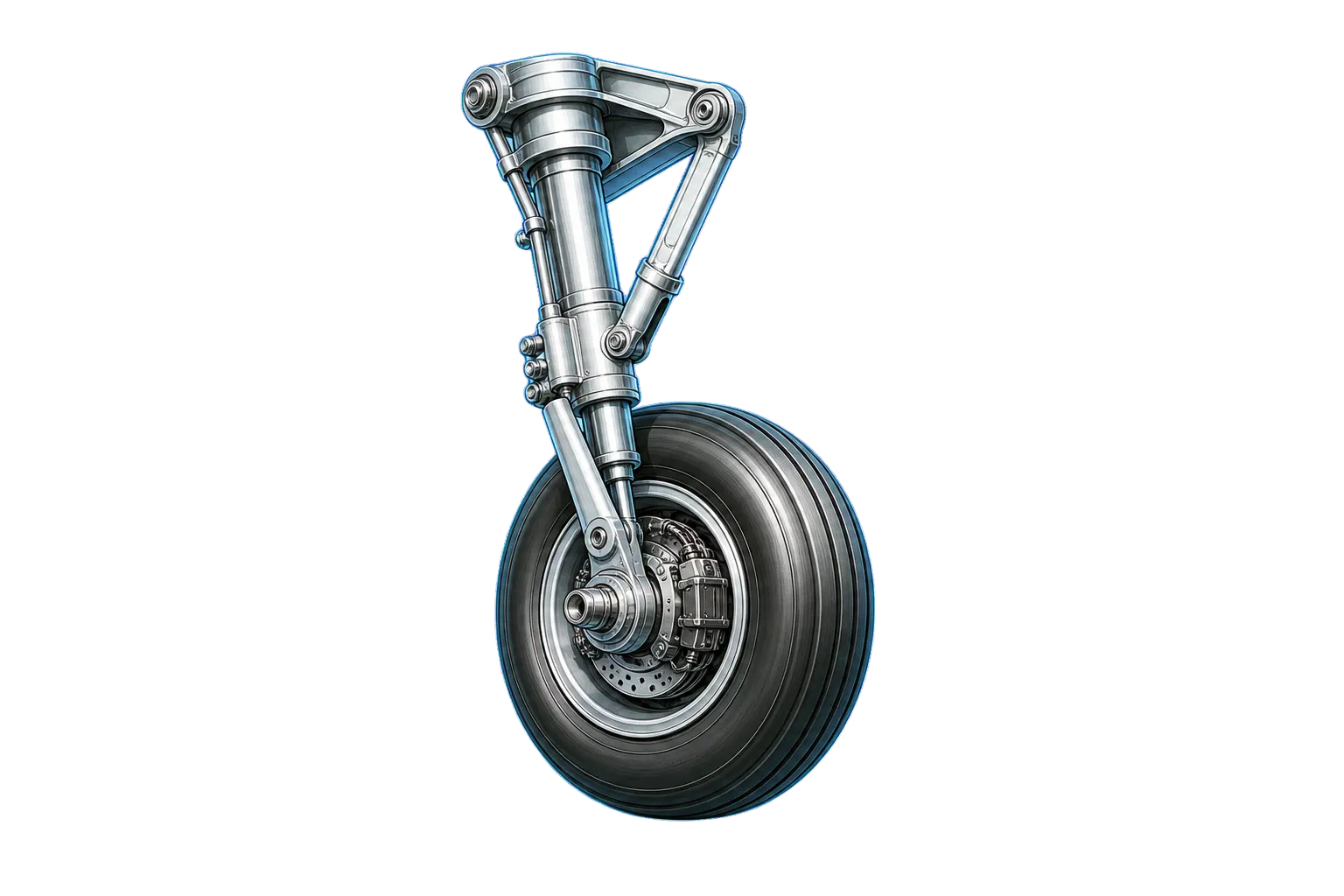
Collapse of the nose landing gear due to fatigue cracks in the drag strut upper left hand segments.
AI-generated summary from the source AD text. Verify against the official source before acting.
Required Actions
Within ten landings after the effective date, inspect nose landing gear drag strut upper left hand segments for cracks using dye penetrant, eddy current, or ultrasonic methods. Replace the drag strut prior to further flight if cracks are found. Repeat inspections at intervals not exceeding 2,400 landings if no cracks are found. Use specific replacement parts or reworked parts with approved rework procedures.
AI-generated summary from the source AD text. Verify against the official source before acting.
Compliance Time
Within ten landings after the effective date of this A.D., unless already accomplished with the last 590 landings prior to this A.D., and at one additional interval not to exceed 600 landings thereafter
AI-generated summary from the source AD text. Verify against the official source before acting.
Affected Aircraft
General Dynamics Models 340/440/580/640 and Model C-131E Series airplanes certificated in all categories.
AI-generated summary from the source AD text. Verify against the official source before acting.
Federal Register Abstract
Nose Landing Gear
Applicability Source Text
Show captured applicability text from the source AD
AD Final Rules - DRS_73-18-01.html
Copy URL
Print/Save as PDF
Document Versions
 Feedback
Details
AD Number:
73-18-01
Document Type:
AD Final Rules
Docket Number:
Unknown
Subject Heading:
Airworthiness Directives; GENERAL DYNAMICS Models 340/440/580/640 and Model C-131E Series Airplanes
Subject:
Nose Landing Gear
Status:
Current
Citation:
This information is not available.
Citation Publish Date:
Effective Date:
08/27/1973
Make:
Kelowna Flightcraft R & D Ltd.
Model:
340 | 440 | Military C-131E
Product Type:
Aircraft
Product Subtype:
Large Airplane
Affected AD:
Superseded AD:
Affected By:
Superseded By:
Service/Office:
Office of Primary Responsibility:
CFR Part Reference:
Part 39
Comments:
Updated RGL applicability to match AD applicability; CAR C-11-185
AIRWORTHINESS DIRECTIVES FINAL RULES: 73-18-01
CITATION:   This information is not available.

PAGE NUMBER:

DOCKET NUMBER:   Unknown

AMENDMENT:   39-1705

AD NUMBER:   73-18-01

SUBJECT HEADING:   Airworthiness Directives; GENERAL DYNAMICS Models 340/440/580/640 and Model C-131E Series Airplanes

ACTION:

SUMMARY:

DATES:   Effective August 27, 1973.

ADDRESSES:

FOR FURTHER INFORMATION CONTACT:

SUPPLEMENTARY INFORMATION:

REGULATORY TEXT:
73-18-01 GENERAL DYNAMICS: Amdt. 39-1705. Applies to General Dynamics 340/440/580/640 (Convair) Series and Model C-131E airplanes certificated in all categories.

Compliance required as indicated.

To prevent possible collapse of the nose landing gear due to fatigue cracks in the drag strut upper left hand segments, accomplish the following.

(a) Within ten landings after the effective date of this A.D., unless already accomplished with the last 590 landings prior to this A.D., and at one additional interval not to exceed 600 landings thereafter, preform an external visual inspection of all P/N 340-5210103, 340-5215103 or 340-7310231 nose landing gear drag strut upper left hand segments for crack development in the area depicted by Figure 1, View A-A, General Dynamics Service Bulletin 640(340D) No. 32-7, dated June 20, 1973, by dye penetrant, eddy current or ultrasonic methods, per the accomplishment instructions in S.B. 32-7, dated June 20, 1973, or later FAA-approved revisions. (Disassembly of strut is not required).

(1) If crack development is noted, replace the drag strut prior to further flight, with new P/N 340-7310231-1, or serviceable parts (Items 1 through 4, Convair Service Engineering Report No. 340-44A/440-44A, dated June 16, 1961).

(2) If crack development is not indicated after the accomplishment of the foregoing inspections, repeat the inspection thereafter at intervals not to exceed 2,400 landings. If cracks are discovered, replace the drag strut, prior to further flight per a(1) above.

(3) If new P/N 340-7310231-1 is used as a replacement, the inspections of this A.D. may be discontinued, and normal maintenance practices will be observed.

(4) If a re-worked part (cf: Convair Service Engineering Report, No. 340- 44A/440-44A) is used as a replacement, perform an inspection for crack development prior to an additional 600 landings after installation per a, above. Repeat the inspections per a and (2) above.

(5) Any parts removed for crack development per this A.D., or as a result of any other inspection indicating a like condition, may not be returned to service unless a specific rework procedure has been approved by the Chief, Aircraft Engineering Division, FAA Western Region, and accomplished as to said parts.

(6) Aircraft may be operated per FAR 21.197 to a base for accomplishment of maintenance per this A.D.

(b) Equivalent inspections and installations may be approved by the Chief, Aircraft Engineering Division, FAA Western Region.

(c) For the purpose of complying with this A.D., subject to acceptance by the assigned FAA maintenance inspector, the number of landings may be determined by dividing each airplane's hours' time in service by the operator's fleet average time from takeoff to landing for the airplane type.

This amendment is effective August 27, 1973 except those to whom it was made effective immediately by airmail letter, dated July 30, 1973.

FOOTER:
Document Text
Show stored source text (verify against official source)
AD Final Rules - DRS_73-18-01.html
Copy URL
Print/Save as PDF
Document Versions
 Feedback
Details
AD Number:
73-18-01
Document Type:
AD Final Rules
Docket Number:
Unknown
Subject Heading:
Airworthiness Directives; GENERAL DYNAMICS Models 340/440/580/640 and Model C-131E Series Airplanes
Subject:
Nose Landing Gear
Status:
Current
Citation:
This information is not available.
Citation Publish Date:
Effective Date:
08/27/1973
Make:
Kelowna Flightcraft R & D Ltd.
Model:
340 | 440 | Military C-131E
Product Type:
Aircraft
Product Subtype:
Large Airplane
Affected AD:
Superseded AD:
Affected By:
Superseded By:
Service/Office:
Office of Primary Responsibility:
CFR Part Reference:
Part 39
Comments:
Updated RGL applicability to match AD applicability; CAR C-11-185
AIRWORTHINESS DIRECTIVES FINAL RULES: 73-18-01
CITATION:   This information is not available.

PAGE NUMBER:

DOCKET NUMBER:   Unknown

AMENDMENT:   39-1705

AD NUMBER:   73-18-01

SUBJECT HEADING:   Airworthiness Directives; GENERAL DYNAMICS Models 340/440/580/640 and Model C-131E Series Airplanes

ACTION:

SUMMARY:

DATES:   Effective August 27, 1973.

ADDRESSES:

FOR FURTHER INFORMATION CONTACT:

SUPPLEMENTARY INFORMATION:

REGULATORY TEXT:
73-18-01 GENERAL DYNAMICS: Amdt. 39-1705. Applies to General Dynamics 340/440/580/640 (Convair) Series and Model C-131E airplanes certificated in all categories.

Compliance required as indicated.

To prevent possible collapse of the nose landing gear due to fatigue cracks in the drag strut upper left hand segments, accomplish the following.

(a) Within ten landings after the effective date of this A.D., unless already accomplished with the last 590 landings prior to this A.D., and at one additional interval not to exceed 600 landings thereafter, preform an external visual inspection of all P/N 340-5210103, 340-5215103 or 340-7310231 nose landing gear drag strut upper left hand segments for crack development in the area depicted by Figure 1, View A-A, General Dynamics Service Bulletin 640(340D) No. 32-7, dated June 20, 1973, by dye penetrant, eddy current or ultrasonic methods, per the accomplishment instructions in S.B. 32-7, dated June 20, 1973, or later FAA-approved revisions. (Disassembly of strut is not required).

(1) If crack development is noted, replace the drag strut prior to further flight, with new P/N 340-7310231-1, or serviceable parts (Items 1 through 4, Convair Service Engineering Report No. 340-44A/440-44A, dated June 16, 1961).

(2) If crack development is not indicated after the accomplishment of the foregoing inspections, repeat the inspection thereafter at intervals not to exceed 2,400 landings. If cracks are discovered, replace the drag strut, prior to further flight per a(1) above.

(3) If new P/N 340-7310231-1 is used as a replacement, the inspections of this A.D. may be discontinued, and normal maintenance practices will be observed.

(4) If a re-worked part (cf: Convair Service Engineering Report, No. 340- 44A/440-44A) is used as a replacement, perform an inspection for crack development prior to an additional 600 landings after installation per a, above. Repeat the inspections per a and (2) above.

(5) Any parts removed for crack development per this A.D., or as a result of any other inspection indicating a like condition, may not be returned to service unless a specific rework procedure has been approved by the Chief, Aircraft Engineering Division, FAA Western Region, and accomplished as to said parts.

(6) Aircraft may be operated per FAR 21.197 to a base for accomplishment of maintenance per this A.D.

(b) Equivalent inspections and installations may be approved by the Chief, Aircraft Engineering Division, FAA Western Region.

(c) For the purpose of complying with this A.D., subject to acceptance by the assigned FAA maintenance inspector, the number of landings may be determined by dividing each airplane's hours' time in service by the operator's fleet average time from takeoff to landing for the airplane type.

This amendment is effective August 27, 1973 except those to whom it was made effective immediately by airmail letter, dated July 30, 1973.

FOOTER:
Source: Official FAA Source ↗
Retrieved: Apr 8, 2026
Rights: U.S. Government Public Domain
This site is not affiliated with or endorsed by the FAA. Always verify with official sources.