AD 55-01-01
Applicability
| Type | Manufacturer | Model | Details |
|---|---|---|---|
| aircraft | Sierra Hotel Aero, Inc. | Navion (Army L-17A) | Airworthiness Directives; Navion All Models |
| aircraft | Sierra Hotel Aero, Inc. | Navion A (Army L-17B and L-17C) | Airworthiness Directives; Navion All Models |
| aircraft | Sierra Hotel Aero, Inc. | Navion B | Airworthiness Directives; Navion All Models |
Unsafe Condition
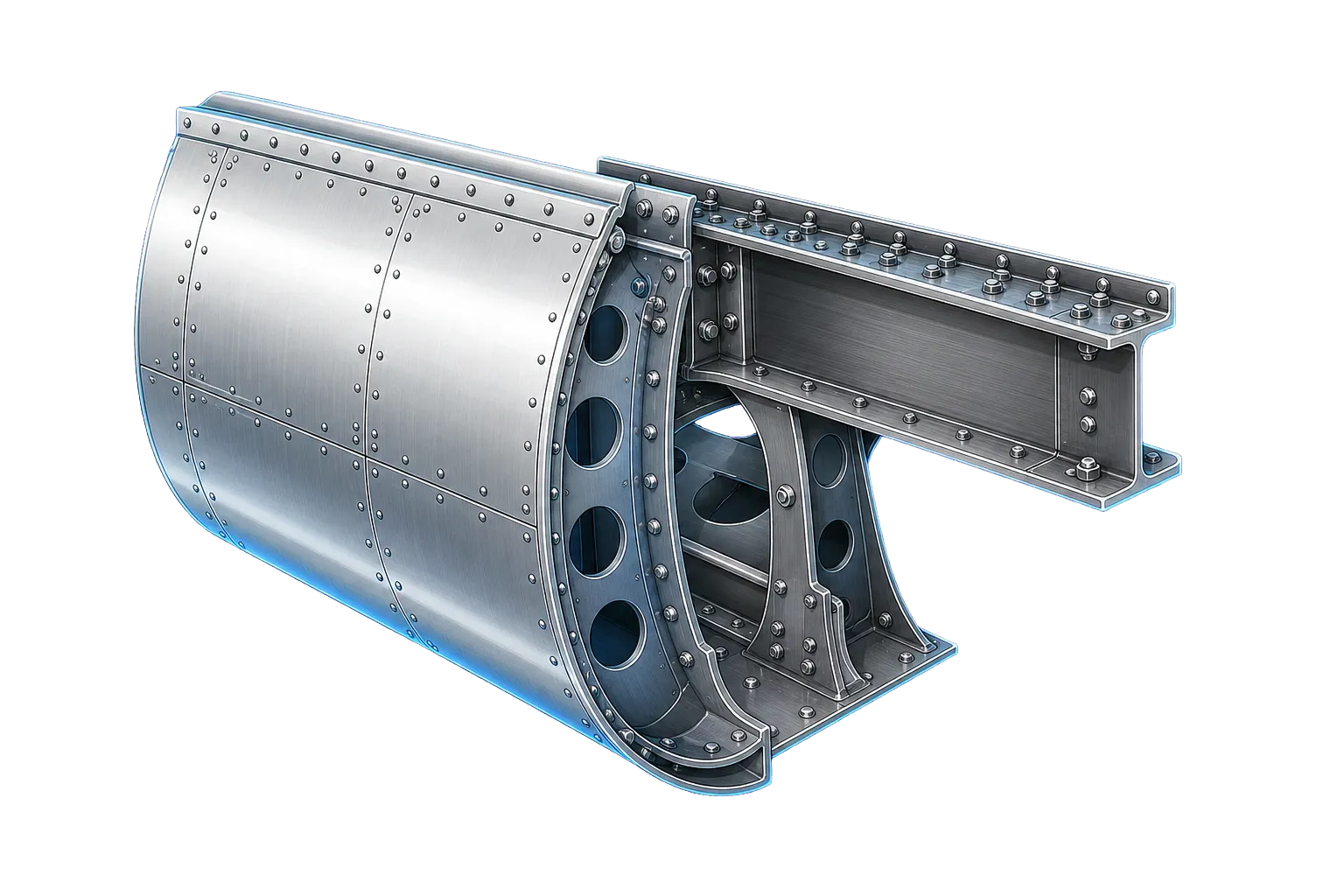
Cracks in fuselage frame 143-31004-16 at Station 294.1 inboard from the top stringer cutout at W.L. 21.00.
AI-generated summary from the source AD text. Verify against the official source before acting.
Required Actions
Inspect for cracks as soon as practicable but not later than March 15, 1955. If cracks are present, determine if they have extended beyond the critical rivet. Apply interim repair (stopdrilling, relocating rivets, installing gussets) or permanent repair (replacing frame, modifying stringers, installing patches) based on crack extent. Conduct 100-hour inspections until reinforcement is completed.
AI-generated summary from the source AD text. Verify against the official source before acting.
Compliance Time
as soon as practicable but not later than March 15, 1955
AI-generated summary from the source AD text. Verify against the official source before acting.
Affected Aircraft
Sierra Hotel Aero, Inc. Navion (Army L-17A), Navion A (Army L-17B and L-17C), Navion B models, all serial numbers.
AI-generated summary from the source AD text. Verify against the official source before acting.
Federal Register Abstract
Fuselage Frame Cracks
Applicability Source Text
Show captured applicability text from the source AD
AD Final Rules - DRS_55-01-01.html
Copy URL
Print/Save as PDF
Document Versions
 Feedback
Details
AD Number:
55-01-01
Document Type:
AD Final Rules
Docket Number:
Unknown
Subject Heading:
Airworthiness Directives; Navion All Models
Subject:
Fuselage Frame Cracks
Status:
Current
Citation:
This information is not available.
Citation Publish Date:
Effective Date:
Make:
Sierra Hotel Aero, Inc.
Model:
Navion (Army L-17A) | Navion A (Army L-17B and L-17C) | Navion B
Product Type:
Aircraft
Product Subtype:
Small Airplane
Affected AD:
Superseded AD:
Affected By:
Superseded By:
Service/Office:
Office of Primary Responsibility:
CFR Part Reference:
Part 39
Comments:
AIRWORTHINESS DIRECTIVES FINAL RULES: 55-01-01
CITATION:   This information is not available.

PAGE NUMBER:

DOCKET NUMBER:   Unknown

AMENDMENT:

AD NUMBER:   55-01-01

SUBJECT HEADING:   Airworthiness Directives; Navion All Models

ACTION:

SUMMARY:

DATES:

ADDRESSES:

FOR FURTHER INFORMATION CONTACT:

SUPPLEMENTARY INFORMATION:

REGULATORY TEXT:
55-01-01 NAVION: Applies to All Models.

Compliance required as indicated.

Some Navion aircraft have been found to have cracks in fuselage frame 143-31004-16 at Station 294.1 inboard from the top stringer cutout at W.L. 21.00.

It is therefore necessary that all Navions be inspected for this condition as soon as practicable but not later than March 15, 1955. Inspection may be made by removing the inspection plate on the left side of the fuselage beneath the horizontal stabilizer and looking forward to view the aft side of the points in question. If no crack is visible, no further immediate action is necessary, however, a thorough inspection of the frame at each 100-hour inspection will be required thereafter until the reinforcement indicated in item 2 or 3 as indicated below is completed.

If a crack is visible at either side of the frame, determine if it has extended beyond the nearest rivet inboard of the cutout (hereafter called the critical rivet). If it has not, the repair as indicated in item 1 may be used as an interim fix in lieu of the permanent repair indicated in item 2 or 3 which is mandatory in the case of a crack extending beyond the critical rivet.

1. Interim repair for cracks not extending beyond the critical rivet:

(a) When crack extends to the critical rivet, remove the rivet and relocate nearby or if crack has not reached the critical rivet, stopdrill end of crack.

(b) Install a modified diamond-shaped 0.125 24ST alclad gusset to right and left outer fuselage surfaces catching two existing rivets on each side of frame through W.L. 21 stringer, five existing rivets through the frame above the stringer cutout and three existing rivets through frame below the cutout. Add two AD4 rivets through the frame between the three existing rivets below the cutout. Additional AD4 rivets through the gusset and skin should be added as necessary.

(c) Check the cracked area at each 100-hour inspection to determine if crack has extended beyond the critical rivet. If so, it will be necessary to apply item 2 or 3.

2. Permanent Repair:

(a) Remove the cracked frame and strip off the angles and doublers and attach to new frame. Do not notch new frame to receive top stringers.

(b) Cut top stringers forward and aft of frame location.

(c) Install new frame in fuselage and attach skin. Where rivets do not properly fill holes use next size larger rivet.

(d) Secure top stringers forward of frame by adding a 0.040 24ST alclad angle 3 inches long to the forward portion of the stringer and attaching it to the frame flange with an existing AD4 rivet through the frame flange, skin and external gusset patch.

(e) Install gusset patch as indicated in item 1(b).

3. In lieu of item 2, an equivalent frame repair in accordance with CAM 18 will be accepted as an alternate for a new frame. This, however, may be difficult due to the presence of existing doublers and stiffeners on the forward face of the frame which is further complicated by the attachment of the W.L. 21 shear web to the aft side of the frame. Such alternate repairs must be submitted to a FAA Aircraft Engineering office for approval prior to installation.

(Ryan Field Service Bulletin No. 22 covers this same subject.)

FOOTER:
Document Text
Show stored source text (verify against official source)
AD Final Rules - DRS_55-01-01.html
Copy URL
Print/Save as PDF
Document Versions
 Feedback
Details
AD Number:
55-01-01
Document Type:
AD Final Rules
Docket Number:
Unknown
Subject Heading:
Airworthiness Directives; Navion All Models
Subject:
Fuselage Frame Cracks
Status:
Current
Citation:
This information is not available.
Citation Publish Date:
Effective Date:
Make:
Sierra Hotel Aero, Inc.
Model:
Navion (Army L-17A) | Navion A (Army L-17B and L-17C) | Navion B
Product Type:
Aircraft
Product Subtype:
Small Airplane
Affected AD:
Superseded AD:
Affected By:
Superseded By:
Service/Office:
Office of Primary Responsibility:
CFR Part Reference:
Part 39
Comments:
AIRWORTHINESS DIRECTIVES FINAL RULES: 55-01-01
CITATION:   This information is not available.

PAGE NUMBER:

DOCKET NUMBER:   Unknown

AMENDMENT:

AD NUMBER:   55-01-01

SUBJECT HEADING:   Airworthiness Directives; Navion All Models

ACTION:

SUMMARY:

DATES:

ADDRESSES:

FOR FURTHER INFORMATION CONTACT:

SUPPLEMENTARY INFORMATION:

REGULATORY TEXT:
55-01-01 NAVION: Applies to All Models.

Compliance required as indicated.

Some Navion aircraft have been found to have cracks in fuselage frame 143-31004-16 at Station 294.1 inboard from the top stringer cutout at W.L. 21.00.

It is therefore necessary that all Navions be inspected for this condition as soon as practicable but not later than March 15, 1955. Inspection may be made by removing the inspection plate on the left side of the fuselage beneath the horizontal stabilizer and looking forward to view the aft side of the points in question. If no crack is visible, no further immediate action is necessary, however, a thorough inspection of the frame at each 100-hour inspection will be required thereafter until the reinforcement indicated in item 2 or 3 as indicated below is completed.

If a crack is visible at either side of the frame, determine if it has extended beyond the nearest rivet inboard of the cutout (hereafter called the critical rivet). If it has not, the repair as indicated in item 1 may be used as an interim fix in lieu of the permanent repair indicated in item 2 or 3 which is mandatory in the case of a crack extending beyond the critical rivet.

1. Interim repair for cracks not extending beyond the critical rivet:

(a) When crack extends to the critical rivet, remove the rivet and relocate nearby or if crack has not reached the critical rivet, stopdrill end of crack.

(b) Install a modified diamond-shaped 0.125 24ST alclad gusset to right and left outer fuselage surfaces catching two existing rivets on each side of frame through W.L. 21 stringer, five existing rivets through the frame above the stringer cutout and three existing rivets through frame below the cutout. Add two AD4 rivets through the frame between the three existing rivets below the cutout. Additional AD4 rivets through the gusset and skin should be added as necessary.

(c) Check the cracked area at each 100-hour inspection to determine if crack has extended beyond the critical rivet. If so, it will be necessary to apply item 2 or 3.

2. Permanent Repair:

(a) Remove the cracked frame and strip off the angles and doublers and attach to new frame. Do not notch new frame to receive top stringers.

(b) Cut top stringers forward and aft of frame location.

(c) Install new frame in fuselage and attach skin. Where rivets do not properly fill holes use next size larger rivet.

(d) Secure top stringers forward of frame by adding a 0.040 24ST alclad angle 3 inches long to the forward portion of the stringer and attaching it to the frame flange with an existing AD4 rivet through the frame flange, skin and external gusset patch.

(e) Install gusset patch as indicated in item 1(b).

3. In lieu of item 2, an equivalent frame repair in accordance with CAM 18 will be accepted as an alternate for a new frame. This, however, may be difficult due to the presence of existing doublers and stiffeners on the forward face of the frame which is further complicated by the attachment of the W.L. 21 shear web to the aft side of the frame. Such alternate repairs must be submitted to a FAA Aircraft Engineering office for approval prior to installation.

(Ryan Field Service Bulletin No. 22 covers this same subject.)

FOOTER:
Source: Official FAA Source ↗
Retrieved: Apr 8, 2026
Rights: U.S. Government Public Domain
This site is not affiliated with or endorsed by the FAA. Always verify with official sources.
Related Airworthiness Directives
2008-05-14 Recurring
final ruleAirworthiness Directives; Sierra Hotel Aero, Inc. Models Navion (L-17A), Navion A (L-17B), (L-17C), Navion B, Navion D, Navion E, Navion F, Navion G, and Navion H Airplanes
Unsafe Condition: Leaking or improperly operating fuel selector valves may disrupt fuel flow to the engine, leading to engine power loss.
68-20-06
final ruleAirworthiness Directives; Navion Models Navion through Navion H Airplanes
Unsafe Condition: Failure of the Rudder Horn, P/N 145-24401, due to horizontal cracks or corrosion in the edge, which may appear as delaminations or swelling under the paint.
62-03-03
final ruleAirworthiness Directives; Navion Models Navion, Navion A, Navion B, Navion D, Navion E, Navion F, and Navion G Aircraft
Unsafe Condition: The landing gear selector valve end fitting P/N 145-58145-3 (heat treated and non-heat treated) has a service history of failure during attempts to extend the gear.
47-31-03
final ruleAirworthiness Directives; Navion Serial Numbers NAV-4-2 Through NAV-4-1010 Which Incorporate Koehler Model 2250 Fuel Strainers
Unsafe Condition: Loss of fuel pressure due to air leakage into the fuel system through the CCA-1550-1/8 drain cock on the Koehler Model 2250 fuel strainer.