AD 53-20-01
Applicability
| Type | Manufacturer | Model | Details |
|---|---|---|---|
| aircraft | Martin-Marietta Corporation | 202 | MARTIN Models 202 and 202A Airplanes |
| aircraft | Martin-Marietta Corporation | 202A | MARTIN Models 202 and 202A Airplanes |
Unsafe Condition
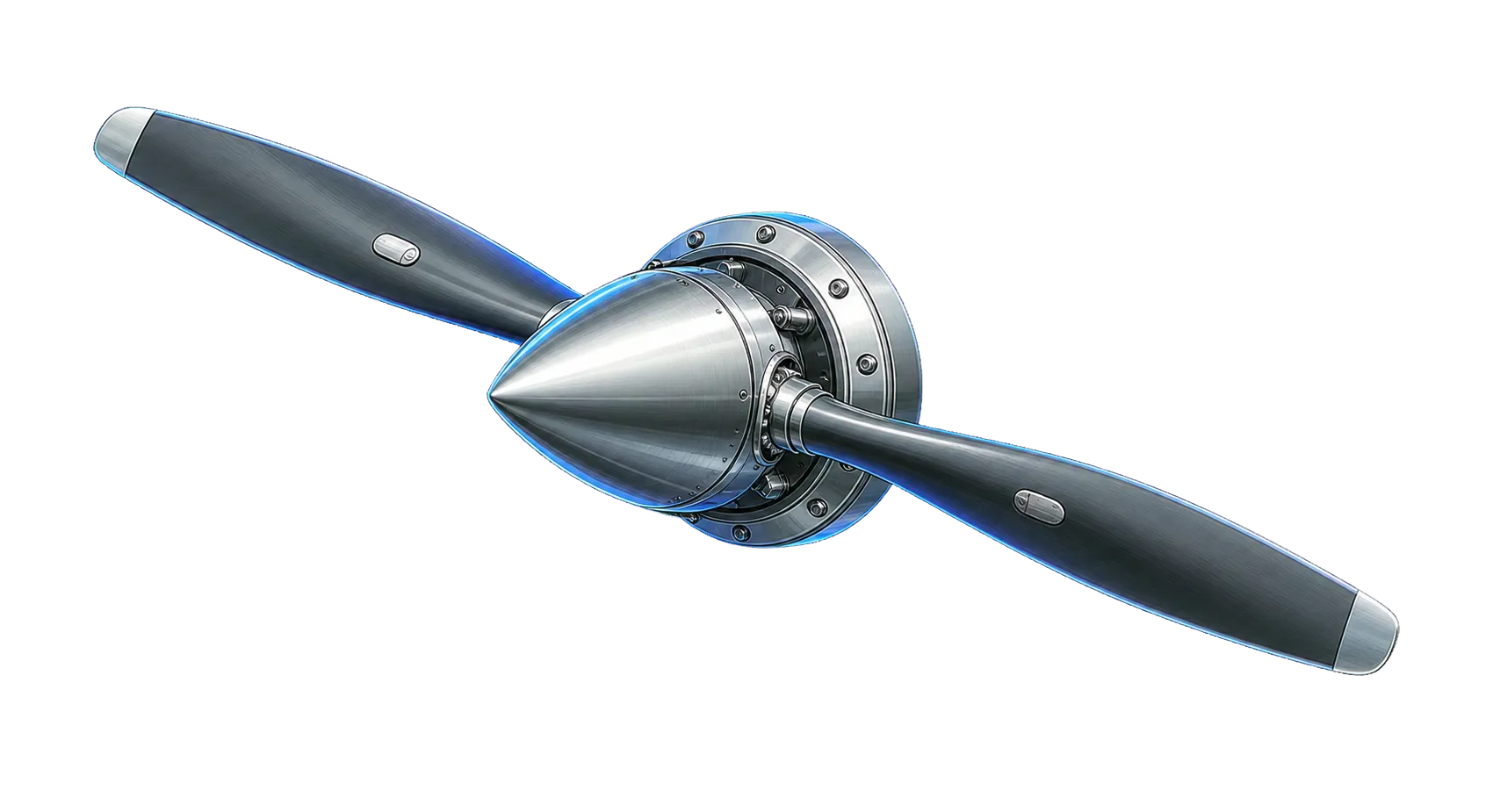
With the reverse pitch stop ring relocated to act as a low pitch stop, inadvertent energization of the reverse solenoid valve can cause the stop ring to fail under extreme loads from high oil pressure surge and high blade twisting moments, leading to jamming of the pitch changing mechanism or propeller reversal.
AI-generated summary from the source AD text. Verify against the official source before acting.
Required Actions
Modify the propeller dome's internal mechanism by removing the low pitch stop lever assembly and installing a dump valve to maintain 50-100 p.s.i. oil pressure. Modify the propeller control system by disconnecting specific wires, isolating solenoid circuits, revising solenoid circuits per Service Bulletin 236, adding throttle lever stops, and updating operating instructions. Compliance with AD 52-15-02 and Service Bulletin 264 is required.
AI-generated summary from the source AD text. Verify against the official source before acting.
Compliance Time
Compliance required prior to November 1, 1954 for dome modifications and by April 1, 1954 for control system modifications. Operating instructions must be updated by November 1, 1953.
AI-generated summary from the source AD text. Verify against the official source before acting.
Affected Aircraft
Martin-Marietta Corporation Models 202 and 202A airplanes with Hamilton Standard reversing propeller installations where the reverse feature is not used and the normal reverse pitch stop ring has been relocated as a low pitch stop.
AI-generated summary from the source AD text. Verify against the official source before acting.
Federal Register Abstract
Hamilton Std. Propeller Pitch Stop
Applicability Source Text
Show captured applicability text from the source AD
AD Final Rules - DRS_53-20-01.html
Copy URL
Print/Save as PDF
Document Versions
 Feedback
Details
AD Number:
53-20-01
Document Type:
AD Final Rules
Docket Number:
Unknown
Subject Heading:
MARTIN Models 202 and 202A Airplanes
Subject:
Hamilton Std. Propeller Pitch Stop
Status:
Current
Citation:
This information is not available.
Citation Publish Date:
Effective Date:
Make:
Martin-Marietta Corporation
Model:
202 | 202A
Product Type:
Aircraft
Product Subtype:
Large Airplane
Affected AD:
Superseded AD:
Affected By:
Superseded By:
Service/Office:
Office of Primary Responsibility:
CFR Part Reference:
Part 39
Comments:
AIRWORTHINESS DIRECTIVES FINAL RULES: 53-20-01
CITATION:   This information is not available.

PAGE NUMBER:

DOCKET NUMBER:   Unknown

AMENDMENT:

AD NUMBER:   53-20-01

SUBJECT HEADING:   MARTIN Models 202 and 202A Airplanes

ACTION:

SUMMARY:

DATES:

ADDRESSES:

FOR FURTHER INFORMATION CONTACT:

SUPPLEMENTARY INFORMATION:

REGULATORY TEXT:
53-20-01 MARTIN: Applies to All Models 202 and 202A Airplanes With Hamilton Standard Reversing Propeller Installations In Which the Reverse Feature is Not Used, and In Which the Normal Reverse Pitch Stop Ring Has Been Relocated to Act Essentially as a Low Pitch Stop.

Compliance required as indicated.

With the reverse pitch stop ring relocated to act as a low pitch stop, and with inadvertent energization of the reverse solenoid valve, the stop ring will fail under the extreme loads resulting from high oil pressure surge plus the high blade twisting moments attendant to rapid pitch change toward low pitch. This failure will result in the jamming of the pitch changing mechanism, or an inadvertent propeller reversal. To preclude any hazardous incidents, modification of the internal mechanism of the propeller dome, or modification of the propeller control system is necessary. Accomplish items I, II, and III.

I. Comply with AD 52-15-02.

A. Item I of AD 52-15-02 is to be accomplished by means of a progressive modification program to be submitted to and approved by the FAA. The program shall begin no later than November 1, 1953, and shall be completed no later than August 1, 1954.

B. Item III shall be instituted when reversing is reactivated.

II. Modify the internal mechanism of the propeller dome. The modifications include removal of the normal low pitch stops, and incorporation of a dump valve which opens just above the normal low pitch position to maintain oil pressure of 50 to 100 p.s.i. on the decrease pitch side of the piston.

A. Replace the present oil transfer housing 70451 or 77828 with engine shaft extension assembly 70300.

B. Remove the present low pitch stop lever assembly 71042, 71676 or 76149 from the propeller entirely.

C. Replace the present piston sleeve 68425 with a new piston sleeve 72259 and snap ring 67698. Since the piston sleeve is pressed into the piston, the internal diameter of the sleeve must be machined after assembly.

D. Purchase Orders for the above parts must be submitted to Hamilton Standard by November 1, 1953.

E. Hamilton Standard Service Bulletin No. 264 covers this same subject.

F. Compliance required prior to November 1, 1954.

III. Modify the propeller control system.

A. At the A or unfeathering relays in the propeller relay control box, disconnect the wires that run through the nose junction box and into the reversing control boxes (Hamilton Standard P/N 72400) to connect the A relays with the throttle microswitches.

(1) Either physically remove the full run of these wires from the A relay terminal to the nose junction box terminal strip, or

(2) Physically remove the portion from the A relays to the pin connector in the propeller control relay box, and disconnect these wires from the mating pin in the external portion of the pin connector. Insulate the exposed ends of these wires, and secure them from movement in such manner as to preclude their becoming grounded or contacting any terminals.

B. Modify the reverse solenoid circuit wiring from the reverse solenoids to the terminal on the A relays by providing continuous wires physically isolated from all other circuits.

C. Comply with item I.C. of AD 52-15-02.

D. Revise the reversing solenoid circuits to comply with Hamilton Standard Service Bulletin No. 236, Ref. 955.

E. Provide positive mechanical stops for both throttle levers so they cannot be moved into the reverse range.

(1) Item 2, of NWA Mechanical Order No. 479, dated November 21, 1950, is considered acceptable to accomplish this.

(2) Comply with items 3 and 4 of NWA Mechanical Order No. 479, dated November 21, 1950.

F. Items III.A, B, C, D, and E of AD 53-20-01 are to be accomplished by April 1, 1954.

G. No later than November 1, 1953, all operating instructions regarding unfeathering procedures shall specify that the following practices are to be observed, and shall indicate that the reason is to guard against jamming the pitch changing mechanism or possible inadvertent reversal during the unfeathering operation:

(1) If unfeathering is being accomplished at night the wing illumination lights or landing lights are to be used to permit observation of propeller operation.

(2) The propeller is to be watched during unfeathering and the button is to be released when rotation starts. (This should normally be in 1 or 2 seconds.)

(3) The tachometer is not to be used as a guide for determining when unfeathering is to be terminated.

FOOTER:
Document Text
Show stored source text (verify against official source)
AD Final Rules - DRS_53-20-01.html
Copy URL
Print/Save as PDF
Document Versions
 Feedback
Details
AD Number:
53-20-01
Document Type:
AD Final Rules
Docket Number:
Unknown
Subject Heading:
MARTIN Models 202 and 202A Airplanes
Subject:
Hamilton Std. Propeller Pitch Stop
Status:
Current
Citation:
This information is not available.
Citation Publish Date:
Effective Date:
Make:
Martin-Marietta Corporation
Model:
202 | 202A
Product Type:
Aircraft
Product Subtype:
Large Airplane
Affected AD:
Superseded AD:
Affected By:
Superseded By:
Service/Office:
Office of Primary Responsibility:
CFR Part Reference:
Part 39
Comments:
AIRWORTHINESS DIRECTIVES FINAL RULES: 53-20-01
CITATION:   This information is not available.

PAGE NUMBER:

DOCKET NUMBER:   Unknown

AMENDMENT:

AD NUMBER:   53-20-01

SUBJECT HEADING:   MARTIN Models 202 and 202A Airplanes

ACTION:

SUMMARY:

DATES:

ADDRESSES:

FOR FURTHER INFORMATION CONTACT:

SUPPLEMENTARY INFORMATION:

REGULATORY TEXT:
53-20-01 MARTIN: Applies to All Models 202 and 202A Airplanes With Hamilton Standard Reversing Propeller Installations In Which the Reverse Feature is Not Used, and In Which the Normal Reverse Pitch Stop Ring Has Been Relocated to Act Essentially as a Low Pitch Stop.

Compliance required as indicated.

With the reverse pitch stop ring relocated to act as a low pitch stop, and with inadvertent energization of the reverse solenoid valve, the stop ring will fail under the extreme loads resulting from high oil pressure surge plus the high blade twisting moments attendant to rapid pitch change toward low pitch. This failure will result in the jamming of the pitch changing mechanism, or an inadvertent propeller reversal. To preclude any hazardous incidents, modification of the internal mechanism of the propeller dome, or modification of the propeller control system is necessary. Accomplish items I, II, and III.

I. Comply with AD 52-15-02.

A. Item I of AD 52-15-02 is to be accomplished by means of a progressive modification program to be submitted to and approved by the FAA. The program shall begin no later than November 1, 1953, and shall be completed no later than August 1, 1954.

B. Item III shall be instituted when reversing is reactivated.

II. Modify the internal mechanism of the propeller dome. The modifications include removal of the normal low pitch stops, and incorporation of a dump valve which opens just above the normal low pitch position to maintain oil pressure of 50 to 100 p.s.i. on the decrease pitch side of the piston.

A. Replace the present oil transfer housing 70451 or 77828 with engine shaft extension assembly 70300.

B. Remove the present low pitch stop lever assembly 71042, 71676 or 76149 from the propeller entirely.

C. Replace the present piston sleeve 68425 with a new piston sleeve 72259 and snap ring 67698. Since the piston sleeve is pressed into the piston, the internal diameter of the sleeve must be machined after assembly.

D. Purchase Orders for the above parts must be submitted to Hamilton Standard by November 1, 1953.

E. Hamilton Standard Service Bulletin No. 264 covers this same subject.

F. Compliance required prior to November 1, 1954.

III. Modify the propeller control system.

A. At the A or unfeathering relays in the propeller relay control box, disconnect the wires that run through the nose junction box and into the reversing control boxes (Hamilton Standard P/N 72400) to connect the A relays with the throttle microswitches.

(1) Either physically remove the full run of these wires from the A relay terminal to the nose junction box terminal strip, or

(2) Physically remove the portion from the A relays to the pin connector in the propeller control relay box, and disconnect these wires from the mating pin in the external portion of the pin connector. Insulate the exposed ends of these wires, and secure them from movement in such manner as to preclude their becoming grounded or contacting any terminals.

B. Modify the reverse solenoid circuit wiring from the reverse solenoids to the terminal on the A relays by providing continuous wires physically isolated from all other circuits.

C. Comply with item I.C. of AD 52-15-02.

D. Revise the reversing solenoid circuits to comply with Hamilton Standard Service Bulletin No. 236, Ref. 955.

E. Provide positive mechanical stops for both throttle levers so they cannot be moved into the reverse range.

(1) Item 2, of NWA Mechanical Order No. 479, dated November 21, 1950, is considered acceptable to accomplish this.

(2) Comply with items 3 and 4 of NWA Mechanical Order No. 479, dated November 21, 1950.

F. Items III.A, B, C, D, and E of AD 53-20-01 are to be accomplished by April 1, 1954.

G. No later than November 1, 1953, all operating instructions regarding unfeathering procedures shall specify that the following practices are to be observed, and shall indicate that the reason is to guard against jamming the pitch changing mechanism or possible inadvertent reversal during the unfeathering operation:

(1) If unfeathering is being accomplished at night the wing illumination lights or landing lights are to be used to permit observation of propeller operation.

(2) The propeller is to be watched during unfeathering and the button is to be released when rotation starts. (This should normally be in 1 or 2 seconds.)

(3) The tachometer is not to be used as a guide for determining when unfeathering is to be terminated.

FOOTER:
Source: Official FAA Source ↗
Retrieved: Apr 8, 2026
Rights: U.S. Government Public Domain
This site is not affiliated with or endorsed by the FAA. Always verify with official sources.
Related Airworthiness Directives
71-09-06
final ruleAirworthiness Directives; MARTIN AIRCRAFT Models 202, 202A and 404 Airplanes
Unsafe Condition: Cracks or corrosion in the main landing gear aluminum gland nut, P/N 202SD81548 (Menasco Drawing No. 511034).
67-19-04
final ruleAirworthiness Directives; MARTIN Models 202, 202A and 404 Airplanes
Unsafe Condition: Cracks and corrosion in the engine mounts, specifically in the tubular members and welds, which could lead to structural failure of the engine mounts.
67-14-06
final ruleMARTIN Models 202, 202A, and 404 Series Airplanes
Unsafe Condition: Cracks in the lower spar cap, spar web inboard of the outer panel closing rib, and vertical angle attaching the web to the outer panel closing rib in the front spars of the outer wing panels at 25%...
66-08-04
final ruleAirworthiness Directives; MARTIN Models 202, 202A, and 404 Airplanes
Unsafe Condition: Cracks in the piston of the piston and fork assembly of the nose landing gear, specifically part number 202SD84483, could lead to failure of the nose landing gear assembly.