AD 66-08-04
Applicability
| Type | Manufacturer | Model | Details |
|---|---|---|---|
| aircraft | Martin-Marietta Corporation | 202 | Airworthiness Directives; MARTIN Models 202, 202A, and 404 Airplanes |
| aircraft | Martin-Marietta Corporation | 202A | Airworthiness Directives; MARTIN Models 202, 202A, and 404 Airplanes |
| aircraft | Martin-Marietta Corporation | 404 | Airworthiness Directives; MARTIN Models 202, 202A, and 404 Airplanes |
Unsafe Condition
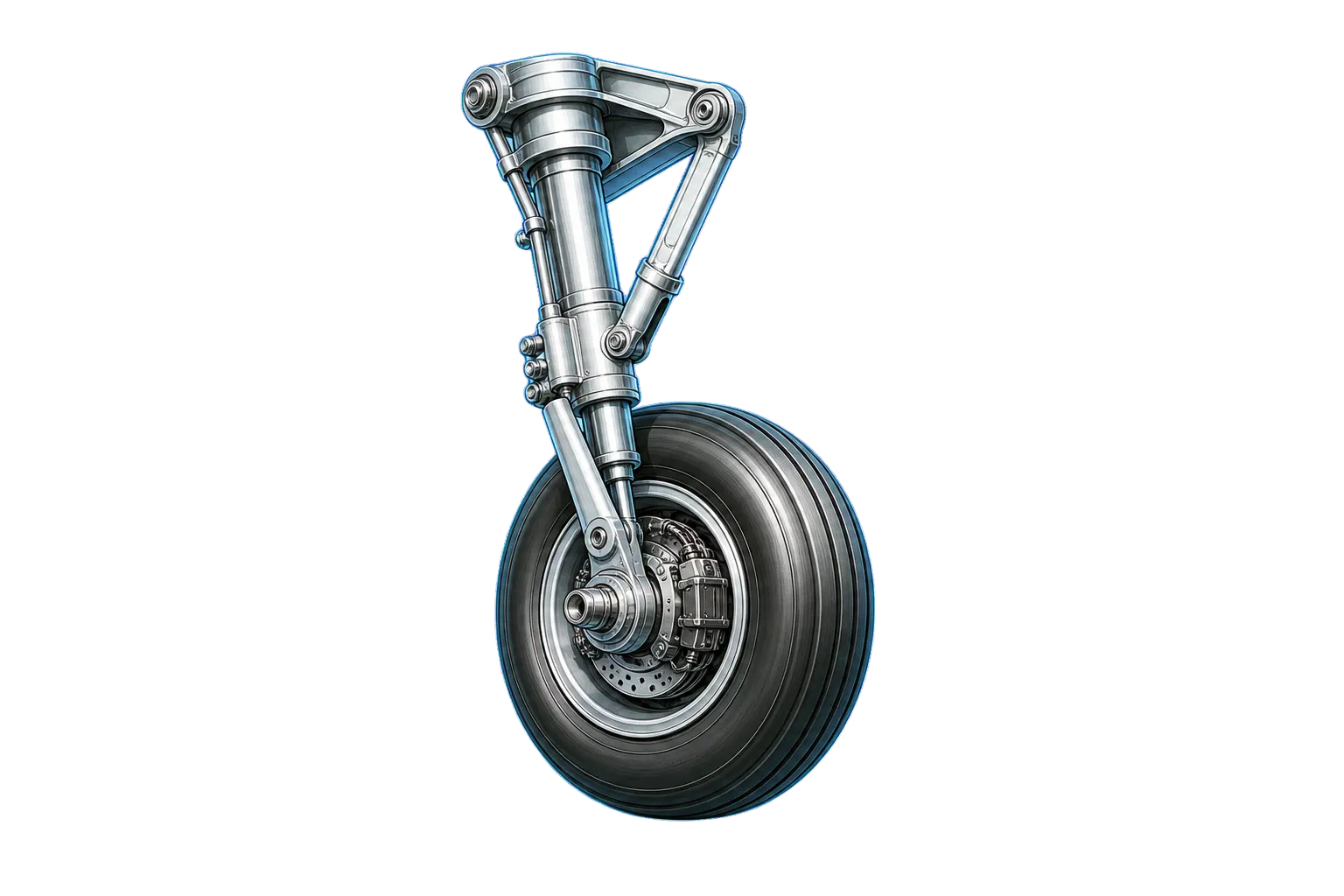
Cracks in the piston of the piston and fork assembly of the nose landing gear, specifically part number 202SD84483, could lead to failure of the nose landing gear assembly.
AI-generated summary from the source AD text. Verify against the official source before acting.
Required Actions
Inspect for cracks around the periphery of the lower part of the piston using dye penetrant or equivalent method. Repair cracks by grinding or replacement with part number 202SD84483 or an approved equivalent. Re-inspections are required at specified intervals after repair.
AI-generated summary from the source AD text. Verify against the official source before acting.
Compliance Time
Compliance required as indicated in the AD, with specific timelines based on the time in service of the nose landing gear assembly. For assemblies with 6,000+ hours on the effective date, comply within next 100 hours' time in service; for those with less than 6,000 hours, comply before 6,100 hours' time in service. Thereafter, inspections at intervals not exceeding 450 hours' time in service (or 150 hours post-repair).
AI-generated summary from the source AD text. Verify against the official source before acting.
Affected Aircraft
Martin-Marietta Corporation Models 202, 202A, and 404 airplanes with nose landing gear piston and fork assembly part number 202SD84483.
AI-generated summary from the source AD text. Verify against the official source before acting.
Federal Register Abstract
Nose Landing Gear
Applicability Source Text
Show captured applicability text from the source AD
AD Final Rules - DRS_66-08-04.html
Copy URL
Print/Save as PDF
Document Versions
 Feedback
Details
AD Number:
66-08-04
Document Type:
AD Final Rules
Docket Number:
Unknown
Subject Heading:
Airworthiness Directives; MARTIN Models 202, 202A, and 404 Airplanes
Subject:
Nose Landing Gear
Status:
Current
Citation:
This information is not available.
Citation Publish Date:
Effective Date:
04/10/1966
Make:
Martin-Marietta Corporation
Model:
202 | 202A | 404
Product Type:
Aircraft
Product Subtype:
Large Airplane
Affected AD:
Superseded AD:
Affected By:
Superseded By:
Service/Office:
Office of Primary Responsibility:
CFR Part Reference:
Part 39
Comments:
AIRWORTHINESS DIRECTIVES FINAL RULES: 66-08-04
CITATION:   This information is not available.

PAGE NUMBER:

DOCKET NUMBER:   Unknown

AMENDMENT:   39-207

AD NUMBER:   66-08-04

SUBJECT HEADING:   Airworthiness Directives; MARTIN Models 202, 202A, and 404 Airplanes

ACTION:

SUMMARY:

DATES:   Effective April 10, 1966.

ADDRESSES:

FOR FURTHER INFORMATION CONTACT:

SUPPLEMENTARY INFORMATION:

REGULATORY TEXT:
66-08-04 MARTIN: Amdt. 39-207 Part 39 Federal Register March 11, 1966. Applies to Models 202, 202A, and 404 Airplanes.

Compliance required as indicated.

To detect and repair cracks in the piston of the piston and fork assembly of the nose landing gear, accomplish the following:

(a) For nose landing gear piston and fork assembly, P/N 202SD84483, with 6,000 or more hours' time in service on the effective date of this AD, comply with (c) within the next 100 hours' time in service unless already accomplished within the last 350 hours' time in service and thereafter at intervals not to exceed 450 hours' time in service from the last inspection.

(b) For nose landing gear piston and fork assembly, P/N 202SD84483, with less than 6,000 hours' time in service on the effective date of this AD, comply with (c) before the accumulation of 6,100 hours' time in service, unless accomplished in the 350 hours' time in service from 5,650 hours' to 6,000 hours', and thereafter at intervals not to exceed 450 hours' time in service from the last inspection.

(c) Inspect for cracks around the periphery of the lower part of the piston from the hard chrome piston finish, to where the piston blends into the barrel (just above the fork junction) including the radii which blends the piston section into the barrel section of the terminal using dye penetrant with at least a 10-power glass or an equivalent FAA-approved method.

(d) If a crack is found, the piston and fork assembly must be repaired by grinding out the crack to a depth not to exceed 0.030 inch, or replace with a part of the same part number, or an equivalent approved by the Chief, Engineering and Manufacturing Branch, FAA Eastern Region. The depth of material removable must be measured from the plane of the piston surface. The reworked area must be blended into the piston surface. The surface finish after grinding must be equivalent to RMS-32 with no tool marks present. One flight may be made in accordance with the provisions of FAR 21.197 for the purpose of obtaining these modifications.

NOTE - The length of grindout may be extended completely around the periphery of the piston surface.

(e) Repaired piston and fork assemblies must be inspected in accordance with (c) within the next 50 hours' time in service after the repair, and thereafter at intervals not to exceed 150 hours' time in service from the last inspection.

(f) Upon request of the operator, an FAA maintenance inspector, subject to prior approval of the Chief, Engineering and Manufacturing Branch, FAA Eastern Region, may adjust the repetitive inspection intervals specified in this AD to permit compliance at an established inspection period of the operator if the request contains substantiating data to justify the increase for that operator.

This directive effective April 10, 1966.

FOOTER:
Document Text
Show stored source text (verify against official source)
AD Final Rules - DRS_66-08-04.html
Copy URL
Print/Save as PDF
Document Versions
 Feedback
Details
AD Number:
66-08-04
Document Type:
AD Final Rules
Docket Number:
Unknown
Subject Heading:
Airworthiness Directives; MARTIN Models 202, 202A, and 404 Airplanes
Subject:
Nose Landing Gear
Status:
Current
Citation:
This information is not available.
Citation Publish Date:
Effective Date:
04/10/1966
Make:
Martin-Marietta Corporation
Model:
202 | 202A | 404
Product Type:
Aircraft
Product Subtype:
Large Airplane
Affected AD:
Superseded AD:
Affected By:
Superseded By:
Service/Office:
Office of Primary Responsibility:
CFR Part Reference:
Part 39
Comments:
AIRWORTHINESS DIRECTIVES FINAL RULES: 66-08-04
CITATION:   This information is not available.

PAGE NUMBER:

DOCKET NUMBER:   Unknown

AMENDMENT:   39-207

AD NUMBER:   66-08-04

SUBJECT HEADING:   Airworthiness Directives; MARTIN Models 202, 202A, and 404 Airplanes

ACTION:

SUMMARY:

DATES:   Effective April 10, 1966.

ADDRESSES:

FOR FURTHER INFORMATION CONTACT:

SUPPLEMENTARY INFORMATION:

REGULATORY TEXT:
66-08-04 MARTIN: Amdt. 39-207 Part 39 Federal Register March 11, 1966. Applies to Models 202, 202A, and 404 Airplanes.

Compliance required as indicated.

To detect and repair cracks in the piston of the piston and fork assembly of the nose landing gear, accomplish the following:

(a) For nose landing gear piston and fork assembly, P/N 202SD84483, with 6,000 or more hours' time in service on the effective date of this AD, comply with (c) within the next 100 hours' time in service unless already accomplished within the last 350 hours' time in service and thereafter at intervals not to exceed 450 hours' time in service from the last inspection.

(b) For nose landing gear piston and fork assembly, P/N 202SD84483, with less than 6,000 hours' time in service on the effective date of this AD, comply with (c) before the accumulation of 6,100 hours' time in service, unless accomplished in the 350 hours' time in service from 5,650 hours' to 6,000 hours', and thereafter at intervals not to exceed 450 hours' time in service from the last inspection.

(c) Inspect for cracks around the periphery of the lower part of the piston from the hard chrome piston finish, to where the piston blends into the barrel (just above the fork junction) including the radii which blends the piston section into the barrel section of the terminal using dye penetrant with at least a 10-power glass or an equivalent FAA-approved method.

(d) If a crack is found, the piston and fork assembly must be repaired by grinding out the crack to a depth not to exceed 0.030 inch, or replace with a part of the same part number, or an equivalent approved by the Chief, Engineering and Manufacturing Branch, FAA Eastern Region. The depth of material removable must be measured from the plane of the piston surface. The reworked area must be blended into the piston surface. The surface finish after grinding must be equivalent to RMS-32 with no tool marks present. One flight may be made in accordance with the provisions of FAR 21.197 for the purpose of obtaining these modifications.

NOTE - The length of grindout may be extended completely around the periphery of the piston surface.

(e) Repaired piston and fork assemblies must be inspected in accordance with (c) within the next 50 hours' time in service after the repair, and thereafter at intervals not to exceed 150 hours' time in service from the last inspection.

(f) Upon request of the operator, an FAA maintenance inspector, subject to prior approval of the Chief, Engineering and Manufacturing Branch, FAA Eastern Region, may adjust the repetitive inspection intervals specified in this AD to permit compliance at an established inspection period of the operator if the request contains substantiating data to justify the increase for that operator.

This directive effective April 10, 1966.

FOOTER:
Source: Official FAA Source ↗
Retrieved: Apr 8, 2026
Rights: U.S. Government Public Domain
This site is not affiliated with or endorsed by the FAA. Always verify with official sources.
Related Airworthiness Directives
71-09-06
final ruleAirworthiness Directives; MARTIN AIRCRAFT Models 202, 202A and 404 Airplanes
Unsafe Condition: Cracks or corrosion in the main landing gear aluminum gland nut, P/N 202SD81548 (Menasco Drawing No. 511034).
67-19-04
final ruleAirworthiness Directives; MARTIN Models 202, 202A and 404 Airplanes
Unsafe Condition: Cracks and corrosion in the engine mounts, specifically in the tubular members and welds, which could lead to structural failure of the engine mounts.
67-14-06
final ruleMARTIN Models 202, 202A, and 404 Series Airplanes
Unsafe Condition: Cracks in the lower spar cap, spar web inboard of the outer panel closing rib, and vertical angle attaching the web to the outer panel closing rib in the front spars of the outer wing panels at 25%...
64-03-03
final ruleHAMILTON STANDARD Models All Standard Aluminum-Alloy Propellers
Unsafe Condition: Propeller blades may have undetected damage from impact with solid objects, leading to bending, twisting, or other structural failures that could result in blade separation or loss of thrust.