AD 2021-25-12
Applicability
| Type | Manufacturer | Model | Details |
|---|---|---|---|
| aircraft | Bombardier | DHC-8-400 | Airworthiness Directives; De Havilland Aircraft of Canada Limited (Type Certificate Previously Held by Bombardier, Inc.) Airplanes |
| aircraft | Bombardier | Various | Airworthiness Directives; De Havilland Aircraft of Canada Limited (Type Certificate Previously Held by Bombardier, Inc.) Airplanes |
| aircraft | de Havilland | Various | Airworthiness Directives; De Havilland Aircraft of Canada Limited (Type Certificate Previously Held by Bombardier, Inc.) Airplanes |
Unsafe Condition
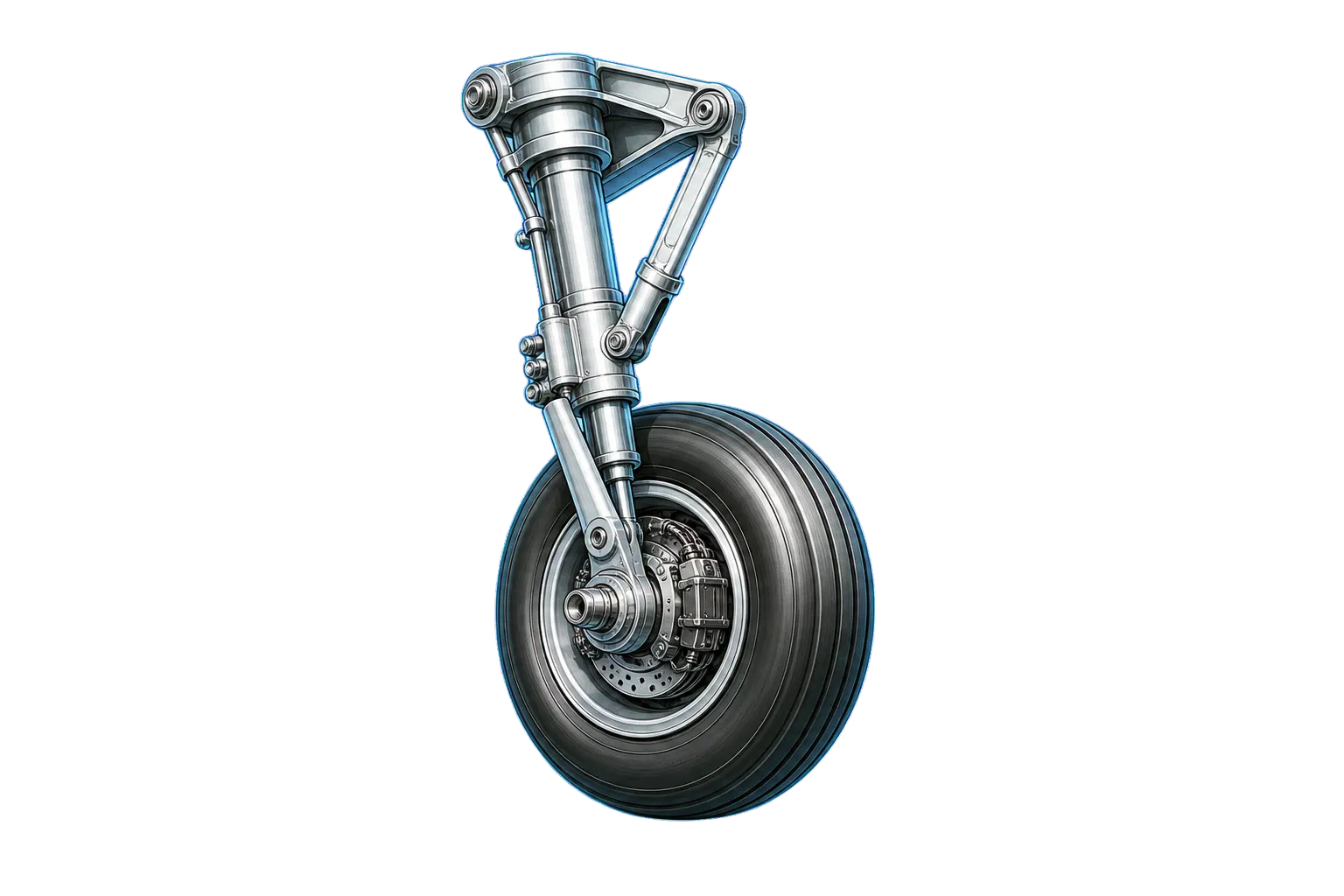
Failure of the pivot pin retention bolt could result in a loss of directional control or loss of a nose landing gear (NLG) tire during takeoff or landing, which could lead to runway excursions.
AI-generated summary from the source AD text. Verify against the official source before acting.
Required Actions
Repetitive lubrications of the trailing arm of the NLG, including a general visual inspection of the NLG pivot pin mechanism for discrepancies and replacement of missing or damaged bolts. Revising the existing maintenance or inspection program to include new and revised airworthiness limitations (life limits for certain bolts).
AI-generated summary from the source AD text. Verify against the official source before acting.
Compliance Time
Within 50 flight hours
AI-generated summary from the source AD text. Verify against the official source before acting.
Affected Aircraft
De Havilland Aircraft of Canada Limited Model DHC-8-401 and -402 airplanes, serial numbers 4001 and above.
AI-generated summary from the source AD text. Verify against the official source before acting.
Federal Register Abstract
The FAA is superseding Airworthiness Directive (AD) 2017-19- 09, which applied to certain De Havilland Aircraft of Canada Limited (Type Certificate Previously Held by Bombardier, Inc.) Model DHC-8-400 series airplanes. AD 2017-19-09 required modifying the nose landing gear (NLG) shock strut assembly. This new AD requires repetitive lubrications of the trailing arm of the NLG. This new AD also requires revising the existing maintenance or inspection program to include new and revised airworthiness limitations (life limits for certain bolts). This AD was prompted by reports of a certain bolt being found missing or having stress corrosion cracking. The FAA is issuing this AD to address the unsafe condition on these products.
Applicability Source Text
Show captured applicability text from the source AD
(c) Applicability

    This AD applies to De Havilland Aircraft of Canada Limited Model
DHC-8-401 and -402 airplanes, certificated in any category, serial
numbers 4001 and 4003 and subsequent.
Document Text
Show stored source text (verify against official source)
72174 Federal Register / Vol. 86, No. 242 / Tuesday, December 21, 2021 / Rules and Regulations (e) Unsafe Condition This AD was prompted by the determination that fatigue cracking may occur at the left-hand and right-hand wing manhole access panel attachment holes in the bottom wing skin panels 2, between rib 13 and rib 23, on airplanes with Sharklets or its structural reinforcements installed. The FAA is issuing this AD to address this condition, which could lead to crack propagation, possibly resulting in reduced structural integrity of the wings. (f) Compliance Comply with this AD within the compliance times specified, unless already done. (g) Requirements Except as specified in paragraph (h) of this AD: Comply with all required actions and compliance times specified in, and in accordance with, European Union Aviation Safety Agency (EASA) AD 2021–0256, dated November 16, 2021 (EASA AD 2021–0256). (h) Exceptions to EASA AD 2021–0256 (1) Where EASA AD 2021–0256 refers to its effective date, this AD requires using the effective date of this AD. (2) Where paragraph (1) of EASA AD 2021– 0256 requires ‘‘a DET [detailed visual inspection] of the affected areas,’’ this AD requires a detailed visual inspection to detect discrepancies (cracking) of the affected areas. (3) Where paragraph (2) of EASA AD 2021– 0256 specifies to ‘‘contact Airbus for approved instructions and . . . accomplish [the specified] instructions accordingly’’ if discrepancies are detected, for this AD if any cracking is detected, the cracking must be repaired before further flight using a method approved by the Manager, Large Aircraft Section, International Validation Branch, FAA; or EASA; or Airbus SAS’s EASA Design Organization Approval (DOA). If approved by the DOA, the approval must include the DOA-authorized signature. (4) Paragraph (3) of EASA AD 2021–0256 specifies to report inspection results to Airbus within a certain compliance time. For this AD, report inspection results at the applicable time specified in paragraph (h)(4)(i) or (ii) of this AD. (i) If the inspection was done on or after the effective date of this AD: Submit the report within 30 days after the inspection. (ii) If the inspection was done before the effective date of this AD: Submit the report within 30 days after the effective date of this AD. (5) The ‘‘Remarks’’ section of EASA AD 2021–0256 does not apply to this AD. (i) Additional AD Provisions The following provisions also apply to this AD: (1) Alternative Methods of Compliance (AMOCs): The Manager, Large Aircraft Section, International Validation Branch, FAA, has the authority to approve AMOCs for this AD, if requested using the procedures found in 14 CFR 39.19. In accordance with 14 CFR 39.19, send your request to your principal inspector or responsible Flight Standards Office, as appropriate. If sending information directly to the Large Aircraft Section, International Validation Branch, send it to the attention of the person identified in paragraph (j) of this AD. Information may be emailed to: 9-AVS-AIR- 730-AMOC@faa.gov. Before using any approved AMOC, notify your appropriate principal inspector, or lacking a principal inspector, the manager of the responsible Flight Standards Office. (2) Contacting the Manufacturer: For any requirement in this AD to obtain instructions from a manufacturer, the instructions must be accomplished using a method approved by the Manager, Large Aircraft Section, International Validation Branch, FAA; or EASA; or Airbus SAS’s EASA Design Organization Approval (DOA). If approved by the DOA, the approval must include the DOA-authorized signature. (3) Required for Compliance (RC): Except as required by paragraph (i)(2) of this AD, if any service information referenced in EASA AD 2021–0256 that contains paragraphs that are labeled as RC, the instructions in RC paragraphs, including subparagraphs under an RC paragraph, must be done to comply with this AD; any paragraphs, including subparagraphs under those paragraphs, that are not identified as RC are recommended. The instructions in paragraphs, including subparagraphs under those paragraphs, not identified as RC may be deviated from using accepted methods in accordance with the operator’s maintenance or inspection program without obtaining approval of an AMOC, provided the instructions identified as RC can be done and the airplane can be put back in an airworthy condition. Any substitutions or changes to instructions identified as RC require approval of an AMOC. (j) Related Information For more information about this AD, contact Sanjay Ralhan, Aerospace Engineer, Large Aircraft Section, FAA, International Validation Branch, 2200 South 216th St., Des Moines, WA 98198; telephone and fax 206– 231–3223; email Sanjay.Ralhan@faa.gov. (k) Material Incorporated by Reference (1) The Director of the Federal Register approved the incorporation by reference of the service information listed in this paragraph under 5 U.S.C. 552(a) and 1 CFR part 51. (2) You must use this service information as applicable to do the actions required by this AD, unless this AD specifies otherwise. (i) European Union Aviation Safety Agency (EASA) AD 2021–0256, dated November 16, 2021. (ii) [Reserved] (3) For EASA AD 2021–0256, contact EASA, Konrad-Adenauer-Ufer 3, 50668 Cologne, Germany; telephone +49 221 8999 000; email ADs@easa.europa.eu; Internet www.easa.europa.eu. You may find this EASA AD on the EASA website at https:// ad.easa.europa.eu. (4) You may view this material at the FAA, Airworthiness Products Section, Operational Safety Branch, 2200 South 216th St., Des Moines, WA. For information on the availability of this material at the FAA, call 206–231–3195. (5) You may view this material that is incorporated by reference at the National Archives and Records Administration (NARA). For information on the availability of this material at NARA, email fr.inspection@nara.gov, or go to https:// www.archives.gov/federal-register/cfr/ibr- locations.html. Issued on December 3, 2021. Lance T. Gant, Director, Compliance & Airworthiness Division, Aircraft Certification Service. [FR Doc. 2021–27707 Filed 12–17–21; 11:15 am] BILLING CODE 4910–13–P DEPARTMENT OF TRANSPORTATION Federal Aviation Administration 14 CFR Part 39 [Docket No. FAA–2021–1064; Project Identifier MCAI–2021–01028–T; Amendment 39–21856; AD 2021–25–12] RIN 2120–AA64 Airworthiness Directives; De Havilland Aircraft of Canada Limited (Type Certificate Previously Held by Bombardier, Inc.) Airplanes AGENCY : Federal Aviation Administration (FAA), Department of Transportation (DOT). ACTION : Final rule; request for comments. SUMMARY : The FAA is superseding Airworthiness Directive (AD) 2017–19– 09, which applied to certain De Havilland Aircraft of Canada Limited (Type Certificate Previously Held by Bombardier, Inc.) Model DHC–8–400 series airplanes. AD 2017–19–09 required modifying the nose landing gear (NLG) shock strut assembly. This new AD requires repetitive lubrications of the trailing arm of the NLG. This new AD also requires revising the existing maintenance or inspection program to include new and revised airworthiness limitations (life limits for certain bolts). This AD was prompted by reports of a certain bolt being found missing or having stress corrosion cracking. The FAA is issuing this AD to address the unsafe condition on these products. DATES : This AD is effective January 5, 2022. The Director of the Federal Register approved the incorporation by reference of certain publications listed in this AD as of January 5, 2022. The FAA must receive comments on this AD by February 4, 2022. ADDRESSES : You may send comments, using the procedures found in 14 CFR 11.43 and 11.45, by any of the following methods: VerDate Sep<11>2014 17:14 Dec 20, 2021 Jkt 256001 PO 00000 Frm 00030 Fmt 4700 Sfmt 4700 E:\FR\FM\21DER1.SGM 21DER1 jspears on DSK121TN23PROD with RULES1

72175 Federal Register / Vol. 86, No. 242 / Tuesday, December 21, 2021 / Rules and Regulations • Federal eRulemaking Portal: Go to https://www.regulations.gov . Follow the instructions for submitting comments. • Fax: 202–493–2251. • Mail: U.S. Department of Transportation, Docket Operations, M– 30, West Building Ground Floor, Room W12–140, 1200 New Jersey Avenue SE, Washington, DC 20590. • Hand Delivery: U.S. Department of Transportation, Docket Operations, M– 30, West Building Ground Floor, Room W12–140, 1200 New Jersey Avenue SE, Washington, DC, between 9 a.m. and 5 p.m., Monday through Friday, except Federal holidays. For service information identified in this final rule, contact De Havilland Aircraft of Canada Limited, Q-Series Technical Help Desk, 123 Garratt Boulevard, Toronto, Ontario M3K 1Y5, Canada; telephone 416–375–4000; fax 416–375–4539; email thd@ dehavilland.com ; internet https:// dehavilland.com . You may view this referenced service information at the FAA, Airworthiness Products Section, Operational Safety Branch, 2200 South 216th St., Des Moines, WA. For information on the availability of this material at the FAA, call 206–231–3195. It is also available on the internet at https://www.regulations.gov by searching for and locating Docket No. FAA–2021–1064. Examining the AD Docket You may examine the AD docket on the internet at https:// www.regulations.gov by searching for and locating Docket No. FAA–2021– 1064; or in person at the Docket Management Facility between 9 a.m. and 5 p.m., Monday through Friday, except Federal holidays. The AD docket contains this AD, any comments received, and other information. The street address for the Docket Operations office is listed above. Comments will be available in the AD docket shortly after receipt. FOR FURTHER INFORMATION CONTACT : Antariksh Shetty, Aerospace Engineer, Airframe and Propulsion Section, FAA, New York ACO Branch, 1600 Stewart Avenue, Suite 410, Westbury, NY 11590; telephone 516–228–7300; fax 516–794–5531; email 9-avs-nyaco-cos@ faa.gov . SUPPLEMENTARY INFORMATION : Discussion The FAA issued AD 2017–19–09, Amendment 39–19039 (82 FR 43829, September 20, 2017) (AD 2017–19–09), which applied to certain De Havilland Aircraft of Canada Limited (Type Certificate Previously Held by Bombardier, Inc.) Model DHC–8–400, –401, and –402 airplanes. AD 2017–19– 09 was prompted by reports of discrepancies of a certain bolt at the pivot pin link, resulting in corrosion of the bolt. AD 2017–19–09 required modifying the NLG shock strut assembly. The FAA issued AD 2017– 19–09 to address failure of the pivot pin retention bolt, which could result in a loss of directional control or loss of an NLG tire during takeoff or landing. Actions Since AD 2017–19–09 Was Issued Since the FAA issued AD 2017–19– 09, the FAA has determined new actions are necessary to address the unsafe condition. New bolts that have been installed must be repetitively lubricated and replaced before reaching their life limit. Failure of the pivot pin retention bolt could result in loss of directional control or loss of a NLG tire during takeoff or landing, which could lead to runway excursions. The actions required by AD 2017–19–09 are not retained in this AD. Transport Canada Civil Aviation (TCCA), which is the aviation authority for Canada, has issued TCCA AD CF– 2009–29R4, dated October 1, 2021 (TCCA AD CF–2009–29R4) (also referred to after this as the Mandatory Continuing Airworthiness Information, or the MCAI), to correct an unsafe condition for certain De Havilland Aircraft of Canada Limited Model DHC– 8–401 and –402 airplanes. You may examine the MCAI in the AD docket on the internet at https:// www.regulations.gov by searching for and locating Docket No. FAA–2021– 1064. This AD was prompted by reports of a certain bolt at the pivot pin link being found missing or having stress corrosion cracking. The FAA is issuing this AD to address failure of the pivot pin retention bolt, which could result in a loss of directional control or loss of an NLG tire during takeoff or landing. See the MCAI for additional background information. Related Service Information Under 1 CFR Part 51 De Havilland Aircraft of Canada Limited has issued Service Bulletin 84– 32–167, dated August 12, 2021. This service information describes procedures for repetitive lubrications of the trailing arm of the NLG, which include a general visual inspection of the NLG pivot pin mechanism for discrepancies ( i.e., bolt part number (P/N) NAS602–14D is missing or has damage ( e.g., stress corrosion or stress corrosion cracking)) and replacement of missing or damaged bolts. De Havilland Aircraft of Canada Limited has also issued Temporary Revision ALI–0223, dated October 15, 2020. This service information describes new and revised airworthiness limitations, including life limits for certain bolts as specified in Structures Safe Life Task 32–21–01–701 and Task 32–21–01–702. This service information is reasonably available because the interested parties have access to it through their normal course of business or by the means identified in the ADDRESSES section. FAA’s Determination This product has been approved by the aviation authority of another country, and is approved for operation in the United States. Pursuant to the FAA’s bilateral agreement with the State of Design Authority, the FAA has been notified of the unsafe condition described in the MCAI and service information referenced above. The FAA is issuing this AD because the FAA evaluated all pertinent information and determined the unsafe condition exists and is likely to exist or develop on other products of the same type design. Requirements of This AD This AD requires accomplishing the actions described previously for De Havilland Aircraft of Canada Limited Service Bulletin 84–32–167, dated August 12, 2021. This AD also requires revising the existing maintenance or inspection program to include new and revised airworthiness limitations (life limits for certain bolts). Differences Between This AD and the MCAI or Service Information Part I of TCCA AD CF–2009–29R4 requires a modification to the NLG shock strut assembly within 1,600 flight cycles or 9 months for certain airplanes. The FAA is currently considering requiring the modification in order to address the identified unsafe condition. However, the planned compliance time for the installation of the modification would allow enough time to provide notice and opportunity for prior public comment on the merits of the modification. Therefore, this AD does not include the modification. Part III of TCCA AD CF 2009–29R4 applies to all airplanes but specifies to do the actions using De Havilland Aircraft of Canada Service Bulletin 84– 32–167, dated August 12, 2021. The service information only has instructions for pivot pin retention bolt P/N NAS6204–14D. Therefore, the repetitive lubrications specified in (i) of this AD is for airplanes with pivot pin VerDate Sep<11>2014 17:14 Dec 20, 2021 Jkt 256001 PO 00000 Frm 00031 Fmt 4700 Sfmt 4700 E:\FR\FM\21DER1.SGM 21DER1 jspears on DSK121TN23PROD with RULES1

72176 Federal Register / Vol. 86, No. 242 / Tuesday, December 21, 2021 / Rules and Regulations retention bolt P/N NAS6204–14D installed on the NLG assembly. Explanation of Change to the Applicability AD 2017–19–09 did not include serial number (S/N) 4002 in its applicability but it did identify Model DHC–8–400 airplanes in the applicability. However, the only Model DHC–8–400 airplane is S/N 4002, making the reference to Model DHC–8–400 unnecessary. In addition, the Model DHC–8–400 airplane is not included in TCCA AD CF–2009–29R4. Therefore, this AD does not apply to the Model DHC–8–400 airplane. In addition, the FAA has revised the applicability of this AD to identify model designations as published in the most recent type certificate data sheet for the affected models. FAA’s Justification and Determination of the Effective Date An unsafe condition exists that requires the immediate adoption of this AD without providing an opportunity for public comments prior to adoption. The FAA has found that the risk to the flying public justifies waiving notice and comment prior to adoption of this rule because failure of the pivot pin retention bolt could result in a loss of directional control or loss of a NLG tire during takeoff or landing, which could lead to runway excursions. In addition, the compliance time for the required action is shorter than the time necessary for the public to comment and for publication of the final rule. Therefore, the FAA finds good cause that notice and opportunity for prior public comment are impracticable. In addition, for the reasons stated above, the FAA finds that good cause exists for making this amendment effective in less than 30 days. Comments Invited The FAA invites you to send any written relevant data, views, or arguments about this AD. Send your comments to an address listed under ADDRESSES . Include ‘‘Docket No. FAA– 2021–1064; Project Identifier MCAI– 2021–01028–T’’ at the beginning of your comments. The most helpful comments reference a specific portion of the final rule, explain the reason for any recommended change, and include supporting data. The FAA will consider all comments received by the closing date and may amend this final rule because of those comments. Except for Confidential Business Information (CBI) as described in the following paragraph, and other information as described in 14 CFR 11.35, the FAA will post all comments received, without change, to https:// www.regulations.gov, including any personal information you provide. The agency will also post a report summarizing each substantive verbal contact received about this final rule. Confidential Business Information CBI is commercial or financial information that is both customarily and actually treated as private by its owner. Under the Freedom of Information Act (FOIA) (5 U.S.C. 552), CBI is exempt from public disclosure. If your comments responsive to this AD contain commercial or financial information that is customarily treated as private, that you actually treat as private, and that is relevant or responsive to this AD, it is important that you clearly designate the submitted comments as CBI. Please mark each page of your submission containing CBI as ‘‘PROPIN.’’ The FAA will treat such marked submissions as confidential under the FOIA, and they will not be placed in the public docket of this AD. Submissions containing CBI should be sent to Antariksh Shetty, Aerospace Engineer, Airframe and Propulsion Section, FAA, New York ACO Branch, 1600 Stewart Avenue, Suite 410, Westbury, NY 11590; telephone 516–228–7300; fax 516–794– 5531; email 9-avs-nyaco-cos@faa.gov . Any commentary that the FAA receives which is not specifically designated as CBI will be placed in the public docket for this rulemaking. Interim Action The FAA considers this AD interim action. The FAA is currently considering requiring the modification to the NLG shock strut assembly specified in Part I of TCCA AD CF– 2009–29R4. Regulatory Flexibility Act (RFA) The requirements of the RFA do not apply when an agency finds good cause pursuant to 5 U.S.C. 553 to adopt a rule without prior notice and comment. Because the FAA has determined that it has good cause to adopt this rule without notice and comment, RFA analysis is not required. Costs of Compliance The FAA estimates that this AD affects 54 airplanes of U.S. registry. The FAA estimates the following costs to comply with this AD: E STIMATED C OSTS FOR R EQUIRED A CTIONS Action Labor cost Parts cost Cost per product Cost on U.S. operators New actions ...................................................... 1 work-hour × $85 per hour = $85 .................. Negligible ... $85 $4,590 * Table does not include estimated costs for revising the maintenance or inspection program. The FAA has determined that revising the maintenance or inspection program takes an average of 90 work-hours per operator, although the FAA recognizes that this number may vary from operator to operator. In the past, the FAA has estimated that this action takes 1 work- hour per airplane. Since operators incorporate maintenance or inspection program changes for their affected fleet(s), the FAA has determined that a per-operator estimate is more accurate than a per-airplane estimate. Therefore, the FAA estimates the total cost per operator to be $7,650 (90 work-hours × $85 per work-hour). The FAA estimates the following costs to do any necessary on-condition actions that would be required based on the results of any required actions. The FAA has no way of determining the number of aircraft that might need these on-condition actions: E STIMATED C OSTS OF O N -C ONDITION A CTIONS Labor cost Parts cost Cost per product 2 work-hours × $85 per hour = $170 ...................................................................................................................... $8 $178 VerDate Sep<11>2014 17:14 Dec 20, 2021 Jkt 256001 PO 00000 Frm 00032 Fmt 4700 Sfmt 4700 E:\FR\FM\21DER1.SGM 21DER1 jspears on DSK121TN23PROD with RULES1

72177 Federal Register / Vol. 86, No. 242 / Tuesday, December 21, 2021 / Rules and Regulations Authority for This Rulemaking Title 49 of the United States Code specifies the FAA’s authority to issue rules on aviation safety. Subtitle I, section 106, describes the authority of the FAA Administrator. Subtitle VII: Aviation Programs, describes in more detail the scope of the Agency’s authority. The FAA is issuing this rulemaking under the authority described in Subtitle VII, Part A, Subpart III, Section 44701: General requirements. Under that section, Congress charges the FAA with promoting safe flight of civil aircraft in air commerce by prescribing regulations for practices, methods, and procedures the Administrator finds necessary for safety in air commerce. This regulation is within the scope of that authority because it addresses an unsafe condition that is likely to exist or develop on products identified in this rulemaking action. Regulatory Findings The FAA determined that this AD will not have federalism implications under Executive Order 13132. This AD will not have a substantial direct effect on the States, on the relationship between the national government and the States, or on the distribution of power and responsibilities among the various levels of government. For the reasons discussed above, I certify that this AD: (1) Is not a ‘‘significant regulatory action’’ under Executive Order 12866, and (2) Will not affect intrastate aviation in Alaska. List of Subjects in 14 CFR Part 39 Air transportation, Aircraft, Aviation safety, Incorporation by reference, Safety. Adoption of the Amendment Accordingly, under the authority delegated to me by the Administrator, the FAA amends 14 CFR part 39 as follows: PART 39—AIRWORTHINESS DIRECTIVES ■ 1. The authority citation for part 39 continues to read as follows: Authority: 49 U.S.C. 106(g), 40113, 44701. § 39.13 [Amended] ■ 2. The FAA amends § 39.13 by: ■ a. Removing Airworthiness Directive (AD) 2017–19–09, Amendment 39– 19039 (82 FR 43829, September 20, 2017); and ■ b. Adding the following new AD: 2021–25–12 De Havilland Aircraft of Canada Limited (Type Certificate Previously Held by Bombardier, Inc.): Amendment 39–21856; Docket No. FAA–2021–1064; Project Identifier MCAI–2021–01028–T. (a) Effective Date This airworthiness directive (AD) is effective January 5, 2022. (b) Affected ADs This AD replaces AD 2017–19–09, Amendment 39–19039 (82 FR 43829, September 20, 2017) (AD 2017–19–09). (c) Applicability This AD applies to De Havilland Aircraft of Canada Limited Model DHC–8–401 and –402 airplanes, certificated in any category, serial numbers 4001 and 4003 and subsequent. (d) Subject Air Transport Association (ATA) of America Code 32, Landing gear. (e) Reason This AD was prompted by reports of a certain bolt at the pivot pin link being found missing or having stress corrosion cracking. The FAA is issuing this AD to address failure of the pivot pin retention bolt, which could result in a loss of directional control or loss of a nose landing gear (NLG) tire during takeoff or landing, which could lead to runway excursions. (f) Compliance Comply with this AD within the compliance times specified, unless already done. (g) Maintenance or Inspection Program Revision For airplanes with pivot pin retention bolt part number (P/N) NAS6204–14D installed on the NLG assembly: Within 30 days after the effective date of this AD, or within 30 days after installation of pivot pin retention bolt part number P/N NAS6204–14D, whichever occurs later, revise the existing maintenance or inspection program, as applicable, to incorporate the information for Structures Safe Life Task 32–21–01–701 and Task 32–21–01–702, as specified in De Havilland Aircraft of Canada Limited Temporary Revision ALI–0223, dated October 15, 2020. The initial compliance time for doing the tasks is at the applicable time specified in De Havilland Aircraft of Canada Limited Temporary Revision ALI– 0223, dated October 15, 2020, or within 30 days after the effective date of this AD, whichever occurs later; except, if replacement of bolt P/N NAS6204–14D was performed before the effective date of this AD as specified in De Havilland Aircraft of Canada Service Bulletin 84–32–161, the initial compliance time for Task 32–21–01– 702 (bolt P/N NAS6204–14D replacement) is within 3 months after the effective date of this AD or within 800 flight cycles after performing the replacement, whichever occurs later. (h) No Alternative Actions or Intervals After the existing maintenance or inspection program has been revised as required by paragraph (g) of this AD, no alternative actions ( e.g., replacements) or intervals may be used unless the actions and intervals are approved as an alternative method of compliance (AMOC) in accordance with the procedures specified in paragraph (j)(1) of this AD. (i) Repetitive Lubrications For airplanes with pivot pin retention bolt P/N NAS6204–14D installed on the NLG assembly: Within 30 days or 400 flight cycles, whichever occurs first after the effective date of this AD, and thereafter at intervals not exceeding 400 flight cycles, lubricate the trailing arm of the NLG, including doing a general visual inspection of the NLG pivot pin mechanism for discrepancies ( i.e., bolt P/N NAS602–14D is missing or has damage ( e.g., stress corrosion or stress corrosion cracking)) and, as applicable, replacing the bolt before further flight, in accordance with paragraph 3.B. of the Accomplishment Instructions of De Havilland Aircraft of Canada Limited Service Bulletin 84–32–167, dated August 12, 2021. (j) Other FAA AD Provisions The following provisions also apply to this AD: (1) Alternative Methods of Compliance (AMOCs): The Manager, New York ACO Branch, FAA, has the authority to approve AMOCs for this AD, if requested using the procedures found in 14 CFR 39.19. In accordance with 14 CFR 39.19, send your request to your principal inspector or responsible Flight Standards Office, as appropriate. If sending information directly to the manager of the certification office, send it to ATTN: Program Manager, Continuing Operational Safety, FAA, New York ACO Branch, 1600 Stewart Avenue, Suite 410, Westbury, NY 11590; telephone 516–228–7300; fax 516–794–5531. Before using any approved AMOC, notify your appropriate principal inspector, or lacking a principal inspector, the manager of the responsible Flight Standards Office. (2) Contacting the Manufacturer: For any requirement in this AD to obtain instructions from a manufacturer, the instructions must be accomplished using a method approved by the Manager, New York ACO Branch, FAA; or Transport Canada Civil Aviation (TCCA); or De Havilland Aircraft of Canada Limited’s TCCA Design Approval Organization (DAO). If approved by the DAO, the approval must include the DAO- authorized signature. (k) Related Information (1) Refer to Mandatory Continuing Airworthiness Information (MCAI) TCCA AD CF–2009–29R4, dated October 1, 2021, for related information. This MCAI may be found in the AD docket on the internet at https://www.regulations.gov by searching for and locating Docket No. FAA–2021–1064. (2) For more information about this AD, contact Antariksh Shetty, Aerospace Engineer, Airframe and Propulsion Section, FAA, New York ACO Branch, 1600 Stewart VerDate Sep<11>2014 17:14 Dec 20, 2021 Jkt 256001 PO 00000 Frm 00033 Fmt 4700 Sfmt 4700 E:\FR\FM\21DER1.SGM 21DER1 jspears on DSK121TN23PROD with RULES1

72178 Federal Register / Vol. 86, No. 242 / Tuesday, December 21, 2021 / Rules and Regulations Avenue, Suite 410, Westbury, NY 11590; telephone 516–228–7300; fax 516–794–5531; email 9-avs-nyaco-cos@faa.gov . (l) Material Incorporated by Reference (1) The Director of the Federal Register approved the incorporation by reference (IBR) of the service information listed in this paragraph under 5 U.S.C. 552(a) and 1 CFR part 51. (2) You must use this service information as applicable to do the actions required by this AD, unless this AD specifies otherwise. (i) De Havilland Aircraft of Canada Limited Service Bulletin 84–32–167, dated August 12, 2021. (ii) De Havilland Aircraft of Canada Limited Temporary Revision ALI–0223, dated October 15, 2020. (3) For service information identified in this AD, contact De Havilland Aircraft of Canada Limited, Q-Series Technical Help Desk, 123 Garratt Boulevard, Toronto, Ontario M3K 1Y5, Canada; telephone 416– 375–4000; fax 416–375–4539; email thd@ dehavilland.com ; internet https:// dehavilland.com . (4) You may view this service information at the FAA, Airworthiness Products Section, Operational Safety Branch, 2200 South 216th St., Des Moines, WA. For information on the availability of this material at the FAA, call 206–231–3195. (5) You may view this service information that is incorporated by reference at the National Archives and Records Administration (NARA). For information on the availability of this material at NARA, email fr.inspection@nara.gov, or go to: https://www.archives.gov/federal-register/cfr/ ibr-locations.html . Issued on December 3, 2021. Lance T. Gant, Director, Compliance & Airworthiness Division, Aircraft Certification Service. [FR Doc. 2021–27709 Filed 12–17–21; 11:15 am] BILLING CODE 4910–13–P DEPARTMENT OF TRANSPORTATION Federal Aviation Administration 14 CFR Part 39 [Docket No. FAA–2021–0869; Project Identifier AD–2021–00176–E; Amendment 39–21878; AD 2021–26–19] RIN 2120–AA64 Airworthiness Directives; General Electric Company Turbofan Engines AGENCY : Federal Aviation Administration (FAA), DOT. ACTION : Final rule. SUMMARY : The FAA is adopting a new airworthiness directive (AD) for certain General Electric Company (GE) CF34– 8C and CF34–8E model turbofan engines. This AD was prompted by a report of a quality escape during the manufacturing of a high-pressure turbine (HPT) rotor stage 1 disk. This AD requires removing the HPT rotor stage 1 disk from service and replacing the HPT rotor stage 1 disk with a part eligible for installation. The FAA is issuing this AD to address the unsafe condition on these products. DATES : This AD is effective January 25, 2022. ADDRESSES : For service information identified in this final rule, contact General Electric Company, 1 Neumann Way, Cincinnati, OH 45215; phone: (513) 552–3272; email: aviation.fleetsupport@ge.com; website: https://www.ge.com. You may view this service information at the FAA, Airworthiness Products Section, Operational Safety Branch, 1200 District Avenue, Burlington, MA 01803. For information on the availability of this material at the FAA, call (817) 222– 5110. It is also available at https:// www.regulations.gov by searching for and locating Docket No. FAA–2021– 0869. Examining the AD Docket You may examine the AD docket at https://www.regulations.gov by searching for and locating Docket No. FAA–2021–0869; or in person at Docket Operations between 9 a.m. and 5 p.m., Monday through Friday, except Federal holidays. The AD docket contains this final rule, any comments received, and other information. The address for Docket Operations U.S. Department of Transportation, Docket Operations, M– 30, West Building, Ground Floor, Room W12–140, 1200 New Jersey Avenue SE, Washington, DC 20590. FOR FURTHER INFORMATION CONTACT : Scott Stevenson, Aviation Safety Engineer, ECO Branch, FAA, 1200 District Avenue, Burlington, MA 01803; phone: (781) 238–7132; fax: (781) 238– 7199; email: Scott.M.Stevenson@faa.gov. SUPPLEMENTARY INFORMATION : Background The FAA issued a notice of proposed rulemaking (NPRM) to amend 14 CFR part 39 by adding an AD that would apply to certain GE CF34–8C5, CF34– 8C5B1, CF34–8E2, CF34–8E2A1, CF34– 8E5, CF34–8E5A1, CF34–8E5A2, CF34– 8E6, and CF34–8E6A1 model turbofan engines. The NPRM published in the Federal Register on October 8, 2021 (86 FR 56217). The NPRM was prompted by GE notifying the FAA of a quality escape that occurred during the manufacturing of an HPT rotor stage 1 disk. The quality escape occurred at a supplier that began production in August 2019. On November 25, 2019, the supplier discovered tool gouges at the forward chamfer on the air holes of an HPT rotor stage 1 disk. These gouges may reduce the life of the HPT rotor stage 1 disk. In the NPRM, the FAA proposed to require removing a certain HPT rotor stage 1 disk from service and replacing the HPT rotor stage 1 disk with a part eligible for installation. The FAA is issuing this AD to address the unsafe condition on these products. Discussion of Final Airworthiness Directive Comments The FAA received a comment from one commenter, the Air Line Pilots Association (ALPA). ALPA supported the NPRM without change. Conclusion The FAA reviewed the relevant data, considered the comment received, and determined that air safety requires adopting the AD as proposed. Accordingly, the FAA is issuing this AD to address the unsafe condition on these products. This AD is adopted as proposed in the NPRM. Related Service Information The FAA reviewed GE CF34–8C Alert Service Bulletin (ASB) 72–A0344 R01 and GE CF34–8E ASB 72–A0228 R01, both dated December 19, 2019. The ASBs describe procedures for removing the HPT rotor stage 1 disk. The FAA also reviewed GE Repair Document RD #150–1811–P1, dated March 17, 2020. This document describes procedures for repairing the HPT rotor stage 1 disk. Costs of Compliance The FAA estimates that this AD affects 23 engines installed on airplanes of U.S. registry. The FAA estimates the following costs to comply with this AD: VerDate Sep<11>2014 17:14 Dec 20, 2021 Jkt 256001 PO 00000 Frm 00034 Fmt 4700 Sfmt 4700 E:\FR\FM\21DER1.SGM 21DER1 jspears on DSK121TN23PROD with RULES1
Source: Official FAA Source ↗
Retrieved: Apr 4, 2026
Rights: U.S. Government Public Domain
This site is not affiliated with or endorsed by the FAA. Always verify with official sources.
Related Airworthiness Directives
2019-15-09 Recurring
final ruleAirworthiness Directives; Bombardier, Inc., Airplanes
Unsafe Condition: cracking of the outboard spoiler actuator mounting brackets, which could cause inoperability or jam of a single spoiler panel and possible jam of the aileron circuit.
2018-22-03
final ruleAirworthiness Directives; Bombardier, Inc., Airplanes
Unsafe Condition: Cracked and corroded barrel nuts, part number DSC228-12, at the mid-spar location of the horizontal-stabilizer-to-vertical-stabilizer attachment joint due to inadequate cadmium plating, which could...
2018-20-18
final ruleAirworthiness Directives; Bombardier, Inc., Airplanes
Unsafe Condition: Faulty switches in the power lever module could result in uncommanded deployment of the ground spoilers and a possible runway excursion.
2018-17-17
final ruleAirworthiness Directives; Bombardier, Inc., Airplanes
Unsafe Condition: Loose windshield heater terminal lugs could create sparks that lead to burning of the lugs and, due to the excessive heat, cracking of the windshields. If not corrected, such a condition could caus...