AD 2020-23-02
Applicability
| Type | Manufacturer | Model | Details |
|---|---|---|---|
| aircraft | Airbus | EC225LP | Airworthiness Directives; Airbus Helicopters |
| aircraft | Aviat | Various | Airworthiness Directives; Airbus Helicopters |
Unsafe Condition
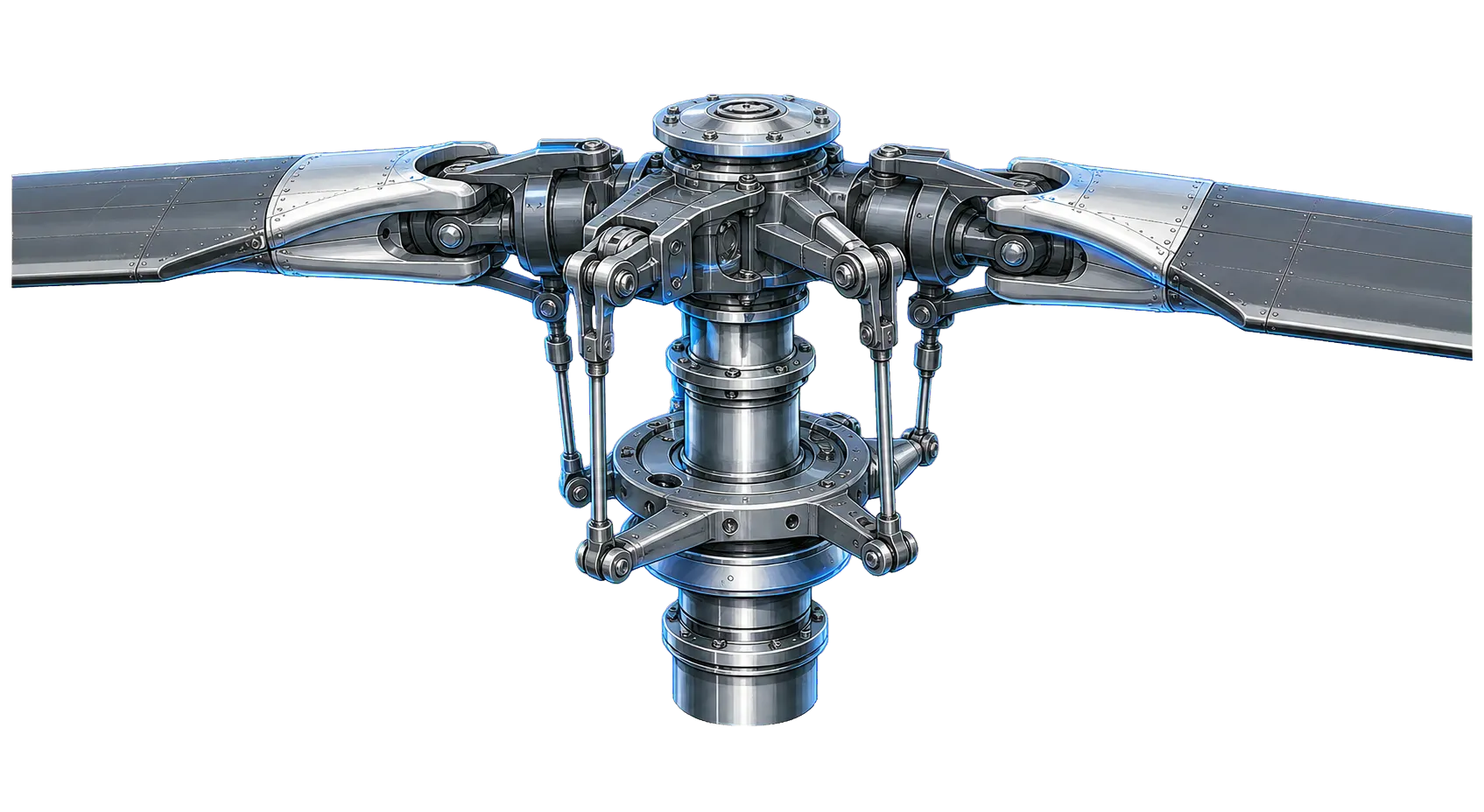
defective ceramic balls in the bearing installed in the swashplate assembly of the main rotor mast assembly could lead to premature spalling of the ball itself and of the bearing, loss of function of the bearing, and overload of the main rotor mast scissor, resulting in reduced control of the helicopter.
AI-generated summary from the source AD text. Verify against the official source before acting.
Required Actions
accomplish the actions specified in EASA AD 2020-0079, which includes repetitive inspections of the main rotor mast swashplate assembly for discrepancies (ceramic balls that have a hard point or sensitive axial play or both), and replacement of an affected main rotor mast assembly with a serviceable main rotor mast assembly.
AI-generated summary from the source AD text. Verify against the official source before acting.
Compliance Time
Before further flight
AI-generated summary from the source AD text. Verify against the official source before acting.
Affected Aircraft
all Airbus Helicopters Model EC225LP helicopters
AI-generated summary from the source AD text. Verify against the official source before acting.
Federal Register Abstract
The FAA is adopting a new airworthiness directive (AD) for all Airbus Helicopters Model EC225LP helicopters. This AD was prompted by a report of a manufacturing and control issue regarding the ceramic balls in the bearing installed in the swashplate assembly of the main rotor mast assembly. This AD requires repetitive inspections of the bearing in the swashplate assembly of the main rotor mast assembly for discrepancies (ceramic balls that have a hard point or sensitive axial play or both) and, depending on the findings, replacement of an affected main rotor mast assembly with a serviceable main rotor mast assembly, as specified in a European Union Aviation Safety Agency (EASA) AD, which is incorporated by reference. The FAA is issuing this AD to address the unsafe condition on these products.
Applicability Source Text
Show captured applicability text from the source AD
(c) Applicability

    This AD applies to Airbus Helicopters Model EC225LP helicopters,
certificated in any category, all manufacturer serial numbers.
Document Text
Show stored source text (verify against official source)
[Federal Register Volume 85, Number 224 (Thursday, November 19, 2020)]
[Rules and Regulations]
[Pages 73607-73610]
From the Federal Register Online via the Government Publishing Office [<a href="http://www.gpo.gov">www.gpo.gov</a>]
[FR Doc No: 2020-25466]
-----------------------------------------------------------------------
DEPARTMENT OF TRANSPORTATION
Federal Aviation Administration
14 CFR Part 39
[Docket No. FAA-2020-0978; Project Identifier MCAI-2020-00459-R;
Amendment 39-21318; AD 2020-23-02]
RIN 2120-AA64
Airworthiness Directives; Airbus Helicopters
AGENCY: Federal Aviation Administration (FAA), DOT.
ACTION: Final rule; request for comments.
-----------------------------------------------------------------------
SUMMARY: The FAA is adopting a new airworthiness directive (AD) for all
Airbus Helicopters Model EC225LP helicopters. This AD was prompted by a
report of a manufacturing and control issue regarding the ceramic balls
in the bearing installed in the swashplate assembly of the main rotor
mast assembly. This AD requires repetitive inspections of the bearing
in the swashplate assembly of the main rotor mast assembly for
discrepancies (ceramic balls that have a hard point or sensitive axial
play or both) and, depending on the findings, replacement of an
affected main rotor mast assembly with a serviceable main rotor mast
assembly, as specified in a European Union Aviation Safety Agency
(EASA) AD, which is incorporated by reference. The FAA is issuing this
AD to address the unsafe condition on these products.
DATES: This AD becomes effective December 4, 2020.
The Director of the Federal Register approved the incorporation by
reference of a certain publication listed in this AD as of December 4,
2020.
The FAA must receive comments on this AD by January 4, 2021.
ADDRESSES: You may send comments, using the procedures found in 14 CFR
11.43 and 11.45, by any of the following methods:
<bullet> Federal eRulemaking Portal: Go to <a href="https://www.regulations.gov">https://www.regulations.gov</a>. Follow the instructions for submitting comments.
<bullet> Fax: 202-493-2251.
<bullet> Mail: U.S. Department of Transportation, Docket
Operations, M-30, West Building Ground Floor, Room W12-140, 1200 New
Jersey Avenue SE, Washington, DC 20590.
<bullet> Hand Delivery: U.S. Department of Transportation, Docket
Operations, M-30, West Building Ground Floor, Room W12-140, 1200 New
Jersey Avenue SE, Washington, DC 20590, between 9 a.m. and 5 p.m.,
Monday through Friday, except Federal holidays.
For material incorporated by reference (IBR) in this AD, contact
the EASA, Konrad-Adenauer-Ufer 3, 50668 Cologne, Germany; telephone +49
221 8999 1000; email <a href="/cdn-cgi/l/email-protection#c78683b487a2a6b4a6e9a2b2b5a8b7a6e9a2b2"><span class="__cf_email__" data-cfemail="16575265567377657738736364796677387363">[email protected]</span></a>; internet www.easa.europa.eu.
You may find this IBR material on the EASA website at <a href="https://ad.easa.europa.eu">https://ad.easa.europa.eu</a>. You may view this IBR material at the FAA, Office of
the Regional Counsel, Southwest Region, 10101 Hillwood Pkwy., Room 6N-
321, Fort Worth, TX 76177. For information on the availability of this
material at the FAA, call 817-222-5110. It is also available in the AD
docket on the internet at <a href="https://www.regulations.gov">https://www.regulations.gov</a> by searching for
and locating Docket No. FAA-2020-0978.
Examining the AD Docket
You may examine the AD docket on the internet at <a href="https://www.regulations.gov">https://www.regulations.gov</a> by searching for and locating Docket No. FAA-2020-
0978; or in person at Docket Operations between 9 a.m. and 5 p.m.,
Monday through Friday, except Federal holidays. The AD docket contains
this AD, any comments received, and other information. The street
address for Docket Operations is listed above. Comments will be
available in the AD docket shortly after receipt.
FOR FURTHER INFORMATION CONTACT: Kathleen Arrigotti, Aviation Safety
Engineer, Large Aircraft Section, International Validation Branch, FAA,
2200 South 216th St., Des Moines, WA 98198; phone and fax: 206-231-
3218; email: <a href="/cdn-cgi/l/email-protection#f29993869a9e97979cdc9380809b959d86869bb2949393dc959d84"><span class="__cf_email__" data-cfemail="503b3124383c35353e7e31222239373f242439103631317e373f26">[email protected]</span></a>.
SUPPLEMENTARY INFORMATION:
Discussion
The EASA, which is the Technical Agent for the Member States of the
European Union, has issued EASA AD 2020-0079, dated April 1, 2020 (EASA
AD 2020-0079) (also referred to as the Mandatory Continuing
Airworthiness Information, or ``the MCAI''), to correct an unsafe
condition for all Airbus Helicopters Model EC225LP helicopters. This AD
was prompted by a report of a manufacturing and control issue regarding
the ceramic balls of the bearing installed in the swashplate assembly
of the main rotor mast assembly.
The FAA is issuing this AD to address defective ceramic balls in
the bearing installed in the swashplate assembly of the main rotor mast
assembly, which could lead to premature spalling of the ball itself and
of the bearing, loss of function of the bearing, and overload of the
main rotor mast scissor, resulting in reduced control of the
helicopter. See the MCAI for additional background information.
Related Service Information Under 1 CFR Part 51
EASA AD 2020-0079 describes procedures for repetitive inspections
of the main rotor mast swashplate assembly for discrepancies (ceramic
balls that have a hard point or sensitive axial play or both), and
replacement of an affected main rotor mast assembly with a serviceable
main rotor mast assembly. This material is reasonably available because
the interested parties have access to it through their normal course of
business or by the means identified in the ADDRESSES section.
FAA's Determination
This product has been approved by the aviation authority of another
country, and is approved for operation in the United States. Pursuant
to the FAA's bilateral agreement with the State of Design Authority,
the FAA has been notified of the unsafe condition described in the MCAI
referenced above. The FAA is issuing this AD because the FAA evaluated
all pertinent information and determined the unsafe condition exists
and is likely to exist or develop on other products of the same type
design.
Requirements of This AD
This AD requires accomplishing the actions specified in EASA AD
2020-0079 described previously, as incorporated by reference, except
for any differences identified as exceptions in the regulatory text of
this AD and except as discussed under ``Difference Between this AD and
the MCAI.''
Explanation of Required Compliance Information
In the FAA's ongoing efforts to improve the efficiency of the AD
process, the FAA initially worked with Airbus and EASA to develop a
process to use certain EASA ADs as the primary source of information
for compliance with requirements for corresponding FAA ADs. The FAA has
since coordinated with other manufacturers
[[Page 73608]]
and civil aviation authorities (CAAs) to use this process. As a result,
EASA AD 2020-0079 is incorporated by reference in this final rule. This
AD, therefore, requires compliance with EASA AD 2020-0079 in its
entirety, through that incorporation, except for any differences
identified as exceptions in the regulatory text of this AD. Using
common terms that are the same as the heading of a particular section
in the EASA AD does not mean that operators need comply only with that
section. For example, where the AD requirement refers to ``all required
actions and compliance times,'' compliance with this AD requirement is
not limited to the section titled ``Required Action(s) and Compliance
Time(s)'' in the EASA AD. Service information specified in EASA AD
2020-0079 that is required for compliance with EASA AD 2020-0079 is
available on the internet at <a href="https://www.regulations.gov">https://www.regulations.gov</a> by searching
for and locating Docket No. FAA-2020-0978.
Difference Between This AD and the MCAI
Although the service information referenced in EASA AD 2020-0079
specifies to return affected parts to the manufacturer, this AD does
not include that requirement.
Interim Action
The FAA considers this AD interim action. If final action is later
identified, the FAA might consider further rulemaking then.
FAA's Justification and Determination of the Effective Date
Section 553(b)(3)(B) of the Administrative Procedure Act (5 U.S.C.)
authorizes agencies to dispense with notice and comment procedures for
rules when the agency, for ``good cause'' finds that those procedures
are ``impracticable, unnecessary, or contrary to the public interest.''
Under this section, an agency, upon finding good cause, may issue a
final rule without seeking comment prior to the rulemaking.
An unsafe condition exists that requires the immediate adoption of
this AD without providing an opportunity for public comments prior to
adoption. The FAA has found that the risk to the flying public
justifies waiving notice and comment prior to adoption of this rule
because defective ceramic balls in the bearing installed in the
swashplate assembly of the main rotor mast assembly could lead to
premature spalling of the ball itself and of the bearing, loss of
function of the bearing, and overload of the main rotor mast scissor,
resulting in reduced control of the helicopter. In addition, the
compliance time for the required action is shorter than the time
necessary for the public to comment and for publication of the final
rule. Therefore, the FAA finds good cause that notice and opportunity
for prior public comment are impracticable. In addition, for the
reasons stated above, the FAA finds that good cause exists pursuant to
5 U.S.C. 553(d) for making this amendment effective in less than 30
days.
Comments Invited
This AD is a final rule that involves requirements affecting flight
safety and was not preceded by notice and an opportunity for public
comment. However, the FAA invites you to send any written comments,
data, or views about this AD. The most helpful comments reference a
specific portion of the proposal, explain the reason for any
recommended change, and include supporting data. To ensure the docket
does not contain duplicate comments, commenters should submit only one
copy of the comments. Send your comments to an address listed under the
ADDRESSES section. Include ``Docket No. FAA-2020-0978; Project
Identifier MCAI-2020-00459-R'' at the beginning of your comments.
Except for Confidential Business Information (CBI) as described in
the following paragraph, and other information as described in 14 CFR
11.35, the FAA will post all comments received, without change, as well
as a report summarizing each substantive public contact with FAA
personnel concerning this AD. The FAA will consider all comments
received by the closing date for comments. The FAA may amend this AD
because of those comments.
Confidential Business Information
CBI is commercial or financial information that is both customarily
and actually treated as private by its owner. Under the Freedom of
Information Act (FOIA) (5 U.S.C. 552), CBI is exempt from public
disclosure. If your comments responsive to this AD contain commercial
or financial information that is customarily treated as private, that
you actually treat as private, and that is relevant or responsive to
this AD, it is important that you clearly designate the submitted
comments as CBI. Please mark each page of your submission containing
CBI as ``PROPIN.'' The FAA will treat such marked submissions as
confidential under the FOIA, and they will not be placed in the public
docket of this AD. Submissions containing CBI should be sent to
Kathleen Arrigotti, Aviation Safety Engineer, Large Aircraft Section,
International Validation Branch, FAA, 2200 South 216th St., Des Moines,
WA 98198; phone and fax: 206-231-3218; email:
<a href="/cdn-cgi/l/email-protection#c8a3a9bca0a4adada6e6a9babaa1afa7bcbca188aea9a9e6afa7be"><span class="__cf_email__" data-cfemail="4a212b3e22262f2f24642b3838232d253e3e230a2c2b2b642d253c">[email protected]</span></a>. Any commentary that the FAA receives that
is not specifically designated as CBI will be placed in the public
docket for this rulemaking.
Regulatory Flexibility Act (RFA)
The requirements of the RFA do not apply when an agency finds good
cause pursuant to 5 U.S.C. 553 to adopt a rule without prior notice and
comment. Because the FAA has determined that it has good cause to adopt
this rule without notice and comment, RFA analysis is not required.
Costs of Compliance
The FAA estimates that this AD affects 30 helicopters of U.S.
registry. The FAA estimates the following costs to comply with this AD:
Estimated Costs for Required Actions
----------------------------------------------------------------------------------------------------------------
Cost per
Labor cost Parts cost product Cost on U.S. operators
----------------------------------------------------------------------------------------------------------------
4 work-hours x $85 per hour = $340, per $0 $340 $10,200, per inspection.
inspection.
----------------------------------------------------------------------------------------------------------------
The FAA estimates the following costs to do any necessary on-
condition action that would be required based on the results of any
required action. The FAA has no way of determining the number of
helicopters that might need this on-condition action:
[[Page 73609]]
Estimated Costs of On-Condition Action *
------------------------------------------------------------------------
Cost per
Labor cost Parts cost product
------------------------------------------------------------------------
4 work-hours x $85 per hour = $340.... (*) * $340
------------------------------------------------------------------------
* The FAA has not received any definitive data regarding the parts cost,
therefore this table does not include estimated costs for parts.
Authority for This Rulemaking
Title 49 of the United States Code specifies the FAA's authority to
issue rules on aviation safety. Subtitle I, section 106, describes the
authority of the FAA Administrator. Subtitle VII: Aviation Programs,
describes in more detail the scope of the Agency's authority.
The FAA is issuing this rulemaking under the authority described in
Subtitle VII, Part A, Subpart III, Section 44701: General requirements.
Under that section, Congress charges the FAA with promoting safe flight
of civil aircraft in air commerce by prescribing regulations for
practices, methods, and procedures the Administrator finds necessary
for safety in air commerce. This regulation is within the scope of that
authority because it addresses an unsafe condition that is likely to
exist or develop on products identified in this rulemaking action.
Regulatory Findings
The FAA determined that this AD will not have federalism
implications under Executive Order 13132. This AD will not have a
substantial direct effect on the States, on the relationship between
the national government and the States, or on the distribution of power
and responsibilities among the various levels of government.
For the reasons discussed above, I certify that this AD:
(1) Is not a ``significant regulatory action'' under Executive
Order 12866, and
(2) Will not affect intrastate aviation in Alaska.
List of Subjects in 14 CFR Part 39
Air transportation, Aircraft, Aviation safety, Incorporation by
reference, Safety.
Adoption of the Amendment
Accordingly, under the authority delegated to me by the
Administrator, the FAA amends 14 CFR part 39 as follows:
PART 39--AIRWORTHINESS DIRECTIVES
0
1. The authority citation for part 39 continues to read as follows:
Authority: 49 U.S.C. 106(g), 40113, 44701.
Sec. 39.13 [Amended]
0
2. The FAA amends Sec. 39.13 by adding the following new airworthiness
directive:
2020-23-02 Airbus Helicopters: Amendment 39-21318; Docket No. FAA-
2020-0978; Project Identifier MCAI-2020-00459-R.
(a) Effective Date
This airworthiness directive (AD) becomes effective December 4,
2020.
(b) Affected ADs
None.
(c) Applicability
This AD applies to Airbus Helicopters Model EC225LP helicopters,
certificated in any category, all manufacturer serial numbers.
(d) Subject
Joint Aircraft System Component (JASC) Code 6230, Main Rotor
Mast/Swashplate.
(e) Reason
This AD was prompted by a report of a manufacturing and control
issue regarding the ceramic balls in the bearing installed in the
swashplate assembly of the main rotor mast assembly. The FAA is
issuing this AD to address defective ceramic balls in the bearing
installed in the swashplate assembly of the main rotor mast
assembly, which could lead to premature spalling of the ball itself
and of the bearing, loss of function of the bearing, and overload of
the main rotor mast scissor, resulting in reduced control of the
helicopter.
(f) Compliance
Comply with this AD within the compliance times specified,
unless already done.
(g) Requirements
Except as specified in paragraph (h) of this AD: Comply with all
required actions and compliance times specified in, and in
accordance with, European Union Aviation Safety Agency (EASA) AD
2020-0079, dated April 1, 2020 (EASA AD 2020-0079).
(h) Exceptions to EASA AD 2020-0079
(1) Where EASA AD 2020-0079 refers to its effective date, this
AD requires using the effective date of this AD.
(2) The ``Remarks'' section of EASA AD 2020-0079 does not apply
to this AD.
(3) Although the service information referenced in EASA AD 2020-
0079 specifies to return affected parts to the manufacturer, this AD
does not include that requirement.
(4) Where the service information referenced in EASA AD 2020-
0079 specifies ``compliance with the works steps concerned with the
check is described in a video'' this AD requires a complete rotation
of the swashplate in both directions using a rate of one revolution
per minute.
Note 1 to paragraph (h)(4): Refer to the video specified in the
service information referenced in EASA AD 2020-0079 for guidance.
(5) Where EASA AD 2020-0079 refers to flight hours, this AD
requires using hours time-in-service. The guidance provided by Note
1 to Table 1 in EASA AD 2020-0079 is still applicable.
(i) No Reporting Requirement
Although the service information referenced in EASA AD 2020-0079
specifies to submit certain information to the manufacturer, this AD
does not include that requirement.
(j) Alternative Methods of Compliance (AMOCs)
The Manager, International Validation Branch, FAA, has the
authority to approve AMOCs for this AD, if requested using the
procedures found in 14 CFR 39.19. In accordance with 14 CFR 39.19,
send your request to your principal inspector or local Flight
Standards District Office, as appropriate. If sending information
directly to the International Validation Branch, send it to the
attention of the person identified in paragraph (k) of this AD.
Information may be emailed to: <a href="/cdn-cgi/l/email-protection#86bfabc7d0d5abc7cfd4abb1b5b6abc7cbc9c5c6e0e7e7a8e1e9f0"><span class="__cf_email__" data-cfemail="3f06127e696c127e766d12080c0f127e72707c7f595e5e11585049">[email protected]</span></a>. Before
using any approved AMOC, notify your appropriate principal
inspector, or lacking a principal inspector, the manager of the
local flight standards district office/certificate holding district
office.
(k) Related Information
For more information about this AD, Kathleen Arrigotti, Aviation
Safety Engineer, Large Aircraft Section, International Validation
Branch, FAA, 2200 South 216th St., Des Moines, WA 98198; phone and
fax: 206-231-3218; email: <a href="/cdn-cgi/l/email-protection#1b707a6f73777e7e75357a6969727c746f6f725b7d7a7a357c746d"><span class="__cf_email__" data-cfemail="f19a9085999d94949fdf90838398969e858598b1979090df969e87">[email protected]</span></a>.
(l) Material Incorporated by Reference
(1) The Director of the Federal Register approved the
incorporation by reference (IBR) of the service information listed
in this paragraph under 5 U.S.C. 552(a) and 1 CFR part 51.
(2) You must use this service information as applicable to do
the actions required by this AD, unless this AD specifies otherwise.
(i) European Union Aviation Safety Agency (EASA) AD 2020-0079,
dated April 1, 2020.
(ii) [Reserved]
(3) For EASA AD 2020-0079, contact the EASA, Konrad-Adenauer-
Ufer 3, 50668 Cologne, Germany; telephone +49 221 8999 000; email
<a href="/cdn-cgi/l/email-protection#3273764172575341531c5747405d42531c5747"><span class="__cf_email__" data-cfemail="7130350231141002105f1404031e01105f1404">[email protected]</span></a>; internet
[[Page 73610]]
www.easa.europa.eu. You may find this EASA AD on the EASA website at
<a href="https://ad.easa.europa.eu">https://ad.easa.europa.eu</a>.
(4) You may view this IBR material at the FAA, Office of the
Regional Counsel, Southwest Region, 10101 Hillwood Pkwy., Room 6N-
321, Fort Worth, TX 76177.
(5) You may view this material that is incorporated by reference
at the National Archives and Records Administration (NARA). For
information on the availability of this material at NARA, email
<a href="/cdn-cgi/l/email-protection#ccaaa9a8bea9abe2a0a9abada08ca2adbeade2aba3ba"><span class="__cf_email__" data-cfemail="8bedeeeff9eeeca5e7eeeceae7cbe5eaf9eaa5ece4fd">[email protected]</span></a>, or go to: <a href="https://www.archives.gov/federal-register/cfr/ibr-locations.html">https://www.archives.gov/federal-register/cfr/ibr-locations.html</a>.
Issued on October 27, 2020.
Gaetano A. Sciortino,
Deputy Director for Strategic Initiatives, Compliance & Airworthiness
Division, Aircraft Certification Service.
[FR Doc. 2020-25466 Filed 11-18-20; 8:45 am]
BILLING CODE 4910-13-P
Source: Official FAA Source ↗
Retrieved: Apr 4, 2026
Rights: U.S. Government Public Domain
This site is not affiliated with or endorsed by the FAA. Always verify with official sources.
Related Airworthiness Directives
2026-05-02 Recurring
final ruleAirworthiness Directives; Airbus Helicopters
Unsafe Condition: Loss of the horizontal stabilizer during flight due to potential cracks, nicks, corrosion, or improper tightening torque.
2025-24-05
final ruleAirworthiness Directives; Airbus Helicopters
Unsafe Condition: cracks on the fuel filter bowl due to over-torquing, failure of the fuel filter bowl, in-flight shutdown of both engines, and consequent reduced control of the helicopter.
2025-23-07
final ruleAirworthiness Directives; Airbus Helicopters
Unsafe Condition: MGB suspension bar attachment fittings and bolts remaining in service beyond their fatigue life, which could result in structural failure of an MGB attachment assembly, detachment of an MGB suspens...
2025-24-03 Recurring
final ruleAirworthiness Directives; Airbus Helicopters
Unsafe Condition: wear of the ramps of the right-hand side (RH) free wheel shaft, which could result in reduced ability to transfer one engine inoperative (OEI) power from the RH engine to the main rotor, and subseq...