AD 2015-07-06
Applicability
| Type | Manufacturer | Model | Details |
|---|---|---|---|
| aircraft | Airbus | A300 B4-601 | Airworthiness Directives; Airbus Airplanes |
| aircraft | Airbus | A300 B4-603 | Airworthiness Directives; Airbus Airplanes |
| aircraft | Airbus | A300 B4-605R | Airworthiness Directives; Airbus Airplanes |
| aircraft | Airbus | A300 B4-620 | Airworthiness Directives; Airbus Airplanes |
| aircraft | Airbus | A300 B4-622 | Airworthiness Directives; Airbus Airplanes |
| aircraft | Airbus | A300 B4-622R | Airworthiness Directives; Airbus Airplanes |
| aircraft | Airbus | A300 C4-605R Variant F | Airworthiness Directives; Airbus Airplanes |
| aircraft | Airbus | A300 F4-605R | Airworthiness Directives; Airbus Airplanes |
| aircraft | Airbus | A300 F4-622R | Airworthiness Directives; Airbus Airplanes |
| aircraft | Airbus | A310-203 | Airworthiness Directives; Airbus Airplanes |
| aircraft | Airbus | A310-204 | Airworthiness Directives; Airbus Airplanes |
| aircraft | Airbus | A310-221 | Airworthiness Directives; Airbus Airplanes |
| aircraft | Airbus | A310-222 | Airworthiness Directives; Airbus Airplanes |
| aircraft | Airbus | A310-304 | Airworthiness Directives; Airbus Airplanes |
| aircraft | Airbus | A310-322 | Airworthiness Directives; Airbus Airplanes |
| aircraft | Airbus | A310-324 | Airworthiness Directives; Airbus Airplanes |
| aircraft | Airbus | A310-325 | Airworthiness Directives; Airbus Airplanes |
Unsafe Condition
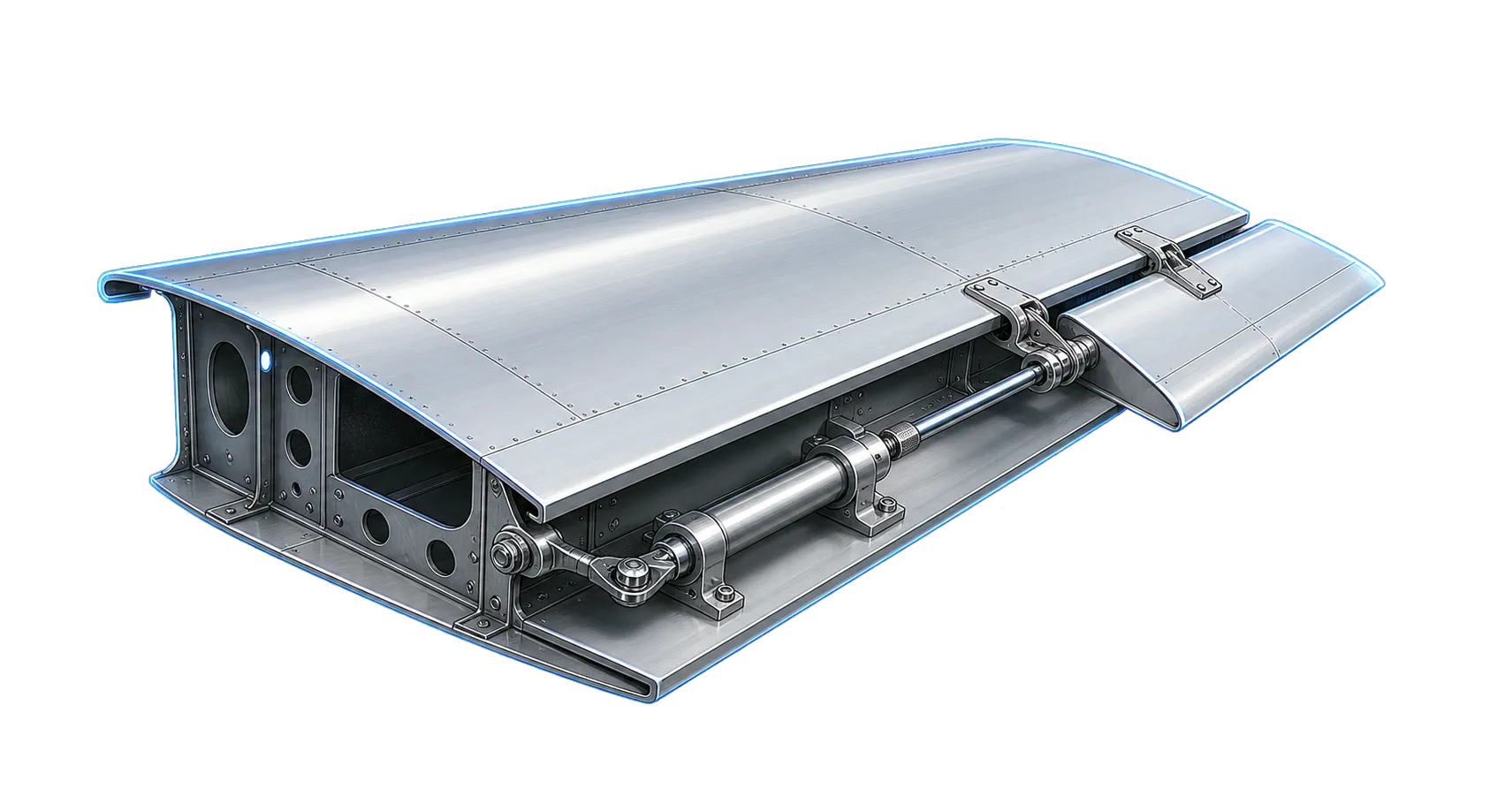
Inner skin disbonding damage on a rudder, potentially caused by blunt impact with no visible external damage, which could grow with pressure variation during ground-air-ground cycles and affect the structural integrity of the rudder.
AI-generated summary from the source AD text. Verify against the official source before acting.
Required Actions
Conduct repetitive ultrasonic inspections for disbonding of certain rudders; perform an elasticity of laminate checker inspection; conduct a woodpecker or tap test inspection; vent the core if necessary; and repair the rudder if necessary.
AI-generated summary from the source AD text. Verify against the official source before acting.
Compliance Time
Within 50 flight hours after the effective date of the AD.
AI-generated summary from the source AD text. Verify against the official source before acting.
Affected Aircraft
Airbus Model A300 B4-601, B4-603, B4-620, B4-622, B4-605R, B4-622R, F4-605R, F4-622R, and C4-605R Variant F airplanes; and Model A310-203, -204, -221, -222, -304, -322, -324, and -325 airplanes.
AI-generated summary from the source AD text. Verify against the official source before acting.
Federal Register Abstract
We are adopting a new airworthiness directive (AD) for certain Airbus Model A300 B4-601, B4-603, B4-620, B4-622, B4-605R, B4-622R, F4- 605R, F4-622R, and C4-605R Variant F airplanes; and Model A310-203, - 204, -221, -222, -304, -322, -324, and -325 airplanes. This AD was prompted by a report of inner skin disbonding damage on a rudder. This AD requires repetitive ultrasonic inspections for disbonding of certain rudders; an elasticity of laminate checker inspection; a woodpecker or tap test inspection; venting the core, if necessary; and repairing, if necessary. We are issuing this AD to detect and correct rudder disbonding, which could affect the structural integrity of the rudder.
Applicability Source Text
Show captured applicability text from the source AD
(c) Applicability

    This AD applies to the airplanes identified in paragraphs (c)(1)
and (c)(2) of this AD, except airplanes on which modification 08827
has been embodied in production.
    (1) Airbus Model A300 B4-601, B4-603, B4-620, B4-622, B4-605R,
B4-622R, F4-605R, F4-622R, and C4-605R Variant F airplanes,
certificated in any category, all manufacturer serial numbers.
    (2) Airbus Model A310-203, -204, -221, -222, -304, -322, -324,
and -325 airplanes, certificated in any category, all manufacturer
serial numbers.
Document Text
Show stored source text (verify against official source)
[Federal Register Volume 80, Number 68 (Thursday, April 9, 2015)]
[Rules and Regulations]
[Pages 19009-19013]
From the Federal Register Online via the Government Publishing Office [<a href="http://www.gpo.gov">www.gpo.gov</a>]
[FR Doc No: 2015-07799]
=======================================================================
-----------------------------------------------------------------------
DEPARTMENT OF TRANSPORTATION
Federal Aviation Administration
14 CFR Part 39
[Docket No. FAA-2014-0123; Directorate Identifier 2013-NM-040-AD;
Amendment 39-18134; AD 2015-07-06]
RIN 2120-AA64
Airworthiness Directives; Airbus Airplanes
AGENCY: Federal Aviation Administration (FAA), Department of
Transportation (DOT).
ACTION: Final rule.
-----------------------------------------------------------------------
SUMMARY: We are adopting a new airworthiness directive (AD) for certain
Airbus Model A300 B4-601, B4-603, B4-620, B4-622, B4-605R, B4-622R, F4-
605R, F4-622R, and C4-605R Variant F airplanes; and Model A310-203, -
204, -221, -222, -304, -322, -324, and -325 airplanes. This AD was
prompted by a report of inner skin disbonding damage on a rudder. This
AD requires repetitive ultrasonic inspections for disbonding of certain
rudders; an elasticity of laminate
[[Page 19010]]
checker inspection; a woodpecker or tap test inspection; venting the
core, if necessary; and repairing, if necessary. We are issuing this AD
to detect and correct rudder disbonding, which could affect the
structural integrity of the rudder.
DATES: This AD becomes effective May 14, 2015.
The Director of the Federal Register approved the incorporation by
reference of a certain publication listed in this AD as of May 14,
2015.
ADDRESSES: You may examine the AD docket on the Internet at <a href="http://www.regulations.gov/#!docketDetail">http://www.regulations.gov/#!docketDetail</a>;D=FAA-2014-0123; or in person at the
Docket Management Facility, U.S. Department of Transportation, Docket
Operations, M-30, West Building Ground Floor, Room W12-140, 1200 New
Jersey Avenue SE., Washington, DC.
For service information identified in this AD, contact Airbus SAS,
Airworthiness Office--EAW, 1 Rond Point Maurice Bellonte, 31707 Blagnac
Cedex, France; telephone +33 5 61 93 36 96; fax +33 5 61 93 44 51;
email <a href="/cdn-cgi/l/email-protection#f39290909c869d87dd929a81849c81879bde969280b3929a81918680dd909c9e"><span class="__cf_email__" data-cfemail="dabbb9b9b5afb4aef4bbb3a8adb5a8aeb2f7bfbba99abbb3a8b8afa9f4b9b5b7">[email protected]</span></a>; Internet <a href="http://www.airbus.com">http://www.airbus.com</a>.
You may view this referenced service information at the FAA, Transport
Airplane Directorate, 1601 Lind Avenue SW., Renton, WA. For information
on the availability of this material at the FAA, call 425-227-1221. It
is also available on the Internet at <a href="http://www.regulations.gov">http://www.regulations.gov</a> by
searching for and locating Docket No. FAA-2014-0123.
FOR FURTHER INFORMATION CONTACT: Dan Rodina, Aerospace Engineer,
International Branch, ANM-116, Transport Airplane Directorate, FAA,
1601 Lind Avenue SW., Renton, WA 98057-3356; telephone 425-227-2125;
fax 425-227-1149.
SUPPLEMENTARY INFORMATION:
Discussion
We issued a notice of proposed rulemaking (NPRM) to amend 14 CFR
part 39 by adding an AD that would apply to certain Airbus Model A300
B4-601, B4-603, B4-620, B4-622, B4-605R, B4-622R, F4-605R, F4-622R, and
C4-605R Variant F airplanes; and Model A310-203, -204, -221, -222, -
304, -322, -324, and -325 airplanes. The NPRM published in the Federal
Register on February 28, 2014 (79 FR 11355).
The European Aviation Safety Agency (EASA), which is the Technical
Agent for the Member States of the European Union, has issued EASA
Airworthiness Directive 2013-0039, dated February 26, 2013 (referred to
after this as the Mandatory Continuing Airworthiness Information, or
``the MCAI''), to correct an unsafe condition for certain Airbus Model
A300 B4-601, B4-603, B4-620, B4-622, B4-605R, B4-622R, F4-605R, F4-
622R, and C4-605R Variant F airplanes; and Model A310-203, -204, -221,
-222, -304, -322, -324, and -325 airplanes. The MCAI states:
One A310 operator found substantial inner skin disbonding damage
on a rudder that was previously inspected in accordance with the
instructions of Airbus Service Bulletin (SB) A310-55-2044. The
results of the subsequent investigation revealed that the most
probable cause of this damage was a blunt impact with no visible
damage from outside during the rudder handling. Damage like this
might grow with pressure variation during ground-air-ground cycles,
and tests performed with other rudders showed a rapid propagation of
damage during artificial pressure cycling.
This condition, if not detected and corrected, could affect the
structural integrity of the rudder.
To address this potential unsafe condition, Airbus issued Alert
Operators Transmission (AOT) A55W002-12 [dated December 13, 2012],
pending Aircraft Maintenance Manual (AMM) 27-21-21 PB401 revision to
update rudder handling procedures.
For the reasons described above, this [EASA] AD requires
ultrasonic test (UT) inspections of the affected rudders to detect
signs of disbonding and, depending on findings, accomplishment of
applicable corrective action(s).
Required actions also include an elasticity of laminate checker
inspection to detect external and internal disbonding, and a woodpecker
or tap test inspection to detect external disbonding. You may examine
the MCAI in the AD docket on the Internet at <a href="http://www.regulations.gov/#!documentDetail">http://www.regulations.gov/#!documentDetail</a>;D=FAA-2014-0123-0002.
Comments
We gave the public the opportunity to participate in developing
this AD. The following presents the comments received on the NPRM (79
FR 11355, February 28, 2014) and the FAA's response to each comment.
Requests To Exclude Certain Airplanes From AD Requirements
Airbus requested that we revise paragraph (g) of the NPRM (79 FR
11355, February 28, 2014) to mirror the language in Airbus Alert
Operators Transmission (AOT) A55W002-12, dated December 13, 2012, which
takes into account whether or not the rudder has been removed and/or
installed since the last inspection. Airbus stated that the removal/
installation process is linked to the risk of the unseen damage
occurring to the rudder. Airbus suggested revised language for a
requirement to determine if the rudder has been removed or installed
since the last inspection.
In addition, FedEx requested that we revise paragraph (c) or (g) of
the NPRM (79 FR 11355, February 28, 2014) to state that, if the
installed rudder has been inspected (and not removed) per AD 2008-11-
05, Amendment 39-15527 (73 FR 29423, May 21, 2008), since its
installation, no further inspection will be required since the unsafe
condition would be alleviated.
UPS, FedEx, and Airbus requested that we revise the NPRM (79 FR
11355, February 28, 2014) to eliminate unnecessary AD tracking
requirements. UPS noted that the identified risk only exists in cases
where the rudder has been changed since inspection under AD 2008-11-05,
Amendment 39-15527 (73 FR 29423, May 21, 2008). UPS further stated that
the NPRM does not refer to AD 2008-11-05, even though the repetitive
ultrasonic inspections to detect disbonding in the NPRM are identical
to the requirements of paragraph (f)(2) of AD 2008-11-05. Also, UPS
stated that the airplane maintenance manual (AMM) has been updated as
of June 1, 2013, to include the same ultrasonic inspection specified in
both AD 2008-11-05 and the NPRM. UPS suggested revised wording for the
NPRM.
We concur with the requests to limit the airplanes subject to the
requirements of paragraph (g) of this AD. This AD does relate to AD
2008-11-05 (73 FR 29423, dated May 21, 2008), in that the ultrasonic
inspections are required in both ADs. This AD requires the ultrasonic
inspections for only certain airplanes. Therefore, we have added a new
paragraph (h)(2) in this AD. Paragraph (h)(2) of this AD specifies
that, for airplanes on which it can be conclusively determined that the
most recent inspection specified in Airbus Service Bulletin A310-55-
2044 or Airbus Service Bulletin A300-55-6043 was done on the airplane;
or the rudder was not removed for any reason since doing the most
recent inspection specified in Airbus Service Bulletin A310-55-2044 or
Airbus Service Bulletin A300-55-6043; no further action is necessary,
except as specified in paragraphs (j) and (k) of this AD.
We have also re-designated paragraphs (h), (h)(1), and (h)(2) of
the NPRM as paragraphs (h)(1), (h)(1)(i), and (h)(1)(ii) of this AD,
respectively.
Request To Remove Requirement To Refer to This AD in Repair Approvals
UPS requested that we revise the NPRM (79 FR 11355, February 28,
2014)
[[Page 19011]]
to remove the requirement to include the AD reference in repair
approvals. UPS noted its concerns that the NPRM will increase requests
for approval of alternative methods of compliance (AMOCs) and result in
delays to other services and actions addressed by the FAA on a daily
basis.
We concur with the commenter's request to remove from this AD the
requirement that repair approvals must specifically refer to this AD.
Since late 2006, we have included a standard paragraph titled
``Airworthy Product'' in all MCAI ADs in which the FAA develops an AD
based on a foreign authority's AD. The MCAI or referenced service
information in an FAA AD often directs the owner/operator to contact
the manufacturer for corrective actions, such as a repair. Briefly, the
Airworthy Product paragraph allowed owners/operators to use corrective
actions provided by the manufacturer if those actions were FAA-
approved. In addition, the paragraph stated that any actions approved
by the State of Design Authority (or its delegated agent) are
considered to be FAA-approved.
In the NPRM (79 FR 11355, February 28, 2014), we proposed to
prevent the use of repairs that were not specifically developed to
correct the unsafe condition, by requiring that the repair approval
provided by the State of Design Authority or its delegated agent
specifically refer to this FAA AD. This change was intended to clarify
the method of compliance and to provide operators with better
visibility of repairs that are specifically developed and approved to
correct the unsafe condition. In addition, we proposed to change the
phrase ``its delegated agent'' to include ``the Design Approval Holder
(DAH) with a State of Design Authority's design organization approval
(DOA)'' to refer to a DAH authorized to approve required repairs for
the AD.
In its comments to the NPRM (79 FR 11355, February 28, 2014), UPS
stated the following: ``The proposed wording, being specific to
repairs, eliminates the interpretation that Airbus messages or other
approved EASA documents are acceptable for approving minor deviations
(corrective actions) needed during accomplishment of a[n AD] mandated
Airbus service bulletin.''
This comment has made the FAA aware that some operators have
misunderstood or misinterpreted the Airworthy Product paragraph to
allow the owner/operator to use messages provided by the manufacturer
as approval of deviations during the accomplishment of an AD-mandated
action. The Airworthy Product paragraph does not approve messages or
other information provided by the manufacturer for deviations to the
requirements of the AD-mandated actions. The Airworthy Product
paragraph only addresses the requirement to contact the manufacturer
for corrective actions for the identified unsafe condition and does not
cover deviations from other AD requirements. However, deviations to AD-
required actions are addressed in 14 CFR 39.17, and anyone may request
the approval for an alternative method of compliance to the AD-required
actions using the procedures found in 14 CFR 39.19.
To address this misunderstanding and misinterpretation of the
Airworthy Product paragraph, we have changed that paragraph and
retitled it ``Contacting the Manufacturer.'' This paragraph now
clarifies that for any requirement in this AD to obtain corrective
actions from a manufacturer, the actions must be accomplished using a
method approved by the FAA, EASA, or Airbus's EASA DOA.
The Contacting the Manufacturer paragraph also clarifies that, if
approved by the DOA, the approval must include the DOA-authorized
signature. The DOA signature indicates that the data and information
contained in the document are EASA-approved, which is also FAA-
approved. Messages and other information provided by the manufacturer
that do not contain the DOA-authorized signature approval are not EASA-
approved, unless EASA directly approves the manufacturer's message or
other information.
This clarification does not remove flexibility afforded previously
by the Airworthy Product paragraph. Consistent with long-standing FAA
policy, such flexibility was never intended for required actions. This
is also consistent with the recommendation of the AD Implementation
Aviation Rulemaking Committee to increase flexibility in complying with
ADs by identifying those actions in manufacturers' service instructions
that are ``Required for Compliance'' with ADs. We continue to work with
manufacturers to implement this recommendation. But once we determine
that an action is required, any deviation from the requirement must be
approved as an alternative method of compliance.
Other commenters to another NPRM having Directorate Identifier
2012-NM-101-AD (78 FR 78285, December 26, 2013) pointed out that in
many cases the foreign manufacturer's service bulletin and the foreign
authority's MCAI may have been issued some time before the FAA AD.
Therefore, the DOA may have provided U.S. operators with an approved
repair, developed with full awareness of the unsafe condition, before
the FAA AD is issued. Under these circumstances, to comply with the FAA
AD, the operator would be required to go back to the manufacturer's DOA
and obtain a new approval document, adding time and expense to the
compliance process with no safety benefit.
Based on these comments, we removed the requirement from this AD
that the DAH-provided repair specifically refer to this AD. Before
adopting such a requirement in the future, the FAA will coordinate with
affected DAHs and verify they are prepared to implement means to ensure
that their repair approvals consider the unsafe condition addressed in
an AD. Any such requirements will be adopted through the normal AD
rulemaking process, including notice-and-comment procedures, when
appropriate.
We have also decided not to include a generic reference to either
the ``delegated agent'' or the ``DAH with State of Design Authority
design organization approval,'' but instead we will provide the
specific delegation approval granted by the State of Design Authority
for the DAH.
Compliance Time Clarification
In paragraph (g) of this AD, for airplanes on which the part number
or serial number cannot be determined, we have revised the compliance
time of ``before further flight'' to ``within 3 months after the
effective date of this AD.'' This clarification corresponds to the
compliance time in the MCAI. We have determined that extending the
compliance time will provide an acceptable level of safety.
Conclusion
We reviewed the relevant data, considered the comments received,
and determined that air safety and the public interest require adopting
this AD with the changes described previously and minor editorial
changes. We have determined that these minor changes:
<bullet> Are consistent with the intent that was proposed in the
NPRM (79 FR 11355, February 28, 2014) for correcting the unsafe
condition; and
<bullet> Do not add any additional burden upon the public than was
already proposed in the NPRM (79 FR 11355, February 28, 2014).
We also determined that these changes will not increase the
economic burden on any operator or increase the scope of this AD.
[[Page 19012]]
Related Service Information Under 1 CFR Part 51
Airbus has issued AOT A55W002-12, dated December 13, 2012,
including Inspection Flowchart. The service information describes,
among other actions, procedures for an ultrasonic inspection along the
Z-profile of the rudder side panel. This service information is
reasonably available; see ADDRESSES for ways to access this service
information.
Costs of Compliance
We estimate that this AD affects 89 airplanes of U.S. registry. We
also estimate that it would take about 10 work-hours per product to
comply with the basic requirements of this AD. The average labor rate
is $85 per work-hour. Required parts would cost about $0 per product.
Based on these figures, we estimate the cost of this AD on U.S.
operators to be $75,650, or $850 per product.
We have received no definitive data that would enable us to provide
a cost estimate for the on-condition actions specified in this AD.
Authority for This Rulemaking
Title 49 of the United States Code specifies the FAA's authority to
issue rules on aviation safety. Subtitle I, section 106, describes the
authority of the FAA Administrator. ``Subtitle VII: Aviation
Programs,'' describes in more detail the scope of the Agency's
authority.
We are issuing this rulemaking under the authority described in
``Subtitle VII, Part A, Subpart III, Section 44701: General
requirements.'' Under that section, Congress charges the FAA with
promoting safe flight of civil aircraft in air commerce by prescribing
regulations for practices, methods, and procedures the Administrator
finds necessary for safety in air commerce. This regulation is within
the scope of that authority because it addresses an unsafe condition
that is likely to exist or develop on products identified in this
rulemaking action.
Regulatory Findings
We determined that this AD will not have federalism implications
under Executive Order 13132. This AD will not have a substantial direct
effect on the States, on the relationship between the national
government and the States, or on the distribution of power and
responsibilities among the various levels of government.
For the reasons discussed above, I certify that this AD:
1. Is not a ``significant regulatory action'' under Executive Order
12866;
2. Is not a ``significant rule'' under the DOT Regulatory Policies
and Procedures (44 FR 11034, February 26, 1979);
3. Will not affect intrastate aviation in Alaska; and
4. Will not have a significant economic impact, positive or
negative, on a substantial number of small entities under the criteria
of the Regulatory Flexibility Act.
Examining the AD Docket
You may examine the AD docket on the Internet at <a href="http://www.regulations.gov/#!docketDetail">http://www.regulations.gov/#!docketDetail</a>;D=FAA-2014-0123; or in person at the
Docket Management Facility between 9 a.m. and 5 p.m., Monday through
Friday, except Federal holidays. The AD docket contains this AD, the
regulatory evaluation, any comments received, and other information.
The street address for the Docket Operations office (telephone 800-647-
5527) is in the ADDRESSES section.
List of Subjects in 14 CFR Part 39
Air transportation, Aircraft, Aviation safety, Incorporation by
reference, Safety.
Adoption of the Amendment
Accordingly, under the authority delegated to me by the
Administrator, the FAA amends 14 CFR part 39 as follows:
PART 39--AIRWORTHINESS DIRECTIVES
0
1. The authority citation for part 39 continues to read as follows:
Authority: 49 U.S.C. 106(g), 40113, 44701.
Sec. 39.13 [Amended]
0
2. The FAA amends Sec. 39.13 by adding the following new airworthiness
directive (AD):
2015-07-06 Airbus: Amendment 39-18134. Docket No. FAA-2014-0123;
Directorate Identifier 2013-NM-040-AD.
(a) Effective Date
This AD becomes effective May 14, 2015.
(b) Affected ADs
None.
(c) Applicability
This AD applies to the airplanes identified in paragraphs (c)(1)
and (c)(2) of this AD, except airplanes on which modification 08827
has been embodied in production.
(1) Airbus Model A300 B4-601, B4-603, B4-620, B4-622, B4-605R,
B4-622R, F4-605R, F4-622R, and C4-605R Variant F airplanes,
certificated in any category, all manufacturer serial numbers.
(2) Airbus Model A310-203, -204, -221, -222, -304, -322, -324,
and -325 airplanes, certificated in any category, all manufacturer
serial numbers.
(d) Subject
Air Transport Association (ATA) of America Code 55; Stabilizers.
(e) Reason
This AD was prompted by a report of inner skin disbonding damage
on a rudder. We are issuing this AD to detect and correct rudder
disbonding, which could affect the structural integrity of the
rudder.
(f) Compliance
Comply with this AD within the compliance times specified,
unless already done.
(g) Identification of Part Number
Within 3 months after the effective date of this AD, identify
the rudder assembly part number (P/N) and serial number (S/N), in
accordance with Airbus Alert Operators Transmission (AOT) A55W002-
12, dated December 13, 2012, including Inspection Flowchart. If the
part number or serial number cannot be determined, within 3 months
after the effective date of this AD, identify the part number and
serial number, in accordance with a method approved by either the
Manager, International Branch, ANM-116, Transport Airplane
Directorate, FAA; or the European Aviation Safety Agency (EASA); or
Airbus's EASA Design Organization Approval (DOA).
(h) Inspections
(1) Except as provided by paragraph (h)(2) of this AD, if a
rudder assembly part number starting with A55471500 is found during
the inspection required by paragraph (g) of this AD, before further
flight, do an ultrasonic (UT) inspection for damage (e.g.,
disbonding and liquid ingress) of the rudder side panel along the Z-
profile and in the booster area, in accordance with Airbus AOT
A55W002-12, dated December 13, 2012, including Inspection Flowchart.
If any damage is found, before further flight, do the inspections to
confirm disbonding damage, as specified in paragraphs (h)(1)(i) and
(h)(1)(ii) of this AD, in accordance with Airbus AOT A55W002-12,
dated December 13, 2012.
(i) Do an elasticity of laminate checker inspection to detect
external and internal disbonding of the rudder side panel along the
Z-profile and in the booster area.
(ii) Do a woodpecker or tap test inspection to detect external
disbonding of the rudder side panel along the Z-profile and in the
booster area.
(2) For airplanes on which it can be conclusively determined
that the most recent inspection specified in Airbus Service Bulletin
A310-55-2044 or Airbus Service Bulletin A300-55-6043 was done on the
airplane; or the rudder was not removed for any reason since doing
the most recent inspection specified in Airbus Service Bulletin
A310-55-2044 or Airbus Service Bulletin A300-55-6043: No further
action is required by this AD, except as specified in paragraphs (j)
and (k) of this AD.
[[Page 19013]]
(i) Repair
(1) If any disbonding is confirmed during any inspection
required by paragraphs (h)(1)(i) and (h)(1)(ii) of this AD, before
further flight, repair as specified in paragraphs (i)(1)(i) and
(i)(1)(ii) of this AD, as applicable.
(i) If disbonding is less than or equal to 50 millimeters (mm)
in width and less than or equal to 150 mm in length, before further
flight, vent the core, using a method approved by either the
Manager, International Branch, ANM-116, Transport Airplane
Directorate, FAA; or EASA; or Airbus's EASA DOA. Within 100 flight
cycles after the UT inspection specified in paragraph (h) of this AD
is done, repair using a method approved by the Manager,
International Branch, ANM-116, Transport Airplane Directorate, FAA;
or EASA; or Airbus's EASA DOA.
(ii) If disbonding is greater than 50 mm in width or greater
than 150 mm in length, before further flight, repair using a method
approved by the Manager, International Branch, ANM-116, Transport
Airplane Directorate, FAA; or EASA; or Airbus's EASA DOA.
(2) If liquid ingress is confirmed during any inspection
required by paragraphs (h)(1)(i) and (h)(1)(ii) of this AD, before
further flight, repair using a method approved by the Manager,
International Branch, ANM-116, Transport Airplane Directorate, FAA;
or EASA; or Airbus's EASA DOA.
(j) Inspection after Re-Installation
If any rudder has been inspected as specified in Airbus Service
Bulletin A300-55-6043, Revision 01, dated December 3, 2007; or A310-
55-2044, Revision 01, dated December 3, 2007; as applicable; and has
been removed and re-installed on any airplane after this inspection,
that rudder must be re-inspected as required by paragraph (g) of
this AD; and all applicable actions required by paragraphs (h) and
(i) of this AD must be done.
(k) Parts Installation Limitation
As of the effective date of this AD, no person may install, on
any airplane, a rudder assembly having a part number starting with
A55471500, unless it has been inspected as required by paragraph (h)
of this AD, and all applicable actions required by paragraph (i) of
this AD have been done.
(l) Other FAA AD Provisions
The following provisions also apply to this AD:
(1) Alternative Methods of Compliance (AMOCs): The Manager,
International Branch, ANM-116, Transport Airplane Directorate, FAA,
has the authority to approve AMOCs for this AD, if requested using
the procedures found in 14 CFR 39.19. In accordance with 14 CFR
39.19, send your request to your principal inspector or local Flight
Standards District Office, as appropriate. If sending information
directly to the International Branch, send it to ATTN: Dan Rodina,
Aerospace Engineer, International Branch, ANM-116, Transport
Airplane Directorate, FAA, 1601 Lind Avenue SW., Renton, WA 98057-
3356; telephone 425-227-2125; fax 425-227-1149. Information may be
emailed to: <a href="/cdn-cgi/l/email-protection#2f16026e6162021e1e19026e62606c027d6a7e7a6a7c7b7c6f494e4e01484059"><span class="__cf_email__" data-cfemail="b1889cf0fffc9c8080879cf0fcfef29ce3f4e0e4f4e2e5e2f1d7d0d09fd6dec7">[email protected]</span></a>. Before using any
approved AMOC, notify your appropriate principal inspector, or
lacking a principal inspector, the manager of the local flight
standards district office/certificate holding district office. The
AMOC approval letter must specifically reference this AD.
(2) Contacting the Manufacturer: For any requirement in this AD
to obtain corrective actions from a manufacturer, the action must be
accomplished using a method approved by the Manager, International
Branch, ANM-116, Transport Airplane Directorate, FAA; or EASA; or
Airbus's EASA DOA. If approved by the DOA, the approval must include
the DOA-authorized signature.
(m) Related Information
Refer to Mandatory Continuing Airworthiness Information (MCAI)
EASA Airworthiness Directive 2013-0039, dated February 26, 2013, for
related information. This MCAI may be found in the AD docket on the
Internet at <a href="http://www.regulations.gov/#!documentDetail">http://www.regulations.gov/#!documentDetail</a>;D=FAA-2014-
0123-0002.
(n) Material Incorporated by Reference
(1) The Director of the Federal Register approved the
incorporation by reference (IBR) of the service information listed
in this paragraph under 5 U.S.C. 552(a) and 1 CFR part 51.
(2) You must use this service information as applicable to do
the actions required by this AD, unless this AD specifies otherwise.
(i) Airbus Alert Operators Transmission (AOT) A55W002-12, dated
December 13, 2012, including Inspection Flowchart. The inspection
flowchart attached to this AOT is referred to in the AOT as
``Appendix 1''; however, the flowchart page does not identify itself
as an appendix. While the inspection flowchart page does specify the
AOT document number, it does not specify a revision level or an
issue date.
(ii) Reserved.
(3) For service information identified in this AD, contact
Airbus SAS, Airworthiness Office--EAW, 1 Rond Point Maurice
Bellonte, 31707 Blagnac Cedex, France; telephone +33 5 61 93 36 96;
fax +33 5 61 93 44 51; email <a href="/cdn-cgi/l/email-protection#0b6a6868647e657f256a62797c64797f63266e6a784b6a6279697e7825686466"><span class="__cf_email__" data-cfemail="87e6e4e4e8f2e9f3a9e6eef5f0e8f5f3efaae2e6f4c7e6eef5e5f2f4a9e4e8ea">[email protected]</span></a>;
Internet <a href="http://www.airbus.com">http://www.airbus.com</a>.
(4) You may view this service information at the FAA, Transport
Airplane Directorate, 1601 Lind Avenue SW., Renton, WA. For
information on the availability of this material at the FAA, call
425-227-1221.
(5) You may view this service information that is incorporated
by reference at the National Archives and Records Administration
(NARA). For information on the availability of this material at
NARA, call 202-741-6030, or go to: <a href="http://www.archives.gov/federal-register/cfr/ibr-locations.html">http://www.archives.gov/federal-register/cfr/ibr-locations.html</a>.
Issued in Renton, Washington, on March 27, 2015.
Michael Kaszycki,
Acting Manager, Transport Airplane Directorate, Aircraft Certification
Service.
[FR Doc. 2015-07799 Filed 4-8-15; 08:45 am]
BILLING CODE 4910-13-P
Source: Official FAA Source ↗
Retrieved: Apr 6, 2026
Rights: U.S. Government Public Domain
This site is not affiliated with or endorsed by the FAA. Always verify with official sources.