AD 2014-16-13
Applicability
| Type | Manufacturer | Model | Details |
|---|---|---|---|
| aircraft | Airbus | A300 B2-1A | Airworthiness Directives; Airbus Airplanes |
| aircraft | Airbus | A300 B2-1C | Airworthiness Directives; Airbus Airplanes |
| aircraft | Airbus | A300 B2-203 | Airworthiness Directives; Airbus Airplanes |
| aircraft | Airbus | A300 B2K-3C | Airworthiness Directives; Airbus Airplanes |
| aircraft | Airbus | A300 B4-103 | Airworthiness Directives; Airbus Airplanes |
| aircraft | Airbus | A300 B4-203 | Airworthiness Directives; Airbus Airplanes |
Unsafe Condition
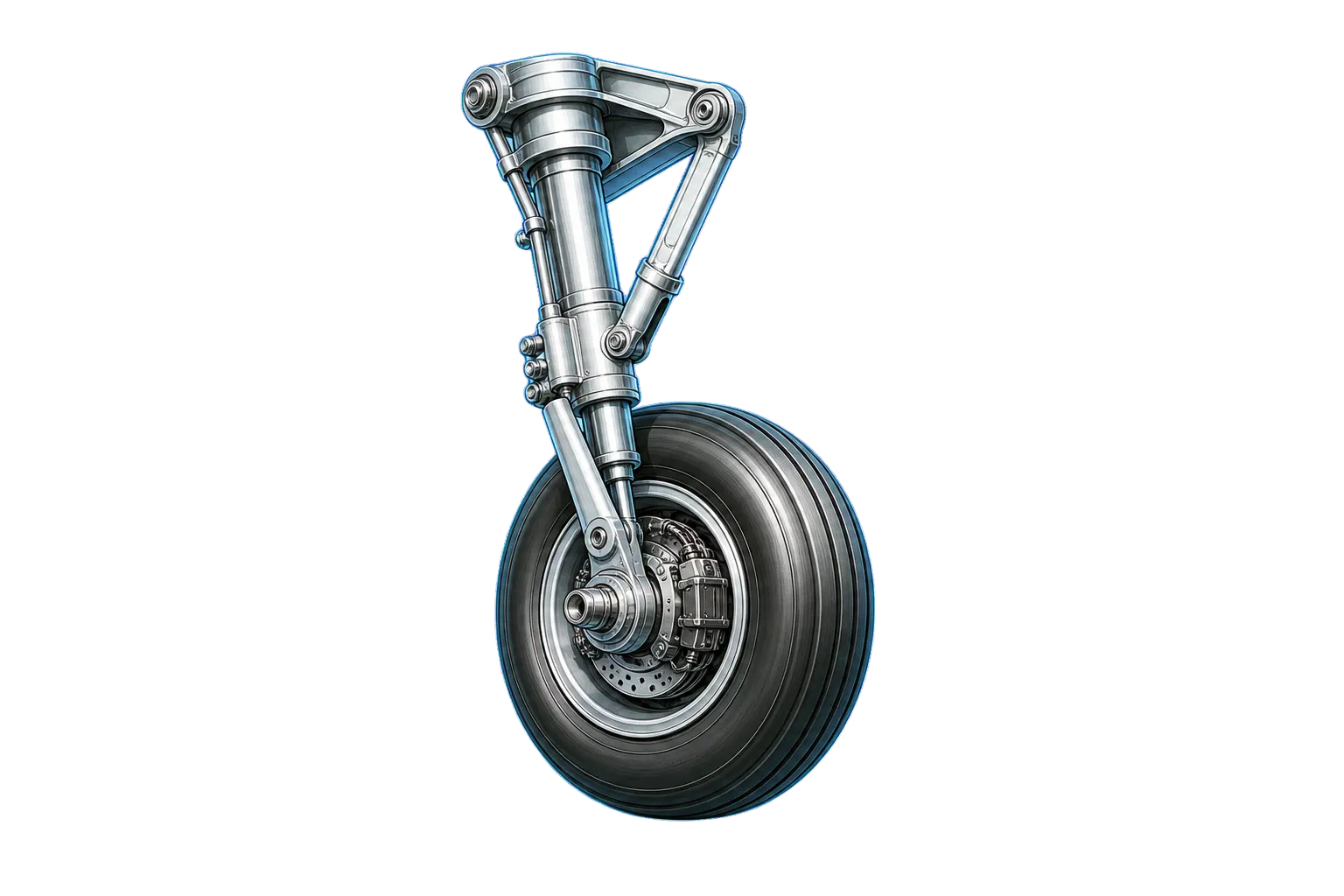
Failure to comply with previously defined life limits for the main landing gear (MLG) barrel assembly, retraction actuator assembly linkage, and flange duct could result in reduced structural integrity and possible loss of controllability of the airplane.
AI-generated summary from the source AD text. Verify against the official source before acting.
Required Actions
Revise the maintenance or inspection program to include new life limits for the main landing gear (MLG) barrel assembly, retraction actuator assembly linkage, and flange duct.
AI-generated summary from the source AD text. Verify against the official source before acting.
Compliance Time
Before further flight
AI-generated summary from the source AD text. Verify against the official source before acting.
Affected Aircraft
All Airbus Model A300 series airplanes.
AI-generated summary from the source AD text. Verify against the official source before acting.
Federal Register Abstract
We are adopting a new airworthiness directive (AD) for all Airbus Model A300 series airplanes. This AD was prompted by our determination of the need to incorporate new life limits for the main landing gear (MLG) barrel assembly, retraction actuator assembly linkage, and flange duct. This AD requires revising the maintenance or inspection program, as applicable, to include the new life limits. We are issuing this AD to prevent reduced structural integrity of the airplane and possible loss of controllability of the airplane.
Applicability Source Text
Show captured applicability text from the source AD
(c) Applicability

    This AD applies to all Airbus Model A300 B2-1A, B2-1C, B2K-3C,
B2-203, B4-2C, B4-103, and B4-203 airplanes, certificated in any
category.
Document Text
Show stored source text (verify against official source)
[Federal Register Volume 79, Number 166 (Wednesday, August 27, 2014)]
[Rules and Regulations]
[Pages 51083-51088]
From the Federal Register Online via the Government Publishing Office [<a href="http://www.gpo.gov">www.gpo.gov</a>]
[FR Doc No: 2014-19708]
-----------------------------------------------------------------------
DEPARTMENT OF TRANSPORTATION
Federal Aviation Administration
14 CFR Part 39
[Docket No. FAA-2014-0236; Directorate Identifier 2013-NM-184-AD;
Amendment 39-17937; AD 2014-16-13]
RIN 2120-AA64
Airworthiness Directives; Airbus Airplanes
AGENCY: Federal Aviation Administration (FAA), Department of
Transportation (DOT).
ACTION: Final rule.
-----------------------------------------------------------------------
SUMMARY: We are adopting a new airworthiness directive (AD) for all
Airbus Model A300 series airplanes. This AD was prompted by our
determination of the need to incorporate new life limits for the main
landing gear (MLG) barrel assembly, retraction actuator assembly
linkage, and flange duct. This AD requires revising the maintenance or
inspection program, as applicable, to include the new life limits. We
are issuing this AD to prevent reduced structural integrity of the
airplane and possible loss of controllability of the airplane.
DATES: This AD becomes effective October 1, 2014.
ADDRESSES: You may examine the AD docket on the Internet at <a href="http://www.regulations.gov/#!docketDetail">http://www.regulations.gov/#!docketDetail</a>;D=FAA-2014-0236 or in person at the
Docket Management Facility, U.S. Department of Transportation, Docket
Operations, M-30, West Building Ground Floor, Room W12-140, 1200 New
Jersey Avenue SE., Washington, DC.
For service information identified in this AD, contact Airbus SAS,
Airworthiness Office--EAW, 1 Rond Point Maurice Bellonte, 31707 Blagnac
Cedex, France; telephone +33 5 61 93 36 96; fax +33 5 61 93 44 51;
email <a href="/cdn-cgi/l/email-protection#ee8f8d8d819b809ac08f879c99819c9a86c38b8f9dae8f879c8c9b9dc08d8183"><span class="__cf_email__" data-cfemail="b3d2d0d0dcc6ddc79dd2dac1c4dcc1c7db9ed6d2c0f3d2dac1d1c6c09dd0dcde">[email protected]</span></a>; Internet <a href="http://www.airbus.com">http://www.airbus.com</a>.
You may view this referenced service information at the FAA, Transport
Airplane Directorate, 1601 Lind Avenue SW., Renton, WA. For information
on the availability of this material at the FAA, call 425-227-1221.
FOR FURTHER INFORMATION CONTACT: Dan Rodina, Aerospace Engineer,
International Branch, ANM 116, Transport Airplane Directorate, FAA,
1601 Lind Avenue SW., Renton, WA 98057-3356; telephone 425-227-2125;
fax 425-227-1149.
SUPPLEMENTARY INFORMATION:
Discussion
We issued a notice of proposed rulemaking (NPRM) to amend 14 CFR
part 39 by adding an AD that would apply to all Airbus Model A300
series airplanes. The NPRM published in the Federal Register on April
17, 2014 (79 FR 21651).
The European Aviation Safety Agency (EASA), which is the Technical
Agent for the Member States of the European Community, has issued EASA
Airworthiness Directive 2013-0210, dated September 11, 2013 (referred
to after this as the Mandatory Continuing Airworthiness Information, or
``the MCAI''), to correct an unsafe condition all Airbus Model A300
series airplanes. The MCAI states:
Some life limits previously defined in Revision 00 of A300 ALS
[airworthiness limitations section] Part 1 have been removed [from]
that document at Revision 01 and should normally be included in an
ALS Part 4.
At this time, there are no plans to issue an ALS Part 4 for A300
aeroplanes.
Nevertheless, failure to comply with these life limits could
result in an unsafe condition.
For the reasons described above, it has been decided to require
the application of these life limits through a separate [EASA] AD.
Consequently, this [EASA] AD requires application of life limits
applicable to Main Landing Gear (MLG) barrel assembly, retraction
actuator assembly linkage assembly and flanged duct which were
previously contained in Airbus ALS Part 1 Revision 00.
EASA AD 2007-0293 [which corresponds with FAA AD 2009-18-15,
Amendment 39-16011 (74 FR 48143, September 22, 2009)], which
required compliance with the actions specified in ALS Part 1, will
be superseded by a new [EASA] AD, requiring compliance with ALS Part
1 at Revision 1.
You may examine the MCAI in the AD docket on the Internet at <a href="http://www.regulations.gov/#!documentDetail">http://www.regulations.gov/#!documentDetail</a>;D=FAA-2014-0236-0002.
Comments
We gave the public the opportunity to participate in developing
this AD. We
[[Page 51084]]
received no comments on the NPRM (79 FR 21651, April 17, 2014) or on
the determination of the cost to the public.
``Contacting the Manufacturer'' Paragraph in This AD
Since late 2006, we have included a standard paragraph titled
``Airworthy Product'' in all MCAI ADs in which the FAA develops an AD
based on a foreign authority's AD.
We have become aware that some operators have misunderstood or
misinterpreted the Airworthy Product paragraph to allow the owner/
operator to use messages provided by the manufacturer as approval of
deviations during the accomplishment of an AD-mandated action. The
Airworthy Product paragraph does not approve messages or other
information provided by the manufacturer for deviations to the
requirements of the AD-mandated actions. The Airworthy Product
paragraph only addresses the requirement to contact the manufacturer
for corrective actions for the identified unsafe condition and does not
cover deviations from other AD requirements. However, deviations to AD-
required actions are addressed in 14 CFR 39.17, and anyone may request
the approval for an alternative method of compliance to the AD-required
actions using the procedures found in 14 CFR 39.19.
To address this misunderstanding and misinterpretation of the
Airworthy Product paragraph, we have changed the paragraph and retitled
it ``Contacting the Manufacturer.'' This paragraph now clarifies that
for any requirement in this AD to obtain corrective actions from a
manufacturer, the actions must be accomplished using a method approved
by the FAA, the European Aviation Safety Agency (EASA), or Airbus's
EASA Design Organization Approval (DOA).
The Contacting the Manufacturer paragraph also clarifies that, if
approved by the DOA, the approval must include the DOA-authorized
signature. The DOA signature indicates that the data and information
contained in the document are EASA-approved, which is also FAA-
approved. Messages and other information provided by the manufacturer
that do not contain the DOA-authorized signature approval are not EASA-
approved, unless EASA directly approves the manufacturer's message or
other information.
This clarification does not remove flexibility previously afforded
by the Airworthy Product paragraph. Consistent with long-standing FAA
policy, such flexibility was never intended for required actions. This
is also consistent with the recommendation of the Airworthiness
Directive Implementation Aviation Rulemaking Committee to increase
flexibility in complying with ADs by identifying those actions in
manufacturers' service instructions that are ``Required for
Compliance'' with ADs. We continue to work with manufacturers to
implement this recommendation. But once we determine that an action is
required, any deviation from the requirement must be approved as an
alternative method of compliance.
We also have decided not to include a generic reference to either
the ``delegated agent'' or ``design approval holder (DAH) with State of
Design Authority design organization approval,'' but instead we have
provided the specific delegation approval granted by the State of
Design Authority for the DAH throughout this AD.
Conclusion
We reviewed the relevant data and determined that air safety and
the public interest require adopting this AD with the changes described
previously and minor editorial changes. We have determined that these
minor changes:
<bullet> Are consistent with the intent that was proposed in the
NPRM (79 FR 21651, April 17, 2014) for correcting the unsafe condition;
and
<bullet> Do not add any additional burden upon the public than was
already proposed in the NPRM (79 FR 21651, April 17, 2014).
We also determined that these changes will not increase the
economic burden on any operator or increase the scope of this AD.
Costs of Compliance
We estimate that this AD affects 7 airplanes of U.S. registry.
We also estimate that it takes about 1 work-hour per product to
comply with the basic requirements of this AD. The average labor rate
is $85 per work hour. Based on these figures, we estimate the cost of
this AD on U.S. operators to be $595, or $85 per product.
Authority for This Rulemaking
Title 49 of the United States Code specifies the FAA's authority to
issue rules on aviation safety. Subtitle I, section 106, describes the
authority of the FAA Administrator. ``Subtitle VII: Aviation
Programs,'' describes in more detail the scope of the Agency's
authority.
We are issuing this rulemaking under the authority described in
``Subtitle VII, Part A, Subpart III, Section 44701: General
requirements.'' Under that section, Congress charges the FAA with
promoting safe flight of civil aircraft in air commerce by prescribing
regulations for practices, methods, and procedures the Administrator
finds necessary for safety in air commerce. This regulation is within
the scope of that authority because it addresses an unsafe condition
that is likely to exist or develop on products identified in this
rulemaking action.
Regulatory Findings
We determined that this AD will not have federalism implications
under Executive Order 13132. This AD will not have a substantial direct
effect on the States, on the relationship between the national
government and the States, or on the distribution of power and
responsibilities among the various levels of government.
For the reasons discussed above, I certify that this AD:
1. Is not a ``significant regulatory action'' under Executive Order
12866;
2. Is not a ``significant rule'' under the DOT Regulatory Policies
and Procedures (44 FR 11034, February 26, 1979);
3. Will not affect intrastate aviation in Alaska; and
4. Will not have a significant economic impact, positive or
negative, on a substantial number of small entities under the criteria
of the Regulatory Flexibility Act.
Examining the AD Docket
You may examine the AD docket on the Internet at <a href="http://www.regulations.gov/#!docketDetail">http://www.regulations.gov/#!docketDetail</a>;D=FAA-2014-0236; or in person at the
Docket Management Facility between 9 a.m. and 5 p.m., Monday through
Friday, except Federal holidays. The AD docket contains this AD, the
regulatory evaluation, any comments received, and other information.
The street address for the Docket Operations office (telephone 800-647-
5527) is in the ADDRESSES section.
List of Subjects in 14 CFR Part 39
Air transportation, Aircraft, Aviation safety, Incorporation by
reference, Safety.
Adoption of the Amendment
Accordingly, under the authority delegated to me by the
Administrator, the FAA amends 14 CFR part 39 as follows:
PART 39--AIRWORTHINESS DIRECTIVES
0
1. The authority citation for part 39 continues to read as follows:
Authority: 49 U.S.C. 106(g), 40113, 44701.
[[Page 51085]]
Sec. 39.13 [Amended]
0
2. The FAA amends Sec. 39.13 by adding the following new airworthiness
directive (AD):
2014-16-13 Airbus: Amendment 39-17937. Docket No. FAA-2014-0236;
Directorate Identifier 2013-NM-184-AD.
(a) Effective Date
This AD becomes effective October 1, 2014.
(b) Affected ADs
None.
(c) Applicability
This AD applies to all Airbus Model A300 B2-1A, B2-1C, B2K-3C,
B2-203, B4-2C, B4-103, and B4-203 airplanes, certificated in any
category.
(d) Subject
Air Transport Association (ATA) of America Code 32, Landing
Gear; and 36, Pneumatic.
(e) Reason
This AD was prompted by our determination of the need to
incorporate new life limits for the main landing gear (MLG) barrel
assembly, retraction actuator assembly linkage, and flange duct. We
are issuing this AD to prevent reduced structural integrity of the
airplane and possible loss of controllability of the airplane.
(f) Compliance
Comply with this AD within the compliance times specified,
unless already done.
(g) Revise the Maintenance or Inspection Program
Within 90 days after the effective date of this AD, revise the
maintenance or inspection program, as applicable, to incorporate the
life limits specified in Appendix 1 of this AD into the Airbus A300
Airworthiness Limitations Section (ALS) Part 1. The initial
compliance time for the replacement is identified in Appendix 1 of
this AD and is prior to the applicable life limits specified in
Appendix 1 of this AD, or within 90 days after the effective date of
this AD, whichever occurs later.
(h) No Alternative Actions and Intervals
After accomplishing the revision required by paragraph (g) of
this AD, no alternative actions (e.g., inspections) or intervals may
be used unless the actions or intervals are approved as an
alternative method of compliance (AMOC) in accordance with the
procedures specified in paragraph (i)(1) of this AD.
(i) Other FAA AD Provisions
The following provisions also apply to this AD:
(1) Alternative Methods of Compliance (AMOCs): The Manager,
International Branch, ANM-116, Transport Airplane Directorate, FAA,
has the authority to approve AMOCs for this AD, if requested using
the procedures found in 14 CFR 39.19. In accordance with 14 CFR
39.19, send your request to your principal inspector or local Flight
Standards District Office, as appropriate. If sending information
directly to the International Branch, send it to ATTN: Dan Rodina,
Aerospace Engineer, International Branch, ANM-116, Transport
Airplane Directorate, FAA, 1601 Lind Avenue SW., Renton, WA 98057-
3356; telephone 425-227-2125; fax 425-227-1149. Information may be
emailed to: <a href="/cdn-cgi/l/email-protection#edd4c0aca3a0c0dcdcdbc0aca0a2aec0bfa8bcb8a8beb9bead8b8c8cc38a829b"><span class="__cf_email__" data-cfemail="4871650906056579797e650905070b651a0d191d0d1b1c1b082e2929662f273e">[email protected]</span></a>. Before using any
approved AMOC, notify your appropriate principal inspector, or
lacking a principal inspector, the manager of the local flight
standards district office/certificate holding district office. The
AMOC approval letter must specifically reference this AD.
(2) Contacting the Manufacturer: For any requirement in this AD
to obtain corrective actions from a manufacturer, the action must be
accomplished using a method approved by the Manager, International
Branch, ANM-116, Transport Airplane Directorate, FAA; or the
European Aviation Safety Agency (EASA); or Airbus's EASA Design
Organization Approval (DOA). If approved by the DOA, the approval
must include the DOA-authorized signature.
(j) Related Information
Refer to Mandatory Continuing Airworthiness Information (MCAI)
European Aviation Safety Agency Airworthiness Directive 2013-0210,
dated September 11, 2013, for related information. This MCAI may be
found in the AD docket on the Internet at <a href="http://www.regulations.gov/#!documentDetailD=FAA-2014-0236-0002">http://www.regulations.gov/#!documentDetailD=FAA-2014-0236-0002</a>.
(k) Material Incorporated by Reference
None.
[[Page 51086]]
[GRAPHIC] [TIFF OMITTED] TR27AU14.000
[[Page 51087]]
[GRAPHIC] [TIFF OMITTED] TR27AU14.001
[[Page 51088]]
Issued in Renton, Washington, on August 4, 2014.
Jeffrey E. Duven,
Manager, Transport Airplane Directorate, Aircraft Certification
Service.
[FR Doc. 2014-19708 Filed 8-26-14; 8:45 am]
BILLING CODE 4910-13-P
Source: Official FAA Source ↗
Retrieved: Apr 4, 2026
Rights: U.S. Government Public Domain
This site is not affiliated with or endorsed by the FAA. Always verify with official sources.
Related Airworthiness Directives
2024-19-15
final ruleAirworthiness Directives; Safran Aerosystems (Formerly AVOX Systems Inc.; Scott Aviation) Oxygen Cylinder and Valve Assemblies, and Oxygen Valve Assemblies
Unsafe Condition: Reports of cylinder and valve assemblies having oxygen leakage from the valve assembly vent hole, caused by the absence of a guide that maintains appropriate spacing between certain parts, and by t...
2016-15-01R1
final ruleAirworthiness Directives; Airbus SAS Airplanes
Unsafe Condition: Flight controls
2023-07-12
final ruleAirworthiness Directives; Airbus SAS Airplanes
Unsafe Condition: Fatigue damage in principal structural elements, which, if not addressed, could result in reduced structural integrity of the airplane.
2023-10-02
final ruleAirworthiness Directives; Transport and Commuter Category Airplanes
Unsafe Condition: Radio altimeter anomalies that are undetected by the automation or pilot, particularly close to the ground (e.g., landing flare), could lead to loss of continued safe flight and landing. Additional...