AD 2011-20-03
Applicability
| Type | Manufacturer | Model | Details |
|---|---|---|---|
| aircraft | Airbus | A300 B4-601 | Airworthiness Directives; Airbus Model A300 B4-600, B4-600R, and F4-600R Series Airplanes, and Model C4-605R Variant F Airplanes (Collectively Called A300-600 Series Airplanes) and A310 Series Airplanes |
| aircraft | Airbus | A300 B4-603 | Airworthiness Directives; Airbus Model A300 B4-600, B4-600R, and F4-600R Series Airplanes, and Model C4-605R Variant F Airplanes (Collectively Called A300-600 Series Airplanes) and A310 Series Airplanes |
| aircraft | Airbus | A300 B4-605R | Airworthiness Directives; Airbus Model A300 B4-600, B4-600R, and F4-600R Series Airplanes, and Model C4-605R Variant F Airplanes (Collectively Called A300-600 Series Airplanes) and A310 Series Airplanes |
| aircraft | Airbus | A300 B4-620 | Airworthiness Directives; Airbus Model A300 B4-600, B4-600R, and F4-600R Series Airplanes, and Model C4-605R Variant F Airplanes (Collectively Called A300-600 Series Airplanes) and A310 Series Airplanes |
| aircraft | Airbus | A300 B4-622 | Airworthiness Directives; Airbus Model A300 B4-600, B4-600R, and F4-600R Series Airplanes, and Model C4-605R Variant F Airplanes (Collectively Called A300-600 Series Airplanes) and A310 Series Airplanes |
| aircraft | Airbus | A300 B4-622R | Airworthiness Directives; Airbus Model A300 B4-600, B4-600R, and F4-600R Series Airplanes, and Model C4-605R Variant F Airplanes (Collectively Called A300-600 Series Airplanes) and A310 Series Airplanes |
| aircraft | Airbus | A300 C4-605R Variant F | Airworthiness Directives; Airbus Model A300 B4-600, B4-600R, and F4-600R Series Airplanes, and Model C4-605R Variant F Airplanes (Collectively Called A300-600 Series Airplanes) and A310 Series Airplanes |
| aircraft | Airbus | A300 F4-605R | Airworthiness Directives; Airbus Model A300 B4-600, B4-600R, and F4-600R Series Airplanes, and Model C4-605R Variant F Airplanes (Collectively Called A300-600 Series Airplanes) and A310 Series Airplanes |
| aircraft | Airbus | A300 F4-622R | Airworthiness Directives; Airbus Model A300 B4-600, B4-600R, and F4-600R Series Airplanes, and Model C4-605R Variant F Airplanes (Collectively Called A300-600 Series Airplanes) and A310 Series Airplanes |
| aircraft | Airbus | A310-203 | Airworthiness Directives; Airbus Model A300 B4-600, B4-600R, and F4-600R Series Airplanes, and Model C4-605R Variant F Airplanes (Collectively Called A300-600 Series Airplanes) and A310 Series Airplanes |
| aircraft | Airbus | A310-204 | Airworthiness Directives; Airbus Model A300 B4-600, B4-600R, and F4-600R Series Airplanes, and Model C4-605R Variant F Airplanes (Collectively Called A300-600 Series Airplanes) and A310 Series Airplanes |
| aircraft | Airbus | A310-221 | Airworthiness Directives; Airbus Model A300 B4-600, B4-600R, and F4-600R Series Airplanes, and Model C4-605R Variant F Airplanes (Collectively Called A300-600 Series Airplanes) and A310 Series Airplanes |
| aircraft | Airbus | A310-222 | Airworthiness Directives; Airbus Model A300 B4-600, B4-600R, and F4-600R Series Airplanes, and Model C4-605R Variant F Airplanes (Collectively Called A300-600 Series Airplanes) and A310 Series Airplanes |
| aircraft | Airbus | A310-304 | Airworthiness Directives; Airbus Model A300 B4-600, B4-600R, and F4-600R Series Airplanes, and Model C4-605R Variant F Airplanes (Collectively Called A300-600 Series Airplanes) and A310 Series Airplanes |
| aircraft | Airbus | A310-322 | Airworthiness Directives; Airbus Model A300 B4-600, B4-600R, and F4-600R Series Airplanes, and Model C4-605R Variant F Airplanes (Collectively Called A300-600 Series Airplanes) and A310 Series Airplanes |
| aircraft | Airbus | A310-324 | Airworthiness Directives; Airbus Model A300 B4-600, B4-600R, and F4-600R Series Airplanes, and Model C4-605R Variant F Airplanes (Collectively Called A300-600 Series Airplanes) and A310 Series Airplanes |
| aircraft | Airbus | A310-325 | Airworthiness Directives; Airbus Model A300 B4-600, B4-600R, and F4-600R Series Airplanes, and Model C4-605R Variant F Airplanes (Collectively Called A300-600 Series Airplanes) and A310 Series Airplanes |
Unsafe Condition
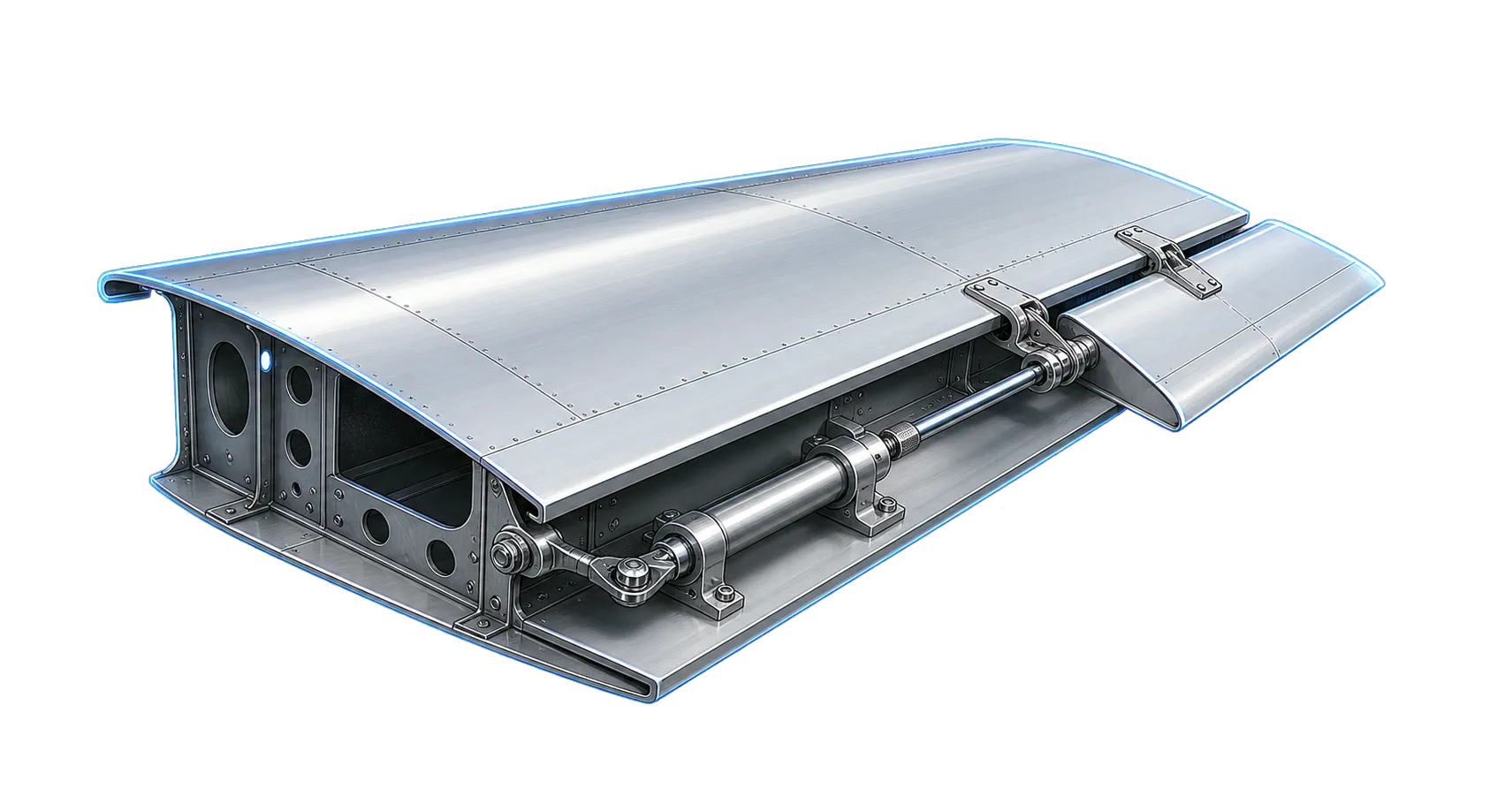
De-bonding between the skin and honeycomb core of the rudder, resulting from production reworks, may degrade the structural integrity of the rudder. Loss of the rudder can lead to degradation of handling qualities and reduced controllability of the airplane.
AI-generated summary from the source AD text. Verify against the official source before acting.
Required Actions
Inspect specific areas of the rudder for defects, including de-bonding between the skin and honeycomb core, using vacuum loss inspections and elasticity laminate checker inspections. If defects are found, contact the FAA or EASA for repair instructions. For certain rudders, replace the rudder with a serviceable one.
AI-generated summary from the source AD text. Verify against the official source before acting.
Compliance Time
Within 12 months of the effective date (October 28, 2011)
AI-generated summary from the source AD text. Verify against the official source before acting.
Affected Aircraft
Airbus Model A300 B4-601, B4-603, B4-620, B4-622, B4-605R, B4-622R, F4-605R, F4-622R, and C4-605R Variant F airplanes; and Model A310-203, -204, -221, -222, -304, -322, -324, and -325 airplanes, equipped with carbon fiber reinforced plastic rudders listed in tables 1, 2, 3, or 4 of the AD.
AI-generated summary from the source AD text. Verify against the official source before acting.
Federal Register Abstract
We are adopting a new airworthiness directive (AD) for the products listed above. This AD results from mandatory continuing airworthiness information (MCAI) originated by an aviation authority of another country to identify and correct an unsafe condition on an aviation product. The MCAI describes the unsafe condition as:
Document Text
Show stored source text (verify against official source)
[Federal Register Volume 76, Number 185 (Friday, September 23, 2011)]
[Rules and Regulations]
[Pages 59008-59011]
From the Federal Register Online via the Government Publishing Office [<a href="http://www.gpo.gov">www.gpo.gov</a>]
[FR Doc No: 2011-24203]
=======================================================================
-----------------------------------------------------------------------
DEPARTMENT OF TRANSPORTATION
Federal Aviation Administration
14 CFR Part 39
[Docket No. FAA-2011-0647; Directorate Identifier 2010-NM-193-AD;
Amendment 39-16812; AD 2011-20-03]
RIN 2120-AA64
Airworthiness Directives; Airbus Model A300 B4-600, B4-600R, and
F4-600R Series Airplanes, and Model C4-605R Variant F Airplanes
(Collectively Called A300-600 Series Airplanes) and A310 Series
Airplanes
AGENCY: Federal Aviation Administration (FAA), Department of
Transportation (DOT).
ACTION: Final rule.
-----------------------------------------------------------------------
SUMMARY: We are adopting a new airworthiness directive (AD) for the
products listed above. This AD results from mandatory continuing
airworthiness information (MCAI) originated by an aviation authority of
another country to identify and correct an unsafe condition on an
aviation product. The MCAI describes the unsafe condition as:
Surface defects were visually detected on the rudder of an A319
and an A321 in-service aeroplane. Investigation has determined that
the defects reported on both rudders corresponded to areas that had
been reworked in production. The investigation confirmed that the
defects were as a result of de-bonding between the skin and
honeycomb core. Such reworks were also performed on some rudders
fitted on A310 and A300-600 aeroplanes.
An extended de-bonding, if not detected and corrected, may
degrade the structural integrity of the rudder. The loss of the
rudder leads to degradation of the handling qualities and reduces
the controllability of the aeroplane.
* * * * *
We are issuing this AD to require actions to correct the unsafe
condition on these products.
DATES: This AD becomes effective October 28, 2011.
The Director of the Federal Register approved the incorporation by
reference of certain publications listed in this AD as of October 28,
2011.
ADDRESSES: You may examine the AD docket on the Internet at <a href="http://www.regulations.gov">http://www.regulations.gov</a> or in person at the U.S. Department of
Transportation, Docket Operations, M-30, West Building Ground Floor,
Room W12-140, 1200 New Jersey Avenue, SE., Washington, DC.
FOR FURTHER INFORMATION CONTACT: Dan Rodina, Aerospace Engineer,
International Branch, ANM-116, Transport Airplane Directorate, FAA,
1601 Lind Avenue, SW., Renton, Washington 98057-3356; telephone (425)
227-2125; fax (425) 227-1149.
SUPPLEMENTARY INFORMATION:
Discussion
We issued a notice of proposed rulemaking (NPRM) to amend 14 CFR
part 39 to include an AD that would apply to the specified products.
That NPRM was published in the Federal Register on June 29, 2011 (76 FR
38069). That NPRM proposed to correct an unsafe condition for the
specified products. The MCAI states:
Surface defects were visually detected on the rudder of an A319
and an A321 in-service aeroplane. Investigation has determined that
the defects reported on both rudders corresponded to areas that had
been reworked in production. The investigation confirmed that the
defects were as a result of de-bonding between the skin and
honeycomb core. Such reworks were also performed on some rudders
fitted on A310 and A300-600 aeroplanes.
An extended de-bonding, if not detected and corrected, may
degrade the structural integrity of the rudder. The loss of the
rudder leads to degradation of the handling qualities and reduces
the controllability of the aeroplane.
To address this unsafe condition, EASA issued AD 2010-0002
[which corresponds to FAA AD 2010-16-13, Amendment 39-16390 (75 FR
49370, August 13, 2010)], superseding [EASA] AD 2009-0166, to
require inspections of specific areas and, depending on findings,
the application of corrective actions for those rudders where
production reworks have been identified.
This new [EASA] AD addresses the rudder population that has also
been reworked in production but not included in the applicability of
EASA AD 2010-0002.
The required actions, for certain rudders, include vacuum loss
inspections and elasticity laminate checker inspections for defects
including de-bonding between the skin and honeycomb core of the rudder.
The corrective action is contacting the FAA or EASA for repair
instructions if any defects are found. For certain other rudders, the
required actions include replacing the rudder with a serviceable
rudder. We are considering similar rulemaking action on Model A319 and
A321 airplanes. You may obtain further information by examining the
MCAI in the AD docket.
Comments
We gave the public the opportunity to participate in developing
this AD. We received no comments on the NPRM (76 FR 38069, June 29,
2011) or on the determination of the cost to the public.
Conclusion
We reviewed the available data and determined that air safety and
the public interest require adopting the AD as proposed.
Differences Between This AD and the MCAI or Service Information
We have reviewed the MCAI and related service information and, in
general, agree with their substance. But we might have found it
necessary to use different words from those in the MCAI to ensure the
AD is clear for U.S. operators and is enforceable. In making these
changes, we do not intend to differ substantively from the information
provided in the MCAI and related service information.
We might also have required different actions in this AD from those
in the MCAI in order to follow our FAA policies. Any such differences
are highlighted in a NOTE within the AD.
Costs of Compliance
We estimate that this AD will affect 215 products of U.S. registry.
We also estimate that it will take about 4 work-
[[Page 59009]]
hours per product to comply with the basic requirements of this AD. The
average labor rate is $85 per work-hour. Based on these figures, we
estimate the cost of the AD on U.S. operators to be $73,100, or $340
per product.
Authority for This Rulemaking
Title 49 of the United States Code specifies the FAA's authority to
issue rules on aviation safety. Subtitle I, section 106, describes the
authority of the FAA Administrator. ``Subtitle VII: Aviation
Programs,'' describes in more detail the scope of the Agency's
authority.
We are issuing this rulemaking under the authority described in
``Subtitle VII, Part A, Subpart III, Section 44701: General
requirements.'' Under that section, Congress charges the FAA with
promoting safe flight of civil aircraft in air commerce by prescribing
regulations for practices, methods, and procedures the Administrator
finds necessary for safety in air commerce. This regulation is within
the scope of that authority because it addresses an unsafe condition
that is likely to exist or develop on products identified in this
rulemaking action.
Regulatory Findings
We determined that this AD will not have federalism implications
under Executive Order 13132. This AD will not have a substantial direct
effect on the States, on the relationship between the national
government and the States, or on the distribution of power and
responsibilities among the various levels of government.
For the reasons discussed above, I certify this AD:
1. Is not a ``significant regulatory action'' under Executive Order
12866;
2. Is not a ``significant rule'' under the DOT Regulatory Policies
and Procedures (44 FR 11034, February 26, 1979); and
3. Will not have a significant economic impact, positive or
negative, on a substantial number of small entities under the criteria
of the Regulatory Flexibility Act.
We prepared a regulatory evaluation of the estimated costs to
comply with this AD and placed it in the AD docket.
Examining the AD Docket
You may examine the AD docket on the Internet at <a href="http://www.regulations.gov">http://www.regulations.gov</a>; or in person at the Docket Operations office
between 9 a.m. and 5 p.m., Monday through Friday, except Federal
holidays. The AD docket contains the NPRM (76 FR 38069, June 29, 2011),
the regulatory evaluation, any comments received, and other
information. The street address for the Docket Operations office
(telephone (800) 647-5527) is in the ADDRESSES section. Comments will
be available in the AD docket shortly after receipt.
List of Subjects in 14 CFR Part 39
Air transportation, Aircraft, Aviation safety, Incorporation by
reference, Safety.
Adoption of the Amendment
Accordingly, under the authority delegated to me by the
Administrator, the FAA amends 14 CFR part 39 as follows:
PART 39--AIRWORTHINESS DIRECTIVES
0
1. The authority citation for part 39 continues to read as follows:
Authority: 49 U.S.C. 106(g), 40113, 44701.
Sec. 39.13 [Amended]
0
2. The FAA amends Sec. 39.13 by adding the following new AD:
2011-20-03 Airbus: Amendment 39-16812. Docket No. FAA-2011-0647;
Directorate Identifier 2010-NM-193-AD.
Effective Date
(a) This airworthiness directive (AD) becomes effective October
28, 2011.
Affected ADs
(b) None.
Applicability
(c) This AD applies to Airbus Model A300 B4-601, B4-603, B4-620,
B4-622, B4-605R, B4-622R, F4-605R, F4-622R, and C4-605R Variant F
airplanes; and Model A310-203, -204, -221, -222, -304, -322, -324,
and -325 airplanes; certificated in any category; equipped with
carbon fiber reinforced plastic rudders having any part number and
serial number listed in table 1, 2, 3, or 4 of this AD.
Table 1--Rudder Information
------------------------------------------------------------------------
Rudder part No. Affected rudder serial No.
------------------------------------------------------------------------
A554-71710-000-00.......................... TS-2010
A554-71710-000-00.......................... TS-2027
A554-71710-000-00.......................... TS-2030
A554-71710-002-00.......................... TS-2043
A554-71710-004-00.......................... TS-2048
------------------------------------------------------------------------
Table 2--Rudder Information
------------------------------------------------------------------------
Rudder part No. Affected rudder serial No.
------------------------------------------------------------------------
MSN-scrapped............................... TS-1362
A554-71710-000-00.......................... TS-2006
A554-71710-000-00.......................... TS-2008
A554-71710-002-00.......................... TS-2033
A554-71710-004-00.......................... TS-2054
A554-71710-004-00.......................... TS-2061
A554-71710-004-00.......................... TS-2071
A554-71710-004-00.......................... TS-2072
A554-71710-004-00.......................... TS-2073
A554-71730-000-00-0000..................... TS-2082
A554-71730-000-00-0000..................... TS-2084
A554-71730-000-00-0000..................... TS-2085
A554-71730-000-00-0000..................... TS-2086
A554-71730-000-00-0000..................... TS-2087
------------------------------------------------------------------------
Table 3--Rudder Information
------------------------------------------------------------------------
Rudder part No. Affected rudder serial No.
------------------------------------------------------------------------
A554-71500-016-30.......................... HF-1254
A554-71710-004-00.......................... TS-2049
A554-71710-004-00.......................... TS-2055
A554-71710-004-00.......................... TS-2059
------------------------------------------------------------------------
Table 4--Rudder Information
------------------------------------------------------------------------
Rudder part No. Affected rudder serial No.
------------------------------------------------------------------------
A554-71500-016-91.......................... HF-1044
A554-71500-014-00.......................... HF-1116
A554-71500-016-00.......................... HF-1183
A554-71500-016-00.......................... HF-1184
A554-71500-026-00.......................... TS-1402
------------------------------------------------------------------------
Subject
(d) Air Transport Association (ATA) of America Code 55:
Stabilizers.
Reason
(e) The mandatory continuing airworthiness information (MCAI)
states:
Surface defects were visually detected on the rudder of an A319
and an A321 in-service aeroplane. Investigation has determined that
the defects reported on both rudders corresponded to areas that had
been reworked in production. The investigation confirmed that the
defects were as a result of de-bonding between the skin and
honeycomb core. Such reworks were also performed on some rudders
fitted on A310 and A300-600 aeroplanes.
An extended de-bonding, if not detected and corrected, may
degrade the structural integrity of the rudder. The loss of the
rudder leads to degradation of the handling qualities and reduces
the controllability of the aeroplane.
* * * * *
Compliance
(f) You are responsible for having the actions required by this
AD performed within the compliance times specified, unless the
actions have already been done.
[[Page 59010]]
Inspections and Corrective Actions for Rudders Identified in Tables 1,
2, and 3
(g) For rudders identified in table 1 or table 2 of this AD: Do
the actions specified in paragraph (g)(1) or (g)(2) of this AD, as
applicable, and paragraphs (g)(3) and (g)(4) of this AD, at the time
specified. Do the actions in accordance with the Accomplishment
Instructions of Airbus Mandatory Service Bulletin A310-55-2049 (for
Model A310 series airplanes) or A300-55-6048 (for Model A300-600
series airplanes), both dated March 16, 2010.
(1) For rudders identified in table 1 of this AD: Within 8
months after the effective date of this AD, perform a vacuum loss
inspection in the ``area 1'' location defined in Airbus Mandatory
Service Bulletin A310-55-2049 or A300-55-6048, both dated March 16,
2010, as applicable, to detect defects, including de-bonding.
(2) For rudders identified in table 2 of this AD: Within 24
months after the effective date of this AD, perform a vacuum loss
inspection in the ``area 1'' location defined in Airbus Mandatory
Service Bulletin A310-55-2049 or A300-55-6048, both dated March 16,
2010, as applicable, to detect defects, including de-bonding.
(3) Within 24 months after the effective date of this AD: Do an
elasticity laminate checker inspection to detect defects, including
de-bonding, in the trailing edge location.
(4) Repeat the inspection required by paragraph (g)(3) of this
AD two times at intervals not to exceed 4,500 flight cycles, but not
fewer than 4,000 flight cycles from the most recent inspection.
(h) For rudders identified in table 3 of this AD: Do the actions
specified in paragraphs (h)(1) and (h)(2) of this AD at the time
specified. Do the actions in accordance with the Accomplishment
Instructions of Airbus Mandatory Service Bulletin A310-55-2049 (for
Model A310 series airplanes) or A300-55-6048 (for Model A300-600
series airplanes), both dated March 16, 2010.
(1) Within 4,500 flight cycles after the effective date of this
AD, but not fewer than 4,000 flight cycles from the most recent
elasticity laminate checker inspection: Do an elasticity laminate
checker inspection to detect defects, including de-bonding, in the
trailing edge location.
(2) Repeat the inspection required by paragraph (h)(1) of this
AD one time within 4,500 flight cycles, but not fewer than 4,000
flight cycles from the last inspection.
(i) If any defect is found during any inspection required by
paragraphs (g) and (h) of this AD, before further flight, repair in
accordance with a method approved by the Manager, International
Branch, ANM-116, Transport Airplane Directorate, FAA, or the
European Aviation Safety Agency (EASA) (or its delegated agent).
(j) If no defect is found during the inspections required by
paragraphs (g)(1) and (g)(2) of this AD, before further flight,
restore the vacuum loss holes with the temporary restoration with
self adhesive tape, temporary restoration with resin, or permanent
restoration with resin and surface protection. Do the applicable
actions specified in paragraph (j)(1) or (j)(2) of this AD.
(1) For airplanes on which a temporary restoration with self-
adhesive disks or tapes is done, within 4 months after doing the
restoration, do a detailed inspection for loose or missing self-
adhesive disks or tapes and repeat the inspection thereafter at
intervals not to exceed 4 months until the permanent restoration is
done, in accordance with the Accomplishment Instructions of Airbus
Mandatory Service Bulletin A310-55-2049 (for Model A310 series
airplanes) or A300-55-6048 (for Model A300-600 series airplanes),
both dated March 16, 2010. If any loose or missing self-adhesive
disks or tapes are found during any inspection required by this AD,
before further flight, close the holes, in accordance with the
Accomplishment Instructions of Airbus Mandatory Service Bulletin
A310-55-2049 or A300-55-6048, both dated March 16, 2010, as
applicable. Do the permanent restoration within 4,500 flight cycles
after doing the temporary restoration, in accordance with the
Accomplishment Instructions of Airbus Mandatory Service Bulletin
A310-55-2049 or A300-55-6048, both dated March 16, 2010, as
applicable.
(2) For airplanes on which a temporary restoration with resin is
done: Within 4,500 flight cycles after doing the temporary
restoration do the permanent restoration, in accordance with the
Accomplishment Instructions of Airbus Mandatory Service Bulletin
A310-55-2049 (for Model A310 series airplanes) or A300-55-6048 (for
Model A300-600 series airplanes), both dated March 16, 2010.
Reporting
(k) At the applicable time specified in paragraph (k)(1) or
(k)(2) of this AD: Report the results of each inspection required by
paragraphs (g) and (h) of this AD, including no findings, to Airbus,
as specified in Airbus Mandatory Service Bulletin A310-55-2049 (for
Model A310 series airplanes) or A300-55-6048 (for Model A300-600
series airplanes), both dated March 16, 2010.
(1) Inspections done before the effective date of this AD:
Within 30 days after the effective date of this AD.
(2) Inspections done on or after the effective date of this AD:
Within 30 days after accomplishment of the inspection.
Replacement for Rudders Identified in Table 4
(l) For rudders identified in table 4 of this AD: Within 8
months after the effective date of this AD, replace the affected
rudder with a serviceable unit, in accordance with a method approved
by the Manager, International Branch, ANM-116, Transport Airplane
Directorate, FAA, or the EASA (or its delegated agent).
Parts Installation
(m) As of the effective date of this AD, no person may install
any rudder identified in table 1, 2, or 3 of this AD on any
airplane, unless the rudder has been inspected and all applicable
corrective actions have been done in accordance with paragraphs (g),
(h), and (i) of this AD, as applicable.
(n) As of the effective date of this AD, no person may install
any rudder identified in table 4 of this AD on any airplane.
FAA AD Differences
Note 1: This AD differs from the MCAI and/or service information
as follows: No differences.
Other FAA AD Provisions
(o) The following provisions also apply to this AD:
(1) Alternative Methods of Compliance (AMOCs): The Manager,
International Branch, ANM-116, FAA, has the authority to approve
AMOCs for this AD, if requested using the procedures found in 14 CFR
39.19. In accordance with 14 CFR 39.19, send your request to your
principal inspector or local Flight Standards District Office, as
appropriate. If sending information directly to the International
Branch, send it to ATTN: Dan Rodina, Aerospace Engineer,
International Branch, ANM-116, Transport Airplane Directorate, FAA,
1601 Lind Avenue, SW., Renton, Washington 98057-3356; telephone
(425) 227-2125; fax (425) 227-1149. Information may be e-mailed to:
<a href="/cdn-cgi/l/email-protection#1f26325e5152322e2e29325e52505c324d5a4e4a5a4c4b4c5f797e7e31787069"><span class="__cf_email__" data-cfemail="172e3a56595a3a2626213a565a58543a45524642524443445771767639707861">[email protected]</span></a>. Before using any approved AMOC,
notify your appropriate principal inspector, or lacking a principal
inspector, the manager of the local flight standards district
office/certificate holding district office. The AMOC approval letter
must specifically reference this AD.
(2) Airworthy Product: For any requirement in this AD to obtain
corrective actions from a manufacturer or other source, use these
actions if they are FAA-approved. Corrective actions are considered
FAA-approved if they are approved by the State of Design Authority
(or their delegated agent). You are required to assure the product
is airworthy before it is returned to service.
(3) Reporting Requirements: A Federal agency may not conduct or
sponsor, and a person is not required to respond to, nor shall a
person be subject to a penalty for failure to comply with a
collection of information subject to the requirements of the
Paperwork Reduction Act unless that collection of information
displays a current valid OMB Control Number. The OMB Control Number
for this information collection is 2120-0056. Public reporting for
this collection of information is estimated to be approximately 5
minutes per response, including the time for reviewing instructions,
completing and reviewing the collection of information. All
responses to this collection of information are mandatory. Comments
concerning the accuracy of this burden and suggestions for reducing
the burden should be directed to the FAA at: 800 Independence Ave.,
SW., Washington, DC 20591, Attn: Information Collection Clearance
Officer, AES-200.
Related Information
(p) Refer to MCAI EASA Airworthiness Directive 2010-0144, dated
July 16, 2010; and Airbus Mandatory Service Bulletins A310-55-2049
and A300-55-6048, both dated March 16, 2010; for related
information.
Material Incorporated by Reference
(q) You must use Airbus Mandatory Service Bulletin A310-55-2049,
dated March
[[Page 59011]]
16, 2010; or Airbus Mandatory Service Bulletin A300-55-6048, dated
March 16, 2010; as applicable; to do the actions required by this
AD, unless the AD specifies otherwise.
(1) The Director of the Federal Register approved the
incorporation by reference of this service information under 5
U.S.C. 552(a) and 1 CFR part 51.
(2) For service information identified in this AD, contact
Airbus SAS--EAW (Airworthiness Office), 1 Rond Point Maurice
Bellonte, 31707 Blagnac Cedex, France; telephone +33 5 61 93 36 96;
fax +33 5 61 93 44 51; e-mail <a href="/cdn-cgi/l/email-protection#c5a4a6a6aab0abb1eba4acb7b2aab7b1ade8a0a4b685a4acb7a7b0b6eba6aaa8"><span class="__cf_email__" data-cfemail="68090b0b071d061c4609011a1f071a1c00450d091b2809011a0a1d1b460b0705">[email protected]</span></a>;
Internet <a href="http://www.airbus.com">http://www.airbus.com</a>.
(3) You may review copies of the service information at the FAA,
Transport Airplane Directorate, 1601 Lind Avenue, SW., Renton,
Washington. For information on the availability of this material at
the FAA, call 425-227-1221.
(4) You may also review copies of the service information that
is incorporated by reference at the National Archives and Records
Administration (NARA). For information on the availability of this
material at NARA, call 202-741-6030, or go to: <a href="http://www.archives.gov/federal_register/code_of_federal_regulations/ibr_locations.html">http://www.archives.gov/federal_register/code_of_federal_regulations/ibr_locations.html</a>.
Issued in Renton, Washington on September 14, 2011.
Ali Bahrami,
Manager, Transport Airplane Directorate, Aircraft Certification
Service.
[FR Doc. 2011-24203 Filed 9-22-11; 8:45 am]
BILLING CODE 4910-13-P
Source: Official FAA Source ↗
Retrieved: Apr 6, 2026
Rights: U.S. Government Public Domain
This site is not affiliated with or endorsed by the FAA. Always verify with official sources.