AD 2011-13-11
Applicability
| Type | Manufacturer | Model | Details |
|---|---|---|---|
| aircraft | Airbus | A318 | Airworthiness Directives; Airbus Model A318, A319, A320, and A321 Series Airplanes |
| aircraft | Aviat | Various | Airworthiness Directives; Airbus Model A318, A319, A320, and A321 Series Airplanes |
Unsafe Condition
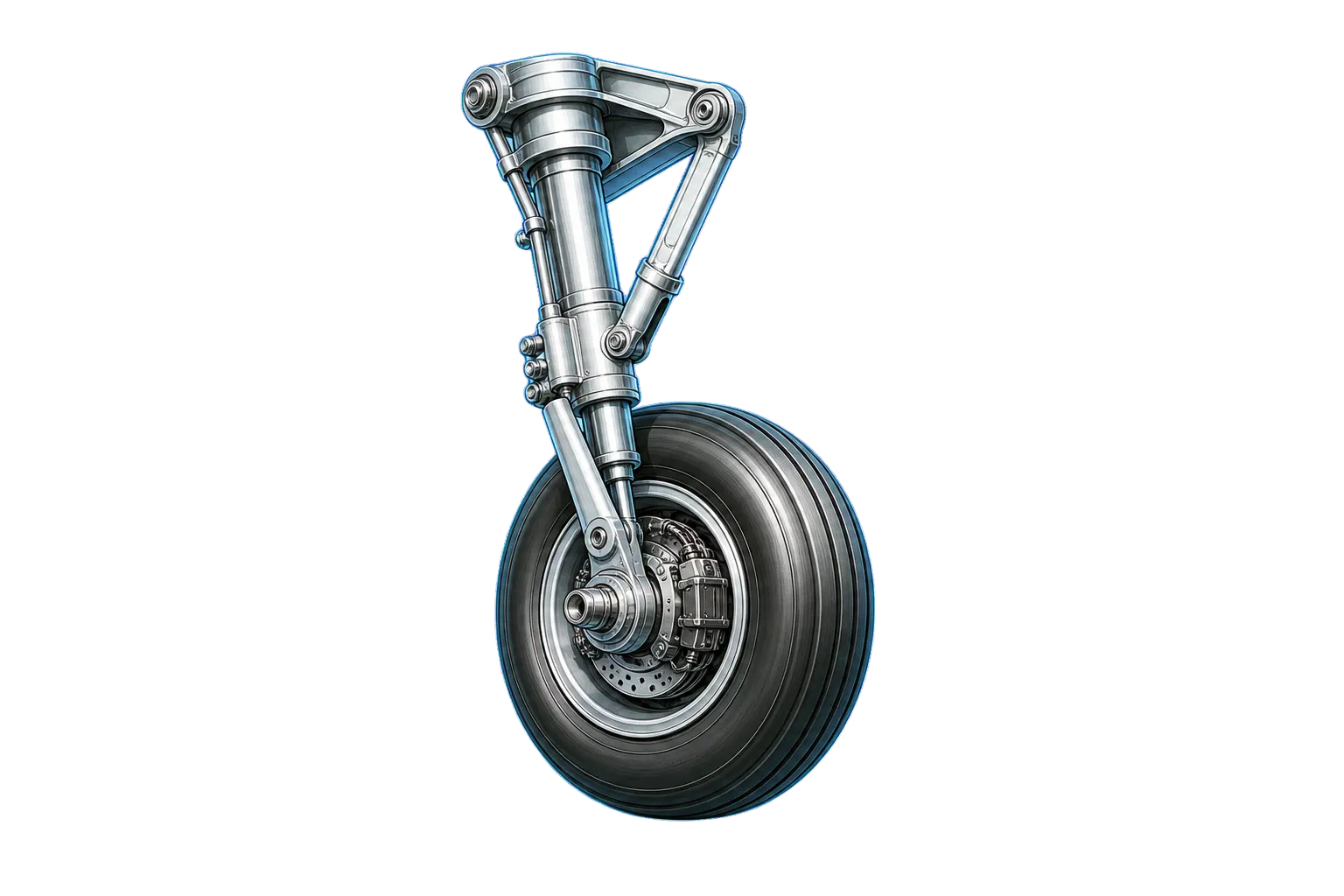
Failure of internal parts of the MLG door actuator could result in slow extension and down-locking of the main landing gear (MLG), potentially leading to MLG collapse during landing or rollout.
AI-generated summary from the source AD text. Verify against the official source before acting.
Required Actions
Amend the applicable Airplane Flight Manual (AFM), perform repetitive checks of specific Centralized Fault Display System (CFDS) messages, and inspect the opening sequence of the MLG door actuator for discrepancies. Replace the affected MLG door actuator with a new one if discrepancies are found.
AI-generated summary from the source AD text. Verify against the official source before acting.
Compliance Time
Before further flight
AI-generated summary from the source AD text. Verify against the official source before acting.
Affected Aircraft
Airbus Model A318, A319, A320, and A321 Series Airplanes with the specified MLG door actuator, P/N 114122012.
AI-generated summary from the source AD text. Verify against the official source before acting.
Federal Register Abstract
We are adopting a new airworthiness directive (AD) for the products listed above that would supersede an existing AD. This AD results from mandatory continuing airworthiness information (MCAI) originated by an aviation authority of another country to identify and correct an unsafe condition on an aviation product. The MCAI describes the unsafe condition as:
Document Text
Show stored source text (verify against official source)
[Federal Register Volume 76, Number 123 (Monday, June 27, 2011)]
[Rules and Regulations]
[Pages 37241-37244]
From the Federal Register Online via the Government Publishing Office [<a href="http://www.gpo.gov">www.gpo.gov</a>]
[FR Doc No: 2011-15683]
========================================================================
Rules and Regulations
Federal Register
________________________________________________________________________
This section of the FEDERAL REGISTER contains regulatory documents
having general applicability and legal effect, most of which are keyed
to and codified in the Code of Federal Regulations, which is published
under 50 titles pursuant to 44 U.S.C. 1510.
The Code of Federal Regulations is sold by the Superintendent of Documents.
Prices of new books are listed in the first FEDERAL REGISTER issue of each
week.
========================================================================
Federal Register / Vol. 76, No. 123 / Monday, June 27, 2011 / Rules
and Regulations
[[Page 37241]]
DEPARTMENT OF TRANSPORTATION
Federal Aviation Administration
14 CFR Part 39
[Docket No. FAA-2011-0573; Directorate Identifier 2011-NM-082-AD;
Amendment 39-16734; AD 2011-13-11]
RIN 2120-AA64
Airworthiness Directives; Airbus Model A318, A319, A320, and A321
Series Airplanes
AGENCY: Federal Aviation Administration (FAA), Department of
Transportation (DOT).
ACTION: Final rule; request for comments.
-----------------------------------------------------------------------
SUMMARY: We are adopting a new airworthiness directive (AD) for the
products listed above that would supersede an existing AD. This AD
results from mandatory continuing airworthiness information (MCAI)
originated by an aviation authority of another country to identify and
correct an unsafe condition on an aviation product. The MCAI describes
the unsafe condition as:
Some operators reported slow operation of the MLG [main landing
gear] door opening/closing sequence, leading to the generation of
ECAM [Electronic Centralised Aircraft Monitoring] warnings during
the landing gear retraction or extension sequence.
* * * * *
This condition, if not corrected, could prevent the full
extension and/or downlocking of the MLG, possibly resulting in MLG
collapse during landing or rollout and consequent damage to the
aeroplane and injury to occupants.
* * * * *
After in-service introduction of the new MLG door actuator, P/N
114122012, several operators reported failures of internal parts of
the MLG door actuator. Investigations confirmed that these failures
could result in slow extension of the actuator rod, delaying the MLG
Door operation, or possibly stopping just before the end of the
stroke, preventing the door to reach the fully open position.
* * * * *
This AD requires actions that are intended to address the unsafe
condition described in the MCAI.
DATES: This AD becomes effective July 12, 2011.
The Director of the Federal Register approved the incorporation by
reference of a certain publication listed in the AD as of July 12,
2011.
The Director of the Federal Register approved the incorporation by
reference of a certain other publication, listed in the AD as of April
27, 2007 (72 FR 13681, March 23, 2007).
We must receive comments on this AD by August 11, 2011.
ADDRESSES: You may send comments by any of the following methods:
<bullet> Federal eRulemaking Portal: Go to <a href="http://www.regulations.gov">http://www.regulations.gov</a>. Follow the instructions for submitting comments.
<bullet> Fax: (202) 493-2251.
<bullet> Mail: U.S. Department of Transportation, Docket
Operations, M-30, West Building Ground Floor, Room W12-140, 1200 New
Jersey Avenue, SE., Washington, DC 20590.
<bullet> Hand Delivery: U.S. Department of Transportation, Docket
Operations, M-30, West Building Ground Floor, Room W12-40, 1200 New
Jersey Avenue, SE., Washington, DC, between 9 a.m. and 5 p.m., Monday
through Friday, except Federal holidays.
Examining the AD Docket
You may examine the AD docket on the Internet at <a href="http://www.regulations.gov">http://www.regulations.gov</a>; or in person at the Docket Operations office
between 9 a.m. and 5 p.m., Monday through Friday, except Federal
holidays. The AD docket contains this AD, the regulatory evaluation,
any comments received, and other information. The street address for
the Docket Operations office (telephone (800) 647-5527) is in the
ADDRESSES section. Comments will be available in the AD docket shortly
after receipt.
FOR FURTHER INFORMATION CONTACT: Sanjay Ralhan, Aerospace Engineer,
International Branch, ANM-116, Transport Airplane Directorate, FAA,
1601 Lind Avenue, SW., Renton, Washington 98057-3356; telephone (425)
227-1405; fax (425) 227-1149.
SUPPLEMENTARY INFORMATION:
Discussion
On March 13, 2007, we issued AD 2007-06-18, Amendment 39-14999 (72
FR 13681, March 23, 2007). That AD required actions intended to address
an unsafe condition on Airbus Model A318, A319, A320, and A321
Airplanes.
Since we issued AD 2007-06-18, it has been determined that certain
new actuators had failure of internal parts. The European Aviation
Safety Agency (EASA), which is the Technical Agent for the Member
States of the European Community, has issued EASA Airworthiness
Directive 2011-0069, dated April 18, 2011 (referred to after this as
``the MCAI''), to correct an unsafe condition for the specified
products. The MCAI states:
Some operators reported slow operation of the [main landing
gear] MLG door opening/closing sequence, leading to the generation
of ECAM [Electronic Centralised Aircraft Monitoring] warnings during
the landing gear retraction or extension sequence.
Investigations showed that the damping ring and associated
retaining ring of the MLG door actuator deteriorate. The resultant
debris increases the friction inside the actuator which can be
sufficiently high to restrict opening of the MLG door by gravity,
during operation of the landing gear alternate (free-fall) extension
system.
This condition, if not corrected, could prevent the full
extension and/or downlocking of the MLG, possibly resulting in MLG
collapse during landing or rollout and consequent damage to the
aeroplane and injury to occupants.
EASA AD 2006-0112R1 was issued to require repetitive inspections
of the opening sequence of the MLG door in order to identify the
defective actuators [and replacement of any defective actuator with
a new actuator], and to introduce as an optional terminating action
Airbus production Modification 38274 and associated Service Bulletin
(SB) A320-32-1338, which incorporate an improved retaining ring,
located on the piston rod's extension end, and a new piston rod with
machined shoulder to accommodate the thicker section of the modified
retaining ring.
After in-service introduction of the new MLG door actuator, P/N
114122012, several operators reported failures of internal parts of
the MLG door actuator. Investigations confirmed that these failures
could result in slow extension of the actuator rod, delaying the MLG
Door operation, or possibly stopping just before the end of the
stroke, preventing the door to reach the fully open position.
This new [EASA] AD, which supersedes EASA AD 2006-0112R1,
requires an amendment of the applicable Airplane Flight
[[Page 37242]]
Manual (AFM), repetitive checks of specific Centralized Fault
Display System (CFDS) messages [and an inspection of the opening
sequence of the MLG door actuator for discrepancies if certain
messages are found], * * * and, depending on findings, corrective
action(s) [i.e., replacing the affected MLG door actuator with a new
MLG door actuator].
You may obtain further information by examining the MCAI in the AD
docket.
Relevant Service Information
Airbus has issued All Operators Telex A320-32A1390, dated February
10, 2011. The actions described in this service information are
intended to correct the unsafe condition identified in the MCAI.
FAA's Determination and Requirements of This AD
This product has been approved by the aviation authority of another
country, and is approved for operation in the United States. Pursuant
to our bilateral agreement with the State of Design Authority, we have
been notified of the unsafe condition described in the MCAI and service
information referenced above. We are issuing this AD because we
evaluated all pertinent information and determined the unsafe condition
exists and is likely to exist or develop on other products of the same
type design.
Differences Between the AD and the MCAI or Service Information
We have reviewed the MCAI and related service information and, in
general, agree with their substance. But we might have found it
necessary to use different words from those in the MCAI to ensure the
AD is clear for U.S. operators and is enforceable. In making these
changes, we do not intend to differ substantively from the information
provided in the MCAI and related service information.
We might also have required different actions in this AD from those
in the MCAI in order to follow FAA policies. Any such differences are
highlighted in a NOTE within the AD.
FAA's Determination of the Effective Date
An unsafe condition exists that requires the immediate adoption of
this AD. The FAA has found that the risk to the flying public justifies
waiving notice and comment prior to adoption of this rule because
failure of internal parts of actuators that could result in slow
extension and down-locking of MLG, resulting in MLG collapse during
landing or roll out, and consequent damage to the airplane. Therefore,
we determined that notice and opportunity for public comment before
issuing this AD are impracticable and that good cause exists for making
this amendment effective in fewer than 30 days.
Comments Invited
This AD is a final rule that involves requirements affecting flight
safety, and we did not precede it by notice and opportunity for public
comment. We invite you to send any written relevant data, views, or
arguments about this AD. Send your comments to an address listed under
the ADDRESSES section. Include ``Docket No. FAA-2011-0573; Directorate
Identifier 2011-NM-082-AD'' at the beginning of your comments. We
specifically invite comments on the overall regulatory, economic,
environmental, and energy aspects of this AD. We will consider all
comments received by the closing date and may amend this AD because of
those comments.
We will post all comments we receive, without change, to <a href="http://www.regulations.gov">http://www.regulations.gov</a>, including any personal information you provide. We
will also post a report summarizing each substantive verbal contact we
receive about this AD.
Authority for This Rulemaking
Title 49 of the United States Code specifies the FAA's authority to
issue rules on aviation safety. Subtitle I, section 106, describes the
authority of the FAA Administrator. ``Subtitle VII: Aviation
Programs,'' describes in more detail the scope of the Agency's
authority.
We are issuing this rulemaking under the authority described in
``Subtitle VII, Part A, Subpart III, Section 44701: General
requirements.'' Under that section, Congress charges the FAA with
promoting safe flight of civil aircraft in air commerce by prescribing
regulations for practices, methods, and procedures the Administrator
finds necessary for safety in air commerce. This regulation is within
the scope of that authority because it addresses an unsafe condition
that is likely to exist or develop on products identified in this
rulemaking action.
Regulatory Findings
We determined that this AD will not have federalism implications
under Executive Order 13132. This AD will not have a substantial direct
effect on the States, on the relationship between the national
government and the States, or on the distribution of power and
responsibilities among the various levels of government.
For the reasons discussed above, I certify this AD:
1. Is not a ''significant regulatory action'' under Executive Order
12866;
2. Is not a ''significant rule'' under the DOT Regulatory Policies
and Procedures (44 FR 11034, February 26, 1979); and
3. Will not have a significant economic impact, positive or
negative, on a substantial number of small entities under the criteria
of the Regulatory Flexibility Act.
We prepared a regulatory evaluation of the estimated costs to
comply with this AD and placed it in the AD docket.
List of Subjects in 14 CFR Part 39
Air transportation, Aircraft, Aviation safety, Incorporation by
reference, Safety.
Adoption of the Amendment
Accordingly, under the authority delegated to me by the
Administrator, the FAA amends 14 CFR part 39 as follows:
PART 39--AIRWORTHINESS DIRECTIVES
0
1. The authority citation for part 39 continues to read as follows:
Authority: 49 U.S.C. 106(g), 40113, 44701.
Sec. 39.13 [Amended]
0
2. The FAA amends Sec. 39.13 by removing Amendment 39-14999 (72 FR
13681, March 23, 2007) and adding the following new AD:
2011-13-11 Airbus: Amendment 39-16734. Docket No. FAA-2011-0573;
Directorate Identifier 2011-NM-082-AD.
Effective Date
(a) This airworthiness directive (AD) becomes effective July 12,
2011.
Affected ADs
(b) This AD supersedes AD 2007-06-18, Amendment 39-14999.
Applicability
(c) This AD applies to all Airbus Model A318-111, -112, -121,
and -122, airplanes; Model A319-111, -112, -113, -114, -115, -131, -
132, and -133 airplanes; Model A320-111, -211, -212, -214, -231, -
232, and -233 airplanes; and Model A321-111, -112, -131, -211, -212,
-213, -231, and -232 airplanes; certificated in any category.
Subject
(d) Air Transport Association (ATA) of America Code 32: Landing
Gear.
Reason
(e) The mandatory continued airworthiness information (MCAI)
states:
Some operators reported slow operation of the MLG [main landing
gear] door opening/closing sequence, leading to the generation of
ECAM [Electronic Centralised Aircraft
[[Page 37243]]
Monitoring] warnings during the landing gear retraction or extension
sequence.
* * * * *
This condition, if not corrected, could prevent the full
extension and/or downlocking of the MLG, possibly resulting in MLG
collapse during landing or rollout and consequent damage to the
aeroplane and injury to occupants.
* * * * *
After in-service introduction of the new MLG door actuator, P/N
114122012, several operators reported failures of internal parts of
the MLG door actuator. Investigations confirmed that these failures
could result in slow extension of the actuator rod, delaying the MLG
Door operation, or possibly stopping just before the end of the
stroke, preventing the door to reach the fully open position.
* * * * *
Compliance
(f) You are responsible for having the actions required by this
AD performed within the compliance times specified, unless the
actions have already been done.
Restatement of Requirements of AD 2007-06-18, With No Changes
Repetitive Inspections/Replacement
(g) At the time specified in paragraph (g)(1) or (g)(2) of this
AD, as applicable: Do a general visual inspection of the operation
of the MLG door opening sequence to determine if a defective
actuator is installed by doing all the applicable actions, including
replacing the door actuator, as applicable, specified in the
Accomplishment Instructions of Airbus Service Bulletin A320-32-1309,
Revision 01, dated June 19, 2006. Do all applicable replacements
before further flight. Repeat the inspection thereafter at intervals
not to exceed 900 flight cycles. Accomplishing the actions before
April 27, 2007 (the effective date of AD 2007-06-18) in accordance
with Airbus Service Bulletin A320-32-1309, dated March 7, 2006, is
acceptable for compliance with the corresponding requirements in
this paragraph. Doing the inspection required by paragraph (l) of
this AD terminates the requirements of this paragraph.
(1) For airplanes on which a record of the total number of
flight cycles on the MLG door actuator is available: Before the
accumulation of 3,000 total flight cycles on the MLG door actuator,
or within 800 flight cycles after April 27, 2007, whichever is
later.
(2) For airplanes on which a record of the total number of
flight cycles on the MLG door actuator is not available: Within 800
flight cycles after April 27, 2007.
Note 1: For the purposes of this AD, a general visual
inspection is: ``A visual examination of an interior or exterior
area, installation, or assembly to detect obvious damage, failure,
or irregularity. This level of inspection is made from within
touching distance unless otherwise specified. A mirror may be
necessary to enhance visual access to all exposed surfaces in the
inspection area. This level of inspection is made under normally
available lighting conditions such as daylight, hangar lighting,
flashlight, or droplight and may require removal or opening of
access panels or doors. Stands, ladders, or platforms may be
required to gain proximity to the area being checked.''
No Reporting/Parts Return Required
(h) Although the Accomplishment Instructions of Airbus Service
Bulletin A320-32-1309, Revision 01, dated June 19, 2006, specify
submitting certain information to the manufacturer and sending
defective actuators back to the component manufacturer for
investigation, this AD does not include those requirements.
New Requirements of This AD
Revise the Airplane Flight Manual (AFM)
(i) Within 14 days after the effective date of this AD, revise
the Emergency Procedure Section of the airplane flight manual (AFM)
to incorporate the following information. This may be done by
inserting a copy of this AD into the AFM.
``<bullet> If ECAM triggers the ``L/G GEAR NOT DOWNLOCKED''
warning, apply the following procedure:
Recycle landing gear.
<bullet> If unsuccessful after 2 min:
Extend landing gear by gravity. Refer to ABN-32 L/G GRAVITY
EXTENSION.''
Note 2: When a statement identical to that in paragraph (i) of
this AD has been included in the Emergency Procedure Section of the
general revisions of the AFM, the general revisions may be inserted
into the AFM, and the copy of this AD may be removed from the AFM.
Repetitive Checks
(j) Within 14 days after the effective date of this AD or before
the accumulation of 800 total flight cycles, whichever occurs later,
check the post flight report (PFR) for centralized fault display
system (CFDS) messages triggered within the last 8 days, in
accordance with paragraph 4.2.1 of Airbus All Operators Telex (AOT)
A320-32A1390, dated February 10, 2011. Repeat the check thereafter
at intervals not to exceed 8 days or 5 flight cycles, whichever
occurs later. If done in accordance with a method approved by the
Manager, International Branch, ANM-116, Transport Airplane
Directorate, FAA, the use of an alternative method to check the PFR
for CFDS messages (e.g., AIRMAN) is acceptable in lieu of this check
if the messages can be conclusively determined from that method.
On-Condition Inspection
(k) If, during any check required by paragraph (j) of this AD, a
pair of specific CFDS messages specified in paragraph 4.2.1 of
Airbus AOT A320-32A1390, dated February 10, 2011, has been triggered
by both landing gear control and indication units (LGCIU) for the
same flight, before further flight, inspect the door opening
sequence of the affected doors of the MLG for discrepancies (i.e.,
if any condition specified in steps (a) through (d) of paragraph
4.2.2 of Airbus AOT A320-32A1390, dated February 10, 2011, is not
met), in accordance with paragraph 4.2.2 of Airbus AOT A320-32A1390,
dated February 10, 2011.
Repetitive Inspections
(l) At the applicable time specified in paragraph (l)(1) or
(l)(2) of this AD: inspect the door opening sequence of the left
hand and right hand doors of the MLG for discrepancies (i.e., if any
condition specified in steps (a) through (d) of paragraph 4.2.2 of
Airbus AOT A320-32A1390, dated February 10, 2011, is not met), in
accordance with the instructions of paragraph 4.2.2 of Airbus AOT
A320-32A1390, dated February 10, 2011. Repeat the inspection
thereafter at intervals not to exceed 425 flight cycles. Doing this
inspection terminates the requirements of paragraph (g) of this AD.
(1) For airplanes on which an inspection required by paragraph
(g) of this AD has been done as of the effective date of this AD:
Within 800 flight cycles after doing the most recent inspection
required by paragraph (g) of this AD, or within 100 flight cycles
after the effective date of this AD, whichever occurs later.
(2) For airplanes on which an inspection required by paragraph
(g) of this AD has not been done as of the effective date of this
AD: Within 800 flight cycles after the effective date of this AD.
Replacement
(m) If any discrepancy (i.e., if any condition specified in
steps (a) through (d) of paragraph 4.2.2 of Airbus AOT A320-32A1390,
dated February 10, 2011, is not met) is found during any inspection
required by paragraph (k) or (l) of this AD, before further flight,
replace the affected MLG door actuator with a new MLG door actuator,
in accordance with the instructions of Airbus AOT A320-32A1390,
dated February 10, 2011.
(n) Replacement of the MLG door actuator as required by
paragraph (m) of this AD is not a terminating action for the
repetitive actions required by paragraphs (j) and (l) of this AD.
FAA AD Differences
Note 3: This AD differs from the MCAI and/or service information
as follows:
(1) Paragraph (6) of European Aviation Safety Agency (EASA) AD
2011-0069, dated April 18, 2011, specifies a compliance time of 800
flight cycles after the effective date for all airplanes for the
initial inspection of the door opening sequence. This AD specifies a
compliance time of 800 flight cycles after the effective date of
this AD for airplanes on which the existing inspections (required by
AD 2007-06-18) of the door opening sequence have not been done, and
a compliance time of within 800 flight cycles since the most recent
inspection or within 100 flight cycles after the effective date of
this AD, whichever occurs later, for airplanes on which the existing
inspections of the door opening sequence have been done.
(2) EASA AD 2011-0069, dated April 18, 2011, specifies MLG door
actuators having part number (P/N) 114122006, P/N 114122007, P/N
114122009, P/N 114122010, P/N 114122011, or P/N 114122012, in its
applicability. This AD retains the existing applicability of AD
2007-06-18 of all airplanes because all airplanes have one of the
affected part numbers.
[[Page 37244]]
Other FAA AD Provisions
(o) The following provisions also apply to this AD:
(1) Alternative Methods of Compliance (AMOCs): The Manager,
International Branch, ANM-116, Transport Airplane Directorate, FAA,
has the authority to approve AMOCs for this AD, if requested using
the procedures found in 14 CFR 39.19. In accordance with 14 CFR
39.19, send your request to your principal inspector or local Flight
Standards District Office, as appropriate. If sending information
directly to the International Branch, send it to ATTN: Sanjay
Ralhan, Aerospace Engineer, International Branch, ANM-116, Transport
Airplane Directorate, FAA, 1601 Lind Avenue, SW., Renton, Washington
98057-3356; telephone (425) 227-1405; fax (425) 227-1149.
Information may be e-mailed to: <a href="/cdn-cgi/l/email-protection#b38a9ef2fdfe9e8282859ef2fefcf09ee1f6e2e6f6e0e7e0f3d5d2d29dd4dcc5"><span class="__cf_email__" data-cfemail="556c78141b18786464637814181a16780710040010060106153334347b323a23">[email protected]</span></a>.
Before using any approved AMOC, notify your appropriate principal
inspector, or lacking a principal inspector, the manager of the
local flight standards district office/certificate holding district
office. The AMOC approval letter must specifically reference this
AD. As of the effective date of this AD, AMOCs approved previously
in accordance with AD 2007-06-18, are not approved as AMOCs with
this AD.
(2) Airworthy Product: For any requirement in this AD to obtain
corrective actions from a manufacturer or other source, use these
actions if they are FAA-approved. Corrective actions are considered
FAA-approved if they are approved by the State of Design Authority
(or their delegated agent). You are required to assure the product
is airworthy before it is returned to service.
(3) Special Flight Permits: Special flight permits may be issued
in accordance with sections 21.197 and 21.199 of the Federal
Aviation Regulations (14 CFR 21.197 and 21.199) with the MLG
extended, provided that no recycle of the MLG is allowed during
flight.
Related Information
(p) Refer to MCAI EASA 2011-0069, dated April 18, 2011; Airbus
Service Bulletin A320-32-1309, Revision 01, dated June 19, 2006; and
Airbus AOT A320-32A1390, dated February 10, 2011; for related
information.
Material Incorporated by Reference
(q) You must use Airbus All Operators Telex A320-32A1390, dated
February 10, 2011; and Airbus Service Bulletin A320-32-1309,
Revision 01, dated June 19, 2006; as applicable; to do the actions
required by this AD, unless the AD specifies otherwise.
(1) The Director of the Federal Register approved the
incorporation by reference of Airbus All Operators Telex A320-
32A1390, dated February 10, 2011, under 5 U.S.C. 552(a) and 1 CFR
part 51.
(2) The Director of the Federal Register previously approved the
incorporation by reference of Airbus Service Bulletin A320-32-1309,
Revision 01, dated June 19, 2006, on April 27, 2007 (72 FR 13681,
March 23, 2007).
(3) For service information identified in this AD, contact
Airbus, Airworthiness Office--EAS, 1 Rond Point Maurice Bellonte,
31707 Blagnac Cedex, France; telephone +33 5 61 93 36 96; fax +33 5
61 93 44 51; e-mail: <a href="/cdn-cgi/l/email-protection#335250505c465d471d525a41445c41475b1e56524073525a415146401d505c5e"><span class="__cf_email__" data-cfemail="a3c2c0c0ccd6cdd78dc2cad1d4ccd1d7cb8ec6c2d0e3c2cad1c1d6d08dc0ccce">[email protected]</span></a>; Internet
<a href="http://www.airbus.com">http://www.airbus.com</a>.
(4) You may review copies of the service information at the FAA,
Transport Airplane Directorate, 1601 Lind Avenue, SW., Renton,
Washington. For information on the availability of this material at
the FAA, call 425-227-1221.
(5) You may also review copies of the service information that
is incorporated by reference at the National Archives and Records
Administration (NARA). For information on the availability of this
material at NARA, call 202-741-6030, or go to: <a href="http://www.archives.gov/federal_register/code_of_federal_regulations/ibr_locations.html">http://www.archives.gov/federal_register/code_of_federal_regulations/ibr_locations.html</a>.
Issued in Renton, Washington, on June 16, 2011.
Ali Bahrami,
Manager, Transport Airplane Directorate, Aircraft Certification
Service.
[FR Doc. 2011-15683 Filed 6-24-11; 8:45 am]
BILLING CODE 4910-13-P
Source: Official FAA Source ↗
Retrieved: Apr 6, 2026
Rights: U.S. Government Public Domain
This site is not affiliated with or endorsed by the FAA. Always verify with official sources.
Related Airworthiness Directives
2026-03-10
final ruleAirworthiness Directives; Airbus SAS Airplanes
Unsafe Condition: a safety significant latent failure (that is not annunciated), which, in combination with one or more other specific failures or events, could result in a hazardous or catastrophic failure condition.
2025-23-09 Recurring
final ruleAirworthiness Directives; Airbus SAS Airplanes
Unsafe Condition: Cracks on the web horizontal flange and inner cap at frame (FR) 68, left-hand (LH) and right-hand (RH) sides, at stringer (STGR) 22, and additional cracks found at the door stop fitting number 1 ho...

2025-20-15 Recurring
final ruleAirworthiness Directives; Airbus SAS Airplanes
Unsafe Condition: Cracks in the double joggle areas at frame (FR) 16 and FR20, right-hand and left-hand sides, which, if not detected and corrected, could reduce the structural integrity of the fuselage.
2025-20-19 Recurring
final ruleAirworthiness Directives; Airbus SAS Airplanes
Unsafe Condition: fatigue cracking of the forward pressure bulkhead, which could result in reduced structural integrity of the airplane