AD 2007-09-07
Applicability
| Type | Manufacturer | Model | Details |
|---|---|---|---|
| aircraft | SOCATA | TBM 700 | Airworthiness Directives; EADS SOCATA Model TBM 700 Airplanes |
Unsafe Condition
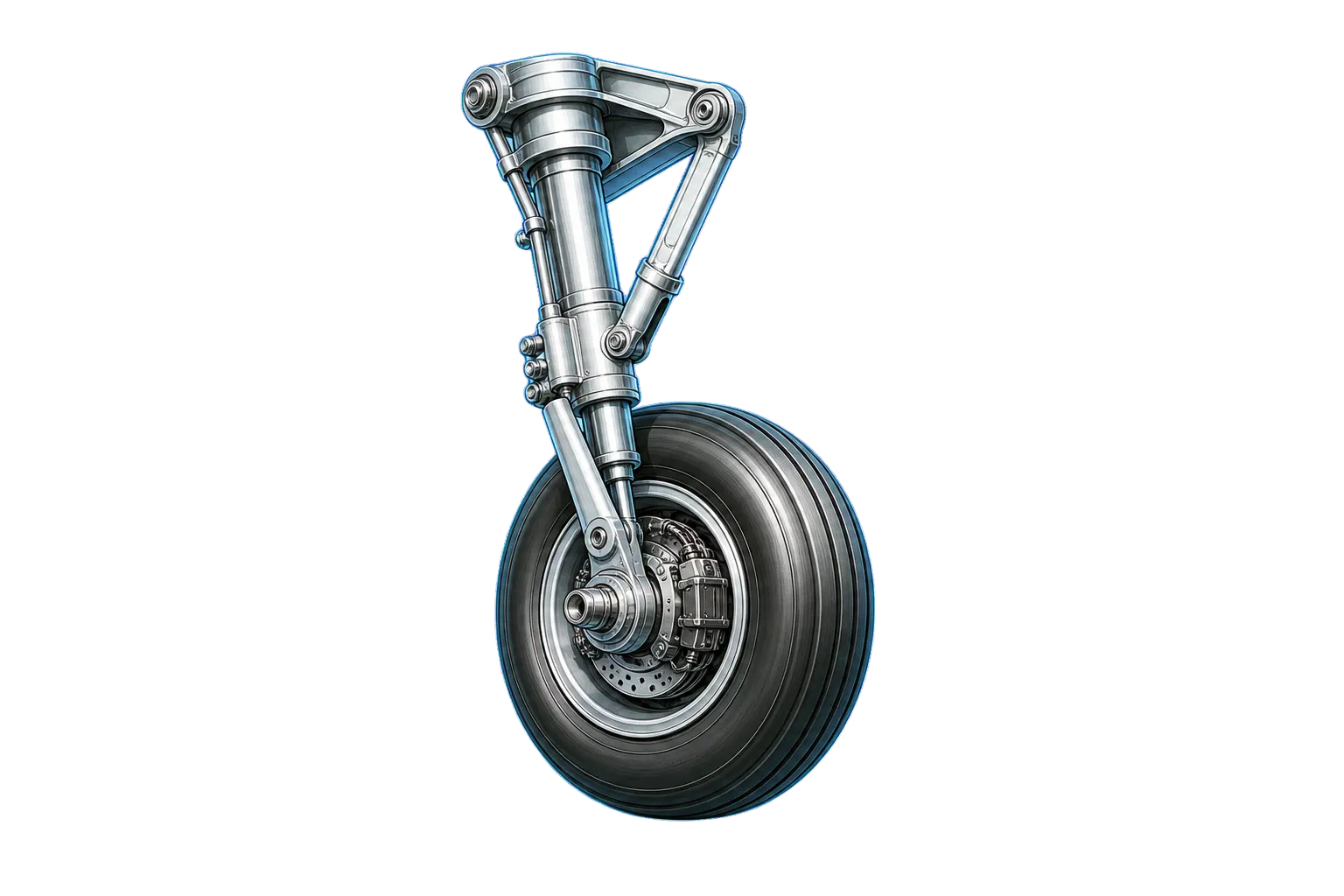
A Nose Landing Gear (NLG) hinge pin rupture that causes an uncommanded NLG retraction, resulting from an incomplete thermal treatment on three hinge pin batches, lowering their mechanical properties with a high risk of deformation under service loads.
AI-generated summary from the source AD text. Verify against the official source before acting.
Required Actions
Inspect the nose landing gear (NLG) part serial number to identify affected parts. Detect and replace defective NLG hinge pins installed on the product.
AI-generated summary from the source AD text. Verify against the official source before acting.
Compliance Time
Within 50 flight hours after the effective date of this AD.
AI-generated summary from the source AD text. Verify against the official source before acting.
Affected Aircraft
EADS SOCATA Model TBM 700 airplanes fitted with nose landing gear (NLG) part number 21130-001-02 with serial numbers B155 through B173 and EUR 174 through EUR 240, certificated in any U.S. category.
AI-generated summary from the source AD text. Verify against the official source before acting.
Federal Register Abstract
We are adopting a new airworthiness directive (AD) for the products listed above. This AD results from mandatory continuing airworthiness information (MCAI) issued by an aviation authority of another country to identify and correct an unsafe condition on an aviation product. The MCAI describes the unsafe condition as:
Document Text
Show stored source text (verify against official source)
[Federal Register Volume 72, Number 82 (Monday, April 30, 2007)]
[Rules and Regulations]
[Pages 21090-21093]
From the Federal Register Online via the Government Publishing Office [<a href="http://www.gpo.gov">www.gpo.gov</a>]
[FR Doc No: E7-8003]


-----------------------------------------------------------------------

DEPARTMENT OF TRANSPORTATION

Federal Aviation Administration

14 CFR Part 39

[Docket No. FAA-2006-25581 Directorate Identifier 2006-CE-041-AD;
Amendment 39-15039; AD 2007-09-07]
RIN 2120-AA64


Airworthiness Directives; EADS SOCATA Model TBM 700 Airplanes

AGENCY: Federal Aviation Administration (FAA), Department of
Transportation (DOT).

ACTION: Final rule.

-----------------------------------------------------------------------

SUMMARY: We are adopting a new airworthiness directive (AD) for the
products listed above. This AD results from mandatory continuing
airworthiness information (MCAI) issued by an aviation authority of
another country to identify and correct an unsafe condition on an
aviation product. The MCAI describes the unsafe condition as:

    * * * a Nose Landing Gear (NLG) hinge pin rupture that causes an
uncommanded NLG retraction.
    Investigations identified the unsafe condition resulting from an
incomplete thermal treatment done on three hinge pin

[[Page 21091]]

batches lowering their mechanical properties with a high risk of
deformation under service loads.

EADS SOCATA notes that an NLG hinge pin rupture could cause an
uncommanded NLG retraction during landing. We are issuing this AD to
require actions to correct the unsafe condition on these products.

DATES: This AD becomes effective June 4, 2007.
    On June 4, 2007 the Director of the Federal Register approved the
incorporation by reference of certain publications listed in this AD.

ADDRESSES: You may examine the AD docket on the Internet at <a href="http://dms.dot.gov">http://dms.dot.gov</a> or in person at the Docket Management Facility, U.S.
Department of Transportation, 400 Seventh Street, SW., Nassif Building,
Room PL-401, Washington, DC.

FOR FURTHER INFORMATION CONTACT: Albert Mercado, Aerospace Engineer,
FAA, Small Airplane Directorate, 901 Locust, Room 301, Kansas City,
Missouri 64106; telephone: (816) 329-4119; fax: (816) 329-4090.

SUPPLEMENTARY INFORMATION:

Streamlined Issuance of AD

    The FAA is implementing a new process for streamlining the issuance
of ADs related to MCAI. The streamlined process will allow us to adopt
MCAI safety requirements in a more efficient manner and will reduce
safety risks to the public. This process continues to follow all FAA AD
issuance processes to meet legal, economic, Administrative Procedure
Act, and Federal Register requirements. We also continue to meet our
technical decision-making responsibilities to identify and correct
unsafe conditions on U.S.-certificated products.
    This AD references the MCAI and related service information that we
considered in forming the engineering basis to correct the unsafe
condition. The AD contains text copied from the MCAI and for this
reason might not follow our plain language principles.

Discussion

    We issued a supplemental notice of proposed rulemaking (NPRM) to
amend 14 CFR part 39 to include an AD that would apply to the specified
products. That NPRM was published in the Federal Register on February
21, 2007 (72 FR 7838). That NPRM proposed to correct an unsafe
condition for the specified products. The MCAI advises of

    * * * a Nose Landing Gear (NLG) hinge pin rupture that causes an
uncommanded NLG retraction.
    Investigations identified the unsafe condition resulting from an
incomplete thermal treatment done on three hinge pin batches
lowering their mechanical properties with a high risk of deformation
under service loads.

EADS SOCATA notes that an NLG hinge pin rupture could cause an
uncommanded NLG retraction during landing.

Comments

    We gave the public the opportunity to participate in developing
this AD. We considered the comments received.

Comment Issue No. 1: Number of Affected Products

    EADS SOCATA writes that TBM Aircraft Mandatory Alert Service
Bulletin SB 70-147, Amendment 1, dated September 2006, affects 86 nose
landing gear (NLG) (in the worst case 86 products). Further, that among
these 86 NLG, only 47 NLG are equipped with defective pins.
    The FAA agrees that not all aircraft contain the affected NLG part.
However, to appropriately identify the product with the affected nose
landing gear part serial number, the AD requires to first identify the
concerned NLG, then to detect the defective hinge pins installed on the
product, and then replace the affected parts. The check of the NLG part
serial number for applicability is necessary on all products.
Therefore, we are not changing the AD based on this comment.

Comment Issue No. 2: Cost of Compliance

    EADS SOCATA notes that the proposed AD specifies that any required
parts would cost about $1,025 for each product and that it would take
about 2 work-hours per product to comply with basic requirements of
this proposed AD. EADS SOCATA specifies that the identification of the
batch number is immediate for products with correct pins. For any
product with defective pins, all the costs, work-hours and required
parts, associated with TBM Aircraft Mandatory Alert Service Bulletin SB
70-147, Amendment 1, dated September 2006, will be covered under
warranty if the defective pins are returned to EADS SOCATA.
    We have noted EADS SOCATA comments and have revised the costs of
compliance to reflect only the labor to identify the NLG part serial
number. Our standard warranty language will reflect EADS SOCATA's
warranty program.

Comment Issue No. 3: Unsafe Condition Description

    EADS SOCATA comments that the proposed AD describes the unsafe
condition associated with TBM Aircraft Mandatory Alert Service Bulletin
SB 70-147, Amendment 1, dated September 2006, as an NLG hinge pin
rupture that causes an uncommanded NLG retraction. Further, EADS SOCATA
estimates that a NLG hinge pin rupture could lead to a nose landing
gear collapse in the case of a three-point landing.
    The FAA notes that the unsafe condition language was copied
directly from the Reason section of the associated MCAI. However, to
clarify the unsafe condition we will change the AD to add that a NLG
hinge pin rupture could cause an uncommanded NLG retraction during
landing.

Conclusion

    We reviewed the available data, including the comments received,
and determined that air safety and the public interest require adopting
the AD with the changes described previously. We determined that these
changes will not increase the economic burden on any operator or
increase the scope of the AD.

Differences Between This AD and the MCAI or Service Information

    We have reviewed the MCAI and related service information and, in
general, agree with their substance. But we might have found it
necessary to use different words from those in the MCAI to ensure the
AD is clear for U.S. operators and is enforceable. In making these
changes, we do not intend to differ substantively from the information
provided in the MCAI and related service information.
    We might also have required different actions in this AD from those
in the MCAI in order to follow FAA policies. Any such differences are
highlighted in a Note within the AD.

Costs of Compliance

    We estimate that this AD will affect 256 products of U.S. registry.
We also estimate that it will take about 0.5 work-hours per product to
comply with basic requirements of this AD. The average labor rate is
$80 per work-hour.
    Based on these figures, we estimate the cost of this AD to the U.S.
operators to be $10,240 or $40 per product. Where the service
information lists required parts costs that are covered under warranty,
we have assumed that there will be no charge for these parts. As we do
not control warranty coverage for

[[Page 21092]]

affected parties, some parties may incur costs higher than estimated
here.

Authority for This Rulemaking

    Title 49 of the United States Code specifies the FAA's authority to
issue rules on aviation safety. Subtitle I, section 106, describes the
authority of the FAA Administrator. ``Subtitle VII: Aviation
Programs,'' describes in more detail the scope of the Agency's
authority.
    We are issuing this rulemaking under the authority described in
``Subtitle VII, Part A, Subpart III, Section 44701: General
requirements.'' Under that section, Congress charges the FAA with
promoting safe flight of civil aircraft in air commerce by prescribing
regulations for practices, methods, and procedures the Administrator
finds necessary for safety in air commerce. This regulation is within
the scope of that authority because it addresses an unsafe condition
that is likely to exist or develop on products identified in this
rulemaking action.

Regulatory Findings

    We determined that this AD will not have federalism implications
under Executive Order 13132. This AD will not have a substantial direct
effect on the States, on the relationship between the national
government and the States, or on the distribution of power and
responsibilities among the various levels of government.
    For the reasons discussed above, I certify this AD:
    (1) Is not a ``significant regulatory action'' under Executive
Order 12866;
    (2) Is not a ``significant rule'' under DOT Regulatory Policies and
Procedures (44 FR 11034, February 26, 1979); and
    (3) Will not have a significant economic impact, positive or
negative, on a substantial number of small entities under the criteria
of the Regulatory Flexibility Act.
    We prepared a regulatory evaluation of the estimated costs to
comply with this AD and placed it in the AD Docket.

Examining the AD Docket

    You may examine the AD docket on the Internet at <a href="http://dms.dot.gov">http://dms.dot.gov</a>; or in person at the Docket Management Facility between 9
a.m. and 5 p.m., Monday through Friday, except Federal holidays. The AD
docket contains the NPRM, the regulatory evaluation, any comments
received, and other information. The street address for the Docket
Office (telephone (800) 647-5227) is in the ADDRESSES section. Comments
will be available in the AD docket shortly after receipt.

List of Subjects in 14 CFR Part 39

    Air transportation, Aircraft, Aviation safety, Incorporation by
reference, Safety.

Adoption of the Amendment

0
Accordingly, under the authority delegated to me by the Administrator,
the FAA amends 14 CFR part 39 as follows:

PART 39--AIRWORTHINESS DIRECTIVES

0
1. The authority citation for part 39 continues to read as follows:

    Authority: 49 U.S.C. 106(g), 40113, 44701.


Sec.  39.13  [Amended]

0
2. The FAA amends Sec.  39.13 by adding the following new AD:

2007-09-07 EADS SOCATA: Amendment 39-15039; Docket No. FAA-2006-
25581; Directorate Identifier 2006-CE-041-AD.

Effective Date

    (a) This airworthiness directive (AD) becomes effective June 4,
2007.

Affected ADs

    (b) None.

Applicability

    (c) This AD applies to all Model TBM 700 airplanes fitted with
nose landing gear (NLG) part number (P/N) 21130-001-02 with serial
numbers (S/N) B155 through B173 and S/N EUR 174 through EUR 240,
that are certificated in any U.S. category.

Subject

    (d) Air Transport Association of America (ATA) Code 32: Landing
Gear.

Reason

    (e) The mandatory continuing airworthiness information (MCAI)
describes the unsafe condition as follows:
    * * * a Nose Landing Gear (NLG) hinge pin rupture that causes an
uncommanded NLG retraction.
    Investigations identified the unsafe condition resulting from an
incomplete thermal treatment done on three hinge pin batches
lowering their mechanical properties with a high risk of deformation
under service loads.

EADS SOCATA notes that an NLG hinge pin rupture could cause an
uncommanded NLG retraction during landing.

Actions and Compliance

    (f) Within 30 days after June 4, 2007 (the effective date of
this AD), unless already done, do the following:
    (1) Identify the NLG hinge pin batch number as instructed in
paragraph B of the accomplishment instructions of EADS SOCATA TBM
Aircraft Mandatory Alert Service Bulletin SB 70-147, Amendment 1,
dated September 2006.
    (i) For airplanes with the correct pin batch numbers, no further
action is required. Return the airplane to service as instructed in
EADS SOCATA TBM Aircraft Mandatory Alert Service Bulletin SB 70-147,
Amendment 1, dated September 2006.
    (ii) For airplanes with pins from the defective pin batch
numbers or for which the batch number cannot be read, do all the
actions as instructed in paragraphs B 5), C, and D of the
accomplishment instructions of EADS SOCATA TBM Aircraft Mandatory
Alert Service Bulletin SB 70-147, Amendment 1, dated September 2006.
    (2) As of 30 days after June 4, 2007 (the effective date of this
AD), do not install on any EADS SOCATA Model TBM 700 airplane an NLG
actuator hinge pin coming from the three defective batches
identified as EUR BC 21344-000-01, EUR BD 21344-000-01, and EUR BF
21344-000-01 on NLG part number 21130-001-02.

FAA AD Differences

    Note: This AD differs from the MCAI and/or service information
as follows: The service bulletin and MCAI require interim
operational instructions until the corrective actions are done. This
AD requires the corrective action at the same time as the pin batch
number check.

Other FAA AD Provisions

    (g) The following provisions also apply to this AD:
    (1) Alternative Methods of Compliance (AMOCs): The Manager,
Standards Staff, FAA, ATTN: Albert J. Mercado, Aerospace Engineer,
FAA, Small Airplane Directorate, 901 Locust, Room 301, Kansas City,
Missouri, 64106; telephone: (816) 329-4119; fax: (816) 329-4090.,
has the authority to approve AMOCs for this AD, if requested using
the procedures found in 14 CFR 39.19.
    (2) Airworthy Product: For any requirement in this AD to obtain
corrective actions from a manufacturer or other source, use these
actions if they are FAA-approved. Corrective actions are considered
FAA-approved if they are approved by the State of Design Authority
(or their delegated agent). You are required to assure the product
is airworthy before it is returned to service.
    (3) Reporting Requirements: For any reporting requirement in
this AD, under the provisions of the Paperwork Reduction Act (44
U.S.C. 3501 et. seq.), the Office of Management and Budget (OMB) has
approved the information collection requirements and has assigned
OMB Control Number 2120-0056.

Related Information

    (h) This AD is related to European Aviation Safety Agency
Emergency AD No. 2006-0271-E, Issue date: September 4, 2006, which
references EADS SOCATA TBM Aircraft Mandatory Alert Service Bulletin
SB 70-147, Amendment 1, dated September 2006.

Material Incorporated by Reference

    (i) You must use EADS SOCATA TBM Aircraft Mandatory Alert
Service Bulletin SB 70-147, Amendment 1, dated September 2006, to do
the actions required by this AD, unless the AD specifies otherwise.
    (1) The Director of the Federal Register approved the
incorporation by reference of

[[Page 21093]]

this service information under 5 U.S.C. 552(a) and 1 CFR part 51.
    (2) For service information identified in this AD, contact EADS
SOCATA, Direction des Services, 65921 Tarbes Cedex 9, France;
telephone: 33 (0)5 62.41.73.00; fax: 33 (0)5 62.41.76.54; or SOCATA
Aircraft, INC., North Perry Airport, 7501 Airport Road, Pembroke
Pines, Florida 33023; telephone: (954) 893-1400; fax: (954) 964-
4141.
    (3) You may review copies at the FAA, Central Region, Office of
the Regional Counsel, 901 Locust, Room 506, Kansas City, Missouri
64106; or at the National Archives and Records Administration
(NARA). For information on the availability of this material at
NARA, call 202-741-6030, or go to: <a href="http://www.archives.gov/federal-register/cfr/ibr-locations.html">http://www.archives.gov/federal-register/cfr/ibr-locations.html</a>.

    Issued in Kansas City, Missouri, on April 20, 2007.
Charles L. Smalley,
Acting Manager, Small Airplane Directorate, Aircraft Certification
Service.
[FR Doc. E7-8003 Filed 4-27-07; 8:45 am]
BILLING CODE 4910-13-P
Source: Official FAA Source ↗
Retrieved: Apr 4, 2026
Rights: U.S. Government Public Domain
This site is not affiliated with or endorsed by the FAA. Always verify with official sources.
Related Airworthiness Directives
2017-15-15
final ruleAirworthiness Directives; SOCATA Airplanes
Unsafe Condition: The flight control wheel traveling beyond normal roll control limits and jamming in a position that could cause loss of control.
2015-17-10
final ruleAirworthiness Directives; SOCATA Airplanes
Unsafe Condition: Cracks found on the main landing gear cylinders, which could lead to fatigue cracks in the shock strut cylinder, potentially causing a collapsed main landing gear during take-off or landing and red...
2014-09-03
final ruleAirworthiness Directives; SOCATA Airplanes
Unsafe Condition: Cracks on the outboard hinge fittings of the horizontal stabilizer, caused by incorrect installation during production, inducing stress.
2014-06-06
final ruleAirworthiness Directives; SOCATA Airplanes
Unsafe Condition: Landing gear actuator rod and piston becoming unscrewed during operation and the landing gear actuator ball joint becoming uncrimped.