AD 2007-01-07
Applicability
| Type | Manufacturer | Model | Details |
|---|---|---|---|
| aircraft | Bombardier Inc. | CL-600-2B19 (Regional Jet Series 100) | Airworthiness Directives; Bombardier Model CL-600-2B19 (Regional Jet Series 100 & 440) Airplanes |
| aircraft | Bombardier Inc. | CL-600-2B19 (Regional Jet Series 440) | Airworthiness Directives; Bombardier Model CL-600-2B19 (Regional Jet Series 100 & 440) Airplanes |
Unsafe Condition
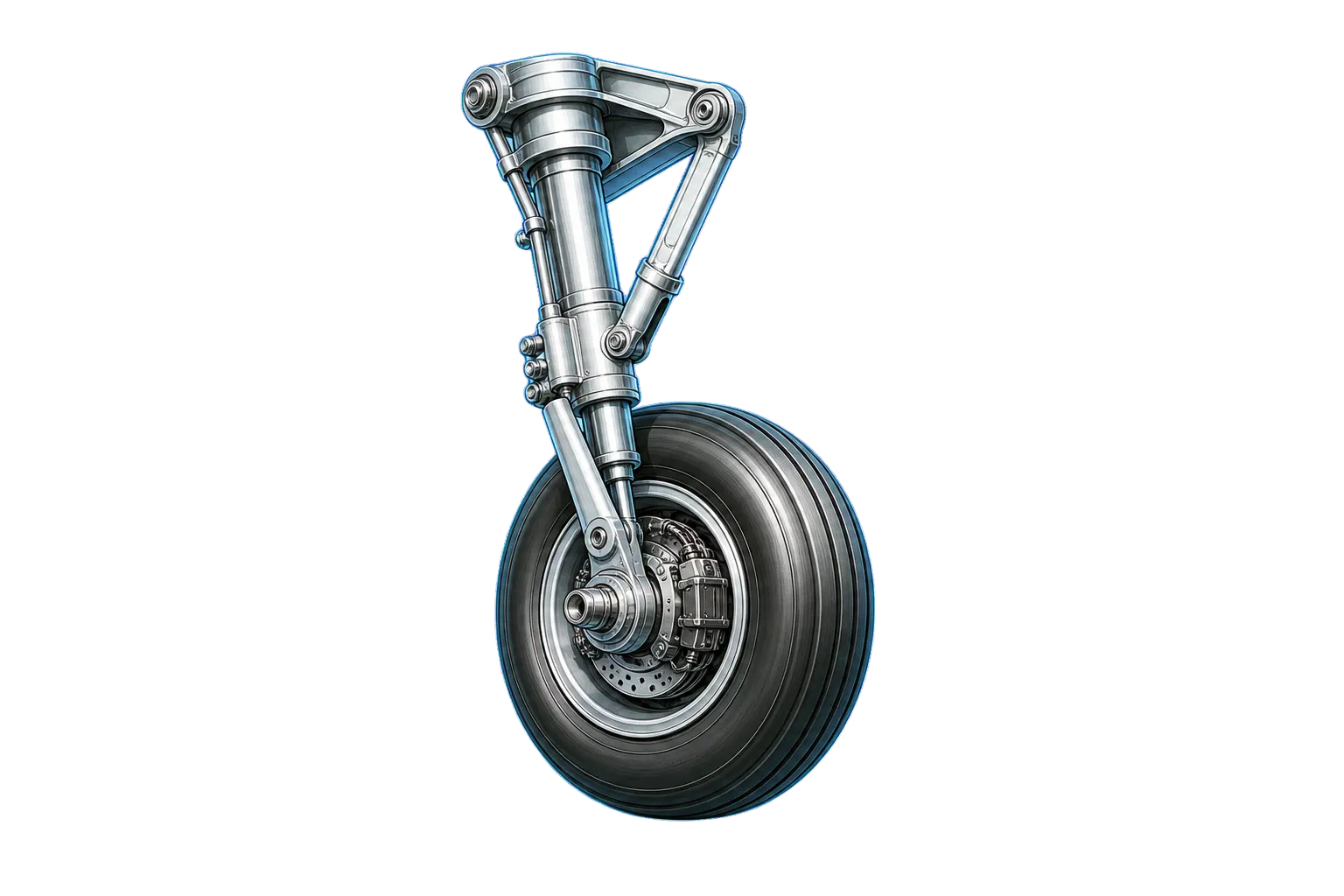
Fatigue cracking of the main fitting of the main landing gear (MLG), which could result in the collapse of the MLG.
AI-generated summary from the source AD text. Verify against the official source before acting.
Required Actions
Inspect the main fittings of the main landing gear (MLG) for cracks, sealant damage, and corrosion. Replace any main fittings found to be cracked or damaged. Install a terminating action to end repetitive inspections for certain low-utilization airplanes.
AI-generated summary from the source AD text. Verify against the official source before acting.
Compliance Time
Within 50 flight hours after the effective date of this AD.
AI-generated summary from the source AD text. Verify against the official source before acting.
Affected Aircraft
Bombardier Model CL-600-2B19 (Regional Jet Series 100 & 440) airplanes.
AI-generated summary from the source AD text. Verify against the official source before acting.
Federal Register Abstract
The FAA is superseding an existing airworthiness directive (AD), that applies to certain Bombardier Model CL-600-2B19 (Regional Jet Series 100 & 440) airplanes. That AD currently requires repetitive inspections for cracks, sealant damage, and corrosion of the main fittings of the main landing gear (MLG), and corrective actions if necessary. This new AD reduces the compliance times for inspecting certain low-utilization airplanes, and provides a terminating action for the repetitive inspections. This AD results from a report of a cracked main fitting of the MLG. We are issuing this AD to detect and correct fatigue cracking of the main fitting of the MLG and consequent failure of the main fitting, which could result in the collapse of the MLG.
Document Text
Show stored source text (verify against official source)
[Federal Register Volume 72, Number 8 (Friday, January 12, 2007)]
[Rules and Regulations]
[Pages 1430-1436]
From the Federal Register Online via the Government Publishing Office [<a href="http://www.gpo.gov">www.gpo.gov</a>]
[FR Doc No: E7-223]


-----------------------------------------------------------------------

DEPARTMENT OF TRANSPORTATION

Federal Aviation Administration

14 CFR Part 39

[Docket No. FAA-2005-22559; Directorate Identifier 2005-NM-076-AD;
Amendment 39-14879; AD 2007-01-07]
RIN 2120-AA64


Airworthiness Directives; Bombardier Model CL-600-2B19 (Regional
Jet Series 100 & 440) Airplanes

AGENCY: Federal Aviation Administration (FAA), Department of
Transportation (DOT).

ACTION: Final rule.

-----------------------------------------------------------------------

SUMMARY: The FAA is superseding an existing airworthiness directive
(AD), that applies to certain Bombardier Model CL-600-2B19 (Regional
Jet Series 100 & 440) airplanes. That AD currently requires repetitive
inspections for cracks, sealant damage, and corrosion of the main
fittings of the

[[Page 1431]]

main landing gear (MLG), and corrective actions if necessary. This new
AD reduces the compliance times for inspecting certain low-utilization
airplanes, and provides a terminating action for the repetitive
inspections. This AD results from a report of a cracked main fitting of
the MLG. We are issuing this AD to detect and correct fatigue cracking
of the main fitting of the MLG and consequent failure of the main
fitting, which could result in the collapse of the MLG.

DATES: This AD becomes effective February 16, 2007.
    The Director of the Federal Register approved the incorporation by
reference of certain publications listed in the AD as of February 16,
2007.
    On October 21, 2004 (69 FR 59790, October 6, 2004), the Director of
the Federal Register approved the incorporation by reference of
Bombardier Alert Service Bulletin A601R-32-099, including Appendices A,
B, and D, and excluding Appendix C, dated September 15, 2004.

ADDRESSES: You may examine the AD docket on the Internet at <a href="http://dms.dot.gov">http://dms.dot.gov</a> or in person at the Docket Management Facility, U.S.
Department of Transportation, 400 Seventh Street, SW., Nassif Building,
Room PL-401, Washington, DC.
    Contact Bombardier, Inc., Canadair, Aerospace Group, P.O. Box 6087,
Station Centre-ville, Montreal, Quebec H3C 3G9, Canada, for service
information identified in this AD.

FOR FURTHER INFORMATION CONTACT: Richard Beckwith, Aerospace Engineer,
Airframe and Propulsion Branch, ANE-171, FAA, New York Aircraft
Certification Office, 1600 Stewart Avenue, suite 410, Westbury, New
York 11590; telephone (516) 228-7302; fax (516) 794-5531.

SUPPLEMENTARY INFORMATION:

Examining the Docket

    You may examine the airworthiness directive (AD) docket on the
Internet at <a href="http://dms.dot.gov">http://dms.dot.gov</a> or in person at the Docket Management
Facility office between 9 a.m. and 5 p.m., Monday through Friday,
except Federal holidays. The Docket Management Facility office
(telephone (800) 647-5227) is located on the plaza level of the Nassif
Building at the street address stated in the ADDRESSES section.

Discussion

    The FAA issued a notice of proposed rulemaking (NPRM) to amend 14
CFR part 39 to include an AD that supersedes AD 2004-20-09, amendment
39-13814 (69 FR 59790, October 6, 2004). The existing AD applies to
certain Bombardier Model CL-600-2B19 (Regional Jet Series 100 & 440)
airplanes. That NPRM was published in the Federal Register on July 12,
2006 (71 FR 39237). That NPRM proposed to continue to require
repetitive inspections for cracks, sealant damage, and corrosion of the
main fittings of the main landing gear (MLG), and corrective actions if
necessary. That NPRM also proposed to reduce the compliance times for
inspecting certain low-utilization airplanes, and to provide a
terminating action for the repetitive inspections.

Comments

    We provided the public the opportunity to participate in the
development of this AD. We have considered the comments that have been
received on the NPRM.

Request To Change Incorporation of Certain Information

    The Modification and Replacement Parts Association (MARPA) states
that, typically, airworthiness directives are based on service
information originating with the type certificate holder or its
suppliers. MARPA adds that manufacturer service documents are privately
authored instruments generally having copyright protection against
duplication and distribution. MARPA notes that when a service document
is incorporated by reference into a public document, such as an
airworthiness directive, it loses its private, protected status and
becomes a public document. MARPA adds that if a service document is
used as a mandatory element of compliance, it should not simply be
referenced, but should be incorporated into the regulatory document; by
definition, public laws must be public, which means they cannot rely
upon private writings. MARPA is concerned that the failure to
incorporate essential service information could result in a court
decision invalidating the AD.
    MARPA adds that incorporated by reference service documents should
be made available to the public by publication in the Docket Management
System (DMS), keyed to the action that incorporates them. MARPA notes
that the stated purpose of the incorporation by reference method is
brevity, to keep from expanding the Federal Register needlessly by
publishing documents already in the hands of the affected individuals;
traditionally, ``affected individuals'' means aircraft owners and
operators, who are generally provided service information by the
manufacturer. MARPA adds that a new class of affected individuals has
emerged, since the majority of aircraft maintenance is now performed by
specialty shops instead of aircraft owners and operators. MARPA notes
that this new class includes maintenance and repair organizations,
component servicing and repair shops, parts purveyors and distributors,
and organizations manufacturing or servicing alternatively certified
parts under section 21.303 (``Parts Manufacturer Approval'') of the
Federal Aviation Regulations (14 CFR part 21). MARPA adds that the
concept of brevity is now nearly archaic as documents exist more
frequently in electronic format than on paper. Therefore, MARPA asks
that the service documents deemed essential to the accomplishment of
the NPRM be incorporated by reference into the regulatory instrument,
and published in the DMS.
    We understand MARPA's comment concerning incorporation by
reference. The Office of the Federal Register (OFR) requires that
documents that are necessary to accomplish the requirements of the AD
be incorporated by reference during the final rule phase of rulemaking.
This final rule incorporates by reference the documents necessary for
the accomplishment of the requirements mandated by this AD. Further, we
point out that while documents that are incorporated by reference do
become public information, they do not lose their copyright protection.
For that reason, we advise the public to contact the manufacturer to
obtain copies of the referenced service information.
    Additionally, we do not publish service documents in DMS. We are
currently reviewing our practice of publishing proprietary service
information. Once we have thoroughly examined all aspects of this
issue, and have made a final determination, we will consider whether
our current practice needs to be revised. However, we consider that to
delay this AD action for that reason would be inappropriate, since we
have determined that an unsafe condition exists and that the
requirements in this AD must be accomplished to ensure continued
safety. Therefore, we have not changed the AD in this regard.

Request To Reference Parts Manufacturer Approval (PMA) Parts

    MARPA also states that type certificate holders in their service
documents typically ignore the possible existence of PMA parts. MARPA
states that this is particularly true with foreign manufacturers where
the concept may not exist or be implemented in the

[[Page 1432]]

country of origin. MARPA points out that the service document upon
which an airworthiness directive is based frequently will require
removing a certain part-numbered part and installing a different part-
numbered part as a corrective action. According to MARPA, this runs
afoul of section 21.303, which permits the development, certification,
and installation of alternatively certified parts.
    MARPA further states that installing a certain part-numbered part
to the exclusion of all other parts is not a favored general practice.
MARPA states that such an action has the dual effect of preventing, in
some cases, the installation of a perfectly good part; while at the
same time prohibiting the development of new parts permitted under
section 21.303. According to MARPA, such a prohibition runs the risk of
taking the AD out of the realm of safety and into the world of
economics, since prohibiting the development, sale, and use of a
perfectly airworthy part has nothing to do with safety. MARPA states
that courts could easily construe such actions as being outside the
statutory basis of the AD (safety) and, as such, unenforceable. MARPA
adds that courts are reluctant to find portions of a rule unenforceable
since they lack the knowledge and authority to re-write requirements,
and are thus generally inclined to simply void the entire rule.
    In response to the commenter's statement regarding running afoul of
section 21.303, under which the FAA issues PMAs, this statement appears
to reflect a misunderstanding of the relationship between ADs and the
certification procedural regulations of 14 CFR part 21. Those
regulations, including section 21.303, are intended to ensure that
aeronautical products comply with the applicable airworthiness
standards. But ADs are issued when, notwithstanding those procedures,
we become aware of unsafe conditions in these products or parts.
Therefore, an AD takes precedence over design approvals when we
identify an unsafe condition, and mandating installation of a certain
part number in an AD is not at variance with section 21.303.
    The AD provides a means of compliance for operators to ensure that
the identified unsafe condition is addressed appropriately. For an
unsafe condition attributable to a part, the AD normally identifies the
replacement parts necessary to obtain that compliance. As stated in
section 39.7 of the Federal Aviation Regulations (14 CFR 39.7),
``Anyone who operates a product that does not meet the requirements of
an applicable airworthiness directive is in violation of this
section.'' Unless an operator obtains approval for an alternative
method of compliance (AMOC), replacing a part with one not specified by
the AD would make the operator subject to an enforcement action and
result in a civil penalty. No change to the AD is necessary in this
regard.

Request To Stop Using AMOC

    MARPA also believes that the practice of requiring an AMOC to
install a PMA part should be stopped. MARPA states that this is somehow
tantamount to stating, illogically, that all PMA parts are inherently
defective and require an additional layer of approval when the original
equipment manufacturer (OEM) part is determined to be defective. MARPA
suspects that the FAA personnel who labored diligently to certify the
PMA part might disagree with such a narrow, OEM-slanted view. MARPA
states that if the PMA part is defective, then it must be deemed so in
the AD, and not simply implied by a catch-all AMOC requirement. MARPA
states that this is why it has repeatedly requested that we adopt
language to trap such defective parts, and suggests that the FAA's
Transport Airplane Directorate adopt the language used by the Small
Airplane Directorate to accomplish this.
    We infer that MARPA would like the AD to permit installation of any
equivalent PMA parts so that it is not necessary for an operator to
request approval of an AMOC in order to install an ``equivalent'' PMA
part. Whether an alternative part is ``equivalent'' in adequately
resolving the unsafe condition can only be determined on a case-by-case
basis based on a complete understanding of the unsafe condition. The
Transport Airplane Directorate's policy is that, in order for operators
to replace a part with one that is not specified in the AD, they must
request an AMOC. This is necessary so that we can make a specific
determination that an alternative part is or is not susceptible to the
same unsafe condition. No change to the AD is necessary in this regard.

Request for Compliance With FAA Order 8040.2/Agreement on Parts
Replacement

    MARPA points out that this AD, as written, does not comply with
proposed Order 8040.2 (AD Process for Mandatory Continuing
Airworthiness Information (MCAI)), which states in the PMA section:
``MCAI that require replacement or installation of certain parts could
have replacement parts approved under 14 CFR Sec.  21.303 based on a
finding of identicality. We have determined that any parts approved
under this regulation and installed should be subject to the actions of
our AD and included in the applicability of our AD.'' MARPA points out
that the Small Airplane Directorate has developed a blanket statement
that resolves this issue. The statement includes words similar to those
in the proposed Order 8040.2.
    MARPA also points out that the Engine and Rotocraft Directorates
avoid the issue by specifying ``airworthy parts'' be installed, leaving
the determination of exactly which parts to the discretion of the
installer.
    MARPA further states that because the NPRM differs markedly in
treatment of this issue from that of the other directorates, the
mandates contained in Section 1, paragraph (b)(10) of Executive Order
12866 are not being met. This paragraph requires that all agencies act
uniformly on a given issue. MARPA therefore requests that we take steps
to bring the universe of PMA parts under the appropriate scope of this
AD both with respect to possible defective PMA parts and the use of
possible present or future approved parts.
    The NPRM did not address PMA parts, as provided in draft FAA Order
8040.2, because the Order was only a draft that was out for comment at
the time. After issuance of the NPRM, the Order was revised and issued
as FAA Order 8040.5 with an effective date of September 29, 2006. FAA
Order 8040.5 does not address PMA parts in ADs. We acknowledge the need
to ensure that unsafe PMA parts are identified and addressed in MCAI-
related ADs. We are currently examining all aspects of this issue,
including input from industry. Once we have made a final determination,
we will consider how our policy regarding PMA parts in ADs needs to be
revised. We consider that to delay this AD action would be
inappropriate, since we have determined that an unsafe condition exists
and that replacement of certain parts must be accomplished to ensure
continued safety. Therefore, no change has been made to the final rule
in this regard.

Clarification of Paragraphs (i) and (k) of the Final Rule

    We have changed paragraphs (i) and (k) of the final rule to specify
more clearly if operators choose to do the terminating action after
finding a crack indication, the terminating action must be done before
further flight.

[[Page 1433]]

Conclusion

    We have carefully reviewed the available data, including the
comments received, and determined that air safety and the public
interest require adopting the AD with the changes described previously.
We have determined that these changes will neither increase the
economic burden on any operator nor increase the scope of the AD.

Costs of Compliance

    The following table provides the estimated costs for U.S. operators
to comply with this AD. There are approximately 201 U.S.-registered
airplanes. The average labor rate is $80 per hour.

                                                 Estimated Costs
----------------------------------------------------------------------------------------------------------------
                Action                 Work hours     Parts       Cost per  airplane            Fleet cost
----------------------------------------------------------------------------------------------------------------
Detailed inspection for cracks of the           1         N/A  $80, per inspection       $16,080 per inspection
 main fitting (required by AD 2004-20-                          cycle.                    cycle.
 09).
Detailed inspection for sealant                 1         N/A  $80, per inspection       $16,080 per inspection
 damage of the bushing (required by                             cycle.                    cycle.
 AD 2004-20-09).
Ultrasonic inspection for cracks of             1         N/A  $80, per inspection       $16,080, per inspection
 the main fittings (required by AD                              cycle.                    cycle.
 2004-20-09).
Replacement (new action).............          56    $105,732  $110,212................  $22,152,612.
----------------------------------------------------------------------------------------------------------------

Authority for This Rulemaking

    Title 49 of the United States Code specifies the FAA's authority to
issue rules on aviation safety. Subtitle I, Section 106, describes the
authority of the FAA Administrator. Subtitle VII, Aviation Programs,
describes in more detail the scope of the Agency's authority.
    We are issuing this rulemaking under the authority described in
Subtitle VII, Part A, Subpart III, Section 44701, ``General
requirements.'' Under that section, Congress charges the FAA with
promoting safe flight of civil aircraft in air commerce by prescribing
regulations for practices, methods, and procedures the Administrator
finds necessary for safety in air commerce. This regulation is within
the scope of that authority because it addresses an unsafe condition
that is likely to exist or develop on products identified in this
rulemaking action.

Regulatory Findings

    We have determined that this AD will not have federalism
implications under Executive Order 13132. This AD will not have a
substantial direct effect on the States, on the relationship between
the national government and the States, or on the distribution of power
and responsibilities among the various levels of government.
    For the reasons discussed above, I certify that this AD:
    (1) Is not a ``significant regulatory action'' under Executive
Order 12866;
    (2) Is not a ``significant rule'' under DOT Regulatory Policies and
Procedures (44 FR 11034, February 26, 1979); and
    (3) Will not have a significant economic impact, positive or
negative, on a substantial number of small entities under the criteria
of the Regulatory Flexibility Act.
    We prepared a regulatory evaluation of the estimated costs to
comply with this AD and placed it in the AD docket. See the ADDRESSES
section for a location to examine the regulatory evaluation.

List of Subjects in 14 CFR Part 39

    Air transportation, Aircraft, Aviation safety, Incorporation by
reference, Safety.

Adoption of the Amendment

0
Accordingly, under the authority delegated to me by the Administrator,
the FAA amends 14 CFR part 39 as follows:

PART 39--AIRWORTHINESS DIRECTIVES

0
1. The authority citation for part 39 continues to read as follows:

     Authority: 49 U.S.C. 106(g), 40113, 44701.


Sec.  39.13  [Amended]

0
2. The Federal Aviation Administration (FAA) amends Sec.  39.13 by
removing amendment 39-13814 (69 FR 59790, October 6, 2004) and by
adding the following new airworthiness directive (AD):

2007-01-07 BOMBARDIER, INC. (Formerly Canadair): Amendment 39-14879.
Docket No. FAA-2005-22559; Directorate Identifier 2005-NM-076-AD.

Effective Date

    (a) This AD becomes effective February 16, 2007.

Affected ADs

    (b) This AD supersedes AD 2004-20-09.

Applicability

    (c) This AD applies to Bombardier Model CL-600-2B19 (Regional
Jet Series 100 & 440) airplanes, certificated in any category;
serial numbers 7003 through 7067 inclusive, and 7069 through 8999
inclusive; equipped with main landing gear (MLG) main fittings,
having part number (P/N) 601R85001-3 or -4 (Messier-Dowty P/N 17064-
101, -102, -103, or -104).

Unsafe Condition

    (d) This AD results from a report of a cracked main fitting of
the MLG. We are issuing this AD to detect and correct fatigue
cracking of the main fitting of the MLG and consequent failure of
the main fitting, which could result in the collapse of the MLG.

Compliance

    (e) You are responsible for having the actions required by this
AD performed within the compliance times specified, unless the
actions have already been done.

Service Bulletin

    (f) Unless otherwise specified in this AD, the term ``service
bulletin,'' as used in this AD, means the Accomplishment
Instructions of the applicable service bulletin identified in
paragraph (f)(1) or (f)(2) of this AD.
    (1) For the actions specified in paragraphs (g), (h), (i), (j),
and (k) of this AD: Bombardier Alert Service Bulletin A601R-32-099,
including Appendices A, B, and D, and excluding Appendix C, dated
September 15, 2004; or Bombardier Alert Service Bulletin A601R-32-
099, Revision A, including Appendices A, B, and D, and excluding
Appendix C, dated December 13, 2004; or Bombardier Alert Service
Bulletin A601R-32-099, Revision B, dated June 16, 2005, including
Appendices A, B, and D, and excluding Appendix C, Revision A, dated
December 13, 2004.
    (2) For the actions specified in paragraph (l) of this AD:
Bombardier Service Bulletin 601R-32-093, Revision B, dated July 14,
2005.
    (3) After the effective date of this AD, only Revision B of
Bombardier Alert Service Bulletin A601R-32-099, dated July 16, 2005,
may be used for the actions specified in paragraphs (g), (h), (i),
(j), and (k) of this AD.
    (4) Although the service bulletins identified in paragraph
(f)(1) of this AD specify to submit certain information to the
airplane manufacturer and to return cracked

[[Page 1434]]

main fittings to the supplier, this AD does not include those
requirements.

Restatement of the Requirements of AD 2004-20-09

Initial Inspections at New Reduced Compliance Times

    (g) Do the actions in Table 1 of this AD.

 Table 1.--Initial Inspection Thresholds at New Reduced Compliance Times
------------------------------------------------------------------------
 Do the following in Column 1--    At the earlier of the times specified
---------------------------------        in Column 2 or Column 3--
                                 ---------------------------------------
           Column 1--                Column 2--The       Column 3--The
                                      latest of--         latest of--
------------------------------------------------------------------------
(1) A detailed inspection for     (i)(A) Before the   (ii)(A) Within 48
 cracks of the inboard and         accumulation of     months since the
 outboard sides of the main        8,000 total         main fitting of
 fitting of the MLG between the    flight cycles       the MLG was new.
 pintle pin trunnion and the       since the main     (B) Within 48
 radius of the shock strut lug,    fitting of the      months since the
 in accordance with Part A of      MLG was new.        last overhaul of
 the applicable service bulletin. (B) Within 8,000     the MLG done
                                   flight cycles       before the
                                   since the last      effective date of
                                   overhaul of the     this AD.
                                   MLG done before    (C) Within 50
                                   the effective       flight cycles
                                   date of this AD..   after the
                                  (C) Within 50        effective date of
                                   flight cycles       this AD.
                                   after October 21,
                                   2004 (the
                                   effective date of
                                   AD 2004-20-09)..
(2) A detailed inspection for     (i)(A) Before the   (ii)(A) Within 48
 sealant damage or corrosion       accumulation of     months since the
 around the forward bushing of     8,000 total         main fitting of
 the left and right main           flight cycles       the MLG was new.
 fittings of the MLG, in           since the main     (B) Within 48
 accordance with Part B of the     fitting of the      months since the
 applicable service bulletin.      MLG was new.        last overhaul of
                                  (B) Within 8,000     the MLG done
                                   flight cycles       before the
                                   since the last      effective date of
                                   overhaul of the     this AD.
                                   MLG done before    (C) Within 500
                                   the effective       flight cycles or
                                   date of this AD..   6 months after
                                  (C) Within 500       the effective
                                   flight cycles       date of this AD,
                                   after October 21,   whichever occurs
                                   2004..              first.
(3) An ultrasonic inspection for  (i)(A) Before the   (ii)(A) Within 48
 cracks of the left and right      accumulation of     months since the
 main fittings of the MLG, in      8,000 total         main fitting of
 accordance with Part C of the     flight cycles       the MLG was new.
 applicable service bulletin.      since the main     (B) Within 48
                                   fitting of the      months since the
                                   MLG was new.        last overhaul of
                                  (B) Within 8,000     the MLG done
                                   flight cycles,      before the
                                   since the last      effective date of
                                   overhaul of the     this AD.
                                   MLG done before    (C) Within 500
                                   the effective       flight cycles or
                                   date of this AD..   6 months after
                                  (C) Within 500       the effective
                                   flight cycles       date of this AD,
                                   after October 21,   whichever occurs
                                   2004..              first.
------------------------------------------------------------------------


    Note 1: For the purposes of this AD, a detailed inspection is:
``An intensive examination of a specific item, installation, or
assembly to detect damage, failure, or irregularity. Available
lighting is normally supplemented with a direct source of good
lighting at an intensity deemed appropriate. Inspection aids such as
mirror, magnifying lenses, etc., may be necessary. Surface cleaning
and elaborate procedures may be required.''

Repetitive Inspections

    (h) Repeat the inspections in paragraph (g) of this AD
thereafter at the applicable interval in paragraph (h)(1) or (h)(2)
of this AD, until the terminating action required by paragraph (l)
of this AD is accomplished.
    (1) For airplanes on which the applicable initial inspection in
paragraph (g) of this AD has been done before the effective date of
this AD, do the next inspection at the applicable interval in Table
2 of this AD.
    (2) For airplanes on which the applicable initial inspection in
paragraph (g) of this AD has not been done before the effective date
of this AD, repeat the inspection at the applicable interval in
Table 2 of this AD.

            Table 2.--Repetitive Inspections at New Intervals
------------------------------------------------------------------------
                                       Repeat at
For the inspection required by--   intervals not to    Until the action
                                       exceed--          required by--
------------------------------------------------------------------------
(3) Paragraph (g)(1) of this AD.  5 days............  Paragraph (g)(3)
                                                       of this AD is
                                                       done, unless
                                                       required by
                                                       paragraph (j) of
                                                       this AD.
(4) Paragraph (g)(2) of this AD.  500 flight cycles   Paragraph (j)(2)
                                   or 6 months,        of this AD is
                                   whichever occurs    done.
                                   first.
(5) Paragraph (g)(3) of this AD.  5,000 flight        (None).
                                   cycles or 30
                                   months, whichever
                                   occurs first,
                                   except as
                                   required by
                                   paragraph (j)(2)
                                   of this AD.
------------------------------------------------------------------------

Corrective Actions

    (i) If there is an indication of a crack during any inspection
required by paragraph (g)(1), (h)(3), or (j)(1) of this AD, before
further flight, do the actions specified in paragraph (i)(1) or
(i)(2) of this AD in accordance with part A of the applicable
service bulletin; or do the terminating action required by paragraph
(l) of this AD before further flight.
    (1) Replace the cracked main fitting of the MLG with a new or
serviceable main fitting.
    (2) Do an eddy current inspection to verify whether there is a
crack. If there is a crack, replace the cracked main fitting of the
MLG with a new or serviceable main fitting.
    (j) If any sealant damage or corrosion is found during any
inspection required by either paragraph (g)(2) or (h)(4) of this AD,
do the actions specified in Table 3 of this AD in accordance with
part B of the applicable service bulletin, until the terminating
action required by paragraph (l) of this AD is accomplished.

[[Page 1435]]


                          Table 3.--Corrective Actions for Sealant Damage or Corrosion
----------------------------------------------------------------------------------------------------------------
                                                               Repeat at intervals not to      Until the action
 Do the inspection specified in--          Within--                     exceed--                specified in--
----------------------------------------------------------------------------------------------------------------
(1) Paragraph (g)(1) of this AD..  5 days after doing the    5 days........................  Paragraph (j)(2) or
                                    inspection required by                                    (l) of this AD is
                                    (g)(2) or (h)(4) of                                       done.
                                    this AD, as applicable.
(2) Paragraph (g)(3) of this AD..  500 flight cycles after   500 flight cycles.............  Paragraph (l) of
                                    doing the inspection                                      this AD is done.
                                    required by paragraph
                                    (g)(2) or (h)(4) of
                                    this AD, as applicable.
----------------------------------------------------------------------------------------------------------------

    (k) If there is an indication of a crack during any inspection
required by paragraph (g)(3) or (h)(5) of this AD, before further
flight, replace the cracked main fitting of the MLG with a new or
serviceable main fitting in accordance with part C of the applicable
service bulletin; or do the terminating action required by paragraph
(l) of this AD before further flight.

New Requirement of This Ad

Terminating Action--Replacement

    (l) Within 15 months after the effective date of this AD,
replace both main fittings of the MLG with new main fittings having
new part numbers, in accordance with the Accomplishment Instructions
of Bombardier Service Bulletin 601R-32-093, Revision B, dated July
14, 2005. Doing this replacement terminates all requirements of
paragraphs (g), (h), (i), (j), and (k) of this AD.

    Note 2: Bombardier Service Bulletin 601R-32-093, Revision B,
refers to Messier-Dowty Service Bulletin M-DT SB17002-32-24, dated
October 9, 2003; and Messier-Dowty Service Bulletin M-DT SB17002-32-
25, Revision 1, dated October 17, 2003; as additional sources of
service information for replacing the MLG main fitting.

Actions Accomplished in Accordance With Earlier Issues of Service
Bulletin

    (m) Actions done before the effective date of this AD in
accordance with the service bulletins listed in Table 4 of this AD
are acceptable for compliance with the corresponding action
specified in this AD.

                                  Table 4.--Earlier Issues of Service Bulletins
----------------------------------------------------------------------------------------------------------------
          Service Bulletin                      Revision level                             Date
----------------------------------------------------------------------------------------------------------------
Bombardier Service Bulletin 601R-32-  Original..........................  October 17, 2003.
 093.
Bombardier Service Bulletin 601R-32-  A.................................  September 21, 2004.
 093.
----------------------------------------------------------------------------------------------------------------

Parts Installation

    (n) As of the effective date of this AD, no person may install a
main fitting of the MLG, Bombardier P/N 601R85001-3 or 601R85001-4;
also referred to as Messier-Dowty P/N 17064-101, 17064-102, 17064-
103, or 17064-104; on any airplane.

Alternative Methods of Compliance (AMOCs)

    (o)(1) The Manager, New York Aircraft Certification Office, FAA,
has the authority to approve AMOCs for this AD, if requested in
accordance with the procedures found in 14 CFR 39.19.
    (2) Before using any AMOC approved in accordance with Sec.
39.19 on any airplane to which the AMOC applies, notify the
appropriate principal inspector in the FAA Flight Standards
Certificate Holding District Office.

Related Information

    (p) Canadian airworthiness directive CF-2004-18R1, dated
September 21, 2005, also addresses the subject of this AD.

Material Incorporated by Reference

    (q) You must use the applicable service bulletin identified in
Table 5 of this AD to perform the actions that are required by this
AD, unless the AD specifies otherwise.

                                Table 5.--All Material Incorporated by Reference
----------------------------------------------------------------------------------------------------------------
          Service Bulletin                      Revision level                             Date
----------------------------------------------------------------------------------------------------------------
Bombardier Alert Service Bulletin     Original..........................  September 15, 2004.
 A601R-32-099, including Appendices
 A, B, and D, and excluding Appendix
 C.
Bombardier Alert Service Bulletin     A.................................  December 13, 2004.
 A601R-32-099, including Appendices
 A, B, and D, and excluding Appendix
 C.
Bombardier Alert Service Bulletin     B.................................  June 16, 2005.
 A601R-32-099, including Appendices
 A, B, and D, and excluding Appendix
 C, Revision A, dated December 13,
 2004.
Bombardier Service Bulletin 601R-32-  B.................................  July 14, 2005.
 093.
----------------------------------------------------------------------------------------------------------------

    (1) The Director of the Federal Register approved the
incorporation by reference of the documents identified in Table 6 of
this AD in accordance with 5 U.S.C. 552(a) and 1 CFR part 51.

                                Table 6.--New Material Incorporated by Reference
----------------------------------------------------------------------------------------------------------------
          Service Bulletin                      Revision level                             Date
----------------------------------------------------------------------------------------------------------------
Bombardier Alert Service Bulletin     A.................................  December 13, 2004.
 A601R-32-099, including Appendices
 A, B, and D, and excluding Appendix
 C.
Bombardier Alert Service Bulletin     B.................................  June 16, 2005.
 A601R-32-099, including Appendices
 A, B, and D, and excluding Appendix
 C, Revision A, dated December 13,
 2004.
Bombardier Service Bulletin 601R-32-  B.................................  July 14, 2005.
 093.
----------------------------------------------------------------------------------------------------------------


[[Page 1436]]

    (2) On October 21, 2004 (69 FR 59790, October 6, 2004), the
Director of the Federal Register approved the incorporation by
reference of Bombardier Alert Service Bulletin A601R-32-099,
including Appendices A, B, and D, and excluding Appendix C, dated
September 15, 2004.
    (3) Contact Bombardier, Inc., Canadair, Aerospace Group, P.O.
Box 6087, Station Centre-ville, Montreal, Quebec H3C 3G9, Canada,
for a copy of this service information. You may review copies at the
Docket Management Facility, U.S. Department of Transportation, 400
Seventh Street SW., Room PL-401, Nassif Building, Washington, DC; on
the Internet at <a href="http://dms.dot.gov">http://dms.dot.gov</a>; or at the National Archives and
Records Administration (NARA). For information on the availability
of this material at the NARA, call (202) 741-6030, or go to <a href="http://www.archives.gov/federal_register/code_of_federal_regulations/ibr_locations.html">http://www.archives.gov/federal_register/code_of_federal_regulations/ibr_locations.html</a>.

    Issued in Renton, Washington, on December 21, 2006.
Ali Bahrami,
Manager, Transport Airplane Directorate, Aircraft Certification
Service.
[FR Doc. E7-223 Filed 1-11-07; 8:45 am]
BILLING CODE 4910-13-P
Source: Official FAA Source ↗
Retrieved: Apr 6, 2026
Rights: U.S. Government Public Domain
This site is not affiliated with or endorsed by the FAA. Always verify with official sources.
Related Airworthiness Directives
2023-10-02
final ruleAirworthiness Directives; Transport and Commuter Category Airplanes
Unsafe Condition: Radio altimeter anomalies that are undetected by the automation or pilot, particularly close to the ground (e.g., landing flare), could lead to loss of continued safe flight and landing. Additional...
2020-08-13
final ruleAirworthiness Directives; Bombardier, Inc. Airplanes
Unsafe Condition: Fractures of the rudder primary feel unit shaft, which could result in a loss of feel in the yaw axis and thereby impact the controllability of the airplane.

2020-03-23
final ruleAirworthiness Directives; Bombardier, Inc., Airplanes
Unsafe Condition: damage to the insulation sleeve of the generator power cables that can potentially cause a short circuit, arcing, and a malfunction of one or both main generators.
2020-03-17 Recurring
final ruleAirworthiness Directives; Bombardier, Inc., Airplanes
Unsafe Condition: damaged or detached window louver panel assemblies (WLPAs) and blowout panels (BOPs), which could delay smoke detection in the cargo compartment in the event of a fire and result in an uncontrolled...