AD 2005-17-07
Applicability
| Type | Manufacturer | Model | Details |
|---|---|---|---|
| aircraft | Airbus | A320-111 | Airworthiness Directives; Airbus Model A320-111 Airplanes and Model A320-200 Series Airplanes |
| aircraft | Airbus | A320-211 | Airworthiness Directives; Airbus Model A320-111 Airplanes and Model A320-200 Series Airplanes |
| aircraft | Airbus | A320-212 | Airworthiness Directives; Airbus Model A320-111 Airplanes and Model A320-200 Series Airplanes |
| aircraft | Airbus | A320-214 | Airworthiness Directives; Airbus Model A320-111 Airplanes and Model A320-200 Series Airplanes |
| aircraft | Airbus | A320-231 | Airworthiness Directives; Airbus Model A320-111 Airplanes and Model A320-200 Series Airplanes |
| aircraft | Airbus | A320-232 | Airworthiness Directives; Airbus Model A320-111 Airplanes and Model A320-200 Series Airplanes |
| aircraft | Airbus | A320-233 | Airworthiness Directives; Airbus Model A320-111 Airplanes and Model A320-200 Series Airplanes |
Unsafe Condition
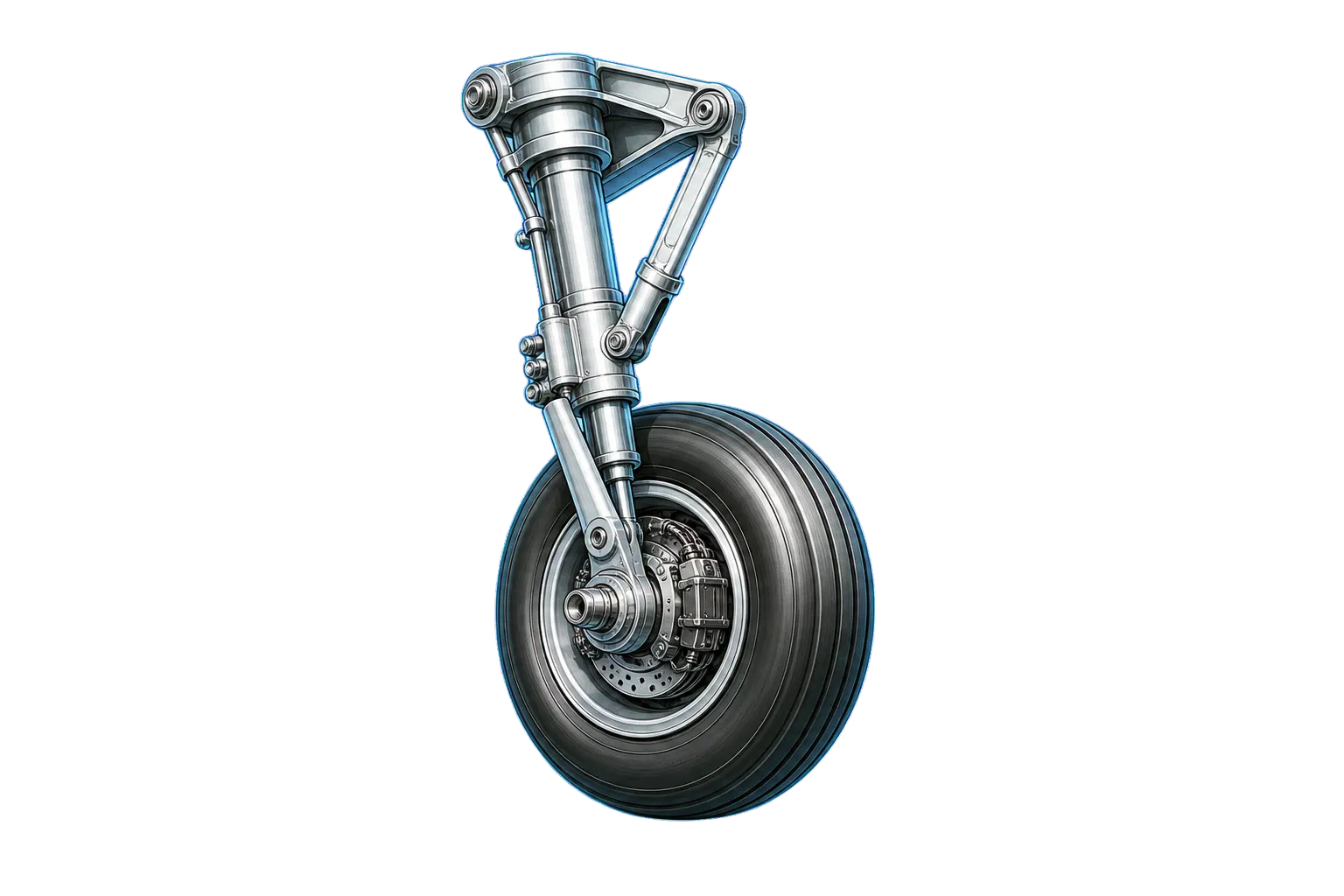
Absence of locking bolts on the axle nut of the main landing gear (MLG) wheels could result in separation of a wheel(s) from the axle, leading to reduced controllability of the airplane during takeoff and landing, and possible injury to people on the ground.
AI-generated summary from the source AD text. Verify against the official source before acting.
Required Actions
Perform a one-time general visual inspection of the axle nut on each MLG wheel for the presence of locking bolts and associated hardware. Conduct any related investigative and corrective actions as applicable, including inspecting debris guards, fan impellers, tachometer mounting sleeves, and other components for damage; ensuring correct torque for the axle nut; inspecting the axle sleeve, retaining ring, and wheel for damage if the axle nut is improperly torqued; replacing damaged components; and installing locking bolts and associated hardware. Submit an inspection report to the manufacturer.
AI-generated summary from the source AD text. Verify against the official source before acting.
Compliance Time
Before further flight
AI-generated summary from the source AD text. Verify against the official source before acting.
Affected Aircraft
Airbus Model A320-111 airplanes and Model A320-200 series airplanes manufactured in France and certificated for operation in the United States.
AI-generated summary from the source AD text. Verify against the official source before acting.
Federal Register Abstract
The FAA is adopting a new airworthiness directive (AD) for certain Airbus Model A320-111 airplanes and Model A320-200 series airplanes. This AD requires doing a one-time general visual inspection of the axle nut on each main landing gear (MLG) wheel for the presence of locking bolts and associated hardware; doing any related investigative and corrective actions as applicable; and submitting an inspection report to the manufacturer. This AD results from a report that an axle nut had separated from an axle on a main landing gear (MLG) wheel, due to missing locking bolts. We are issuing this AD to detect and correct missing locking bolts on the axle nuts of the MLG wheels. Absence of the locking bolts could result in separation of a wheel(s) from the axle and consequent reduced controllability of the airplane during takeoff and landing, and possible injury to people on the ground.
Document Text
Show stored source text (verify against official source)
[Federal Register Volume 70, Number 162 (Tuesday, August 23, 2005)]
[Rules and Regulations]
[Pages 49170-49172]
From the Federal Register Online via the Government Publishing Office [<a href="http://www.gpo.gov">www.gpo.gov</a>]
[FR Doc No: 05-16457]


-----------------------------------------------------------------------

DEPARTMENT OF TRANSPORTATION

Federal Aviation Administration

14 CFR Part 39

[Docket No. FAA-2005-22142; Directorate Identifier 2005-NM-153-AD;
Amendment 39-14228; AD 2005-17-07]
RIN 2120-AA64


Airworthiness Directives; Airbus Model A320-111 Airplanes and
Model A320-200 Series Airplanes

AGENCY: Federal Aviation Administration (FAA), Department of
Transportation (DOT).

ACTION: Final rule; request for comments.

-----------------------------------------------------------------------

SUMMARY: The FAA is adopting a new airworthiness directive (AD) for
certain Airbus Model A320-111 airplanes and Model A320-200 series
airplanes. This AD requires doing a one-time general visual inspection
of the axle nut on each main landing gear (MLG) wheel for the presence
of locking bolts and associated hardware; doing any related
investigative and corrective actions as applicable; and submitting an
inspection report to the manufacturer. This AD results from a report
that an axle nut had separated from an axle on a main landing gear
(MLG) wheel, due to missing locking bolts. We are issuing this AD to
detect and correct missing locking bolts on the axle nuts of the MLG
wheels. Absence of the locking bolts could result in separation of a
wheel(s) from the axle and consequent reduced controllability of the
airplane during takeoff and landing, and possible injury to people on
the ground.

DATES: This AD becomes effective September 7, 2005.
    The Director of the Federal Register approved the incorporation by
reference of a certain publication listed in the AD as of September 7,
2005.
    We must receive comments on this AD by October 24, 2005.

ADDRESSES: Use one of the following addresses to submit comments on
this AD.
    <bullet> DOT Docket Web site: Go to <a href="http://dms.dot.gov">http://dms.dot.gov</a> and follow
the instructions for sending your comments electronically.

[[Page 49171]]

    <bullet> Government-wide rulemaking Web site: Go to <a href="http://www.regulations.gov">http://www.regulations.gov</a> and follow the instructions for sending your
comments electronically.
    <bullet> Mail: Docket Management Facility; U.S. Department of
Transportation, 400 Seventh Street SW., Nassif Building, Room PL-401,
Washington, DC 20590.
    <bullet> Fax: (202) 493-2251.
    <bullet> Hand Delivery: Room PL-401 on the plaza level of the
Nassif Building, 400 Seventh Street SW., Washington, DC, between 9 a.m.
and 5 p.m., Monday through Friday, except Federal holidays.
    Contact Airbus, 1 Rond Point Maurice Bellonte, 31707 Blagnac Cedex,
France, for service information identified in this AD.

FOR FURTHER INFORMATION CONTACT: Tim Dulin, Aerospace Engineer,
International Branch, ANM-116, FAA, Transport Airplane Directorate,
1601 Lind Avenue, SW., Renton, Washington 98055-4056; telephone (425)
227-2141; fax (425) 227-1149.

SUPPLEMENTARY INFORMATION:

Discussion

    The Direction G[eacute]n[eacute]rale de l'Aviation Civile (DGAC),
which is the airworthiness authority for France, notified us that an
unsafe condition may exist on certain Airbus Model A320-111 airplanes
and Model A320-200 series airplanes. The DGAC advises that it received
a report that, during taxi-out, the flightcrew of a Model A320 airplane
felt the brake at wheel position 3 of the main landing gear (MLG)
dragging, and saw a rise in brake temperature. An inspection of wheel
position 3 revealed that the axle nut had separated from the axle, the
axle sleeve had started to move out, and that the wheel assembly,
including the outer bearing, had been severely damaged. An inspection
of the other three wheel positions on that airplane revealed that the
axle nuts on those wheels were not secured with locking bolts and had
started to move out. An investigation revealed that the locking bolts
that were intended to secure the axle nut to the axle were most likely
not installed during production. Absence of the locking bolts, if not
detected and corrected, could result in separation of a wheel(s) from
the axle and consequent reduced controllability of the airplane during
takeoff and landing, and possible injury to people on the ground.

Relevant Service Information

    Airbus has issued All Operators Telex (AOT) A320-32A1303, dated
July 4, 2005. The AOT describes procedures for doing a one-time visual
inspection of the axle nut on each MLG wheel for the presence of
locking bolts and associated hardware (nuts, washers, and pins); doing
related investigative and corrective actions as applicable; and
reporting inspection results. The related investigative and corrective
actions are:
    <bullet> Doing a visual inspection of the debris guard, fan
impeller or hubcap, tachometer mounting sleeve, and other related
components for any damage;
    <bullet> Ensuring the correct torque for the axle nut;
    <bullet> Doing a general visual inspection of the axle sleeve,
retaining ring, and wheel for any damage if the axle nut has not been
torqued properly;
    <bullet> Replacing any damaged components; and
    <bullet> Installing locking bolts and associated hardware.
    The DGAC mandated the service information and issued French
emergency airworthiness directive UF-2005-128, dated July 13, 2005, to
ensure the continued airworthiness of these airplanes in France.

FAA's Determination and Requirements of this AD

    These airplane models are manufactured in France and are type
certificated for operation in the United States under the provisions of
section 21.29 of the Federal Aviation Regulations (14 CFR 21.29) and
the applicable bilateral airworthiness agreement. Pursuant to this
bilateral airworthiness agreement, the DGAC has kept the FAA informed
of the situation described above. We have examined the DGAC's findings,
evaluated all pertinent information, and determined that we need to
issue an AD for products of this type design that are certificated for
operation in the United States.
    Therefore, we are issuing this AD to detect and correct missing
locking bolts on the MLG wheels. Absence of the locking bolts could
result in separation of a wheel(s) from the axle and consequent reduced
controllability of the airplane during takeoff and landing, and
possible injury to people on the ground. This AD requires accomplishing
the actions specified in the service information described previously.

Clarification of Inspection Terminology

    In this AD, the ``visual inspection'' specified in the Airbus
service information is referred to as a ``general visual inspection.''
We have included the definition for a general visual inspection in a
note in the AD.

Interim Action

    This is considered to be interim action. The inspection reports
that are required by this AD will enable the manufacturer to obtain
better insight into the extent of the missing locking bolts and
associated hardware in the fleet to develop final action to address the
unsafe condition. Once final action has been identified, the FAA may
consider further rulemaking.

FAA's Determination of the Effective Date

    An unsafe condition exists that requires the immediate adoption of
this AD; therefore, providing notice and opportunity for public comment
before the AD is issued is impracticable, and good cause exists to make
this AD effective in less than 30 days.

Comments Invited

    This AD is a final rule that involves requirements that affect
flight safety and was not preceded by notice and an opportunity for
public comment; however, we invite you to submit any relevant written
data, views, or arguments regarding this AD. Send your comments to an
address listed in the ADDRESSES section. Include ``Docket No. FAA-2005-
22142; Directorate Identifier 2005-NM-153-AD'' at the beginning of your
comments. We specifically invite comments on the overall regulatory,
economic, environmental, and energy aspects of the AD that might
suggest a need to modify it.
    We will post all comments we receive, without change, to <a href="http://dms.dot.gov">http://dms.dot.gov</a>, including any personal information you provide. We will
also post a report summarizing each substantive verbal contact with FAA
personnel concerning this AD. Using the search function of that web
site, anyone can find and read the comments in any of our dockets,
including the name of the individual who sent the comment (or signed
the comment on behalf of an association, business, labor union, etc.).
You may review the DOT's complete Privacy Act Statement in the Federal
Register published on April 11, 2000 (65 FR 19477-78), or you may visit
<a href="http://dms.dot.gov">http://dms.dot.gov</a>.

Examining the Docket

    You may examine the AD docket on the Internet at <a href="http://dms.dot.gov">http://dms.dot.gov</a>, or in person at the Docket Management Facility office
between 9 a.m. and 5 p.m., Monday through Friday, except Federal
holidays. The Docket Management Facility office (telephone (800) 647-
5227) is located on the plaza level of the Nassif Building at the DOT
street address stated in the ADDRESSES section. Comments will be
available in the AD docket shortly after the Docket Management System
receives them.

[[Page 49172]]

Authority for This Rulemaking

    Title 49 of the United States Code specifies the FAA's authority to
issue rules on aviation safety. Subtitle I, Section 106, describes the
authority of the FAA Administrator. Subtitle VII, Aviation Programs,
describes in more detail the scope of the Agency's authority.
    We are issuing this rulemaking under the authority described in
subtitle VII, part A, subpart III, section 44701, ``General
requirements.'' Under that section, Congress charges the FAA with
promoting safe flight of civil aircraft in air commerce by prescribing
regulations for practices, methods, and procedures the Administrator
finds necessary for safety in air commerce. This regulation is within
the scope of that authority because it addresses an unsafe condition
that is likely to exist or develop on products identified in this
rulemaking action.

Regulatory Findings

    We have determined that this AD will not have federalism
implications under Executive Order 13132. This AD will not have a
substantial direct effect on the States, on the relationship between
the national government and the States, or on the distribution of power
and responsibilities among the various levels of government.
    For the reasons discussed above, I certify that the regulation:
    1. Is not a ``significant regulatory action'' under Executive Order
12866;
    2. Is not a ``significant rule'' under the DOT Regulatory Policies
and Procedures (44 FR 11034, February 26, 1979); and
    3. Will not have a significant economic impact, positive or
negative, on a substantial number of small entities under the criteria
of the Regulatory Flexibility Act.
    We prepared a regulatory evaluation of the estimated costs to
comply with this AD and placed it in the AD docket. See the ADDRESSES
section for a location to examine the regulatory evaluation.

List of Subjects in 14 CFR Part 39

    Air transportation, Aircraft, Aviation safety, Incorporation by
reference, Safety.

Adoption of the Amendment

0
Accordingly, under the authority delegated to me by the Administrator,
the FAA amends 14 CFR part 39 as follows:

PART 39--AIRWORTHINESS DIRECTIVES

0
1. The authority citation for part 39 continues to read as follows:

    Authority: 49 U.S.C. 106(g), 40113, 44701.


Sec.  39.13  [Amended]

0
2. The Federal Aviation Administration (FAA) amends Sec.  39.13 by
adding the following new airworthiness directive (AD):

2005-17-07 Airbus: Amendment 39-14228. Docket No. FAA-2005-22142;
Directorate Identifier 2005-NM-153-AD.

Effective Date

    (a) This AD becomes effective September 7, 2005.

Affected ADs

    (b) None.

Applicability

    (c) This AD applies to Airbus Model A320-111 airplanes, and
Model A320-211, -212, -214, -231, -232, and -233 airplanes;
certificated in any category; with serial numbers 2275 through 2440
inclusive, 2442 through 2446 inclusive, 2448, 2450, 2452, 2454, 2456
through 2458 inclusive, 2460 through 2474 inclusive, 2476 through
2478 inclusive, 2480 through 2483 inclusive, 2485, and 2486.

Unsafe Condition

    (d) This AD results from a report that an axle nut had separated
from an axle on a main landing gear (MLG) wheel, due to missing
locking bolts. The FAA is issuing this AD to detect and correct
missing locking bolts on the axle nuts of the MLG wheels. Absence of
the locking bolts could result in separation of a wheel(s) from the
axle and consequent reduced controllability of the airplane during
takeoff and landing, and possible injury to people on the ground.

Compliance

    (e) You are responsible for having the actions required by this
AD performed within the compliance times specified, unless the
actions have already been done.

Inspection and Related Investigative and Corrective Actions

    (f) Within 500 flight hours after the effective date of this AD,
do a one-time general visual inspection of the axle nut of each MLG
wheel for the presence of locking bolts and associated hardware
(nuts, washers, and pins), and any applicable related investigative
and corrective actions, in accordance with the Description section
of Airbus All Operators Telex (AOT) A320-32A1303, dated July 4,
2005. Do any related investigative or corrective action before
further flight.

    Note 1: For the purposes of this AD, a general visual inspection
is: ``A visual examination of an interior or exterior area,
installation, or assembly to detect obvious damage, failure, or
irregularity. This level of inspection is made from within touching
distance unless otherwise specified. A mirror may be necessary to
ensure visual access to all surfaces in the inspection area. This
level of inspection is made under normally available lighting
conditions such as daylight, hangar lighting, flashlight, or
droplight and may require removal or opening of access panels or
doors. Stands, ladders, or platforms may be required to gain
proximity to the area being checked.''

Inspection Report

    (g) Submit a report of the findings (both positive and negative)
of the inspection(s) required by paragraph (f) of this AD to the
manufacturer, in accordance with the Reporting/Acknowledgement
section of Airbus AOT A320-32A1303, dated July 4, 2005, at the
applicable time specified in paragraph (g)(1) or (g)(2) of this AD.
The report must include the inspection results, a description of any
discrepancies found, the airplane serial number, and the number of
landings and flight hours on the airplane. Under the provisions of
the Paperwork Reduction Act of 1980 (44 U.S.C. 3501 et seq.), the
Office of Management and Budget (OMB) has approved the information
collection requirements contained in this AD and has assigned OMB
Control Number 2120-0056.
    (1) If the inspection was done after the effective date of this
AD: Submit the report within 30 days after the inspection.
    (2) If the inspection was accomplished prior to the effective
date of this AD: Submit the report within 30 days after the
effective date of this AD.

Alternative Methods of Compliance (AMOCs)

    (h) The Manager, International Branch, ANM-116, Transport
Airplane Directorate, FAA, has the authority to approve AMOCs for
this AD, if requested in accordance with the procedures found in 14
CFR 39.19.

Related Information

    (i) French emergency airworthiness directive UF-2005-128, dated
July 13, 2005, also addresses the subject of this AD.

Material Incorporated by Reference

    (j) You must use Airbus All Operators Telex A320-32A1303, dated
July 4, 2005, to perform the actions that are required by this AD,
unless the AD specifies otherwise. The Director of the Federal
Register approved the incorporation by reference of this document in
accordance with 5 U.S.C. 552(a) and 1 CFR part 51. Contact Airbus, 1
Rond Point Maurice Bellonte, 31707 Blagnac Cedex, France, for a copy
of this service information. You may review copies at the Docket
Management Facility, U.S. Department of Transportation, 400 Seventh
Street SW., room PL-401, Nassif Building, Washington, DC; on the
Internet at <a href="http://dms.dot.gov">http://dms.dot.gov</a>; or at the National Archives and
Records Administration (NARA). For information on the availability
of this material at the NARA, call (202) 741-6030, or go to <a href="http://www.archives.gov/federal-register/cfr/ibr-locations.html">http://www.archives.gov/federal-register/cfr/ibr-locations.html</a>.

    Issued in Renton, Washington, on August 11, 2005.
Kalene C. Yanamura,
Acting Manager, Transport Airplane Directorate, Aircraft Certification
Service.
[FR Doc. 05-16457 Filed 8-22-05; 8:45 am]
BILLING CODE 4910-13-P
Source: Official FAA Source ↗
Retrieved: Apr 6, 2026
Rights: U.S. Government Public Domain
This site is not affiliated with or endorsed by the FAA. Always verify with official sources.
Related Airworthiness Directives
2021-22-07 Recurring
final ruleAirworthiness Directives; Umlaut Engineering GmbH (Previously P3 Engineering GmbH) HAFEX (Halon-Free) Hand-Held Fire Extinguishers
Unsafe Condition: Prolonged exposure to high temperature conditions can dislodge the spindle in the fire extinguisher head, subsequently making the fire extinguisher inoperative.
2019-24-01
final ruleAirworthiness Directives; Airbus SAS Airplanes
Unsafe Condition: The FAA determined that an unsafe condition exists due to the potential for ignition sources inside the center fuel tank, which, in combination with flammable fuel vapors, could result in a fuel ta...
2019-08-07 Recurring
final ruleAirworthiness Directives; Airbus SAS Airplanes
Unsafe Condition: Cracks at the lower riveting of the four titanium angles that connect the belly fairing to the keel beam side panels on both sides of the fuselage, which could affect the structural integrity of th...
2019-08-01
final ruleAirworthiness Directives; RECARO Aircraft Seating GmbH & Co. KG
Unsafe Condition: The seat pan design of certain RECARO model 3510A and 3510D passenger seats is insufficiently stable to sustain the loads applied by a person who would use the seat as assistance means in case of a...