AD 2000-26-19
Applicability
| Type | Manufacturer | Model | Details |
|---|---|---|---|
| aircraft | SOCATA | TBM 700 | Airworthiness Directives; SOCATA - Groupe AEROSPATIALE Model TBM 700 Airplanes |
Unsafe Condition
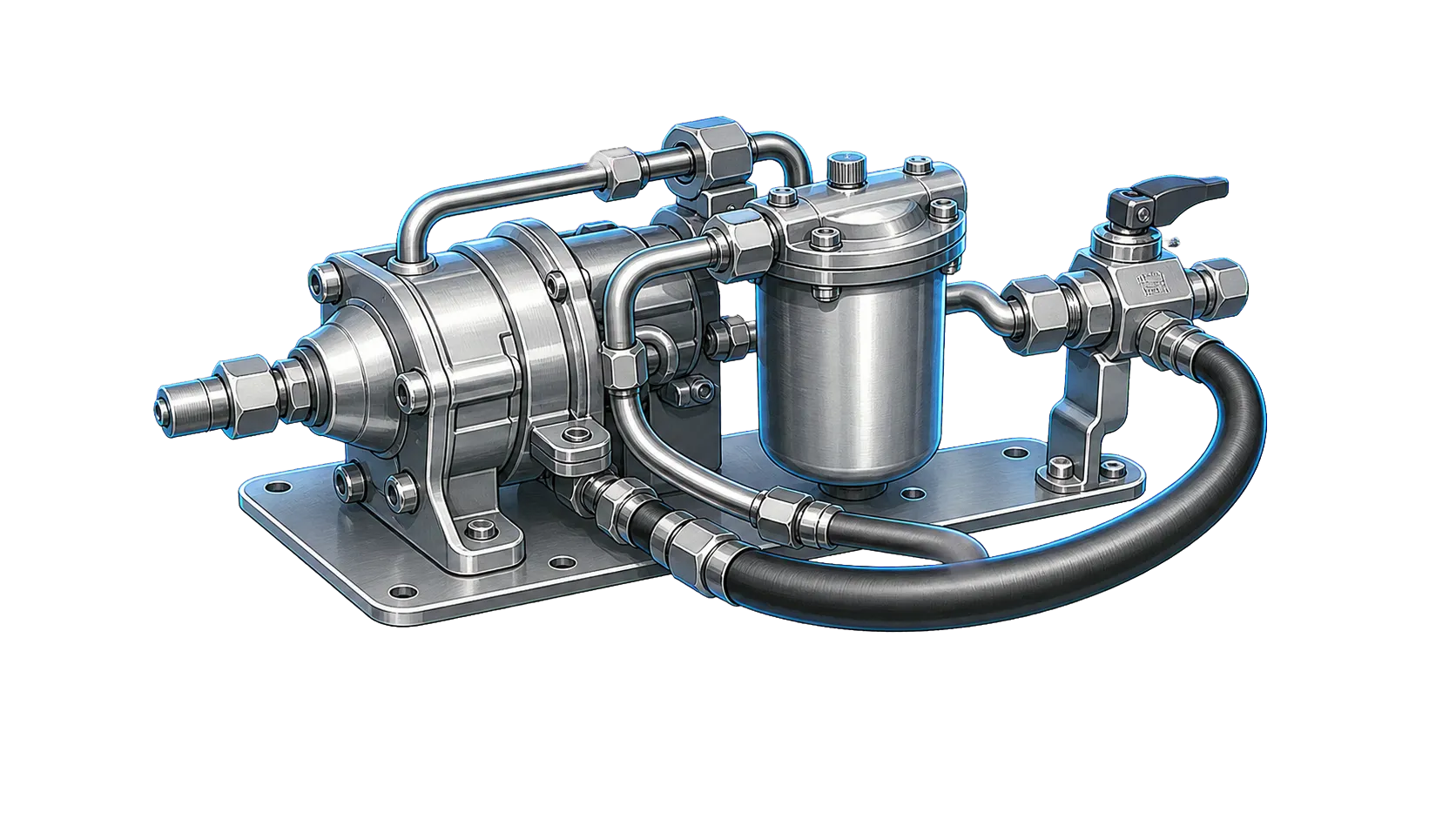
Low pressure resulting from a misrouted fuel tank air vent valve hose and the fuel tank vent not operating, leading to abnormal venting conditions of the wing fuel tank.
AI-generated summary from the source AD text. Verify against the official source before acting.
Required Actions
Inspect for a low point in the fuel tank air vent valve hose; reroute the hose as necessary.
AI-generated summary from the source AD text. Verify against the official source before acting.
Compliance Time
Within the next 5 hours time-in-service (TIS) after February 2, 2001 (the effective date of this AD).
AI-generated summary from the source AD text. Verify against the official source before acting.
Affected Aircraft
SOCATA-Groupe AEROSPATIALE Model TBM 700 airplanes, serial numbers 1 through 182, certificated in any category.
AI-generated summary from the source AD text. Verify against the official source before acting.
Federal Register Abstract
This amendment adopts a new airworthiness directive (AD) that applies to certain SOCATA--Groupe AEROSPATIALE (Socata) Model TBM 700 airplanes. This AD requires you to inspect for a low point in the fuel tank air vent valve hose; and reroute the hose as necessary. This AD is the result of mandatory continuing airworthiness information (MCAI) issued by the airworthiness authority for France. The actions specified by this AD are intended to prevent in-flight damage to the wing skins caused by abnormal venting conditions of the wing fuel tank, which could result in severe handling problems or reduced structural capability. Continued operation with such structural deformation or handling problems could result in loss of control of the airplane.
Document Text
Show stored source text (verify against official source)
[Federal Register Volume 66, Number 8 (Thursday, January 11, 2001)]
[Rules and Regulations]
[Pages 2212-2214]
From the Federal Register Online via the Government Publishing Office [<a href="http://www.gpo.gov">www.gpo.gov</a>]
[FR Doc No: 01-307]


[[Page 2212]]

=======================================================================
-----------------------------------------------------------------------

DEPARTMENT OF TRANSPORTATION

Federal Aviation Administration

14 CFR Part 39

[Docket No. 2000-CE-82-AD; Amendment 39-12069; AD 2000-26-19]
RIN 2120-AA64


Airworthiness Directives; SOCATA--Groupe AEROSPATIALE Model TBM
700 Airplanes

AGENCY: Federal Aviation Administration, DOT.

ACTION: Final rule; request for comments.

-----------------------------------------------------------------------

SUMMARY: This amendment adopts a new airworthiness directive (AD) that
applies to certain SOCATA--Groupe AEROSPATIALE (Socata) Model TBM 700
airplanes. This AD requires you to inspect for a low point in the fuel
tank air vent valve hose; and reroute the hose as necessary. This AD is
the result of mandatory continuing airworthiness information (MCAI)
issued by the airworthiness authority for France. The actions specified
by this AD are intended to prevent in-flight damage to the wing skins
caused by abnormal venting conditions of the wing fuel tank, which
could result in severe handling problems or reduced structural
capability. Continued operation with such structural deformation or
handling problems could result in loss of control of the airplane.

DATES: This AD becomes effective on February 2, 2001.
    The Director of the Federal Register approved the incorporation by
reference of certain publications listed in the regulation as of
February 2, 2001.
    The Federal Aviation Administration (FAA) must receive any comments
on this rule by February 15, 2001.

ADDRESSES: Send three copies of comments to FAA, Central Region, Office
of the Regional Counsel, Attention: Rules Docket No. 2000-CE-82-AD, 901
Locust, Room 506, Kansas City, Missouri 64106.
    You may get service information referenced in this AD from SOCATA
Groupe AEROSPATIALE, Customer Support, Aerodrome Tarbes-Ossun-Lourdes,
BP 930--F65009 Tarbes Cedex, France; telephone: (33) (0)5.62.41.73.00;
facsimile: (33) (0)5.62.41.76.54; or the Product Support Manager,
SOCATA--Groupe AEROSPATIALE, North Perry Airport, 7501 Pembroke Road,
Pembroke Pines, Florida 33023; telephone: (954) 894-1160; facsimile:
(954) 964-4191. You may read this information at FAA, Central Region,
Office of the Regional Counsel, Attention: Rules Docket No. 2000-CE-
821-AD, 901 Locust, Room 506, Kansas City, Missouri 64106; or at the
Office of the Federal Register, 800 North Capitol Street, NW, suite
700, Washington, DC.

FOR FURTHER INFORMATION CONTACT: Karl Schletzbaum, Aerospace Engineer,
FAA, Small Airplane Directorate, 901 Locust, Room 301, Kansas City,
Missouri 64106; telephone: (816) 329-4146; facsimile: (816) 329-4090.

SUPPLEMENTARY INFORMATION:

Discussion

    What events have caused this AD? The Direction Geenerale de
l'Aviation Civile (DGAC), which is the airworthiness authority for
France, recently notified FAA that an unsafe condition may exist on
certain Socata Model TBM 700 airplanes. The DGAC reports two
occurrences on Socata Model TBM 700 airplanes of abnormal venting
conditions of the wing fuel tank.
    One occurrence was where an airplane experienced leaking during
refueling. Inspection revealed the wing skin had come apart from the
rib breaking the sealer, allowing the fuel to leak.
    Another reported occurrence was in-flight where the pilot saw a
wing skin deformation. These occurrences are caused by low pressure
resulting from a misrouted fuel tank air vent valve hose and the fuel
tank vent not operating.
    What are the consequences if the condition is not corrected? This
condition, if not corrected, could result in severe handling problems
or reduced structural capability. Continued operation with such
structural deformation or handling problems could result in loss of
control of the airplane.
    Is there service information that applies to this subject? Socata
has issued Service Bulletin SB 70-088, dated November 2000. This
service bulletin includes procedures for:

--Inspecting for a low point in the fuel tank air vent valve hose; and
--Rerouting the hose as necessary.

    What action did DGAC take? The DGAC classified this service
bulletin as mandatory and issued French AD T2000-545(A), dated December
20, 2000, to ensure the continued airworthiness of these airplanes in
France.
    Was this in accordance with the bilateral airworthiness agreement?
These airplane models are manufactured in France and are type
certificated for operation in the United States under the provisions of
section 21.29 of the Federal Aviation Regulations (14 CFR 21.29) and
the applicable bilateral airworthiness agreement.
    In carrying out this bilateral airworthiness agreement, the DGAC
has kept FAA informed of the situation described above.

The FAA's Determination and an Explanation of the Provisions of the
AD

    What has FAA decided? The FAA has examined the findings of the
DGAC; reviewed all available information, including the service
information referenced above; and determined that:

--The unsafe condition referenced in this document exists or could
develop on other Socata Model TBM 700 airplanes of the same type
design;
--The actions specified in the previously-referenced service
information (as specified in this AD) should be accomplished on the
affected airplanes; and
--AD action should be taken in order to correct this unsafe condition.

    What does this AD require? This AD requires you to do the actions
previously specified in accordance with Socata Service Bulletin SB 70-
088, dated November 2000.
    Will I have the opportunity to comment prior to the issuance of the
rule? Because the unsafe condition described in this document could
result in structural failure with possible loss of control of the
airplane, FAA finds that notice and opportunity for public prior
comment are impracticable. Therefore, good cause exists for making this
amendment effective in less than 30 days.

Comments Invited

    How do I comment on this AD? Although this action is in the form of
a final rule and was not preceded by notice and opportunity for public
comment, we invite your comments on the rule. You may send whatever
written data, views, or arguments you choose. You need to include the
rule's docket number and send three copies of your comments to the
address specified under the caption ADDRESSES. We will consider all
comments received by the closing date specified above. We may change
this rule in light of comments received. Factual information that
supports your ideas and suggestions is extremely helpful in evaluating
the effectiveness of the AD action and determining whether we need to
take additional rulemaking action.
    Are there any specific portions of the AD I should pay attention
to? The FAA specifically invites comments on the overall regulatory,
economic, environmental, and energy aspects of

[[Page 2213]]

the rule that might require a change to the rule. You may look at all
comments we receive. We will file a report in the Rules Docket that
summarizes each FAA contact with the public that concerns the
substantive parts of this proposal.
    We are reviewing the writing style we currently use in regulatory
documents, in response to the Presidential memorandum of June 1, 1998.
That memorandum requires federal agencies to communicate more clearly
with the public. We are interested in your comments on whether the
style of this document is clear, and any other suggestions you might
have to improve the clarity of FAA communications that affect you. You
can get more information about the Presidential memorandum and the
plain language initiative at <a href="http://www.plainlanguage.gov">http://www.plainlanguage.gov</a>.
    How can I be sure FAA receives my comment? If you want us to
acknowledge the receipt of your comments, you must include a self-
addressed, stamped postcard. On the postcard, write ``Comments to
Docket No. 2000-CE-82-AD.'' We will date stamp and mail the postcard
back to you.

Regulatory Impact

    Does this AD impact various entities? These regulations will not
have a substantial direct effect on the States, on the relationship
between the national Government and the States, or on the distribution
of power and responsibilities among the various levels of government.
Therefore, FAA has determined that this final rule does not have
federalism implications under Executive Order 13132.
    Does this AD involve a significant rule or regulatory action? The
FAA has determined that this regulation is an emergency regulation that
must be issued immediately to correct an unsafe condition in aircraft,
and is not a significant regulatory action under Executive Order 12866.
It has been determined further that this action involves an emergency
regulation under DOT Regulatory Policies and Procedures (44 FR 11034,
February 26, 1979). If it is determined that this emergency regulation
otherwise would be significant under DOT Regulatory Policies and
Procedures, a final regulatory evaluation will be prepared and placed
in the Rules Docket (otherwise, an evaluation is not required). A copy
of it, if filed, may be obtained from the Rules Docket.

List of Subjects in 14 CFR Part 39

    Air transportation, Aircraft, Aviation safety, Incorporation by
Reference, Safety.

Adoption of the Amendment

    Accordingly, under the authority delegated to me by the
Administrator, the Federal Aviation Administration amends part 39 of
the Federal Aviation Regulations (14 CFR part 39) as follows:

PART 39--AIRWORTHINESS DIRECTIVES

    1. The authority citation for part 39 continues to read as follows:

    Authority: 49 U.S.C. 106(g), 40113, 44701.


Sec. 39.13  [Amended]

    2. FAA amends Sec. 39.13 by adding a new airworthiness directive
(AD) to read as follows:

2000-26-19 SOCATA--Groupe Aerospatiale: Amendment 39-12069; Docket
No. 2000-CE-82-AD.

    (a) What airplanes are affected by this AD? This AD affects
Model TBM 700 airplanes, serial numbers 1 through 182, that are
certificated in any category.
    (b) Who must comply with this AD? Anyone who wishes to operate
any of the above airplanes must comply with this AD.
    (c) What problem does this AD address? The actions specified by
this AD are intended to prevent in-flight damage to the wing skins
caused by abnormal venting conditions of the wing fuel tank, which
could result in severe handling problems or reduced structural
capability. Continued operation with such structural deformation
could result in loss of control of the airplane.
    (d) What must I do to address this problem? To address this
problem, unless already done, you must do the following actions:

------------------------------------------------------------------------
             Action                 Compliance time       Procedures
------------------------------------------------------------------------
(1) Inspect for a low point in    Within the next 5   Do this action
 the fuel tank air vent valve      hours time-in-      following the
 hose.                             service (TIS)       ACCOMPLISHMENT
                                   after February 2,   INSTRUCTIONS
                                   2001 (the           paragraph in
                                   effective date of   Socata Service
                                   this AD).           Bulletin SB 70-
                                                       088, dated
                                                       November 2000,
                                                       and the
                                                       applicable
                                                       maintenance
                                                       manual.
(2) If there is a low point in    Before further      Do this action
 the fuel tank air vent valve      flight after the    following the
 hose, reroute the hose.           inspection.         ACCOMPLISHMENT
                                                       INSTRUCTIONS
                                                       paragraph in
                                                       Socata Service
                                                       Bulletin SB 70-
                                                       088, dated
                                                       November 2000,
                                                       and the
                                                       applicable
                                                       maintenance
                                                       manual.
------------------------------------------------------------------------

    (e) Can I comply with this AD in any other way? You may use an
alternative method of compliance or adjust the compliance time if:
    (1) Your alternative method of compliance provides an equivalent
level of safety; and
    (2) The Manager, Small Airplane Directorate, approves your
alternative. Send your request through an FAA Principal Maintenance
Inspector, who may add comments and then send it to the Manager,
Small Airplane Directorate.

    Note 1: This AD applies to each airplane identified in paragraph
(a) of this AD, regardless of whether it has been modified, altered,
or repaired in the area subject to the requirements of this AD. For
airplanes that have been modified, altered, or repaired so that the
performance of the requirements of this AD is affected, the owner/
operator must request approval for an alternative method of
compliance in accordance with paragraph (e) of this AD. The request
should include an assessment of the effect of the modification,
alteration, or repair on the unsafe condition addressed by this AD;
and, if you have not eliminated the unsafe condition, specific
actions you propose to address it.

    (f) Where can I get information about any already-approved
alternative methods of compliance? Contact Karl Schletzbaum,
Aerospace Engineer, FAA, Small Airplane Directorate, 901 Locust,
Room 301, Kansas City, Missouri 64106; telephone: (816) 329-4146;
facsimile: (816) 329-4090.
    (g) What if I need to fly the airplane to another location to
comply with this AD? The FAA can issue a special flight permit under
sections 21.197 and 21.199 of the Federal Aviation Regulations (14
CFR 21.197 and 21.199) to operate your airplane to a location where
you can accomplish the requirements of this AD.
    (h) Are any service bulletins incorporated into this AD by
reference? Actions required by this AD must be done following Socata
Service Bulletin 70-088, dated November 2000. The Director of the
Federal Register approved this incorporation by reference under 5
U.S.C. 552(a) and 1 CFR part 51. You can get copies from SOCATA
Groupe AEROSPATIALE, Customer Support, Aerodrome Tarbes-Ossun-
Lourdes, BP 930-F65009 Tarbes Cedex, France; or the Product Support
Manager, SOCATA--Groupe AEROSPATIALE, North Perry Airport, 7501
Pembroke Road, Pembroke Pines, Florida 33023. You can look at copies
at FAA, Central Region, Office of the Regional

[[Page 2214]]

Counsel, 901 Locust, Room 506, Kansas City, Missouri, or at the
Office of the Federal Register, 800 North Capitol Street, NW, suite
700, Washington, DC .
    (i) When does this amendment become effective? This amendment
becomes effective on February 2, 2001.

    Note 2: The subject of this AD is addressed in French AD T2000-
545(A), dated December 20, 2000.


    Issued in Kansas City, Missouri, on December 29, 2000.
David R. Showers,
Acting Manager, Small Airplane Directorate, Aircraft Certification
Service.
[FR Doc. 01-307 Filed 1-10-01; 8:45 am]
BILLING CODE 4910-13-P
Source: Official FAA Source ↗
Retrieved: Apr 6, 2026
Rights: U.S. Government Public Domain
This site is not affiliated with or endorsed by the FAA. Always verify with official sources.
Related Airworthiness Directives
2017-15-15
final ruleAirworthiness Directives; SOCATA Airplanes
Unsafe Condition: The flight control wheel traveling beyond normal roll control limits and jamming in a position that could cause loss of control.
2015-17-10
final ruleAirworthiness Directives; SOCATA Airplanes
Unsafe Condition: Cracks found on the main landing gear cylinders, which could lead to fatigue cracks in the shock strut cylinder, potentially causing a collapsed main landing gear during take-off or landing and red...
2014-09-03
final ruleAirworthiness Directives; SOCATA Airplanes
Unsafe Condition: Cracks on the outboard hinge fittings of the horizontal stabilizer, caused by incorrect installation during production, inducing stress.
2014-06-06
final ruleAirworthiness Directives; SOCATA Airplanes
Unsafe Condition: Landing gear actuator rod and piston becoming unscrewed during operation and the landing gear actuator ball joint becoming uncrimped.