AD 2000-11-09
Applicability
| Type | Manufacturer | Model | Details |
|---|---|---|---|
| aircraft | Airbus | A319-111 | Airworthiness Directives; Airbus Model A319, A320, and A321 Series Airplanes |
| aircraft | Airbus | A319-112 | Airworthiness Directives; Airbus Model A319, A320, and A321 Series Airplanes |
| aircraft | Airbus | A319-113 | Airworthiness Directives; Airbus Model A319, A320, and A321 Series Airplanes |
| aircraft | Airbus | A319-114 | Airworthiness Directives; Airbus Model A319, A320, and A321 Series Airplanes |
| aircraft | Airbus | A319-131 | Airworthiness Directives; Airbus Model A319, A320, and A321 Series Airplanes |
| aircraft | Airbus | A319-132 | Airworthiness Directives; Airbus Model A319, A320, and A321 Series Airplanes |
| aircraft | Airbus | A320-111 | Airworthiness Directives; Airbus Model A319, A320, and A321 Series Airplanes |
| aircraft | Airbus | A320-211 | Airworthiness Directives; Airbus Model A319, A320, and A321 Series Airplanes |
| aircraft | Airbus | A320-212 | Airworthiness Directives; Airbus Model A319, A320, and A321 Series Airplanes |
| aircraft | Airbus | A320-214 | Airworthiness Directives; Airbus Model A319, A320, and A321 Series Airplanes |
| aircraft | Airbus | A320-231 | Airworthiness Directives; Airbus Model A319, A320, and A321 Series Airplanes |
| aircraft | Airbus | A320-232 | Airworthiness Directives; Airbus Model A319, A320, and A321 Series Airplanes |
| aircraft | Airbus | A320-233 | Airworthiness Directives; Airbus Model A319, A320, and A321 Series Airplanes |
| aircraft | Airbus | A321-111 | Airworthiness Directives; Airbus Model A319, A320, and A321 Series Airplanes |
| aircraft | Airbus | A321-112 | Airworthiness Directives; Airbus Model A319, A320, and A321 Series Airplanes |
| aircraft | Airbus | A321-131 | Airworthiness Directives; Airbus Model A319, A320, and A321 Series Airplanes |
| aircraft | Airbus | A321-211 | Airworthiness Directives; Airbus Model A319, A320, and A321 Series Airplanes |
| aircraft | Airbus | A321-231 | Airworthiness Directives; Airbus Model A319, A320, and A321 Series Airplanes |
Unsafe Condition
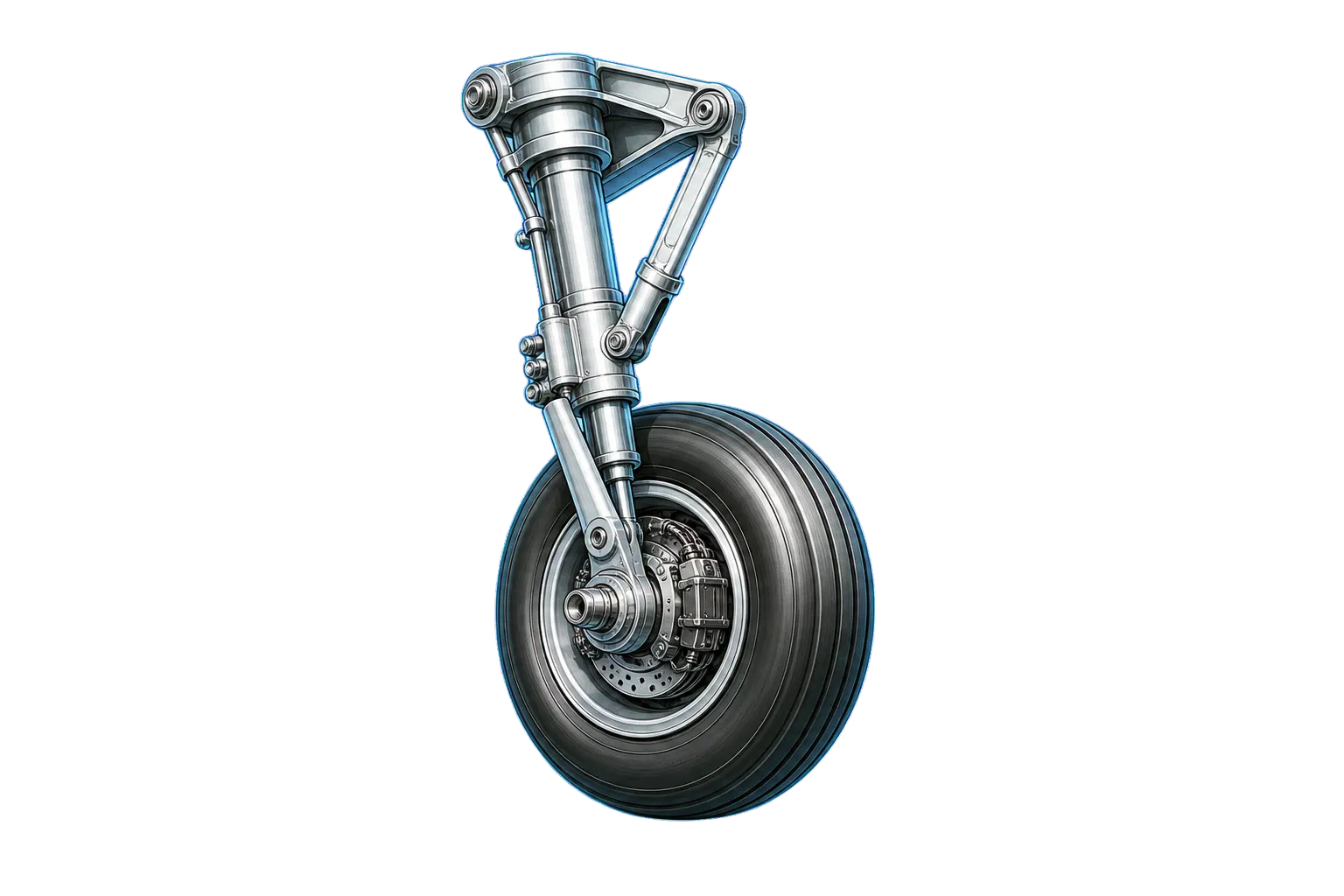
Cracking of the main landing gear (MLG) sliding tube subassembly, which could result in collapse of the MLG.
AI-generated summary from the source AD text. Verify against the official source before acting.
Required Actions
Conduct repetitive inspections of the MLG sliding tube subassembly to detect cracks. Replace a cracked subassembly with a new one. Eventually, perform a more extensive, one-time inspection of the same area and take corrective actions if necessary, which will terminate the repetitive inspections.
AI-generated summary from the source AD text. Verify against the official source before acting.
Compliance Time
Within the specified intervals as outlined in the AD, with the one-time inspection to be completed within a defined timeframe after the repetitive inspections are terminated.
AI-generated summary from the source AD text. Verify against the official source before acting.
Affected Aircraft
Airbus Model A319, A320, and A321 series airplanes; manufacturer serial numbers through 0875 inclusive; certificated in any category; except those on which Airbus Service Bulletin A320-32-1189, dated December 23, 1998, has been accomplished; and except those meeting specific conditions regarding MLG sliding tube history.
AI-generated summary from the source AD text. Verify against the official source before acting.
Federal Register Abstract
This amendment adopts a new airworthiness directive (AD), applicable to certain Airbus Model A319, A320, and A321 series airplanes, that requires repetitive inspections of the sliding tube subassembly on the main landing gear (MLG) to detect cracks, and replacement of a cracked subassembly with a new subassembly. This amendment also eventually requires a more extensive, one-time inspection of the same area and corrective actions, if necessary; which terminates the repetitive inspections. This amendment is prompted by issuance of mandatory continuing airworthiness information by a foreign civil airworthiness authority. The actions specified by this AD are intended to prevent cracking of the MLG sliding tube subassembly, which could result in collapse of the MLG.
Document Text
Show stored source text (verify against official source)
[Federal Register Volume 65, Number 106 (Thursday, June 1, 2000)]
[Rules and Regulations]
[Pages 34938-34940]
From the Federal Register Online via the Government Publishing Office [<a href="http://www.gpo.gov">www.gpo.gov</a>]
[FR Doc No: 00-13446]


-----------------------------------------------------------------------

DEPARTMENT OF TRANSPORTATION

Federal Aviation Administration

14 CFR Part 39

[Docket No. 99-NM-343-AD; Amendment 39-11757; AD 2000-11-09]
RIN 2120-AA64


Airworthiness Directives; Airbus Model A319, A320, and A321
Series Airplanes

AGENCY: Federal Aviation Administration, DOT.

ACTION: Final rule.

-----------------------------------------------------------------------

SUMMARY: This amendment adopts a new airworthiness directive (AD),
applicable to certain Airbus Model A319, A320, and A321 series
airplanes, that requires repetitive inspections of the sliding tube
subassembly on the main landing gear (MLG) to detect cracks, and
replacement of a cracked subassembly with a new subassembly. This
amendment also eventually requires a more extensive, one-time
inspection of the same area and corrective actions, if necessary; which
terminates the repetitive inspections. This amendment is prompted by
issuance of mandatory continuing airworthiness information by a foreign
civil airworthiness authority. The actions specified by this AD are
intended to prevent cracking of the MLG sliding tube subassembly, which
could result in collapse of the MLG.

DATES: Effective July 6, 2000.
    The incorporation by reference of certain publications listed in
the regulations is approved by the Director of the Federal Register as
of July 6, 2000.

ADDRESSES: The service information referenced in this AD may be
obtained from Airbus Industrie, 1 Rond Point Maurice Bellonte, 31707
Blagnac Cedex, France. This information may be examined at the Federal
Aviation Administration (FAA), Transport Airplane Directorate, Rules
Docket, 1601 Lind Avenue, SW., Renton, Washington; or at the Office of
the Federal Register, 800 North Capitol Street, NW., suite 700,
Washington, DC.

FOR FURTHER INFORMATION CONTACT: Norman B. Martenson, Manager,
International Branch, ANM-116, FAA, Transport Airplane Directorate,
1601 Lind Avenue, SW., Renton, Washington 98055-4056; telephone (425)
227-2110; fax (425) 227-1149.

SUPPLEMENTARY INFORMATION: A proposal to amend part 39 of the Federal
Aviation Regulations (14 CFR part 39) to include an airworthiness
directive (AD) that is applicable to certain Airbus Model A319, A320,
and A321 series airplanes was published in the Federal Register on
February 15, 2000 (65 FR 7465). That action proposed to require
repetitive inspections of the sliding tube subassembly on the main
landing gear (MLG) to detect cracks, and replacement of a cracked
subassembly with a new subassembly. That action also proposed to
eventually require a more extensive, one-time inspection of the same
area and corrective actions, if necessary; which would terminate the
repetitive inspections.

Comments Received

    Interested persons have been afforded an opportunity to participate
in the making of this amendment. Due

[[Page 34939]]

consideration has been given to the comments received.

Previous Inspections of MLG Sliding Tubes

    Two commenters request that the applicability of the proposed AD be
revised to exclude airplanes on which certain conditions regarding the
MLG sliding tubes are met. Specifically, the commenters request that
airplanes be excluded if it can be determined that (1) the MLG sliding
tubes have never been removed; (2) a magnetic particle non-destructive
test (NDT2) inspection has never been accomplished on the installed MLG
sliding tubes; or, (3) an NDT2 inspection has been accomplished on the
installed MLG sliding tubes only after removal of attaching hardware
and bushings. One commenter states that, contrary to the assertion in
the proposed AD that these conditions cannot be easily determined, each
operator is required to track such information for its airplanes. The
commenter notes that, since an MLG sliding tube is a safe life-limited
item, operators are required to maintain complete records of
maintenance and overhaul. And, since the NDT2 inspection can be
performed only in a shop environment, there should be no concern that
such an inspection could have occurred ``on-wing,'' without generation
of proper maintenance records.
    The FAA acknowledges that operators are required to maintain status
records for each safe life-limited part with regard to the life limits
of that part, i.e., hours or cycles of operation. However, not all
operators maintain complete maintenance records for the life of the
part, and such records would be necessary in order to make a definitive
determination of the conditions defined above. The FAA has no objection
to revising the applicability of the AD to exclude those airplanes on
which one of these conditions can be definitively shown. The FAA has
revised the applicability accordingly, and has added a ``NOTE'' to the
final rule to specify that complete maintenance records are considered
necessary in order to determine whether one of the above conditions has
been met.

Exemption from Requirements of AD

    One commenter, an operator, states that its airplanes have never
been subjected to an NDT2 inspection (as referenced in Airbus Service
Bulletin A320-32-1189, dated December 23, 1998), and hence are exempt
from the repetitive inspections required by the proposed AD.
    The FAA considers that reiteration of the requirements of the
specified applicability of the proposed AD is necessary. The commenter
is referring to a determination that an NDT2 inspection has never been
accomplished [as described in condition (2) above] on its airplanes.
All operators should be aware that the applicability of this AD (or any
other AD) takes precedence over the effectivity listed in the
referenced service bulletin. The exemption declared by the commenter,
based on the information in the service bulletin, was NOT included in
the applicability of the proposed AD, for reasons described in the
``Differences'' section of the preamble of the proposed AD. Therefore,
the commenter was indeed subject to the requirements of the AD with the
applicability as proposed. However, since the applicability of the
final rule has been revised, as discussed above, the commenter may now
reevaluate its determination of affected airplanes based on the
applicability specified in the final rule.

Revision to Applicability of AD

    One commenter states that the applicability of the proposed AD is
confusing, and suggests that it be revised to include airplanes ``only
if the initial issue of Messier-Dowty SB 200-32-250 has been
accomplished.'' (The original Messier-Dowty service bulletin called for
an NDT2 inspection without specifying removal of the jacking dome
bushings. If the jacking dome bushings were not removed, high
temperature damage could have occurred to the MLG bore and bushings.)
The commenter states that Airbus Service Bulletin A320-32-1189, dated
December 23, 1998, was issued to alert operators of potential cracking
that can occur if the NDT2 inspection procedures in the original
Messier-Dowty service bulletin were used.
    The FAA does not concur with limiting the applicability as
suggested, due to potential difficulties in determining the complete
inspection history of installed MLG sliding tubes, as described
previously. However, the FAA has determined that an inadvertent error
in the proposed applicability may have created confusion. The
applicability of the proposed AD includes airplanes ``. . . except
those on which Airbus Service Bulletin A320-32-1189, dated December 23,
1998, has not been accomplished.'' Since the actions described in
Airbus Service Bulletin A320-32-1189 are actually required by this AD,
the FAA's intent in the proposed applicability was to exclude airplanes
on which all actions described in Service Bulletin A320-32-1189 have
been accomplished. Therefore, the FAA has determined that the
applicability should have read ``. . . except those on which Airbus
Service Bulletin A320-32-1189, dated December 23, 1998, has been
accomplished.'' The final rule has been revised accordingly.

Conclusion

    After careful review of the available data, including the comments
noted above, the FAA has determined that air safety and the public
interest require the adoption of the rule with the change described
previously. The FAA has determined that this change will neither
increase the economic burden on any operator nor increase the scope of
the AD.

Cost Impact

    The FAA estimates that 179 airplanes of U.S. registry will be
affected by this AD.
    It will take approximately 1 work hour per airplane to accomplish
the required ``Part A'' (repetitive) inspection, at an average labor
rate of $60 per work hour. Based on these figures, the cost impact of
the ``Part A'' (repetitive) inspection on U.S. operators is estimated
to be $10,740, or $60 per airplane, per inspection cycle.
    It will take approximately 6 work hours per airplane to accomplish
the required ``Part B'' (one-time) inspection, at an average labor rate
of $60 per work hour. Based on these figures, the cost impact of the
``Part B'' (one-time) inspection on U.S. operators is estimated to be
$64,440, or $360 per airplane.
    The cost impact figures discussed above are based on assumptions
that no operator has yet accomplished any of the requirements of this
AD action, and that no operator would accomplish those actions in the
future if this AD were not adopted.

Regulatory Impact

    The regulations adopted herein will not have a substantial direct
effect on the States, on the relationship between the national
Government and the States, or on the distribution of power and
responsibilities among the various levels of government. Therefore, it
is determined that this final rule does not have federalism
implications under Executive Order 13132.
    For the reasons discussed above, I certify that this action (1) is
not a ``significant regulatory action'' under Executive Order 12866;
(2) is not a ``significant rule'' under DOT Regulatory Policies and
Procedures (44 FR 11034, February 26, 1979); and (3)

[[Page 34940]]

will not have a significant economic impact, positive or negative, on a
substantial number of small entities under the criteria of the
Regulatory Flexibility Act. A final evaluation has been prepared for
this action and it is contained in the Rules Docket. A copy of it may
be obtained from the Rules Docket at the location provided under the
caption ADDRESSES.

List of Subjects in 14 CFR Part 39

    Air transportation, Aircraft, Aviation safety, Incorporation by
reference, Safety.

Adoption of the Amendment

    Accordingly, pursuant to the authority delegated to me by the
Administrator, the Federal Aviation Administration amends part 39 of
the Federal Aviation Regulations (14 CFR part 39) as follows:

PART 39--AIRWORTHINESS DIRECTIVES

    1. The authority citation for part 39 continues to read as follows:

    Authority: 49 U.S.C. 106(g), 40113, 44701.


Sec. 39.13  [Amended]

    2. Section 39.13 is amended by adding the following new
airworthiness directive:

2000-11-09 Airbus: Amendment 39-11757. Docket 99-NM-343-AD.

    Applicability: Model A319, A320, and A321 series airplanes;
manufacturer serial numbers through 0875 inclusive; certificated in
any category; except those on which Airbus Service Bulletin A320-32-
1189, dated December 23, 1998, has been accomplished; and except
those on which it can be shown that one of the following conditions
has been met (also see NOTE 1):
    (1) The main landing gear (MLG) sliding tubes have never been
removed from the airplane;
    (2) A magnetic particle non-destructive test (NDT2) inspection
has never been accomplished on any of the MLG sliding tubes
installed on the airplane; or
    (3) If an NDT2 inspection has been accomplished on any of the
MLG sliding tubes installed on the airplane, it was accomplished
only after removal of the attaching hardware and bushings.

    Note 1: Operators should note that complete maintenance records
for the life of each MLG sliding tube are necessary in order to make
a definitive determination of whether any condition specified in the
Applicability of the AD has been met.


    Note 2: This AD applies to each airplane identified in the
preceding applicability provision, regardless of whether it has been
otherwise modified, altered, or repaired in the area subject to the
requirements of this AD. For airplanes that have been modified,
altered, or repaired so that the performance of the requirements of
this AD is affected, the owner/operator must request approval for an
alternative method of compliance in accordance with paragraph (c) of
this AD. The request should include an assessment of the effect of
the modification, alteration, or repair on the unsafe condition
addressed by this AD; and, if the unsafe condition has not been
eliminated, the request should include specific proposed actions to
address it.

    Compliance: Required as indicated, unless accomplished
previously.
    To prevent cracking of the sliding tube subassembly of the main
landing gear (MLG), which could result in collapse of the MLG,
accomplish the following:

Inspections

    (a) Within 500 flight hours after the effective date of this AD,
perform a detailed visual inspection to detect cracking of the left-
hand and right-hand MLG sliding tube subassemblies, in accordance
with paragraph 2.B.(1) of the Accomplishment Instructions of Airbus
Service Bulletin A320-32-1189, dated December 23, 1998.
    (1) If no crack is found, repeat the inspection at intervals not
to exceed 500 flight hours, until the requirements of paragraph (b)
of this AD have been accomplished.
    (2) If any crack is found, prior to further flight, replace the
sliding tube subassembly with a new subassembly, in accordance with
the service bulletin. Thereafter, repeat the inspection at intervals
not to exceed 500 flight hours, until the requirements of paragraph
(b) of this AD have been accomplished.

    Note 3: For the purposes of this AD, a detailed visual
inspection is defined as: ``an intensive visual examination of a
specific structural area, system, installation, or assembly to
detect damage, failure, or irregularity. Available lighting is
normally supplemented with a direct source of good lighting at
intensity deemed appropriate by the inspector. Inspection aids such
as mirror, magnifying lenses, etc., may be used. Surface cleaning
and elaborate access procedures may be required.''

    (b) Within 15 months after the effective date of this AD: Remove
the jacking dome, the stop washer, the jacking dome bushing, and the
harness supports; and perform detailed visual inspections to detect
discrepancies (including cracking of the left and right MLG sliding
tube subassemblies, and overheat damage of the jacking dome
bushing), in accordance with paragraph 2.B.(2) of the Accomplishment
Instructions of Airbus Service Bulletin A320-32-1189, dated December
23, 1998. Accomplishment of the requirements of this paragraph
constitutes terminating action for the requirements of paragraph (a)
of this AD.
    (1) If no discrepancy is found, prior to further flight, install
a new stop washer and jacking dome bushing, in accordance with the
service bulletin. No further action is required by this AD.
    (2) If any discrepancy is found, prior to further flight, repair
in accordance with a method approved by the Manager, International
Branch, ANM-116, FAA, Transport Airplane Directorate; or the
Direction Generale de l'Aviation Civile (DGAC) (or its delegated
agent). For a repair method to be approved by the Manager,
International Branch, ANM-116, as required by this paragraph, the
Manager's approval letter must specifically reference this AD.

Alternative Methods of Compliance

    (c) An alternative method of compliance or adjustment of the
compliance time that provides an acceptable level of safety may be
used if approved by the Manager, International Branch, ANM-116.
Operators shall submit their requests through an appropriate FAA
Principal Maintenance Inspector, who may add comments and then send
it to the Manager, International Branch, ANM-116.

    Note 4: Information concerning the existence of approved
alternative methods of compliance with this AD, if any, may be
obtained from the International Branch, ANM-116.

Special Flight Permits

    (d) Special flight permits may be issued in accordance with
sections 21.197 and 21.199 of the Federal Aviation Regulations (14
CFR 21.197 and 21.199) to operate the airplane to a location where
the requirements of this AD can be accomplished.

Incorporation by Reference

    (e) Except as required by paragraph (b)(2), the actions shall be
done in accordance with Airbus Service Bulletin A320-32-1189, dated
December 23, 1998. This incorporation by reference was approved by
the Director of the Federal Register in accordance with 5 U.S.C.
552(a) and 1 CFR part 51. Copies may be obtained from Airbus
Industrie, 1 Rond Point Maurice Bellonte, 31707 Blagnac Cedex,
France. Copies may be inspected at the FAA, Transport Airplane
Directorate, 1601 Lind Avenue, SW., Renton, Washington; or at the
Office of the Federal Register, 800 North Capitol Street, NW., suite
700, Washington, DC.

    Note 5: The subject of this AD is addressed in French
airworthiness directive 1999-358-137(B) R1, dated October 20, 1999.

    (f) This amendment becomes effective on July 6, 2000.

    Issued in Renton, Washington, on May 23, 2000.
Donald L. Riggin,
Acting Manager, Transport Airplane Directorate, Aircraft Certification
Service.
[FR Doc. 00-13446 Filed 5-31-00; 8:45 am]
BILLING CODE 4910-13-U
Source: Official FAA Source ↗
Retrieved: Apr 6, 2026
Rights: U.S. Government Public Domain
This site is not affiliated with or endorsed by the FAA. Always verify with official sources.
Related Airworthiness Directives
2026-03-10
final ruleAirworthiness Directives; Airbus SAS Airplanes
Unsafe Condition: a safety significant latent failure (that is not annunciated), which, in combination with one or more other specific failures or events, could result in a hazardous or catastrophic failure condition.
2025-23-09 Recurring
final ruleAirworthiness Directives; Airbus SAS Airplanes
Unsafe Condition: Cracks on the web horizontal flange and inner cap at frame (FR) 68, left-hand (LH) and right-hand (RH) sides, at stringer (STGR) 22, and additional cracks found at the door stop fitting number 1 ho...
2025-24-51
final ruleAirworthiness Directives; Airbus SAS Airplanes
Unsafe Condition: A malfunction of the affected elevator aileron computer (ELAC) could lead to an uncommanded elevator movement that may result in exceeding the aircraft's structural capability and consequent loss o...
2025-20-15 Recurring
final ruleAirworthiness Directives; Airbus SAS Airplanes
Unsafe Condition: Cracks in the double joggle areas at frame (FR) 16 and FR20, right-hand and left-hand sides, which, if not detected and corrected, could reduce the structural integrity of the fuselage.