AD Amdt-39-23319
Applicability
| Type | Manufacturer | Model | Details |
|---|---|---|---|
| aircraft | Pilatus | Various | Airworthiness Directives; Pilatus Aircraft Ltd. Airplanes |
Unsafe Condition
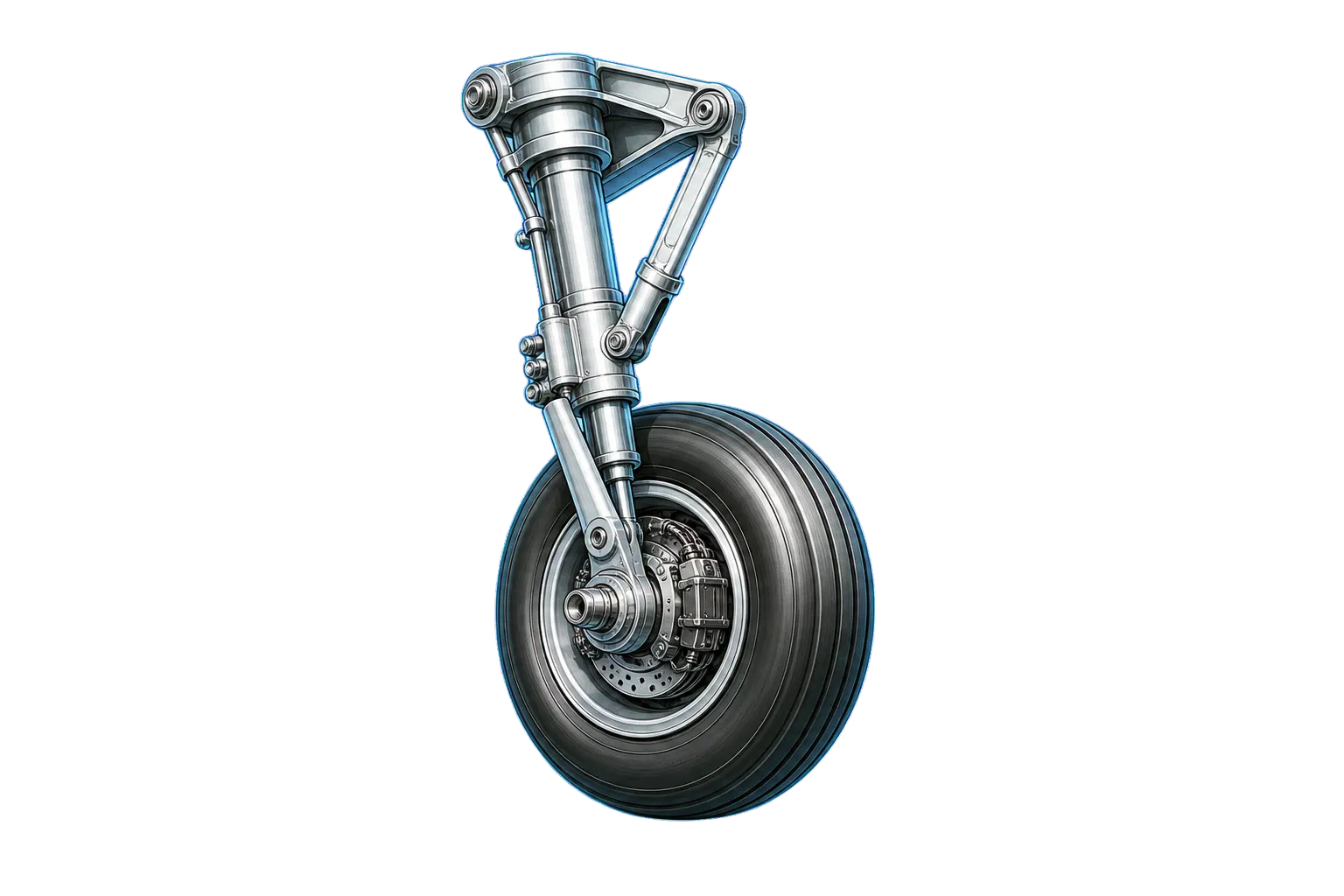
A brake shuttle valve (BSV) on a production airplane shuttled and isolated the brake line to the left-hand (LH) brake, resulting in brake lockup.
AI-generated summary from the source AD text. Verify against the official source before acting.
Required Actions
Replace the LH and right-hand (RH) brake pipe assemblies and prohibit the installation of affected parts.
AI-generated summary from the source AD text. Verify against the official source before acting.
Affected Aircraft
Pilatus Aircraft Ltd. Model PC-12/47G airplanes as specified in the AD.
AI-generated summary from the source AD text. Verify against the official source before acting.
Federal Register Abstract
The FAA is adopting a new airworthiness directive (AD) for certain Pilatus Aircraft Ltd. (Pilatus) Model PC-12/47G airplanes. This AD was prompted by a report that a brake shuttle valve (BSV) on a production airplane shuttled and isolated the brake line to the left- hand (LH) brake, which resulted in brake lockup. This AD requires replacement of the LH and right-hand (RH) brake pipe assemblies and also prohibits the installation of affected parts. The FAA is issuing this AD to address the unsafe condition on these products.
Applicability Source Text
Show captured applicability text from the source AD
(c) Applicability

    This AD applies to Pilatus Aircraft Ltd., Model PC-12/47G
airplanes, certificated in any category, as identified in European
Union Aviation Safety Agency (EASA) Emergency AD 2026-0065-E, dated
March 25, 2026 (EASA Emergency AD 2026-0065-E).
Document Text
Show stored source text (verify against official source)
21952 Federal Register / Vol. 91, No. 79 / Friday, April 24, 2026 / Rules and Regulations PART 39—AIRWORTHINESS DIRECTIVES ■ 1. The authority citation for part 39 continues to read as follows: Authority: 49 U.S.C. 106(g), 40113, 44701. § 39.13 [Amended] ■ 2. The FAA amends § 39.13 by adding the following new airworthiness directive: 2026–08–04 Bombardier, Inc.: Amendment 39–23312; Docket No. FAA–2026–0727; Project Identifier MCAI–2025–01659–T. (a) Effective Date This airworthiness directive (AD) is effective May 29, 2026. (b) Affected ADs None. (c) Applicability This AD applies to certain Bombardier, Inc., Model BD–700–1A10 and BD–700–1A11 airplanes, certificated in any category, as identified in Transport Canada AD CF–2025– 53, dated November 11, 2025 (Transport Canada AD CF–2025–53) except serial number 9001. (d) Subject Air Transport Association (ATA) of America Code 27, Flight Controls. (e) Unsafe Condition This AD was prompted by a determination that the approach speed adders and landing distance factors must be corrected in the airplane flight manual (AFM) tables in the non-normal procedure for the SLAT FAIL (Caution) crew alerting system (CAS) message. The FAA is issuing this AD to correct the approach speed adders and landing distance factors for the SLAT FAIL (Caution) non-normal procedure. The unsafe condition, if not corrected, could lead to a reduced maneuvering margin to stick shaker (stall warning) activation, which could increase flightcrew workload due to an unexpected stall warning and could adversely affect the safe operation of the airplane. (f) Compliance Comply with this AD within the compliance times specified, unless already done. (g) Requirements Except as specified in paragraph (h) of this AD: Comply with all required actions and compliance times specified in, and in accordance with, Transport Canada AD CF– 2025–53. (h) Exceptions to Transport Canada AD CF– 2025–53 (1) Where Transport Canada AD CF–2025– 53 refers to its effective date, this AD requires using the effective date of this AD. (2) Where paragraph B of Transport Canada AD CF–2025–53 specifies to ‘‘Advise all flight crews of the changes introduced by the approved Transport Canada AFM procedures listed above and thereafter operate the aeroplane accordingly,’’ this AD does not require those actions as those actions are already required by existing FAA operating regulations (see 14 CFR 91.9, 91.505, and 121.137). (i) Additional AD Provisions The following provisions also apply to this AD: (1) Alternative Methods of Compliance (AMOCs): The Manager, International Validation Branch, FAA, has the authority to approve AMOCs for this AD, if requested using the procedures found in 14 CFR 39.19. In accordance with 14 CFR 39.19, send your request to your principal inspector or responsible Flight Standards Office, as appropriate. If sending information directly to the manager of the International Validation Branch, send it to the attention of the person identified in paragraph (j) of this AD and email to: AMOC@faa.gov . Before using any approved AMOC, notify your appropriate principal inspector, or lacking a principal inspector, the manager of the responsible Flight Standards Office. (2) Contacting the Manufacturer: For any requirement in this AD to obtain instructions from a manufacturer, the instructions must be accomplished using a method approved by the Manager, International Validation Branch, FAA; or Transport Canada; or Bombardier, Inc.’s Transport Canada Design Approval Organization (DAO). If approved by the DAO, the approval must include the DAO-authorized signature. (j) Additional Information For more information about this AD, contact John Massey, Aviation Safety Engineer, FAA, 1600 Stewart Avenue, Suite 410, Westbury, NY 11590; phone: 516–228– 7300; email: 9-avs-nyaco-cos@faa.gov. (k) Material Incorporated by Reference (1) The Director of the Federal Register approved the incorporation by reference of the material listed in this paragraph under 5 U.S.C. 552(a) and 1 CFR part 51. (2) You must use this material as applicable to do the actions required by this AD, unless this AD specifies otherwise. (i) Transport Canada AD CF–2025–53, dated November 11, 2025. (ii) [Reserved] (3) For Transport Canada material identified in this AD, contact Transport Canada, Transport Canada National Aircraft Certification, 159 Cleopatra Drive, Nepean, Ontario K1A 0N5, Canada; telephone 888– 663–3639; email TC.AirworthinessDirectives- Consignesdenavigabilite.TC@tc.gc.ca. You may find this material on the Transport Canada website at tc.canada.ca/en/aviation. (4) You may view this material at the FAA, Airworthiness Products Section, Operational Safety Branch, 2200 South 216th St., Des Moines, WA. For information on the availability of this material at the FAA, call 206–231–3195. (5) You may view this material at the National Archives and Records Administration (NARA). For information on the availability of this material at NARA, visit www.archives.gov/federal-register/cfr/ ibr-locations or email fr.inspection@nara.gov. Issued on April 13, 2026. Steven W. Thompson, Acting Deputy Director, Compliance & Airworthiness Division, Aircraft Certification Service. [FR Doc. 2026–08032 Filed 4–23–26; 8:45 am] BILLING CODE 4910–13–P DEPARTMENT OF TRANSPORTATION Federal Aviation Administration 14 CFR Part 39 [Docket No. FAA–2026–3862; Project Identifier MCAI–2026–00317–A; Amendment 39–23319; 2026–08–11] RIN 2120–AA64 Airworthiness Directives; Pilatus Aircraft Ltd. Airplanes AGENCY : Federal Aviation Administration (FAA), DOT. ACTION : Final rule; request for comments. SUMMARY : The FAA is adopting a new airworthiness directive (AD) for certain Pilatus Aircraft Ltd. (Pilatus) Model PC– 12/47G airplanes. This AD was prompted by a report that a brake shuttle valve (BSV) on a production airplane shuttled and isolated the brake line to the left-hand (LH) brake, which resulted in brake lockup. This AD requires replacement of the LH and right-hand (RH) brake pipe assemblies and also prohibits the installation of affected parts. The FAA is issuing this AD to address the unsafe condition on these products. DATES : This AD is effective May 11, 2026. The Director of the Federal Register approved the incorporation by reference of a certain publication listed in this AD as of May 11, 2026. The FAA must receive comments on this AD by June 8, 2026. ADDRESSES : You may send comments, using the procedures found in 14 CFR 11.43 and 11.45, by any of the following methods: • Federal eRulemaking Portal: Go to regulations.gov . Follow the instructions for submitting comments. • Fax: (202) 493–2251. • Mail: U.S. Department of Transportation, Docket Operations, M– 30, West Building Ground Floor, Room W12–140, 1200 New Jersey Avenue SE, Washington, DC 20590. • Hand Delivery: Deliver to Mail address above between 9 a.m. and 5 p.m., Monday through Friday, except Federal holidays. AD Docket: You may examine the AD docket at regulations.gov under Docket VerDate Sep<11>2014 17:12 Apr 23, 2026 Jkt 268001 PO 00000 Frm 00016 Fmt 4700 Sfmt 4700 E:\FR\FM\24APR1.SGM 24APR1 KHAMMOND on DSK9W7S144PROD with RULES

21953 Federal Register / Vol. 91, No. 79 / Friday, April 24, 2026 / Rules and Regulations No. FAA–2026–3862; or in person at Docket Operations between 9 a.m. and 5 p.m., Monday through Friday, except Federal holidays. The AD docket contains this final rule, the mandatory continuing airworthiness information (MCAI), any comments received, and other information. The street address for Docket Operations is listed above. Material Incorporated by Reference: • For European Union Aviation Safety Agency (EASA) material identified in this AD, contact EASA, Konrad-Adenauer-Ufer 3, 50668 Cologne, Germany; phone: +49 221 8999 000; email: ADs@easa.europa.eu; website: easa.europa.eu. You may find this material on the EASA website at ad.easa.europa.eu. • You may view this material at the FAA, Airworthiness Products Section, Operational Safety Branch, 901 Locust, Kansas City, MO 64106. For information on the availability of this material at the FAA, call (817) 222–5110. It is also available at regulations.gov under Docket No. FAA–2026–3862. FOR FURTHER INFORMATION CONTACT : Doug Rudolph, Aviation Safety Engineer, FAA, 1600 Stewart Avenue, Suite 410, Westbury, NY 11590; phone: (816) 329–4059; email: doug.rudolph@ faa.gov. SUPPLEMENTARY INFORMATION : Comments Invited The FAA invites you to send any written data, views, or arguments about this final rule. Send your comments using a method listed under the ADDRESSES section. Include ‘‘Docket No. FAA–2026–3862; Project Identifier MCAI–2026–00317–A’’ at the beginning of your comments. The most helpful comments reference a specific portion of the final rule, explain the reason for any recommended change, and include supporting data. The FAA will consider all comments received by the closing date and may amend this final rule because of those comments. Except for Confidential Business Information (CBI) as described in the following paragraph, and other information as described in 14 CFR 11.35, the FAA will post all comments received, without change, to regulations.gov , including any personal information you provide. The agency will also post a report summarizing each substantive verbal contact received about this final rule. Confidential Business Information CBI is commercial or financial information that is both customarily and actually treated as private by its owner. Under the Freedom of Information Act (FOIA) (5 U.S.C. 552), CBI is exempt from public disclosure. If your comments responsive to this AD contain commercial or financial information that is customarily treated as private, that you actually treat as private, and that is relevant or responsive to this AD, it is important that you clearly designate the submitted comments as CBI. Please mark each page of your submission containing CBI as ‘‘PROPIN.’’ The FAA will treat such marked submissions as confidential under the FOIA, and they will not be placed in the public docket of this AD. Submissions containing CBI should be sent to Doug Rudolph, Aviation Safety Engineer, FAA, 1600 Stewart Avenue, Suite 410, Westbury, NY 11590. Any commentary that the FAA receives which is not specifically designated as CBI will be placed in the public docket for this rulemaking. Background EASA, which is the Technical Agent for the Member States of the European Union, has issued EASA Emergency AD 2026–0065–E, dated March 25, 2026 (EASA Emergency AD 2026–0065–E) (also referred to as the MCAI), to correct an unsafe condition on certain Pilatus Model PC–12/47G airplanes. The MCAI states that during production operations it was observed that the BSV, installed as a provision for a future emergency autoland system, had shuttled and isolated the brake line between the BSV and the LH brake, which resulted in LH brake lockup. This condition, if not corrected, could lead to unintended asymmetric wheel braking and reduced directional control of the airplane. You may examine the MCAI in the AD docket at regulations.gov under Docket No. FAA–2026–3862. Material Incorporated by Reference Under 1 CFR Part 51 The FAA reviewed EASA Emergency AD 2026–0065–E, which specifies procedures for the replacement of the LH and RH brake pipe assemblies and prohibits the installation of affected parts. This material is reasonably available because the interested parties have access to it through their normal course of business or by the means identified in the ADDRESSES section. FAA’s Determination These products have been approved by the civil aviation authority of another country and are approved for operation in the United States. Pursuant to the FAA’s bilateral agreement with this State of Design Authority, that authority has notified the FAA of the unsafe condition described in the MCAI referenced above. The FAA is issuing this AD after determining that the unsafe condition described previously is likely to exist or develop on other products of the same type design. AD Requirements This AD requires accomplishing the actions specified in the material already described, except for any differences identified as exceptions in the regulatory text of this AD. Explanation of Required Compliance Information In the FAA’s ongoing efforts to improve the efficiency of the AD process, the FAA developed a process to use some civil aviation authority (CAA) ADs as the primary source of information for compliance with requirements for corresponding FAA ADs. The FAA has been coordinating this process with manufacturers and CAAs. As a result, EASA Emergency AD 2026–0065–E is incorporated by reference in this AD. This AD requires compliance with EASA Emergency AD 2026–0065–E in its entirety through that incorporation, except for any differences identified as exceptions in the regulatory text of this AD. Using common terms that are the same as the heading of a particular section in EASA Emergency AD 2026–0065–E does not mean that operators need comply only with that section. For example, where the AD requirement refers to ‘‘all required actions and compliance times,’’ compliance with this AD requirement is not limited to the section titled ‘‘Required Action(s) and Compliance Time(s)’’ in EASA Emergency AD 2026– 0065–E. Material required by EASA Emergency AD 2026–0065–E for compliance will be available at regulations.gov under Docket No. FAA– 2026–3862 after this AD is published. Interim Action The FAA considers this AD to be an interim action. If final action is later identified, the FAA might consider further rulemaking. Justification for Immediate Adoption and Determination of the Effective Date Section 553(b) of the Administrative Procedure Act (APA) (5 U.S.C. 551 et seq. ) authorizes agencies to dispense with notice and comment procedures for rules when the agency, for ‘‘good cause,’’ finds that those procedures are ‘‘impracticable, unnecessary, or contrary to the public interest.’’ Under this section, an agency, upon finding good cause, may issue a final rule without providing notice and seeking comment prior to issuance. Further, section 553(d) of the APA authorizes agencies to VerDate Sep<11>2014 17:12 Apr 23, 2026 Jkt 268001 PO 00000 Frm 00017 Fmt 4700 Sfmt 4700 E:\FR\FM\24APR1.SGM 24APR1 KHAMMOND on DSK9W7S144PROD with RULES

21954 Federal Register / Vol. 91, No. 79 / Friday, April 24, 2026 / Rules and Regulations make rules effective in less than thirty days, upon a finding of good cause. An unsafe condition exists that requires the immediate adoption of this AD without providing an opportunity for public comments prior to adoption. The FAA has found that the risk to the flying public justifies forgoing notice and comment prior to adoption of this rule because a BSV can shuttle and isolate the brake line, resulting in brake lockup. This could lead to unintended asymmetric braking during takeoff, aborted takeoff, or landing. Asymmetric braking during the takeoff roll could result in the airplane veering sharply to one side, preventing the airplane from accelerating correctly or maintaining the runway centerline. Similarly, during landing, asymmetric braking could result in reduced directional control and prevent the airplane from maintaining the centerline. Failure to maintain the runway centerline increases the risk of a runway excursion, which can lead to loss of control, departure from the paved surface, and potential damage to the airplane and surrounding infrastructure, or injury to occupants. Additionally, the compliance time in this AD is shorter than the time necessary for the public to comment prior to publication of the final rule. Accordingly, notice and opportunity for prior public comment are impracticable and contrary to the public interest pursuant to 5 U.S.C. 553(b). In addition, the FAA finds that good cause exists pursuant to 5 U.S.C. 553(d) for making this amendment effective in less than 30 days, for the same reasons the FAA found good cause to forgo notice and comment. Regulatory Flexibility Act The requirements of the Regulatory Flexibility Act (RFA) do not apply when an agency finds good cause pursuant to 5 U.S.C. 553 to adopt a rule without prior notice and comment. Because the FAA has determined that it has good cause to adopt this rule without prior notice and comment, RFA analysis is not required. Costs of Compliance The FAA estimates that this AD affects 13 airplanes of U.S. registry. The FAA estimates the following costs to comply with this AD: E STIMATED C OSTS Action Labor cost Parts cost Cost per product Cost on U.S. operators Replace the LH and RH brake pipe assem- blies. 3 work-hours × $85 per hour = $255 ............. $5,000 $5,255 $68,315 The FAA has included all known costs in its cost estimate. According to the manufacturer, however, some of the costs of this AD may be covered under warranty, thereby reducing the cost impact on affected operators. Authority for This Rulemaking Title 49 of the United States Code specifies the FAA’s authority to issue rules on aviation safety. Subtitle I, section 106, describes the authority of the FAA Administrator. Subtitle VII: Aviation Programs describes in more detail the scope of the Agency’s authority. The FAA is issuing this rulemaking under the authority described in Subtitle VII, Part A, Subpart III, Section 44701: General requirements. Under that section, Congress charges the FAA with promoting safe flight of civil aircraft in air commerce by prescribing regulations for practices, methods, and procedures the Administrator finds necessary for safety in air commerce. This regulation is within the scope of that authority because it addresses an unsafe condition that is likely to exist or develop on products identified in this rulemaking action. Regulatory Findings This AD will not have federalism implications under Executive Order 13132. This AD will not have a substantial direct effect on the States, on the relationship between the national government and the States, or on the distribution of power and responsibilities among the various levels of government. For the reasons discussed above, I certify that this AD: (1) Is not a ‘‘significant regulatory action’’ under Executive Order 12866, and (2) Will not affect intrastate aviation in Alaska. List of Subjects in 14 CFR Part 39 Air transportation, Aircraft, Aviation safety, Incorporation by reference, Safety. The Amendment Accordingly, under the authority delegated to me by the Administrator, the FAA amends 14 CFR part 39 as follows: PART 39—AIRWORTHINESS DIRECTIVES ■ 1. The authority citation for part 39 continues to read as follows: Authority: 49 U.S.C. 106(g), 40113, 44701. § 39.13 [Amended] ■ 2. The FAA amends § 39.13 by adding the following new airworthiness directive: 2026–08–11 Pilatus Aircraft Ltd.: Amendment 39–23319; Docket No. FAA–2026–3862; Project Identifier MCAI–2026–00317–A. (a) Effective Date This airworthiness directive (AD) is effective May 11, 2026. (b) Affected ADs None. (c) Applicability This AD applies to Pilatus Aircraft Ltd., Model PC–12/47G airplanes, certificated in any category, as identified in European Union Aviation Safety Agency (EASA) Emergency AD 2026–0065–E, dated March 25, 2026 (EASA Emergency AD 2026–0065– E). (d) Subject Joint Aircraft System Component (JASC) Code 3240, Landing Gear Brake System. (e) Unsafe Condition This AD was prompted by a report that a brake shuttle valve (BSV) on a production airplane shuttled and isolated the brake line to the left-hand (LH) brake, resulting in brake lockup. The FAA is issuing this AD to prevent unintended asymmetric wheel braking. The unsafe condition, if not addressed, could result in reduced directional control of the airplane. (f) Compliance Comply with this AD within the compliance times specified, unless already done. (g) Required Actions Except as specified in paragraphs (h) and (i) of this AD: Comply with all required actions and compliance times specified in, and in accordance with, EASA Emergency AD 2026–0065–E. VerDate Sep<11>2014 17:12 Apr 23, 2026 Jkt 268001 PO 00000 Frm 00018 Fmt 4700 Sfmt 4700 E:\FR\FM\24APR1.SGM 24APR1 KHAMMOND on DSK9W7S144PROD with RULES

21955 Federal Register / Vol. 91, No. 79 / Friday, April 24, 2026 / Rules and Regulations 1 Public Law 115–254. 2 Initially, Section 429 of the 2018 FAA Act was codified in the notes preceding 49 U.S.C. 42301. On May 16, 2024, the FAA Reauthorization Act of 2024 (2024 FAA Act) was signed into law. Public Law 118–64. Section 510 of the 2024 FAA Act recodified the provision requiring the Passenger Rights Summary from the notes preceding 49 U.S.C. 42301 to 49 U.S.C. 41727. 3 ‘‘Air carrier’’ is defined as ‘‘a citizen of the United States undertaking by any means, directly or indirectly, to provide air transportation.’’ 49 U.S.C. 40102(a)(2). ‘‘Foreign air carrier’’ is defined as ‘‘a person, not a citizen of the United States, undertaking by any means, directly or indirectly, to provide foreign air transportation.’’ 49 U.S.C. 40102(a)(21). (h) Exceptions to EASA Emergency AD 2026– 0065–E (1) Where EASA Emergency AD 2026– 0065–E refers to its effective date, this AD requires using the effective date of this AD. (2) This AD does not adopt the ‘‘Remarks’’ section of EASA Emergency AD 2026–0065– E. (i) No Reporting Requirement Although the material referenced in EASA Emergency AD 2026–0065–E specifies to submit certain information to the manufacturer, this AD does not include that requirement. (j) Alternative Methods of Compliance (AMOCs) The Manager, International Validation Branch, FAA, has the authority to approve AMOCs for this AD, if requested using the procedures found in 14 CFR 39.19. In accordance with 14 CFR 39.19, send your request to your principal inspector or local Flight Standards District Office, as appropriate. If sending information directly to the manager of the International Validation Branch, send it to the attention of the person identified in paragraph (k) of this AD and email to AMOC@faa.gov. Before using any approved AMOC, notify your appropriate principal inspector, or lacking a principal inspector, the manager of the local flight standards district office/certificate holding district office. (k) Additional Information For more information about this AD, contact Doug Rudolph, Aviation Safety Engineer, FAA, 1600 Stewart Avenue, Suite 410, Westbury, NY 11590; phone: (816) 329– 4059; email: doug.rudolph@faa.gov. (l) Material Incorporated by Reference (1) The Director of the Federal Register approved the incorporation by reference of the material listed in this paragraph under 5 U.S.C. 552(a) and 1 CFR part 51. (2) You must use this material as applicable to do the actions required by this AD, unless the AD specifies otherwise. (i) European Union Aviation Safety Agency (EASA) Emergency AD 2026–0065–E, dated March 25, 2026. (ii) [Reserved] (3) For EASA material identified in this AD, contact EASA, Konrad-Adenauer-Ufer 3, 50668 Cologne, Germany; phone: +49 221 8999 000; email: ADs@easa.europa.eu; website: easa.europa.eu. You may find this EASA AD on the EASA website at ad.easa.europa.eu. (4) You may view this material at the FAA, Airworthiness Products Section, Operational Safety Branch, 901 Locust, Kansas City, MO 64106. For information on the availability of this material at the FAA, call (817) 222–5110. (5) You may view this material at the National Archives and Records Administration (NARA). For information on the availability of this material at NARA, visit www.archives.gov/federal-register/cfr/ ibr-locations or email fr.inspection@nara.gov. Issued on April 16, 2026. Steven W. Thompson, Acting Deputy Director, Compliance & Airworthiness Division, Aircraft Certification Service. [FR Doc. 2026–08022 Filed 4–23–26; 8:45 am] BILLING CODE 4910–13–P DEPARTMENT OF TRANSPORTATION Office of the Secretary 14 CFR Part 259 [Docket No. DOT–OST–2026–1651] RIN 2105–AE82 One-Page Document on Passenger Rights AGENCY : Office of the Secretary, Office of the General Counsel, Office of Aviation Consumer Protection, Department of Transportation. ACTION : Final rule. SUMMARY : This final rule implements Section 429 of the FAA Reauthorization Act of 2018 by requiring covered air carriers to submit to the U.S. Department of Transportation (Department) a one-page document summarizing passenger rights regarding delays, diversions, cancellations, baggage, and boarding. To ensure transparency, carriers must post this summary in a prominent location on their websites within 90 days of submitting the plan to the Department. The obligation of carriers to submit and post the summary is contingent upon the Department’s completion of the Paperwork Reduction Act process. DATES : This rule is effective May 26, 2026. However, compliance with the information collection requirements ( i.e., submitting and posting the summary) is not required until the Department publishes a subsequent notice in the Federal Register announcing Office of Management and Budget (OMB) approval of the information collection established in this final rule. FOR FURTHER INFORMATION CONTACT : Nicole Smith, Attorney-Advisor, Heather Filemyr, Attorney-Advisor, or Blane A. Workie, Assistant General Counsel, Office of Aviation Consumer Protection, U.S. Department of Transportation, 1200 New Jersey Avenue SE, Washington, DC 20590, 202–366–9342, 202–366–7152 (fax), nicole.smith@dot.gov, heather.filemyr@ dot.gov, blane.workie@dot.gov (email). SUPPLEMENTARY INFORMATION : Background and Legal Authority On October 5, 2018, the FAA Reauthorization Act of 2018 (2018 FAA Act) was signed into law. 1 Section 429 of the 2018 FAA Act provides that the Secretary of Transportation (the Secretary) shall require covered air carriers to submit a summarized one- page document that describes the rights of passengers in air transportation (Passenger Rights Summary). 2 The Passenger Rights Summary must include ‘‘guidelines’’ for the following: (1) Compensation (regarding rebooking options, refunds, meals, and lodging) for flight delays of various lengths. (2) Compensation (regarding rebooking options, refunds, meals, and lodging) for flight diversions. (3) Compensation (regarding rebooking options, refunds, meals, and lodging) for flight cancellations. (4) Compensation for mishandled baggage, including delayed, damaged, pilfered, or lost baggage. (5) Voluntary relinquishment of a ticketed seat due to overbooking or priority of other passengers. (6) Involuntary denial of boarding and forced removal for whatever reason, including for safety and security reasons. Section 429 of the 2018 FAA Act also requires that each covered air carrier make its Passenger Rights Summary available in a prominent location on its website within 90 days of submitting the plan to the Department. Section 401 of the 2018 FAA Act defines the term ‘‘covered air carrier’’ for its purposes as an air carrier or foreign air carrier as those terms are defined by 49 U.S.C. 40102. 3 To implement this statutory requirement, this final rule creates a new section at 14 CFR 259.9 requiring covered air carriers to submit the Passenger Rights Summary as dictated by 49 U.S.C. 41727. In implementing this requirement, covered air carriers should consider creating a ‘‘one-page’’ summary with a concise, user-friendly document designed for quick consumer reference. A Passenger Rights Summary that fulfills this expectation is typically a single-page document—or a digital equivalent such as a one-page PDF— VerDate Sep<11>2014 17:12 Apr 23, 2026 Jkt 268001 PO 00000 Frm 00019 Fmt 4700 Sfmt 4700 E:\FR\FM\24APR1.SGM 24APR1 KHAMMOND on DSK9W7S144PROD with RULES
Source: Official FAA Source ↗
Retrieved: Jun 22, 2026
Rights: U.S. Government Public Domain
This site is not affiliated with or endorsed by the FAA. Always verify with official sources.