AD Amdt-39-12870
Applicability
| Type | Manufacturer | Model | Details |
|---|---|---|---|
| aircraft | Diamond | Various | Airworthiness Directives; Diamond Aircraft Industries GmbH Models HK 36 R “Super Dimona”, HK 36 TC, HK 36 TS, HK 36 TTC, HK 36 TTC-ECO, HK 36 TTC-ECO (Restricted Category), and HK 36 TTS Sailplanes |
Unsafe Condition
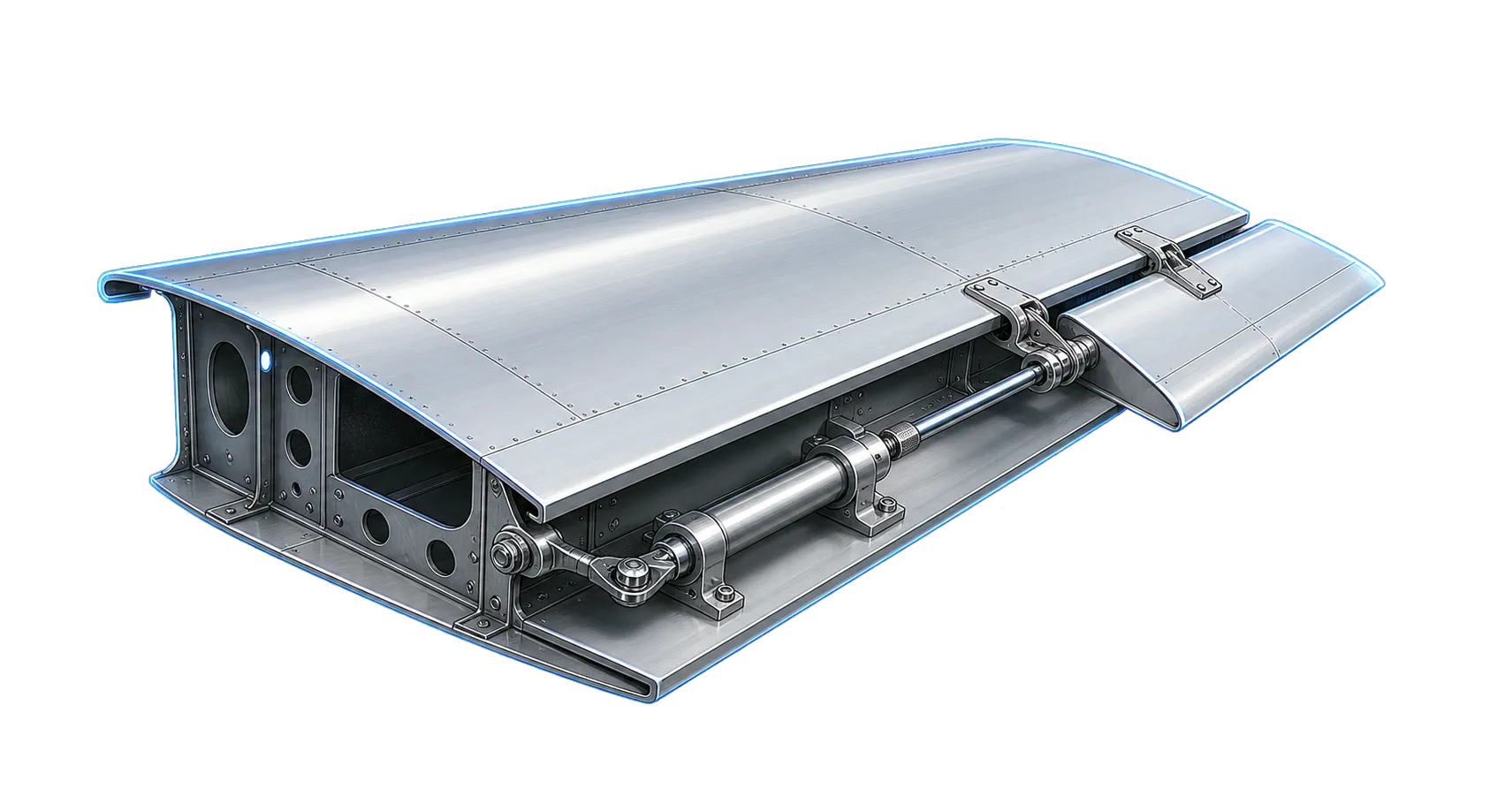
Damage to the long aileron push rods in both wings could result in failure of the aileron push rods and decreased control, potentially leading to aeroelastic flutter.
AI-generated summary from the source AD text. Verify against the official source before acting.
Required Actions
Inspect the long aileron push rods in both wings for damage. Modify the push rods as specified.
AI-generated summary from the source AD text. Verify against the official source before acting.
Compliance Time
Before further flight
AI-generated summary from the source AD text. Verify against the official source before acting.
Affected Aircraft
Diamond Aircraft Industries GmbH Models HK 36 R “Super Dimona”, HK 36 TC, HK 36 TS, HK 36 TTC, HK 36 TTC-ECO, HK 36 TTC-ECO (Restricted Category), and HK 36 TTS sailplanes. Excludes Model H-36 “Dimona” sailplanes due to a different flight control system.
AI-generated summary from the source AD text. Verify against the official source before acting.
Federal Register Abstract
This amendment clarifies information contained in Airworthiness Directive (AD) 2002-15-01, which currently requires you to inspect the long aileron push rods in both wings for damage and modify the push rods on all Diamond Aircraft Industries GmbH (Diamond) Models H-36 "Dimona", HK 36 R "Super Dimona", HK 36 TC, HK 36 TS, HK 36 TTC, HK 36 TTC-ECO, HK 36 TTC-ECO (Restricted Category), and HK 36 TTS sailplanes. The Model H-36 "Dimona" sailplane has a different flight control system than the rest of the affected sailplanes. This particular flight control system makes it impossible for the Model H-36 "Dimona" sailplanes to be in compliance with AD 2002-15-01. This document deletes these sailplanes from the AD applicability. The actions specified by this AD are intended to detect and correct damage in the long aileron push control rods, which could result in failure of the aileron push rods and decreased control. Such failure could lead to aeroelastic flutter.
Document Text
Show stored source text (verify against official source)
[Federal Register Volume 67, Number 169 (Friday, August 30, 2002)]
[Rules and Regulations]
[Pages 55712-55714]
From the Federal Register Online via the Government Publishing Office [<a href="http://www.gpo.gov">www.gpo.gov</a>]
[FR Doc No: 02-22129]


-----------------------------------------------------------------------

DEPARTMENT OF TRANSPORTATION

Federal Aviation Administration

14 CFR Part 39

[Docket No. 2002-CE-11-AD; Amendment 39-12870; AD 2002-15-01 R1]
RIN 2120-AA64


Airworthiness Directives; Diamond Aircraft Industries GmbH Models
HK 36 R ``Super Dimona'', HK 36 TC, HK 36 TS, HK 36 TTC, HK 36 TTC-ECO,
HK 36 TTC-ECO (Restricted Category), and HK 36 TTS Sailplanes

AGENCY: Federal Aviation Administration, DOT.

ACTION: Final rule; correction.

-----------------------------------------------------------------------

SUMMARY: This amendment clarifies information contained in
Airworthiness Directive (AD) 2002-15-01, which currently requires you
to inspect the long aileron push rods in both wings for damage and
modify the push rods on all Diamond Aircraft Industries GmbH (Diamond)
Models H-36 ``Dimona'', HK 36 R ``Super Dimona'', HK 36 TC, HK 36 TS,
HK 36 TTC, HK 36 TTC-ECO, HK 36 TTC-ECO (Restricted Category), and HK
36 TTS sailplanes. The Model H-36 ``Dimona'' sailplane has a different
flight control system than the rest of the affected sailplanes. This
particular flight control system makes it impossible for the Model H-36
``Dimona'' sailplanes to be in compliance with AD 2002-15-01. This
document deletes these sailplanes from the AD applicability. The
actions specified by this AD are intended to detect and correct damage
in the long aileron push control rods, which could result in failure of
the aileron push rods and decreased control. Such failure could lead to
aeroelastic flutter.

DATES: This AD becomes effective on September 3, 2002.
    The Director of the Federal Register approved the incorporation by
reference of certain publications listed in the regulations as of
September 3, 2002.

ADDRESSES: You may get the service information referenced in this AD
from Diamond Aircraft Industries GmbH, N.A. Otto-Strasse 5, A-2700
Wiener Neistadt, Austria; telephone: 43 2622 26 700; facsimile: 43 2622
26 780. You may view this information at the Federal Aviation
Administration (FAA), Central Region, Office of the Regional Counsel,
Attention: Rules Docket No. 2002-CE-11-AD, 901 Locust, Room 506, Kansas
City, Missouri 64106; or at the Office of the Federal Register, 800
North Capitol Street, NW., suite 700, Washington, DC.

FOR FURTHER INFORMATION CONTACT: Mike Kiesov, Aerospace Engineer, FAA,
Small Airplane Directorate, 901 Locust, Room 301, Kansas City, Missouri
64106; telephone: (816) 329-4144; facsimile: (816) 329-4090.

SUPPLEMENTARY INFORMATION:

Discussion

What Prior Action Did FAA Take on This Subject?

    We issued AD 2002-15-01, Amendment 39-12829 (67 FR 47680, July 22,
2002), in order to detect and correct damage in the long aileron push
control rods on all Diamond Models H-36 ``Dimona'', HK 36 R ``Super
Dimona'', HK 36 TC, HK 36 TS, HK 36 TTC, HK 36 TTC-ECO, HK 36 TTC-ECO
(Restricted Category), and HK 36 TTS

[[Page 55713]]

sailplanes. This AD currently requires you to inspect the long aileron
push rods in both wings for damage and modify the push rods.

What Has Happened To Necessitate Further AD Action?

    The Model H-36 ``Dimona'' sailplane has a different flight control
system than the rest of the affected sailplanes. This particular flight
control system makes it impossible for the Model H-36 ``Dimona''
sailplanes to be in compliance with AD 2002-15-01.
    Consequently, FAA sees a need to clarify AD 2002-15-01 to assure
that every owner/operator of the affected sailplanes is able to comply
with the AD action. This is possible by removing the Model H-36
``Dimona'' sailplanes from the AD applicability.

Correction of Publication

What Is the Purpose of This Document?

    This document clarifies AD 2002-15-01 by removing the Model H-36
``Dimona'' sailplanes from the AD applicability and adds the amendment
to section 39.13 of the Federal Aviation Regulations (14 CFR 39.13).

Is It Necessary To Seek Public Input?

    Since this action only clarifies the intent of the compliance time,
it has no adverse economic impact and imposes no additional burden on
any person than would have been necessary to comply with AD 2000-23-01.
Therefore, FAA has determined that prior notice and opportunity for
public comment are unnecessary.

List of Subjects in 14 CFR Part 39

    Air transportation, Aircraft, Aviation safety, Incorporation by
Reference, Safety.

Adoption of the Amendment

    Accordingly, under the authority delegated to me by the
Administrator, the Federal Aviation Administration amends part 39 of
the Federal Aviation Regulations (14 CFR part 39) as follows:

PART 39--AIRWORTHINESS DIRECTIVES

    1. The authority citation for part 39 continues to read as follows:

    Authority: 49 U.S.C. 106(g), 40113, 44701.


Sec. 39.13  [Amended]

    2. FAA amends Sec. 39.13 by removing Airworthiness Directive (AD)
2002-15-01, Amendment 39-12829 (67 FR 47680, July 22, 2002), and by
adding a new AD to read as follows:

2002-15-01 R1  Diamond Aircraft Industries Gmbh: Amendment 39-12870;
Docket No. 2002-CE-11-AD; Revises AD 2002-15-01, Amendment 39-12829.

    (a) What sailplanes are affected by this AD? This AD affects
Models HK 36 R ``Super Dimona'', HK 36 TC, HK 36 TS, HK 36 TTC, HK
36 TTC-ECO, HK 36 TTC-ECO (Restricted Category), and HK 36 TTS
sailplanes, all serial numbers, that are certificated in any
category.
    (b) Who must comply with this AD? Anyone who wishes to operate
any of the sailplanes identified in paragraph (a) of this AD must
comply with this AD.
    (c) What problem does this AD address? The actions specified by
this AD are intended to detect and correct damage in the long
aileron push control rods, which could result in failure of the
aileron push rods and decreased control. Such failure could lead to
aeroelastic flutter.
    (d) What actions must I accomplish to address this problem? To
address this problem, you must accomplish the following:

----------------------------------------------------------------------------------------------------------------
                 Actions                             Compliance                          Procedures
----------------------------------------------------------------------------------------------------------------
(1) Inspect the long aileron push rods    Within the next 10 hours time-in- In accordance with paragraph 1.8
 in both wings.                            service (TIS) after September     Measures of Diamond Aircraft
                                           3, 2002 (the effective date of    Industries GmbH Service Bulletin
                                           this AD), unless already          No. MSB36-72, dated Febraury 1,
                                           accomplished.                     2002; Diamond Aircraft Industries
                                                                             GmbH Work Instruction No. WI-MSB36-
                                                                             72, dated February 1, 2002; and the
                                                                             applicable sailplane maintenance
                                                                             manual.
(2) If any long aileron push rods are     Before further flight, after the  In accordance with paragraph 1.8
 found damaged during the inspection       inspection required in            Measures of Diamond Aircraft
 required in paragraph (d)(1) of this      paragraph (d)(1) of this AD,      Industries GmbH Service Bulletin
 AD, modify the push rods.                 unless already accomplished.      No. MSB36-72, dated Febraury 1,
                                                                             2002; Diamond Aircraft Industries
                                                                             GmbH Work Instruction No. WI-MSB36-
                                                                             72, dated February 1, 2002; and the
                                                                             applicable sailplane maintenance
                                                                             manual.
(3) If no damage is found during the      Within the next 25 hours TIS      In accordance with paragraph 1.8
 inspection required in paragraph          after September 3, 2002 (the      Measures of Diamond Aircraft
 (d)(1), modify the push rods.             effective date of this AD),       Industries GmbH Service Bulletin
                                           unless already accomplished.      No. MSB36-72, dated February 1,
                                                                             2002; Diamond Aircraft Industries
                                                                             GmbH Work Instruction No. WI-MSB36-
                                                                             72, dated February 1, 2002; and the
                                                                             applicable sailplane maintenance
                                                                             manual.
----------------------------------------------------------------------------------------------------------------

    (e) Can I comply with this AD in any other way? You may use an
alternative method of compliance or adjust the compliance time if:
    (1) Your alternative method of compliance provides an equivalent
level of safety; and
    (2) The Standards Office Manager, Small Airplane Directorate,
approves your alternative. Submit your request through an FAA
Principal Maintenance Inspector, who may add comments and then send
it to the Standards Office Manager.

    Note 1: This AD applies to each sailplane identified in
paragraph (a) of this AD, regardless of whether it has been
modified, altered, or repaired in the area subject to the
requirements of this AD. For sailplanes that have been modified,
altered, or repaired so that the performance of the requirements of
this AD is affected, the owner/operator must request approval for an
alternative method of compliance in accordance with paragraph (e) of
this AD. The request should include an assessment of the effect of
the modification, alteration, or repair on the unsafe condition
addressed by this AD; and, if you have not eliminated the unsafe
condition, specific actions you propose to address it.

    (f) Where can I get information about any already-approved
alternative methods of compliance? Contact Mike Kiesov, Aerospace
Engineer, FAA, Small Airplane Directorate, 901 Locust, Room 301,
Kansas City, Missouri 64106; telephone: (816) 329-4144; facsimile:
(816) 329-4090.
    (g) What if I need to fly the sailplane to another location to
comply with this AD? The FAA can issue a special flight permit under
sections 21.197 and 21.199 of the Federal Aviation Regulations (14
CFR 21.197 and 21.199) to operate your sailplane to a location where
you can accomplish the requirements of this AD.
    (h) Are any service bulletins incorporated into this AD by
reference? Actions required by this AD must be done in accordance
with Diamond Aircraft Industries GmbH Service Bulletin No. MSB36-72,
dated February 1, 2002; and Diamond Aircraft Industries GmbH Work
Instruction No. WI-MSB36-72, dated February 1, 2002. The Director of
the Federal Register approved this incorporation by reference under
5 U.S.C. 552(a) and 1 CFR part 51. You may get copies from Diamond
Aircraft Industries GmbH, N.A. Otto-Strasse

[[Page 55714]]

5, A-2700 Wiener Neistadt, Austria; telephone: 43 2622 26 700;
facsimile: 43 2622 26 780. You may view copies at the FAA, Central
Region, Office of the Regional Counsel, 901 Locust, Room 506, Kansas
City, Missouri, or at the Office of the Federal Register, 800 North
Capitol Street, NW., suite 700, Washington, DC.

    Note 2: The subject of this AD is addressed in Austrian AD No.
111, dated February 26, 2002.

    (i) Does this AD action affect any existing AD actions? This
amendment revises 2002-15-01, Amendment 39-12829 (67 FR 47680, July
22, 2002) .
    (j) When does this amendment become effective? This amendment
becomes effective on September 3, 2002.

    Issued in Kansas City, Missouri, on August 21, 2002.
David R. Showers,
Acting Manager, Small Airplane Directorate, Aircraft Certification
Service.
[FR Doc. 02-22129 Filed 8-29-02; 8:45 am]
BILLING CODE 4910-13-P
Source: Official FAA Source ↗
Retrieved: Apr 6, 2026
Rights: U.S. Government Public Domain
This site is not affiliated with or endorsed by the FAA. Always verify with official sources.