AD Amdt-39-11284
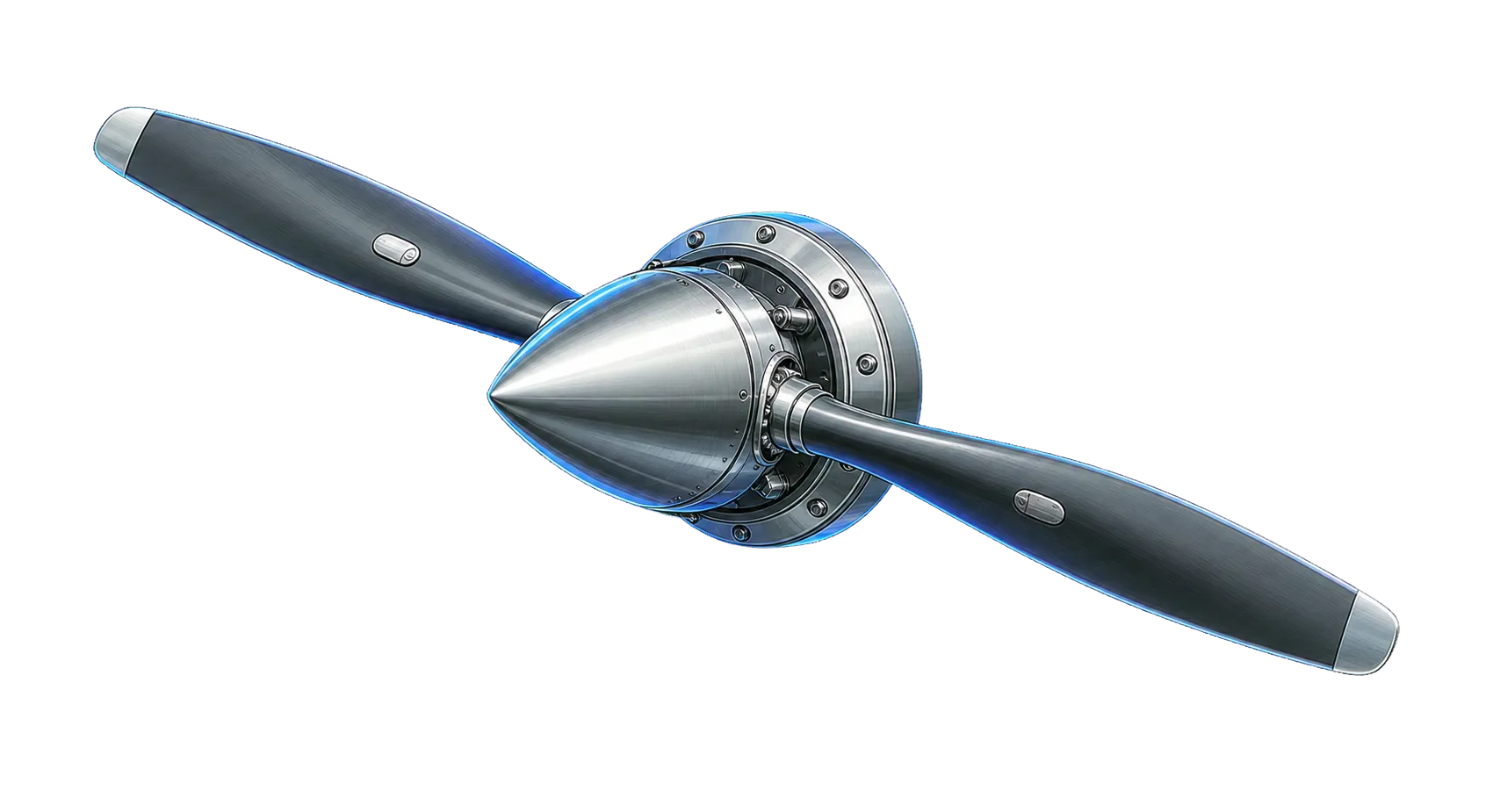
Unsafe Condition
Reports of a cracked composite propeller blade indicate potential for cracks across the camber face, leading to propeller blade separation and possible aircraft loss of control.
AI-generated summary from the source AD text. Verify against the official source before acting.
Required Actions
Inspect propeller blades visually and using ultrasonic (UT) methods for cracks across the camber face. Replace any cracked blades with serviceable blades.
AI-generated summary from the source AD text. Verify against the official source before acting.
Compliance Time
Within 50 flight hours after the effective date of this AD.
AI-generated summary from the source AD text. Verify against the official source before acting.
Affected Aircraft
Dowty Aerospace Propellers Model R381/6-123-F/5 propellers.
AI-generated summary from the source AD text. Verify against the official source before acting.
Federal Register Abstract
This amendment adopts a new airworthiness directive (AD) that is applicable to Dowty Aerospace Propellers Model R381/6-123-F/5 propellers. This action requires initial and repetitive visual and ultrasonic (UT) inspections of propeller blades for cracks across the camber face, and, if blades are found cracked, replacement with serviceable blades. This amendment is prompted by reports of a cracked composite propeller blade. The actions specified in this AD are intended to prevent propeller blade cracks and propagation, which could result in propeller blade separation and possible aircraft loss of control.
Document Text
Show stored source text (verify against official source)
[Federal Register Volume 64, Number 169 (Wednesday, September 1, 1999)]
[Rules and Regulations]
[Pages 47661-47663]
From the Federal Register Online via the Government Publishing Office [<a href="http://www.gpo.gov">www.gpo.gov</a>]
[FR Doc No: 99-22563]
-----------------------------------------------------------------------
DEPARTMENT OF TRANSPORTATION
Federal Aviation Administration
14 CFR Part 39
[Docket No. 99-NE-43-AD; Amendment 39-11284; AD 99-18-18]
RIN 2120-AA64
Airworthiness Directives; Dowty Aerospace Propellers Model R381/
6-123-F/5 Propellers
AGENCY: Federal Aviation Administration, DOT.
ACTION: Final rule; request for comments.
-----------------------------------------------------------------------
[[Page 47662]]
SUMMARY: This amendment adopts a new airworthiness directive (AD) that
is applicable to Dowty Aerospace Propellers Model R381/6-123-F/5
propellers. This action requires initial and repetitive visual and
ultrasonic (UT) inspections of propeller blades for cracks across the
camber face, and, if blades are found cracked, replacement with
serviceable blades. This amendment is prompted by reports of a cracked
composite propeller blade. The actions specified in this AD are
intended to prevent propeller blade cracks and propagation, which could
result in propeller blade separation and possible aircraft loss of
control.
DATES: Effective September 16, 1999.
The incorporation by reference of certain publications listed in
the regulations is approved by the Director of the Federal Register as
of September 16, 1999.
Comments for inclusion in the Rules Docket must be received on or
before November 1, 1999.
ADDRESSES: Submit comments to the Federal Aviation Administration
(FAA), New England Region, Office of the Regional Counsel, Attention:
Rules Docket No. 99-NE-43-AD, 12 New England Executive Park,
Burlington, MA 01803-5299. Comments may also be sent via the Internet
using the following address: <a href="/cdn-cgi/l/email-protection#b8d8d88195d9d6dd95d9dcdbd7d5d5ddd6ccf8ded9d996dfd7ce">``<span class="__cf_email__" data-cfemail="dae3f7bbb4bff7bbbeb9b5b7b7bfb4ae9abcbbbbf4bdb5ac">[email protected]</span></a>''. Comments sent
via the Internet must contain the docket number in the subject line.
The service information referenced in this AD may be obtained from
Dowty Aerospace Propellers, Anson Business Park, Cheltenham Road East,
Gloucester GL29QN, England; telephone +44 1452 716000, fax +44 1452
716001. This information may be examined at the FAA, New England
Region, Office of the Regional Counsel, 12 New England Executive Park,
Burlington, MA; or at the Office of the Federal Register, 800 North
Capitol Street, NW, suite 700, Washington, DC.
FOR FURTHER INFORMATION CONTACT: Frank Walsh, Aerospace Engineer,
Boston Aircraft Certification Office, FAA, Engine and Propeller
Directorate, 12 New England Executive Park, Burlington, MA 01803-5299;
telephone (781) 238-7158, fax (781) 238-7199.
SUPPLEMENTARY INFORMATION: The Civil Aviation Authority (CAA), which is
the airworthiness authority for the United Kingdom (UK), recently
notified the Federal Aviation Administration (FAA) that an unsafe
condition may exist on Dowty Aerospace Propellers Model R381/6-123-F/5
propellers. The CAA advises that they have received a report of a crack
that had developed on a de-iced propeller blade assembly across the
camber face at a blade station of approximately 13.5'' up from the base
of the blade cuff. Engineering evaluation of X-ray examination and
subsequent CAT scan inspections of the camber face of the spar
indicated a crack had developed internally from a composite defect in
the spar and had propagated outward through the blade skin. The
defective blade was found visually during a pre-flight pilot walk-
around inspection. The results of this pre-flight inspection resulted
in removal of the propeller and replacement of the de-iced propeller
blade assembly by maintenance crews. This condition, if not corrected,
could result in propeller blade cracks and propagation, which could
result in propeller blade separation and possible aircraft loss of
control.
Service Information
Dowty Aerospace Propellers has issued Service Bulletin (SB) No.
S2000-61-75, Revision 1, dated June 11, 1999, that specifies procedures
for visual and ultrasonic (UT) inspections of propeller blades for
cracks across the camber face, and provides reject procedures for
cracked blades. The CAA classified this SB as mandatory and issued
Airworthiness Directive (AD) 003-05-99 in order to assure the
airworthiness of these propellers in the UK.
This propeller model is manufactured in the UK and is type
certificated for operation in the United States under the provisions of
Sec. 21.29 of the Federal Aviation Regulations (14 CFR 21.29) and the
applicable bilateral airworthiness agreement. Pursuant to this
bilateral airworthiness agreement, the CAA has kept the FAA informed of
the situation described above. The FAA has examined the findings of the
CAA, reviewed all available information, and determined that AD action
is necessary for products of this type design that are certificated for
operation in the United States.
Required Actions
Since an unsafe condition has been identified that is likely to
exist or develop on other propellers of the same type design registered
in the United States, this AD requires initial and repetitive visual
inspections for blade cracks at intervals of 50 hours time-in-service
(TIS), and UT inspections at intervals of 200 hours TIS. Blades found
cracked must be replaced with serviceable blades prior to further
flight. The actions would be required to be accomplished in accordance
with the SB described previously.
Interim Action
The manufacturer is reviewing the design of the propeller blades
and changes to the manufacturing process; hence future rulemaking may
be forthcoming requiring installation of improved blades or changes to
the inspection procedures.
Since a situation exists that requires the immediate adoption of
this regulation, it is found that notice and opportunity for prior
public comment hereon are impracticable, and that good cause exists for
making this amendment effective in less than 30 days.
Comments Invited
Although this action is in the form of a final rule that involves
requirements affecting flight safety and, thus, was not preceded by
notice and an opportunity for public comment, comments are invited on
this rule. Interested persons are invited to comment on this rule by
submitting such written data, views, or arguments as they may desire.
Communications should identify the Rules Docket number and be submitted
in triplicate to the address specified under the caption ADDRESSES. All
communications received on or before the closing date for comments will
be considered, and this rule may be amended in light of the comments
received. Factual information that supports the commenter's ideas and
suggestions is extremely helpful in evaluating the effectiveness of the
AD action and determining whether additional rulemaking action would be
needed.
Comments are specifically invited on the overall regulatory,
economic, environmental, and energy aspects of the rule that might
suggest a need to modify the rule. All comments submitted will be
available, both before and after the closing date for comments, in the
Rules Docket for examination by interested persons. A report that
summarizes each FAA-public contact concerned with the substance of this
AD will be filed in the Rules Docket.
Commenters wishing the FAA to acknowledge receipt of their comments
submitted in response to this notice must submit a self-addressed,
stamped postcard on which the following statement is made: ``Comments
to Docket Number 99-NE-43-AD.'' The postcard will be date stamped and
returned to the commenter.
The regulations adopted herein will not have substantial direct
effects on the States, on the relationship between the national
government and the States, or on the distribution of power and
responsibilities among the various
[[Page 47663]]
levels of government. Therefore, in accordance with Executive Order
12612, it is determined that this final rule does not have sufficient
federalism implications to warrant the preparation of a Federalism
Assessment.
The FAA has determined that this regulation is an emergency
regulation that must be issued immediately to correct an unsafe
condition in aircraft, and is not a ``significant regulatory action''
under Executive Order 12866. It has been determined further that this
action involves an emergency regulation under DOT Regulatory Policies
and Procedures (44 FR 11034, February 26, 1979). If it is determined
that this emergency regulation otherwise would be significant under DOT
Regulatory Policies and Procedures, a final regulatory evaluation will
be prepared and placed in the Rules Docket. A copy of it, if filed, may
be obtained from the Rules Docket at the location provided under the
caption ADDRESSES.
List of Subjects in 14 CFR Part 39
Air transportation, Aircraft, Aviation safety, Incorporation by
reference, Safety.
Adoption of the Amendment
Accordingly, pursuant to the authority delegated to me by the
Administrator, the Federal Aviation Administration amends part 39 of
the Federal Aviation Regulations (14 CFR part 39) as follows:
PART 39--AIRWORTHINESS DIRECTIVES
1. The authority citation for part 39 continues to read as follows:
Authority: 49 U.S.C. 106(g), 40113, 44701.
Sec. 39.13 [Amended]
2. Section 39.13 is amended by adding the following new
airworthiness directive:
99-18-18 Dowty Aerospace Propellers: Amendment 39-11284. Docket 99-
NE-43-AD.
Applicability: Dowty Aerospace Propellers Model R381/6-123-F/5
propellers, installed on but not limited to SAAB 2000 series
airplanes.
Note 1: This airworthiness directive (AD) applies to each
propeller identified in the preceding applicability provision,
regardless of whether it has been modified, altered, or repaired in
the area subject to the requirements of this AD. For propellers that
have been modified, altered, or repaired so that the performance of
the requirements of this AD is affected, the owner/operator must
request approval for an alternative method of compliance in
accordance with paragraph (c) of this AD. The request should include
an assessment of the effect of the modification, alteration, or
repair on the unsafe condition addressed by this AD; and, if the
unsafe condition has not been eliminated, the request should include
specific proposed actions to address it.
Compliance: Required as indicated, unless accomplished
previously.
To prevent propeller blade cracks and propagation, which could
result in propeller blade separation and possible aircraft loss of
control, accomplish the following:
Visual Inspections
(a) Perform initial and repetitive visual inspections of
propeller blades for cracks across the camber face in accordance
with the Accomplishment Instructions of Dowty Aerospace Propellers
Service Bulletin (SB) No. S2000-61-75, Revision 1, dated June 11,
1999, as follows:
(1) Initially inspect within 50 hours time-in-service (TIS)
after the effective date of this AD.
(2) Thereafter, inspect at intervals not to exceed 50 hours TIS
since last inspection.
(3) Replace cracked propeller blades prior to further flight
with serviceable blades.
Ultrasonic (UT) Inspections
(b) Perform initial and repetitive UT inspections of propeller
blades for cracks across the camber face in accordance with the
Accomplishment Instructions of Dowty Aerospace Propellers SB No.
S2000-61-75, Revision 1, dated June 11, 1999, as follows:
(1) Initially inspect within 200 hours TIS after the effective
date of this AD.
(2) Thereafter, inspect at intervals not to exceed 200 hours TIS
since last inspection.
(3) Replace cracked propeller blades prior to further flight
with serviceable blades.
(c) An alternative method of compliance or adjustment of the
compliance time that provides an acceptable level of safety may be used
if approved by the Manager, Boston Aircraft Certification Office (ACO).
Operators shall submit their requests through an appropriate FAA
Principal Maintenance Inspector, who may add comments and then send it
to the Manager, Boston ACO.
Note 2: Information concerning the existence of approved
alternative methods of compliance with this airworthiness directive,
if any, may be obtained from the Boston ACO.
(d) Special flight permits may be issued in accordance with
Secs. 21.197 and 21.199 of the Federal Aviation Regulations (14 CFR
21.197 and 21.199) to operate the aircraft to a location where the
inspection requirements of this AD can be accomplished.
(e) The actions required by this AD shall be performed in
accordance with Dowty Aerospace Propellers SB No. S2000-61-75,
Revision 1, dated June 11, 1999. This incorporation by reference was
approved by the Director of the Federal Register in accordance with
5 U.S.C. 552(a) and 1 CFR part 51. Copies may be obtained from Dowty
Aerospace Propellers, Anson Business Park, Cheltenham Road East,
Gloucester GL29QN, England; telephone +44 1452 716000, fax +44 1452
716001. Copies may be inspected at the FAA, New England Region,
Office of the Regional Counsel, 12 New England Executive Park,
Burlington, MA; or at the Office of the Federal Register, 800 North
Capitol Street, NW, suite 700, Washington, DC.
(f) This amendment becomes effective on September 16, 1999.
Issued in Burlington, Massachusetts, on August 25, 1999.
David A. Downey,
Assistant Manager, Engine and Propeller Directorate, Aircraft
Certification Service.
[FR Doc. 99-22563 Filed 8-31-99; 8:45 am]
BILLING CODE 4910-13-U
Source: Official FAA Source ↗
Retrieved: Apr 6, 2026
Rights: U.S. Government Public Domain
This site is not affiliated with or endorsed by the FAA. Always verify with official sources.