AD Amdt-39-11212
Applicability
| Type | Manufacturer | Model | Details |
|---|---|---|---|
| aircraft | Boeing | 747-300 -400 | Airworthiness Directives; Boeing Model 747-300 and -400 Series Airplanes |
Unsafe Condition
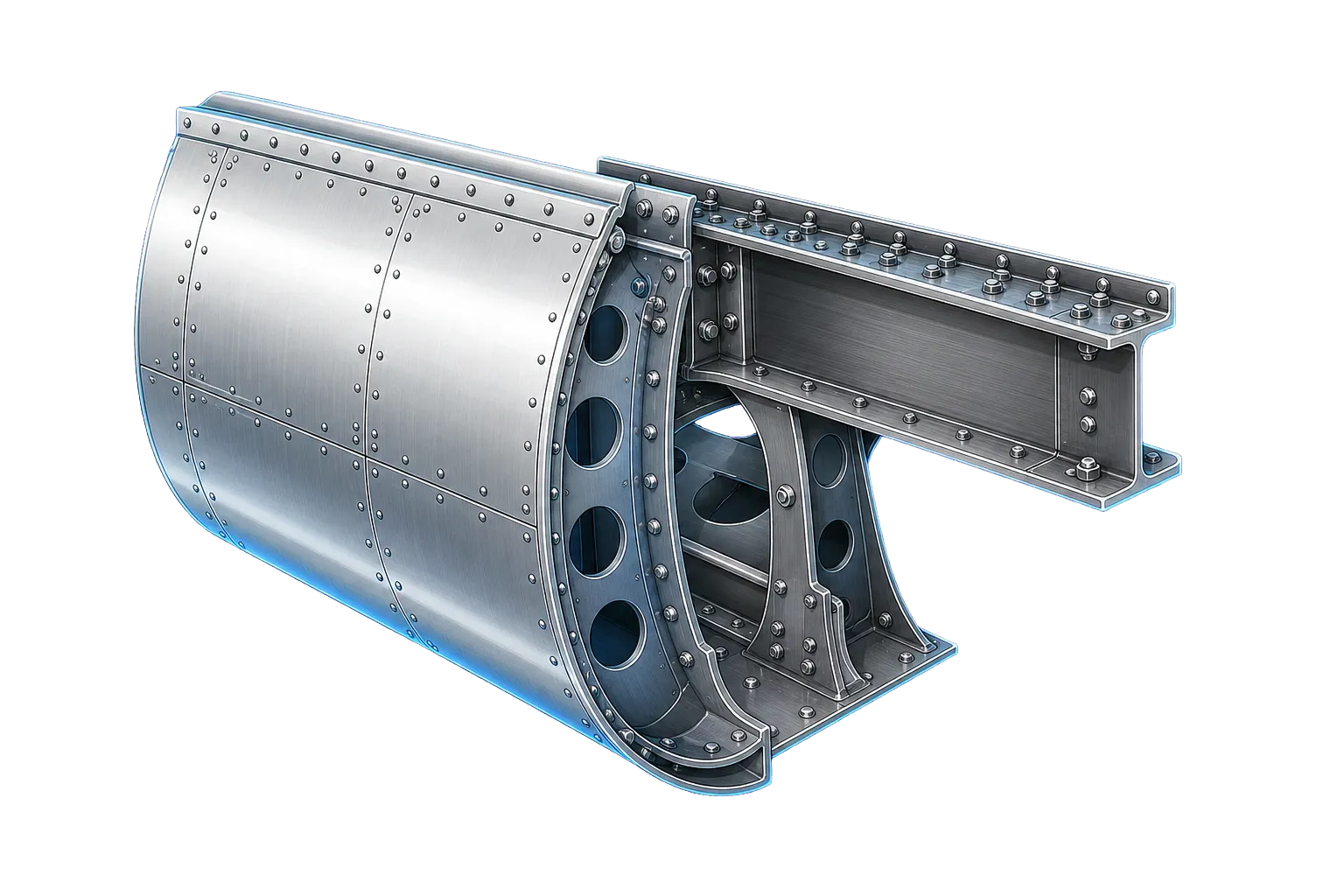
Cracking in the area surrounding the fastener holes and broken or missing fasteners on the E-42 satellite communications (SATCOM) rack and its supporting fuselage structure could result in the SATCOM equipment falling from the rack, loss of SATCOM capabilities, injury to passengers, and reduced controllability of the airplane.
AI-generated summary from the source AD text. Verify against the official source before acting.
Required Actions
Inspect the E-42 SATCOM rack and fuselage structure for cracking and broken or missing fasteners. Perform corrective actions as necessary to repair detected issues.
AI-generated summary from the source AD text. Verify against the official source before acting.
Compliance Time
Within 50 flight hours after the effective date of the AD.
AI-generated summary from the source AD text. Verify against the official source before acting.
Affected Aircraft
Boeing Model 747-300 and -400 series airplanes with the E-42 satellite communications (SATCOM) rack installed.
AI-generated summary from the source AD text. Verify against the official source before acting.
Federal Register Abstract
This amendment adopts a new airworthiness directive (AD) that is applicable to certain Boeing Model 747-300 and -400 series airplanes. This action requires repetitive inspections of the E-42 satellite communications (SATCOM) rack and fuselage (supporting) structure to detect cracking in the area surrounding the fastener holes, and to detect broken and missing fasteners; and corrective actions, if necessary. This amendment is prompted by reports indicating that cracking and broken and/or missing fasteners were found on the E- 42 SATCOM equipment rack structure that attaches to the fuselage structure. The actions specified in this AD are intended to detect and repair cracking of the E-42 SATCOM rack and its supporting structure, which could result in the SATCOM equipment falling from the rack, loss of SATCOM capabilities, injury to passengers, and reduced controllability of the airplane.
Document Text
Show stored source text (verify against official source)
[Federal Register Volume 64, Number 124 (Tuesday, June 29, 1999)]
[Rules and Regulations]
[Pages 34707-34710]
From the Federal Register Online via the Government Publishing Office [<a href="http://www.gpo.gov">www.gpo.gov</a>]
[FR Doc No: 99-16326]


=======================================================================
-----------------------------------------------------------------------

DEPARTMENT OF TRANSPORTATION

Federal Aviation Administration

14 CFR Part 39

[Docket No. 99-NM-45-AD; Amendment 39-11212; AD 99-14-04]
RIN 2120-AA64


Airworthiness Directives; Boeing Model 747-300 and -400 Series
Airplanes

AGENCY: Federal Aviation Administration, DOT.

ACTION: Final rule; request for comments.

-----------------------------------------------------------------------

SUMMARY: This amendment adopts a new airworthiness directive (AD) that
is applicable to certain Boeing Model 747-300 and -400 series
airplanes. This action requires repetitive inspections of the E-42
satellite communications (SATCOM) rack and fuselage (supporting)
structure to detect cracking in the area surrounding the fastener
holes, and to detect broken and missing fasteners; and corrective
actions, if necessary. This amendment is prompted by reports indicating
that cracking and broken and/or missing fasteners were found on the E-
42 SATCOM equipment rack structure that attaches to the fuselage
structure. The actions specified in this AD are intended to detect and
repair cracking of the E-42 SATCOM rack and its supporting structure,
which could result in the SATCOM equipment falling from the rack, loss
of SATCOM capabilities, injury to passengers, and reduced
controllability of the airplane.

DATES: Effective July 14, 1999.
    The incorporation by reference of certain publications listed in
the regulations is approved by the Director of the Federal Register as
of July 14, 1999.
    Comments for inclusion in the Rules Docket must be received on or
before August 30, 1999.

ADDRESSES: Submit comments in triplicate to the Federal Aviation
Administration (FAA), Transport Airplane Directorate, ANM-114,
Attention: Rules Docket No. 99-NM-45-AD, 1601 Lind Avenue, SW., Renton,
Washington 98055-4056.
    The service information referenced in this AD may be obtained from
Boeing Commercial Airplane Group, P.O. Box 3707, Seattle, Washington
98124-2207. This information may be examined at the FAA, Transport
Airplane Directorate, 1601 Lind Avenue, SW., Renton, Washington; or at
the Office of the Federal Register, 800 North Capitol Street, NW.,
suite 700, Washington, DC.


[[Page 34708]]


FOR FURTHER INFORMATION CONTACT: Elizabeth A. Gnehm, Aerospace
Engineer, Airframe Branch, ANM-120S, FAA, Transport Airplane
Directorate, Seattle Aircraft Certification Office, 1601 Lind Avenue,
SW., Renton, Washington 98055-4056; telephone (425) 227-1426; fax (425)
227-1181.

SUPPLEMENTARY INFORMATION: The FAA has received reports indicating that
cracking and broken and/or missing fasteners were found on the E-42
SATCOM equipment rack structure that attaches to the fuselage structure
on several Boeing Model 747-300 and -400 series airplanes.
Investigation revealed that one of the four stanchions (i.e., a
supporting prop or brace) was found completely broken on two airplanes
(one that had accumulated 23,693 total flight hours and the other with
24,752 total flight hours). Further investigation revealed that the
rigid joints of the supporting structure of the E-42 SATCOM rack,
coupled with environmental vibration of the airplane, may have caused
the cracking to initiate in the area surrounding the fastener holes
(located at the rigid joints) of the supporting structure of the E-42
SATCOM rack. The FAA also has received a report indicating that
cracking has been detected on four freighter airplanes; one of the
airplanes had accumulated less than 1,500 total flight hours.
    On all airplanes, the E-42 SATCOM rack hangs above the main deck
ceiling. On freighter airplanes and ``combi'' airplanes (i.e.,
configurations with provisions for passenger seating and cargo on the
main deck), the E-42 SATCOM rack is located near rudder and elevator
control cables, and the SATCOM wires run above the rudder and elevator
control cables.
    On all airplanes, failure of the rack and its supporting structure
could result in loss of support for the E-42 SATCOM equipment, which
could lead to chafing and arcing of the electrical wires and loss of
SATCOM capabilities. Such failure also could result in the following
unsafe conditions:
    <bullet> On passenger-only airplanes, the E-42 SATCOM equipment
could break through the ceiling, which could result in injury to
passengers.
    <bullet> On freighter and ``combi'' airplanes, the E-42 SATCOM
equipment could fall and cause the SATCOM wires to pull and possibly
break the rudder and/or elevator control cables, which could result in
reduced controllability of the airplane. Failure of the SATCOM rack on
``combi'' airplanes carrying passengers also could result in injury to
the passengers.

Explanation of Relevant Service Information

    The FAA has reviewed and approved Boeing Alert Service Bulletin
747-53A2428, dated December 17, 1998, which describes procedures for
repetitive close visual inspections of the E-42 SATCOM rack and
fuselage (supporting) structure to detect cracking in the area
surrounding the fastener holes, and to detect broken or missing
fasteners.

Explanation of the Requirements of the Rule

    Since an unsafe condition has been identified that is likely to
exist or develop on other airplanes of the same type design, this AD is
being issued to detect and repair cracking of the E-42 SATCOM rack and
its supporting structure, which could result in the SATCOM equipment
falling from the rack, loss of SATCOM capabilities, injury to
passengers, and reduced controllability of the airplane. This AD
requires accomplishment of the actions specified in the alert service
bulletin described previously, except as discussed below. This AD also
requires that operators report results of initial inspection findings
to the manufacturer.

Interim Action

    This is considered to be interim action. The manufacturer has
advised that it currently is developing a modification that will
positively address the unsafe condition addressed by this AD. Once this
modification is developed, approved, and available, the FAA may
consider additional rulemaking.

Differences Between AD and Alert Service Bulletin

    Operators should note that, although the Boeing alert service
bulletin specifies that the manufacturer may be contacted for
disposition of certain conditions, this proposal would require the
repair of those conditions to be accomplished in accordance with a
method approved by the FAA.
    Operators also should note that the Boeing alert service bulletin
specifies that the manufacturer determine the repetitive inspection
intervals in the event a repair and/or replacement of the fasteners is
necessary. This AD would require repetitive inspections of the E-42
SATCOM rack and its supporting structure at intervals not exceeding
3,000 flight cycles, whether a repair and/or replacement of fasteners
is required or not. While a manufacturer Designated Engineering
Representative (DER) is authorized to determine whether a design or
repair method complies with a specific requirement, at this time the
FAA has not delegated the authority to a manufacturer DER to make the
discretionary determination for repetitive inspection requirements.

Explanation of Applicability

    Operators should note that the Boeing alert service bulletin
(previously described), does not specify the line number for the
effectivity of Boeing Model 747-400 series airplanes, but states that
``a line number will be specified at a later date,'' when a design
improvement can be incorporated into the production line. To account
for this interpretative effectivity, this AD is applicable to Boeing
Model 747-300 series airplanes as listed in the alert service bulletin
and Boeing Model 747-400 series airplanes equipped with a Boeing-
installed E-42 SATCOM rack. As discussed previously, because this AD is
considered interim action, applicability may be revised accordingly in
subsequent AD action.

Explanation of Compliance Time

    Operators should note that the Boeing alert service bulletin
(previously described) recommends that the initial inspection be
performed at the applicable time, as specified below:
    <bullet> For airplanes identified in the alert service as Group 1:
Within 500 flight hours or within 14,000 flight hours since the E-42
SATCOM rack was installed and populated with equipment.
    <bullet> For airplanes identified in the alert service as Groups 2,
3, and 4: Within 500 flight hours or 20,000 flight hours since the E-42
SATCOM rack was installed and populated with equipment.
    This AD would require that the initial inspection be performed at
the applicable time, as specified below:
    <bullet> For airplanes identified in the alert service bulletin as
Group 1: Within 30 days after the effective date of this AD.
    <bullet> For airplanes identified in the alert service bulletin as
Groups 2, 3, and 4: Within 90 days after the effective date of this AD.
    The FAA finds that, in view of a recent report indicating that
cracking has been detected on an airplane that had accumulated less
than 1,500 total flight hours, and because of the safety implications
and consequences associated with such cracking, the initial compliance
time specified in this AD is appropriate.

Determination of Rule's Effective Date

    Since a situation exists that requires the immediate adoption of
this regulation, it is found that notice and

[[Page 34709]]

opportunity for prior public comment hereon are impracticable, and that
good cause exists for making this amendment effective in less than 30
days.

Comments Invited

    Although this action is in the form of a final rule that involves
requirements affecting flight safety and, thus, was not preceded by
notice and an opportunity for public comment, comments are invited on
this rule. Interested persons are invited to comment on this rule by
submitting such written data, views, or arguments as they may desire.
Communications shall identify the Rules Docket number and be submitted
in triplicate to the address specified under the caption ADDRESSES. All
communications received on or before the closing date for comments will
be considered, and this rule may be amended in light of the comments
received. Factual information that supports the commenter's ideas and
suggestions is extremely helpful in evaluating the effectiveness of the
AD action and determining whether additional rulemaking action would be
needed.
    Comments are specifically invited on the overall regulatory,
economic, environmental, and energy aspects of the rule that might
suggest a need to modify the rule. All comments submitted will be
available, both before and after the closing date for comments, in the
Rules Docket for examination by interested persons. A report that
summarizes each FAA-public contact concerned with the substance of this
AD will be filed in the Rules Docket.
    Commenters wishing the FAA to acknowledge receipt of their comments
submitted in response to this rule must submit a self-addressed,
stamped postcard on which the following statement is made: ``Comments
to Docket Number 99-NM-45-AD.'' The postcard will be date stamped and
returned to the commenter.

Regulatory Impact

    The regulations adopted herein will not have substantial direct
effects on the States, on the relationship between the national
government and the States, or on the distribution of power and
responsibilities among the various levels of government. Therefore, in
accordance with Executive Order 12612, it is determined that this final
rule does not have sufficient federalism implications to warrant the
preparation of a Federalism Assessment.
    The FAA has determined that this regulation is an emergency
regulation that must be issued immediately to correct an unsafe
condition in aircraft, and that it is not a ``significant regulatory
action'' under Executive Order 12866. It has been determined further
that this action involves an emergency regulation under DOT Regulatory
Policies and Procedures (44 FR 11034, February 26, 1979). If it is
determined that this emergency regulation otherwise would be
significant under DOT Regulatory Policies and Procedures, a final
regulatory evaluation will be prepared and placed in the Rules Docket.
A copy of it, if filed, may be obtained from the Rules Docket at the
location provided under the caption ADDRESSES.

List of Subjects in 14 CFR Part 39

    Air transportation, Aircraft, Aviation safety, Incorporation by
reference, Safety.

Adoption of the Amendment

    Accordingly, pursuant to the authority delegated to me by the
Administrator, the Federal Aviation Administration amends part 39 of
the Federal Aviation Regulations (14 CFR part 39) as follows:

PART 39--AIRWORTHINESS DIRECTIVES

    1. The authority citation for part 39 continues to read as follows:

    Authority: 49 U.S.C. 106(g), 40113, 44701.


Sec. 39.13  [Amended]

    2. Section 39.13 is amended by adding the following new
airworthiness directive:

99-14-04 Boeing: Amendment 39-11212. Docket 99-NM-45-AD.

    Applicability: Model 747-300 series airplanes, as listed in
Boeing Alert Service Bulletin 747-53A2428, dated December 17, 1998;
and Model 747-400 series airplanes equipped with a Boeing installed
E-42 satellite communications (SATCOM) rack; certificated in any
category.

    Note 1: This AD applies to each airplane identified in the
preceding applicability provision, regardless of whether it has been
modified, altered, or repaired in the area subject to the
requirements of this AD. For airplanes that have been modified,
altered, or repaired so that the performance of the requirements of
this AD is affected, the owner/operator must request approval for an
alternative method of compliance in accordance with paragraph (d) of
this AD. The request should include an assessment of the effect of
the modification, alteration, or repair on the unsafe condition
addressed by this AD; and, if the unsafe condition has not been
eliminated, the request should include specific proposed actions to
address it.

    Compliance: Required as indicated, unless accomplished
previously.
    To detect and repair cracking of the E-42 SATCOM rack and its
supporting structure, which could result in the SATCOM equipment
falling from the rack, loss of SATCOM capabilities, injury to
passengers, and reduced controllability of the airplane, accomplish
the following:

Initial and Repetitive Detailed Visual Inspections

    (a) Perform a detailed visual inspection of the E-42 SATCOM rack
and fuselage (supporting) structure to detect cracking in the area
surrounding the fastener holes, and to detect broken or missing
fasteners, in accordance with Boeing Alert Service Bulletin 747-
53A2428, dated December 17, 1998, at the time specified in paragraph
(a)(1) or (a)(2) of this AD, as applicable. Thereafter, repeat the
inspection at intervals not to exceed 3,000 flight hours.
    (1) For airplanes identified as Group 1: Within 30 days after
the effective date of this AD.
    (2) For airplanes identified as Groups 2, 3, and 4: Within 90
days after the effective date of this AD.

    Note 2: For the purposes of this AD, a detailed inspection is
defined as: ``An intensive visual examination of a specific
structural area, system, installation or assembly to detect damage,
failure or irregularity. Available lighting is normally supplemented
with a direct source of good lighting at intensity deemed
appropriate by the inspector. Inspection aids such as mirror,
magnifying lenses, etc. may be used. Surface cleaning and elaborate
access procedures may be required.''

Corrective Actions

    (b) If any cracking is found, or if any fastener is broken or
missing, during any inspection required by paragraph (a) of this AD,
prior to further flight: Repair in accordance with a method approved
by the Manager, Seattle Aircraft Certification Office (ACO), FAA,
Transport Airplane Directorate; or in accordance with data meeting
the type certification basis of the airplane approved by a Boeing
Company Designated Engineering Representative who has been
authorized by the Manager, Seattle ACO, to make such findings.
Repeat the detailed visual inspection of the SATCOM rack and
fuselage (supporting) structure thereafter at the intervals
specified by paragraph (a) of this AD.

Reporting Requirements

    (c) Submit a report of the initial inspection findings (positive
and negative) to Boeing Commercial Airplane Group, Attention:
Manager, Airline Support, P.O. Box 3707, Seattle, Washington 98124-
2207; at the time specified in paragraph (c)(1) or (c)(2) of this
AD, as applicable. The report must include a description of any
discrepancy found, the airplane serial number, the number of
landings and flight hours on the airplane, and, when possible,
sketches and photographs of the inspected area. Information
collection requirements contained in this regulation have been
approved by the Office of Management and Budget (OMB) under the
provisions of the Paperwork Reduction Act of 1980 (44 U.S.C. 3501 et
seq.) and have been assigned OMB Control Number 2120-0056.

[[Page 34710]]

    (1) For airplanes on which the initial inspection is
accomplished after the effective date of this AD: Submit the report
within 10 days after performing the initial inspection required by
paragraph (a) of this AD.
    (2) For airplanes on which the initial inspection has been
accomplished prior to the effective date of this AD: Submit the
report within 30 days after the effective date of this AD.

Alternative Methods of Compliance

    (d) An alternative method of compliance or adjustment of the
compliance time that provides an acceptable level of safety may be
used if approved by the Manager, Seattle ACO. Operators shall submit
their requests through an appropriate FAA Principal Maintenance
Inspector, who may add comments and then send it to the Manager,
Seattle ACO.

    Note 3: Information concerning the existence of approved
alternative methods of compliance with this AD, if any, may be
obtained from the Seattle ACO.

Special Flight Permits

    (e) Special flight permits may be issued in accordance with
sections 21.197 and 21.199 of the Federal Aviation Regulations (14
CFR 21.197 and 21.199) to operate the airplane to a location where
the requirements of this AD can be accomplished, provided that all
the equipment is removed from the E-42 SATCOM rack.

Incorporation by Reference

    (f) The inspections shall be done in accordance with Boeing
Alert Service Bulletin 747-53A2428, dated December 17, 1998. This
incorporation by reference was approved by the Director of the
Federal Register in accordance with 5 U.S.C. 552(a) and 1 CFR part
51. Copies may be obtained from Boeing Commercial Airplane Group,
P.O. Box 3707, Seattle, Washington 98124-2207. Copies may be
inspected at the FAA, Transport Airplane Directorate, 1601 Lind
Avenue, SW., Renton, Washington; or at the Office of the Federal
Register, 800 North Capitol Street, NW., suite 700, Washington, DC.
    (g) This amendment becomes effective on July 14, 1999.

    Issued in Renton, Washington, on June 22, 1999.
D.L. Riggin,
Acting Manager, Transport Airplane Directorate, Aircraft Certification
Service.
[FR Doc. 99-16326 Filed 6-28-99; 8:45 am]
BILLING CODE 4910-13-P
Source: Official FAA Source ↗
Retrieved: Apr 6, 2026
Rights: U.S. Government Public Domain
This site is not affiliated with or endorsed by the FAA. Always verify with official sources.