AD Amdt-39-11008
Applicability
| Type | Manufacturer | Model | Details |
|---|---|---|---|
| aircraft | Raytheon | B300 B300C | Airworthiness Directives; Raytheon Aircraft Company Models B300 and B300C Airplanes |
Unsafe Condition
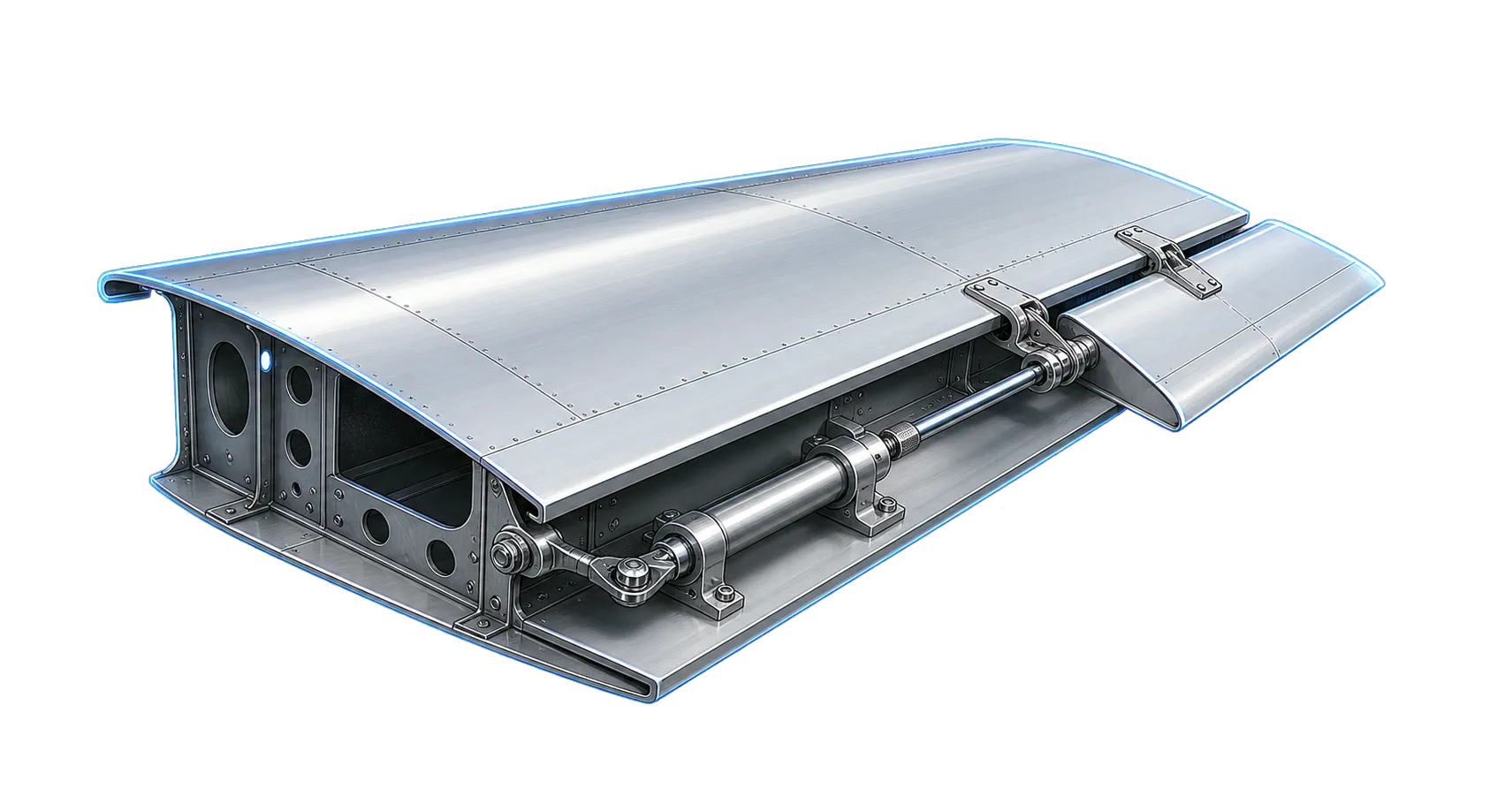
Ice forming on the elevator trim tab actuators and jamming the trim tab control.
AI-generated summary from the source AD text. Verify against the official source before acting.
Required Actions
Modify the elevator trim tab actuators by incorporating a new elevator trim tab actuator assembly kit, replacing the elevator trim tab pushrod assembly, or modifying the elevator spar opening, whichever is applicable.
AI-generated summary from the source AD text. Verify against the official source before acting.
Compliance Time
Not specified in the provided text.
AI-generated summary from the source AD text. Verify against the official source before acting.
Affected Aircraft
Raytheon Aircraft Company Models B300 and B300C airplanes.
AI-generated summary from the source AD text. Verify against the official source before acting.
Federal Register Abstract
This amendment adopts a new airworthiness directive (AD) that applies to certain Raytheon Aircraft Company (Raytheon) Models B300 and B300C airplanes (commonly referred to as Beech Models B300 and B300C airplanes). This AD requires modifying the elevator trim tab actuators by incorporating a new elevator trim tab actuator assembly kit, replacing the elevator trim tab pushrod assembly, or modifying the elevator spar opening, whichever is applicable. Reports from operators of ice forming on the elevator trim tab actuators and jamming the trim tab control prompted this action. The actions specified by this AD are intended to prevent jamming of the elevator trim tab actuator caused by ice formations, which could result in loss of control of the airplane.
Document Text
Show stored source text (verify against official source)
[Federal Register Volume 64, Number 16 (Tuesday, January 26, 1999)]
[Rules and Regulations]
[Pages 3826-3828]
From the Federal Register Online via the Government Publishing Office [<a href="http://www.gpo.gov">www.gpo.gov</a>]
[FR Doc No: 99-1446]


[[Page 3826]]

-----------------------------------------------------------------------

DEPARTMENT OF TRANSPORTATION

Federal Aviation Administration

14 CFR Part 39

[Docket No. 97-CE-16-AD; Amendment 39-11008; AD 99-02-16]
RIN 2120-AA64


Airworthiness Directives; Raytheon Aircraft Company Models B300
and B300C Airplanes

AGENCY: Federal Aviation Administration, DOT.

ACTION: Final rule.

-----------------------------------------------------------------------

SUMMARY: This amendment adopts a new airworthiness directive (AD) that
applies to certain Raytheon Aircraft Company (Raytheon) Models B300 and
B300C airplanes (commonly referred to as Beech Models B300 and B300C
airplanes). This AD requires modifying the elevator trim tab actuators
by incorporating a new elevator trim tab actuator assembly kit,
replacing the elevator trim tab pushrod assembly, or modifying the
elevator spar opening, whichever is applicable. Reports from operators
of ice forming on the elevator trim tab actuators and jamming the trim
tab control prompted this action. The actions specified by this AD are
intended to prevent jamming of the elevator trim tab actuator caused by
ice formations, which could result in loss of control of the airplane.

DATES: Effective March 12, 1999.
    The incorporation by reference of certain publications listed in
the regulations is approved by the Director of the Federal Register as
of March 12, 1999.

ADDRESSES: Service information that applies to this AD may be obtained
from the Raytheon Aircraft Company, P. O. Box 85, Wichita, Kansas
67201-0085; telephone: (800) 625-7043. This information may also be
examined at the Federal Aviation Administration (FAA), Central Region,
Office of the Regional Counsel, Attention: Rules Docket No. 97-CE-16-
AD, Room 1558, 601 E. 12th Street, Kansas City, Missouri 64106; or at
the Office of the Federal Register, 800 North Capitol Street, NW, suite
700, Washington, DC.

FOR FURTHER INFORMATION CONTACT: Mr. Steven E. Potter, Aerospace
Engineer, FAA, Wichita Aircraft Certification Office, 1801 Airport Rd.,
Rm 100, Wichita, Kansas 67209; telephone: (316) 946-4124; facsimile:
(316) 946-4407.

SUPPLEMENTARY INFORMATION:

Events Leading to the Issuance of This AD

    A proposal to amend part 39 of the Federal Aviation Regulations (14
CFR part 39) to include an AD that would apply to certain Raytheon
Models B300 and B300C airplanes was published in the Federal Register
as a notice of proposed rulemaking (NPRM) on August 25, 1998 (63 FR
45187). The NPRM proposed to require modifying the elevator trim tab
system. Accomplishment of the proposed action as specified in the NPRM
would be in accordance with the Installation Instructions in Raytheon
Kit Part Number (P/N) 130-5011-3 or Raytheon Kit P/N 130-5011-9, which
contain Beech Aircraft Corporation Drawing 130-5011, Revision E, dated
March 21, 1996, as referenced in the COMPLIANCE section in the
ACCOMPLISHMENT INSTRUCTIONS, PART I, PART II, or PART III (whichever is
applicable to the airplane serial number) of Raytheon Mandatory Service
Bulletin (MSB) No. 2620, Issued: November, 1996.
    The NPRM was the result of reports from operators of ice forming on
the elevator trim tab actuators and jamming the trim tab control.
    Interested persons have been afforded an opportunity to participate
in the making of this amendment. No comments were received on the
proposed rule or the FAA's determination of the cost to the public.

The FAA's Determination

    After careful review of all available information related to the
subject presented above, the FAA has determined that air safety and the
public interest require the adoption of the rule as proposed except for
minor editorial corrections. The FAA has determined that these minor
corrections will not change the meaning of the AD and will not add any
additional burden upon the public than was already proposed.

Cost Impact

    The FAA estimates that 132 airplanes in the U.S. registry will be
affected by this AD, that it will take approximately 30 workhours per
airplane to accomplish this action, and that the average labor rate is
approximately $60 an hour. Parts cost approximately $5,000 per
airplane. Based on these figures, the total cost impact of this AD on
U.S. operators is estimated to be $897,600, or $6,800 per airplane.
    Raytheon has informed the FAA that parts have been distributed to
equip 102 of the affected airplanes. The FAA will presume that all 102
of the airplanes have the modification required by this AD
incorporated. This will reduce the number of affected airplanes from
132 to 30 airplanes and will reduce the total cost impact on the U.S.
operators from $897,600, to $204,000.

Regulatory Economic Analysis

    The Regulatory Flexibility Act of 1980 was enacted by Congress to
ensure that small entities are not unnecessarily or disproportionately
burdened by Government regulations. This Act established ``as a
principle of regulatory issuance that agencies shall endeavor,
consistent with the objectives of the rule and of applicable statutes,
to fit regulatory and informational requirements to the scale of the
businesses, organizations, and governmental jurisdictions subject to
regulation''. To achieve this principle, the Act requires agencies to
solicit and consider flexible regulatory proposals and to explain the
rationale for their actions. The Act covers a wide range of small
entities, including small businesses, not-for-profit organizations and
small governmental jurisdictions.
    Agencies must perform a review to determine whether a rule will
have a ``significant economic impact on a substantial number of small
entities.'' If the determination is that it will, the agency must
prepare a Regulatory Flexibility Analysis as described in the Act.
However, if after a review for a proposed or final rule, an agency
determines that a rule is not expected to have a significant economic
impact on a substantial number of small entities, Section 605(b) of the
Act provides that the head of the agency may so certify and a
Regulatory Flexibility Analysis is not required. The certification must
include a statement providing the factual basis for this determination,
and the reasoning should be clear.
    The FAA has determined that this airworthiness directive (AD) will
not have a significant economic impact on a substantial number of small
entities.

Review To Determine the Need for a Regulatory Flexibility Analysis

    An examination of the U. S. Registered Aircraft Database indicated
that there are 132 Beech B300 and B300C aircraft registered in the
United States. Ownership is held by a large number and wide variety of
entities, many of them recognizable as major corporations or as
financial institutions that are believed to be leasing the aircraft to
unnamed entities. Many of the small entities affected by this AD are
believed to be in either Standard Industrial Classification (SIC) 4522,
``Air

[[Page 3827]]

Transportation, Nonscheduled'' or SIC 4581 ``Airports, Flying Fields,
and Airport Terminal Services.'' Under the Small Business
Administration (SBA) Table of Size Standards, March 1, 1996, an entity
in SIC 4522 would be a small entity if it has 1,500 or fewer employees
and an entity in SIC 4581 would be a small entity if it has annual
sales of $5 million or less. Thus, this AD is believed likely to affect
a substantial number of small entities.
    The cost that will be incurred in order to bring an airplane into
compliance with this AD has been estimated to be approximately $5,000
for parts and 30 hours of labor at $60 per hour for installation, a
total of approximately $6,800 per airplane. All these costs are
incurred at the time of installation. It is assumed that the
modification of the elevator tab actuator mechanism and other
associated modifications cause no significant changes in requirements
for subsequent inspection and recordkeeping.
    It has been estimated that the modification has already been
accomplished on the majority of the aircraft covered by this AD and
that only 30 airplanes do not have the modification incorporated. This
implies that the total cost arising from this AD will be approximately
$200,000 ($6,800 x 30 = $204,000).
    A reasonable range of annualized of costs arising from this AD is
suggested in the following table:


------------------------------------------------------------------------
                                       Remaining life
 Cost of capital  (percent per year)     of aircraft     Annualized cost
                                           (years)
------------------------------------------------------------------------
10..................................                20              $799
15..................................                20             1,086
10..................................                10             1,107
15..................................                10             1,355
------------------------------------------------------------------------

    The average annualized cost per airplane is estimated to be in the
range of approximately $800 to $1,400 (consistent with 10 to 20 years
of remaining life and a cost of capital of 10 to 15 percent per year).
Market values for the affected airplanes are believed to be on the
order of $2,000,000 or more, with some variation depending on the
airplane's age, condition, and installed equipment. Costs for the
required modifications will be in the order of one-third of one percent
(($6,800/$2,000,000) x 100% = 0.34%) of the market value of an affected
airplane.
    Annual operating costs are estimated to include about $46,000 for
fuel and at least $11,000 for crew. According to the General Aviation
and Air Taxi Activity and Avionics Survey, Calendar Year 1995, FAA-APO-
97-4, these aircraft fly an average of about 270 hours per year (Table
2.2). Average fuel consumption for a two-engine turboprop seating 1
through 12 passengers is about 85 gallons per hour (Table 5.1). Recent
prices for Jet A fuel are $2.00 per gallon (at <a href="http://
www.fillupflyer.com">http://
www.fillupflyer.com</a> in May 1998). This implies average annual fuel
costs of approximately $46,000 (270 hours x 85 gallons/hour x $2/gallon
= $45,900). Two crewmembers paid a nominal $20 per hour will cost at
least $11,000 (2 x 270 hours x $20 = $10,800). Annualized capital costs
for the aircraft will be in the range of $235,000 (capital recovery
factor for 20 years at 10% x $2 million = $234,919) to $400,000
(capital recovery factor for 10 years at 15% x $2 million = $398,504).
Costs for maintenance, insurance, and parking will further add to the
total cost for owning and operating the aircraft, bringing the annual
totals to the range of $300,000 to $500,000. In this context, this AD's
implied annualized costs in the range of $800 to $1,400 are less than
three tenths of one percent of the annualized cost of owning and
operating the aircraft, a level that is not believed to have a
significant economic impact on the owner/operator of such aircraft.
    On the basis of these considerations, the FAA has determined that,
although a substantial number of small entities is likely to be
affected by this proposed AD, there will not be a significant economic
impact on these entities. Based on the above analysis and findings, the
FAA has determined that this AD will not have significant economic
impact on a substantial number of small entities.

Regulatory Impact

    The regulations adopted herein will not have substantial direct
effects on the States, on the relationship between the national
government and the States, or on the distribution of power and
responsibilities among the various levels of government. Therefore, in
accordance with Executive Order 12612, it is determined that this final
rule does not have sufficient federalism implications to warrant the
preparation of a Federalism Assessment.
    For the reasons discussed above, I certify that this action (1) is
not a ``significant regulatory action'' under Executive Order 12866;
(2) is not a ``significant rule'' under DOT Regulatory Policies and
Procedures (44 FR 11034, February 26, 1979); and (3) will not have a
significant economic impact, positive or negative, on a substantial
number of small entities under the criteria of the Regulatory
Flexibility Act. A copy of the final evaluation prepared for this
action is contained in the Rules Docket. A copy of it may be obtained
by contacting the Rules Docket at the location provided under the
caption ADDRESSES.

List of Subjects in 14 CFR Part 39

    Air transportation, Aircraft, Aviation safety, Incorporation by
reference, Safety.

Adoption of the Amendment

    Accordingly, pursuant to the authority delegated to me by the
Administrator, the Federal Aviation Administration amends part 39 of
the Federal Aviation Regulations (14 CFR part 39) as follows:

PART 39--AIRWORTHINESS DIRECTIVES

    1. The authority citation for part 39 continues to read as follows:

    Authority: 49 U.S.C. 106(g), 40113, 44701.


Sec. 39.13  [Amended]

    2. Section 39.13 is amended by adding a new airworthiness directive
(AD) to read as follows:

99-02-16  Raytheon Aircraft Company (Type Certificate No. A24CE
formerly held by Beech Aircraft Corporation): Amendment 39-11008;
Docket No. 97-CE-16-AD.

    Applicability: The following models and serial number (S/N)
airplanes, certificated in any category:


[[Page 3828]]


----------------------------------------------------------------------------------------------------------------
                     Models                                               Serial numbers
----------------------------------------------------------------------------------------------------------------
B300...........................................  FL-1 through FL-23, FL-25 through FL134, FL-136, and FL-137.
B300C..........................................  FM-1 through FM-9, and FN-1.
----------------------------------------------------------------------------------------------------------------

    Note 1: This AD applies to each airplane identified in the
preceding applicability provision, regardless of whether it has been
modified, altered, or repaired in the area subject to the
requirements of this AD. For airplanes that have been modified,
altered, or repaired so that the performance of the requirements of
this AD is affected, the owner/operator must request approval for an
alternative method of compliance in accordance with paragraph (c) of
this AD. The request should include an assessment of the effect of
the modification, alteration, or repair on the unsafe condition
addressed by this AD; and, if the unsafe condition has not been
eliminated, the request should include specific proposed actions to
address it.

    Compliance: Required within the next 200 hours time-in-service
after the effective date of this AD, unless already accomplished.
    To prevent jamming of the elevator trim tab actuator caused by
ice formations, which could cause loss of control of the airplane,
accomplish the following:
    (a) Modify the elevator trim tab system in accordance with the
Installation Instructions in Raytheon Kit Part Number (P/N) 130-
5011-3 or Raytheon Kit P/N 130-5011-9, which contain Beech Aircraft
Corporation Drawing 130-5011, Revision E, dated March 21, 1996, as
referenced in the COMPLIANCE section in the ACCOMPLISHMENT
INSTRUCTIONS, PART I, PART II, or PART III (whichever is applicable
to the airplane serial number) of Raytheon Mandatory Service
Bulletin (MSB) No. 2620, Issued: November, 1996.

    Note 2: The MATERIALS section in Raytheon MSB No. 2620, Issued:
November, 1996, provides a breakdown of the airplane Models and
serial numbers affected by PART I, PART II, or PART III of the
ACCOMPLISHMENT INSTRUCTIONS section.

    (b) Special flight permits may be issued in accordance with
sections 21.197 and 21.199 of the Federal Aviation Regulations (14
CFR 21.197 and 21.199) to operate the airplane to a location where
the requirements of this AD can be accomplished.
    (c) An alternative method of compliance or adjustment of the
compliance time that provides an equivalent level of safety may be
approved by the Manager, Wichita Aircraft Certification Office
(ACO), Room 100, 1801 Airport Rd., Wichita, Kansas 67209. The
request shall be forwarded through an appropriate FAA Maintenance
Inspector, who may add comments and then send it to the Manager,
Wichita ACO.

    Note 3: Information concerning the existence of approved
alternative methods of compliance with this AD, if any, may be
obtained from the Wichita ACO.

    (d) The modification required by this AD shall be done in
accordance with the Installation Instructions in Raytheon Kit Part
Number (P/N) 130-5011-3 or Raytheon Kit P/N 130-5011-9, as
referenced in Raytheon Mandatory Service Bulletin No. 2620, Issued:
November, 1996. This incorporation by reference was approved by the
Director of the Federal Register in accordance with 5 U.S.C. 552(a)
and 1 CFR part 51. Copies may be obtained from the Raytheon Aircraft
Company, P. O. Box 85, Wichita, Kansas 67201-0085. Copies may be
inspected at the FAA, Central Region, Office of the Regional
Counsel, Room 1558, 601 E. 12th Street, Kansas City, Missouri, or at
the Office of the Federal Register, 800 North Capitol Street, NW,
suite 700, Washington, DC.
    (e) This amendment becomes effective on March 12, 1999. Issued
in Kansas City, Missouri, on January 13, 1999.
Larry E. Werth,
Acting Manager, Small Airplane Directorate, Aircraft Certification
Service.
[FR Doc. 99-1446 Filed 1-25-99; 8:45 am]
BILLING CODE 4910-13-P
Source: Official FAA Source ↗
Retrieved: Apr 6, 2026
Rights: U.S. Government Public Domain
This site is not affiliated with or endorsed by the FAA. Always verify with official sources.