AD Amdt-39-10170
Applicability
| Type | Manufacturer | Model | Details |
|---|---|---|---|
| aircraft | Pilatus | Various | Airworthiness Directives; Pilatus Britten-Norman Ltd. (Formerly Britten-Norman) BN-2A, BN-2B, and BN-2T Series Airplanes |
| aircraft | Aviat | Various | Airworthiness Directives; Pilatus Britten-Norman Ltd. (Formerly Britten-Norman) BN-2A, BN-2B, and BN-2T Series Airplanes |
Unsafe Condition
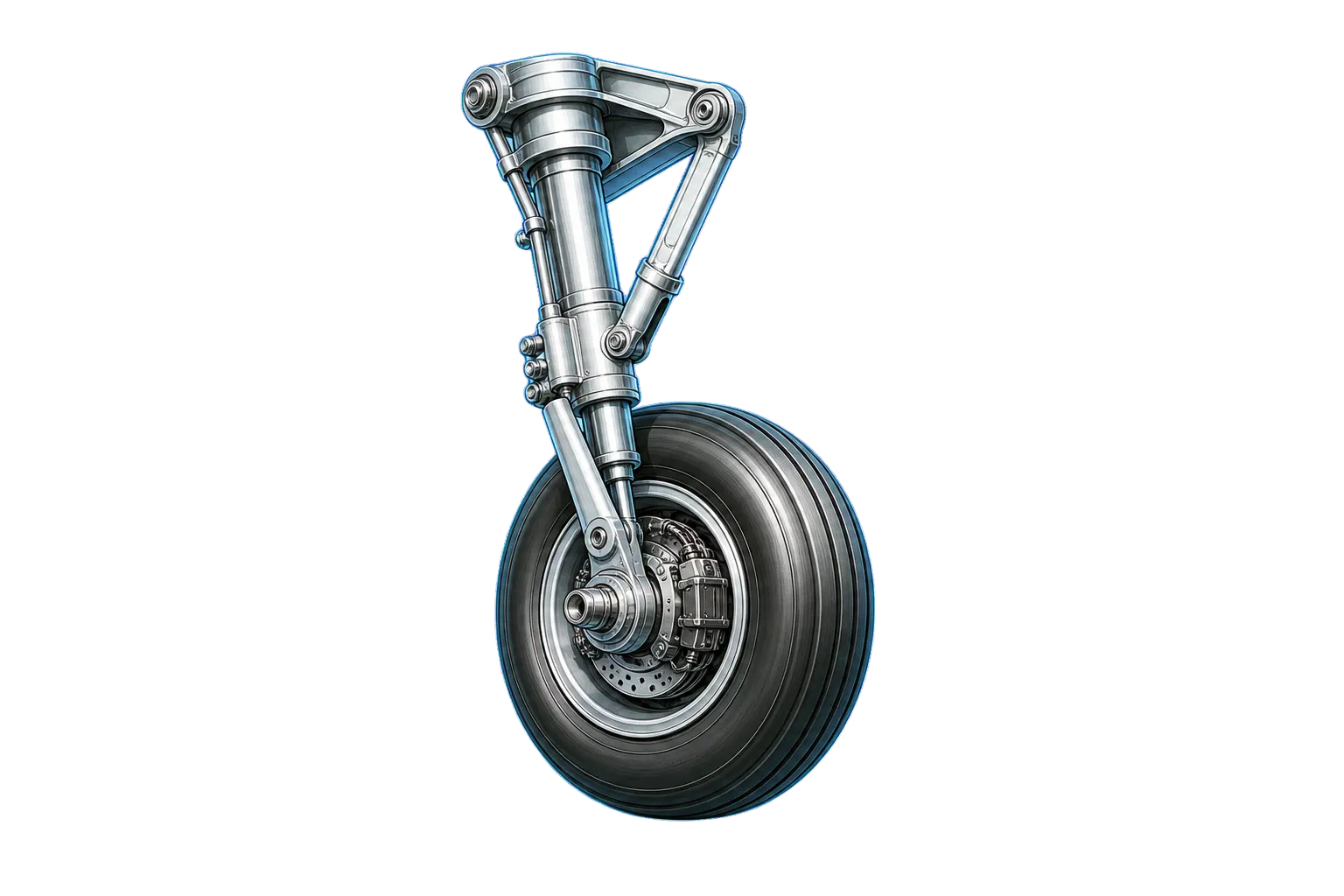
Cracks in the junction of the torque link lug and upper case of the main landing gear (MLG) torque link assemblies could lead to failure of the main landing gear, resulting in loss of control during landing operations.
AI-generated summary from the source AD text. Verify against the official source before acting.
Required Actions
Repetitively inspect the junction of the torque link lug and upper case of the MLG torque link assemblies for cracks. Replace any MLG torque link assembly with Modification A39 if cracks are found or after a certain period without cracks. Replacing all assemblies with Modification A39 eliminates the need for inspections.
AI-generated summary from the source AD text. Verify against the official source before acting.
Compliance Time
Before further flight
AI-generated summary from the source AD text. Verify against the official source before acting.
Affected Aircraft
Pilatus Britten-Norman BN-2A, BN-2B, and BN-2T series airplanes (excluding BN2A MK. 111 series)
AI-generated summary from the source AD text. Verify against the official source before acting.
Federal Register Abstract
This amendment adopts a new airworthiness directive that applies to Pilatus Britten-Norman Ltd. (Pilatus Britten-Norman) BN-2A, BN-2B, and BN-2T series airplanes. This AD requires repetitively inspecting the junction of the torque link lug and upper case of the main landing gear (MLG) torque link assemblies for cracks, and replacing any MLG torque link assembly with a Modification A39 MLG torque link assembly, either immediately when cracks are found or after a certain period of time if cracks are not found. Replacing all MLG torque link assemblies with Modification A39 MLG torque link assemblies eliminates the need for the repetitive inspections. These repetitive inspections are currently required by AD 86-07-02 for the BN-2A, BN-2B, and BN-2T series airplanes, as well as the BN2A MK. 111 series airplanes. There are no improved design parts for the BN2A MK. 111 series airplanes. The Federal Aviation Administration (FAA) is issuing in a separate action a revision to AD 86-07-02 to retain the repetitive inspection and replacement (if necessary) requirements for the BN2A MK. 111 series airplanes. The actions specified in this AD are intended to prevent failure of the main landing gear caused by cracks in the torque link area, which could lead to loss of control of the airplane during landing operations.
Document Text
Show stored source text (verify against official source)
[Federal Register Volume 62, Number 203 (Tuesday, October 21, 1997)]
[Rules and Regulations]
[Pages 54577-54579]
From the Federal Register Online via the Government Publishing Office [<a href="http://www.gpo.gov">www.gpo.gov</a>]
[FR Doc No: 97-27795]


[[Page 54577]]

-----------------------------------------------------------------------

DEPARTMENT OF TRANSPORTATION

Federal Aviation Administration

14 CFR Part 39

[Docket No. 96-CE-25-AD; Amendment 39-10170; AD 97-22-01]
RIN 2120-AA64


Airworthiness Directives; Pilatus Britten-Norman Ltd. (Formerly
Britten-Norman) BN-2A, BN-2B, and BN-2T Series Airplanes

AGENCY: Federal Aviation Administration, DOT.

ACTION: Final rule.

-----------------------------------------------------------------------

SUMMARY: This amendment adopts a new airworthiness directive that
applies to Pilatus Britten-Norman Ltd. (Pilatus Britten-Norman) BN-2A,
BN-2B, and BN-2T series airplanes. This AD requires repetitively
inspecting the junction of the torque link lug and upper case of the
main landing gear (MLG) torque link assemblies for cracks, and
replacing any MLG torque link assembly with a Modification A39 MLG
torque link assembly, either immediately when cracks are found or after
a certain period of time if cracks are not found. Replacing all MLG
torque link assemblies with Modification A39 MLG torque link assemblies
eliminates the need for the repetitive inspections. These repetitive
inspections are currently required by AD 86-07-02 for the BN-2A, BN-2B,
and BN-2T series airplanes, as well as the BN2A MK. 111 series
airplanes. There are no improved design parts for the BN2A MK. 111
series airplanes. The Federal Aviation Administration (FAA) is issuing
in a separate action a revision to AD 86-07-02 to retain the repetitive
inspection and replacement (if necessary) requirements for the BN2A MK.
111 series airplanes. The actions specified in this AD are intended to
prevent failure of the main landing gear caused by cracks in the torque
link area, which could lead to loss of control of the airplane during
landing operations.

DATES: Effective November 28, 1997.
    The incorporation by reference of certain publications listed in
the regulations is approved by the Director of the Federal Register as
of November 28, 1997.

ADDRESSES: Service information that applies to this AD may be obtained
from Fairey Hydraulics Limited, Claverham, Bristol, England; or Pilatus
Britten-Norman Limited, Bembridge, Isle of Wight, United Kingdom PO35
5PR; telephone 44-1983 872511; facsimile 44-1983 873246. This
information may also be examined at the FAA, Central Region, Office of
the Regional Counsel, Attention: Rules Docket 96-CE-25-AD, Room 1558,
601 E. 12th Street, Kansas City, Missouri 64106; or at the Office of
the Federal Register, 800 North Capitol Street, NW., suite 700,
Washington, DC.

FOR FURTHER INFORMATION CONTACT: Mr. S.M. Nagarajan, Aerospace
Engineer, Small Airplane Directorate, Airplane Certification Service,
FAA, 1201 Walnut, suite 900, Kansas City, Missouri 64106; telephone
(816) 426-6932; facsimile (816) 426-2169.

SUPPLEMENTARY INFORMATION:

Events Leading to the Issuance of This AD

    A proposal to amend part 39 of the Federal Aviation Regulations (14
CFR part 39) to include an AD that would apply to Pilatus Britten-
Norman BN-2A, BN-2B, and BN-2T series airplanes was published in the
Federal Register as a notice of proposed rulemaking (NPRM) on May 27,
1997 (62 FR 28646). The NPRM proposed to require repetitively
inspecting the junction of the torque link lug and upper case of the
MLG torque link assemblies for cracks, and replacing any MLG torque
link assembly with a Modification A39 MLG torque link assembly, either
immediately when cracks are found or at a certain period of time if
cracks are not found. Installation of the improved part would eliminate
the need for the repetitive inspections. Accomplishment of the proposed
inspections and installation as specified in the NPRM would be in
accordance with Fairey Hydraulics Limited SB 32-4, Issue 4, dated
January 30, 1990.
    Interested persons have been afforded an opportunity to participate
in the making of this amendment. No comments were received on the
proposed rule or the FAA's determination of the cost to the public.

The FAA's Determination

    After careful review of all available information related to the
subject presented above, the FAA has determined that air safety and the
public interest require the adoption of the rule as proposed except for
minor editorial corrections. The FAA has determined that these minor
corrections will not change the meaning of the AD and will not add any
additional burden upon the public than was already proposed.

The FAA's Aging Commuter-Class Airplane Policy

    This AD applies to the FAA's aging commuter-class airplane policy.
This policy simply states that reliance on repetitive inspections of
critical areas on commuter-class airplanes carries an unnecessary
safety risk when a design change exists that could eliminate or, in
certain instances, reduce the number of those critical inspections. The
alternative to issuing this AD would be to rely on repetitive
inspections to detect failure of the MLG torque link assemblies on the
affected airplanes.
    The intent of the FAA's aging commuter airplane program is to
ensure safe operation of commuter-class airplanes that are in
commercial service without adversely impacting private operators. Of
the approximately 112 airplanes in the U.S. registry that would be
affected by this AD, the FAA has determined that approximately 25
percent are operated in scheduled passenger service by 11 different
operators. A significant number of the remaining 75 percent are
operated in other forms of air transportation such as air cargo and air
taxi.
    This AD allows at least 1,000 hours TIS after the effective date of
the AD before mandatory accomplishment of the design modification (upon
the accumulation of 5,000 hours TIS or within the next 1,000 hours TIS
after the effective date of the AD, whichever is later). The average
utilization of the fleet for those airplanes in commercial commuter
service is approximately 25 to 50 hours TIS per week. Based on these
figures, operators of commuter airplanes involved in commercial
operation will have to accomplish the replacement within 5 to 10
calendar months (at the least) after this AD becomes effective. For
private owners, who typically operate between 100 to 200 hours TIS per
year, this will allow 5 to 10 years (at the least) before the
replacement becomes mandatory. The time it would take those in air
cargo/air taxi operations before the replacement becomes mandatory is
unknown because of the wide variation between each airplane used in
this service. The exact numbers would fall somewhere between the
average for commuter operators and private operators.

Cost Impact

    The FAA estimates that 112 airplanes in the U.S. registry will be
affected by this AD, that it will take approximately 13 workhours per
airplane to accomplish this AD (1 workhour per inspection and 12
workhours for the installation), and that the average labor rate is
approximately $60 an hour. Parts cost approximately $6,200 per
airplane. Based on these figures, the total cost impact of this AD on
U.S. operators is

[[Page 54578]]

estimated to be $781,760 or $6,980 per airplane.
    The inspections are currently required on the 112 affected
airplanes by AD 86-07-02. This AD would not require any additional
inspection requirements over that already required by AD 86-07-02. In
addition, the cost figures referenced above are based on the
presumption that no affected airplane operator has incorporated the
inspection-terminating installation. Pilatus Britten-Norman does not
know the number of parts distributed to the affected airplane owners/
operators. Numerous sets of parts were sent out to the owners/operators
of the affected airplanes, but over the years Pilatus Britten-Norman
has not retained these records.

Regulatory Flexibility Determination and Analysis

    The Regulatory Flexibility Act of 1980 (RFA) was enacted by
Congress to ensure that small entities are not unnecessarily or
disproportionally burdened by government regulations. The RFA requires
government agencies to determine whether rules would have a
``significant economic impact on a substantial number of small
entities,'' and, in cases where they would, conduct a Regulatory
Flexibility Analysis in which alternatives to the rule are considered.
FAA Order 2100.14A, Regulatory Flexibility Criteria and Guidance,
outlines FAA procedures and criteria for complying with the RFA. Small
entities are defined as small businesses and small not-for-profit
organizations that are independently owned and operated or airports
operated by small governmental jurisdictions. A ``substantial number''
is defined as a number that is not less than 11 and that is more than
one-third of the small entities subject to a rule, or any number of
small entities judged to be substantial by the rulemaking official. A
``significant economic impact'' is defined by an annualized net
compliance cost, adjusted for inflation, which is greater than a
threshold cost level for defined entity types.
    The entities that would be affected by this AD are mostly in the
portion of Standard Industrial Classification (SIC) 4512, Operators of
Aircraft for Hire, classified as ``unscheduled.'' FAA Order 2100.14A
sets the size threshold for small entities operating aircraft in this
category at nine or fewer aircraft owned and the annualized cost
thresholds of at least $4,975 (1996 dollars) for unscheduled operators.
A four-year life for the torque link assembly and capital cost of 15-
percent would establish an annualized cost of $2,445 (1996 dollars).
This is less than 50-percent of the threshold cost of $4,975 per year.
In order to incur costs of at least $4,975, an entity would have to
operate three or more of the airplanes referenced in this AD. FAA data
shows that only five small entities operate three or more of these
airplanes. In addition, this data shows that approximately 60 entities
operate the airplanes referenced in this AD, but that only 15 of these
entities (one-fourth) operate two or more of these airplanes.
    Based on this information, less than one-third of the entities will
incur significant operating costs under FAA Order 2100.14A. Therefore,
this AD will not significantly affect a number of small entities.
    A copy of the full Cost Analysis and Regulatory Flexibility
Determination for this AD may be examined at the FAA, Central Region,
Office of the Regional Counsel, Attention: Rules Docket No. 96-CE-25-
AD, Room 1558, 601 E. 12th Street, Kansas City, Missouri.

Regulatory Impact

    The regulations adopted herein will not have substantial direct
effects on the States, on the relationship between the national
government and the States, or on the distribution of power and
responsibilities among the various levels of government. Therefore, in
accordance with Executive Order 12612, it is determined that this final
rule does not have sufficient federalism implications to warrant the
preparation of a Federalism Assessment.
    For the reasons discussed above, I certify that this action (1) is
not a ``significant regulatory action'' under Executive Order 12866;
(2) is not a ``significant rule'' under DOT Regulatory Policies and
Procedures (44 FR 11034, February 26, 1979); and (3) will not have a
significant economic impact, positive or negative, on a substantial
number of small entities under the criteria of the Regulatory
Flexibility Act. A copy of the final evaluation prepared for this
action is contained in the Rules Docket. A copy of it may be obtained
by contacting the Rules Docket at the location provided under the
caption ADDRESSES.

List of Subjects in 14 CFR Part 39

    Air transportation, Aircraft, Aviation safety, Incorporation by
reference, Safety.

Adoption of the Amendment

    Accordingly, pursuant to the authority delegated to me by the
Administrator, the Federal Aviation Administration amends part 39 of
the Federal Aviation Regulations (14 CFR part 39) as follows:

PART 39--AIRWORTHINESS DIRECTIVES

    1. The authority citation for part 39 continues to read as follows:

    Authority: 49 U.S.C. 106(g), 40113, 44701.


Sec. 39.13  [Amended]

    2. Section 39.13 is amended by adding a new airworthiness directive
(AD) to read as follows:

97-22-01  Pilatus Britten-Norman: Amendment 39-10170; Docket No. 96-
CE-25-AD.

    Applicability: Models BN-2, BN-2A, BN-2A-2, BN-2A-3, BN-2A-6,
BN-2A-8, BN-2A-9, BN-2A-20, BN-2A-21, BN-2A-26, BN-2A-27, BN-2B-20,
BN-2B-21, BN-2B-26, BN-2B-27, and BN-2T airplanes (all serial
numbers), certificated in any category.

    Note 1: This AD applies to each airplane identified in the
preceding applicability provision, regardless of whether it has been
modified, altered, or repaired in the area subject to the
requirements of this AD. For airplanes that have been modified,
altered, or repaired so that the performance of the requirements of
this AD is affected, the owner/operator must request approval for an
alternative method of compliance in accordance with paragraph (f) of
this AD. The request should include an assessment of the effect of
the replacement, alteration, or repair on the unsafe condition
addressed by this AD; and, if the unsafe condition has not been
eliminated, the request should include specific proposed actions to
address it.

    Compliance: Required as indicated after the effective date of
this AD, unless already accomplished.
    To prevent failure of the main landing gear caused by cracks in
the torque link assembly area, which could lead to loss of control
of the airplane during landing operations, accomplish the following:
    (a) Prior to further flight after the effective date of this AD
or within the next 100 hours time-in-service (TIS) after the last
inspection required by AD 86-07-02, whichever occurs later, and
thereafter at intervals not to exceed 100 hours TIS until the
installations required by paragraph (c) of this AD are accomplished,
inspect the junction of the torque link lug and upper case of all
main landing gear (MLG) torque link assemblies for cracks (using a
10-power magnifying glass or by dye penetrant methods). Accomplish
these inspections in accordance with the ACCOMPLISHMENT INSTRUCTIONS
section of Fairey Hydraulics Limited Service Bulletin (SB) 32-4,
Issue 4, dated January 30, 1990. Pilatus Britten-Norman SB BN-2/
SB.170, Issue 4, November 16, 1990, references this service
bulletin.

    Note 2: The inspections required by paragraph (a) of this AD
were initially a part of AD 86-07-02, which applied to the BN2A MK.
111 series airplanes as well as the airplanes affected by this AD.
The ``prior to further flight after the effective date of this AD''
compliance time was the original initial compliance time of AD 86-
07-02, and is being retained to provide credit and continuity for
already-accomplished and future inspections.


[[Page 54579]]


    (b) If any cracks are found during any of the inspections
required by this AD, prior to further flight, replace the MLG torque
link assembly with a Modification A39 MLG torque link assembly in
accordance with the ACCOMPLISHMENT INSTRUCTIONS section of Fairey
Hydraulics Limited SB No. 32-4, Issue 4, dated January 30, 1990.
    (1) Repetitive inspections are no longer required when all MLG
torque assemblies are replaced with Modification A39 MLG torque link
assemblies.
    (2) Repetitive inspections may no longer be required on one MLG
torque assembly, but still be required on another if all haven't
been replaced with a Modification A39 MLG torque link assembly.
    (c) Upon the accumulation of 5,000 hours TIS or within the next
1,000 hours TIS after the effective date of this AD, whichever
occurs later, unless already accomplished as specified in paragraph
(b) of this AD, replace each MLG torque link assembly with a
Modification A39 MLG torque link assembly in accordance with the
ACCOMPLISHMENT INSTRUCTIONS section of Fairey Hydraulics Limited SB
No. 32-4, Issue 4, dated January 30, 1990.
    (d) The intervals between the repetitive inspections required by
this AD may be adjusted up to 10 percent of the specified interval
to allow accomplishing these actions along with other scheduled
maintenance on the airplane.
    (e) Special flight permits may be issued in accordance with
sections 21.197 and 21.199 of the Federal Aviation Regulations (14
CFR 21.197 and 21.199) to operate the airplane to a location where
the inspection requirements of this AD can be accomplished.
    (f) An alternative method of compliance or adjustment of the
initial or repetitive compliance times that provides an equivalent
level of safety may be approved by the Manager, Small Airplane
Directorate, 1201 Walnut, suite 900, Kansas City, Missouri 64106.
The request should be forwarded through an appropriate FAA
Maintenance Inspector, who may add comments and then send it to the
Manager, Small Airplane Directorate.

    Note 3: Information concerning the existence of approved
alternative methods of compliance with this AD, if any, may be
obtained from the Small Airplane Directorate.

    (g) The inspections and replacement required by this AD shall be
done in accordance with Fairey Hydraulics Limited Service Bulletin
(SB) 32-4, Issue 4, dated January 30, 1990. This incorporation by
reference was approved by the Director of the Federal Register in
accordance with 5 U.S.C. 552(a) and 1 CFR part 51. Copies may be
obtained from Fairey Hydraulics Limited, Claverham, Bristol,
England; or Pilatus Britten-Norman Limited, Bembridge, Isle of
Wight, United Kingdom PO35 5PR. Copies may be inspected at the FAA,
Central Region, Office of the Regional Counsel, Room 1558, 601 E.
12th Street, Kansas City, Missouri, or at the Office of the Federal
Register, 800 North Capitol Street, NW., suite 700, Washington, DC.
    (h) This amendment (39-10170) becomes effective on November 28,
1997.

    Issued in Kansas City, Missouri, on October 14, 1997.
Mary Ellen Schutt,
Acting Manager, Small Airplane Directorate, Aircraft Certification
Service.
[FR Doc. 97-27795 Filed 10-20-97; 8:45 am]
BILLING CODE 4910-13-U
Source: Official FAA Source ↗
Retrieved: Apr 6, 2026
Rights: U.S. Government Public Domain
This site is not affiliated with or endorsed by the FAA. Always verify with official sources.