AD 99-04-13
Applicability
| Type | Manufacturer | Model | Details |
|---|---|---|---|
| aircraft | Bell Helicopter Textron, Inc. | 214ST | Airworthiness Directives; Bell Helicopter Textron, Inc. Model 214ST Helicopters |
Unsafe Condition
Fatigue failure of the tail rotor yoke due to external bending forces, which could result in failure of the yoke, loss of control of the tail rotor, and subsequent loss of control of the helicopter.
AI-generated summary from the source AD text. Verify against the official source before acting.
Required Actions
Review historical records for incidents imposing bending loads on the yoke and replace the yoke if such history exists. Install a reduced Vne placard and incorporate the limitation into the Rotorcraft Flight Manual. Within 180 days, replace the yoke assembly with a zero-hours TIS airworthy yoke or one passing x-ray diffraction inspection, and install a frangible tail rotor flapping stop/yield indicator (P/N 214-011-809-109). Conduct repetitive 25 hours time-in-service inspections and inspections after incidents involving hard landings, sudden stoppage, or power on/off events to detect flapping stop damage.
AI-generated summary from the source AD text. Verify against the official source before acting.
Compliance Time
Before further flight (for certain actions) and within 180 days (for others).
AI-generated summary from the source AD text. Verify against the official source before acting.
Affected Aircraft
Bell Helicopter Textron, Inc. Model 214ST helicopters, serial numbers 28101 and higher.
AI-generated summary from the source AD text. Verify against the official source before acting.
Federal Register Abstract
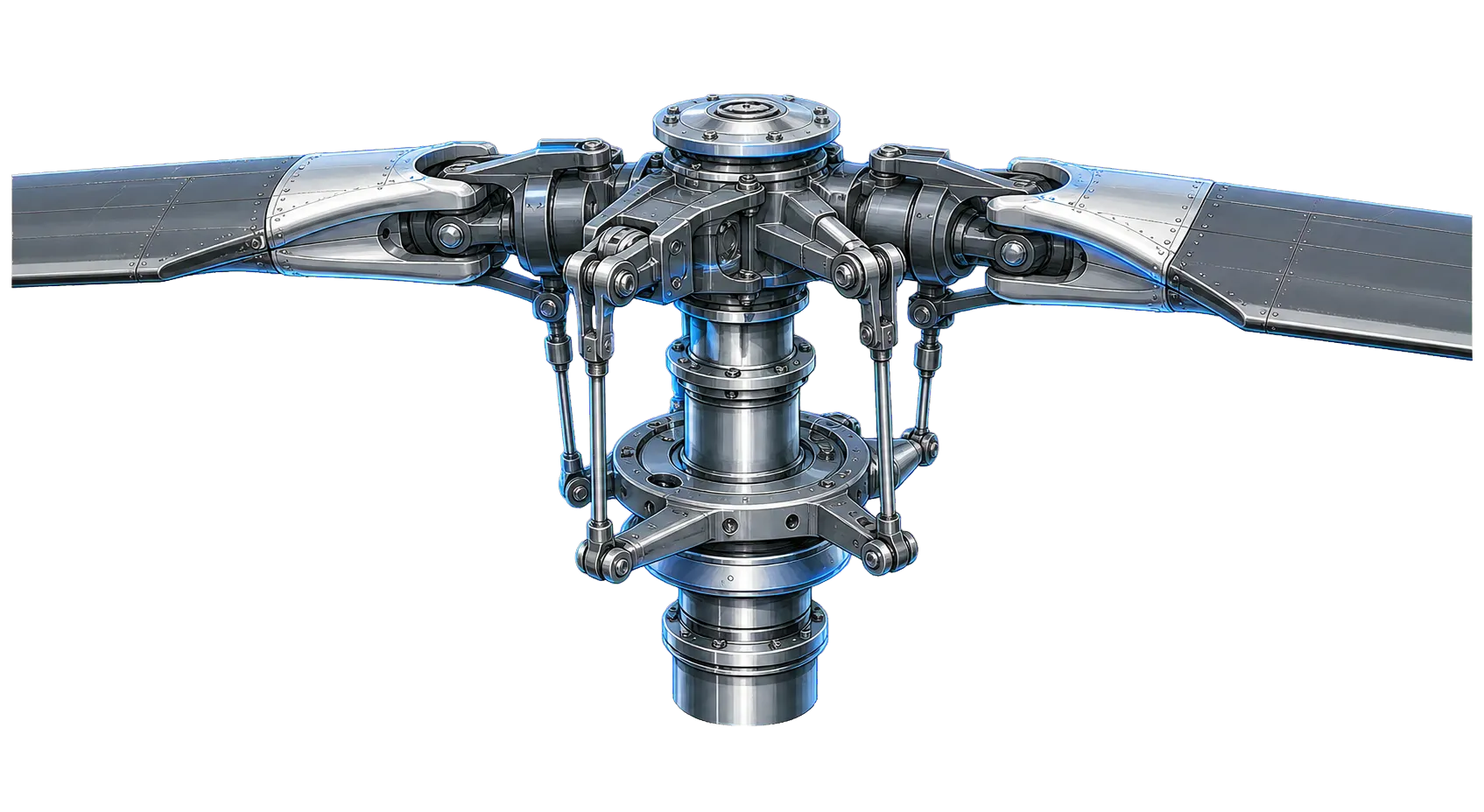
Tail Rotor Yoke
Applicability Source Text
Show captured applicability text from the source AD
AD Final Rules - DRS_99-04-13.html
Copy URL
Print/Save as PDF
Document Versions
 Feedback
Details
AD Number:
99-04-13
Document Type:
AD Final Rules
Docket Number:
98-SW-27-AD
Subject Heading:
Airworthiness Directives; Bell Helicopter Textron, Inc. Model 214ST Helicopters
Subject:
Tail Rotor Yoke
Status:
Current
Citation:
This information is not available.
Citation Publish Date:
Effective Date:
03/04/1999
Make:
Bell Helicopter Textron, Inc.
Model:
214ST
Product Type:
Aircraft
Product Subtype:
Rotorcraft
Affected AD:
Superseded AD:
Affected By:
Superseded By:
Service/Office:
Office of Primary Responsibility:
CFR Part Reference:
Part 39 [64 FR 7771 NO. 31 02/17/99]
Comments:
AIRWORTHINESS DIRECTIVES FINAL RULES: 99-04-13
CITATION:   This information is not available.

PAGE NUMBER:

DOCKET NUMBER:   98-SW-27-AD

AMENDMENT:   39-11037

AD NUMBER:   99-04-13

SUBJECT HEADING:   Airworthiness Directives; Bell Helicopter Textron, Inc. Model 214ST Helicopters

ACTION:   Final rule; request for comments

SUMMARY:   This amendment adopts a new airworthiness directive (AD) that is applicable to Bell Helicopter Textron, Inc. (BHTI) Model 214ST helicopters. This action requires a reduction of the never-exceed velocity (Vne) limitation until an inspection of the tail rotor yoke (yoke) assembly for fatigue damage and installation of a redesigned yoke flapping stop are accomplished. Recurring periodic and special inspections to detect occurrences of yoke overload are also required. This amendment is prompted by reports of inflight failures of yokes installed on civilian and military helicopters of similar type design. The actions specified in this AD are intended to prevent fatigue failure of the yoke that could result in loss of the tail rotor and subsequent loss of control of the helicopter.

DATES:   Effective March 4, 1999. The incorporation by reference of certain publications listed in the regulations is approved by the Director of the Federal Register as of March 4, 1999. Comments for inclusion in the Rules Docket must be received on or before April 19, 1999.

ADDRESSES:   Submit comments in triplicate to the Federal Aviation Administration (FAA), Office of the Regional Counsel, Southwest Region, Attention: Rules Docket No. 98-SW-27-AD, 2601 Meacham Blvd., Room 663, Fort Worth, Texas 76137.
The service information referenced in this AD may be obtained from Bell Helicopter Textron, Inc., P.O. Box 482, Fort Worth, Texas 76101, telephone (817) 280-3391, fax (817) 280-6466. This information may be examined at the FAA, Office of the Regional Counsel, Southwest Region, 2601 Meacham Blvd., Room 663, Fort Worth, Texas 76137; or at the Office of the Federal Register, 800 North Capitol Street, NW., suite 700, Washington, DC.

FOR FURTHER INFORMATION CONTACT:   Mr. Harry Edmiston, Aerospace Engineer, Rotorcraft Certification Office, Rotorcraft Directorate, FAA, 2601 Meacham Blvd., Fort Worth, Texas 76137, telephone (817) 222-5158, fax (817) 222-5783.

SUPPLEMENTARY INFORMATION:
This amendment adopts a new AD that is applicable to BHTI Model 214ST helicopters. This action requires, before further flight, reviewing the historical records for any incidents that may have imposed greater than normal bending loads on the tail rotor yoke, installing a placard on the instrument panel with a reduced airspeed limitation, and inserting the limitation into the Limitations section of the Rotorcraft Flight Manual (RFM). This action also requires, within 180 days, replacing the yoke assembly with a zero-hours TIS airworthy yoke assembly, or one that has passed an x-ray diffraction inspection. A frangible tail rotor flapping stop/yield indicator, P/N 214-011-809-109, must also be installed. Further, this AD requires a repetitive 25 hours time-in-service (TIS) inspection to detect tail rotor flapping stop damage due to a hard landing, sudden stoppage, or miscellaneous power on/off incidents, and an inspection after each incident in which damage due to a hard landing, sudden stoppage, or miscellaneous power on/off incidents may have occurred. This amendment is prompted by reports of inflight failures of yokes installed on civilian and military helicopters of similar type design. The actions specified in this AD are intended to prevent fatigue failure of the yoke that could result in loss of the tail rotor and subsequent loss of control of the helicopter.

The FAA has reviewed Bell Helicopter Textron, Inc. Alert Service Bulletin No. 214ST-96-75, dated August 26, 1996, which specifies an immediate, temporary reduction in the maximum airspeed, installing a cockpit placard for this limitation, and incorporating a temporary RFM supplement until the yoke historical records are researched for previous damage history; until an x-ray diffraction inspection is performed on the yoke to detect fatigue damage; and until a frangible tail rotor flapping stop/yield indicator, P/N 214-011-809-109, is installed. A repetitive 25 hour TIS inspection to detect damaging tail rotor flapping stop contact due to a hard landing, sudden stoppage, or miscellaneous power on/off incidents has been added.

Since an unsafe condition has been identified that is likely to exist or develop on other BHTI Model 214ST helicopters of the same type design, this AD is being issued to prevent fatigue failure of the yoke due to external bending forces, which could result in failure of the yoke, loss of control of the tail rotor, and subsequent loss of control of the helicopter. The actions are required to be accomplished in accordance with the service bulletin described previously. The short compliance time involved is required because the previously described critical unsafe condition can adversely affect the controllability of the helicopter. Therefore, the actions stated in the AD are required prior to further flight, and this AD must be issued immediately.

Since a situation exists that requires the immediate adoption of this regulation, it is found that notice and opportunity for prior public comment hereon are impracticable, and that good cause exists for making this amendment effective in less than 30 days.

The FAA estimates that 14 helicopters will be affected by this proposed AD, that it will take approximately 9 work hours to accomplish the inspections and installations, and that the average labor rate is $60 per work hour. Required parts will cost approximately $21,844 for the yoke, and $936 for the flapping stop, per helicopter. Based on these figures, the total cost impact of the AD on U.S. operators is estimated to be $326,480 to replace the yoke and flapping stop in the entire fleet.

Comments Invited
Although this action is in the form of a final rule that involves requirements affecting flight safety and, thus, was not preceded by notice and an opportunity for public comment, comments are invited on this rule. Interested persons are invited to comment on this rule by submitting such written data, views, or arguments as they may desire. Communications should identify the Rules Docket number and be submitted in triplicate to the address specified under the caption "ADDRESSES." All communications received on or before the closing date for comments will be considered, and this rule may be amended in light of the comments received. Factual information that supports the commenter's ideas and suggestions is extremely helpful in evaluating the effectiveness of the AD action and determining whether additional rulemaking action would be needed.

Comments are specifically invited on the overall regulatory, economic, environmental, and energy aspects of the rule that might suggest a need to modify the rule. All comments submitted will be available, both before and after the closing date for comments, in the Rules Docket for examination by interested persons. A report that summarizes each FAA-public contact concerned with the substance of this AD will be filed in the Rules Docket.

Commenters wishing the FAA to acknowledge receipt of their comments submitted in response to this rule must submit a self-addressed, stamped postcard on which the following statement is made: "Comments to Docket No. 98-SW-27-AD." The postcard will be date stamped and returned to the commenter.

The regulations adopted herein will not have substantial direct effects on the States, on the relationship between the national government and the States, or on the distribution of power and responsibilities among the various levels of government. Therefore, in accordance with Executive Order 12612, it is determined that this final rule does not have sufficient federalism implications to warrant the preparation of a Federalism Assessment.

The FAA has determined that this regulation is an emergency regulation that must be issued immediately to correct an unsafe condition in aircraft, and that it is not a "significant regulatory action" under Executive Order 12866. It has been determined further that this action involves an emergency regulation under DOT Regulatory Policies and Procedures (44 FR 11034, February 26, 1979). If it is determined that this emergency regulation otherwise would be significant under DOT Regulatory Policies and Procedures, a final regulatory evaluation will be prepared and placed in the Rules Docket. A copy of it, if filed, may be obtained from the Rules Docket at the location provided under the caption "ADDRESSES."

List of Subjects in 14 CFR Part 39
Air transportation, Aircraft, Aviation safety, Incorporation by reference, Safety.

Adoption of the Amendment
Accordingly, pursuant to the authority delegated to me by the Administrator, the Federal Aviation Administration amends part 39 of the Federal Aviation Regulations (14 CFR part 39) as follows:

PART 39 - AIRWORTHINESS DIRECTIVES
1. The authority citation for part 39 continues to read as follows:
Authority: 49 U.S.C. 106(g), 40113, 44701.

§ 39.13 [Amended]
2. Section 39.13 is amended by adding a new airworthiness directive to read as follows:

REGULATORY TEXT:
99-04-13 BELL HELICOPTER TEXTRON, INC.: Amendment 39-11037. Docket No. 98-SW-27-AD.

Applicability: Model 214ST helicopters, serial numbers 28101 and higher, certificated in any category.

NOTE 1: This AD applies to each helicopter identified in the preceding applicability provision, regardless of whether it has been modified, altered, or repaired in the area subject to the requirements of this AD. For helicopters that have been modified, altered, or repaired so that the performance of the requirements of this AD is affected, the owner/operator must use the authority provided in paragraph (e) to request approval from the FAA. This approval may address either no action, if the current configuration eliminates the unsafe condition, or different actions necessary to address the unsafe condition described in this AD. Such a request should include an assessment of the effect of the changed configuration on the unsafe condition addressed by this AD. In no case does the presence of any modification, alteration, or repair remove any helicopter from the applicability of this AD.

Compliance: Required as indicated, unless accomplished previously.

To prevent fatigue failure of the tail rotor yoke (yoke) that could result in loss of the tail rotor and subsequent loss of control of the helicopter, accomplish the following:

(a) Before further flight, review the historical records of the yoke assembly, part number (P/N) 214-011-802-105 or 214-011-802-111, for any recorded static or dynamic incidents that could have imposed a bending load on the yoke, but did not require yoke assembly replacement; for example, an incident in which a damaged tail rotor blade was replaced due to a blade strike. If such a history exists, replace the yoke assembly with an airworthy yoke assembly.

(b) Before further flight, unless paragraph (c) of this AD has been accomplished previously:

(1) Install a Never Exceed Velocity (Vne) red line at 145 knots indicated airspeed (KIAS) on the pilot and copilot airspeed indicators using red tape or paint, and a slippage indicator on the instrument case and glass.

(2) Install a placard made of material that is not easily erased, disfigured, or obscured on the instrument panel in clear view of the pilot and copilot: "Observe temporary Maximum Never Exceed (Vne) airspeed red line (marked at 145 knots indicated airspeed (KIAS). Basic Vne is 15 KIAS less than that determined by the Air Data Computer (ADC) but never less than 70 KIAS."

(3) Insert the Bell Helicopter Textron 214ST Temporary Revision for Airspeed Restriction, dated August 16, 1996, which is attached to Bell Helicopter Textron Alert Service Bulletin No. 214ST-96-75, dated August 26, 1996 (ASB) into the Limitations section of the Model 214ST Rotorcraft Flight Manual (RFM).

(c) Within 180 calendar days after the effective date of this AD:

(1) Remove yoke assembly, P/N 214-011-802-105 or 214-011-802-111, and replace it with an airworthy yoke assembly, P/N 214-011-802-105 or 214-011-802-111, with zero hours time-in-service (TIS), or an airworthy yoke (regardless of TIS) that has passed a one-time x-ray diffraction inspection in accordance with the ASB.

(2) Install an airworthy tail rotor flapping stop, P/N 214-011-809-109.

(3) After the requirements of paragraphs (c)(1) and (c)(2) of this AD are accomplished, remove the 145 KIAS redline from the pilot and copilot airspeed indicators, remove the Vne airspeed restriction placard, and remove the Bell Helicopter Textron 214ST Temporary Revision for Airspeed Restriction, dated August 16, 1996, from the RFM.

(d) After accomplishing paragraph (c) of this AD, inspect the yoke assembly and tail rotor flapping stop in accordance with Part III, Recurring 25 Hour Inspection and Conditional Inspection Requirement, of the ASB

- at intervals not to exceed 25 hours TIS; and
- before further flight after each incident in which there could have been imposed a bending load on the yoke as referenced in paragraph (a).

(e) An alternative method of compliance or adjustment of the compliance time that provides an acceptable level of safety may be used if approved by the Manager, Rotorcraft Certification Office, Rotorcraft Directorate, FAA. Operators shall submit their requests through an FAA Principal Maintenance Inspector, who may concur or comment and then send it to the Manager, Rotorcraft Certification Office.

NOTE 2: Information concerning the existence of approved alternative methods of compliance with this AD, if any, may be obtained from the Rotorcraft Certification Office.

(f) Special flight permits may be issued in accordance with sections 21.197 and 21.199 of the Federal Aviation Regulations (14 CFR 21.197 and 21.199) to operate the helicopter to a location where the requirements of this AD can be accomplished.

(g) The actions shall be done in accordance with Bell Helicopter Textron Alert Service Bulletin No. 214ST-96-75, dated August 26, 1996. This incorporation by reference was approved by the Director of the Federal Register in accordance with 5 U.S.C. 552(a) and 1 CFR part 51. Copies may be obtained from Bell Helicopter Textron, Inc., P.O. Box 482, Fort Worth, Texas 76101, telephone (817) 280-3391, fax (817) 280-6466. Copies may be inspected at the FAA, Office of the Regional Counsel, Southwest Region, 2601 Meacham Blvd., Room 663, Fort Worth, Texas; or at the Office of the Federal Register, 800 North Capitol Street, NW., suite 700, Washington, DC.

(h) This amendment becomes effective on March 4, 1999.

FOOTER:
Document Text
Show stored source text (verify against official source)
AD Final Rules - DRS_99-04-13.html
Copy URL
Print/Save as PDF
Document Versions
 Feedback
Details
AD Number:
99-04-13
Document Type:
AD Final Rules
Docket Number:
98-SW-27-AD
Subject Heading:
Airworthiness Directives; Bell Helicopter Textron, Inc. Model 214ST Helicopters
Subject:
Tail Rotor Yoke
Status:
Current
Citation:
This information is not available.
Citation Publish Date:
Effective Date:
03/04/1999
Make:
Bell Helicopter Textron, Inc.
Model:
214ST
Product Type:
Aircraft
Product Subtype:
Rotorcraft
Affected AD:
Superseded AD:
Affected By:
Superseded By:
Service/Office:
Office of Primary Responsibility:
CFR Part Reference:
Part 39 [64 FR 7771 NO. 31 02/17/99]
Comments:
AIRWORTHINESS DIRECTIVES FINAL RULES: 99-04-13
CITATION:   This information is not available.

PAGE NUMBER:

DOCKET NUMBER:   98-SW-27-AD

AMENDMENT:   39-11037

AD NUMBER:   99-04-13

SUBJECT HEADING:   Airworthiness Directives; Bell Helicopter Textron, Inc. Model 214ST Helicopters

ACTION:   Final rule; request for comments

SUMMARY:   This amendment adopts a new airworthiness directive (AD) that is applicable to Bell Helicopter Textron, Inc. (BHTI) Model 214ST helicopters. This action requires a reduction of the never-exceed velocity (Vne) limitation until an inspection of the tail rotor yoke (yoke) assembly for fatigue damage and installation of a redesigned yoke flapping stop are accomplished. Recurring periodic and special inspections to detect occurrences of yoke overload are also required. This amendment is prompted by reports of inflight failures of yokes installed on civilian and military helicopters of similar type design. The actions specified in this AD are intended to prevent fatigue failure of the yoke that could result in loss of the tail rotor and subsequent loss of control of the helicopter.

DATES:   Effective March 4, 1999. The incorporation by reference of certain publications listed in the regulations is approved by the Director of the Federal Register as of March 4, 1999. Comments for inclusion in the Rules Docket must be received on or before April 19, 1999.

ADDRESSES:   Submit comments in triplicate to the Federal Aviation Administration (FAA), Office of the Regional Counsel, Southwest Region, Attention: Rules Docket No. 98-SW-27-AD, 2601 Meacham Blvd., Room 663, Fort Worth, Texas 76137.
The service information referenced in this AD may be obtained from Bell Helicopter Textron, Inc., P.O. Box 482, Fort Worth, Texas 76101, telephone (817) 280-3391, fax (817) 280-6466. This information may be examined at the FAA, Office of the Regional Counsel, Southwest Region, 2601 Meacham Blvd., Room 663, Fort Worth, Texas 76137; or at the Office of the Federal Register, 800 North Capitol Street, NW., suite 700, Washington, DC.

FOR FURTHER INFORMATION CONTACT:   Mr. Harry Edmiston, Aerospace Engineer, Rotorcraft Certification Office, Rotorcraft Directorate, FAA, 2601 Meacham Blvd., Fort Worth, Texas 76137, telephone (817) 222-5158, fax (817) 222-5783.

SUPPLEMENTARY INFORMATION:
This amendment adopts a new AD that is applicable to BHTI Model 214ST helicopters. This action requires, before further flight, reviewing the historical records for any incidents that may have imposed greater than normal bending loads on the tail rotor yoke, installing a placard on the instrument panel with a reduced airspeed limitation, and inserting the limitation into the Limitations section of the Rotorcraft Flight Manual (RFM). This action also requires, within 180 days, replacing the yoke assembly with a zero-hours TIS airworthy yoke assembly, or one that has passed an x-ray diffraction inspection. A frangible tail rotor flapping stop/yield indicator, P/N 214-011-809-109, must also be installed. Further, this AD requires a repetitive 25 hours time-in-service (TIS) inspection to detect tail rotor flapping stop damage due to a hard landing, sudden stoppage, or miscellaneous power on/off incidents, and an inspection after each incident in which damage due to a hard landing, sudden stoppage, or miscellaneous power on/off incidents may have occurred. This amendment is prompted by reports of inflight failures of yokes installed on civilian and military helicopters of similar type design. The actions specified in this AD are intended to prevent fatigue failure of the yoke that could result in loss of the tail rotor and subsequent loss of control of the helicopter.

The FAA has reviewed Bell Helicopter Textron, Inc. Alert Service Bulletin No. 214ST-96-75, dated August 26, 1996, which specifies an immediate, temporary reduction in the maximum airspeed, installing a cockpit placard for this limitation, and incorporating a temporary RFM supplement until the yoke historical records are researched for previous damage history; until an x-ray diffraction inspection is performed on the yoke to detect fatigue damage; and until a frangible tail rotor flapping stop/yield indicator, P/N 214-011-809-109, is installed. A repetitive 25 hour TIS inspection to detect damaging tail rotor flapping stop contact due to a hard landing, sudden stoppage, or miscellaneous power on/off incidents has been added.

Since an unsafe condition has been identified that is likely to exist or develop on other BHTI Model 214ST helicopters of the same type design, this AD is being issued to prevent fatigue failure of the yoke due to external bending forces, which could result in failure of the yoke, loss of control of the tail rotor, and subsequent loss of control of the helicopter. The actions are required to be accomplished in accordance with the service bulletin described previously. The short compliance time involved is required because the previously described critical unsafe condition can adversely affect the controllability of the helicopter. Therefore, the actions stated in the AD are required prior to further flight, and this AD must be issued immediately.

Since a situation exists that requires the immediate adoption of this regulation, it is found that notice and opportunity for prior public comment hereon are impracticable, and that good cause exists for making this amendment effective in less than 30 days.

The FAA estimates that 14 helicopters will be affected by this proposed AD, that it will take approximately 9 work hours to accomplish the inspections and installations, and that the average labor rate is $60 per work hour. Required parts will cost approximately $21,844 for the yoke, and $936 for the flapping stop, per helicopter. Based on these figures, the total cost impact of the AD on U.S. operators is estimated to be $326,480 to replace the yoke and flapping stop in the entire fleet.

Comments Invited
Although this action is in the form of a final rule that involves requirements affecting flight safety and, thus, was not preceded by notice and an opportunity for public comment, comments are invited on this rule. Interested persons are invited to comment on this rule by submitting such written data, views, or arguments as they may desire. Communications should identify the Rules Docket number and be submitted in triplicate to the address specified under the caption "ADDRESSES." All communications received on or before the closing date for comments will be considered, and this rule may be amended in light of the comments received. Factual information that supports the commenter's ideas and suggestions is extremely helpful in evaluating the effectiveness of the AD action and determining whether additional rulemaking action would be needed.

Comments are specifically invited on the overall regulatory, economic, environmental, and energy aspects of the rule that might suggest a need to modify the rule. All comments submitted will be available, both before and after the closing date for comments, in the Rules Docket for examination by interested persons. A report that summarizes each FAA-public contact concerned with the substance of this AD will be filed in the Rules Docket.

Commenters wishing the FAA to acknowledge receipt of their comments submitted in response to this rule must submit a self-addressed, stamped postcard on which the following statement is made: "Comments to Docket No. 98-SW-27-AD." The postcard will be date stamped and returned to the commenter.

The regulations adopted herein will not have substantial direct effects on the States, on the relationship between the national government and the States, or on the distribution of power and responsibilities among the various levels of government. Therefore, in accordance with Executive Order 12612, it is determined that this final rule does not have sufficient federalism implications to warrant the preparation of a Federalism Assessment.

The FAA has determined that this regulation is an emergency regulation that must be issued immediately to correct an unsafe condition in aircraft, and that it is not a "significant regulatory action" under Executive Order 12866. It has been determined further that this action involves an emergency regulation under DOT Regulatory Policies and Procedures (44 FR 11034, February 26, 1979). If it is determined that this emergency regulation otherwise would be significant under DOT Regulatory Policies and Procedures, a final regulatory evaluation will be prepared and placed in the Rules Docket. A copy of it, if filed, may be obtained from the Rules Docket at the location provided under the caption "ADDRESSES."

List of Subjects in 14 CFR Part 39
Air transportation, Aircraft, Aviation safety, Incorporation by reference, Safety.

Adoption of the Amendment
Accordingly, pursuant to the authority delegated to me by the Administrator, the Federal Aviation Administration amends part 39 of the Federal Aviation Regulations (14 CFR part 39) as follows:

PART 39 - AIRWORTHINESS DIRECTIVES
1. The authority citation for part 39 continues to read as follows:
Authority: 49 U.S.C. 106(g), 40113, 44701.

§ 39.13 [Amended]
2. Section 39.13 is amended by adding a new airworthiness directive to read as follows:

REGULATORY TEXT:
99-04-13 BELL HELICOPTER TEXTRON, INC.: Amendment 39-11037. Docket No. 98-SW-27-AD.

Applicability: Model 214ST helicopters, serial numbers 28101 and higher, certificated in any category.

NOTE 1: This AD applies to each helicopter identified in the preceding applicability provision, regardless of whether it has been modified, altered, or repaired in the area subject to the requirements of this AD. For helicopters that have been modified, altered, or repaired so that the performance of the requirements of this AD is affected, the owner/operator must use the authority provided in paragraph (e) to request approval from the FAA. This approval may address either no action, if the current configuration eliminates the unsafe condition, or different actions necessary to address the unsafe condition described in this AD. Such a request should include an assessment of the effect of the changed configuration on the unsafe condition addressed by this AD. In no case does the presence of any modification, alteration, or repair remove any helicopter from the applicability of this AD.

Compliance: Required as indicated, unless accomplished previously.

To prevent fatigue failure of the tail rotor yoke (yoke) that could result in loss of the tail rotor and subsequent loss of control of the helicopter, accomplish the following:

(a) Before further flight, review the historical records of the yoke assembly, part number (P/N) 214-011-802-105 or 214-011-802-111, for any recorded static or dynamic incidents that could have imposed a bending load on the yoke, but did not require yoke assembly replacement; for example, an incident in which a damaged tail rotor blade was replaced due to a blade strike. If such a history exists, replace the yoke assembly with an airworthy yoke assembly.

(b) Before further flight, unless paragraph (c) of this AD has been accomplished previously:

(1) Install a Never Exceed Velocity (Vne) red line at 145 knots indicated airspeed (KIAS) on the pilot and copilot airspeed indicators using red tape or paint, and a slippage indicator on the instrument case and glass.

(2) Install a placard made of material that is not easily erased, disfigured, or obscured on the instrument panel in clear view of the pilot and copilot: "Observe temporary Maximum Never Exceed (Vne) airspeed red line (marked at 145 knots indicated airspeed (KIAS). Basic Vne is 15 KIAS less than that determined by the Air Data Computer (ADC) but never less than 70 KIAS."

(3) Insert the Bell Helicopter Textron 214ST Temporary Revision for Airspeed Restriction, dated August 16, 1996, which is attached to Bell Helicopter Textron Alert Service Bulletin No. 214ST-96-75, dated August 26, 1996 (ASB) into the Limitations section of the Model 214ST Rotorcraft Flight Manual (RFM).

(c) Within 180 calendar days after the effective date of this AD:

(1) Remove yoke assembly, P/N 214-011-802-105 or 214-011-802-111, and replace it with an airworthy yoke assembly, P/N 214-011-802-105 or 214-011-802-111, with zero hours time-in-service (TIS), or an airworthy yoke (regardless of TIS) that has passed a one-time x-ray diffraction inspection in accordance with the ASB.

(2) Install an airworthy tail rotor flapping stop, P/N 214-011-809-109.

(3) After the requirements of paragraphs (c)(1) and (c)(2) of this AD are accomplished, remove the 145 KIAS redline from the pilot and copilot airspeed indicators, remove the Vne airspeed restriction placard, and remove the Bell Helicopter Textron 214ST Temporary Revision for Airspeed Restriction, dated August 16, 1996, from the RFM.

(d) After accomplishing paragraph (c) of this AD, inspect the yoke assembly and tail rotor flapping stop in accordance with Part III, Recurring 25 Hour Inspection and Conditional Inspection Requirement, of the ASB

- at intervals not to exceed 25 hours TIS; and
- before further flight after each incident in which there could have been imposed a bending load on the yoke as referenced in paragraph (a).

(e) An alternative method of compliance or adjustment of the compliance time that provides an acceptable level of safety may be used if approved by the Manager, Rotorcraft Certification Office, Rotorcraft Directorate, FAA. Operators shall submit their requests through an FAA Principal Maintenance Inspector, who may concur or comment and then send it to the Manager, Rotorcraft Certification Office.

NOTE 2: Information concerning the existence of approved alternative methods of compliance with this AD, if any, may be obtained from the Rotorcraft Certification Office.

(f) Special flight permits may be issued in accordance with sections 21.197 and 21.199 of the Federal Aviation Regulations (14 CFR 21.197 and 21.199) to operate the helicopter to a location where the requirements of this AD can be accomplished.

(g) The actions shall be done in accordance with Bell Helicopter Textron Alert Service Bulletin No. 214ST-96-75, dated August 26, 1996. This incorporation by reference was approved by the Director of the Federal Register in accordance with 5 U.S.C. 552(a) and 1 CFR part 51. Copies may be obtained from Bell Helicopter Textron, Inc., P.O. Box 482, Fort Worth, Texas 76101, telephone (817) 280-3391, fax (817) 280-6466. Copies may be inspected at the FAA, Office of the Regional Counsel, Southwest Region, 2601 Meacham Blvd., Room 663, Fort Worth, Texas; or at the Office of the Federal Register, 800 North Capitol Street, NW., suite 700, Washington, DC.

(h) This amendment becomes effective on March 4, 1999.

FOOTER:
Source: Official FAA Source ↗
Retrieved: Apr 8, 2026
Rights: U.S. Government Public Domain
This site is not affiliated with or endorsed by the FAA. Always verify with official sources.
Related Airworthiness Directives
2014-12-01 Recurring
final ruleAirworthiness Directives; Bell Helicopter Textron, Inc. (Bell) Helicopters
Unsafe Condition: A bearing with incorrect seal material, which could fail under extreme temperature or environmental conditions, resulting in loss of tail rotor control and subsequent loss of control of the helicop...
2013-19-05
final ruleAirworthiness Directives; Bell Helicopter Textron, Inc., Helicopters
Unsafe Condition: Failure of the pylon support spindle assembly due to cracks, corrosion, or damage leading to loss of control of the helicopter.
2013-06-51
final ruleAirworthiness Directives; Various Helicopter Models
Unsafe Condition: Failure of the overload clutch in Goodrich externally-mounted hoists, resulting in uncontrolled reeling-out of the cable and loss of load capacity.
98-23-18
final ruleAirworthiness Directives; Bell Helicopter Textron, Inc. Model 214B, 214B-1, and 214ST Helicopters
Unsafe Condition: Cracking in Kaynar Technologies, Inc. manufactured barrel nuts, part number NAS577B-10A, due to hydrogen embrittlement introduced during manufacture, which could lead to failure of main rotor grips...