AD 98-19-05
Applicability
| Type | Manufacturer | Model | Details |
|---|---|---|---|
| aircraft | The Boeing Company | 757-200 Series | Airworthiness Directives; Boeing Model 757-200 Series Airplanes |
| aircraft | The Boeing Company | 757-200CB Series | Airworthiness Directives; Boeing Model 757-200 Series Airplanes |
| aircraft | The Boeing Company | 757-200PF Series | Airworthiness Directives; Boeing Model 757-200 Series Airplanes |
Unsafe Condition
Failure to apply the secondary fuel barrier during manufacture could result in fuel or fuel vapors entering the cargo or passenger compartment through fasteners, sealant, or structural cracks in the center section structure.
AI-generated summary from the source AD text. Verify against the official source before acting.
Required Actions
Apply sealant, secondary fuel barrier (BMS 5-81, Type II), and corrosion-inhibiting compound to specified portions of the wing center section as per Boeing Service Bulletin 757-57-0053 or its revision.
AI-generated summary from the source AD text. Verify against the official source before acting.
Compliance Time
at the next scheduled heavy maintenance check (i.e., a '4C' check) or within 48 months after the effective date of the AD, whichever occurs first
AI-generated summary from the source AD text. Verify against the official source before acting.
Affected Aircraft
Boeing Model 757-200 Series, 757-200CB Series, 757-200PF Series airplanes where the secondary fuel barrier was not applied during manufacture.
AI-generated summary from the source AD text. Verify against the official source before acting.
Federal Register Abstract
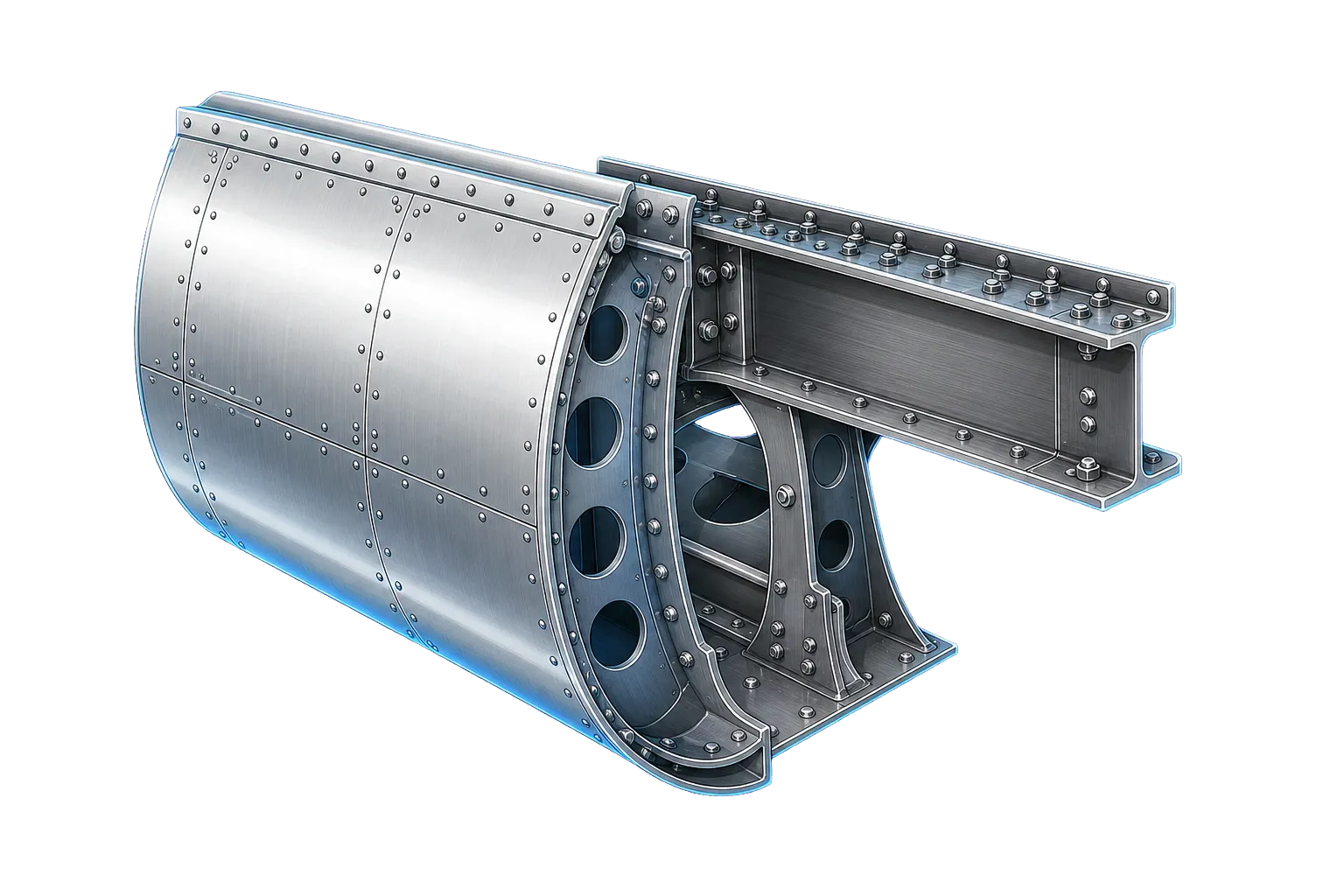
Front Spar Wing Center Section
Applicability Source Text
Show captured applicability text from the source AD
AD Final Rules - DRS_98-19-05.html
Copy URL
Print/Save as PDF
Document Versions
 Feedback
Details
AD Number:
98-19-05
Document Type:
AD Final Rules
Docket Number:
97-NM-54-AD
Subject Heading:
Airworthiness Directives; Boeing Model 757-200 Series Airplanes
Subject:
Front Spar Wing Center Section
Status:
Current
Citation:
(Federal Register: September 10, 1998 (Volume 63, Number 175))
Citation Publish Date:
09/10/1998
Effective Date:
10/15/1998
Make:
The Boeing Company
Model:
757-200 Series | 757-200CB Series | 757-200PF Series
Product Type:
Aircraft
Product Subtype:
Large Airplane
Affected AD:
Superseded AD:
Affected By:
Superseded By:
Service/Office:
Office of Primary Responsibility:
CFR Part Reference:
Part 39 (63 FR 48423 No. 175 09/10/98)
Comments:
AIRWORTHINESS DIRECTIVES FINAL RULES: 98-19-05
CITATION:   [Federal Register: September 10, 1998 (Volume 63, Number 175)]

PAGE NUMBER:   [Page 48423]

DOCKET NUMBER:   97-NM-54-AD

AMENDMENT:   39-10747

AD NUMBER:   98-19-05

SUBJECT HEADING:   Airworthiness Directives; Boeing Model 757-200 Series Airplanes

ACTION:   Final rule

SUMMARY:
This amendment adopts a new airworthiness directive (AD), applicable to certain Boeing Model 757-200 series airplanes, that requires the application of a sealant, secondary fuel barrier, and corrosion-inhibiting compound to certain portions of the wing center section. This amendment is prompted by reports indicating that, during manufacture, the secondary fuel barrier was not applied to certain portions of the wing center section. The actions specified by this AD are intended to prevent leakage of fuel through the fasteners, sealant, or structural cracks in the center section structure, which could result in fuel or fuel vapors entering the cargo or passenger compartment of the airplane.

DATES:   Effective October 15, 1998. The incorporation by reference of certain publications listed in the regulations is approved by the Director of the Federal Register as of October 15, 1998.

ADDRESSES:
The service information referenced in this AD may be obtained from Boeing Commercial Airplane Group, P.O. Box 3707, Seattle, Washington 98124-2207. This information may be examined at the Federal Aviation Administration (FAA), Transport Airplane Directorate, Rules Docket, 1601 Lind Avenue, SW., Renton, Washington; or at the Office of the Federal Register, 800 North Capitol Street, NW., suite 700, Washington, DC.

FOR FURTHER INFORMATION CONTACT:
Kathrine Rask, Aerospace Engineer, Propulsion Branch, ANM-140S, FAA, Transport Airplane Directorate, Seattle Aircraft Certification Office, 1601 Lind Avenue, SW., Renton, Washington 98055-4056; telephone (425) 227-1547; fax (425) 227-1181.

SUPPLEMENTARY INFORMATION:
A proposal to amend part 39 of the Federal Aviation Regulations (14 CFR part 39) to include an airworthiness directive (AD) that is applicable to certain Boeing Model 757-200 series airplanes was published in the Federal Register on September 25, 1997 (62 FR 50263). That action proposed to require the application of a sealant, secondary fuel barrier, and corrosion-inhibiting compound to certain portions of the wing center section.

Comments

Interested persons have been afforded an opportunity to participate in the making of this amendment. Due consideration has been given to the comments received.

Support for the Proposal

One commenter supports the proposed rule.

Request for Extension of the Compliance Time

Several commenters request that the compliance time for the actions required by this proposed AD be extended, and suggest that the compliance thresholds be revised to coincide with the next scheduled heavy maintenance check. Compliance times of 36 months, 48 months, and 72 months are suggested as appropriate for the extension. The commenters state that the extensive access required to fully clean the corrosion inhibiting compound applied at the factory, the cure times for the sealants, and the application of the corrosion inhibiting compounds, are all factors making it prohibitive to incorporate the modification during "C" checks. One commenter estimates that it could save $36,000 by retrofitting its 17 airplanes during a heavy maintenance check instead of during a "C" check. Another operator states that to accomplish the modification on its affected fleet of airplanes within 18 months would require special scheduling and would create an economic burden. Another commenter states that it does not agree with the logic used to determine the urgency of this issue because there have not been any reports or evidence of fuel vapors reaching the pressurized area.

The FAA concurs that the compliance times can be extended somewhat. The intent of the AD is that the inspections be conducted during a regularly scheduled maintenance visit for the majority of the affected fleet, when the airplanes would be located at a base where special equipment and trained personnel would be readily available, if necessary. Based on the information supplied by the commenters, the FAA now recognizes that a compliance time of 48 months corresponds more closely to the interval representative of most of the affected operators' normal maintenance schedules. Paragraph (a) of the final rule has been revised to require accomplishment of the required actions "at the next scheduled heavy maintenance check (i.e., a "4C" check) or within 48 months after the effective date of the AD, whichever occurs first." The FAA does not consider that this extension will adversely affect safety. The affected area is small, approximately 200 square inches, and there have been no reported leaks in this area of the front spar of the wing center section. In addition, the barrier does not function as the primary barrier but is designed to provide a fume-proof and fuel-proof barrier in the event of a failure of the fastener sealant or structural cracks in the center section.

Request for Use of Equivalent Methods and Finishes

One commenter requests that the proposed AD be revised to allow the use of an "industry accepted standard or practice" material, in lieu of "original equipment manufacturer approved parts and procedures." The commenter states that Boeing Service Bulletin 757-57-0053, dated February 6, 1997, lists secondary fuel barrier BMS 5-81, Type II, which is not stocked by the airplane manufacturer or this operator.

The FAA does not concur with the commenter's request. The material in question, secondary fuel barrier, is used on all current generation Boeing airplanes and, from time to time, may require replacement following structural work on the fuel tank walls. Although such material may not currently be stocked by this operator, it should be readily available. Further, BMS 5-81, Type II, has specific property requirements needed to ensure a fume-proof and fuel-proof barrier over the life of the airplane. Allowing use of other substances without a detailed review by the FAA could compromise the performance of the barrier. However, for any material or process an operator may wish to substitute, the operator may request approval of an alternative method of compliance in accordance with the provisions of paragraph (b) of this AD.

Request for Revision of Cost Impact Information

Two commenters state that the proposed AD underestimates the cost of the modification, in that the economic analysis did not include the 18 to 36 work hours required to gain access to the front spar of the wing center section and to return the airplane to a serviceable condition. Another commenter states that the airplane downtime required to accomplish the modification during a "C" check was not included in the cost impact information.

The FAA acknowledges that the cost impact information, below, describes only the "direct" costs of the specific actions required by this AD. The estimate of 2 work hours necessary to accomplish the required actions was provided to the FAA by the manufacturer, and represents the time necessary to perform only the actions actually required by this AD. The FAA recognizes that, in accomplishing the requirements of any AD, operators may incur "incidental" costs in addition to the "direct" costs. The cost analysis in AD rulemaking actions, however, typically does not include incidental costs, such as the time required to gain access and close up; planning time; or time necessitated by other administrative actions. Because incidental costs may vary significantly from operator to operator, they are almost impossible to calculate.

Furthermore, because the FAA generally attempts to impose compliance times that coincide with operators' scheduled maintenance, the FAA considers it inappropriate to attribute the costs associated with aircraft "downtime" to the cost of the AD because, normally, compliance with the AD will not necessitate any additional downtime beyond that of a regularly scheduled maintenance hold. Even if, in some cases, additional downtime is necessary for some airplanes, the FAA does not possess sufficient information to evaluate the number of airplanes that may be so affected or the amount of additional downtime that may be required. Therefore, attempting to estimate such costs would be futile. No change to the final rule is necessary.

Explanation of Changes Made to Proposal

Since the issuance of the proposed AD, the manufacturer has issued Boeing Service Bulletin 757-57-0053, Revision 1, dated January 15, 1998. This revision is essentially the same as Boeing Service Bulletin 757-57-0053, dated February 6, 1997 (which is cited in the proposal as the appropriate source of service information for accomplishment of the requirements of the AD), with minor editorial changes incorporated. The FAA has reviewed and approved this revision as an additional source of service information for accomplishment of the actions required by this AD, and has revised the final rule accordingly.

Conclusion

After careful review of the available data, including the comments noted above, the FAA has determined that air safety and the public interest require the adoption of the rule with the changes described previously. The FAA has determined that these changes will neither increase the economic burden on any operator nor increase the scope of the AD.

Cost Impact

There are approximately 724 Boeing Model 757-200 series airplanes of the affected design in the worldwide fleet. The FAA estimates that 463 airplanes of U.S. registry will be affected by this AD, that it will take approximately 2 work hours per airplane to accomplish the required actions, and that the average labor rate is $60 per work hour. Required parts will cost approximately $100 per airplane. Based on these figures, the cost impact of the AD on U.S. operators is estimated to be $101,860, or $220 per airplane.

The cost impact figure discussed above is based on assumptions that no operator has yet accomplished any of the requirements of this AD action, and that no operator would accomplish those actions in the future if this AD were not adopted.

Regulatory Impact

The regulations adopted herein will not have substantial direct effects on the States, on the relationship between the national government and the States, or on the distribution of power and responsibilities among the various levels of government. Therefore, in accordance with Executive Order 12612, it is determined that this final rule does not have sufficient federalism implications to warrant the preparation of a Federalism Assessment.

For the reasons discussed above, I certify that this action (1) is not a "significant regulatory action" under Executive Order 12866; (2) is not a "significant rule" under DOT Regulatory Policies and Procedures (44 FR 11034, February 26, 1979); and (3) will not have a significant economic impact, positive or negative, on a substantial number of small entities under the criteria of the Regulatory Flexibility Act. A final evaluation has been prepared for this action and it is contained in the Rules Docket. A copy of it may be obtained from the Rules Docket at the location provided under the caption "ADDRESSES."

List of Subjects in 14 CFR Part 39

Air transportation, Aircraft, Aviation safety, Incorporation by reference, Safety.

Adoption of the Amendment

Accordingly, pursuant to the authority delegated to me by the Administrator, the Federal Aviation Administration amends part 39 of the Federal Aviation Regulations (14 CFR part 39) as follows:

PART 39 - AIRWORTHINESS DIRECTIVES

1. The authority citation for part 39 continues to read as follows: Authority: 49 U.S.C. 106(g), 40113, 44701. § 39.13 [Amended]
2. Section 39.13 is amended by adding the following new airworthiness directive:


REGULATORY TEXT:
98-19-05 BOEING: Amendment 39-10747. Docket 97-NM-54-AD.

Applicability: Model 757-200 series airplanes, line numbers 1 through 724 inclusive, certificated in any category.

NOTE 1: This AD applies to each airplane identified in the preceding applicability provision, regardless of whether it has been modified, altered, or repaired in the area subject to the requirements of this AD. For airplanes that have been modified, altered, or repaired so that the performance of the requirements of this AD is affected, the owner/operator must request approval for an alternative method of compliance in accordance with paragraph (b) of this AD. The request should include an assessment of the effect of the modification, alteration, or repair on the unsafe condition addressed by this AD; and, if the unsafe condition has not been eliminated, the request should include specific proposed actions to address it.

Compliance: Required as indicated, unless accomplished previously.

To prevent leakage of fuel through the fasteners, sealant, or structural cracks in the center section structure, which could result in fuel or fuel vapors entering into the cargo or passenger compartment of the airplane, accomplish the following:

(a) At the next scheduled heavy maintenance check (i.e., "4C" check) or within 48 months after the effective date of this AD, whichever occurs first, apply sealant, secondary fuel barrier, and corrosion-inhibiting compound to areas on the front spar of the wing center section, in accordance with Figure 3 of Boeing Service Bulletin 757-57-0053, dated February 6, 1997, or Boeing Service Bulletin 757-57-0053, Revision 1, dated January 15, 1998.

(b) An alternative method of compliance or adjustment of the compliance time that provides an acceptable level of safety may be used if approved by the Manager, Seattle Aircraft Certification Office (ACO), FAA, Transport Airplane Directorate. Operators shall submit their requests through an appropriate FAA Principal Maintenance Inspector, who may add comments and then send it to the Manager, Seattle ACO.

NOTE 2: Information concerning the existence of approved alternative methods of compliance with this AD, if any, may be obtained from the Seattle ACO.

(c) Special flight permits may be issued in accordance with sections 21.197 and 21.199 of the Federal Aviation Regulations (14 CFR 21.197 and 21.199) to operate the airplane to a location where the requirements of this AD can be accomplished.

(d) The actions shall be done in accordance with Boeing Service Bulletin 757-57-0053, dated February 6, 1997, or Boeing Service Bulletin 757-57-0053, Revision 1, dated January 15, 1998. This incorporation by reference was approved by the Director of the Federal Register in accordance with 5 U.S.C. 552(a) and 1 CFR part 51. Copies may be obtained from Boeing Commercial Airplane Group, P.O. Box 3707, Seattle, Washington 98124-2207. Copies may be inspected at the FAA, Transport Airplane Directorate, 1601 Lind Avenue, SW., Renton, Washington; or at the Office of the Federal Register, 800 North Capitol Street, NW., suite 700, Washington, DC.

(e) This amendment becomes effective on October 15, 1998.

FOOTER:
Document Text
Show stored source text (verify against official source)
AD Final Rules - DRS_98-19-05.html
Copy URL
Print/Save as PDF
Document Versions
 Feedback
Details
AD Number:
98-19-05
Document Type:
AD Final Rules
Docket Number:
97-NM-54-AD
Subject Heading:
Airworthiness Directives; Boeing Model 757-200 Series Airplanes
Subject:
Front Spar Wing Center Section
Status:
Current
Citation:
(Federal Register: September 10, 1998 (Volume 63, Number 175))
Citation Publish Date:
09/10/1998
Effective Date:
10/15/1998
Make:
The Boeing Company
Model:
757-200 Series | 757-200CB Series | 757-200PF Series
Product Type:
Aircraft
Product Subtype:
Large Airplane
Affected AD:
Superseded AD:
Affected By:
Superseded By:
Service/Office:
Office of Primary Responsibility:
CFR Part Reference:
Part 39 (63 FR 48423 No. 175 09/10/98)
Comments:
AIRWORTHINESS DIRECTIVES FINAL RULES: 98-19-05
CITATION:   [Federal Register: September 10, 1998 (Volume 63, Number 175)]

PAGE NUMBER:   [Page 48423]

DOCKET NUMBER:   97-NM-54-AD

AMENDMENT:   39-10747

AD NUMBER:   98-19-05

SUBJECT HEADING:   Airworthiness Directives; Boeing Model 757-200 Series Airplanes

ACTION:   Final rule

SUMMARY:
This amendment adopts a new airworthiness directive (AD), applicable to certain Boeing Model 757-200 series airplanes, that requires the application of a sealant, secondary fuel barrier, and corrosion-inhibiting compound to certain portions of the wing center section. This amendment is prompted by reports indicating that, during manufacture, the secondary fuel barrier was not applied to certain portions of the wing center section. The actions specified by this AD are intended to prevent leakage of fuel through the fasteners, sealant, or structural cracks in the center section structure, which could result in fuel or fuel vapors entering the cargo or passenger compartment of the airplane.

DATES:   Effective October 15, 1998. The incorporation by reference of certain publications listed in the regulations is approved by the Director of the Federal Register as of October 15, 1998.

ADDRESSES:
The service information referenced in this AD may be obtained from Boeing Commercial Airplane Group, P.O. Box 3707, Seattle, Washington 98124-2207. This information may be examined at the Federal Aviation Administration (FAA), Transport Airplane Directorate, Rules Docket, 1601 Lind Avenue, SW., Renton, Washington; or at the Office of the Federal Register, 800 North Capitol Street, NW., suite 700, Washington, DC.

FOR FURTHER INFORMATION CONTACT:
Kathrine Rask, Aerospace Engineer, Propulsion Branch, ANM-140S, FAA, Transport Airplane Directorate, Seattle Aircraft Certification Office, 1601 Lind Avenue, SW., Renton, Washington 98055-4056; telephone (425) 227-1547; fax (425) 227-1181.

SUPPLEMENTARY INFORMATION:
A proposal to amend part 39 of the Federal Aviation Regulations (14 CFR part 39) to include an airworthiness directive (AD) that is applicable to certain Boeing Model 757-200 series airplanes was published in the Federal Register on September 25, 1997 (62 FR 50263). That action proposed to require the application of a sealant, secondary fuel barrier, and corrosion-inhibiting compound to certain portions of the wing center section.

Comments

Interested persons have been afforded an opportunity to participate in the making of this amendment. Due consideration has been given to the comments received.

Support for the Proposal

One commenter supports the proposed rule.

Request for Extension of the Compliance Time

Several commenters request that the compliance time for the actions required by this proposed AD be extended, and suggest that the compliance thresholds be revised to coincide with the next scheduled heavy maintenance check. Compliance times of 36 months, 48 months, and 72 months are suggested as appropriate for the extension. The commenters state that the extensive access required to fully clean the corrosion inhibiting compound applied at the factory, the cure times for the sealants, and the application of the corrosion inhibiting compounds, are all factors making it prohibitive to incorporate the modification during "C" checks. One commenter estimates that it could save $36,000 by retrofitting its 17 airplanes during a heavy maintenance check instead of during a "C" check. Another operator states that to accomplish the modification on its affected fleet of airplanes within 18 months would require special scheduling and would create an economic burden. Another commenter states that it does not agree with the logic used to determine the urgency of this issue because there have not been any reports or evidence of fuel vapors reaching the pressurized area.

The FAA concurs that the compliance times can be extended somewhat. The intent of the AD is that the inspections be conducted during a regularly scheduled maintenance visit for the majority of the affected fleet, when the airplanes would be located at a base where special equipment and trained personnel would be readily available, if necessary. Based on the information supplied by the commenters, the FAA now recognizes that a compliance time of 48 months corresponds more closely to the interval representative of most of the affected operators' normal maintenance schedules. Paragraph (a) of the final rule has been revised to require accomplishment of the required actions "at the next scheduled heavy maintenance check (i.e., a "4C" check) or within 48 months after the effective date of the AD, whichever occurs first." The FAA does not consider that this extension will adversely affect safety. The affected area is small, approximately 200 square inches, and there have been no reported leaks in this area of the front spar of the wing center section. In addition, the barrier does not function as the primary barrier but is designed to provide a fume-proof and fuel-proof barrier in the event of a failure of the fastener sealant or structural cracks in the center section.

Request for Use of Equivalent Methods and Finishes

One commenter requests that the proposed AD be revised to allow the use of an "industry accepted standard or practice" material, in lieu of "original equipment manufacturer approved parts and procedures." The commenter states that Boeing Service Bulletin 757-57-0053, dated February 6, 1997, lists secondary fuel barrier BMS 5-81, Type II, which is not stocked by the airplane manufacturer or this operator.

The FAA does not concur with the commenter's request. The material in question, secondary fuel barrier, is used on all current generation Boeing airplanes and, from time to time, may require replacement following structural work on the fuel tank walls. Although such material may not currently be stocked by this operator, it should be readily available. Further, BMS 5-81, Type II, has specific property requirements needed to ensure a fume-proof and fuel-proof barrier over the life of the airplane. Allowing use of other substances without a detailed review by the FAA could compromise the performance of the barrier. However, for any material or process an operator may wish to substitute, the operator may request approval of an alternative method of compliance in accordance with the provisions of paragraph (b) of this AD.

Request for Revision of Cost Impact Information

Two commenters state that the proposed AD underestimates the cost of the modification, in that the economic analysis did not include the 18 to 36 work hours required to gain access to the front spar of the wing center section and to return the airplane to a serviceable condition. Another commenter states that the airplane downtime required to accomplish the modification during a "C" check was not included in the cost impact information.

The FAA acknowledges that the cost impact information, below, describes only the "direct" costs of the specific actions required by this AD. The estimate of 2 work hours necessary to accomplish the required actions was provided to the FAA by the manufacturer, and represents the time necessary to perform only the actions actually required by this AD. The FAA recognizes that, in accomplishing the requirements of any AD, operators may incur "incidental" costs in addition to the "direct" costs. The cost analysis in AD rulemaking actions, however, typically does not include incidental costs, such as the time required to gain access and close up; planning time; or time necessitated by other administrative actions. Because incidental costs may vary significantly from operator to operator, they are almost impossible to calculate.

Furthermore, because the FAA generally attempts to impose compliance times that coincide with operators' scheduled maintenance, the FAA considers it inappropriate to attribute the costs associated with aircraft "downtime" to the cost of the AD because, normally, compliance with the AD will not necessitate any additional downtime beyond that of a regularly scheduled maintenance hold. Even if, in some cases, additional downtime is necessary for some airplanes, the FAA does not possess sufficient information to evaluate the number of airplanes that may be so affected or the amount of additional downtime that may be required. Therefore, attempting to estimate such costs would be futile. No change to the final rule is necessary.

Explanation of Changes Made to Proposal

Since the issuance of the proposed AD, the manufacturer has issued Boeing Service Bulletin 757-57-0053, Revision 1, dated January 15, 1998. This revision is essentially the same as Boeing Service Bulletin 757-57-0053, dated February 6, 1997 (which is cited in the proposal as the appropriate source of service information for accomplishment of the requirements of the AD), with minor editorial changes incorporated. The FAA has reviewed and approved this revision as an additional source of service information for accomplishment of the actions required by this AD, and has revised the final rule accordingly.

Conclusion

After careful review of the available data, including the comments noted above, the FAA has determined that air safety and the public interest require the adoption of the rule with the changes described previously. The FAA has determined that these changes will neither increase the economic burden on any operator nor increase the scope of the AD.

Cost Impact

There are approximately 724 Boeing Model 757-200 series airplanes of the affected design in the worldwide fleet. The FAA estimates that 463 airplanes of U.S. registry will be affected by this AD, that it will take approximately 2 work hours per airplane to accomplish the required actions, and that the average labor rate is $60 per work hour. Required parts will cost approximately $100 per airplane. Based on these figures, the cost impact of the AD on U.S. operators is estimated to be $101,860, or $220 per airplane.

The cost impact figure discussed above is based on assumptions that no operator has yet accomplished any of the requirements of this AD action, and that no operator would accomplish those actions in the future if this AD were not adopted.

Regulatory Impact

The regulations adopted herein will not have substantial direct effects on the States, on the relationship between the national government and the States, or on the distribution of power and responsibilities among the various levels of government. Therefore, in accordance with Executive Order 12612, it is determined that this final rule does not have sufficient federalism implications to warrant the preparation of a Federalism Assessment.

For the reasons discussed above, I certify that this action (1) is not a "significant regulatory action" under Executive Order 12866; (2) is not a "significant rule" under DOT Regulatory Policies and Procedures (44 FR 11034, February 26, 1979); and (3) will not have a significant economic impact, positive or negative, on a substantial number of small entities under the criteria of the Regulatory Flexibility Act. A final evaluation has been prepared for this action and it is contained in the Rules Docket. A copy of it may be obtained from the Rules Docket at the location provided under the caption "ADDRESSES."

List of Subjects in 14 CFR Part 39

Air transportation, Aircraft, Aviation safety, Incorporation by reference, Safety.

Adoption of the Amendment

Accordingly, pursuant to the authority delegated to me by the Administrator, the Federal Aviation Administration amends part 39 of the Federal Aviation Regulations (14 CFR part 39) as follows:

PART 39 - AIRWORTHINESS DIRECTIVES

1. The authority citation for part 39 continues to read as follows: Authority: 49 U.S.C. 106(g), 40113, 44701. § 39.13 [Amended]
2. Section 39.13 is amended by adding the following new airworthiness directive:


REGULATORY TEXT:
98-19-05 BOEING: Amendment 39-10747. Docket 97-NM-54-AD.

Applicability: Model 757-200 series airplanes, line numbers 1 through 724 inclusive, certificated in any category.

NOTE 1: This AD applies to each airplane identified in the preceding applicability provision, regardless of whether it has been modified, altered, or repaired in the area subject to the requirements of this AD. For airplanes that have been modified, altered, or repaired so that the performance of the requirements of this AD is affected, the owner/operator must request approval for an alternative method of compliance in accordance with paragraph (b) of this AD. The request should include an assessment of the effect of the modification, alteration, or repair on the unsafe condition addressed by this AD; and, if the unsafe condition has not been eliminated, the request should include specific proposed actions to address it.

Compliance: Required as indicated, unless accomplished previously.

To prevent leakage of fuel through the fasteners, sealant, or structural cracks in the center section structure, which could result in fuel or fuel vapors entering into the cargo or passenger compartment of the airplane, accomplish the following:

(a) At the next scheduled heavy maintenance check (i.e., "4C" check) or within 48 months after the effective date of this AD, whichever occurs first, apply sealant, secondary fuel barrier, and corrosion-inhibiting compound to areas on the front spar of the wing center section, in accordance with Figure 3 of Boeing Service Bulletin 757-57-0053, dated February 6, 1997, or Boeing Service Bulletin 757-57-0053, Revision 1, dated January 15, 1998.

(b) An alternative method of compliance or adjustment of the compliance time that provides an acceptable level of safety may be used if approved by the Manager, Seattle Aircraft Certification Office (ACO), FAA, Transport Airplane Directorate. Operators shall submit their requests through an appropriate FAA Principal Maintenance Inspector, who may add comments and then send it to the Manager, Seattle ACO.

NOTE 2: Information concerning the existence of approved alternative methods of compliance with this AD, if any, may be obtained from the Seattle ACO.

(c) Special flight permits may be issued in accordance with sections 21.197 and 21.199 of the Federal Aviation Regulations (14 CFR 21.197 and 21.199) to operate the airplane to a location where the requirements of this AD can be accomplished.

(d) The actions shall be done in accordance with Boeing Service Bulletin 757-57-0053, dated February 6, 1997, or Boeing Service Bulletin 757-57-0053, Revision 1, dated January 15, 1998. This incorporation by reference was approved by the Director of the Federal Register in accordance with 5 U.S.C. 552(a) and 1 CFR part 51. Copies may be obtained from Boeing Commercial Airplane Group, P.O. Box 3707, Seattle, Washington 98124-2207. Copies may be inspected at the FAA, Transport Airplane Directorate, 1601 Lind Avenue, SW., Renton, Washington; or at the Office of the Federal Register, 800 North Capitol Street, NW., suite 700, Washington, DC.

(e) This amendment becomes effective on October 15, 1998.

FOOTER:
Source: Official FAA Source ↗
Retrieved: Apr 8, 2026
Rights: U.S. Government Public Domain
This site is not affiliated with or endorsed by the FAA. Always verify with official sources.
Related Airworthiness Directives
2026-04-06
final ruleAirworthiness Directives; The Boeing Company Airplanes
Unsafe Condition: Cracks in the inspar outer lower wing skin area near access panel 543BB, specifically in Aviation Partners Boeing machined skin panels installed during winglet modification, could lead to reduced s...
2026-01-05
final ruleAirworthiness Directives; The Boeing Company Airplanes
Unsafe Condition: The potential for cracking on the right- or left-wing lower stringer L-8 or L-6 vertical web flange at a fastener common to the reinforcement strap.
2025-23-03 Recurring
final ruleAirworthiness Directives; The Boeing Company Airplanes
Unsafe Condition: Precoolers failed due to a wear-out condition, combined with latently failed overheat detection thermal switches, leading to prolonged high temperature heat exposure on the strut, which could resul...
2025-20-14 Recurring
final ruleAirworthiness Directives; The Boeing Company Airplanes
Unsafe Condition: uncommanded movement of the Captain's and First Officer's seats, which could lead to reduced controllability of the airplane.