AD 98-12-30
Applicability
| Type | Manufacturer | Model | Details |
|---|---|---|---|
| aircraft | MD Helicopters, Inc. | MD900 | Airworthiness Directives; McDonnell Douglas Helicopter Systems Model MD-900 Helicopters |
Unsafe Condition
Cracks in the main rotor upper hub assembly (part number 900R2101006-101 or -103) could result in failure of the hub assembly, loss of drive to the main rotor, and subsequent loss of control of the helicopter.
AI-generated summary from the source AD text. Verify against the official source before acting.
Required Actions
Inspect the hub assembly for cracks using a 10-power or higher magnifying glass after removing paint from the upper mating surface. Replace the hub assembly if cracks are found. Verify attachment nut torque values and perform repetitive inspections at intervals not exceeding 150 hours time-in-service.
AI-generated summary from the source AD text. Verify against the official source before acting.
Compliance Time
Before further flight for hub assemblies with 300 or more hours time-in-service (TIS); within the next 25 hours TIS for those with less than 300 hours TIS.
AI-generated summary from the source AD text. Verify against the official source before acting.
Affected Aircraft
McDonnell Douglas Helicopter Systems Model MD-900 helicopters with main rotor upper hub assembly part number 900R2101006-101 or -103 installed.
AI-generated summary from the source AD text. Verify against the official source before acting.
Federal Register Abstract
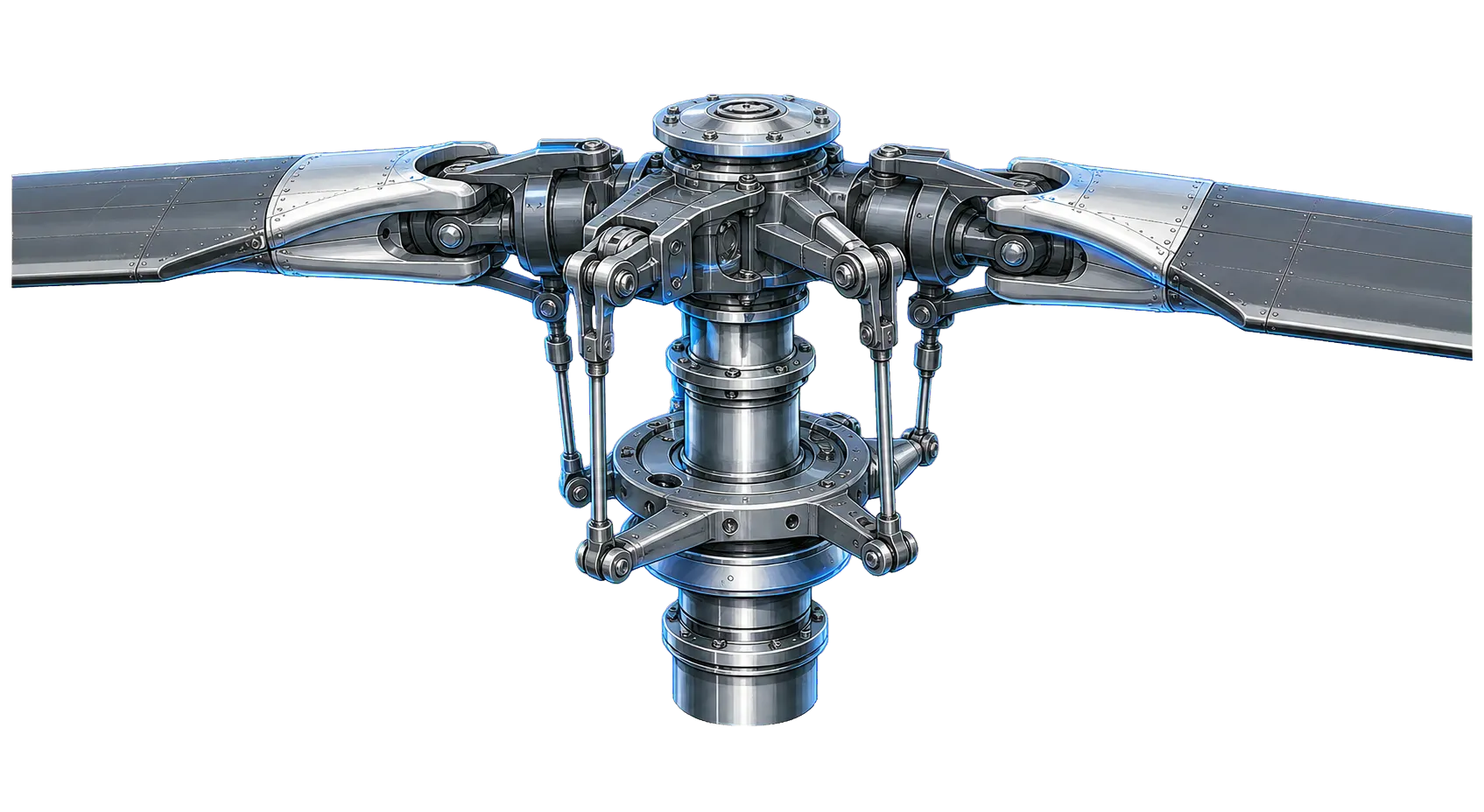
Hub Assembly
Applicability Source Text
Show captured applicability text from the source AD
AD Final Rules - DRS_98-12-30.html
Copy URL
Print/Save as PDF
Document Versions
 Feedback
Details
AD Number:
98-12-30
Document Type:
AD Final Rules
Docket Number:
98-SW-24-AD
Subject Heading:
Airworthiness Directives; McDonnell Douglas Helicopter Systems Model MD-900 Helicopters
Subject:
Hub Assembly
Status:
Current
Citation:
(Federal Register: January 19, 1999 (Volume 64, Number 11))
Citation Publish Date:
01/19/1999
Effective Date:
02/03/1999
Make:
MD Helicopters, Inc.
Model:
MD900
Product Type:
Aircraft
Product Subtype:
Rotorcraft
Affected AD:
Superseded AD:
Affected By:
Superseded By:
Service/Office:
Office of Primary Responsibility:
CFR Part Reference:
Part 39 (64 FR 2810 NO. 11 01/19/99)
Comments:
AIRWORTHINESS DIRECTIVES FINAL RULES: 98-12-30
CITATION:   [Federal Register: January 19, 1999 (Volume 64, Number 11)]

PAGE NUMBER:   [Page 2810]

DOCKET NUMBER:   98-SW-24-AD

AMENDMENT:   39-10989

AD NUMBER:   98-12-30

SUBJECT HEADING:   Airworthiness Directives; McDonnell Douglas Helicopter Systems Model MD-900 Helicopters

ACTION:   Final rule; request for comments

SUMMARY:   This document publishes in the Federal Register an amendment adopting Airworthiness Directive (AD) 98-12-30 which was sent previously to all known U.S. owners and operators of McDonnell Douglas Helicopter Systems (MDHS) Model MD-900 helicopters by individual letters. This AD requires inspecting the main rotor upper hub assembly (hub assembly) for cracks, and if a crack is found, replacing the hub assembly. The AD also requires verifying attachment nut torque values and a repetitive inspection at intervals not to exceed 150 hours time-in-service. This amendment is prompted by the discovery of cracks in 6 main rotor upper hub assemblies. This condition, if not corrected, could result in failure of the hub assembly, loss of drive to the main rotor, and subsequent loss of control of the helicopter.

DATES:   Effective February 3, 1999. To all persons except those persons to whom it was made immediately effective by priority letter AD 98-12-30, issued on June 4, 1998, which contained the requirements of this amendment. Comments for inclusion in the Rules Docket must be received on or before March 22, 1999.

ADDRESSES:   Submit comments in triplicate to the Federal Aviation Administration (FAA), Office of the Regional
Counsel, Southwest Region, Attention: Rules Docket No. 98-SW-24-AD, 2601 Meacham Blvd., Room 663, Fort Worth,
Texas 76137.

FOR FURTHER INFORMATION CONTACT:   Greg DiLibero, Aerospace Engineer, FAA, Los Angeles Aircraft
Certification Office, 3960 Paramount Blvd., Lakewood, California 90712, telephone (562) 627-5231, fax (562) 627-5210.

SUPPLEMENTARY INFORMATION:

On June 4, 1998, the FAA issued priority letter AD 98-12-30, applicable to MDHS Model MD-900 helicopters, which requires inspecting the hub assembly, part number 900R2101006-101 or -103, for cracks, and if a crack is found, replacing the hub assembly. The AD also requires verifying attachment nut torque values and a repetitive inspection at intervals not to exceed 150 hours time-in-service. That action was prompted by the discovery of cracks in 6 hub assemblies. This condition, if not corrected, could result in failure of the hub assembly, loss of drive to the main rotor, and subsequent loss of control of the helicopter.

Since the unsafe condition described is likely to exist or develop on other MDHS Model MD-900 helicopters of the same type design, the FAA issued priority letter AD 98-12-30 to prevent failure of the hub assembly, loss of drive to the main rotor, and subsequent loss of control of the helicopter. The AD requires inspecting the hub assembly, part number 900R2101006-101 or -103, for cracks, and if a crack is found, replacing the hub assembly. The AD also requires verifying attachment nut torque values and a repetitive inspection at intervals not to exceed 150 hours time-in-service. Due to the criticality of the hub assembly, the short compliance time is required. The previously described unsafe condition can adversely affect the controllability of the helicopter and this AD must be issued immediately.

Since it was found that immediate corrective action was required, notice and opportunity for prior public comment thereon were impracticable and contrary to the public interest, and good cause existed to make the AD effective immediately by individual letters issued on June 4, 1998 to all known U.S. owners and operators of MDHS Model MD-900 helicopters. These conditions still exist, and the AD is hereby published in the Federal Register as an amendment to section 39.13 of the Federal Aviation Regulations (14 CFR 39.13) to make it effective to all persons.

The FAA estimates that 26 helicopters of U.S. registry will be affected by this AD, that it will take approximately 14 work hours per helicopter to accomplish the required actions, and that the average labor rate is $60 per work hour. Required parts will cost approximately $21,610 per helicopter. Based on these figures, the total cost impact of the AD on U.S. operators is estimated to be $583,700 to accomplish the required actions and replace the hub assemblies on all the fleet, if necessary.

Comments Invited
Although this action is in the form of a final rule that involves requirements affecting flight safety and, thus, was not preceded by notice and an opportunity for public comment, comments are invited on this rule. Interested persons are invited to comment on this rule by submitting such written data, views, or arguments as they may desire. Communications should identify the Rules Docket number and be submitted in triplicate to the address specified under the caption "ADDRESSES." All communications received on or before the closing date for comments will be considered, and this rule may be amended in light of the comments received. Factual information that supports the commenter's ideas and suggestions is extremely helpful in evaluating the effectiveness of the AD action and determining whether additional rulemaking action would be needed.

Comments are specifically invited on the overall regulatory, economic, environmental, and energy aspects of the rule that might suggest a need to modify the rule. All comments submitted will be available, both before and after the closing date for comments, in the Rules Docket for examination by interested persons. A report that summarizes each FAA-public contact concerned with the substance of this AD will be filed in the Rules Docket.

Commenters wishing the FAA to acknowledge receipt of their comments submitted in response to this rule must submit a self-addressed, stamped postcard on which the following statement is made: "Comments to Docket No. 98-SW-24-AD." The postcard will be date stamped and returned to the commenter.

The regulations adopted herein will not have substantial direct effects on the States, on the relationship between the national government and the States, or on the distribution of power and responsibilities among the various levels of government. Therefore, in accordance with Executive Order 12612, it is determined that this final rule does not have sufficient federalism implications to warrant the preparation of a Federalism Assessment.

The FAA has determined that this regulation is an emergency regulation that must be issued immediately to correct an unsafe condition in aircraft, and that it is not a "significant regulatory action" under Executive Order 12866. It has been determined further that this action involves an emergency regulation under DOT Regulatory Policies and Procedures (44 FR 11034, February 26, 1979). If it is determined that this emergency regulation otherwise would be significant under DOT Regulatory Policies and Procedures, a final regulatory evaluation will be prepared and placed in the Rules Docket. A copy of it, if filed, may be obtained from the Rules Docket at the location provided under the caption "ADDRESSES."

List of Subjects in 14 CFR Part 39
Air transportation, Aircraft, Aviation safety, Safety.

Adoption of the Amendment
Accordingly, pursuant to the authority delegated to me by the Administrator, the Federal Aviation Administration amends part 39 of the Federal Aviation Regulations (14 CFR part 39) as follows:

PART 39 - AIRWORTHINESS DIRECTIVES
1. The authority citation for part 39 continues to read as follows:
Authority: 49 U.S.C. 106(g), 40113, 44701.

§ 39.13 [Amended]
2. Section 39.13 is amended by adding a new airworthiness directive to read as follows:

REGULATORY TEXT:
98-12-30 MCDONNELL DOUGLAS HELICOPTER SYSTEMS: Amendment 39-10989. Docket No. 98-SW-24-AD.

Applicability: Model MD-900 helicopters, with main rotor upper hub assembly (hub assembly), part number (P/N) 900R2101006-101 or -103, installed, certificated in any category.

NOTE 1: This AD applies to each helicopter identified in the preceding applicability provision, regardless of whether it has been modified, altered, or repaired in the area subject to the requirements of this AD. For helicopters that have been modified, altered, or repaired so that the performance of the requirements of this AD is affected, the owner/operator must use the authority provided in paragraph (f) to request approval from the FAA. This approval may address either no action, if the current configuration eliminates the unsafe condition, or different actions necessary to address the unsafe condition described in this AD. Such a request should include an assessment of the effect of the changed configuration on the unsafe condition addressed by this AD. In no case does the presence of any modification, alteration, or repair remove any helicopter from the applicability of this AD.

Compliance: Required as indicated, unless accomplished previously.

To prevent failure of the hub assembly, loss of drive to the main rotor assembly, and subsequent loss of control of the helicopter, accomplish the following:

(a) For a hub assembly that has accumulated 300 or more hours time-in-service (TIS), accomplish the inspection procedures in paragraph (b) of this AD before further flight. For a hub assembly that has accumulated less than 300 hours TIS, accomplish the inspection procedures in paragraph (b) of this AD within the next 25 hours TIS.

(b) Inspect and reassemble the hub assembly as follows:

(1) If present, remove sealant from the drive plate attachment to the main rotor assembly.

(2) Using an indelible marker, number the main rotor drive plate attachment fastener torque sequence on the drive plate (Figure 1).

(3) Remove the main rotor drive plate assembly (drive plate assembly) and fretting buffer. Discard the 10 bolts and nuts and 20 washers.

(4) Using paint stripper (C313 or equivalent) and cleaning solvent (C420 or equivalent), remove the paint from the upper mating surface of the hub assembly to enable an accurate visual inspection of the drive plate attachment bolt hole (bolt hole) area for cracking (Figure 1). Ensure the paint stripper and solvent DO NOT contaminate the upper bearing and upper grease seal areas.

(5) Using a 10-power or higher magnifying glass, inspect the area around the 10 bolt holes of the hub assembly for cracks. If a crack is found, replace the hub assembly with an airworthy hub assembly.

(6) Remove any fretting from the mating surfaces of the hub assembly and the drive plate assembly.

NOTE 2: Boeing McDonnell Douglas Helicopter Systems Service Letter SL900-039, dated May 20, 1998, pertains to the subject of this AD.

(7) Reinstall the main rotor drive plate using 10 new sets of replacement attachment hardware. Torque the nuts to 160-180 in.-lbs. above locknut locking/run-on torque in the sequence shown (Figure 1). Record in the rotorcraft log book the locknut locking/run-on torque for each nut.

(c) After the next flight, verify that the torque on each of the 10 nuts is at least 160 in.-lbs. above the locknut locking/run-on torque (minimum torque). Re-torque as required without loosening nuts. Fillet surface seal main rotor drive plate to fretting buffer to hub assembly mating lines, and seal all exposed unpainted upper surfaces of the hub assembly.

(d) Thereafter, at intervals of at least 4 hours TIS, not to exceed 6 hours TIS, verify that the torque of each of the 10 nuts is at least the minimum torque. Re-torque as required without loosening nuts. This torque verification is no longer required after the torque on each of the 10 nuts has stabilized at the minimum torque for each nut during two successive torque verifications.

(e) Repeat the requirements specified in this AD at intervals not to exceed 150 hours TIS.

NOTE 3: Rotorcraft Maintenance Manual, CSP-900RMM-2, Section 62-20-00 and 63-10-00, pertain to the subject of this AD.

(f) An alternative method of compliance or adjustment of the compliance time that provides an acceptable level of safety may be used if approved by the Manager, Los Angeles Aircraft Certification Office, FAA. Operators shall submit their requests through an FAA Principal Maintenance Inspector, who may concur or comment and then send it to the Manager, Los Angeles Aircraft Certification Office.

NOTE 4: Information concerning the existence of approved alternative methods of compliance with this AD, if any, may be obtained from the Los Angeles Aircraft Certification Office.

(g) Special flight permits may be issued in accordance with sections 21.197 and 21.199 of the Federal Aviation Regulations (14 CFR 21.197 and 21.199) to operate the helicopter to a location where the requirements of this AD can be accomplished.

(h) This amendment becomes effective on February 3, 1999, to all persons except those persons to whom it was made immediately effective by priority letter AD 98-12-30, issued June 4, 1998, which contained the requirements of this amendment.


FOOTER:
Document Text
Show stored source text (verify against official source)
AD Final Rules - DRS_98-12-30.html
Copy URL
Print/Save as PDF
Document Versions
 Feedback
Details
AD Number:
98-12-30
Document Type:
AD Final Rules
Docket Number:
98-SW-24-AD
Subject Heading:
Airworthiness Directives; McDonnell Douglas Helicopter Systems Model MD-900 Helicopters
Subject:
Hub Assembly
Status:
Current
Citation:
(Federal Register: January 19, 1999 (Volume 64, Number 11))
Citation Publish Date:
01/19/1999
Effective Date:
02/03/1999
Make:
MD Helicopters, Inc.
Model:
MD900
Product Type:
Aircraft
Product Subtype:
Rotorcraft
Affected AD:
Superseded AD:
Affected By:
Superseded By:
Service/Office:
Office of Primary Responsibility:
CFR Part Reference:
Part 39 (64 FR 2810 NO. 11 01/19/99)
Comments:
AIRWORTHINESS DIRECTIVES FINAL RULES: 98-12-30
CITATION:   [Federal Register: January 19, 1999 (Volume 64, Number 11)]

PAGE NUMBER:   [Page 2810]

DOCKET NUMBER:   98-SW-24-AD

AMENDMENT:   39-10989

AD NUMBER:   98-12-30

SUBJECT HEADING:   Airworthiness Directives; McDonnell Douglas Helicopter Systems Model MD-900 Helicopters

ACTION:   Final rule; request for comments

SUMMARY:   This document publishes in the Federal Register an amendment adopting Airworthiness Directive (AD) 98-12-30 which was sent previously to all known U.S. owners and operators of McDonnell Douglas Helicopter Systems (MDHS) Model MD-900 helicopters by individual letters. This AD requires inspecting the main rotor upper hub assembly (hub assembly) for cracks, and if a crack is found, replacing the hub assembly. The AD also requires verifying attachment nut torque values and a repetitive inspection at intervals not to exceed 150 hours time-in-service. This amendment is prompted by the discovery of cracks in 6 main rotor upper hub assemblies. This condition, if not corrected, could result in failure of the hub assembly, loss of drive to the main rotor, and subsequent loss of control of the helicopter.

DATES:   Effective February 3, 1999. To all persons except those persons to whom it was made immediately effective by priority letter AD 98-12-30, issued on June 4, 1998, which contained the requirements of this amendment. Comments for inclusion in the Rules Docket must be received on or before March 22, 1999.

ADDRESSES:   Submit comments in triplicate to the Federal Aviation Administration (FAA), Office of the Regional
Counsel, Southwest Region, Attention: Rules Docket No. 98-SW-24-AD, 2601 Meacham Blvd., Room 663, Fort Worth,
Texas 76137.

FOR FURTHER INFORMATION CONTACT:   Greg DiLibero, Aerospace Engineer, FAA, Los Angeles Aircraft
Certification Office, 3960 Paramount Blvd., Lakewood, California 90712, telephone (562) 627-5231, fax (562) 627-5210.

SUPPLEMENTARY INFORMATION:

On June 4, 1998, the FAA issued priority letter AD 98-12-30, applicable to MDHS Model MD-900 helicopters, which requires inspecting the hub assembly, part number 900R2101006-101 or -103, for cracks, and if a crack is found, replacing the hub assembly. The AD also requires verifying attachment nut torque values and a repetitive inspection at intervals not to exceed 150 hours time-in-service. That action was prompted by the discovery of cracks in 6 hub assemblies. This condition, if not corrected, could result in failure of the hub assembly, loss of drive to the main rotor, and subsequent loss of control of the helicopter.

Since the unsafe condition described is likely to exist or develop on other MDHS Model MD-900 helicopters of the same type design, the FAA issued priority letter AD 98-12-30 to prevent failure of the hub assembly, loss of drive to the main rotor, and subsequent loss of control of the helicopter. The AD requires inspecting the hub assembly, part number 900R2101006-101 or -103, for cracks, and if a crack is found, replacing the hub assembly. The AD also requires verifying attachment nut torque values and a repetitive inspection at intervals not to exceed 150 hours time-in-service. Due to the criticality of the hub assembly, the short compliance time is required. The previously described unsafe condition can adversely affect the controllability of the helicopter and this AD must be issued immediately.

Since it was found that immediate corrective action was required, notice and opportunity for prior public comment thereon were impracticable and contrary to the public interest, and good cause existed to make the AD effective immediately by individual letters issued on June 4, 1998 to all known U.S. owners and operators of MDHS Model MD-900 helicopters. These conditions still exist, and the AD is hereby published in the Federal Register as an amendment to section 39.13 of the Federal Aviation Regulations (14 CFR 39.13) to make it effective to all persons.

The FAA estimates that 26 helicopters of U.S. registry will be affected by this AD, that it will take approximately 14 work hours per helicopter to accomplish the required actions, and that the average labor rate is $60 per work hour. Required parts will cost approximately $21,610 per helicopter. Based on these figures, the total cost impact of the AD on U.S. operators is estimated to be $583,700 to accomplish the required actions and replace the hub assemblies on all the fleet, if necessary.

Comments Invited
Although this action is in the form of a final rule that involves requirements affecting flight safety and, thus, was not preceded by notice and an opportunity for public comment, comments are invited on this rule. Interested persons are invited to comment on this rule by submitting such written data, views, or arguments as they may desire. Communications should identify the Rules Docket number and be submitted in triplicate to the address specified under the caption "ADDRESSES." All communications received on or before the closing date for comments will be considered, and this rule may be amended in light of the comments received. Factual information that supports the commenter's ideas and suggestions is extremely helpful in evaluating the effectiveness of the AD action and determining whether additional rulemaking action would be needed.

Comments are specifically invited on the overall regulatory, economic, environmental, and energy aspects of the rule that might suggest a need to modify the rule. All comments submitted will be available, both before and after the closing date for comments, in the Rules Docket for examination by interested persons. A report that summarizes each FAA-public contact concerned with the substance of this AD will be filed in the Rules Docket.

Commenters wishing the FAA to acknowledge receipt of their comments submitted in response to this rule must submit a self-addressed, stamped postcard on which the following statement is made: "Comments to Docket No. 98-SW-24-AD." The postcard will be date stamped and returned to the commenter.

The regulations adopted herein will not have substantial direct effects on the States, on the relationship between the national government and the States, or on the distribution of power and responsibilities among the various levels of government. Therefore, in accordance with Executive Order 12612, it is determined that this final rule does not have sufficient federalism implications to warrant the preparation of a Federalism Assessment.

The FAA has determined that this regulation is an emergency regulation that must be issued immediately to correct an unsafe condition in aircraft, and that it is not a "significant regulatory action" under Executive Order 12866. It has been determined further that this action involves an emergency regulation under DOT Regulatory Policies and Procedures (44 FR 11034, February 26, 1979). If it is determined that this emergency regulation otherwise would be significant under DOT Regulatory Policies and Procedures, a final regulatory evaluation will be prepared and placed in the Rules Docket. A copy of it, if filed, may be obtained from the Rules Docket at the location provided under the caption "ADDRESSES."

List of Subjects in 14 CFR Part 39
Air transportation, Aircraft, Aviation safety, Safety.

Adoption of the Amendment
Accordingly, pursuant to the authority delegated to me by the Administrator, the Federal Aviation Administration amends part 39 of the Federal Aviation Regulations (14 CFR part 39) as follows:

PART 39 - AIRWORTHINESS DIRECTIVES
1. The authority citation for part 39 continues to read as follows:
Authority: 49 U.S.C. 106(g), 40113, 44701.

§ 39.13 [Amended]
2. Section 39.13 is amended by adding a new airworthiness directive to read as follows:

REGULATORY TEXT:
98-12-30 MCDONNELL DOUGLAS HELICOPTER SYSTEMS: Amendment 39-10989. Docket No. 98-SW-24-AD.

Applicability: Model MD-900 helicopters, with main rotor upper hub assembly (hub assembly), part number (P/N) 900R2101006-101 or -103, installed, certificated in any category.

NOTE 1: This AD applies to each helicopter identified in the preceding applicability provision, regardless of whether it has been modified, altered, or repaired in the area subject to the requirements of this AD. For helicopters that have been modified, altered, or repaired so that the performance of the requirements of this AD is affected, the owner/operator must use the authority provided in paragraph (f) to request approval from the FAA. This approval may address either no action, if the current configuration eliminates the unsafe condition, or different actions necessary to address the unsafe condition described in this AD. Such a request should include an assessment of the effect of the changed configuration on the unsafe condition addressed by this AD. In no case does the presence of any modification, alteration, or repair remove any helicopter from the applicability of this AD.

Compliance: Required as indicated, unless accomplished previously.

To prevent failure of the hub assembly, loss of drive to the main rotor assembly, and subsequent loss of control of the helicopter, accomplish the following:

(a) For a hub assembly that has accumulated 300 or more hours time-in-service (TIS), accomplish the inspection procedures in paragraph (b) of this AD before further flight. For a hub assembly that has accumulated less than 300 hours TIS, accomplish the inspection procedures in paragraph (b) of this AD within the next 25 hours TIS.

(b) Inspect and reassemble the hub assembly as follows:

(1) If present, remove sealant from the drive plate attachment to the main rotor assembly.

(2) Using an indelible marker, number the main rotor drive plate attachment fastener torque sequence on the drive plate (Figure 1).

(3) Remove the main rotor drive plate assembly (drive plate assembly) and fretting buffer. Discard the 10 bolts and nuts and 20 washers.

(4) Using paint stripper (C313 or equivalent) and cleaning solvent (C420 or equivalent), remove the paint from the upper mating surface of the hub assembly to enable an accurate visual inspection of the drive plate attachment bolt hole (bolt hole) area for cracking (Figure 1). Ensure the paint stripper and solvent DO NOT contaminate the upper bearing and upper grease seal areas.

(5) Using a 10-power or higher magnifying glass, inspect the area around the 10 bolt holes of the hub assembly for cracks. If a crack is found, replace the hub assembly with an airworthy hub assembly.

(6) Remove any fretting from the mating surfaces of the hub assembly and the drive plate assembly.

NOTE 2: Boeing McDonnell Douglas Helicopter Systems Service Letter SL900-039, dated May 20, 1998, pertains to the subject of this AD.

(7) Reinstall the main rotor drive plate using 10 new sets of replacement attachment hardware. Torque the nuts to 160-180 in.-lbs. above locknut locking/run-on torque in the sequence shown (Figure 1). Record in the rotorcraft log book the locknut locking/run-on torque for each nut.

(c) After the next flight, verify that the torque on each of the 10 nuts is at least 160 in.-lbs. above the locknut locking/run-on torque (minimum torque). Re-torque as required without loosening nuts. Fillet surface seal main rotor drive plate to fretting buffer to hub assembly mating lines, and seal all exposed unpainted upper surfaces of the hub assembly.

(d) Thereafter, at intervals of at least 4 hours TIS, not to exceed 6 hours TIS, verify that the torque of each of the 10 nuts is at least the minimum torque. Re-torque as required without loosening nuts. This torque verification is no longer required after the torque on each of the 10 nuts has stabilized at the minimum torque for each nut during two successive torque verifications.

(e) Repeat the requirements specified in this AD at intervals not to exceed 150 hours TIS.

NOTE 3: Rotorcraft Maintenance Manual, CSP-900RMM-2, Section 62-20-00 and 63-10-00, pertain to the subject of this AD.

(f) An alternative method of compliance or adjustment of the compliance time that provides an acceptable level of safety may be used if approved by the Manager, Los Angeles Aircraft Certification Office, FAA. Operators shall submit their requests through an FAA Principal Maintenance Inspector, who may concur or comment and then send it to the Manager, Los Angeles Aircraft Certification Office.

NOTE 4: Information concerning the existence of approved alternative methods of compliance with this AD, if any, may be obtained from the Los Angeles Aircraft Certification Office.

(g) Special flight permits may be issued in accordance with sections 21.197 and 21.199 of the Federal Aviation Regulations (14 CFR 21.197 and 21.199) to operate the helicopter to a location where the requirements of this AD can be accomplished.

(h) This amendment becomes effective on February 3, 1999, to all persons except those persons to whom it was made immediately effective by priority letter AD 98-12-30, issued June 4, 1998, which contained the requirements of this amendment.


FOOTER:
Source: Official FAA Source ↗
Retrieved: Apr 8, 2026
Rights: U.S. Government Public Domain
This site is not affiliated with or endorsed by the FAA. Always verify with official sources.
Related Airworthiness Directives
2017-17-03 Recurring
final ruleAirworthiness Directives; Airbus SAS Airplanes
Unsafe Condition: cracking of the pocket radius, which could lead to in-flight decompression of the airplane and possible injury to the passengers.
2013-20-16 Recurring
final ruleAirworthiness Directives; MD Helicopters, Inc. (MDHI) Helicopters
Unsafe Condition: Bolt failure, which could result in loss of main rotor blade structural integrity and subsequent loss of control of the helicopter.
2013-06-51
final ruleAirworthiness Directives; Various Helicopter Models
Unsafe Condition: Failure of the overload clutch in Goodrich externally-mounted hoists, resulting in uncontrolled reeling-out of the cable and loss of load capacity.
2013-03-03
final ruleAirworthiness Directives; MD Helicopters, Inc., Helicopters
Unsafe Condition: A decrease, over time, in the strength of a T-T strap caused by moisture, which could result in failure of a T-T strap, loss of directional control, and subsequent loss of control of the helicopter.