AD 97-26-01
Applicability
| Type | Manufacturer | Model | Details |
|---|---|---|---|
| aircraft | The Boeing Company | 737-100 Series | Airworthiness Directives; Boeing Model 737-100, -200, -300, -400, and -500 Series Airplanes |
| aircraft | The Boeing Company | 737-200 Series | Airworthiness Directives; Boeing Model 737-100, -200, -300, -400, and -500 Series Airplanes |
| aircraft | The Boeing Company | 737-300 Series | Airworthiness Directives; Boeing Model 737-100, -200, -300, -400, and -500 Series Airplanes |
| aircraft | The Boeing Company | 737-400 Series | Airworthiness Directives; Boeing Model 737-100, -200, -300, -400, and -500 Series Airplanes |
| aircraft | The Boeing Company | 737-500 Series | Airworthiness Directives; Boeing Model 737-100, -200, -300, -400, and -500 Series Airplanes |
Unsafe Condition
Galling on the input shaft and bearing of the standby rudder power control unit (PCU) could result in uncommanded movement of the rudder or increased pedal forces, leading to reduced controllability of the airplane.
AI-generated summary from the source AD text. Verify against the official source before acting.
Required Actions
Within 18 months or 4,500 hours time-in-service after the effective date, and every 18 months or 4,500 hours thereafter, inspect the standby rudder PCU input shaft and bearing for galling via force tests. Replace the actuator if forces exceed one pound. Within 3 years after the effective date, replace the input bearing with an improved bearing per Dowty Aerospace Service Bulletin 1150-27-04.
AI-generated summary from the source AD text. Verify against the official source before acting.
Compliance Time
Within 18 months or 4,500 hours time-in-service after the effective date of this AD, whichever occurs later; and thereafter at intervals not to exceed 18 months or 4,500 hours time-in-service, whichever occurs later. The input bearing replacement must be done within 3 years after the effective date.
AI-generated summary from the source AD text. Verify against the official source before acting.
Affected Aircraft
Boeing Model 737-100, -200, -300, -400, and -500 series airplanes, line numbers 1 through 2814 inclusive.
AI-generated summary from the source AD text. Verify against the official source before acting.
Federal Register Abstract
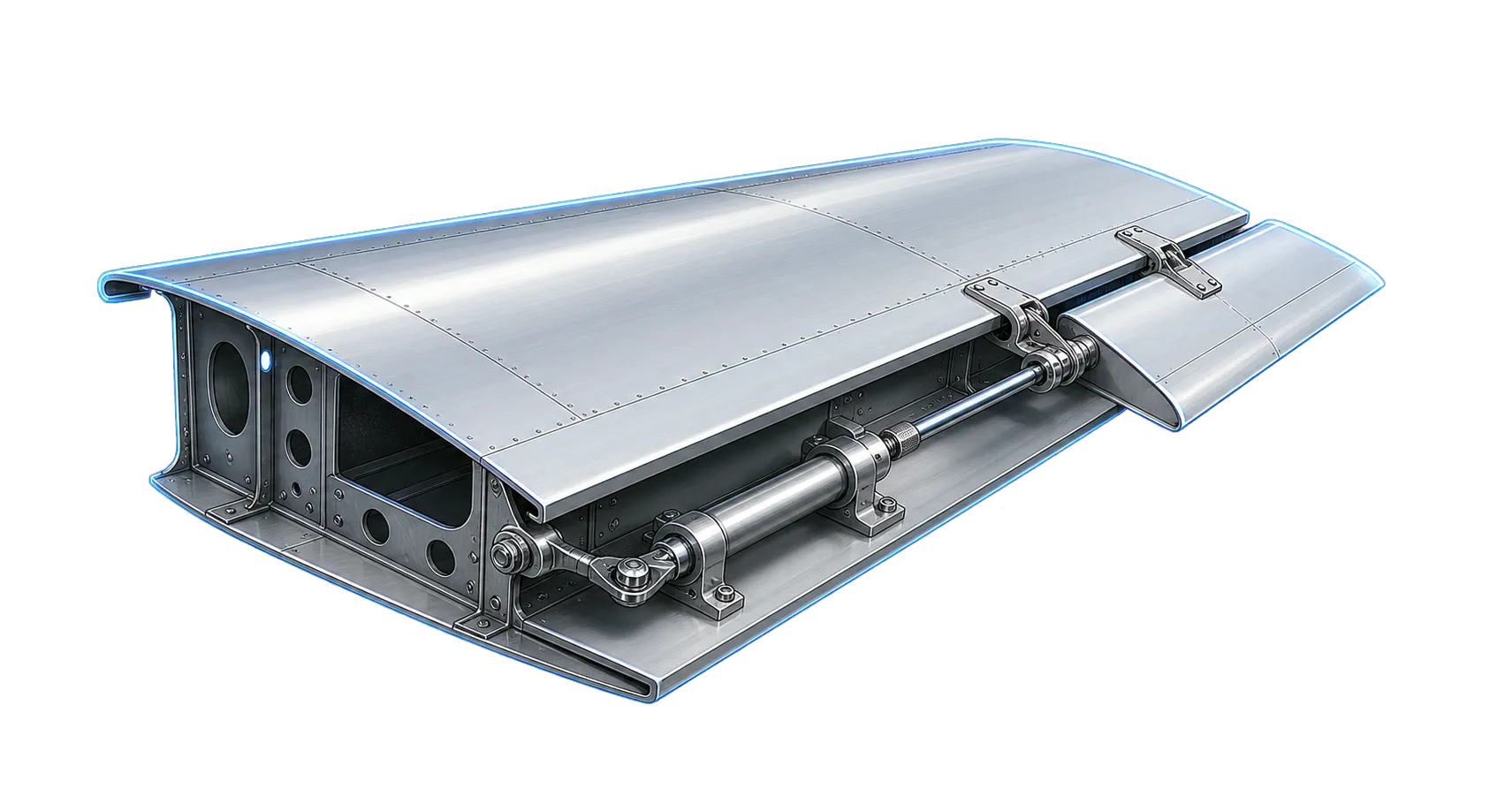
Rudder Actuator
Applicability Source Text
Show captured applicability text from the source AD
AD Final Rules - DRS_97-26-01.html
Copy URL
Print/Save as PDF
Document Versions
 Feedback
Details
AD Number:
97-26-01
Document Type:
AD Final Rules
Docket Number:
96-NM-147-AD
Subject Heading:
Airworthiness Directives; Boeing Model 737-100, -200, -300, -400, and -500 Series Airplanes
Subject:
Rudder Actuator
Status:
Current
Citation:
(Federal Register: December 15, 1997 (Volume 62, Number 240))
Citation Publish Date:
12/15/1997
Effective Date:
01/20/1998
Make:
The Boeing Company
Model:
737-100 Series | 737-200 Series | 737-300 Series | 737-400 Series | 737-500 Series
Product Type:
Aircraft
Product Subtype:
Large Airplane
Affected AD:
Superseded AD:
Affected By:
Superseded By:
Service/Office:
Office of Primary Responsibility:
CFR Part Reference:
Part 39 (62 FR 65597 NO. 240 12/15/97)
Comments:
Updated RGL applicability to match AD applicability; CAR C-11-185
AIRWORTHINESS DIRECTIVES FINAL RULES: 97-26-01
CITATION:   [Federal Register: December 15, 1997 (Volume 62, Number 240)]

PAGE NUMBER:   [Page 65597]

DOCKET NUMBER:   96-NM-147-AD

AMENDMENT:   39-10244

AD NUMBER:   97-26-01

SUBJECT HEADING:   Airworthiness Directives; Boeing Model 737-100, -200, -300, -400, and -500 Series Airplanes

ACTION:   Final rule

SUMMARY:
This amendment adopts a new airworthiness directive (AD), applicable to certain Boeing Model 737-100, -200, -300, -400, and -500 series airplanes, that requires repetitive inspections to detect galling on the input shaft and bearing of the standby rudder power control unit (PCU), and replacement of the standby rudder actuator with a serviceable actuator, if necessary. This amendment also requires eventual replacement of the input bearing of the standby PCU with an improved bearing, which constitutes terminating action for the inspections to detect galling. This amendment is prompted by a review of the design of the flight control systems on Model 737 series airplanes. The actions specified by this AD are intended to prevent galling on the input shaft and bearing of the standby PCU, which could result in uncommanded movement of the rudder or increased pedal forces. These conditions, if not corrected, could result in reduced controllability of the airplane.

DATES:   Effective January 20, 1998. The incorporation by reference of certain publications listed in the regulations is approved by the Director of the Federal Register as of January 20, 1998.

ADDRESSES:
The service information referenced in this AD may be obtained from Dowty
Aerospace Los Angeles, 1700 Business Center Drive, Duarte, California 91010-2859. This
information may be examined at the Federal Aviation Administration (FAA), Transport Airplane
Directorate, Rules Docket, 1601 Lind Avenue, SW., Renton, Washington; or at the Office of the
Federal Register, 800 North Capitol Street, NW., suite 700, Washington, DC.

FOR FURTHER INFORMATION CONTACT:
Kenneth W. Frey, Aerospace Engineer, Systems and Equipment Branch, ANM-130S, FAA, Transport Airplane Directorate, Seattle Aircraft Certification Office, 1601 Lind Avenue, SW., Renton, Washington 98055-4056; telephone (425) 227-2673; fax (425) 227-1181.

SUPPLEMENTARY INFORMATION:
A proposal to amend part 39 of the Federal Aviation Regulations (14 CFR part 39) to include an airworthiness directive (AD) that is applicable to all Boeing Model 737-100, -200, -300, -400, and -500 series airplanes was published in the Federal Register on August 28, 1996 (61 FR 44234). That action proposed to require operational tests of the standby rudder power control unit (PCU) to ensure correct operation of the rudder, and correction of any discrepancy found; and repetitive inspections to detect galling on the input shaft and bearing of the standby PCU, and replacement of the standby rudder actuator with a serviceable actuator, if necessary. That action also proposed to require eventual replacement of the input bearing of the standby PCU with an improved bearing, which would constitute terminating action for the inspections to detect galling.

Actions Since the Issuance of the Proposal

Since the issuance of the proposal, the FAA has reviewed and approved Dowty Aerospace Los Angeles Service Bulletin 1150-27-04, dated December 5, 1996, which describes procedures to replace the input shaft assembly and related hardware with a new, improved input shaft. The new input shaft uses radial bearings, which will prevent galling on the input shaft and bearing. Paragraph (b) of this final rule has been revised to reference the Dowty Aerospace service bulletin as an appropriate source of service information for accomplishment of the replacement.

In addition, since the issuance of the proposal, the manufacturer has advised the FAA that the replacement of the input bearing of the standby PCU with an improved bearing has been incorporated on airplanes having line numbers 2815 and subsequent. Therefore, the FAA has revised the applicability of this final rule to include only airplanes having line numbers 1 through 2814 inclusive.

Interested persons have been afforded an opportunity to participate in the making of this amendment. Due consideration has been given to the comments received.

Request to Revise Statement of Findings of Critical Design Review Team

One commenter requests the second paragraph of the Discussion section that appeared in the preamble to the proposed rule be revised to accurately reflect the findings of the Critical Design Review (CDR) team. The commenter asks that the FAA delete the one sentence in that paragraph that reads: "The recommendations of the team include various changes to the design of the flight control systems of these airplanes, as well as correction of certain design deficiencies." The commenter suggests that the following sentences should be added: "The team did not find any design issues that could lead to a definite cause of the accidents that gave rise to this effort. The recommendations of the team include various changes to the design of the flight control systems of these airplanes, as well as incorporation of certain design improvements in order to enhance its already acceptable level of safety."

The FAA does not find that a revision to this final rule in the manner suggested by the commenter is necessary, since the Discussion section of a proposed rule does not reappear in a final rule. The FAA acknowledges that the CDR team did not find any design issue that could lead to a definite cause of the accidents that gave rise to this effort. However, as a result of having conducted the CDR of the flight control systems on Boeing Model 737 series airplanes, the team indicated that there are a number of recommendations that should be addressed by the FAA for each of the various models of the Model 737. In reviewing these recommendations, the FAA has concluded that they address unsafe conditions that must be corrected through the issuance of AD's. Therefore, the FAA does not concur that these design changes merely "enhance [the Model 737's] already acceptable level of safety."

Request to Delete Operational Test Requirement

Several commenters request that the requirement to perform the operational tests to cycle hydraulic fluid through the standby rudder PCU and to ensure correct operation of the rudder when the standby hydraulic system is powered) be deleted from the proposal. These commenters point out that the Boeing Service Letter referenced in paragraph (a) of the proposal does not provide a description of procedures to perform the operational tests and does not include instructions to correct any discrepancies found. Another commenter requests that paragraph (a) be deleted from the proposal because it is not a technically sound approach to eliminating galling. This commenter states that the only way to prevent galling is to upgrade the input bearing of the standby hydraulic system.

The FAA concurs that replacement of the input bearing of the standby hydraulic system with a new, improved (upgraded) input bearing is a technically sound approach to eliminate galling. The requirement to replace the input bearing with a new, improved input bearing within 3 years, as specified in the proposed AD, supports that approach. Accordingly, this final rule has been revised to delete the proposed requirement for operational tests. The FAA finds that, until the replacement of the input bearing is required, repetitive inspections to detect galling of the input shaft and bearing, and replacement with a serviceable standby rudder actuator, if necessary (as specified in the proposed AD), will positively address the unsafe condition.

Request to Extend the Compliance Time for Operational Tests

Several commenters request that the compliance time be extended for the operational tests discussed previously. The commenters request that the compliance time for the repetitive operational tests be extended from the proposed "at intervals not to exceed 250 hours time-in- service" to "at intervals not to exceed 800 hours time-in-service." The commenters state that the recent FAA MSG-3 analysis on the hydraulic fluid compound revealed that the appropriate interval for the operational test is every 800 hours time-in-service.

As explained previously, the FAA has removed the requirement for operational tests from the final rule; however, this final rule is considered to be interim action. The FAA may consider further rulemaking to require operational tests of the standby system and correction of any discrepancies. The FAA will consider the results of the previously discussed MSG-3 analysis in determining an appropriate compliance time for future proposed operational tests.

Request to Extend the Compliance Times for Inspections for Galling

Several commenters request that the compliance time for the initial and repetitive inspections for galling be extended from 3,000 hours time-in-service to "18 months or 4,500 hours time-in- service" for the proposed inspections to detect galling on the input shaft and bearing of the standby rudder PCU. The commenters state that 18 months or 4,500 hours time-in-service closely corresponds to a "C" check, which allows operators to schedule maintenance at a heavy maintenance base without impacting safety. One commenter suggests that the initial inspection and repetitive interval inspections should be extended to 46,000 flight hours. (The FAA infers that the "46,000" flight hours is a typographical error and that the commenter actually requests an extension to 4,600 flight hours.)

The FAA concurs with the commenters' request to revise the compliance time to 18 months or 4,500 hours time-in-service (whichever occurs later) since the last inspection. The FAA finds that this extension of the compliance time will not adversely affect safety, and will more closely correspond to the operators' scheduled "C" checks. The FAA has revised paragraph (a) of this final rule accordingly.

Requests to Revise the Compliance Time for Replacement of the Input Bearing

One commenter (the airplane manufacturer) requests that the proposed compliance time for replacement of the input bearing be changed from 3 to 4 years after the effective date of the AD. The commenter states that the inspection should be accomplished at least once in 4 years, and the inspection should detect any units that are galled. Another commenter requests that the replacement be required by August 1, 1997. This commenter states that the National Transportation Safety Board (NTSB) suggests that date in a recommendation to the FAA.

The FAA does not concur that the compliance time should be revised. In developing an appropriate compliance time for this action, the FAA considered not only the degree of urgency associated with addressing the subject unsafe condition, but the availability of required parts and the practical aspect of accomplishing the required replacement within an interval of time that parallels normal scheduled maintenance for the majority of affected operators. The manufacturer has advised that an ample number of required parts will be available for modification of the U.S. fleet within the compliance period. However, under the provisions of this final rule, the FAA may approve requests for adjustments to the compliance time if data are submitted to substantiate that such adjustments would provide an acceptable level of safety.

Request to Delete (or Make Optional) the Replacement Requirement

Several commenters request that the proposed replacement requirement be deleted to provide more time to review the retrofit program. One commenter suggests that the requirement should be optional, as long as the inspection to detect galling on the PCU input shaft is carried out repetitively every 46,000 flight hours. The commenter does not provide a justification for the recommended 46,000 flight hours. (The FAA infers that the "46,000" flight hours is a typographical error and that the commenter actually requests a compliance time of 4,600 flight hours.)

The FAA does not concur with the commenters' requests. Although the repetitive inspections required by this final rule may detect galled units before the galling progresses to a level that would affect the flight control system, the inspections do not ensure that galling will not occur. The replacement of the input bearing with a new, improved bearing, as described in the Dowty Aerospace service bulletin discussed previously, will positively address the subject unsafe condition and provide an acceptable level of safety.

The FAA has determined that long term continued operational safety will be better assured by modifications or design changes to remove the source of the problem, rather than by repetitive inspections. Long term inspections may not be providing the degree of safety assurance necessary for the transport airplane fleet. This, coupled with a better understanding of the human factors associated with numerous repetitive inspections, has led the FAA to consider placing less emphasis on special procedures and more emphasis on design improvements. The replacement requirement is in consonance with these considerations.

Request to Revise the Cost Estimate

One commenter, the airplane manufacturer, requests that the cost estimate for the proposed inspections be revised from $60 to $120 per airplane, per inspection cycle. The FAA acknowledges that the correct cost estimate is $120 per airplane, per inspection cycle, and has revised the cost impact information, below, accordingly.

Conclusion

After careful review of the available data, including the comments noted above, the FAA has determined that air safety and the public interest require the adoption of the rule with the changes previously described. The FAA has determined that these changes will neither significantly increase the economic burden on any operator nor increase the scope of the AD.

Cost Impact

There are approximately 2,830 Model 737 series airplanes of the affected design in the worldwide fleet. The FAA estimates that 1,037 airplanes of U.S. registry would be affected by this proposed AD.
The FAA estimates that it will take approximately 2 work hours per airplane to accomplish the required inspections, at an average labor rate of $60 per work hour. Based on these figures, the cost impact of the required inspections on U.S. operators is estimated to be $124,440, or $120 per airplane, per inspection cycle.

The FAA estimates that it will take approximately 2 work hours per airplane to accomplish the required replacement, at an average labor rate of $60 per work hour. The cost of the replacement parts is estimated to be $793 per airplane. Based on these figures, the cost impact of the required replacement is estimated to be $946,781, or $913 per airplane.

The cost impact figures discussed above are based on assumptions that no operator has yet accomplished any of the proposed requirements of this AD action, and that no operator would accomplish those actions in the future if this AD were not adopted.

Regulatory Impact

The regulations adopted herein will not have substantial direct effects on the States, on the relationship between the national government and the States, or on the distribution of power and responsibilities among the various levels of government. Therefore, in accordance with Executive Order 12612, it is determined that this final rule does not have sufficient federalism implications to warrant the preparation of a Federalism Assessment.

For the reasons discussed above, I certify that this action (1) is not a "significant regulatory action" under Executive Order 12866; (2) is not a "significant rule" under DOT Regulatory Policies and Procedures (44 FR 11034, February 26, 1979); and (3) will not have a significant economic impact, positive or negative, on a substantial number of small entities under the criteria of the Regulatory Flexibility Act. A final evaluation has been prepared for this action and it is contained in the Rules Docket. A copy of it may be obtained from the Rules Docket at the location provided under the caption "ADDRESSES."

List of Subjects in 14 CFR Part 39

Air transportation, Aircraft, Aviation safety, Incorporation by reference, Safety.
Adoption of the Amendment

Accordingly, pursuant to the authority delegated to me by the Administrator, the Federal Aviation Administration amends part 39 of the Federal Aviation Regulations (14 CFR part 39) as follows:

PART 39 - AIRWORTHINESS DIRECTIVES

1. The authority citation for part 39 continues to read as follows: Authority: 49 U.S.C. 106(g), 40113, 44701. § 39.13 [Amended]
2. Section 39.13 is amended by adding the following new airworthiness directive:

REGULATORY TEXT:
97-26-01 BOEING: Amendment 39-10244. Docket 97-NM-147-AD.

Applicability: Model 737-100, -200, -300, -400, and -500 series airplanes, having line numbers 1 through 2814 inclusive; certificated in any category.

NOTE 1: This AD applies to each airplane identified in the preceding applicability provision, regardless of whether it has been otherwise modified, altered, or repaired in the area subject to the requirements of this AD. For airplanes that have been modified, altered, or repaired so that the performance of the requirements of this AD is affected, the owner/operator must request approval for an alternative method of compliance in accordance with paragraph (c) of this AD. The request should include an assessment of the effect of the modification, alteration, or repair on the unsafe condition addressed by this AD; and, if the unsafe condition has not been eliminated, the request should include specific proposed actions to address it.

Compliance: Required as indicated, unless accomplished previously.

To prevent uncommanded movement of the rudder or increased rudder pedal forces, and consequent reduced controllability of the airplane, accomplish the following:

(a) Within 18 months or 4,500 hours time-in-service after the effective date of this AD, whichever occurs later; and thereafter at intervals not to exceed 18 months or 4,500 hours time-in- service, whichever occurs later: Perform an inspection to detect galling on the input shaft and bearing of the standby rudder PCU by accomplishing paragraphs (a)(1) through (a)(10) of this AD.

(1) Shut off all hydraulic power.
(2) Gain access to the standby rudder actuator.
(3) Disconnect the input rod from the standby actuator.
(4) Using a push/pull spring scale (minimum +/- 10% accuracy at 1.0
pound; preferably one having a peak load memory function), push on the standby rudder actuator input lever with sufficient force to move the lever from the neutral position up to, but not touching, the aft stop. The scale must be contacting the input lever at approximately the clevis bolt centerline. While applying the load required to move the lever, the scale must be maintained at an angle perpendicular to the lever arm (not to exceed 20 degrees from perpendicular). The force required to move the input lever throughout this range of motion must not exceed one pound.
(5) Repeat the test specified in paragraph (a)(4) of this AD, moving the lever arm from the aft stop position up to the forward stop, but not touching. The force required to move the input lever throughout this range of motion must not exceed one pound.
(6) Repeat the test specified in paragraph (a)(4) of this AD, moving the lever arm from the forward stop position back to the neutral position. The force required to move the input lever throughout this range of motion must not exceed one pound.
(7) If the actuator force encountered during any of the procedures required by paragraph (a)(4), (a)(5), or (a)(6) of this AD exceeds one pound, prior to further flight, replace the standby rudder actuator with a serviceable actuator, and test the standby rudder actuator in accordance with the procedure specified in paragraph (a)(9) of this AD.
(8) If the actuator force encountered during any of the procedures required by paragraph (a)(4), (a)(5), or (a)(6) of this AD is one pound or less, prior to further flight, reconnect the input rod to the standby rudder actuator, and test the standby rudder actuator in accordance with the procedure specified in paragraph (a)(9) of this AD.
(9) Perform a functional test of the standby rudder actuator in accordance with Maintenance Manual 737-100/-200, Chapter 27-21-141, removal/installation (for Model 737-100 and -200 series airplanes); or maintenance Manual 737-300/-400/-500, Chapter 27-21-24, removal/installation (for Model 737-300, -400, and -500 series airplanes).
(10) Restore the airplane to its normal condition.

(b) Within 3 years after the effective date of this AD, replace the input bearing of the standby rudder PCU with an improved bearing in accordance with Dowty Aerospace Los Angeles Service Bulletin 1150-27-04, dated December 5, 1996; or in accordance with a method approved by the Manager, Seattle Aircraft Certification Office (ACO), FAA, Transport Airplane Directorate. Replacement of the input bearing with an improved bearing in accordance with the service bulletin constitutes terminating action for the requirements of this AD.

(c) An alternative method of compliance or adjustment of the compliance time that provides an acceptable level of safety may be used if approved by the Manager, Seattle ACO, FAA, Transport Airplane Directorate. Operators shall submit their requests through an appropriate FAA Principal Maintenance Inspector, who may add comments and then send it to the Manager, Seattle ACO.

NOTE 2: Information concerning the existence of approved alternative methods of compliance with this AD, if any, may be obtained from the Seattle, ACO.

(d) Special flight permits may be issued in accordance with sections 21.197 and 21.199 of the Federal Aviation Regulations (14 CFR 21.197 and 21.199) to operate the airplane to a location where the requirements of this AD can be accomplished.

(e) Except as provided by paragraph (b) of this AD, the replacement shall be done in accordance with Dowty Aerospace Los Angeles Service Bulletin 1150-27-04, dated December 5, 1996. This incorporation by reference was approved by the Director of the Federal Register in accordance with 5 U.S.C. 552(a) and 1 CFR part 51. Copies may be obtained from Dowty Aerospace Los Angeles, 1700 Business Center Drive, Duarte, California 91010-2859. Copies may be inspected at the FAA, Transport Airplane Directorate, 1601 Lind Avenue, SW., Renton, Washington; or at the Office of the Federal Register, 800 North Capitol Street, NW., suite 700, Washington, DC.

(f) This amendment becomes effective on January 20, 1998.

FOOTER:
Document Text
Show stored source text (verify against official source)
AD Final Rules - DRS_97-26-01.html
Copy URL
Print/Save as PDF
Document Versions
 Feedback
Details
AD Number:
97-26-01
Document Type:
AD Final Rules
Docket Number:
96-NM-147-AD
Subject Heading:
Airworthiness Directives; Boeing Model 737-100, -200, -300, -400, and -500 Series Airplanes
Subject:
Rudder Actuator
Status:
Current
Citation:
(Federal Register: December 15, 1997 (Volume 62, Number 240))
Citation Publish Date:
12/15/1997
Effective Date:
01/20/1998
Make:
The Boeing Company
Model:
737-100 Series | 737-200 Series | 737-300 Series | 737-400 Series | 737-500 Series
Product Type:
Aircraft
Product Subtype:
Large Airplane
Affected AD:
Superseded AD:
Affected By:
Superseded By:
Service/Office:
Office of Primary Responsibility:
CFR Part Reference:
Part 39 (62 FR 65597 NO. 240 12/15/97)
Comments:
Updated RGL applicability to match AD applicability; CAR C-11-185
AIRWORTHINESS DIRECTIVES FINAL RULES: 97-26-01
CITATION:   [Federal Register: December 15, 1997 (Volume 62, Number 240)]

PAGE NUMBER:   [Page 65597]

DOCKET NUMBER:   96-NM-147-AD

AMENDMENT:   39-10244

AD NUMBER:   97-26-01

SUBJECT HEADING:   Airworthiness Directives; Boeing Model 737-100, -200, -300, -400, and -500 Series Airplanes

ACTION:   Final rule

SUMMARY:
This amendment adopts a new airworthiness directive (AD), applicable to certain Boeing Model 737-100, -200, -300, -400, and -500 series airplanes, that requires repetitive inspections to detect galling on the input shaft and bearing of the standby rudder power control unit (PCU), and replacement of the standby rudder actuator with a serviceable actuator, if necessary. This amendment also requires eventual replacement of the input bearing of the standby PCU with an improved bearing, which constitutes terminating action for the inspections to detect galling. This amendment is prompted by a review of the design of the flight control systems on Model 737 series airplanes. The actions specified by this AD are intended to prevent galling on the input shaft and bearing of the standby PCU, which could result in uncommanded movement of the rudder or increased pedal forces. These conditions, if not corrected, could result in reduced controllability of the airplane.

DATES:   Effective January 20, 1998. The incorporation by reference of certain publications listed in the regulations is approved by the Director of the Federal Register as of January 20, 1998.

ADDRESSES:
The service information referenced in this AD may be obtained from Dowty
Aerospace Los Angeles, 1700 Business Center Drive, Duarte, California 91010-2859. This
information may be examined at the Federal Aviation Administration (FAA), Transport Airplane
Directorate, Rules Docket, 1601 Lind Avenue, SW., Renton, Washington; or at the Office of the
Federal Register, 800 North Capitol Street, NW., suite 700, Washington, DC.

FOR FURTHER INFORMATION CONTACT:
Kenneth W. Frey, Aerospace Engineer, Systems and Equipment Branch, ANM-130S, FAA, Transport Airplane Directorate, Seattle Aircraft Certification Office, 1601 Lind Avenue, SW., Renton, Washington 98055-4056; telephone (425) 227-2673; fax (425) 227-1181.

SUPPLEMENTARY INFORMATION:
A proposal to amend part 39 of the Federal Aviation Regulations (14 CFR part 39) to include an airworthiness directive (AD) that is applicable to all Boeing Model 737-100, -200, -300, -400, and -500 series airplanes was published in the Federal Register on August 28, 1996 (61 FR 44234). That action proposed to require operational tests of the standby rudder power control unit (PCU) to ensure correct operation of the rudder, and correction of any discrepancy found; and repetitive inspections to detect galling on the input shaft and bearing of the standby PCU, and replacement of the standby rudder actuator with a serviceable actuator, if necessary. That action also proposed to require eventual replacement of the input bearing of the standby PCU with an improved bearing, which would constitute terminating action for the inspections to detect galling.

Actions Since the Issuance of the Proposal

Since the issuance of the proposal, the FAA has reviewed and approved Dowty Aerospace Los Angeles Service Bulletin 1150-27-04, dated December 5, 1996, which describes procedures to replace the input shaft assembly and related hardware with a new, improved input shaft. The new input shaft uses radial bearings, which will prevent galling on the input shaft and bearing. Paragraph (b) of this final rule has been revised to reference the Dowty Aerospace service bulletin as an appropriate source of service information for accomplishment of the replacement.

In addition, since the issuance of the proposal, the manufacturer has advised the FAA that the replacement of the input bearing of the standby PCU with an improved bearing has been incorporated on airplanes having line numbers 2815 and subsequent. Therefore, the FAA has revised the applicability of this final rule to include only airplanes having line numbers 1 through 2814 inclusive.

Interested persons have been afforded an opportunity to participate in the making of this amendment. Due consideration has been given to the comments received.

Request to Revise Statement of Findings of Critical Design Review Team

One commenter requests the second paragraph of the Discussion section that appeared in the preamble to the proposed rule be revised to accurately reflect the findings of the Critical Design Review (CDR) team. The commenter asks that the FAA delete the one sentence in that paragraph that reads: "The recommendations of the team include various changes to the design of the flight control systems of these airplanes, as well as correction of certain design deficiencies." The commenter suggests that the following sentences should be added: "The team did not find any design issues that could lead to a definite cause of the accidents that gave rise to this effort. The recommendations of the team include various changes to the design of the flight control systems of these airplanes, as well as incorporation of certain design improvements in order to enhance its already acceptable level of safety."

The FAA does not find that a revision to this final rule in the manner suggested by the commenter is necessary, since the Discussion section of a proposed rule does not reappear in a final rule. The FAA acknowledges that the CDR team did not find any design issue that could lead to a definite cause of the accidents that gave rise to this effort. However, as a result of having conducted the CDR of the flight control systems on Boeing Model 737 series airplanes, the team indicated that there are a number of recommendations that should be addressed by the FAA for each of the various models of the Model 737. In reviewing these recommendations, the FAA has concluded that they address unsafe conditions that must be corrected through the issuance of AD's. Therefore, the FAA does not concur that these design changes merely "enhance [the Model 737's] already acceptable level of safety."

Request to Delete Operational Test Requirement

Several commenters request that the requirement to perform the operational tests to cycle hydraulic fluid through the standby rudder PCU and to ensure correct operation of the rudder when the standby hydraulic system is powered) be deleted from the proposal. These commenters point out that the Boeing Service Letter referenced in paragraph (a) of the proposal does not provide a description of procedures to perform the operational tests and does not include instructions to correct any discrepancies found. Another commenter requests that paragraph (a) be deleted from the proposal because it is not a technically sound approach to eliminating galling. This commenter states that the only way to prevent galling is to upgrade the input bearing of the standby hydraulic system.

The FAA concurs that replacement of the input bearing of the standby hydraulic system with a new, improved (upgraded) input bearing is a technically sound approach to eliminate galling. The requirement to replace the input bearing with a new, improved input bearing within 3 years, as specified in the proposed AD, supports that approach. Accordingly, this final rule has been revised to delete the proposed requirement for operational tests. The FAA finds that, until the replacement of the input bearing is required, repetitive inspections to detect galling of the input shaft and bearing, and replacement with a serviceable standby rudder actuator, if necessary (as specified in the proposed AD), will positively address the unsafe condition.

Request to Extend the Compliance Time for Operational Tests

Several commenters request that the compliance time be extended for the operational tests discussed previously. The commenters request that the compliance time for the repetitive operational tests be extended from the proposed "at intervals not to exceed 250 hours time-in- service" to "at intervals not to exceed 800 hours time-in-service." The commenters state that the recent FAA MSG-3 analysis on the hydraulic fluid compound revealed that the appropriate interval for the operational test is every 800 hours time-in-service.

As explained previously, the FAA has removed the requirement for operational tests from the final rule; however, this final rule is considered to be interim action. The FAA may consider further rulemaking to require operational tests of the standby system and correction of any discrepancies. The FAA will consider the results of the previously discussed MSG-3 analysis in determining an appropriate compliance time for future proposed operational tests.

Request to Extend the Compliance Times for Inspections for Galling

Several commenters request that the compliance time for the initial and repetitive inspections for galling be extended from 3,000 hours time-in-service to "18 months or 4,500 hours time-in- service" for the proposed inspections to detect galling on the input shaft and bearing of the standby rudder PCU. The commenters state that 18 months or 4,500 hours time-in-service closely corresponds to a "C" check, which allows operators to schedule maintenance at a heavy maintenance base without impacting safety. One commenter suggests that the initial inspection and repetitive interval inspections should be extended to 46,000 flight hours. (The FAA infers that the "46,000" flight hours is a typographical error and that the commenter actually requests an extension to 4,600 flight hours.)

The FAA concurs with the commenters' request to revise the compliance time to 18 months or 4,500 hours time-in-service (whichever occurs later) since the last inspection. The FAA finds that this extension of the compliance time will not adversely affect safety, and will more closely correspond to the operators' scheduled "C" checks. The FAA has revised paragraph (a) of this final rule accordingly.

Requests to Revise the Compliance Time for Replacement of the Input Bearing

One commenter (the airplane manufacturer) requests that the proposed compliance time for replacement of the input bearing be changed from 3 to 4 years after the effective date of the AD. The commenter states that the inspection should be accomplished at least once in 4 years, and the inspection should detect any units that are galled. Another commenter requests that the replacement be required by August 1, 1997. This commenter states that the National Transportation Safety Board (NTSB) suggests that date in a recommendation to the FAA.

The FAA does not concur that the compliance time should be revised. In developing an appropriate compliance time for this action, the FAA considered not only the degree of urgency associated with addressing the subject unsafe condition, but the availability of required parts and the practical aspect of accomplishing the required replacement within an interval of time that parallels normal scheduled maintenance for the majority of affected operators. The manufacturer has advised that an ample number of required parts will be available for modification of the U.S. fleet within the compliance period. However, under the provisions of this final rule, the FAA may approve requests for adjustments to the compliance time if data are submitted to substantiate that such adjustments would provide an acceptable level of safety.

Request to Delete (or Make Optional) the Replacement Requirement

Several commenters request that the proposed replacement requirement be deleted to provide more time to review the retrofit program. One commenter suggests that the requirement should be optional, as long as the inspection to detect galling on the PCU input shaft is carried out repetitively every 46,000 flight hours. The commenter does not provide a justification for the recommended 46,000 flight hours. (The FAA infers that the "46,000" flight hours is a typographical error and that the commenter actually requests a compliance time of 4,600 flight hours.)

The FAA does not concur with the commenters' requests. Although the repetitive inspections required by this final rule may detect galled units before the galling progresses to a level that would affect the flight control system, the inspections do not ensure that galling will not occur. The replacement of the input bearing with a new, improved bearing, as described in the Dowty Aerospace service bulletin discussed previously, will positively address the subject unsafe condition and provide an acceptable level of safety.

The FAA has determined that long term continued operational safety will be better assured by modifications or design changes to remove the source of the problem, rather than by repetitive inspections. Long term inspections may not be providing the degree of safety assurance necessary for the transport airplane fleet. This, coupled with a better understanding of the human factors associated with numerous repetitive inspections, has led the FAA to consider placing less emphasis on special procedures and more emphasis on design improvements. The replacement requirement is in consonance with these considerations.

Request to Revise the Cost Estimate

One commenter, the airplane manufacturer, requests that the cost estimate for the proposed inspections be revised from $60 to $120 per airplane, per inspection cycle. The FAA acknowledges that the correct cost estimate is $120 per airplane, per inspection cycle, and has revised the cost impact information, below, accordingly.

Conclusion

After careful review of the available data, including the comments noted above, the FAA has determined that air safety and the public interest require the adoption of the rule with the changes previously described. The FAA has determined that these changes will neither significantly increase the economic burden on any operator nor increase the scope of the AD.

Cost Impact

There are approximately 2,830 Model 737 series airplanes of the affected design in the worldwide fleet. The FAA estimates that 1,037 airplanes of U.S. registry would be affected by this proposed AD.
The FAA estimates that it will take approximately 2 work hours per airplane to accomplish the required inspections, at an average labor rate of $60 per work hour. Based on these figures, the cost impact of the required inspections on U.S. operators is estimated to be $124,440, or $120 per airplane, per inspection cycle.

The FAA estimates that it will take approximately 2 work hours per airplane to accomplish the required replacement, at an average labor rate of $60 per work hour. The cost of the replacement parts is estimated to be $793 per airplane. Based on these figures, the cost impact of the required replacement is estimated to be $946,781, or $913 per airplane.

The cost impact figures discussed above are based on assumptions that no operator has yet accomplished any of the proposed requirements of this AD action, and that no operator would accomplish those actions in the future if this AD were not adopted.

Regulatory Impact

The regulations adopted herein will not have substantial direct effects on the States, on the relationship between the national government and the States, or on the distribution of power and responsibilities among the various levels of government. Therefore, in accordance with Executive Order 12612, it is determined that this final rule does not have sufficient federalism implications to warrant the preparation of a Federalism Assessment.

For the reasons discussed above, I certify that this action (1) is not a "significant regulatory action" under Executive Order 12866; (2) is not a "significant rule" under DOT Regulatory Policies and Procedures (44 FR 11034, February 26, 1979); and (3) will not have a significant economic impact, positive or negative, on a substantial number of small entities under the criteria of the Regulatory Flexibility Act. A final evaluation has been prepared for this action and it is contained in the Rules Docket. A copy of it may be obtained from the Rules Docket at the location provided under the caption "ADDRESSES."

List of Subjects in 14 CFR Part 39

Air transportation, Aircraft, Aviation safety, Incorporation by reference, Safety.
Adoption of the Amendment

Accordingly, pursuant to the authority delegated to me by the Administrator, the Federal Aviation Administration amends part 39 of the Federal Aviation Regulations (14 CFR part 39) as follows:

PART 39 - AIRWORTHINESS DIRECTIVES

1. The authority citation for part 39 continues to read as follows: Authority: 49 U.S.C. 106(g), 40113, 44701. § 39.13 [Amended]
2. Section 39.13 is amended by adding the following new airworthiness directive:

REGULATORY TEXT:
97-26-01 BOEING: Amendment 39-10244. Docket 97-NM-147-AD.

Applicability: Model 737-100, -200, -300, -400, and -500 series airplanes, having line numbers 1 through 2814 inclusive; certificated in any category.

NOTE 1: This AD applies to each airplane identified in the preceding applicability provision, regardless of whether it has been otherwise modified, altered, or repaired in the area subject to the requirements of this AD. For airplanes that have been modified, altered, or repaired so that the performance of the requirements of this AD is affected, the owner/operator must request approval for an alternative method of compliance in accordance with paragraph (c) of this AD. The request should include an assessment of the effect of the modification, alteration, or repair on the unsafe condition addressed by this AD; and, if the unsafe condition has not been eliminated, the request should include specific proposed actions to address it.

Compliance: Required as indicated, unless accomplished previously.

To prevent uncommanded movement of the rudder or increased rudder pedal forces, and consequent reduced controllability of the airplane, accomplish the following:

(a) Within 18 months or 4,500 hours time-in-service after the effective date of this AD, whichever occurs later; and thereafter at intervals not to exceed 18 months or 4,500 hours time-in- service, whichever occurs later: Perform an inspection to detect galling on the input shaft and bearing of the standby rudder PCU by accomplishing paragraphs (a)(1) through (a)(10) of this AD.

(1) Shut off all hydraulic power.
(2) Gain access to the standby rudder actuator.
(3) Disconnect the input rod from the standby actuator.
(4) Using a push/pull spring scale (minimum +/- 10% accuracy at 1.0
pound; preferably one having a peak load memory function), push on the standby rudder actuator input lever with sufficient force to move the lever from the neutral position up to, but not touching, the aft stop. The scale must be contacting the input lever at approximately the clevis bolt centerline. While applying the load required to move the lever, the scale must be maintained at an angle perpendicular to the lever arm (not to exceed 20 degrees from perpendicular). The force required to move the input lever throughout this range of motion must not exceed one pound.
(5) Repeat the test specified in paragraph (a)(4) of this AD, moving the lever arm from the aft stop position up to the forward stop, but not touching. The force required to move the input lever throughout this range of motion must not exceed one pound.
(6) Repeat the test specified in paragraph (a)(4) of this AD, moving the lever arm from the forward stop position back to the neutral position. The force required to move the input lever throughout this range of motion must not exceed one pound.
(7) If the actuator force encountered during any of the procedures required by paragraph (a)(4), (a)(5), or (a)(6) of this AD exceeds one pound, prior to further flight, replace the standby rudder actuator with a serviceable actuator, and test the standby rudder actuator in accordance with the procedure specified in paragraph (a)(9) of this AD.
(8) If the actuator force encountered during any of the procedures required by paragraph (a)(4), (a)(5), or (a)(6) of this AD is one pound or less, prior to further flight, reconnect the input rod to the standby rudder actuator, and test the standby rudder actuator in accordance with the procedure specified in paragraph (a)(9) of this AD.
(9) Perform a functional test of the standby rudder actuator in accordance with Maintenance Manual 737-100/-200, Chapter 27-21-141, removal/installation (for Model 737-100 and -200 series airplanes); or maintenance Manual 737-300/-400/-500, Chapter 27-21-24, removal/installation (for Model 737-300, -400, and -500 series airplanes).
(10) Restore the airplane to its normal condition.

(b) Within 3 years after the effective date of this AD, replace the input bearing of the standby rudder PCU with an improved bearing in accordance with Dowty Aerospace Los Angeles Service Bulletin 1150-27-04, dated December 5, 1996; or in accordance with a method approved by the Manager, Seattle Aircraft Certification Office (ACO), FAA, Transport Airplane Directorate. Replacement of the input bearing with an improved bearing in accordance with the service bulletin constitutes terminating action for the requirements of this AD.

(c) An alternative method of compliance or adjustment of the compliance time that provides an acceptable level of safety may be used if approved by the Manager, Seattle ACO, FAA, Transport Airplane Directorate. Operators shall submit their requests through an appropriate FAA Principal Maintenance Inspector, who may add comments and then send it to the Manager, Seattle ACO.

NOTE 2: Information concerning the existence of approved alternative methods of compliance with this AD, if any, may be obtained from the Seattle, ACO.

(d) Special flight permits may be issued in accordance with sections 21.197 and 21.199 of the Federal Aviation Regulations (14 CFR 21.197 and 21.199) to operate the airplane to a location where the requirements of this AD can be accomplished.

(e) Except as provided by paragraph (b) of this AD, the replacement shall be done in accordance with Dowty Aerospace Los Angeles Service Bulletin 1150-27-04, dated December 5, 1996. This incorporation by reference was approved by the Director of the Federal Register in accordance with 5 U.S.C. 552(a) and 1 CFR part 51. Copies may be obtained from Dowty Aerospace Los Angeles, 1700 Business Center Drive, Duarte, California 91010-2859. Copies may be inspected at the FAA, Transport Airplane Directorate, 1601 Lind Avenue, SW., Renton, Washington; or at the Office of the Federal Register, 800 North Capitol Street, NW., suite 700, Washington, DC.

(f) This amendment becomes effective on January 20, 1998.

FOOTER:
Source: Official FAA Source ↗
Retrieved: Apr 8, 2026
Rights: U.S. Government Public Domain
This site is not affiliated with or endorsed by the FAA. Always verify with official sources.
Related Airworthiness Directives
2025-02-02 Recurring
final ruleAirworthiness Directives; The Boeing Company Airplanes
Unsafe Condition: cracks in the frame inner chord and web at station (STA) 727 between S-11L and S-13L, which could result in the inability of a principal structural element to sustain limit load, and adversely affe...
2023-13-12 Recurring
final ruleAirworthiness Directives; The Boeing Company Airplanes
Unsafe Condition: premature aging of certain passenger chemical oxygen generators, which could fail to deliver oxygen during an emergency, possibly resulting in injury to the airplane occupants.
2023-12-13
final ruleAirworthiness Directives; The Boeing Company Airplanes
Unsafe Condition: Radio altimeters cannot be relied upon to perform their intended function if they experience interference from wireless broadband operations in the 5G C-Band. This interference can cause other airp...
2023-10-02
final ruleAirworthiness Directives; Transport and Commuter Category Airplanes
Unsafe Condition: Radio altimeter anomalies that are undetected by the automation or pilot, particularly close to the ground (e.g., landing flare), could lead to loss of continued safe flight and landing. Additional...