AD 97-18-06
Applicability
| Type | Manufacturer | Model | Details |
|---|---|---|---|
| aircraft | The Boeing Company | 737-100 Series | Airworthiness Directives; Boeing Model 737 Series Airplanes |
| aircraft | The Boeing Company | 737-200 Series | Airworthiness Directives; Boeing Model 737 Series Airplanes |
| aircraft | The Boeing Company | 737-200C Series | Airworthiness Directives; Boeing Model 737 Series Airplanes |
| aircraft | The Boeing Company | 737-300 Series | Airworthiness Directives; Boeing Model 737 Series Airplanes |
| aircraft | The Boeing Company | 737-400 Series | Airworthiness Directives; Boeing Model 737 Series Airplanes |
| aircraft | The Boeing Company | 737-500 Series | Airworthiness Directives; Boeing Model 737 Series Airplanes |
| aircraft | The Boeing Company | 737-600 Series | Airworthiness Directives; Boeing Model 737 Series Airplanes |
| aircraft | The Boeing Company | 737-700 Series | Airworthiness Directives; Boeing Model 737 Series Airplanes |
| aircraft | The Boeing Company | 737-800 Series | Airworthiness Directives; Boeing Model 737 Series Airplanes |
Unsafe Condition
Corrosion of bearings, cables, electrical connectors, or other equipment in the main wheel well due to the use of inappropriate pressure washing techniques could result in reduced controllability of the airplane.
AI-generated summary from the source AD text. Verify against the official source before acting.
Required Actions
Revise the FAA-approved maintenance program to prohibit pressure washing within the wheel well or on the landing gear and prohibit the use of pumps/nozzles for washing wheel wells or landing gear; or incorporate a Temporary Revision to the Boeing Airplane Maintenance Manual into the FAA-approved maintenance program.
AI-generated summary from the source AD text. Verify against the official source before acting.
Compliance Time
before further flight
AI-generated summary from the source AD text. Verify against the official source before acting.
Affected Aircraft
All Boeing Model 737 series airplanes including 737-100, 737-200, 737-200C, 737-300, 737-400, 737-500 series.
AI-generated summary from the source AD text. Verify against the official source before acting.
Federal Register Abstract
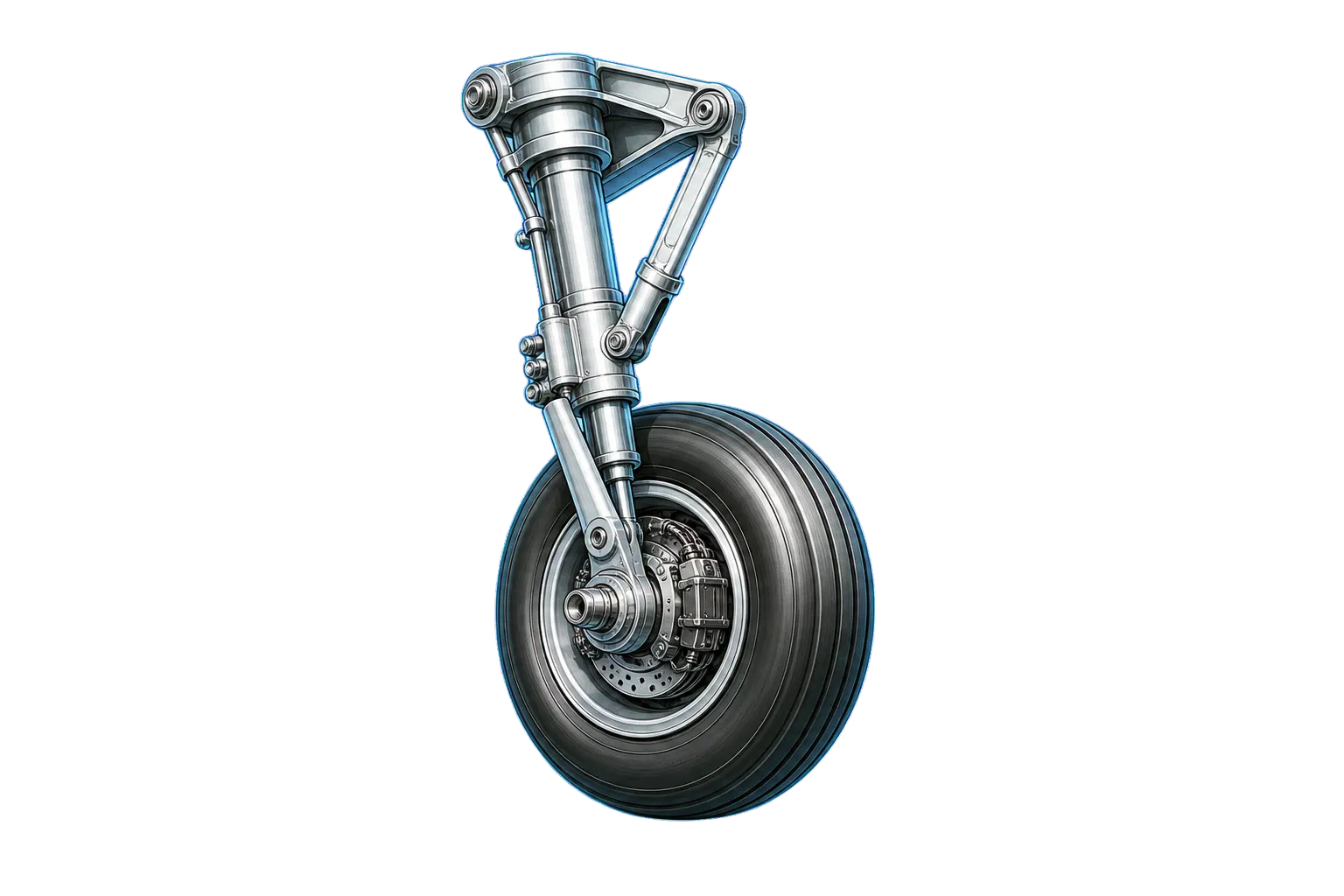
Main Wheel Well
Applicability Source Text
Show captured applicability text from the source AD
AD Final Rules - DRS_97-18-06.html
Copy URL
Print/Save as PDF
Document Versions
 Feedback
Details
AD Number:
97-18-06
Document Type:
AD Final Rules
Docket Number:
96-NM-149-AD
Subject Heading:
Airworthiness Directives; Boeing Model 737 Series Airplanes
Subject:
Main Wheel Well
Status:
Current
Citation:
(Federal Register: October 08, 1997 (Volume 62, Number 195))
Citation Publish Date:
10/08/1997
Effective Date:
11/12/1997
Make:
The Boeing Company
Model:
737-100 Series | 737-200 Series | 737-200C Series | 737-300 Series | 737-400 Series | 737-500 Series...Show more
Product Type:
Aircraft
Product Subtype:
Large Airplane
Affected AD:
Superseded AD:
Affected By:
Superseded By:
Service/Office:
Office of Primary Responsibility:
CFR Part Reference:
Part 39 (62 FR 52486 NO. 195 10/08/97)
Comments:
AIRWORTHINESS DIRECTIVES FINAL RULES: 97-18-06
CITATION:   [Federal Register: October 08, 1997 (Volume 62, Number 195)]

PAGE NUMBER:   [Page 52486]

DOCKET NUMBER:   96-NM-149-AD

AMENDMENT:   39-10116

AD NUMBER:   97-18-06

SUBJECT HEADING:   Airworthiness Directives; Boeing Model 737 Series Airplanes

ACTION:   Final rule.

SUMMARY:
This amendment adopts a new airworthiness directive (AD), applicable to all Boeing Model 737 series airplanes, that requires revising the FAA-approved maintenance program to prohibit the use of pressure washing within the wheel well or on the landing gear and to prohibit the use of pumps and/or nozzles for washing wheel wells or the landing gear; or incorporation of a certain Temporary Revision to the Boeing Airplane Maintenance Manual into the FAA-approved maintenance program. This amendment is prompted by a review of the design of the flight control systems on Model 737 series airplanes. The actions specified by this AD are intended to prevent corrosion of certain equipment due to the use of inappropriate pressure washing techniques. Corrosion of bearings, cables, electrical connectors, or other equipment in the main wheel well, if not detected and corrected in a timely manner, could result in reduced controllability of the airplane.

DATES:   Effective November 12, 1997. The incorporation of reference of certain publications listed in the regulations is approved by the Director of the Federal Register as of November 12, 1997.

ADDRESSES:
The service information referenced in this AD may be obtained from Boeing
Commercial Airplane Group, P.O. Box 3707, Seattle, Washington 98124-2207. This information may be examined at the Federal Aviation Administration (FAA), Transport Airplane Directorate, Rules Docket, 1601 Lind Avenue, SW., Renton, Washington; or at the Office of the Federal Register, 800 North Capitol Street, NW., suite 700, Washington, DC.

FOR FURTHER INFORMATION CONTACT:
David Herron, Aerospace Engineer, Systems and Equipment Branch, ANM-130S, FAA, Transport Airplane Directorate, Seattle Aircraft Certification Office, 1601 Lind Avenue, SW., Renton, Washington 98055-4056; telephone (425) 227-2672; fax (425) 227-1181.

SUPPLEMENTARY INFORMATION:
A proposal to amend part 39 of the Federal Aviation Regulations (14 CFR part 39) to include an airworthiness directive (AD) that is applicable to all Boeing Model 737 series airplanes was published in the Federal Register on August 28, 1996 (61 FR 44239). That action proposed to require revising the FAA-approved maintenance program to prohibit the use of pressure washing within the wheel well or on the landing gear and to prohibit the use of pumps and/or nozzles for washing wheel wells or the landing gear.

Interested persons have been afforded an opportunity to participate in the making of this amendment. Due consideration has been given to the comments received.

Support for the Proposal

One commenter supports the proposal.

Request to Revise Statement of Findings of Critical Design Review Team

One commenter requests the second paragraph of the Discussion section that appeared in the preamble to the proposed rule be revised to accurately reflect the findings of the Critical Design Review (CDR) team. The commenter asks that the FAA delete the one sentence in that paragraph, which read: "The recommendations of the team include various changes to the design of the flight control systems of these airplanes, as well as correction of certain design deficiencies." The commenter suggests that the following sentences should be added: "The team did not find any design issues that could lead to a definite cause of the accidents that gave rise to this effort. The recommendations of the team include various changes to the design of the flight control systems of these airplanes, as well as incorporation of certain design improvements in order to enhance its already acceptable level of safety."

The FAA does not find that a revision to this final rule in the manner suggested by the commenter is necessary, since the Discussion section of a proposed rule does not reappear in a final rule. The FAA acknowledges that the CDR team did not find any design issue that could lead to a definite cause of the accidents that gave rise to this effort. However, as a result of having conducted the CDR of the flight control systems on Boeing Model 737 series airplanes, the team indicated that there are a number of recommendations that should be addressed by the FAA for each of the various models of the Model 737. In reviewing these recommendations, the FAA has concluded that they address unsafe conditions that must be corrected through the issuance of AD's. Therefore, the FAA does not concur that these design changes merely "enhance [the Model 737's] already acceptable level of safety."

Request to Withdraw the Proposal:

Existing Procedures are Adequate

Several commenters request that the proposed rule be withdrawn since pressure washing procedures exist that adequately clean the wheel wells and landing gear, yet provide protective shielding for various components.

The FAA does not concur that this final rule should be withdrawn for the reason requested by the commenters. Since the issuance of the proposal, the FAA has reviewed and approved a new Temporary Revision to the Airplane Maintenance Manual (AMM), Chapter 12-40-0, that lists specific components that require protection from exposure to moisture. The Temporary Revision describes procedures to shield and protect these specific components from moisture during pressure washing. Therefore, the FAA has revised paragraph (a) of this final rule to provide an alternative method of compliance for the requirements of this AD by incorporating the Temporary Revision into the AMM.

Request to Withdraw the Proposal: No Supporting Data

Several commenters contend that there are no data or records of in-service findings that support the conclusion that corrosion of the wheel wells or the landing gear is induced by proper pressure washing. One commenter considers that the improper use of pressure equipment, lack of protection of critical areas, and improper lubrication techniques are the more significant and likely causes of any corrosion occurring in the wheel well. The commenter suggests that the appropriate action to minimize the possibility of corrosion is: proper training of cleaning personnel, use of proper equipment, protection of critical areas, and proper lubrication techniques.

The FAA does not concur that the rule should be withdrawn for the reasons presented by the commenters. The FAA acknowledges that pressure washing done correctly may not induce corrosion of the wheel wells or the landing gear. However, incorrect pressure washing techniques of the bearings, cables, electrical connectors, and other equipment in the main wheel well can result in fluids (or additives in the fluids) being forced into these areas. Such retention of fluid in these areas can result in the development of corrosion. Therefore, the FAA finds that one method of preventing fluids from being forced into certain areas is to prohibit the use of pressure washing within the wheel well or landing gear.

Request to Withdraw the Proposal:

Alternative Methods of Washing are Unsatisfactory

Several commenters state that methods other than pressure washing do not clean the area as well. The commenters point out that surfaces of the wheel wells or the landing gear that are not adequately cleaned could adversely affect the ability to perform accurate structural inspections for cracking. The commenters also contend that hand washing of the wheel wells or the landing gear would take significantly more work hours to accomplish than pressure washing and, consequently, would be much more costly to perform. The commenters request that the proposal be withdrawn since use of alternative methods of washing are unsatisfactory.

The FAA does not concur that the rule should be withdrawn for the reasons presented by the commenters. The FAA acknowledges that proper pressure washing techniques provide adequate cleaning of wheel wells and landing gears, which enables structural inspections for cracking to be performed under optimum conditions. As stated previously, the FAA has revised paragraph (a) of this final rule, which provides for pressure washing by incorporation of the previously described Temporary Revision into the AMM as an alternative method of compliance with the requirements of this AD.

Request to Clarify the Prohibition of Pressure Washing

Several commenters request that the FAA clarify whether the proposed prohibition of pressure washing would include the use of de-icing fluids since de-icing fluids are also applied with pressure equipment. One commenter, an operator, requests that de-icing be specifically excluded from the requirements of the proposed AD. The commenter notes that it applies indirect pressure spray to remove rime ice buildup and other frozen accumulations from the airplane. The commenter states that there is a high potential for anomalous operation if ice and grime are not removed from the airplane. Another operator requests that pressure de-icing fluid be permitted when used with a fan spray pattern, which the operator asserts will reduce the impact of the fluid on the airplane structure.

The FAA acknowledges that clarification is appropriate. This AD addresses procedures and limitations of pressure washing as applicable only to the cleaning of the airplane prior to repair and inspection. Since de-icing fluids are generally applied with a lower pressure than pressure washing, and de-icing normally impacts the ice directly, rather than the sensitive components, the FAA does not consider de-icing to be encompassed within this rule. However, if additional information warrants further consideration of the aspects of de-icing as related to pressure application, the FAA may consider additional rulemaking to address that issue.

Request to Revise the Limit of 80 Pounds Per Square Inch, Gauge (PSIG)

Several commenters suggest that the FAA has not given proper consideration to the effects of impact pressure (force) or momentum in determining the need for a prohibition of use of pressure equipment. One commenter points out that impact pressure is a function of flow rate and the square root of pressure. This commenter states that pressure psig is merely one component of the force function. Another commenter added that the temperature of the spraying fluid should also be considered since hot water or steam has a much higher capability of dissolving grease than cold water when applied at the same pressure. Two other commenters suggested the following procedures to establish an appropriate pressure limit: One procedure is to use an equation that would establish an impact pressure, and the other procedure is to base the pressure limit upon the pain threshold of impact on the human hand.

The FAA does not concur that the proposed pressure limit (80) psig should be revised. The FAA established a conservative figure based on water tap pressure with an upper limit of 80 psig, as provided by some municipalities. The FAA has determined that with a limitation of 80 psig during washing, water and other contaminates such as dirt are not likely to be driven into close tolerance areas such as sealed bearings. Therefore, if an operator elects to eliminate pressure washing in order to comply with the requirements of this AD, 80 psig is an appropriate pressure limit, since fluid would still be needed to clean the wheel wells or landing gear.

Additionally, the FAA does not concur with the commenters' suggested means of establishing a pressure limit. The methods suggested by the commenters provide no documentation as to whether or not a pressure limit established by either method proposed would provide protection against water and other contaminates such as dirt from being driven into close tolerance areas.

Request to Clarify Design Consideration

One commenter requests clarification of the statement in the preamble of the proposal indicating that "the FAA concludes that these aircraft were designed to operate with contaminate buildup in the wheel wells and landing gears." The FAA concurs that clarification of the impact of design considerations is necessary. The manufacturer has advised the FAA that certain elements of the airplane design are not readily changed. For example, the feel and centering mechanism of the aileron system has bearings that must be oriented horizontally. That orientation results in a pool of water/solvent and debris accumulating on the top of certain component equipment within the wheel well.

Another commenter states that pressure washing is comparable to the airplane design to withstand the momentum of rain droplets hitting gears at 200 knots (which may be expected with a Boeing Model 737 series airplane during final approach). This commenter further states that, while intense gear and wheel well washing of the type done during a C-check normally occurs only once a year, airplanes could be expected to fly through precipitation with gear extended fifty or more times a year.

The FAA does not concur that the impact of rain is analogous to pressure washing. While the design of the airplane provides for the landing gear to withstand the impact of rain, the wheel well is located outside the streamline flow. Consequently, rain pellets entering the wheel well would be well below the stream line velocity of the flow field around the airplane. Therefore, the FAA considers a certain amount of contaminate buildup in the wheel wells and landing gears to be an inherent consideration of the design.

Request to Revise Estimated Cost

Several commenters (operators) state that the estimated cost impact information presented in the proposal is clearly understated. These operators all state, that instead of the estimated 5 work hours specified in the proposal to perform the wheel well washings, it would be more accurate and realistic to estimate 40 or 50 work hours per airplane for methods other than pressure washing. The commenters state that the expense of implementing this type of corrective action is inappropriate since pressure cleaning done properly is, in itself, not a cause of corrosion.

The FAA concurs that the cost impact information, below, should be revised based on information received from the commenters. The FAA has revised this information to specify 40 work hours to perform the wheel well washings by means other than pressure washing. Additionally, the FAA has included cost impact information of one work hour for incorporating the Temporary Revision into the AMM for those operators who elect to accomplish this method of complying with the requirements of this AD.

Request to Clarify How Restricting Pressure Washing Impacts Controllability of the Airplane

One commenter requests clarification on how pressure washing affects the controllability of the airplane. The operator points out that, in its experience, no incidents have occurred where the controllability of the airplane has been compromised due to washing of the landing gear.

The FAA acknowledges that clarification is necessary. Corroded or contaminated joints of the landing gear could cause an increase in forces that could adversely affect the actuation/retraction of the landing gear or movement of flight control surfaces during flight. Additionally, damage such as weakened seals due to erosion or abrasion to hydraulic hoses or other elements located on the landing gear could further contribute to an adverse effect on the controllability of the airplane during flight and/or landing. Therefore, the FAA finds that the failure of bearings, cables, electrical connectors, or other equipment in the main wheel well, if not detected and corrected in a timely manner, could result in reduced controllability of the airplane.

Conclusion

After careful review of the available data, including the comments noted above, the FAA has determined that air safety and the public interest require the adoption of the rule with the changes previously described. The FAA has determined that these changes will neither significantly increase the economic burden on any operator nor increase the scope of the AD.

Cost Impact

There are approximately 2,463 Model 737 series airplanes of the affected design in the worldwide fleet.
The FAA estimates that 1,040 airplanes of U.S. registry will be affected by this AD, that it will take approximately 40 work hours per airplane to accomplish washing of the wheel wells and landing gear by means other than pressure washing, and that the average labor rate is $60 per work hour. If operators choose to comply with this AD by prohibiting pressure washing, the cost impact of the AD on U.S. operators is estimated to be $2,400 per airplane, per washing.

If operators choose to comply with this AD by incorporating a certain Temporary Revision into the AMM, it will take approximately 1 work hour per airplane, at an average labor rate of $60 per work hour. Based on these figures, the cost impact of U.S. operators is estimated to be $60 per airplane.

The cost impact figures discussed above are based on assumptions that no operator has yet accomplished any of the requirements of this AD action, and that no operator would accomplish those actions in the future if this AD were not adopted.

Regulatory Impact

The regulations adopted herein will not have substantial direct effects on the States, on the relationship between the national government and the States, or on the distribution of power and responsibilities among the various levels of government. Therefore, in accordance with Executive Order 12612, it is determined that this final rule does not have sufficient federalism implications to warrant the preparation of a Federalism Assessment.

For the reasons discussed above, I certify that this action (1) is not a "significant regulatory action" under Executive Order 12866; (2) is not a "significant rule" under DOT Regulatory Policies and Procedures (44 FR 11034, February 26, 1979); and (3) will not have a significant economic impact, positive or negative, on a substantial number of small entities under the criteria of the Regulatory Flexibility Act. A final evaluation has been prepared for this action and it is contained in the Rules Docket. A copy of it may be obtained from the Rules Docket at the location provided under the caption "ADDRESSES."

List of Subjects in 14 CFR Part 39

Air transportation, Aircraft, Aviation safety, Incorporation by reference, Safety.
Adoption of the Amendment
Accordingly, pursuant to the authority delegated to me by the Administrator, the Federal Aviation Administration amends part 39 of the Federal Aviation Regulations (14 CFR part 39) as follows: PART 39 - AIRWORTHINESS DIRECTIVES
1. The authority citation for part 39 continues to read as follows: Authority: 49 U.S.C. 106(g), 40113, 44701. § 39.13 - [Amended]
2. Section 39.13 is amended by adding the following new airworthiness directive:

REGULATORY TEXT:
97-18-06 BOEING: Amendment 39-10116. Docket 96-NM-149-AD.

Applicability: All Model 737 series airplanes, certificated in any category.

NOTE 1: This AD applies to each airplane identified in the preceding applicability provision, regardless of whether it has been modified, altered, or repaired in the area subject to the requirements of this AD. For airplanes that have been modified, altered, or repaired so that the performance of the requirements of this AD is affected, the owner/operator must request approval for an alternative method of compliance in accordance with paragraph (b) of this AD. The request should include an assessment of the effect of the modification, alteration, or repair on the unsafe condition addressed by this AD; and, if the unsafe condition has not been eliminated, the request should include specific proposed actions to address it.

Compliance: Required as indicated, unless accomplished previously.

To prevent corrosion in the bearings, cables, electrical connectors, or other equipment in the main wheel well, which could result in reduced controllability of the airplane, accomplish the following:

(a) Within 90 days after the effective date of this AD, perform the requirements of either paragraph (a)(1) or (a)(2) of this AD.

(1) Incorporate a revision into the FAA-approved maintenance program that prohibits the use of pressure washing within the wheel well or on the landing gear, and that prohibits the use of pumps and/or nozzles for washing wheel wells or the landing gear. Pressure washing is defined as the use of any fluid under pressure greater than 80 pounds per square inch, gauge (psig); or

(2) Incorporate the following Temporary Revision(s) to Chapter 12 of the Boeing Model 737 Airplane Maintenance Manual (AMM), all dated February 7, 1997; as applicable; into the FAA-approved maintenance program.

Airplane Model

Temporary Revision No.


737-100/200

12-368
12-369
12-370
12-371
12-372
12-373


737-300/-400/-500

12-85

NOTE 2: Once an operator has incorporated the above procedures into its maintenance program, this AD does not require that the operator subsequently record accomplishment each time the wheel well is cleaned. Future changes to the above maintenance program require prior approval of an appropriate FAA Principal Maintenance Inspector (PMI).

(b) An alternative method of compliance or adjustment of the compliance time that provides an acceptable level of safety may be used if approved by the Manager, Seattle Aircraft Certification Office (ACO), FAA, Transport Airplane Directorate. Operators shall submit their requests through an appropriate FAA PMI, who may add comments and then send it to the Manager, Seattle ACO.

NOTE 3: Information concerning the existence of approved alternative methods of compliance with this AD, if any, may be obtained from the Seattle ACO.

(c) Special flight permits may be issued in accordance with sections 21.197 and 21.199 of the Federal Aviation Regulations (14 CFR 21.197 and 21.199) to operate the airplane to a location where the requirements of this AD can be accomplished.

(d) Except as specified in paragraph (a)(1) of this AD, the actions shall be done in accordance with the following Temporary Revisions to Chapter 12 of the Boeing Model 737 Airplane Maintenance Manual.


Airplane Model

Temporary Revision No.

Dated

737-100/200	12-368	February 7, 1997
	12-369	February 7, 1997
	12-370	February 7, 1997
	12-371	February 7, 1997
	12-372	February 7, 1997
	12-373	February 7, 1997
737-300/-400/-500	12-85	February 7, 1997

The incorporation by reference was approved by the Director of the Federal Register in accordance with 5 U.S.C. 552(a) and 1 CFR part 51. Copies may be obtained from Boeing Commercial Airplane Group, P.O. Box 3707, Seattle, Washington 98124-2207. Copies may be inspected at the FAA, Transport Airplane Directorate, 1601 Lind Avenue, SW., Renton, Washington; or at the Office of the Federal Register, 800 North Capitol Street, NW., suite 700, Washington.

(e) This amendment becomes effective on November 12, 1997.

FOOTER:
Document Text
Show stored source text (verify against official source)
AD Final Rules - DRS_97-18-06.html
Copy URL
Print/Save as PDF
Document Versions
 Feedback
Details
AD Number:
97-18-06
Document Type:
AD Final Rules
Docket Number:
96-NM-149-AD
Subject Heading:
Airworthiness Directives; Boeing Model 737 Series Airplanes
Subject:
Main Wheel Well
Status:
Current
Citation:
(Federal Register: October 08, 1997 (Volume 62, Number 195))
Citation Publish Date:
10/08/1997
Effective Date:
11/12/1997
Make:
The Boeing Company
Model:
737-100 Series | 737-200 Series | 737-200C Series | 737-300 Series | 737-400 Series | 737-500 Series...Show more
Product Type:
Aircraft
Product Subtype:
Large Airplane
Affected AD:
Superseded AD:
Affected By:
Superseded By:
Service/Office:
Office of Primary Responsibility:
CFR Part Reference:
Part 39 (62 FR 52486 NO. 195 10/08/97)
Comments:
AIRWORTHINESS DIRECTIVES FINAL RULES: 97-18-06
CITATION:   [Federal Register: October 08, 1997 (Volume 62, Number 195)]

PAGE NUMBER:   [Page 52486]

DOCKET NUMBER:   96-NM-149-AD

AMENDMENT:   39-10116

AD NUMBER:   97-18-06

SUBJECT HEADING:   Airworthiness Directives; Boeing Model 737 Series Airplanes

ACTION:   Final rule.

SUMMARY:
This amendment adopts a new airworthiness directive (AD), applicable to all Boeing Model 737 series airplanes, that requires revising the FAA-approved maintenance program to prohibit the use of pressure washing within the wheel well or on the landing gear and to prohibit the use of pumps and/or nozzles for washing wheel wells or the landing gear; or incorporation of a certain Temporary Revision to the Boeing Airplane Maintenance Manual into the FAA-approved maintenance program. This amendment is prompted by a review of the design of the flight control systems on Model 737 series airplanes. The actions specified by this AD are intended to prevent corrosion of certain equipment due to the use of inappropriate pressure washing techniques. Corrosion of bearings, cables, electrical connectors, or other equipment in the main wheel well, if not detected and corrected in a timely manner, could result in reduced controllability of the airplane.

DATES:   Effective November 12, 1997. The incorporation of reference of certain publications listed in the regulations is approved by the Director of the Federal Register as of November 12, 1997.

ADDRESSES:
The service information referenced in this AD may be obtained from Boeing
Commercial Airplane Group, P.O. Box 3707, Seattle, Washington 98124-2207. This information may be examined at the Federal Aviation Administration (FAA), Transport Airplane Directorate, Rules Docket, 1601 Lind Avenue, SW., Renton, Washington; or at the Office of the Federal Register, 800 North Capitol Street, NW., suite 700, Washington, DC.

FOR FURTHER INFORMATION CONTACT:
David Herron, Aerospace Engineer, Systems and Equipment Branch, ANM-130S, FAA, Transport Airplane Directorate, Seattle Aircraft Certification Office, 1601 Lind Avenue, SW., Renton, Washington 98055-4056; telephone (425) 227-2672; fax (425) 227-1181.

SUPPLEMENTARY INFORMATION:
A proposal to amend part 39 of the Federal Aviation Regulations (14 CFR part 39) to include an airworthiness directive (AD) that is applicable to all Boeing Model 737 series airplanes was published in the Federal Register on August 28, 1996 (61 FR 44239). That action proposed to require revising the FAA-approved maintenance program to prohibit the use of pressure washing within the wheel well or on the landing gear and to prohibit the use of pumps and/or nozzles for washing wheel wells or the landing gear.

Interested persons have been afforded an opportunity to participate in the making of this amendment. Due consideration has been given to the comments received.

Support for the Proposal

One commenter supports the proposal.

Request to Revise Statement of Findings of Critical Design Review Team

One commenter requests the second paragraph of the Discussion section that appeared in the preamble to the proposed rule be revised to accurately reflect the findings of the Critical Design Review (CDR) team. The commenter asks that the FAA delete the one sentence in that paragraph, which read: "The recommendations of the team include various changes to the design of the flight control systems of these airplanes, as well as correction of certain design deficiencies." The commenter suggests that the following sentences should be added: "The team did not find any design issues that could lead to a definite cause of the accidents that gave rise to this effort. The recommendations of the team include various changes to the design of the flight control systems of these airplanes, as well as incorporation of certain design improvements in order to enhance its already acceptable level of safety."

The FAA does not find that a revision to this final rule in the manner suggested by the commenter is necessary, since the Discussion section of a proposed rule does not reappear in a final rule. The FAA acknowledges that the CDR team did not find any design issue that could lead to a definite cause of the accidents that gave rise to this effort. However, as a result of having conducted the CDR of the flight control systems on Boeing Model 737 series airplanes, the team indicated that there are a number of recommendations that should be addressed by the FAA for each of the various models of the Model 737. In reviewing these recommendations, the FAA has concluded that they address unsafe conditions that must be corrected through the issuance of AD's. Therefore, the FAA does not concur that these design changes merely "enhance [the Model 737's] already acceptable level of safety."

Request to Withdraw the Proposal:

Existing Procedures are Adequate

Several commenters request that the proposed rule be withdrawn since pressure washing procedures exist that adequately clean the wheel wells and landing gear, yet provide protective shielding for various components.

The FAA does not concur that this final rule should be withdrawn for the reason requested by the commenters. Since the issuance of the proposal, the FAA has reviewed and approved a new Temporary Revision to the Airplane Maintenance Manual (AMM), Chapter 12-40-0, that lists specific components that require protection from exposure to moisture. The Temporary Revision describes procedures to shield and protect these specific components from moisture during pressure washing. Therefore, the FAA has revised paragraph (a) of this final rule to provide an alternative method of compliance for the requirements of this AD by incorporating the Temporary Revision into the AMM.

Request to Withdraw the Proposal: No Supporting Data

Several commenters contend that there are no data or records of in-service findings that support the conclusion that corrosion of the wheel wells or the landing gear is induced by proper pressure washing. One commenter considers that the improper use of pressure equipment, lack of protection of critical areas, and improper lubrication techniques are the more significant and likely causes of any corrosion occurring in the wheel well. The commenter suggests that the appropriate action to minimize the possibility of corrosion is: proper training of cleaning personnel, use of proper equipment, protection of critical areas, and proper lubrication techniques.

The FAA does not concur that the rule should be withdrawn for the reasons presented by the commenters. The FAA acknowledges that pressure washing done correctly may not induce corrosion of the wheel wells or the landing gear. However, incorrect pressure washing techniques of the bearings, cables, electrical connectors, and other equipment in the main wheel well can result in fluids (or additives in the fluids) being forced into these areas. Such retention of fluid in these areas can result in the development of corrosion. Therefore, the FAA finds that one method of preventing fluids from being forced into certain areas is to prohibit the use of pressure washing within the wheel well or landing gear.

Request to Withdraw the Proposal:

Alternative Methods of Washing are Unsatisfactory

Several commenters state that methods other than pressure washing do not clean the area as well. The commenters point out that surfaces of the wheel wells or the landing gear that are not adequately cleaned could adversely affect the ability to perform accurate structural inspections for cracking. The commenters also contend that hand washing of the wheel wells or the landing gear would take significantly more work hours to accomplish than pressure washing and, consequently, would be much more costly to perform. The commenters request that the proposal be withdrawn since use of alternative methods of washing are unsatisfactory.

The FAA does not concur that the rule should be withdrawn for the reasons presented by the commenters. The FAA acknowledges that proper pressure washing techniques provide adequate cleaning of wheel wells and landing gears, which enables structural inspections for cracking to be performed under optimum conditions. As stated previously, the FAA has revised paragraph (a) of this final rule, which provides for pressure washing by incorporation of the previously described Temporary Revision into the AMM as an alternative method of compliance with the requirements of this AD.

Request to Clarify the Prohibition of Pressure Washing

Several commenters request that the FAA clarify whether the proposed prohibition of pressure washing would include the use of de-icing fluids since de-icing fluids are also applied with pressure equipment. One commenter, an operator, requests that de-icing be specifically excluded from the requirements of the proposed AD. The commenter notes that it applies indirect pressure spray to remove rime ice buildup and other frozen accumulations from the airplane. The commenter states that there is a high potential for anomalous operation if ice and grime are not removed from the airplane. Another operator requests that pressure de-icing fluid be permitted when used with a fan spray pattern, which the operator asserts will reduce the impact of the fluid on the airplane structure.

The FAA acknowledges that clarification is appropriate. This AD addresses procedures and limitations of pressure washing as applicable only to the cleaning of the airplane prior to repair and inspection. Since de-icing fluids are generally applied with a lower pressure than pressure washing, and de-icing normally impacts the ice directly, rather than the sensitive components, the FAA does not consider de-icing to be encompassed within this rule. However, if additional information warrants further consideration of the aspects of de-icing as related to pressure application, the FAA may consider additional rulemaking to address that issue.

Request to Revise the Limit of 80 Pounds Per Square Inch, Gauge (PSIG)

Several commenters suggest that the FAA has not given proper consideration to the effects of impact pressure (force) or momentum in determining the need for a prohibition of use of pressure equipment. One commenter points out that impact pressure is a function of flow rate and the square root of pressure. This commenter states that pressure psig is merely one component of the force function. Another commenter added that the temperature of the spraying fluid should also be considered since hot water or steam has a much higher capability of dissolving grease than cold water when applied at the same pressure. Two other commenters suggested the following procedures to establish an appropriate pressure limit: One procedure is to use an equation that would establish an impact pressure, and the other procedure is to base the pressure limit upon the pain threshold of impact on the human hand.

The FAA does not concur that the proposed pressure limit (80) psig should be revised. The FAA established a conservative figure based on water tap pressure with an upper limit of 80 psig, as provided by some municipalities. The FAA has determined that with a limitation of 80 psig during washing, water and other contaminates such as dirt are not likely to be driven into close tolerance areas such as sealed bearings. Therefore, if an operator elects to eliminate pressure washing in order to comply with the requirements of this AD, 80 psig is an appropriate pressure limit, since fluid would still be needed to clean the wheel wells or landing gear.

Additionally, the FAA does not concur with the commenters' suggested means of establishing a pressure limit. The methods suggested by the commenters provide no documentation as to whether or not a pressure limit established by either method proposed would provide protection against water and other contaminates such as dirt from being driven into close tolerance areas.

Request to Clarify Design Consideration

One commenter requests clarification of the statement in the preamble of the proposal indicating that "the FAA concludes that these aircraft were designed to operate with contaminate buildup in the wheel wells and landing gears." The FAA concurs that clarification of the impact of design considerations is necessary. The manufacturer has advised the FAA that certain elements of the airplane design are not readily changed. For example, the feel and centering mechanism of the aileron system has bearings that must be oriented horizontally. That orientation results in a pool of water/solvent and debris accumulating on the top of certain component equipment within the wheel well.

Another commenter states that pressure washing is comparable to the airplane design to withstand the momentum of rain droplets hitting gears at 200 knots (which may be expected with a Boeing Model 737 series airplane during final approach). This commenter further states that, while intense gear and wheel well washing of the type done during a C-check normally occurs only once a year, airplanes could be expected to fly through precipitation with gear extended fifty or more times a year.

The FAA does not concur that the impact of rain is analogous to pressure washing. While the design of the airplane provides for the landing gear to withstand the impact of rain, the wheel well is located outside the streamline flow. Consequently, rain pellets entering the wheel well would be well below the stream line velocity of the flow field around the airplane. Therefore, the FAA considers a certain amount of contaminate buildup in the wheel wells and landing gears to be an inherent consideration of the design.

Request to Revise Estimated Cost

Several commenters (operators) state that the estimated cost impact information presented in the proposal is clearly understated. These operators all state, that instead of the estimated 5 work hours specified in the proposal to perform the wheel well washings, it would be more accurate and realistic to estimate 40 or 50 work hours per airplane for methods other than pressure washing. The commenters state that the expense of implementing this type of corrective action is inappropriate since pressure cleaning done properly is, in itself, not a cause of corrosion.

The FAA concurs that the cost impact information, below, should be revised based on information received from the commenters. The FAA has revised this information to specify 40 work hours to perform the wheel well washings by means other than pressure washing. Additionally, the FAA has included cost impact information of one work hour for incorporating the Temporary Revision into the AMM for those operators who elect to accomplish this method of complying with the requirements of this AD.

Request to Clarify How Restricting Pressure Washing Impacts Controllability of the Airplane

One commenter requests clarification on how pressure washing affects the controllability of the airplane. The operator points out that, in its experience, no incidents have occurred where the controllability of the airplane has been compromised due to washing of the landing gear.

The FAA acknowledges that clarification is necessary. Corroded or contaminated joints of the landing gear could cause an increase in forces that could adversely affect the actuation/retraction of the landing gear or movement of flight control surfaces during flight. Additionally, damage such as weakened seals due to erosion or abrasion to hydraulic hoses or other elements located on the landing gear could further contribute to an adverse effect on the controllability of the airplane during flight and/or landing. Therefore, the FAA finds that the failure of bearings, cables, electrical connectors, or other equipment in the main wheel well, if not detected and corrected in a timely manner, could result in reduced controllability of the airplane.

Conclusion

After careful review of the available data, including the comments noted above, the FAA has determined that air safety and the public interest require the adoption of the rule with the changes previously described. The FAA has determined that these changes will neither significantly increase the economic burden on any operator nor increase the scope of the AD.

Cost Impact

There are approximately 2,463 Model 737 series airplanes of the affected design in the worldwide fleet.
The FAA estimates that 1,040 airplanes of U.S. registry will be affected by this AD, that it will take approximately 40 work hours per airplane to accomplish washing of the wheel wells and landing gear by means other than pressure washing, and that the average labor rate is $60 per work hour. If operators choose to comply with this AD by prohibiting pressure washing, the cost impact of the AD on U.S. operators is estimated to be $2,400 per airplane, per washing.

If operators choose to comply with this AD by incorporating a certain Temporary Revision into the AMM, it will take approximately 1 work hour per airplane, at an average labor rate of $60 per work hour. Based on these figures, the cost impact of U.S. operators is estimated to be $60 per airplane.

The cost impact figures discussed above are based on assumptions that no operator has yet accomplished any of the requirements of this AD action, and that no operator would accomplish those actions in the future if this AD were not adopted.

Regulatory Impact

The regulations adopted herein will not have substantial direct effects on the States, on the relationship between the national government and the States, or on the distribution of power and responsibilities among the various levels of government. Therefore, in accordance with Executive Order 12612, it is determined that this final rule does not have sufficient federalism implications to warrant the preparation of a Federalism Assessment.

For the reasons discussed above, I certify that this action (1) is not a "significant regulatory action" under Executive Order 12866; (2) is not a "significant rule" under DOT Regulatory Policies and Procedures (44 FR 11034, February 26, 1979); and (3) will not have a significant economic impact, positive or negative, on a substantial number of small entities under the criteria of the Regulatory Flexibility Act. A final evaluation has been prepared for this action and it is contained in the Rules Docket. A copy of it may be obtained from the Rules Docket at the location provided under the caption "ADDRESSES."

List of Subjects in 14 CFR Part 39

Air transportation, Aircraft, Aviation safety, Incorporation by reference, Safety.
Adoption of the Amendment
Accordingly, pursuant to the authority delegated to me by the Administrator, the Federal Aviation Administration amends part 39 of the Federal Aviation Regulations (14 CFR part 39) as follows: PART 39 - AIRWORTHINESS DIRECTIVES
1. The authority citation for part 39 continues to read as follows: Authority: 49 U.S.C. 106(g), 40113, 44701. § 39.13 - [Amended]
2. Section 39.13 is amended by adding the following new airworthiness directive:

REGULATORY TEXT:
97-18-06 BOEING: Amendment 39-10116. Docket 96-NM-149-AD.

Applicability: All Model 737 series airplanes, certificated in any category.

NOTE 1: This AD applies to each airplane identified in the preceding applicability provision, regardless of whether it has been modified, altered, or repaired in the area subject to the requirements of this AD. For airplanes that have been modified, altered, or repaired so that the performance of the requirements of this AD is affected, the owner/operator must request approval for an alternative method of compliance in accordance with paragraph (b) of this AD. The request should include an assessment of the effect of the modification, alteration, or repair on the unsafe condition addressed by this AD; and, if the unsafe condition has not been eliminated, the request should include specific proposed actions to address it.

Compliance: Required as indicated, unless accomplished previously.

To prevent corrosion in the bearings, cables, electrical connectors, or other equipment in the main wheel well, which could result in reduced controllability of the airplane, accomplish the following:

(a) Within 90 days after the effective date of this AD, perform the requirements of either paragraph (a)(1) or (a)(2) of this AD.

(1) Incorporate a revision into the FAA-approved maintenance program that prohibits the use of pressure washing within the wheel well or on the landing gear, and that prohibits the use of pumps and/or nozzles for washing wheel wells or the landing gear. Pressure washing is defined as the use of any fluid under pressure greater than 80 pounds per square inch, gauge (psig); or

(2) Incorporate the following Temporary Revision(s) to Chapter 12 of the Boeing Model 737 Airplane Maintenance Manual (AMM), all dated February 7, 1997; as applicable; into the FAA-approved maintenance program.

Airplane Model

Temporary Revision No.


737-100/200

12-368
12-369
12-370
12-371
12-372
12-373


737-300/-400/-500

12-85

NOTE 2: Once an operator has incorporated the above procedures into its maintenance program, this AD does not require that the operator subsequently record accomplishment each time the wheel well is cleaned. Future changes to the above maintenance program require prior approval of an appropriate FAA Principal Maintenance Inspector (PMI).

(b) An alternative method of compliance or adjustment of the compliance time that provides an acceptable level of safety may be used if approved by the Manager, Seattle Aircraft Certification Office (ACO), FAA, Transport Airplane Directorate. Operators shall submit their requests through an appropriate FAA PMI, who may add comments and then send it to the Manager, Seattle ACO.

NOTE 3: Information concerning the existence of approved alternative methods of compliance with this AD, if any, may be obtained from the Seattle ACO.

(c) Special flight permits may be issued in accordance with sections 21.197 and 21.199 of the Federal Aviation Regulations (14 CFR 21.197 and 21.199) to operate the airplane to a location where the requirements of this AD can be accomplished.

(d) Except as specified in paragraph (a)(1) of this AD, the actions shall be done in accordance with the following Temporary Revisions to Chapter 12 of the Boeing Model 737 Airplane Maintenance Manual.


Airplane Model

Temporary Revision No.

Dated

737-100/200	12-368	February 7, 1997
	12-369	February 7, 1997
	12-370	February 7, 1997
	12-371	February 7, 1997
	12-372	February 7, 1997
	12-373	February 7, 1997
737-300/-400/-500	12-85	February 7, 1997

The incorporation by reference was approved by the Director of the Federal Register in accordance with 5 U.S.C. 552(a) and 1 CFR part 51. Copies may be obtained from Boeing Commercial Airplane Group, P.O. Box 3707, Seattle, Washington 98124-2207. Copies may be inspected at the FAA, Transport Airplane Directorate, 1601 Lind Avenue, SW., Renton, Washington; or at the Office of the Federal Register, 800 North Capitol Street, NW., suite 700, Washington.

(e) This amendment becomes effective on November 12, 1997.

FOOTER:
Source: Official FAA Source ↗
Retrieved: Apr 8, 2026
Rights: U.S. Government Public Domain
This site is not affiliated with or endorsed by the FAA. Always verify with official sources.
Related Airworthiness Directives
2025-02-02 Recurring
final ruleAirworthiness Directives; The Boeing Company Airplanes
Unsafe Condition: cracks in the frame inner chord and web at station (STA) 727 between S-11L and S-13L, which could result in the inability of a principal structural element to sustain limit load, and adversely affe...
2023-13-12 Recurring
final ruleAirworthiness Directives; The Boeing Company Airplanes
Unsafe Condition: premature aging of certain passenger chemical oxygen generators, which could fail to deliver oxygen during an emergency, possibly resulting in injury to the airplane occupants.
2023-12-13
final ruleAirworthiness Directives; The Boeing Company Airplanes
Unsafe Condition: Radio altimeters cannot be relied upon to perform their intended function if they experience interference from wireless broadband operations in the 5G C-Band. This interference can cause other airp...
2023-10-02
final ruleAirworthiness Directives; Transport and Commuter Category Airplanes
Unsafe Condition: Radio altimeter anomalies that are undetected by the automation or pilot, particularly close to the ground (e.g., landing flare), could lead to loss of continued safe flight and landing. Additional...