AD 97-17-08
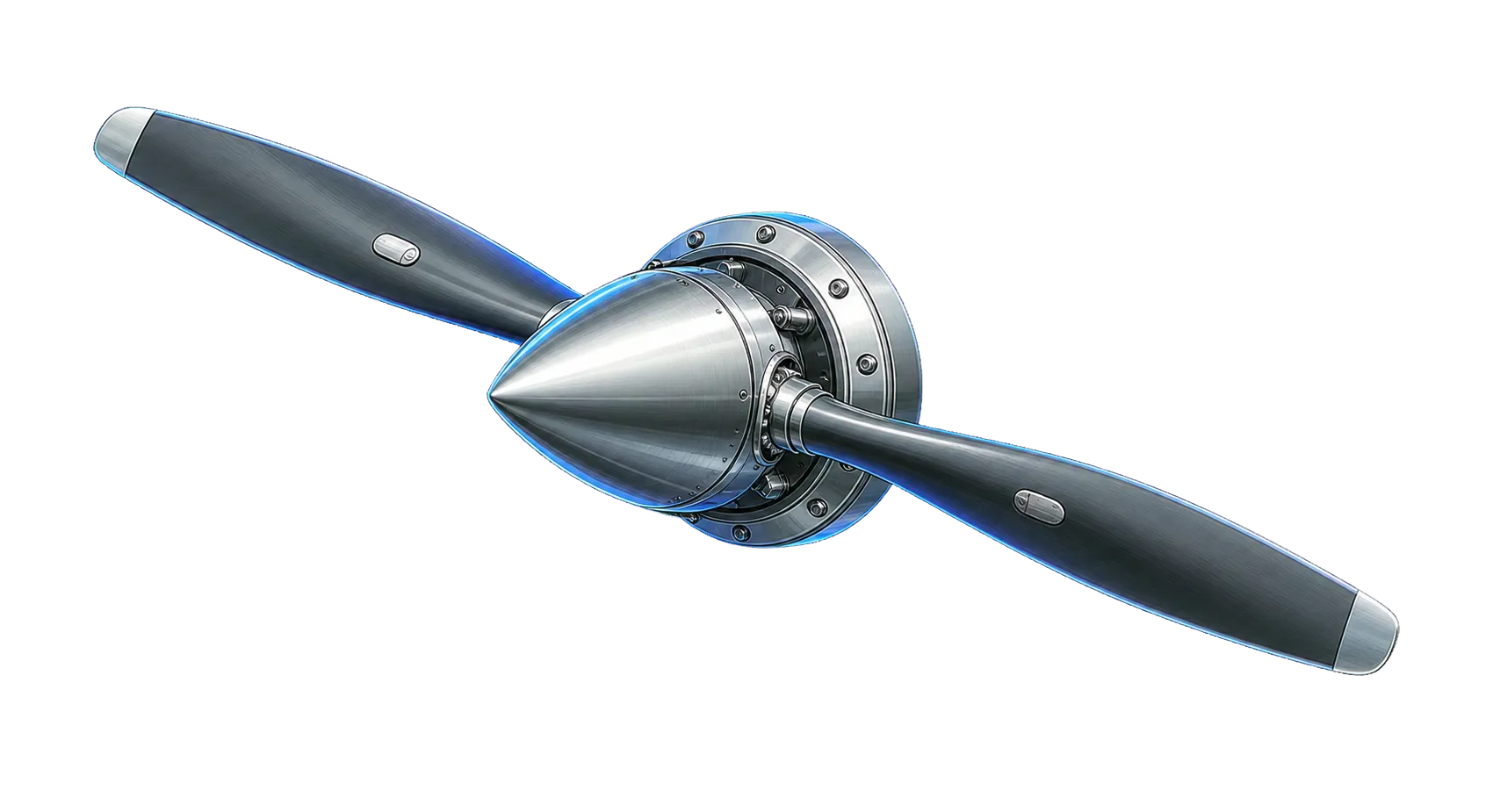
Applicability
| Type | Manufacturer | Model | Details |
|---|---|---|---|
| aircraft | Textron Aviation Inc. | 1900D | Airworthiness Directives; Raytheon Aircraft Company Model 1900D Airplanes (formerly known as Beech Aircraft Corporation Model 1900D Airplanes). |
Unsafe Condition
Fatigue cracking and failure of the propeller mounting bolts (part number B3347) due to improper torque levels during factory installation, which could result in loss of the propeller.
AI-generated summary from the source AD text. Verify against the official source before acting.
Required Actions
Inspect propeller mounting bolts for correct torque level. Re-torque bolts to 100-105 ft-lbs or replace if torque is less than 60 ft-lbs, following the Model 1900D Maintenance Manual procedures. Re-safety wire and re-install components.
AI-generated summary from the source AD text. Verify against the official source before acting.
Compliance Time
within the next 50 hours time-in-service (TIS), unless already accomplished
AI-generated summary from the source AD text. Verify against the official source before acting.
Affected Aircraft
Raytheon Aircraft Company Model 1900D airplanes (serial numbers UE-176 through UE-280, UE-282 and UE-284) that have not had the propeller removed and re-installed since factory installation, or have not had the attaching bolts re-torqued.
AI-generated summary from the source AD text. Verify against the official source before acting.
Federal Register Abstract
Propeller Mounting Bolts
Applicability Source Text
Show captured applicability text from the source AD
AD Final Rules - DRS_97-17-08.html
Copy URL
Print/Save as PDF
Document Versions
 Feedback
Details
AD Number:
97-17-08
Document Type:
AD Final Rules
Docket Number:
97-CE-73-AD
Subject Heading:
Airworthiness Directives; Raytheon Aircraft Company Model 1900D Airplanes (formerly known as Beech A...Show more
Subject:
Propeller Mounting Bolts
Status:
Current
Citation:
This information is not available.
Citation Publish Date:
Effective Date:
09/24/1997
Make:
Textron Aviation Inc.
Model:
1900D
Product Type:
Aircraft
Product Subtype:
Small/Large Airplane
Affected AD:
Superseded AD:
Affected By:
Superseded By:
Service/Office:
Office of Primary Responsibility:
CFR Part Reference:
Part 39 [62 FR 44404 NO. 162 08/21/97]
Comments:
AIRWORTHINESS DIRECTIVES FINAL RULES: 97-17-08
CITATION:   This information is not available.

PAGE NUMBER:

DOCKET NUMBER:   97-CE-73-AD

AMENDMENT:   39-10111

AD NUMBER:   97-17-08

SUBJECT HEADING:   Airworthiness Directives; Raytheon Aircraft Company Model 1900D Airplanes (formerly known as Beech Aircraft Corporation Model 1900D Airplanes).

ACTION:   Final rule; request for comments.

SUMMARY:   This amendment adopts a new airworthiness directive (AD) that is applicable to Raytheon Aircraft Company (Raytheon) Model 1900D airplanes (formerly known as Beech Aircraft Corporation Model 1900D airplanes) that have not had the propeller removed and re-installed since factory installation. This action requires inspecting the propeller mounting bolts for the proper torque and replacing or re-torquing any propeller bolt with the wrong torque level. The manufacturer discovered some under-torqued propeller mounting bolts during factory installation of the propeller. The actions specified by this AD are intended to prevent fatigue cracking and failure of the propeller mounting bolts, which if not detected and corrected, could result in loss of the propeller.

Comments for inclusion in the Rules Docket must be received on or before October 30, 1997.

DATES:   Effective September 24, 1997.

ADDRESSES:   Submit comments in triplicate to the Federal Aviation Administration (FAA), Central Region, Office of the Assistant Chief Counsel, Attention: Rules Docket 97-CE-73-AD, Room 1558, 601 E. 12th Street, Kansas City, Missouri 64106.

Service information that applies to this AD may be obtained from Raytheon Aircraft Company, 9709 E. Central, P.O. Box 85, Wichita, Kansas 67201-0085. This information may also be examined at the Federal Aviation Administration (FAA), Central Region, Office of the Assistant Chief Counsel, Attention: Rules Docket 97-CE-73-AD, Room 1558, 601 E. 12th Street, Kansas City, Missouri 64106.

FOR FURTHER INFORMATION CONTACT:   Mr. Randy Griffith, Aerospace Engineer, Wichita Aircraft Certification Office, Room 100, 1801 Airport Rd., Wichita, Kansas 67209; telephone (316) 946-4145; facsimile (316) 946-4407.

SUPPLEMENTARY INFORMATION:
Discussion
The FAA has received three reports from operators and has recently been notified by Raytheon Aircraft Company (Raytheon) (formerly known as Beech Aircraft Corporation) that certain Raytheon Model 1900D airplane propellers were inadvertently installed with under-torqued propeller mounting bolts at factory installation. The bolts were not being torqued to the end torque requirement of 100 to 105 ft-lbs. These bolts have a three stage, wet torque requirement ending at a value of 100 to 105 ft-lbs. Originally it was believed that the bolts were being torqued to at least 80 ft-lbs (the second stage of the torque procedure), but three cases of bolts with less than 60 ft-lbs have been reported. The manufacturer of the propeller and Raytheon notified the owners/operators of the affected Model 1900D airplanes (serial numbers (S/N) UE-176 through UE-280, UE-282 and UE-284) by "urgent action" letter. If the propeller bolts are not torqued to the right level, fatigue cracking could result.

Relevant Service Information
Raytheon has issued an urgent action Letter No. 52-0092, dated July 22, 1997, which references the propeller bolt torque problem and the recommended action to fix the torque levels.

The FAA's Determination
After examining the circumstances and reviewing all available information related to the incidents described above, including the relevant service information, the FAA has determined that AD action should be taken to prevent fatigue cracking and failure of the propeller mounting bolts, which if not detected and corrected, could result in loss of the propeller.

Explanation of the Provisions of the AD
Since an unsafe condition has been identified that is likely to exist or develop in certain Raytheon Model 1900D airplanes of the same type design that have not had the propeller removed and re-installed, this AD requires inspecting the propeller mounting bolts for correct torque level, and re-torquing or replacing the bolts as necessary.

Determination of the Effective Date of the AD
Since a situation exists that requires the immediate adoption of this regulation, it is found that notice and opportunity for public prior comment hereon are impracticable, and that good cause exists for making this amendment effective in less than 30 days.

Comments Invited
Although this action is in the form of a final rule that involves requirements affecting immediate flight safety and, thus, was not preceded by notice and opportunity to comment, comments are invited on this rule. Interested persons are invited to comment on this rule by submitting such written data, views, or arguments as they may desire. Communications should identify the Rules Docket number and be submitted in triplicate to the address specified above. All communications received on or before the closing date for comments will be considered, and this rule may be amended in light of the comments received. Factual information that supports the commenter's ideas and suggestions is extremely helpful in evaluating the effectiveness of the AD action and determining whether additional rulemaking action would be needed.

Comments are specifically invited on the overall regulatory, economic, environmental, and energy aspects of the rule that might suggest a need to modify the rule. All comments submitted will be available, both before and after the closing date for comments, in the Rules Docket for examination by interested persons. A report that summarizes each FAA-public contact concerned with the substance of this AD will be filed in the Rules Docket.

Commenters wishing the FAA to acknowledge receipt of their comments submitted in response to this rule must submit a self-addressed, stamped postcard on which the following statement is made: "Comments to Docket No. 97-CE-73-AD." The postcard will be date stamped and returned to the commenter.

Regulatory Impact
The regulations adopted herein will not have substantial direct effects on the States, on the relationship between the national government and the States, or on the distribution of power and responsibilities among the various levels of government. Therefore, in accordance with Executive Order 12612, it is determined that this final rule does not have sufficient federalism implications to warrant the preparation of a Federalism Assessment.

The FAA has determined that this regulation is an emergency regulation that must be issued immediately to correct an unsafe condition in aircraft, and is not a significant regulatory action under Executive Order 12866. It has been determined further that this action involves an emergency regulation under DOT Regulatory Policies and Procedures (44 FR 11034, February 26, 1979). If it is determined that this emergency regulation otherwise would be significant under DOT Regulatory Policies and Procedures, a final regulatory evaluation will be prepared and placed in the Rules Docket (otherwise, an evaluation is not required). A copy of it, if filed, may be obtained from the Rules Docket.

List of Subjects in 14 CFR Part 39
Air transportation, Aircraft, Aviation safety, Safety.

Adoption of the Amendment
Accordingly, pursuant to the authority delegated to me by the Administrator, the Federal Aviation Administration amends part 39 of the Federal Aviation Regulations (14 CFR part 39) as follows:

PART 39 - AIRWORTHINESS DIRECTIVES
1. The authority citation for part 39 continues to read as follows:
Authority: 49 USC 106(g), 40113, 44701.

§ 39.13 [Amended]
2. Section 39.13 is amended by adding a new airworthiness directive (AD) to read as follows:

REGULATORY TEXT:
97-17-08 RAYTHEON AIRCRAFT COMPANY (formerly known as Beech Aircraft Corporation): Amendment 39-10111; Docket No. 97-CE-73-AD.

Applicability: Model 1900D airplanes (serial numbers UE-176 through UE-280, UE-282 and UE-284) certificated in any category, that have not had the propeller removed and re-installed since factory installation, or have not had the attaching bolts re-torqued.

NOTE 1: This AD applies to each airplane identified in the preceding applicability provision, regardless of whether it has been modified, altered, or repaired in the area subject to the requirements of this AD. For airplanes that have been modified, altered, or repaired so that the performance of the requirements of this AD is affected, the owner/operator must request approval for an alternative method of compliance in accordance with paragraph (c) of this AD. The request should include an assessment of the effect of the modification, alteration, or repair on the unsafe condition addressed by this AD; and, if the unsafe condition has not been eliminated, the request should include specific proposed actions to address it.

Compliance: Required within the next 50 hours time-in-service (TIS), unless already accomplished (accomplished according to Raytheon Aircraft Company Letter No. 52-0092, dated July 22, 1997).

To prevent fatigue cracking and failure of the propeller mounting bolts, which if not detected and corrected, could result in loss of the propeller, accomplish the following:

(a) Accomplish the following if the airplane records indicate that the propeller has not been removed and re-installed since the factory installation.

(1) Remove spinner dome, cowling, and hardware as required to access propeller attachment bolts.

(2) Reposition the beta system, using beta positioning tool, and remove the safety wire from the propeller mounting bolts (part number (P/N) B3347).

(3) Check the torque level of the P/N B3347 propeller bolts.

(i) If the torque is less than 60 ft-lbs, prior to further flight, replace the bolts with another FAA-approved propeller bolt using the installation procedures and torque sequence detailed in the Model 1900D Maintenance Manual (61-10-00) (A/Steps 1, 2, and B/Step 3).

(ii) If torque is 60 ft-lbs or greater, torque the bolts to a value of 100-105 ft-lbs using the torque sequence detailed in the Model 1900D Maintenance Manual (61-10-00) (B/Step 3).

(4) Re-safety wire the propeller bolts and remove the beta system positioning tool.

(5) Re-install the hardware, the spinner, and the cowlings.

(b) Special flight permits may be issued in accordance with sections 21.197 and 21.199 of the Federal Aviation Regulations (14 CFR 21.197 and 21.199) to operate the airplane to a location where the requirements of this AD can be accomplished.

(c) An alternative method of compliance or adjustment of the compliance time that provides an equivalent level of safety may be approved by the Manager, Wichita Aircraft Certification Office, Room 100, 1801 Airport Rd., Wichita, Kansas 67209. The request shall be forwarded through an appropriate FAA Maintenance Inspector, who may add comments and then send it to the Manager, Wichita Aircraft Certification Office.

NOTE 2: Information concerning the existence of approved alternative methods of compliance with this AD, if any, may be obtained from Wichita Aircraft Certification Office.

(d) Information related to this AD may be inspected at the FAA, Central Region, Office of the Assistant Chief Counsel, Room 1558, 601 E. 12th Street, Kansas City, Missouri 64106.

(e) This amendment (39-10111) becomes effective on September 24, 1997.

FOOTER:
Document Text
Show stored source text (verify against official source)
AD Final Rules - DRS_97-17-08.html
Copy URL
Print/Save as PDF
Document Versions
 Feedback
Details
AD Number:
97-17-08
Document Type:
AD Final Rules
Docket Number:
97-CE-73-AD
Subject Heading:
Airworthiness Directives; Raytheon Aircraft Company Model 1900D Airplanes (formerly known as Beech A...Show more
Subject:
Propeller Mounting Bolts
Status:
Current
Citation:
This information is not available.
Citation Publish Date:
Effective Date:
09/24/1997
Make:
Textron Aviation Inc.
Model:
1900D
Product Type:
Aircraft
Product Subtype:
Small/Large Airplane
Affected AD:
Superseded AD:
Affected By:
Superseded By:
Service/Office:
Office of Primary Responsibility:
CFR Part Reference:
Part 39 [62 FR 44404 NO. 162 08/21/97]
Comments:
AIRWORTHINESS DIRECTIVES FINAL RULES: 97-17-08
CITATION:   This information is not available.

PAGE NUMBER:

DOCKET NUMBER:   97-CE-73-AD

AMENDMENT:   39-10111

AD NUMBER:   97-17-08

SUBJECT HEADING:   Airworthiness Directives; Raytheon Aircraft Company Model 1900D Airplanes (formerly known as Beech Aircraft Corporation Model 1900D Airplanes).

ACTION:   Final rule; request for comments.

SUMMARY:   This amendment adopts a new airworthiness directive (AD) that is applicable to Raytheon Aircraft Company (Raytheon) Model 1900D airplanes (formerly known as Beech Aircraft Corporation Model 1900D airplanes) that have not had the propeller removed and re-installed since factory installation. This action requires inspecting the propeller mounting bolts for the proper torque and replacing or re-torquing any propeller bolt with the wrong torque level. The manufacturer discovered some under-torqued propeller mounting bolts during factory installation of the propeller. The actions specified by this AD are intended to prevent fatigue cracking and failure of the propeller mounting bolts, which if not detected and corrected, could result in loss of the propeller.

Comments for inclusion in the Rules Docket must be received on or before October 30, 1997.

DATES:   Effective September 24, 1997.

ADDRESSES:   Submit comments in triplicate to the Federal Aviation Administration (FAA), Central Region, Office of the Assistant Chief Counsel, Attention: Rules Docket 97-CE-73-AD, Room 1558, 601 E. 12th Street, Kansas City, Missouri 64106.

Service information that applies to this AD may be obtained from Raytheon Aircraft Company, 9709 E. Central, P.O. Box 85, Wichita, Kansas 67201-0085. This information may also be examined at the Federal Aviation Administration (FAA), Central Region, Office of the Assistant Chief Counsel, Attention: Rules Docket 97-CE-73-AD, Room 1558, 601 E. 12th Street, Kansas City, Missouri 64106.

FOR FURTHER INFORMATION CONTACT:   Mr. Randy Griffith, Aerospace Engineer, Wichita Aircraft Certification Office, Room 100, 1801 Airport Rd., Wichita, Kansas 67209; telephone (316) 946-4145; facsimile (316) 946-4407.

SUPPLEMENTARY INFORMATION:
Discussion
The FAA has received three reports from operators and has recently been notified by Raytheon Aircraft Company (Raytheon) (formerly known as Beech Aircraft Corporation) that certain Raytheon Model 1900D airplane propellers were inadvertently installed with under-torqued propeller mounting bolts at factory installation. The bolts were not being torqued to the end torque requirement of 100 to 105 ft-lbs. These bolts have a three stage, wet torque requirement ending at a value of 100 to 105 ft-lbs. Originally it was believed that the bolts were being torqued to at least 80 ft-lbs (the second stage of the torque procedure), but three cases of bolts with less than 60 ft-lbs have been reported. The manufacturer of the propeller and Raytheon notified the owners/operators of the affected Model 1900D airplanes (serial numbers (S/N) UE-176 through UE-280, UE-282 and UE-284) by "urgent action" letter. If the propeller bolts are not torqued to the right level, fatigue cracking could result.

Relevant Service Information
Raytheon has issued an urgent action Letter No. 52-0092, dated July 22, 1997, which references the propeller bolt torque problem and the recommended action to fix the torque levels.

The FAA's Determination
After examining the circumstances and reviewing all available information related to the incidents described above, including the relevant service information, the FAA has determined that AD action should be taken to prevent fatigue cracking and failure of the propeller mounting bolts, which if not detected and corrected, could result in loss of the propeller.

Explanation of the Provisions of the AD
Since an unsafe condition has been identified that is likely to exist or develop in certain Raytheon Model 1900D airplanes of the same type design that have not had the propeller removed and re-installed, this AD requires inspecting the propeller mounting bolts for correct torque level, and re-torquing or replacing the bolts as necessary.

Determination of the Effective Date of the AD
Since a situation exists that requires the immediate adoption of this regulation, it is found that notice and opportunity for public prior comment hereon are impracticable, and that good cause exists for making this amendment effective in less than 30 days.

Comments Invited
Although this action is in the form of a final rule that involves requirements affecting immediate flight safety and, thus, was not preceded by notice and opportunity to comment, comments are invited on this rule. Interested persons are invited to comment on this rule by submitting such written data, views, or arguments as they may desire. Communications should identify the Rules Docket number and be submitted in triplicate to the address specified above. All communications received on or before the closing date for comments will be considered, and this rule may be amended in light of the comments received. Factual information that supports the commenter's ideas and suggestions is extremely helpful in evaluating the effectiveness of the AD action and determining whether additional rulemaking action would be needed.

Comments are specifically invited on the overall regulatory, economic, environmental, and energy aspects of the rule that might suggest a need to modify the rule. All comments submitted will be available, both before and after the closing date for comments, in the Rules Docket for examination by interested persons. A report that summarizes each FAA-public contact concerned with the substance of this AD will be filed in the Rules Docket.

Commenters wishing the FAA to acknowledge receipt of their comments submitted in response to this rule must submit a self-addressed, stamped postcard on which the following statement is made: "Comments to Docket No. 97-CE-73-AD." The postcard will be date stamped and returned to the commenter.

Regulatory Impact
The regulations adopted herein will not have substantial direct effects on the States, on the relationship between the national government and the States, or on the distribution of power and responsibilities among the various levels of government. Therefore, in accordance with Executive Order 12612, it is determined that this final rule does not have sufficient federalism implications to warrant the preparation of a Federalism Assessment.

The FAA has determined that this regulation is an emergency regulation that must be issued immediately to correct an unsafe condition in aircraft, and is not a significant regulatory action under Executive Order 12866. It has been determined further that this action involves an emergency regulation under DOT Regulatory Policies and Procedures (44 FR 11034, February 26, 1979). If it is determined that this emergency regulation otherwise would be significant under DOT Regulatory Policies and Procedures, a final regulatory evaluation will be prepared and placed in the Rules Docket (otherwise, an evaluation is not required). A copy of it, if filed, may be obtained from the Rules Docket.

List of Subjects in 14 CFR Part 39
Air transportation, Aircraft, Aviation safety, Safety.

Adoption of the Amendment
Accordingly, pursuant to the authority delegated to me by the Administrator, the Federal Aviation Administration amends part 39 of the Federal Aviation Regulations (14 CFR part 39) as follows:

PART 39 - AIRWORTHINESS DIRECTIVES
1. The authority citation for part 39 continues to read as follows:
Authority: 49 USC 106(g), 40113, 44701.

§ 39.13 [Amended]
2. Section 39.13 is amended by adding a new airworthiness directive (AD) to read as follows:

REGULATORY TEXT:
97-17-08 RAYTHEON AIRCRAFT COMPANY (formerly known as Beech Aircraft Corporation): Amendment 39-10111; Docket No. 97-CE-73-AD.

Applicability: Model 1900D airplanes (serial numbers UE-176 through UE-280, UE-282 and UE-284) certificated in any category, that have not had the propeller removed and re-installed since factory installation, or have not had the attaching bolts re-torqued.

NOTE 1: This AD applies to each airplane identified in the preceding applicability provision, regardless of whether it has been modified, altered, or repaired in the area subject to the requirements of this AD. For airplanes that have been modified, altered, or repaired so that the performance of the requirements of this AD is affected, the owner/operator must request approval for an alternative method of compliance in accordance with paragraph (c) of this AD. The request should include an assessment of the effect of the modification, alteration, or repair on the unsafe condition addressed by this AD; and, if the unsafe condition has not been eliminated, the request should include specific proposed actions to address it.

Compliance: Required within the next 50 hours time-in-service (TIS), unless already accomplished (accomplished according to Raytheon Aircraft Company Letter No. 52-0092, dated July 22, 1997).

To prevent fatigue cracking and failure of the propeller mounting bolts, which if not detected and corrected, could result in loss of the propeller, accomplish the following:

(a) Accomplish the following if the airplane records indicate that the propeller has not been removed and re-installed since the factory installation.

(1) Remove spinner dome, cowling, and hardware as required to access propeller attachment bolts.

(2) Reposition the beta system, using beta positioning tool, and remove the safety wire from the propeller mounting bolts (part number (P/N) B3347).

(3) Check the torque level of the P/N B3347 propeller bolts.

(i) If the torque is less than 60 ft-lbs, prior to further flight, replace the bolts with another FAA-approved propeller bolt using the installation procedures and torque sequence detailed in the Model 1900D Maintenance Manual (61-10-00) (A/Steps 1, 2, and B/Step 3).

(ii) If torque is 60 ft-lbs or greater, torque the bolts to a value of 100-105 ft-lbs using the torque sequence detailed in the Model 1900D Maintenance Manual (61-10-00) (B/Step 3).

(4) Re-safety wire the propeller bolts and remove the beta system positioning tool.

(5) Re-install the hardware, the spinner, and the cowlings.

(b) Special flight permits may be issued in accordance with sections 21.197 and 21.199 of the Federal Aviation Regulations (14 CFR 21.197 and 21.199) to operate the airplane to a location where the requirements of this AD can be accomplished.

(c) An alternative method of compliance or adjustment of the compliance time that provides an equivalent level of safety may be approved by the Manager, Wichita Aircraft Certification Office, Room 100, 1801 Airport Rd., Wichita, Kansas 67209. The request shall be forwarded through an appropriate FAA Maintenance Inspector, who may add comments and then send it to the Manager, Wichita Aircraft Certification Office.

NOTE 2: Information concerning the existence of approved alternative methods of compliance with this AD, if any, may be obtained from Wichita Aircraft Certification Office.

(d) Information related to this AD may be inspected at the FAA, Central Region, Office of the Assistant Chief Counsel, Room 1558, 601 E. 12th Street, Kansas City, Missouri 64106.

(e) This amendment (39-10111) becomes effective on September 24, 1997.

FOOTER:
Source: Official FAA Source ↗
Retrieved: Apr 8, 2026
Rights: U.S. Government Public Domain
This site is not affiliated with or endorsed by the FAA. Always verify with official sources.
Related Airworthiness Directives
2023-10-02
final ruleAirworthiness Directives; Transport and Commuter Category Airplanes
Unsafe Condition: Radio altimeter anomalies that are undetected by the automation or pilot, particularly close to the ground (e.g., landing flare), could lead to loss of continued safe flight and landing. Additional...
2014-02-03
final ruleAirworthiness Directives; Beechcraft Corporation Airplanes
Unsafe Condition: Elevator bob-weight (stabilizer weight) traveling past its stop bolt may allow the attaching linkage to move over-center and lead to reduced nose down elevator control.
2013-24-03
final ruleAirworthiness Directives; Beechcraft Corporation Airplanes
Unsafe Condition: Cracking in the front spar cap angles and hat section structure of the vertical stabilizer.
2011-01-09
final ruleAirworthiness Directives; B/E Aerospace Protective Breathing Equipment (PBE) Part Number 119003-11 Installed on Various Transport Airplanes
Unsafe Condition: Potentially defective potassium superoxide canisters used in PBE units could result in an exothermic reaction and ignition.