AD 97-04-16
Applicability
| Type | Manufacturer | Model | Details |
|---|---|---|---|
| aircraft | Fokker Services | F27 Mark 050 | Airworthiness Directives; Fokker Model F27 Series Airplanes Equipped with Walter Kidde Nose Wheel Steering System |
| aircraft | Fokker Services | F27 Mark 100 | Airworthiness Directives; Fokker Model F27 Series Airplanes Equipped with Walter Kidde Nose Wheel Steering System |
| aircraft | Fokker Services | F27 Mark 200 | Airworthiness Directives; Fokker Model F27 Series Airplanes Equipped with Walter Kidde Nose Wheel Steering System |
| aircraft | Fokker Services | F27 Mark 300 | Airworthiness Directives; Fokker Model F27 Series Airplanes Equipped with Walter Kidde Nose Wheel Steering System |
| aircraft | Fokker Services | F27 Mark 400 | Airworthiness Directives; Fokker Model F27 Series Airplanes Equipped with Walter Kidde Nose Wheel Steering System |
| aircraft | Fokker Services | F27 Mark 500 | Airworthiness Directives; Fokker Model F27 Series Airplanes Equipped with Walter Kidde Nose Wheel Steering System |
| aircraft | Fokker Services | F27 Mark 600 | Airworthiness Directives; Fokker Model F27 Series Airplanes Equipped with Walter Kidde Nose Wheel Steering System |
| aircraft | Fokker Services | F27 Mark 700 | Airworthiness Directives; Fokker Model F27 Series Airplanes Equipped with Walter Kidde Nose Wheel Steering System |
Unsafe Condition
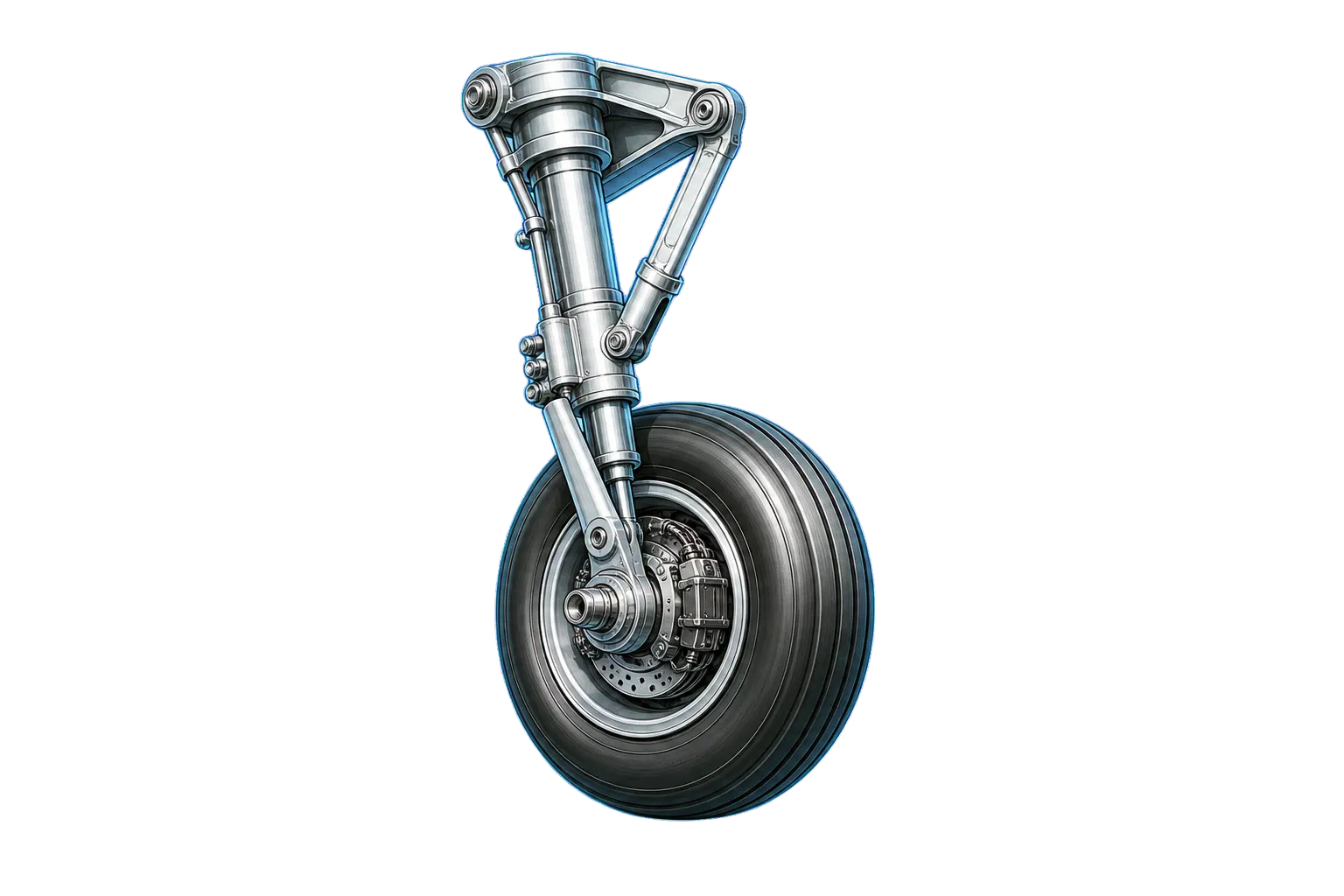
A reduction in the torque value of the bolt connecting the gearbox housing assembly of the steering unit to the pivot bracket of the nose landing gear (NLG) could result in failure of the dowel pins in the Walter Kidde nose wheel steering system, leading to reduced controllability of the airplane or collapse of the NLG during landing.
AI-generated summary from the source AD text. Verify against the official source before acting.
Required Actions
Tighten the bolt to a torque value of 700 to 800 inch-pounds within 500 flight hours or 4 months after the effective date. Revise the FAA-approved maintenance program within 30 days to include periodic inspections of the torque value as per specified documents.
AI-generated summary from the source AD text. Verify against the official source before acting.
Compliance Time
Within 500 flight hours after the effective date of this AD, or within 4 months after the effective date of this AD, whichever occurs first
AI-generated summary from the source AD text. Verify against the official source before acting.
Affected Aircraft
Fokker Model F27 series airplanes, serial numbers 10102 through 10692 inclusive; equipped with Walter Kidde nose wheel steering system (steering unit gearbox housing assembly) having part number 893954
AI-generated summary from the source AD text. Verify against the official source before acting.
Federal Register Abstract
Nose Wheel Steering System
Applicability Source Text
Show captured applicability text from the source AD
AD Final Rules - DRS_97-04-16.html
Copy URL
Print/Save as PDF
Document Versions
 Feedback
Details
AD Number:
97-04-16
Document Type:
AD Final Rules
Docket Number:
96-NM-38-AD
Subject Heading:
Airworthiness Directives; Fokker Model F27 Series Airplanes Equipped with Walter Kidde Nose Wheel St...Show more
Subject:
Nose Wheel Steering System
Status:
Current
Citation:
This information is not available.
Citation Publish Date:
Effective Date:
03/31/1997
Make:
Fokker Services
Model:
F27 Mark 050 | F27 Mark 100 | F27 Mark 200 | F27 Mark 300 | F27 Mark 400 | F27 Mark 500 | F27 Mark 6...Show more
Product Type:
Aircraft
Product Subtype:
Large Airplane
Affected AD:
Superseded AD:
Affected By:
Superseded By:
Service/Office:
Office of Primary Responsibility:
CFR Part Reference:
Part 39 [62 FR 8156 NO. 36 02/24/97]
Comments:
AIRWORTHINESS DIRECTIVES FINAL RULES: 97-04-16
CITATION:   This information is not available.

PAGE NUMBER:

DOCKET NUMBER:   96-NM-38-AD

AMENDMENT:   39-9941

AD NUMBER:   97-04-16

SUBJECT HEADING:   Airworthiness Directives; Fokker Model F27 Series Airplanes Equipped with Walter Kidde Nose Wheel Steering System

ACTION:   Final rule

SUMMARY:   This amendment adopts a new airworthiness directive (AD), applicable to certain Fokker Model F27 series airplanes, that requires increasing the torque value of the bolt that connects the gearbox housing assembly of the steering unit to the pivot bracket of the nose landing gear (NLG). This amendment also requires that periodic inspections of that torque value be incorporated into the FAA-approved maintenance program. This amendment is prompted by several reports that the dowel pins in the Walter Kidde nose wheel steering system were found broken and/or had elongated holes due to a reduced torque value of the subject bolt. The actions specified by this AD are intended to prevent such a reduction in the torque value, which could result in failure of the dowel pins in the Walter Kidde nose wheel steering system; this situation could result in reduced controllability of the airplane or the collapse of the NLG during landing.

DATES:   Effective March 31, 1997. The incorporation by reference of certain publications listed in the regulations is approved by the Director of the Federal Register as of March 31, 1997.

ADDRESSES:   The service information referenced in this AD may be obtained from Fokker Aircraft USA, Inc., 1199 North Fairfax Street, Alexandria, Virginia 22314. This information may be examined at the Federal Aviation Administration (FAA), Transport Airplane Directorate, Rules Docket, 1601 Lind Avenue, SW., Renton, Washington; or at the Office of the Federal Register, 800 North Capitol Street, NW., suite 700, Washington, DC.

FOR FURTHER INFORMATION CONTACT:   Ruth Harder, Aerospace Engineer, Standardization Branch, ANM-113, FAA, Transport Airplane Directorate, 1601 Lind Avenue, SW., Renton, Washington 98055-4056; telephone (206) 227-1721; fax (206) 227-1149.

SUPPLEMENTARY INFORMATION:
A proposal to amend part 39 of the Federal Aviation Regulations (14 CFR part 39) to include an airworthiness directive (AD) that is applicable to certain Fokker Model F27 series airplanes was published in the Federal Register on July 29, 1996 (61 FR 39366). That action proposed to require increasing the torque value of the bolt that connects the gearbox housing assembly of the steering unit to the pivot bracket of the nose landing gear (NLG).

Interested persons have been afforded an opportunity to participate in the making of this amendment. Due consideration has been given to the comments received.

Support for the Proposal
One commenter supports the proposed rule.

Request to Withdraw Proposal
One commenter, a U.S. operator, requests that the proposal be withdrawn because it is unnecessary. The commenter points out that the proposed requirements previously were issued by Fokker both as a service bulletin and a maintenance circular several years ago. This commenter has already added the inspections to its maintenance program, far in advance of any requirement by AD to do so. The commenter contends that mandating the actions via an AD will "only add an administrative burden on an industry already overburdened with administrative tasks, many of which are redundant." Instead of issuing this AD, the commenter recommends that the proposed requirements be added to the airlines' Operations Specifications, or merely have the Principal Maintenance Inspectors for the affected airlines talk to the operators about this issue. The commenter maintains that handling the proposed requirements in some other way than by AD action would save the affected operators a considerable amount of time and money.

The FAA does not concur with the commenter's request to withdraw the proposal. The FAA acknowledges that the required actions specified in this AD were contained in a manufacturer's service bulletin and maintenance circular, both of which were released some time ago. Prudent operators, such as the commenter, may have accomplished those actions already. However, until an AD is issued, there is no legal basis for requiring U.S. operators to comply with those actions. The AD is the vehicle for ensuring, by law, that all affected operators perform the necessary actions that will address the identified unsafe condition. In light of this, the FAA has determined that this AD is appropriate and warranted.

Further, the FAA is not convinced that issuance of this AD will add a significant economic or administrative burden on operators who have already accomplished the required actions, as the commenter suggests:

First, the FAA points out that there are currently only 34 U.S.-registered airplanes that are affected by the AD.

Second, the compliance provision of the AD clearly states that compliance is "required as indicated, unless accomplished previously." Therefore, operators who have already accomplished the required actions need only make a single entry in their maintenance logs to indicate compliance with the AD. Further, once the maintenance program is changed to include the required periodic inspections, in accordance with paragraph (b) of the AD, operators do not need to make a maintenance log entry to show compliance with the AD every time those inspections are accomplished thereafter. (A new NOTE 2 has been added to the final rule to specify this.) Such procedures should not pose a serious burden on any operator.

Conclusion
After careful review of the available data, including the comments noted above, the FAA has determined that air safety and the public interest require the adoption of the rule with the changes previously described. The FAA has determined that these changes will neither increase the economic burden on any operator nor increase the scope of the AD.

Cost Impact
The FAA estimates that 34 Fokker Model F27 series airplanes of U.S. registry will be affected by this AD.

It will take approximately 2 work hours per airplane to accomplish the required actions, at an average labor rate of $60 per work hour. Based on these figures, the cost impact of this AD on U.S. operators is estimated to be $4,080, or $120 per airplane.

The cost impact figure discussed above is based on assumptions that no operator has yet accomplished any of the requirements of this AD action, and that no operator would accomplish those actions in the future if this AD were not adopted.

However, the FAA has been advised that one U.S. operator already has accomplished the required actions on its 2 affected airplanes. Therefore, the future cost impact of this AD is only $4,056.

Regulatory Impact
The regulations adopted herein will not have substantial direct effects on the States, on the relationship between the national government and the States, or on the distribution of power and responsibilities among the various levels of government. Therefore, in accordance with Executive Order 12612, it is determined that this final rule does not have sufficient federalism implications to warrant the preparation of a Federalism Assessment.

For the reasons discussed above, I certify that this action (1) is not a "significant regulatory action" under Executive Order 12866; (2) is not a "significant rule" under DOT Regulatory Policies and Procedures (44 FR 11034, February 26, 1979); and (3) will not have a significant economic impact, positive or negative, on a substantial number of small entities under the criteria of the Regulatory Flexibility Act. A final evaluation has been prepared for this action and it is contained in the Rules Docket. A copy of it may be obtained from the Rules Docket at the location provided under the caption "ADDRESSES."

List of Subjects in 14 CFR Part 39
Air transportation, Aircraft, Aviation safety, Incorporation by reference, Safety.

Adoption of the Amendment
Accordingly, pursuant to the authority delegated to me by the Administrator, the Federal Aviation Administration amends part 39 of the Federal Aviation Regulations (14 CFR part 39) as follows:

PART 39 - AIRWORTHINESS DIRECTIVES
1. The authority citation for part 39 continues to read as follows:
Authority: 49 U.S.C. 106(g), 40113, 44701.

§ 39.13 - [Amended]
2. Section 39.13 is amended by adding the following new airworthiness directive:

REGULATORY TEXT:
97-04-16 FOKKER: Amendment 39-9941. Docket 96-NM-38-AD.
Applicability: Model F27 series airplanes, serial numbers 10102 through 10692 inclusive; equipped with Walter Kidde nose wheel steering system (steering unit gearbox housing assembly) having part number 893954; certificated in any category.

NOTE 1: This AD applies to each airplane identified in the preceding applicability provision, regardless of whether it has been modified, altered, or repaired in the area subject to the requirements of this AD. For airplanes that have been modified, altered, or repaired so that the performance of the requirements of this AD is affected, the owner/operator must request approval for an alternative method of compliance in accordance with paragraph (c) of this AD. The request should include an assessment of the effect of the modification, alteration, or repair on the unsafe condition addressed by this AD; and, if the unsafe condition has not been eliminated, the request should include specific proposed actions to address it.

Compliance: Required as indicated, unless accomplished previously.

To prevent a reduction in the torque value of the bolt in the Walter Kidde nose wheel steering system, which could result in reduced controllability of the airplane or the collapse of the nose landing gear (NLG) during landing, accomplish the following:

(a) Within 500 flight hours after the effective date of this AD, or within 4 months after the effective date of this AD, whichever occurs first, tighten the bolt that connects the gearbox housing assembly of the steering unit to the pivot bracket of the NLG to a torque value of 700 to 800 inch-pounds, in accordance with Fokker Service Bulletin F27/32-166, dated September 7, 1993.

(b) Within 30 days following accomplishment of paragraph (a) of this AD, revise the FAA-approved maintenance program to include periodic inspections of the torque value of the affected bolt, as described in Fokker F27 Maintenance Circular No. 32-6, dated April 30, 1993; and, thereafter, comply with those requirements.

NOTE 2: Once the maintenance program is changed to include the required periodic inspections, in accordance with this paragraph, operators do not need to make an maintenance log entry to show compliance with this AD every time those inspections are accomplished thereafter.

(c) An alternative method of compliance or adjustment of the compliance time that provides an acceptable level of safety may be used if approved by the Manager, Standardization Branch, ANM-113, FAA, Transport Airplane Directorate. Operators shall submit their requests through an appropriate FAA Principal Maintenance Inspector, who may add comments and then send it to the Manager, Standardization Branch, ANM-113.

NOTE 3: Information concerning the existence of approved alternative methods of compliance with this AD, if any, may be obtained from the Standardization Branch, ANM-113.

(d) Special flight permits may be issued in accordance with sections 21.197 and 21.199 of the Federal Aviation Regulations (14 CFR 21.197 and 21.199) to operate the airplane to a location where the requirements of this AD can be accomplished.

(e) The actions shall be done in accordance with Fokker Service Bulletin F27/32-166, dated September 7, 1993; and Fokker F27 Maintenance Circular No. 32-6, dated April 30, 1993. This incorporation by reference was approved by the Director of the Federal Register in accordance with 5 U.S.C. 552(a) and 1 CFR part 51. Copies may be obtained from Fokker Aircraft USA, Inc., 1199 North Fairfax Street, Alexandria, Virginia 22314. Copies may be inspected at the FAA, Transport Airplane Directorate, 1601 Lind Avenue, SW., Renton, Washington; or at the Office of the Federal Register, 800 North Capitol Street, NW., suite 700, Washington, DC.

(f) This amendment becomes effective on March 31, 1997.

FOOTER:
Document Text
Show stored source text (verify against official source)
AD Final Rules - DRS_97-04-16.html
Copy URL
Print/Save as PDF
Document Versions
 Feedback
Details
AD Number:
97-04-16
Document Type:
AD Final Rules
Docket Number:
96-NM-38-AD
Subject Heading:
Airworthiness Directives; Fokker Model F27 Series Airplanes Equipped with Walter Kidde Nose Wheel St...Show more
Subject:
Nose Wheel Steering System
Status:
Current
Citation:
This information is not available.
Citation Publish Date:
Effective Date:
03/31/1997
Make:
Fokker Services
Model:
F27 Mark 050 | F27 Mark 100 | F27 Mark 200 | F27 Mark 300 | F27 Mark 400 | F27 Mark 500 | F27 Mark 6...Show more
Product Type:
Aircraft
Product Subtype:
Large Airplane
Affected AD:
Superseded AD:
Affected By:
Superseded By:
Service/Office:
Office of Primary Responsibility:
CFR Part Reference:
Part 39 [62 FR 8156 NO. 36 02/24/97]
Comments:
AIRWORTHINESS DIRECTIVES FINAL RULES: 97-04-16
CITATION:   This information is not available.

PAGE NUMBER:

DOCKET NUMBER:   96-NM-38-AD

AMENDMENT:   39-9941

AD NUMBER:   97-04-16

SUBJECT HEADING:   Airworthiness Directives; Fokker Model F27 Series Airplanes Equipped with Walter Kidde Nose Wheel Steering System

ACTION:   Final rule

SUMMARY:   This amendment adopts a new airworthiness directive (AD), applicable to certain Fokker Model F27 series airplanes, that requires increasing the torque value of the bolt that connects the gearbox housing assembly of the steering unit to the pivot bracket of the nose landing gear (NLG). This amendment also requires that periodic inspections of that torque value be incorporated into the FAA-approved maintenance program. This amendment is prompted by several reports that the dowel pins in the Walter Kidde nose wheel steering system were found broken and/or had elongated holes due to a reduced torque value of the subject bolt. The actions specified by this AD are intended to prevent such a reduction in the torque value, which could result in failure of the dowel pins in the Walter Kidde nose wheel steering system; this situation could result in reduced controllability of the airplane or the collapse of the NLG during landing.

DATES:   Effective March 31, 1997. The incorporation by reference of certain publications listed in the regulations is approved by the Director of the Federal Register as of March 31, 1997.

ADDRESSES:   The service information referenced in this AD may be obtained from Fokker Aircraft USA, Inc., 1199 North Fairfax Street, Alexandria, Virginia 22314. This information may be examined at the Federal Aviation Administration (FAA), Transport Airplane Directorate, Rules Docket, 1601 Lind Avenue, SW., Renton, Washington; or at the Office of the Federal Register, 800 North Capitol Street, NW., suite 700, Washington, DC.

FOR FURTHER INFORMATION CONTACT:   Ruth Harder, Aerospace Engineer, Standardization Branch, ANM-113, FAA, Transport Airplane Directorate, 1601 Lind Avenue, SW., Renton, Washington 98055-4056; telephone (206) 227-1721; fax (206) 227-1149.

SUPPLEMENTARY INFORMATION:
A proposal to amend part 39 of the Federal Aviation Regulations (14 CFR part 39) to include an airworthiness directive (AD) that is applicable to certain Fokker Model F27 series airplanes was published in the Federal Register on July 29, 1996 (61 FR 39366). That action proposed to require increasing the torque value of the bolt that connects the gearbox housing assembly of the steering unit to the pivot bracket of the nose landing gear (NLG).

Interested persons have been afforded an opportunity to participate in the making of this amendment. Due consideration has been given to the comments received.

Support for the Proposal
One commenter supports the proposed rule.

Request to Withdraw Proposal
One commenter, a U.S. operator, requests that the proposal be withdrawn because it is unnecessary. The commenter points out that the proposed requirements previously were issued by Fokker both as a service bulletin and a maintenance circular several years ago. This commenter has already added the inspections to its maintenance program, far in advance of any requirement by AD to do so. The commenter contends that mandating the actions via an AD will "only add an administrative burden on an industry already overburdened with administrative tasks, many of which are redundant." Instead of issuing this AD, the commenter recommends that the proposed requirements be added to the airlines' Operations Specifications, or merely have the Principal Maintenance Inspectors for the affected airlines talk to the operators about this issue. The commenter maintains that handling the proposed requirements in some other way than by AD action would save the affected operators a considerable amount of time and money.

The FAA does not concur with the commenter's request to withdraw the proposal. The FAA acknowledges that the required actions specified in this AD were contained in a manufacturer's service bulletin and maintenance circular, both of which were released some time ago. Prudent operators, such as the commenter, may have accomplished those actions already. However, until an AD is issued, there is no legal basis for requiring U.S. operators to comply with those actions. The AD is the vehicle for ensuring, by law, that all affected operators perform the necessary actions that will address the identified unsafe condition. In light of this, the FAA has determined that this AD is appropriate and warranted.

Further, the FAA is not convinced that issuance of this AD will add a significant economic or administrative burden on operators who have already accomplished the required actions, as the commenter suggests:

First, the FAA points out that there are currently only 34 U.S.-registered airplanes that are affected by the AD.

Second, the compliance provision of the AD clearly states that compliance is "required as indicated, unless accomplished previously." Therefore, operators who have already accomplished the required actions need only make a single entry in their maintenance logs to indicate compliance with the AD. Further, once the maintenance program is changed to include the required periodic inspections, in accordance with paragraph (b) of the AD, operators do not need to make a maintenance log entry to show compliance with the AD every time those inspections are accomplished thereafter. (A new NOTE 2 has been added to the final rule to specify this.) Such procedures should not pose a serious burden on any operator.

Conclusion
After careful review of the available data, including the comments noted above, the FAA has determined that air safety and the public interest require the adoption of the rule with the changes previously described. The FAA has determined that these changes will neither increase the economic burden on any operator nor increase the scope of the AD.

Cost Impact
The FAA estimates that 34 Fokker Model F27 series airplanes of U.S. registry will be affected by this AD.

It will take approximately 2 work hours per airplane to accomplish the required actions, at an average labor rate of $60 per work hour. Based on these figures, the cost impact of this AD on U.S. operators is estimated to be $4,080, or $120 per airplane.

The cost impact figure discussed above is based on assumptions that no operator has yet accomplished any of the requirements of this AD action, and that no operator would accomplish those actions in the future if this AD were not adopted.

However, the FAA has been advised that one U.S. operator already has accomplished the required actions on its 2 affected airplanes. Therefore, the future cost impact of this AD is only $4,056.

Regulatory Impact
The regulations adopted herein will not have substantial direct effects on the States, on the relationship between the national government and the States, or on the distribution of power and responsibilities among the various levels of government. Therefore, in accordance with Executive Order 12612, it is determined that this final rule does not have sufficient federalism implications to warrant the preparation of a Federalism Assessment.

For the reasons discussed above, I certify that this action (1) is not a "significant regulatory action" under Executive Order 12866; (2) is not a "significant rule" under DOT Regulatory Policies and Procedures (44 FR 11034, February 26, 1979); and (3) will not have a significant economic impact, positive or negative, on a substantial number of small entities under the criteria of the Regulatory Flexibility Act. A final evaluation has been prepared for this action and it is contained in the Rules Docket. A copy of it may be obtained from the Rules Docket at the location provided under the caption "ADDRESSES."

List of Subjects in 14 CFR Part 39
Air transportation, Aircraft, Aviation safety, Incorporation by reference, Safety.

Adoption of the Amendment
Accordingly, pursuant to the authority delegated to me by the Administrator, the Federal Aviation Administration amends part 39 of the Federal Aviation Regulations (14 CFR part 39) as follows:

PART 39 - AIRWORTHINESS DIRECTIVES
1. The authority citation for part 39 continues to read as follows:
Authority: 49 U.S.C. 106(g), 40113, 44701.

§ 39.13 - [Amended]
2. Section 39.13 is amended by adding the following new airworthiness directive:

REGULATORY TEXT:
97-04-16 FOKKER: Amendment 39-9941. Docket 96-NM-38-AD.
Applicability: Model F27 series airplanes, serial numbers 10102 through 10692 inclusive; equipped with Walter Kidde nose wheel steering system (steering unit gearbox housing assembly) having part number 893954; certificated in any category.

NOTE 1: This AD applies to each airplane identified in the preceding applicability provision, regardless of whether it has been modified, altered, or repaired in the area subject to the requirements of this AD. For airplanes that have been modified, altered, or repaired so that the performance of the requirements of this AD is affected, the owner/operator must request approval for an alternative method of compliance in accordance with paragraph (c) of this AD. The request should include an assessment of the effect of the modification, alteration, or repair on the unsafe condition addressed by this AD; and, if the unsafe condition has not been eliminated, the request should include specific proposed actions to address it.

Compliance: Required as indicated, unless accomplished previously.

To prevent a reduction in the torque value of the bolt in the Walter Kidde nose wheel steering system, which could result in reduced controllability of the airplane or the collapse of the nose landing gear (NLG) during landing, accomplish the following:

(a) Within 500 flight hours after the effective date of this AD, or within 4 months after the effective date of this AD, whichever occurs first, tighten the bolt that connects the gearbox housing assembly of the steering unit to the pivot bracket of the NLG to a torque value of 700 to 800 inch-pounds, in accordance with Fokker Service Bulletin F27/32-166, dated September 7, 1993.

(b) Within 30 days following accomplishment of paragraph (a) of this AD, revise the FAA-approved maintenance program to include periodic inspections of the torque value of the affected bolt, as described in Fokker F27 Maintenance Circular No. 32-6, dated April 30, 1993; and, thereafter, comply with those requirements.

NOTE 2: Once the maintenance program is changed to include the required periodic inspections, in accordance with this paragraph, operators do not need to make an maintenance log entry to show compliance with this AD every time those inspections are accomplished thereafter.

(c) An alternative method of compliance or adjustment of the compliance time that provides an acceptable level of safety may be used if approved by the Manager, Standardization Branch, ANM-113, FAA, Transport Airplane Directorate. Operators shall submit their requests through an appropriate FAA Principal Maintenance Inspector, who may add comments and then send it to the Manager, Standardization Branch, ANM-113.

NOTE 3: Information concerning the existence of approved alternative methods of compliance with this AD, if any, may be obtained from the Standardization Branch, ANM-113.

(d) Special flight permits may be issued in accordance with sections 21.197 and 21.199 of the Federal Aviation Regulations (14 CFR 21.197 and 21.199) to operate the airplane to a location where the requirements of this AD can be accomplished.

(e) The actions shall be done in accordance with Fokker Service Bulletin F27/32-166, dated September 7, 1993; and Fokker F27 Maintenance Circular No. 32-6, dated April 30, 1993. This incorporation by reference was approved by the Director of the Federal Register in accordance with 5 U.S.C. 552(a) and 1 CFR part 51. Copies may be obtained from Fokker Aircraft USA, Inc., 1199 North Fairfax Street, Alexandria, Virginia 22314. Copies may be inspected at the FAA, Transport Airplane Directorate, 1601 Lind Avenue, SW., Renton, Washington; or at the Office of the Federal Register, 800 North Capitol Street, NW., suite 700, Washington, DC.

(f) This amendment becomes effective on March 31, 1997.

FOOTER:
Source: Official FAA Source ↗
Retrieved: Apr 8, 2026
Rights: U.S. Government Public Domain
This site is not affiliated with or endorsed by the FAA. Always verify with official sources.