AD 97-02-09
Applicability
| Type | Manufacturer | Model | Details |
|---|---|---|---|
| aircraft | The Boeing Company | 727-100 Series | Airworthiness Directives; Boeing Model 727 Series Airplanes |
| aircraft | The Boeing Company | 727-100C Series | Airworthiness Directives; Boeing Model 727 Series Airplanes |
| aircraft | The Boeing Company | 727-200 Series | Airworthiness Directives; Boeing Model 727 Series Airplanes |
| aircraft | The Boeing Company | 727-200F Series | Airworthiness Directives; Boeing Model 727 Series Airplanes |
| aircraft | The Boeing Company | 727 Series | Airworthiness Directives; Boeing Model 727 Series Airplanes |
| aircraft | The Boeing Company | 727C Series | Airworthiness Directives; Boeing Model 727 Series Airplanes |
Unsafe Condition
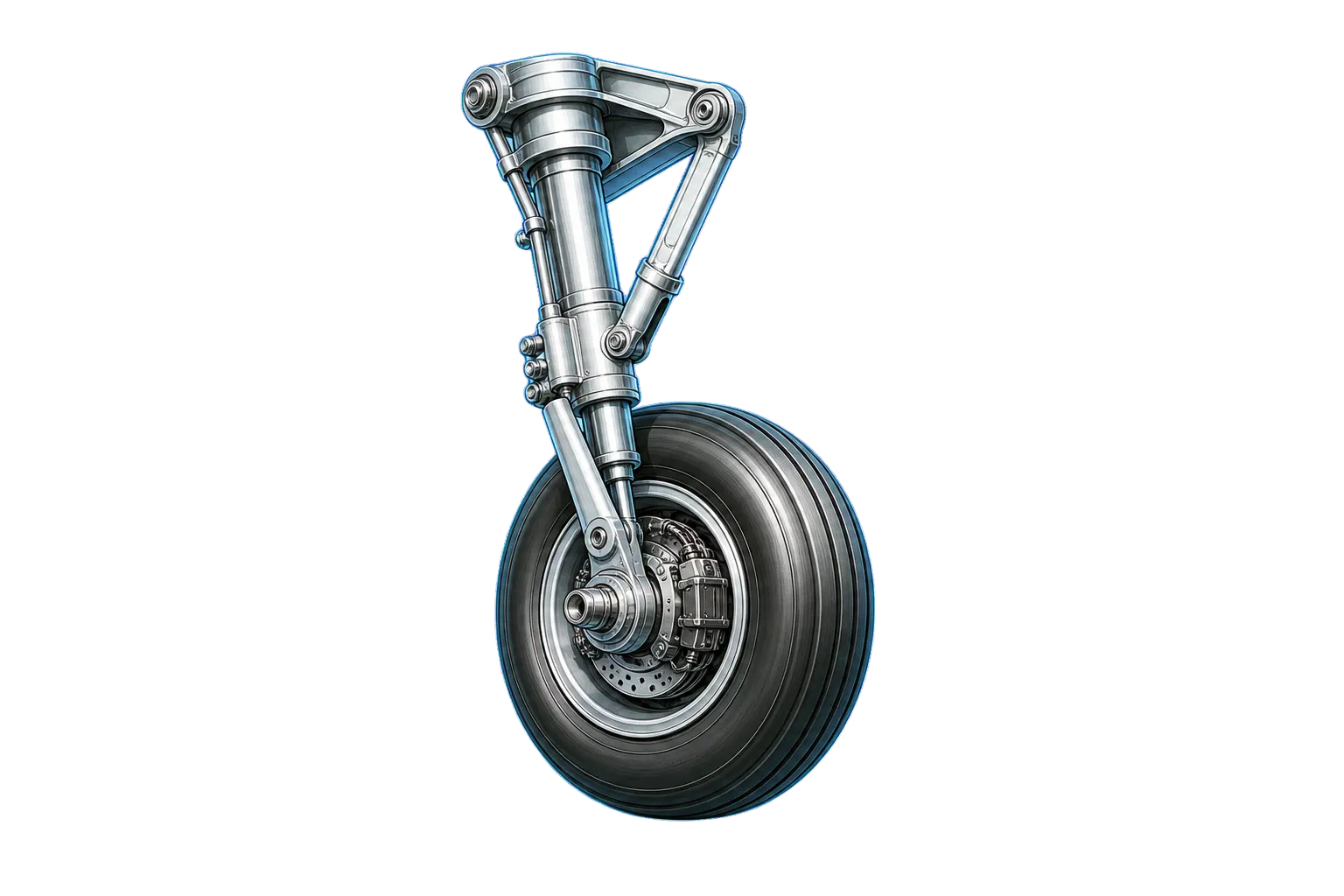
Cracking in the actuator rib fitting of the inboard door of the main landing gear (MLG), which could lead to failure of the landing gear to extend due to a fractured rib fitting.
AI-generated summary from the source AD text. Verify against the official source before acting.
Required Actions
Inspect the actuator rib fitting of the MLG inboard door in an expanded area to detect cracking. Rework or replace any cracked fittings. Perform follow-on actions including inspections at specified intervals or installation of steel fittings as a terminating action.
AI-generated summary from the source AD text. Verify against the official source before acting.
Compliance Time
Effective March 4, 1997.
AI-generated summary from the source AD text. Verify against the official source before acting.
Affected Aircraft
Boeing Model 727-100 Series, 727-100C Series, 727-200 Series, 727-200F Series, 727 Series, 727C Series airplanes, certificated in any category.
AI-generated summary from the source AD text. Verify against the official source before acting.
Federal Register Abstract
Actuator Rib Fitting of Main Landing Gear
Applicability Source Text
Show captured applicability text from the source AD
AD Final Rules - DRS_97-02-09.html
Copy URL
Print/Save as PDF
Document Versions
 Feedback
Details
AD Number:
97-02-09
Document Type:
AD Final Rules
Docket Number:
95-NM-223-AD
Subject Heading:
Airworthiness Directives; Boeing Model 727 Series Airplanes
Subject:
Actuator Rib Fitting of Main Landing Gear
Status:
Current
Citation:
(Federal Register: January 28, 1997 (Volume 62, Number 18))
Citation Publish Date:
01/28/1997
Effective Date:
03/04/1997
Make:
The Boeing Company
Model:
727-100 Series | 727-100C Series | 727-200 Series | 727-200F Series | 727 Series | 727C Series
Product Type:
Aircraft
Product Subtype:
Large Airplane
Affected AD:
Superseded AD:
Affected By:
Superseded By:
Service/Office:
Office of Primary Responsibility:
CFR Part Reference:
Part 39 (62 FR 3988 NO. 18 01/28/97)
Comments:
AIRWORTHINESS DIRECTIVES FINAL RULES: 97-02-09
CITATION:   [Federal Register: January 28, 1997 (Volume 62, Number 18)]

PAGE NUMBER:   [Page 3988]

DOCKET NUMBER:   95-NM-223-AD

AMENDMENT:   39-9894

AD NUMBER:   97-02-09

SUBJECT HEADING:   Airworthiness Directives; Boeing Model 727 Series Airplanes

ACTION:   Final rule

SUMMARY:
This amendment supersedes two existing airworthiness directives (AD), applicable to all Boeing Model 727 series airplanes, that currently require inspections to detect cracking of the actuator rib fitting of the inboard door of the main landing gear (MLG); and rework or replacement of any cracked fitting. This amendment requires inspections to detect cracking in an expanded area of the actuator rib fitting, and various follow-on actions. This amendment is prompted by a report of a fractured rib fitting that had been reworked in accordance with one of the existing AD's. The actions specified by this AD are intended to prevent damage to the airplane caused by a failure of the landing gear to extend due to a fractured rib fitting.

DATES:   Effective March 4, 1997. The incorporation by reference of certain publications listed in the regulations is approved by the Director of the Federal Register as of March 4, 1997.

ADDRESSES:
The service information referenced in this AD may be obtained from Boeing
Commercial Airplane Group, P.O. Box 3707, Seattle, Washington 98124-2207. This information may be examined at the Federal Aviation Administration (FAA), Transport Airplane Directorate, Rules Docket, 1601 Lind Avenue, SW., Renton, Washington; or at the Office of the Federal Register, 800 North Capitol Street, NW., suite 700, Washington, DC.

FOR FURTHER INFORMATION CONTACT:
Walter Sippel, Aerospace Engineer, Airframe Branch, ANM-120S, FAA, Seattle Aircraft Certification Office, 1601 Lind Avenue, SW., Renton, Washington; telephone (206) 227-2774; fax (206) 227-1181.

SUPPLEMENTARY INFORMATION:
A proposal to amend part 39 of the Federal Aviation Regulations (14 CFR part 39) by superseding AD 90-02-19 [amendment 39-6433 (55 FR 601, January 8, 1990)] and AD 93-01-14 [amendment 39-8368, (58 FR 5574, January 22, 1993)], both of which are applicable to Boeing Model 727 series airplanes, was published in the Federal Register as a supplemental notice of proposed rulemaking on October 1, 1996, (61 FR 51250). The action proposed to continue to require the actions specified in the two previously issued AD's, but to expand the area of inspection and to require various follow-on actions.

Interested persons have been afforded an opportunity to participate in the making of this amendment.

Due consideration has been given to the comments received.

Support for the Proposal

Two commenters support the proposed AD.

Request to Revise Compliance Threshold for Modified Fittings

One commenter, the airframe manufacturer, requests that paragraph (b)(1)(ii) of the proposal be revised to extend one of the compliance thresholds for the initial inspections of fittings that have been modified in accordance with Boeing Service bulletin 727-32-0383, Revision 1. This commenter points out that, in the supplemental NPRM, the FAA proposed to reduced the initial inspection time for these fittings from 2,500 cycles to 1,500 cycles, based on an analysis of a recent incident of cracking found in the fittings. However, based on newer data, the commenter states that the proposed reduction may be too conservative. A recent striation analysis has shown that the crack on the fitting involved in the new incident was present for a significantly greater time than the 1,350 cycles since the last inspection (as originally thought). The exact interval between crack initiation and fitting fracture is indeterminate because of fracture surface deterioration. There was evidence of significant surface attack, which indicates prolonged exposure to a corrosive environment; however, the exact length of exposure is not know. The commenter further states that it was possible to perform some striation count analysis on a portion of the fracture; correlation of this analysis to the analysis performed on the earlier cracking incident (in 1994) showed a high degree of similarity. Additionally, the commenter states that the recent cracking incident occurred approximately 8,000 cycles after the modification was installed on the fitting. Consequently, the commenter considers that the reasoning for a 2,500- cycle initial inspection threshold is valid.

The FAA concurs. The FAA has reviewed the data presented by the commenter and agrees that the threshold for initiating the inspections of modified fittings can be extended. Paragraph (b)(1)(ii) of the final rule has been revised to indicate a threshold of 2,500 flight cycles after the immediately preceding inspection conducted in accordance with Boeing Service Bulletin 727- 32A0399. Additionally, a new paragraph (b)(1)(iii) has been added to provide for a threshold of "within 5,000 flight cycles after accomplishing the terminating action in accordance with AD 93-01-14."

Request for Reference to Additional Service Information

This same commenter, requests that the proposal be revised to include Revision 1 of Boeing Service Bulletin 727-32A0399 as an additional source of service information. The commenter indicates that Boeing will be issuing Revision 1 of the service bulletin in the near future to reflect the requirements and reference the AD number of this final rule.

The FAA does not concur, since Revision 1 does not yet exist and has not been reviewed and approved by the FAA.

Request to Revise Cost Impact Information

One commenter requests that the cost impact information, iterated in the preamble to the supplemental NPRM, be revised to update the cost of required parts for the optional terminating action (installation of steel fittings). This commenter states that the necessary parts cost $3,489 per side and there are two sides; therefore, the total cost of parts is $6,978. Additionally, the commenter points out that the number of work hours required to accomplish the installation is 18, rather than 4 work hours, as was indicated in the proposal.

The FAA concurs that the figures provided by the commenter are more up-to-date than those obtained by the FAA at the time the supplemental NPRM was issued. The cost impact information, below, has been revised to include these new figures.

Conclusion

After careful review of the available data, including the comments noted above, the FAA has determined that air safety and the public interest require the adoption of the rule with the changes previously described. The FAA has determined that these changes will neither increase the economic burden on any operator nor increase the scope of the AD.

Cost Impact

There are approximately 1,631 Boeing Model 727 series airplanes of the affected design in the worldwide fleet. The FAA estimates that 1,166 airplanes of U.S. registry will be affected by this proposed AD.

The inspections required by this AD action will take approximately 10 work hours per airplane to accomplish, at an average labor rate of $60 per work hour. Based on these figures, the cost impact of the required inspections on U.S. operators is estimated to be $699,600, or $600 per airplane, per inspection.

The modification required by this AD action will take approximately 6 work hours per airplane to accomplish, at an average labor rate of $60 per work hour. The cost of required parts is expected to be negligible. Based on these figures, the cost impact of the required modification on U.S. operators is estimated to be $376,560, or $360 per airplane.

The cost impact figures discussed above are based on assumptions that no operator has yet accomplished any of the requirements of this AD action, and that no operator would accomplish those actions in the future if this AD were not adopted.

Should an operator elect to accomplish the optional terminating action (installation of steel fittings) provided by this AD, it would take approximately 18 work hours per airplane, at an average labor rate of $60 per work hour. Required parts would cost approximately $6,978 per airplane. Based on these figures, the cost impact of this optional terminating action on U.S. operators is estimated to be $8,058 per airplane.

Regulatory Impact

The regulations adopted herein will not have substantial direct effects on the States, on the relationship between the national government and the States, or on the distribution of power and responsibilities among the various levels of government. Therefore, in accordance with Executive Order 12612, it is determined that this final rule does not have sufficient federalism implications to warrant the preparation of a Federalism Assessment.

For the reasons discussed above, I certify that this action (1) is not a "significant regulatory action" under Executive Order 12866; (2) is not a "significant rule" under DOT Regulatory Policies and Procedures (44 FR 11034, February 26, 1979); and (3) will not have a significant economic impact, positive or negative, on a substantial number of small entities under the criteria of the Regulatory Flexibility Act. A final evaluation has been prepared for this action and it is contained in the Rules Docket. A copy of it may be obtained from the Rules Docket at the location provided under the caption "ADDRESSES."

List of Subjects in 14 CFR Part 39

Air transportation, Aircraft, Aviation safety, Incorporation by reference, Safety.
Adoption of the Amendment

Accordingly, pursuant to the authority delegated to me by the Administrator, the Federal Aviation Administration amends part 39 of the Federal Aviation Regulations (14 CFR part 39) as follows:

PART 39 - AIRWORTHINESS DIRECTIVES

1. The authority citation for part 39 continues to read as follows: Authority: 49 U.S.C. 106(g), 40113, 44701. § 39.13 - [Amended]

2. Section 39.13 is amended by removing amendment 39-6433 (55 FR 601, January 8, 1990); and by removing amendment 39-8368 (58 FR 5574, January 22, 1993); and by adding a new airworthiness directive (AD), to read as follows:

REGULATORY TEXT:
97-02-09 BOEING: Amendment 39-9894, Docket 95-NM-223-AD. Supersedes AD 90-02-19, amendment 39-6433; and supersedes AD 93-01-14, amendment 39-8368.

Applicability: All Model 727 series airplanes, certificated in any category.

NOTE 1: This AD applies to each airplane identified in the preceding applicability provision, regardless of whether it has been otherwise modified, altered, or repaired in the area subject to the requirements of this AD. For airplanes that have been modified, altered, or repaired so that the performance of the requirements of this AD is affected, the owner/operator must request approval for an alternative method of compliance in accordance with paragraph (g) of this AD. The request should include an assessment of the effect of the modification, alteration, or repair on the unsafe condition addressed by this AD; and, if the unsafe condition has not been eliminated, the request should include specific proposed actions to address it.

Compliance: Required as indicated, unless accomplished previously.

To prevent failure of the main landing gear (MLG) to extend for landing and subsequent damage to the airplane, accomplish the following:

(a) For airplanes equipped with rib fittings that have been modified (reworked) in accordance with Boeing Service Bulletin 727-32-0364, dated December 15, 1988, or Revision 1, dated October 19, 1989; but have not been modified in accordance with Figure 2 of Boeing Service Bulletin 727-32-0383, Revision 1, dated January 30, 1992: Accomplish the following:

(1) Prior to the accumulation of 1,000 flight cycles after the effective date of this AD, accomplish the actions specified in both paragraphs (a)(1)(i) and (a)(1)(ii):

(i) Perform either a high frequency eddy current or dye penetrant inspection to detect cracking of the actuator rib fitting of the MLG, in accordance with Part I of the Accomplishment Instructions of Boeing Alert Service Bulletin 727-32A0399, dated July 13, 1995. And

(ii) Inspect the actuator rib fitting of the MLG to ensure that serrations are fully mated, and to detect loose bolts, in accordance with Figure 1 of Boeing Service Bulletin 727- 32-0383, Revision 1, dated January 30, 1992.

(2) If the inspections required by paragraph (a)(1) of this AD reveal no cracking or loose bolts, and reveal that the serrations are fully mated, accomplish the actions specified in paragraphs (a)(2)(i), (a)(2)(ii), and (a)(2)(iii) of this AD:

(i) Prior to further flight, re-rig the door in accordance with the maintenance manual procedures referenced in Boeing Alert Service Bulletin 727-32A0399, dated July 13, 1995, to ensure proper door rigging. And

(ii) Thereafter, repeat the inspections required by paragraph (a)(1) of this AD at intervals not to exceed 1,000 flight cycles until the modification required by paragraph (a)(2)(iii) of this AD is accomplished. And

(iii) Prior to the accumulation of 3,000 flight cycles after the effective date of this AD, modify the actuator rib fitting in accordance with Part II of the Accomplishment Instructions of Boeing Alert Service Bulletin 727-32A0399, dated July 13, 1995. As an option to the action specified in Step 1 of Figure 3 of that alert service bulletin, operators may layout a .39-inch minimum radius.

(3) If the inspections required by paragraph (a)(1) of this AD reveal no cracking, but do reveal loose bolts or serrations that are not fully mated, prior to further flight accomplish either paragraph (a)(3)(i) or (a)(3)(ii) of this AD:

(i) Modify the actuator rib fitting in accordance with Part II of the Accomplishment Instructions of Boeing Alert Service Bulletin 727-32A0399, dated July 13, 1995. As an option to the action specified in Step 1 of Figure 3 of that alert service bulletin, operators may layout a .39-inch minimum radius. Or

(ii) Replace the currently-installed aluminum rib fitting with a new steel rib fitting, in accordance with Part III of the Accomplishment Instructions of Boeing Alert Service Bulletin 727-32A0399, dated July 13, 1995. After this replacement, no further action is required by this AD for that rib fitting.

(b) For airplanes equipped with rib fittings that have been modified in accordance with Boeing Service Bulletin 727-32-0364, dated December 15, 1988, or Revision 1, dated October 19, 1989; and have been modified in accordance with Figure 2 of Boeing Service Bulletin 727-32- 0383, Revision 1, dated January 30, 1992: Accomplish the following:

(1) Perform either a high frequency eddy current or dye penetrant inspection to detect cracking of the actuator rib fitting of the MLG, in accordance with Part I of the Accomplishment Instructions of Boeing Alert Service Bulletin 727-32A0399, dated July 13, 1995, at the later of the times specified in either paragraph (b)(1)(i), (b)(1)(ii), or (b)(1)(iii) of this AD.

(i) Prior to the accumulation of 1,000 flight cycles after the effective date of the AD; or

(ii) Within 2,500 flight cycles after the immediately preceding inspection performed in accordance with Boeing Service Bulletin 727-32A0399; or

(iii) Within 5,000 flight cycles after accomplishing the terminating action in accordance with AD 93-01-14.

(2) If no cracking is detected during the inspection required by paragraph (b)(1) of this AD, accomplish the actions specified in paragraphs (b)(2)(i), (b)(2)(ii), and (b)(2)(iii) of this AD:

(i) Prior to further flight, re-rig the door in accordance with the maintenance manual procedures referenced in Boeing Alert Service Bulletin 727-32A0399, dated July 13, 1995, to ensure proper door rigging. And

(ii) Thereafter, repeat the inspection required by paragraph (b)(1) at intervals not to exceed 2,500 flight cycles until the modification required by paragraph (b)(2)(iii) of this AD is accomplished. And

(iii) Prior to the accumulation of 6,000 flight cycles after the effective date of this AD, modify the actuator rib fitting in accordance with Part II of the Accomplishment Instructions of Boeing Alert Service Bulletin 727-32A0399, dated July 13, 1995. As an option to the action specified in Step 1 of Figure 3 of that alert service bulletin, operators may layout a .39-inch minimum radius.

(c) For airplanes equipped with rib fittings that have not been modified in accordance with Boeing Service Bulletin 727-32-0364, dated December 15, 1988, or Revision 1, dated October 19, 1989: Accomplish the following:

(1) Prior to the accumulation of 1,000 flight cycles after the effective date of this AD, accomplish the actions specified in both paragraphs (c)(1)(i) and (c)(1)(ii) of this AD:

(i) Perform either a high frequency eddy current or dye penetrant inspection to detect cracking of the actuator rib fitting of the MLG, in accordance with Part I of the Accomplishment Instructions of Boeing Alert Service Bulletin 727-32A0399, dated July 13, 1995. And

(ii) Inspect the actuator rib fitting of the MLG to ensure that serrations are fully mated, and to detect loose bolts, in accordance with Figure 1 of Boeing Service Bulletin 727- 32-0383, Revision 1, dated January 30, 1992.

(2) If the inspections required by paragraph (c)(1) of this AD reveal no cracking or loose bolts, and reveal that the serrations are fully mated, prior to further flight, accomplish the actions specified in either paragraph (c)(2)(i), (c)(2)(ii), or (c)(2)(iii) of this AD:
(i) Modify the actuator rib fitting in accordance with Part II of the Accomplishment Instructions of Boeing Alert Service Bulletin 727-32A0399, dated July 13, 1995; and in accordance with Boeing Service Bulletin 727-32-0364, dated December 15, 1988, or Revision 1, dated October 19, 1989. As an option to the action specified in Step 1 of Figure 3 of Boeing Alert Service Bulletin 727-32A0399, operators may layout a .39-inch minimum radius. Or
(ii) Replace the currently-installed aluminum rib fitting with a new steel rib fitting, in accordance with Part III of the Accomplishment Instructions of Boeing Alert Service Bulletin 727-32A0399, dated July 13, 1995. After this replacement, no further action is required by this AD for that fitting. Or

(iii) Replace the fitting with a like fitting that has been inspected in accordance with Part I of the Accomplishment Instructions of Boeing Alert Service Bulletin 727-32A0399, dated July 13, 1995; and modified in accordance with Part II of the Accomplishment Instructions of that service bulletin and in accordance with Boeing Service Bulletin 727-32-0364, dated December 15, 1988, or Revision 1, dated October 19, 1989.

(d) If any cracking is detected during the inspections required by paragraphs (a)(1), (b)(1), or (c)(1) of this AD, prior to further flight, accomplish the actions specified in either paragraph (d)(1) or (d)(2) of this AD:

(1) Replace the cracked fitting with a like fitting that has been inspected in accordance with Part I of the Accomplishment Instructions of Boeing Alert Service Bulletin 727- 32A0399, dated July 13, 1995; and modified in accordance with Part II of the Accomplishment Instructions of that service bulletin and in accordance with Boeing Service Bulletin 727-32-0364, dated December 15, 1988, or Revision 1, dated October 19, 1989. As an option to the action specified in Step 1 of Figure 3 of Boeing Alert Service Bulletin 727-32A0399, operators may layout a .39-inch minimum radius. Or

(2) Replace the cracked fitting with a new steel rib fitting in accordance with Part III of the Accomplishment Instructions of Boeing Alert Service Bulletin 727-32A0399, dated July 13, 1995. This replacement constitutes terminating action for the requirements of this AD for that fitting.

(e) For all airplanes on which modification of the actuator rib fitting has been accomplished in accordance with Part II of the Accomplishment Instructions of Boeing Alert Service Bulletin 727-32A0399, dated July 13, 1995; and Boeing Service Bulletin 727-32-0364, dated December 15, 1988, or Revision 1, dated October 19, 1989: Within 7,500 flight cycles after accomplishing the modification, accomplish the following:

(1) Perform either a high frequency eddy current or dye penetrant inspection to detect cracking of the modified actuator rib fitting, in accordance with the alert service bulletin.

(2) Repeat the inspection thereafter at intervals not to exceed 2,500 flight cycles until the fitting is replaced with a new steel rib fitting, in accordance with Part III of the Accomplishment Instructions of the alert service bulletin. This replacement constitutes terminating action for the requirements of this AD for that fitting.

(f) Replacement of aluminum actuator rib fittings with new steel actuator rib fittings in accordance with Part III of the Accomplishment Instructions of Boeing Alert Service Bulletin 727- 32A0399, dated July 13, 1995, constitutes terminating action for the requirements of this AD.

(g) An alternative method of compliance or adjustment of the compliance time that provides an acceptable level of safety may be used if approved by the Manager, Seattle Aircraft Certification Office (ACO), FAA, Transport Airplane Directorate. Operators shall submit their requests through an appropriate FAA Principal Maintenance Inspector, who may add comments and then send it to the Manager, Seattle ACO.

NOTE 2: Information concerning the existence of approved alternative methods of compliance with this AD, if any, may be obtained from the Seattle ACO.

(h) Special flight permits may be issued in accordance with sections 21.197 and 21.199 of the Federal Aviation Regulations (14 CFR 21.197 and 21.199) to operate the airplane to a location where the requirements of this AD can be accomplished.

(i) The actions shall be done in accordance with Boeing Alert Service Bulletin 727- 32A0399, dated July 13, 1995. This incorporation by reference was approved by the Director of the Federal Register in accordance with 5 U.S.C. 552(a) and 1 CFR part 51. Copies may be obtained from Boeing Commercial Airplane Group, P.O. Box 3707, Seattle, Washington 98124- 2207. Copies may be inspected at the FAA, Transport Airplane Directorate, 1601 Lind Avenue, SW., Renton, Washington; or at the Office of the Federal Register, 800 North Capitol Street, NW., suite 700, Washington, DC.

(j) This amendment becomes effective on March 4, 1997.

FOOTER:
Document Text
Show stored source text (verify against official source)
AD Final Rules - DRS_97-02-09.html
Copy URL
Print/Save as PDF
Document Versions
 Feedback
Details
AD Number:
97-02-09
Document Type:
AD Final Rules
Docket Number:
95-NM-223-AD
Subject Heading:
Airworthiness Directives; Boeing Model 727 Series Airplanes
Subject:
Actuator Rib Fitting of Main Landing Gear
Status:
Current
Citation:
(Federal Register: January 28, 1997 (Volume 62, Number 18))
Citation Publish Date:
01/28/1997
Effective Date:
03/04/1997
Make:
The Boeing Company
Model:
727-100 Series | 727-100C Series | 727-200 Series | 727-200F Series | 727 Series | 727C Series
Product Type:
Aircraft
Product Subtype:
Large Airplane
Affected AD:
Superseded AD:
Affected By:
Superseded By:
Service/Office:
Office of Primary Responsibility:
CFR Part Reference:
Part 39 (62 FR 3988 NO. 18 01/28/97)
Comments:
AIRWORTHINESS DIRECTIVES FINAL RULES: 97-02-09
CITATION:   [Federal Register: January 28, 1997 (Volume 62, Number 18)]

PAGE NUMBER:   [Page 3988]

DOCKET NUMBER:   95-NM-223-AD

AMENDMENT:   39-9894

AD NUMBER:   97-02-09

SUBJECT HEADING:   Airworthiness Directives; Boeing Model 727 Series Airplanes

ACTION:   Final rule

SUMMARY:
This amendment supersedes two existing airworthiness directives (AD), applicable to all Boeing Model 727 series airplanes, that currently require inspections to detect cracking of the actuator rib fitting of the inboard door of the main landing gear (MLG); and rework or replacement of any cracked fitting. This amendment requires inspections to detect cracking in an expanded area of the actuator rib fitting, and various follow-on actions. This amendment is prompted by a report of a fractured rib fitting that had been reworked in accordance with one of the existing AD's. The actions specified by this AD are intended to prevent damage to the airplane caused by a failure of the landing gear to extend due to a fractured rib fitting.

DATES:   Effective March 4, 1997. The incorporation by reference of certain publications listed in the regulations is approved by the Director of the Federal Register as of March 4, 1997.

ADDRESSES:
The service information referenced in this AD may be obtained from Boeing
Commercial Airplane Group, P.O. Box 3707, Seattle, Washington 98124-2207. This information may be examined at the Federal Aviation Administration (FAA), Transport Airplane Directorate, Rules Docket, 1601 Lind Avenue, SW., Renton, Washington; or at the Office of the Federal Register, 800 North Capitol Street, NW., suite 700, Washington, DC.

FOR FURTHER INFORMATION CONTACT:
Walter Sippel, Aerospace Engineer, Airframe Branch, ANM-120S, FAA, Seattle Aircraft Certification Office, 1601 Lind Avenue, SW., Renton, Washington; telephone (206) 227-2774; fax (206) 227-1181.

SUPPLEMENTARY INFORMATION:
A proposal to amend part 39 of the Federal Aviation Regulations (14 CFR part 39) by superseding AD 90-02-19 [amendment 39-6433 (55 FR 601, January 8, 1990)] and AD 93-01-14 [amendment 39-8368, (58 FR 5574, January 22, 1993)], both of which are applicable to Boeing Model 727 series airplanes, was published in the Federal Register as a supplemental notice of proposed rulemaking on October 1, 1996, (61 FR 51250). The action proposed to continue to require the actions specified in the two previously issued AD's, but to expand the area of inspection and to require various follow-on actions.

Interested persons have been afforded an opportunity to participate in the making of this amendment.

Due consideration has been given to the comments received.

Support for the Proposal

Two commenters support the proposed AD.

Request to Revise Compliance Threshold for Modified Fittings

One commenter, the airframe manufacturer, requests that paragraph (b)(1)(ii) of the proposal be revised to extend one of the compliance thresholds for the initial inspections of fittings that have been modified in accordance with Boeing Service bulletin 727-32-0383, Revision 1. This commenter points out that, in the supplemental NPRM, the FAA proposed to reduced the initial inspection time for these fittings from 2,500 cycles to 1,500 cycles, based on an analysis of a recent incident of cracking found in the fittings. However, based on newer data, the commenter states that the proposed reduction may be too conservative. A recent striation analysis has shown that the crack on the fitting involved in the new incident was present for a significantly greater time than the 1,350 cycles since the last inspection (as originally thought). The exact interval between crack initiation and fitting fracture is indeterminate because of fracture surface deterioration. There was evidence of significant surface attack, which indicates prolonged exposure to a corrosive environment; however, the exact length of exposure is not know. The commenter further states that it was possible to perform some striation count analysis on a portion of the fracture; correlation of this analysis to the analysis performed on the earlier cracking incident (in 1994) showed a high degree of similarity. Additionally, the commenter states that the recent cracking incident occurred approximately 8,000 cycles after the modification was installed on the fitting. Consequently, the commenter considers that the reasoning for a 2,500- cycle initial inspection threshold is valid.

The FAA concurs. The FAA has reviewed the data presented by the commenter and agrees that the threshold for initiating the inspections of modified fittings can be extended. Paragraph (b)(1)(ii) of the final rule has been revised to indicate a threshold of 2,500 flight cycles after the immediately preceding inspection conducted in accordance with Boeing Service Bulletin 727- 32A0399. Additionally, a new paragraph (b)(1)(iii) has been added to provide for a threshold of "within 5,000 flight cycles after accomplishing the terminating action in accordance with AD 93-01-14."

Request for Reference to Additional Service Information

This same commenter, requests that the proposal be revised to include Revision 1 of Boeing Service Bulletin 727-32A0399 as an additional source of service information. The commenter indicates that Boeing will be issuing Revision 1 of the service bulletin in the near future to reflect the requirements and reference the AD number of this final rule.

The FAA does not concur, since Revision 1 does not yet exist and has not been reviewed and approved by the FAA.

Request to Revise Cost Impact Information

One commenter requests that the cost impact information, iterated in the preamble to the supplemental NPRM, be revised to update the cost of required parts for the optional terminating action (installation of steel fittings). This commenter states that the necessary parts cost $3,489 per side and there are two sides; therefore, the total cost of parts is $6,978. Additionally, the commenter points out that the number of work hours required to accomplish the installation is 18, rather than 4 work hours, as was indicated in the proposal.

The FAA concurs that the figures provided by the commenter are more up-to-date than those obtained by the FAA at the time the supplemental NPRM was issued. The cost impact information, below, has been revised to include these new figures.

Conclusion

After careful review of the available data, including the comments noted above, the FAA has determined that air safety and the public interest require the adoption of the rule with the changes previously described. The FAA has determined that these changes will neither increase the economic burden on any operator nor increase the scope of the AD.

Cost Impact

There are approximately 1,631 Boeing Model 727 series airplanes of the affected design in the worldwide fleet. The FAA estimates that 1,166 airplanes of U.S. registry will be affected by this proposed AD.

The inspections required by this AD action will take approximately 10 work hours per airplane to accomplish, at an average labor rate of $60 per work hour. Based on these figures, the cost impact of the required inspections on U.S. operators is estimated to be $699,600, or $600 per airplane, per inspection.

The modification required by this AD action will take approximately 6 work hours per airplane to accomplish, at an average labor rate of $60 per work hour. The cost of required parts is expected to be negligible. Based on these figures, the cost impact of the required modification on U.S. operators is estimated to be $376,560, or $360 per airplane.

The cost impact figures discussed above are based on assumptions that no operator has yet accomplished any of the requirements of this AD action, and that no operator would accomplish those actions in the future if this AD were not adopted.

Should an operator elect to accomplish the optional terminating action (installation of steel fittings) provided by this AD, it would take approximately 18 work hours per airplane, at an average labor rate of $60 per work hour. Required parts would cost approximately $6,978 per airplane. Based on these figures, the cost impact of this optional terminating action on U.S. operators is estimated to be $8,058 per airplane.

Regulatory Impact

The regulations adopted herein will not have substantial direct effects on the States, on the relationship between the national government and the States, or on the distribution of power and responsibilities among the various levels of government. Therefore, in accordance with Executive Order 12612, it is determined that this final rule does not have sufficient federalism implications to warrant the preparation of a Federalism Assessment.

For the reasons discussed above, I certify that this action (1) is not a "significant regulatory action" under Executive Order 12866; (2) is not a "significant rule" under DOT Regulatory Policies and Procedures (44 FR 11034, February 26, 1979); and (3) will not have a significant economic impact, positive or negative, on a substantial number of small entities under the criteria of the Regulatory Flexibility Act. A final evaluation has been prepared for this action and it is contained in the Rules Docket. A copy of it may be obtained from the Rules Docket at the location provided under the caption "ADDRESSES."

List of Subjects in 14 CFR Part 39

Air transportation, Aircraft, Aviation safety, Incorporation by reference, Safety.
Adoption of the Amendment

Accordingly, pursuant to the authority delegated to me by the Administrator, the Federal Aviation Administration amends part 39 of the Federal Aviation Regulations (14 CFR part 39) as follows:

PART 39 - AIRWORTHINESS DIRECTIVES

1. The authority citation for part 39 continues to read as follows: Authority: 49 U.S.C. 106(g), 40113, 44701. § 39.13 - [Amended]

2. Section 39.13 is amended by removing amendment 39-6433 (55 FR 601, January 8, 1990); and by removing amendment 39-8368 (58 FR 5574, January 22, 1993); and by adding a new airworthiness directive (AD), to read as follows:

REGULATORY TEXT:
97-02-09 BOEING: Amendment 39-9894, Docket 95-NM-223-AD. Supersedes AD 90-02-19, amendment 39-6433; and supersedes AD 93-01-14, amendment 39-8368.

Applicability: All Model 727 series airplanes, certificated in any category.

NOTE 1: This AD applies to each airplane identified in the preceding applicability provision, regardless of whether it has been otherwise modified, altered, or repaired in the area subject to the requirements of this AD. For airplanes that have been modified, altered, or repaired so that the performance of the requirements of this AD is affected, the owner/operator must request approval for an alternative method of compliance in accordance with paragraph (g) of this AD. The request should include an assessment of the effect of the modification, alteration, or repair on the unsafe condition addressed by this AD; and, if the unsafe condition has not been eliminated, the request should include specific proposed actions to address it.

Compliance: Required as indicated, unless accomplished previously.

To prevent failure of the main landing gear (MLG) to extend for landing and subsequent damage to the airplane, accomplish the following:

(a) For airplanes equipped with rib fittings that have been modified (reworked) in accordance with Boeing Service Bulletin 727-32-0364, dated December 15, 1988, or Revision 1, dated October 19, 1989; but have not been modified in accordance with Figure 2 of Boeing Service Bulletin 727-32-0383, Revision 1, dated January 30, 1992: Accomplish the following:

(1) Prior to the accumulation of 1,000 flight cycles after the effective date of this AD, accomplish the actions specified in both paragraphs (a)(1)(i) and (a)(1)(ii):

(i) Perform either a high frequency eddy current or dye penetrant inspection to detect cracking of the actuator rib fitting of the MLG, in accordance with Part I of the Accomplishment Instructions of Boeing Alert Service Bulletin 727-32A0399, dated July 13, 1995. And

(ii) Inspect the actuator rib fitting of the MLG to ensure that serrations are fully mated, and to detect loose bolts, in accordance with Figure 1 of Boeing Service Bulletin 727- 32-0383, Revision 1, dated January 30, 1992.

(2) If the inspections required by paragraph (a)(1) of this AD reveal no cracking or loose bolts, and reveal that the serrations are fully mated, accomplish the actions specified in paragraphs (a)(2)(i), (a)(2)(ii), and (a)(2)(iii) of this AD:

(i) Prior to further flight, re-rig the door in accordance with the maintenance manual procedures referenced in Boeing Alert Service Bulletin 727-32A0399, dated July 13, 1995, to ensure proper door rigging. And

(ii) Thereafter, repeat the inspections required by paragraph (a)(1) of this AD at intervals not to exceed 1,000 flight cycles until the modification required by paragraph (a)(2)(iii) of this AD is accomplished. And

(iii) Prior to the accumulation of 3,000 flight cycles after the effective date of this AD, modify the actuator rib fitting in accordance with Part II of the Accomplishment Instructions of Boeing Alert Service Bulletin 727-32A0399, dated July 13, 1995. As an option to the action specified in Step 1 of Figure 3 of that alert service bulletin, operators may layout a .39-inch minimum radius.

(3) If the inspections required by paragraph (a)(1) of this AD reveal no cracking, but do reveal loose bolts or serrations that are not fully mated, prior to further flight accomplish either paragraph (a)(3)(i) or (a)(3)(ii) of this AD:

(i) Modify the actuator rib fitting in accordance with Part II of the Accomplishment Instructions of Boeing Alert Service Bulletin 727-32A0399, dated July 13, 1995. As an option to the action specified in Step 1 of Figure 3 of that alert service bulletin, operators may layout a .39-inch minimum radius. Or

(ii) Replace the currently-installed aluminum rib fitting with a new steel rib fitting, in accordance with Part III of the Accomplishment Instructions of Boeing Alert Service Bulletin 727-32A0399, dated July 13, 1995. After this replacement, no further action is required by this AD for that rib fitting.

(b) For airplanes equipped with rib fittings that have been modified in accordance with Boeing Service Bulletin 727-32-0364, dated December 15, 1988, or Revision 1, dated October 19, 1989; and have been modified in accordance with Figure 2 of Boeing Service Bulletin 727-32- 0383, Revision 1, dated January 30, 1992: Accomplish the following:

(1) Perform either a high frequency eddy current or dye penetrant inspection to detect cracking of the actuator rib fitting of the MLG, in accordance with Part I of the Accomplishment Instructions of Boeing Alert Service Bulletin 727-32A0399, dated July 13, 1995, at the later of the times specified in either paragraph (b)(1)(i), (b)(1)(ii), or (b)(1)(iii) of this AD.

(i) Prior to the accumulation of 1,000 flight cycles after the effective date of the AD; or

(ii) Within 2,500 flight cycles after the immediately preceding inspection performed in accordance with Boeing Service Bulletin 727-32A0399; or

(iii) Within 5,000 flight cycles after accomplishing the terminating action in accordance with AD 93-01-14.

(2) If no cracking is detected during the inspection required by paragraph (b)(1) of this AD, accomplish the actions specified in paragraphs (b)(2)(i), (b)(2)(ii), and (b)(2)(iii) of this AD:

(i) Prior to further flight, re-rig the door in accordance with the maintenance manual procedures referenced in Boeing Alert Service Bulletin 727-32A0399, dated July 13, 1995, to ensure proper door rigging. And

(ii) Thereafter, repeat the inspection required by paragraph (b)(1) at intervals not to exceed 2,500 flight cycles until the modification required by paragraph (b)(2)(iii) of this AD is accomplished. And

(iii) Prior to the accumulation of 6,000 flight cycles after the effective date of this AD, modify the actuator rib fitting in accordance with Part II of the Accomplishment Instructions of Boeing Alert Service Bulletin 727-32A0399, dated July 13, 1995. As an option to the action specified in Step 1 of Figure 3 of that alert service bulletin, operators may layout a .39-inch minimum radius.

(c) For airplanes equipped with rib fittings that have not been modified in accordance with Boeing Service Bulletin 727-32-0364, dated December 15, 1988, or Revision 1, dated October 19, 1989: Accomplish the following:

(1) Prior to the accumulation of 1,000 flight cycles after the effective date of this AD, accomplish the actions specified in both paragraphs (c)(1)(i) and (c)(1)(ii) of this AD:

(i) Perform either a high frequency eddy current or dye penetrant inspection to detect cracking of the actuator rib fitting of the MLG, in accordance with Part I of the Accomplishment Instructions of Boeing Alert Service Bulletin 727-32A0399, dated July 13, 1995. And

(ii) Inspect the actuator rib fitting of the MLG to ensure that serrations are fully mated, and to detect loose bolts, in accordance with Figure 1 of Boeing Service Bulletin 727- 32-0383, Revision 1, dated January 30, 1992.

(2) If the inspections required by paragraph (c)(1) of this AD reveal no cracking or loose bolts, and reveal that the serrations are fully mated, prior to further flight, accomplish the actions specified in either paragraph (c)(2)(i), (c)(2)(ii), or (c)(2)(iii) of this AD:
(i) Modify the actuator rib fitting in accordance with Part II of the Accomplishment Instructions of Boeing Alert Service Bulletin 727-32A0399, dated July 13, 1995; and in accordance with Boeing Service Bulletin 727-32-0364, dated December 15, 1988, or Revision 1, dated October 19, 1989. As an option to the action specified in Step 1 of Figure 3 of Boeing Alert Service Bulletin 727-32A0399, operators may layout a .39-inch minimum radius. Or
(ii) Replace the currently-installed aluminum rib fitting with a new steel rib fitting, in accordance with Part III of the Accomplishment Instructions of Boeing Alert Service Bulletin 727-32A0399, dated July 13, 1995. After this replacement, no further action is required by this AD for that fitting. Or

(iii) Replace the fitting with a like fitting that has been inspected in accordance with Part I of the Accomplishment Instructions of Boeing Alert Service Bulletin 727-32A0399, dated July 13, 1995; and modified in accordance with Part II of the Accomplishment Instructions of that service bulletin and in accordance with Boeing Service Bulletin 727-32-0364, dated December 15, 1988, or Revision 1, dated October 19, 1989.

(d) If any cracking is detected during the inspections required by paragraphs (a)(1), (b)(1), or (c)(1) of this AD, prior to further flight, accomplish the actions specified in either paragraph (d)(1) or (d)(2) of this AD:

(1) Replace the cracked fitting with a like fitting that has been inspected in accordance with Part I of the Accomplishment Instructions of Boeing Alert Service Bulletin 727- 32A0399, dated July 13, 1995; and modified in accordance with Part II of the Accomplishment Instructions of that service bulletin and in accordance with Boeing Service Bulletin 727-32-0364, dated December 15, 1988, or Revision 1, dated October 19, 1989. As an option to the action specified in Step 1 of Figure 3 of Boeing Alert Service Bulletin 727-32A0399, operators may layout a .39-inch minimum radius. Or

(2) Replace the cracked fitting with a new steel rib fitting in accordance with Part III of the Accomplishment Instructions of Boeing Alert Service Bulletin 727-32A0399, dated July 13, 1995. This replacement constitutes terminating action for the requirements of this AD for that fitting.

(e) For all airplanes on which modification of the actuator rib fitting has been accomplished in accordance with Part II of the Accomplishment Instructions of Boeing Alert Service Bulletin 727-32A0399, dated July 13, 1995; and Boeing Service Bulletin 727-32-0364, dated December 15, 1988, or Revision 1, dated October 19, 1989: Within 7,500 flight cycles after accomplishing the modification, accomplish the following:

(1) Perform either a high frequency eddy current or dye penetrant inspection to detect cracking of the modified actuator rib fitting, in accordance with the alert service bulletin.

(2) Repeat the inspection thereafter at intervals not to exceed 2,500 flight cycles until the fitting is replaced with a new steel rib fitting, in accordance with Part III of the Accomplishment Instructions of the alert service bulletin. This replacement constitutes terminating action for the requirements of this AD for that fitting.

(f) Replacement of aluminum actuator rib fittings with new steel actuator rib fittings in accordance with Part III of the Accomplishment Instructions of Boeing Alert Service Bulletin 727- 32A0399, dated July 13, 1995, constitutes terminating action for the requirements of this AD.

(g) An alternative method of compliance or adjustment of the compliance time that provides an acceptable level of safety may be used if approved by the Manager, Seattle Aircraft Certification Office (ACO), FAA, Transport Airplane Directorate. Operators shall submit their requests through an appropriate FAA Principal Maintenance Inspector, who may add comments and then send it to the Manager, Seattle ACO.

NOTE 2: Information concerning the existence of approved alternative methods of compliance with this AD, if any, may be obtained from the Seattle ACO.

(h) Special flight permits may be issued in accordance with sections 21.197 and 21.199 of the Federal Aviation Regulations (14 CFR 21.197 and 21.199) to operate the airplane to a location where the requirements of this AD can be accomplished.

(i) The actions shall be done in accordance with Boeing Alert Service Bulletin 727- 32A0399, dated July 13, 1995. This incorporation by reference was approved by the Director of the Federal Register in accordance with 5 U.S.C. 552(a) and 1 CFR part 51. Copies may be obtained from Boeing Commercial Airplane Group, P.O. Box 3707, Seattle, Washington 98124- 2207. Copies may be inspected at the FAA, Transport Airplane Directorate, 1601 Lind Avenue, SW., Renton, Washington; or at the Office of the Federal Register, 800 North Capitol Street, NW., suite 700, Washington, DC.

(j) This amendment becomes effective on March 4, 1997.

FOOTER:
Source: Official FAA Source ↗
Retrieved: Apr 8, 2026
Rights: U.S. Government Public Domain
This site is not affiliated with or endorsed by the FAA. Always verify with official sources.