AD 85-21-51
Applicability
| Type | Manufacturer | Model | Details |
|---|---|---|---|
| aircraft | The Boeing Company | 767-200 Series | Airworthiness Directives; Boeing Model 767-200 Airplanes |
Unsafe Condition
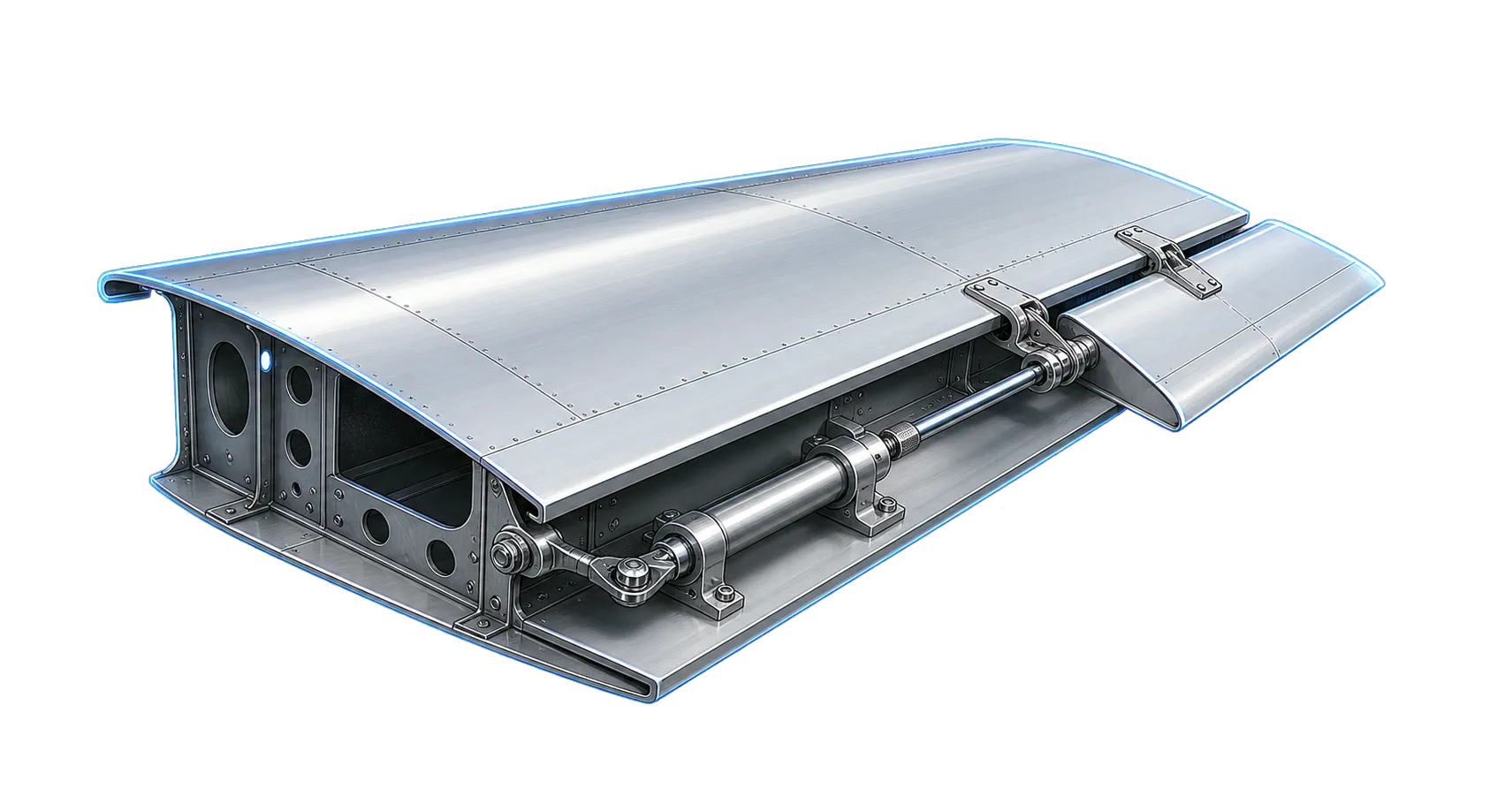
Self-locking nuts in critical areas, such as elevator actuator rod end bolt joints, inboard trailing edge flap drive mechanisms, and outboard wing spoiler control systems, may fail to retain their self-locking feature, leading to bolt disconnection and potential loss of airplane control.
AI-generated summary from the source AD text. Verify against the official source before acting.
Required Actions
Inspect self-locking nuts in elevator, inboard trailing edge flap, and outboard wing spoiler systems per Boeing Service Bulletin 767-27A0064. Replace insecure nuts before further flight with serviceable ones. Compliance must be within 35 landings or 10 days for elevator nuts, and within 50 landings or 20 days for flap and spoiler nuts.
AI-generated summary from the source AD text. Verify against the official source before acting.
Compliance Time
Within 35 landings or 10 days after the effective date of this AD, whichever occurs first (for elevator nuts); within 50 landings or 20 days after the effective date of this AD, whichever occurs first (for flap and spoiler nuts).
AI-generated summary from the source AD text. Verify against the official source before acting.
Affected Aircraft
Boeing Model 767-200 airplanes, certificated in any category.
AI-generated summary from the source AD text. Verify against the official source before acting.
Federal Register Abstract
Elevator Actuator Rod End Bolt Retaining Nuts
Applicability Source Text
Show captured applicability text from the source AD
AD Final Rules - DRS_85-21-51.html
Copy URL
Print/Save as PDF
Document Versions
 Feedback
Details
AD Number:
85-21-51
Document Type:
AD Final Rules
Docket Number:
85-NM-125-AD
Subject Heading:
Airworthiness Directives; Boeing Model 767-200 Airplanes
Subject:
Elevator Actuator Rod End Bolt Retaining Nuts
Status:
Current
Citation:
(Federal Register: February 4, 1986)
Citation Publish Date:
02/04/1986
Effective Date:
02/24/1986
Make:
The Boeing Company
Model:
767-200 Series
Product Type:
Aircraft
Product Subtype:
Large Airplane
Affected AD:
Superseded AD:
T85-21-51
Affected By:
Superseded By:
Service/Office:
Office of Primary Responsibility:
CFR Part Reference:
Part 39
Comments:
T85-21-51 was issued October 25, 1985, and was written applicable to 767 series airplanes. At that...Show more
AIRWORTHINESS DIRECTIVES FINAL RULES: 85-21-51
CITATION:   [Federal Register: February 4, 1986]

PAGE NUMBER:   Page 4301

DOCKET NUMBER:   85-NM-125-AD

AMENDMENT:   39-5232

AD NUMBER:   85-21-51

SUBJECT HEADING:   Airworthiness Directives; Boeing Model 767-200 Airplanes

ACTION:

SUMMARY:
This action publishes in the Federal Register and makes effective as to all persons an amendment adopting a new airworthiness directive (AD) which was previously made effective to all known U.S. owners and operators of certain Boeing Model 767-200 airplanes by individual telegrams. The AD requires inspection and replacement, if necessary, of self-locking nuts located in certain critical areas of the airplanes. This action was prompted by the discovery that two elevator actuator rod end bolt retaining nuts on one recently delivered Model 767 airplane did not have their intended self-locking feature. Such a nut could back off its mating bolt and result in a disconnection of the affected joint. Multiple disconnections of elevator to actuator joints could result in partial or complete loss of airplane control. These nuts have other critical applications on the Model 767 airplane, which are also addressed in the AD.


DATES:   Effective February 24, 1986. This AD was effective earlier to all recipients of telegraphic AD T85-21-51, dated October 25, 1985. Compliance schedule as prescribed in the body of the AD, unless already accomplished.

ADDRESSES:   The service bulletin specified in this AD may be obtained upon request to the Boeing Commercial Airplane Company, P. O. Box 3707, Seattle, Washington 98124, or may be examined at the FAA, Northwest Mountain Region, 17900 Pacific Highway South, Seattle, Washington, or the Seattle Aircraft Certification Office, 9010 East Marginal Way South, Seattle, Washington.

FOR FURTHER INFORMATION CONTACT:   Mr. Richard Yarges, Airframe Branch, ANM-120S; telephone (206) 431-2925. Mailing address: FAA, Northwest Mountain Region, 17900 Pacific Highway South, C-68966, Seattle, Washington 98168.

SUPPLEMENTARY INFORMATION:
On October 25, 1985, telegraphic AD T85-21-51 was issued and made effective immediately as to all known U.S. owners and operators of Boeing Model 767-200 series airplanes. The AD was prompted by the discovery that two elevator actuator rod end bolt retaining nuts on one Boeing Model 767 airplane, that had just been delivered, did not have their intended self-locking feature.

Self-locking nuts are designed to resist turning off their mating bolt by ways of friction between the nut and bolt. This feature provides additional retention capability in the event that the installation torque (clamp-up) should relax. The additional retention capability is considered essential for safe operation in certain instances. It has been determined that other nuts of the same design as those initially discovered to be discrepant do not have adequate locking friction when installed on bolts.

These nuts are used in the control linkages to attach the elevator hydraulic actuators to the elevator. A nonfunctioning self-locking nut could back off its mating bolt under conceivable conditions and result in a disconnection of the affected joint. Although there is redundancy in the mechanical control linkage for such disconnections, multiple disconnections could occur, or the loose actuator could damage adjacent structure. These effects could result in partial or complete loss of airplane control.

The same type of nut is used in the inboard trailing edge flap drive mechanism and the outboard wing spoiler control system. The consequences of a defective locknut at these locations are as critical as those described above. Therefore, corrective action is considered necessary for these applications as well.

Boeing issued Service Bulletin 767-27A0064, dated October 25, 1985, which identifies the location of the critical suspect self-locking nuts and which specifies inspections that can be performed on the nuts to determine if there locking torque is within an allowable tolerance. This AD makes the inspection of the nuts specified in the service bulletin mandatory, and requires the replacement, before further flight, of self-locking nuts found to be discrepant. Since it was found that immediate corrective action was required, notice and public procedure thereon were impracticable and contrary to public interest, and good cause existed to make the AD effective immediately by individual telegrams issued October 25, 1985, to all known U.S. owners and operators of certain Boeing Model 767-200 airplanes. These conditions still exist and the AD is hereby published in the Federal Register as an amendment to Sec. 39.13 of Part 39 of the Federal Aviation Regulations to make it effective as to all persons.

The FAA has determined that this regulation is an emergency regulation that is not considered to be major under Executive Order 12291. It is impracticable for the agency to follow the procedures of Order 12291 with respect to this rule since the rule must be issued immediately to correct an unsafe condition in aircraft. It has been further determined that this document involves an emergency regulation under DOT Regulatory Policies and Procedures (44 FR 11034; February 26, 1979). If this action is subsequently determined to involve a significant/ major regulation, a final regulatory evaluation or analysis, as appropriate, will be prepared and placed in the regulatory docket (otherwise, an evaluation or analysis is not required).

List of Subjects in 14 CFR Part 39

Aviation safety, Aircraft.

Adoption of Amendment

Accordingly, pursuant to the authority delegated to me by the Administrator, the Federal Aviation Administration amends Section 39.13 of Part 39 of the Federal Aviation Regulations as follows:

PART 39--[AMENDED]

1. The authority citation for Part 39 continues to read as follows:

Authority: 49 U.S.C. 1354(a) 1421 and 1423; 49 U.S.C. 106(g) (Revised Pub. L. 97-449. January 12, 1963); and 14 CFR 11.89.

2. By adding the following new airworthiness directive:


REGULATORY TEXT:
85-21-51 Boeing; Applies to Boeing Model 767-200 airplanes, certificated in any category. To prevent loss of certain critical airframe self-locking nuts, accomplish the following, unless previously accomplished:

A. Within 35 landings or 10 days after the effective date of this AD, whichever occurs first, inspect the horizontal elevator self-locking nuts in accordance with Boeing Alert Service Bulleting 767-27A0064, dated October 25, 1985, or later FAA-approved revision. Self-locking nuts found to be insecure in accordance with the criteria specified in the service bulletin must be replaced before further flight with serviceable self-locking nuts.

B. Within 50 landings or 20 days after the effective date of this AD, whichever occurs first, inspect the inboard aft trailing edge flap self-locking nuts and the outboard wing spoiler actuator self-locking nuts in accordance with Boeing Alert Service Bulletin 767-27A0064, dated October 25, 1985, or later FAA-approved revision. Self-locking nuts found to be insecure in accordance with the criteria specified in the service bulletin must be replaced before further flight with serviceable self-locking nuts.

C. Alternate means of compliance which provide an acceptable level of safety may be used when approved by the Manager, Seattle Aircraft Certification Office, FAA, Northwest Mountain Region.

All persons affected by this directive who have not already received the appropriate service document from the manufacturer may obtain copies upon request to Boeing Commercial Airplane Company, P. O. Box 3707, Seattle, Washington 98124. This document may also be examined at FAA Northwest Mountain Region, 17900 Pacific Highway South, Seattle, Washington, or the Seattle Aircraft Certification Office, 9010 East Marginal Way South, Seattle, Washington.

This amendment becomes effective February 24, 1986 as to all persons, except those persons to whom it was made immediately effective by telegraphic AD T85-21-51, issued October 25, 1985.


FOOTER:   Issued in Seattle, Washington, on January 28, 1986.
Wayne J. Barlow,
Acting Director, Northwest Mountain Region
[FR Doc. 86-2420 filed 2-3-86; 8:45 am]
BILLING CODE 4910-13-M
Document Text
Show stored source text (verify against official source)
AD Final Rules - DRS_85-21-51.html
Copy URL
Print/Save as PDF
Document Versions
 Feedback
Details
AD Number:
85-21-51
Document Type:
AD Final Rules
Docket Number:
85-NM-125-AD
Subject Heading:
Airworthiness Directives; Boeing Model 767-200 Airplanes
Subject:
Elevator Actuator Rod End Bolt Retaining Nuts
Status:
Current
Citation:
(Federal Register: February 4, 1986)
Citation Publish Date:
02/04/1986
Effective Date:
02/24/1986
Make:
The Boeing Company
Model:
767-200 Series
Product Type:
Aircraft
Product Subtype:
Large Airplane
Affected AD:
Superseded AD:
T85-21-51
Affected By:
Superseded By:
Service/Office:
Office of Primary Responsibility:
CFR Part Reference:
Part 39
Comments:
T85-21-51 was issued October 25, 1985, and was written applicable to 767 series airplanes. At that...Show more
AIRWORTHINESS DIRECTIVES FINAL RULES: 85-21-51
CITATION:   [Federal Register: February 4, 1986]

PAGE NUMBER:   Page 4301

DOCKET NUMBER:   85-NM-125-AD

AMENDMENT:   39-5232

AD NUMBER:   85-21-51

SUBJECT HEADING:   Airworthiness Directives; Boeing Model 767-200 Airplanes

ACTION:

SUMMARY:
This action publishes in the Federal Register and makes effective as to all persons an amendment adopting a new airworthiness directive (AD) which was previously made effective to all known U.S. owners and operators of certain Boeing Model 767-200 airplanes by individual telegrams. The AD requires inspection and replacement, if necessary, of self-locking nuts located in certain critical areas of the airplanes. This action was prompted by the discovery that two elevator actuator rod end bolt retaining nuts on one recently delivered Model 767 airplane did not have their intended self-locking feature. Such a nut could back off its mating bolt and result in a disconnection of the affected joint. Multiple disconnections of elevator to actuator joints could result in partial or complete loss of airplane control. These nuts have other critical applications on the Model 767 airplane, which are also addressed in the AD.


DATES:   Effective February 24, 1986. This AD was effective earlier to all recipients of telegraphic AD T85-21-51, dated October 25, 1985. Compliance schedule as prescribed in the body of the AD, unless already accomplished.

ADDRESSES:   The service bulletin specified in this AD may be obtained upon request to the Boeing Commercial Airplane Company, P. O. Box 3707, Seattle, Washington 98124, or may be examined at the FAA, Northwest Mountain Region, 17900 Pacific Highway South, Seattle, Washington, or the Seattle Aircraft Certification Office, 9010 East Marginal Way South, Seattle, Washington.

FOR FURTHER INFORMATION CONTACT:   Mr. Richard Yarges, Airframe Branch, ANM-120S; telephone (206) 431-2925. Mailing address: FAA, Northwest Mountain Region, 17900 Pacific Highway South, C-68966, Seattle, Washington 98168.

SUPPLEMENTARY INFORMATION:
On October 25, 1985, telegraphic AD T85-21-51 was issued and made effective immediately as to all known U.S. owners and operators of Boeing Model 767-200 series airplanes. The AD was prompted by the discovery that two elevator actuator rod end bolt retaining nuts on one Boeing Model 767 airplane, that had just been delivered, did not have their intended self-locking feature.

Self-locking nuts are designed to resist turning off their mating bolt by ways of friction between the nut and bolt. This feature provides additional retention capability in the event that the installation torque (clamp-up) should relax. The additional retention capability is considered essential for safe operation in certain instances. It has been determined that other nuts of the same design as those initially discovered to be discrepant do not have adequate locking friction when installed on bolts.

These nuts are used in the control linkages to attach the elevator hydraulic actuators to the elevator. A nonfunctioning self-locking nut could back off its mating bolt under conceivable conditions and result in a disconnection of the affected joint. Although there is redundancy in the mechanical control linkage for such disconnections, multiple disconnections could occur, or the loose actuator could damage adjacent structure. These effects could result in partial or complete loss of airplane control.

The same type of nut is used in the inboard trailing edge flap drive mechanism and the outboard wing spoiler control system. The consequences of a defective locknut at these locations are as critical as those described above. Therefore, corrective action is considered necessary for these applications as well.

Boeing issued Service Bulletin 767-27A0064, dated October 25, 1985, which identifies the location of the critical suspect self-locking nuts and which specifies inspections that can be performed on the nuts to determine if there locking torque is within an allowable tolerance. This AD makes the inspection of the nuts specified in the service bulletin mandatory, and requires the replacement, before further flight, of self-locking nuts found to be discrepant. Since it was found that immediate corrective action was required, notice and public procedure thereon were impracticable and contrary to public interest, and good cause existed to make the AD effective immediately by individual telegrams issued October 25, 1985, to all known U.S. owners and operators of certain Boeing Model 767-200 airplanes. These conditions still exist and the AD is hereby published in the Federal Register as an amendment to Sec. 39.13 of Part 39 of the Federal Aviation Regulations to make it effective as to all persons.

The FAA has determined that this regulation is an emergency regulation that is not considered to be major under Executive Order 12291. It is impracticable for the agency to follow the procedures of Order 12291 with respect to this rule since the rule must be issued immediately to correct an unsafe condition in aircraft. It has been further determined that this document involves an emergency regulation under DOT Regulatory Policies and Procedures (44 FR 11034; February 26, 1979). If this action is subsequently determined to involve a significant/ major regulation, a final regulatory evaluation or analysis, as appropriate, will be prepared and placed in the regulatory docket (otherwise, an evaluation or analysis is not required).

List of Subjects in 14 CFR Part 39

Aviation safety, Aircraft.

Adoption of Amendment

Accordingly, pursuant to the authority delegated to me by the Administrator, the Federal Aviation Administration amends Section 39.13 of Part 39 of the Federal Aviation Regulations as follows:

PART 39--[AMENDED]

1. The authority citation for Part 39 continues to read as follows:

Authority: 49 U.S.C. 1354(a) 1421 and 1423; 49 U.S.C. 106(g) (Revised Pub. L. 97-449. January 12, 1963); and 14 CFR 11.89.

2. By adding the following new airworthiness directive:


REGULATORY TEXT:
85-21-51 Boeing; Applies to Boeing Model 767-200 airplanes, certificated in any category. To prevent loss of certain critical airframe self-locking nuts, accomplish the following, unless previously accomplished:

A. Within 35 landings or 10 days after the effective date of this AD, whichever occurs first, inspect the horizontal elevator self-locking nuts in accordance with Boeing Alert Service Bulleting 767-27A0064, dated October 25, 1985, or later FAA-approved revision. Self-locking nuts found to be insecure in accordance with the criteria specified in the service bulletin must be replaced before further flight with serviceable self-locking nuts.

B. Within 50 landings or 20 days after the effective date of this AD, whichever occurs first, inspect the inboard aft trailing edge flap self-locking nuts and the outboard wing spoiler actuator self-locking nuts in accordance with Boeing Alert Service Bulletin 767-27A0064, dated October 25, 1985, or later FAA-approved revision. Self-locking nuts found to be insecure in accordance with the criteria specified in the service bulletin must be replaced before further flight with serviceable self-locking nuts.

C. Alternate means of compliance which provide an acceptable level of safety may be used when approved by the Manager, Seattle Aircraft Certification Office, FAA, Northwest Mountain Region.

All persons affected by this directive who have not already received the appropriate service document from the manufacturer may obtain copies upon request to Boeing Commercial Airplane Company, P. O. Box 3707, Seattle, Washington 98124. This document may also be examined at FAA Northwest Mountain Region, 17900 Pacific Highway South, Seattle, Washington, or the Seattle Aircraft Certification Office, 9010 East Marginal Way South, Seattle, Washington.

This amendment becomes effective February 24, 1986 as to all persons, except those persons to whom it was made immediately effective by telegraphic AD T85-21-51, issued October 25, 1985.


FOOTER:   Issued in Seattle, Washington, on January 28, 1986.
Wayne J. Barlow,
Acting Director, Northwest Mountain Region
[FR Doc. 86-2420 filed 2-3-86; 8:45 am]
BILLING CODE 4910-13-M
Source: Official FAA Source ↗
Retrieved: Apr 8, 2026
Rights: U.S. Government Public Domain
This site is not affiliated with or endorsed by the FAA. Always verify with official sources.
Related Airworthiness Directives
2026-05-07
final ruleAirworthiness Directives; The Boeing Company Airplanes
Unsafe Condition: Discovery of a crack at one of the forward lower fastener holes following replacement of a cracked underwing longeron (UWL) fitting. Such cracking could result in loss in the primary load path betw...
2026-05-03 Recurring
final ruleAirworthiness Directives; The Boeing Company Airplanes
Unsafe Condition: scribe lines found at skin lap joints and butt joints, around external repairs and antennas, and at locations where external decals had been cut, which could develop into fatigue cracks in the skin...
2026-04-10 Recurring
final ruleAirworthiness Directives; The Boeing Company Airplanes
Unsafe Condition: Corrosion damage on the Model 767 satellite communications (SATCOM) high gain antenna adapter plate, which could result in parts departing the airplane (PDA). A PDA event of the SATCOM high gain an...
2025-15-08 Recurring
final ruleAirworthiness Directives; The Boeing Company Airplanes
Unsafe Condition: uncommanded fore and aft movement of the Captain's and First Officer's seats, which could cause a flight control obstruction or unintended flight control input, resulting in the loss of the ability...