AD 75-01-06
Applicability
| Type | Manufacturer | Model | Details |
|---|---|---|---|
| aircraft | Airesearch | The Boeing Company | Auxiliary Power Units | Airworthiness Directives; AIRESEARCH MANUFACTURING COMPANY of ARIZONA: Applies to model GTCP660-4 (prior to Serial No. P37808) and GTCP660-4R (Prior to Serial No. P133) Auxiliary Power Units |
| aircraft | Airesearch | The Boeing Company | 747-100 Series | Airworthiness Directives; AIRESEARCH MANUFACTURING COMPANY of ARIZONA: Applies to model GTCP660-4 (prior to Serial No. P37808) and GTCP660-4R (Prior to Serial No. P133) Auxiliary Power Units |
| aircraft | Airesearch | The Boeing Company | 747-100B Series | Airworthiness Directives; AIRESEARCH MANUFACTURING COMPANY of ARIZONA: Applies to model GTCP660-4 (prior to Serial No. P37808) and GTCP660-4R (Prior to Serial No. P133) Auxiliary Power Units |
| aircraft | Airesearch | The Boeing Company | 747-100B SUD Series | Airworthiness Directives; AIRESEARCH MANUFACTURING COMPANY of ARIZONA: Applies to model GTCP660-4 (prior to Serial No. P37808) and GTCP660-4R (Prior to Serial No. P133) Auxiliary Power Units |
| aircraft | Airesearch | The Boeing Company | 747-200B Series | Airworthiness Directives; AIRESEARCH MANUFACTURING COMPANY of ARIZONA: Applies to model GTCP660-4 (prior to Serial No. P37808) and GTCP660-4R (Prior to Serial No. P133) Auxiliary Power Units |
| aircraft | Airesearch | The Boeing Company | 747-200C Series | Airworthiness Directives; AIRESEARCH MANUFACTURING COMPANY of ARIZONA: Applies to model GTCP660-4 (prior to Serial No. P37808) and GTCP660-4R (Prior to Serial No. P133) Auxiliary Power Units |
| aircraft | Airesearch | The Boeing Company | 747-200F Series | Airworthiness Directives; AIRESEARCH MANUFACTURING COMPANY of ARIZONA: Applies to model GTCP660-4 (prior to Serial No. P37808) and GTCP660-4R (Prior to Serial No. P133) Auxiliary Power Units |
| aircraft | Airesearch | The Boeing Company | 747-300 Series | Airworthiness Directives; AIRESEARCH MANUFACTURING COMPANY of ARIZONA: Applies to model GTCP660-4 (prior to Serial No. P37808) and GTCP660-4R (Prior to Serial No. P133) Auxiliary Power Units |
| aircraft | Airesearch | The Boeing Company | 747-400 Series | Airworthiness Directives; AIRESEARCH MANUFACTURING COMPANY of ARIZONA: Applies to model GTCP660-4 (prior to Serial No. P37808) and GTCP660-4R (Prior to Serial No. P133) Auxiliary Power Units |
| aircraft | Airesearch | The Boeing Company | 747-400D Series | Airworthiness Directives; AIRESEARCH MANUFACTURING COMPANY of ARIZONA: Applies to model GTCP660-4 (prior to Serial No. P37808) and GTCP660-4R (Prior to Serial No. P133) Auxiliary Power Units |
| appliance | Airesearch | The Boeing Company | Auxiliary Power Units | Airworthiness Directives; AIRESEARCH MANUFACTURING COMPANY of ARIZONA: Applies to model GTCP660-4 (prior to Serial No. P37808) and GTCP660-4R (Prior to Serial No. P133) Auxiliary Power Units |
| appliance | Airesearch | The Boeing Company | 747-100 Series | Airworthiness Directives; AIRESEARCH MANUFACTURING COMPANY of ARIZONA: Applies to model GTCP660-4 (prior to Serial No. P37808) and GTCP660-4R (Prior to Serial No. P133) Auxiliary Power Units |
| appliance | Airesearch | The Boeing Company | 747-100B Series | Airworthiness Directives; AIRESEARCH MANUFACTURING COMPANY of ARIZONA: Applies to model GTCP660-4 (prior to Serial No. P37808) and GTCP660-4R (Prior to Serial No. P133) Auxiliary Power Units |
| appliance | Airesearch | The Boeing Company | 747-100B SUD Series | Airworthiness Directives; AIRESEARCH MANUFACTURING COMPANY of ARIZONA: Applies to model GTCP660-4 (prior to Serial No. P37808) and GTCP660-4R (Prior to Serial No. P133) Auxiliary Power Units |
| appliance | Airesearch | The Boeing Company | 747-200B Series | Airworthiness Directives; AIRESEARCH MANUFACTURING COMPANY of ARIZONA: Applies to model GTCP660-4 (prior to Serial No. P37808) and GTCP660-4R (Prior to Serial No. P133) Auxiliary Power Units |
| appliance | Airesearch | The Boeing Company | 747-200C Series | Airworthiness Directives; AIRESEARCH MANUFACTURING COMPANY of ARIZONA: Applies to model GTCP660-4 (prior to Serial No. P37808) and GTCP660-4R (Prior to Serial No. P133) Auxiliary Power Units |
| appliance | Airesearch | The Boeing Company | 747-200F Series | Airworthiness Directives; AIRESEARCH MANUFACTURING COMPANY of ARIZONA: Applies to model GTCP660-4 (prior to Serial No. P37808) and GTCP660-4R (Prior to Serial No. P133) Auxiliary Power Units |
| appliance | Airesearch | The Boeing Company | 747-300 Series | Airworthiness Directives; AIRESEARCH MANUFACTURING COMPANY of ARIZONA: Applies to model GTCP660-4 (prior to Serial No. P37808) and GTCP660-4R (Prior to Serial No. P133) Auxiliary Power Units |
| appliance | Airesearch | The Boeing Company | 747-400 Series | Airworthiness Directives; AIRESEARCH MANUFACTURING COMPANY of ARIZONA: Applies to model GTCP660-4 (prior to Serial No. P37808) and GTCP660-4R (Prior to Serial No. P133) Auxiliary Power Units |
| appliance | Airesearch | The Boeing Company | 747-400D Series | Airworthiness Directives; AIRESEARCH MANUFACTURING COMPANY of ARIZONA: Applies to model GTCP660-4 (prior to Serial No. P37808) and GTCP660-4R (Prior to Serial No. P133) Auxiliary Power Units |
| appliance | Airesearch | The Boeing Company | 747-400F Series | Airworthiness Directives; AIRESEARCH MANUFACTURING COMPANY of ARIZONA: Applies to model GTCP660-4 (prior to Serial No. P37808) and GTCP660-4R (Prior to Serial No. P133) Auxiliary Power Units |
| appliance | Airesearch | The Boeing Company | 747SP Series | Airworthiness Directives; AIRESEARCH MANUFACTURING COMPANY of ARIZONA: Applies to model GTCP660-4 (prior to Serial No. P37808) and GTCP660-4R (Prior to Serial No. P133) Auxiliary Power Units |
| appliance | Airesearch | The Boeing Company | 747SR Series | Airworthiness Directives; AIRESEARCH MANUFACTURING COMPANY of ARIZONA: Applies to model GTCP660-4 (prior to Serial No. P37808) and GTCP660-4R (Prior to Serial No. P133) Auxiliary Power Units |
Unsafe Condition
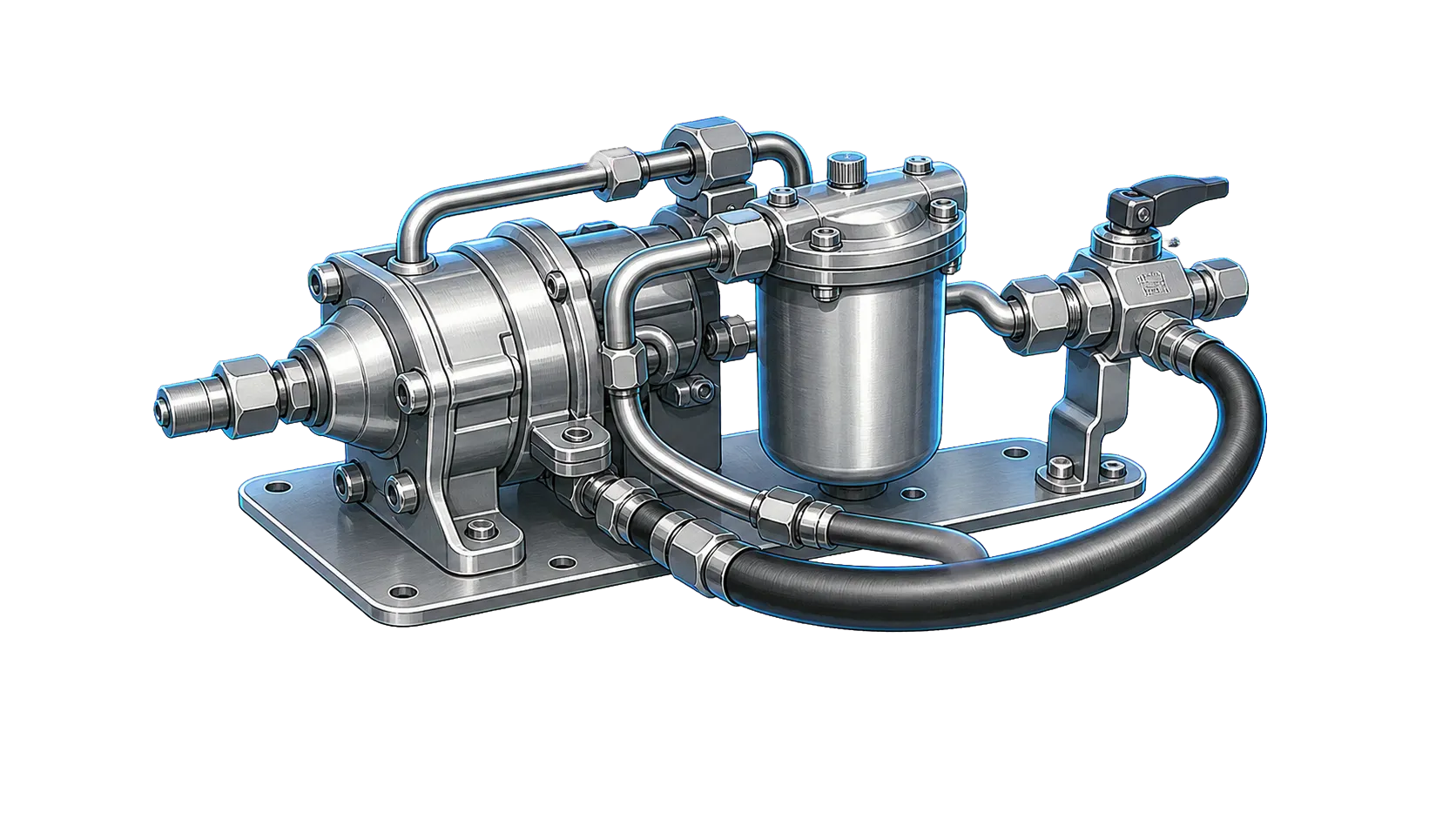
Fatigue cracks in the fuel pump body, part numbers 968502-2 and -3, could lead to fuel system failure.
AI-generated summary from the source AD text. Verify against the official source before acting.
Required Actions
Install a placard prohibiting inflight or taxi APU operation depending on cycles. Inspect fuel pump body for cracks and check relief valve setting per service bulletin. Replace cracked units with inspected or new parts. Recurring inspections at 2,500 cycle intervals after initial checks.
AI-generated summary from the source AD text. Verify against the official source before acting.
Compliance Time
Within 15 days time in service after the effective date of this AD, and within 500 APU operating cycles after the effective date.
AI-generated summary from the source AD text. Verify against the official source before acting.
Affected Aircraft
AIRESEARCH MANUFACTURING COMPANY of ARIZONA model GTCP660-4 (prior to Serial No. P37808) and GTCP660-4R (Prior to Serial No. P133) Auxiliary Power Units installed in Boeing B-747 series airplanes.
AI-generated summary from the source AD text. Verify against the official source before acting.
Federal Register Abstract
Auxiliary Power Units
Applicability Source Text
Show captured applicability text from the source AD
AD Final Rules - DRS_75-01-06.html
Copy URL
Print/Save as PDF
Document Versions
 Feedback
Details
AD Number:
75-01-06
Document Type:
AD Final Rules
Docket Number:
Unknown
Subject Heading:
Airworthiness Directives; AIRESEARCH MANUFACTURING COMPANY of ARIZONA: Applies to model GTCP660-4...Show more
Subject:
Auxiliary Power Units
Status:
Current
Citation:
This information is not available.
Citation Publish Date:
Effective Date:
01/31/1975
Make:
Airesearch | The Boeing Company
Model:
Auxiliary Power Units | 747-100 Series | 747-100B Series | 747-100B SUD Series | 747-200B Series | 7...Show more
Product Type:
Appliance
Product Subtype:
Affected AD:
Superseded AD:
Affected By:
Superseded By:
Service/Office:
Office of Primary Responsibility:
CFR Part Reference:
Part 39
Comments:
AIRWORTHINESS DIRECTIVES FINAL RULES: 75-01-06
CITATION:   This information is not available.

PAGE NUMBER:

DOCKET NUMBER:   Unknown

AMENDMENT:   39-2079

AD NUMBER:   75-01-06

SUBJECT HEADING:   Airworthiness Directives; AIRESEARCH MANUFACTURING COMPANY of ARIZONA: Applies to model GTCP660-4 (prior to Serial No. P37808) and GTCP660-4R (Prior to Serial No. P133) Auxiliary Power Units

ACTION:

SUMMARY:

DATES:   Effective January 31, 1975.

ADDRESSES:

FOR FURTHER INFORMATION CONTACT:

SUPPLEMENTARY INFORMATION:

REGULATORY TEXT:
75-01-06 AIRESEARCH MANUFACTURING COMPANY of ARIZONA: Amendment 39-2064 as amended by Amendment 39-2079. Applies to model GTCP660-4 (prior to Serial No. P37808) and GTCP660-4R (Prior to Serial No. P133) Auxiliary Power Units installed in, but not limited to, Boeing B-747 airplanes, certificated in all categories.

To detect fatigue cracks in the fuel pump body, P/N 968502-2 and -3, and provide for replacement of assemblies, accomplish the following.

Compliance required as indicated.

(a) For APU fuel pump bodies, P/N 968502-2 or -3, with less than 7500 operating cycles time in service on the effective date of this AD, unless already accomplished, accomplish the following:

(1) Within 15 days time in service after the effective date of this AD, install a placard in view of the flight crew to prohibit all inflight operation of the APU. Thereafter, the APU may not be used during flight but may be used for ground operations.

(2) Within 500 APU operating cycles after the effective date of this AD, check the fuel pump ultimate relief valve setting in accordance with paragraph 2.B. and C. of AiResearch Service Bulletin GTCP660-49-A3673, dated December 13, 1974, or later FAA approved revisions.

Note 1. For the purposes of this AD, a fuel pump body operating cycle is any operation consisting of an APU start and shutdown. The number of cycles may be determined by actual count, or subject to acceptance by the assigned FAA maintenance inspector, may be calculated by dividing the fuel pump assembly time in service by the operator's fleet average APU operating time per APU cycle. If the actual fuel pump total time is unknown, APU operating time on which this pump is installed may be substituted for this figure.

(3) If the relief valve setting determined in (a)(2) above is in excess of the limits shown on line one, table one, of the above referenced service bulletin, inspect the fuel pump body, P/N 968502-2 or -3, for cracks in accordance with paragraph 2.E. of the above referenced service bulletin.

(4) Units found to be cracked per (a)(3) above must be rendered unserviceable and must be replaced with a new or serviceable fuel pump body, P/N 968502-2, -3, or -4, which has been inspected per paragraph 2.E. of the above referenced service bulletin prior to further operation.

Note 2. Observe fuel pump body interchangability restrictions detailed in paragraph 2.E. of the above referenced service bulletin.

(5) Units found to be free of cracks per (a)(3) above may be returned to, or placed in, service after having determined that the relief valve has been properly adjusted and recording the total operating cycles on the pump body in accordance with paragraph 2.F. of the above referenced service bulletin.

(6) New or serviceable units returned to service in accordance with those requirements described in (a)(5), above, must be inspected for cracks before accumulating 7,500 cycles total time in service, and at intervals not to exceed 2,500 cycles thereafter.

(7) Operators whose maintenance records show verification that they have been correctly setting this fuel pump ultimate relief valve using a procedure corresponding with paragraphs 2.B. and C. of the above referenced service bulletin are not required to install the placard or perform the pressure setting check required by (a)(1) and (a)(2) above.

(8) The operating restriction prescribed in (a)(1) above may be discontinued and the placard may be removed when the ultimate relief valve pressure check is conducted in accordance with (a)(2) through (a)(6) above.

(b) For fuel pump bodies, P/N 968502-2 or -3, with 7500 or more cycles in service on the effective date of this AD, unless already accomplished, accomplish the following:

(1) Within 15 days time in service after the effective date of this AD install a placard in view of the flight crew to prohibit all taxi and inflight operation of the APU. Thereafter, the APU may not be used during taxi or flight but may be used for static ground operation.

(2) Within 500 APU operating cycles in service after the effective date of this AD, unless already accomplished, inspect the fuel pump body, P/N 968502-2 or -3, for cracks in accordance with paragraph 2.E. of the above referenced service bulletin.

(3) Units found to contain cracks must be rendered unserviceable and must be replaced with a new or serviceable fuel pump body, P/N 968502-2, -3, or -4 which has been inspected per paragraph 2.E. of the above referenced service bulletin prior to further operation. Prior to the installation of these units, it must be determined that the ultimate relief valve has been properly adjusted and the total operating cycles must be recorded on the pump body in accordance with paragraph 2.F. of the above referenced service bulletin.

(4) Units found to be free of cracks per (b)(2) above may be returned to, or placed in service after having determined that the ultimate relief valve has been properly set in accordance with paragraphs 2.B. and C. of the above referenced service bulletin.

(5) For crack free units returned to service in accordance with (b)(4) above, repeat the fuel pump body crack inspections at intervals not to exceed 2,500 cycles thereafter. If cracks are found, remove from service and replace the unit as prescribed in (b)(3) above.

(6) New or serviceable crack free units installed to replace cracked units in accordance with those requirements described in (b)(3), above, must be inspected for cracks at or before accumulating 7500 total cycles, and at or before 2500 cycle intervals thereafter.

(7) The operating restriction prescribed in (b)(1), above, may be discontinued and the placard may be removed when the fuel pump body inspection is conducted in accordance with (b)(2) through (b)(6) above.

(c) Fuel pump bodies may be continued in service beyond 7,500 cycles, and the recurring inspections and operational restrictions required by paragraphs (a) and (b) above may be discontinued, when:

(1) A relief bleed down valve, P/N 3603770-1, is incorporated per Service Bulletin GTCP660-49-3662, with either a new fuel pump body or a serviceable fuel pump body which has been inspected and determined to be crack free.

(2) An APU log book entry describing this modification must be made.

(d) Equivalent procedures may be approved by the Chief, Aircraft Engineering Division, FAA Western Region, upon submission of adequate substantiation data.

(e) Aircraft may be flown to a base for the accomplishment of maintenance required by this AD, per FAR's 21.197 and 21.199.

Amendment 39-2064 became effective January 13, 1975.

This amendment 39-2079 becomes effective January 31, 1975.

FOOTER:
Document Text
Show stored source text (verify against official source)
AD Final Rules - DRS_75-01-06.html
Copy URL
Print/Save as PDF
Document Versions
 Feedback
Details
AD Number:
75-01-06
Document Type:
AD Final Rules
Docket Number:
Unknown
Subject Heading:
Airworthiness Directives; AIRESEARCH MANUFACTURING COMPANY of ARIZONA: Applies to model GTCP660-4...Show more
Subject:
Auxiliary Power Units
Status:
Current
Citation:
This information is not available.
Citation Publish Date:
Effective Date:
01/31/1975
Make:
Airesearch | The Boeing Company
Model:
Auxiliary Power Units | 747-100 Series | 747-100B Series | 747-100B SUD Series | 747-200B Series | 7...Show more
Product Type:
Appliance
Product Subtype:
Affected AD:
Superseded AD:
Affected By:
Superseded By:
Service/Office:
Office of Primary Responsibility:
CFR Part Reference:
Part 39
Comments:
AIRWORTHINESS DIRECTIVES FINAL RULES: 75-01-06
CITATION:   This information is not available.

PAGE NUMBER:

DOCKET NUMBER:   Unknown

AMENDMENT:   39-2079

AD NUMBER:   75-01-06

SUBJECT HEADING:   Airworthiness Directives; AIRESEARCH MANUFACTURING COMPANY of ARIZONA: Applies to model GTCP660-4 (prior to Serial No. P37808) and GTCP660-4R (Prior to Serial No. P133) Auxiliary Power Units

ACTION:

SUMMARY:

DATES:   Effective January 31, 1975.

ADDRESSES:

FOR FURTHER INFORMATION CONTACT:

SUPPLEMENTARY INFORMATION:

REGULATORY TEXT:
75-01-06 AIRESEARCH MANUFACTURING COMPANY of ARIZONA: Amendment 39-2064 as amended by Amendment 39-2079. Applies to model GTCP660-4 (prior to Serial No. P37808) and GTCP660-4R (Prior to Serial No. P133) Auxiliary Power Units installed in, but not limited to, Boeing B-747 airplanes, certificated in all categories.

To detect fatigue cracks in the fuel pump body, P/N 968502-2 and -3, and provide for replacement of assemblies, accomplish the following.

Compliance required as indicated.

(a) For APU fuel pump bodies, P/N 968502-2 or -3, with less than 7500 operating cycles time in service on the effective date of this AD, unless already accomplished, accomplish the following:

(1) Within 15 days time in service after the effective date of this AD, install a placard in view of the flight crew to prohibit all inflight operation of the APU. Thereafter, the APU may not be used during flight but may be used for ground operations.

(2) Within 500 APU operating cycles after the effective date of this AD, check the fuel pump ultimate relief valve setting in accordance with paragraph 2.B. and C. of AiResearch Service Bulletin GTCP660-49-A3673, dated December 13, 1974, or later FAA approved revisions.

Note 1. For the purposes of this AD, a fuel pump body operating cycle is any operation consisting of an APU start and shutdown. The number of cycles may be determined by actual count, or subject to acceptance by the assigned FAA maintenance inspector, may be calculated by dividing the fuel pump assembly time in service by the operator's fleet average APU operating time per APU cycle. If the actual fuel pump total time is unknown, APU operating time on which this pump is installed may be substituted for this figure.

(3) If the relief valve setting determined in (a)(2) above is in excess of the limits shown on line one, table one, of the above referenced service bulletin, inspect the fuel pump body, P/N 968502-2 or -3, for cracks in accordance with paragraph 2.E. of the above referenced service bulletin.

(4) Units found to be cracked per (a)(3) above must be rendered unserviceable and must be replaced with a new or serviceable fuel pump body, P/N 968502-2, -3, or -4, which has been inspected per paragraph 2.E. of the above referenced service bulletin prior to further operation.

Note 2. Observe fuel pump body interchangability restrictions detailed in paragraph 2.E. of the above referenced service bulletin.

(5) Units found to be free of cracks per (a)(3) above may be returned to, or placed in, service after having determined that the relief valve has been properly adjusted and recording the total operating cycles on the pump body in accordance with paragraph 2.F. of the above referenced service bulletin.

(6) New or serviceable units returned to service in accordance with those requirements described in (a)(5), above, must be inspected for cracks before accumulating 7,500 cycles total time in service, and at intervals not to exceed 2,500 cycles thereafter.

(7) Operators whose maintenance records show verification that they have been correctly setting this fuel pump ultimate relief valve using a procedure corresponding with paragraphs 2.B. and C. of the above referenced service bulletin are not required to install the placard or perform the pressure setting check required by (a)(1) and (a)(2) above.

(8) The operating restriction prescribed in (a)(1) above may be discontinued and the placard may be removed when the ultimate relief valve pressure check is conducted in accordance with (a)(2) through (a)(6) above.

(b) For fuel pump bodies, P/N 968502-2 or -3, with 7500 or more cycles in service on the effective date of this AD, unless already accomplished, accomplish the following:

(1) Within 15 days time in service after the effective date of this AD install a placard in view of the flight crew to prohibit all taxi and inflight operation of the APU. Thereafter, the APU may not be used during taxi or flight but may be used for static ground operation.

(2) Within 500 APU operating cycles in service after the effective date of this AD, unless already accomplished, inspect the fuel pump body, P/N 968502-2 or -3, for cracks in accordance with paragraph 2.E. of the above referenced service bulletin.

(3) Units found to contain cracks must be rendered unserviceable and must be replaced with a new or serviceable fuel pump body, P/N 968502-2, -3, or -4 which has been inspected per paragraph 2.E. of the above referenced service bulletin prior to further operation. Prior to the installation of these units, it must be determined that the ultimate relief valve has been properly adjusted and the total operating cycles must be recorded on the pump body in accordance with paragraph 2.F. of the above referenced service bulletin.

(4) Units found to be free of cracks per (b)(2) above may be returned to, or placed in service after having determined that the ultimate relief valve has been properly set in accordance with paragraphs 2.B. and C. of the above referenced service bulletin.

(5) For crack free units returned to service in accordance with (b)(4) above, repeat the fuel pump body crack inspections at intervals not to exceed 2,500 cycles thereafter. If cracks are found, remove from service and replace the unit as prescribed in (b)(3) above.

(6) New or serviceable crack free units installed to replace cracked units in accordance with those requirements described in (b)(3), above, must be inspected for cracks at or before accumulating 7500 total cycles, and at or before 2500 cycle intervals thereafter.

(7) The operating restriction prescribed in (b)(1), above, may be discontinued and the placard may be removed when the fuel pump body inspection is conducted in accordance with (b)(2) through (b)(6) above.

(c) Fuel pump bodies may be continued in service beyond 7,500 cycles, and the recurring inspections and operational restrictions required by paragraphs (a) and (b) above may be discontinued, when:

(1) A relief bleed down valve, P/N 3603770-1, is incorporated per Service Bulletin GTCP660-49-3662, with either a new fuel pump body or a serviceable fuel pump body which has been inspected and determined to be crack free.

(2) An APU log book entry describing this modification must be made.

(d) Equivalent procedures may be approved by the Chief, Aircraft Engineering Division, FAA Western Region, upon submission of adequate substantiation data.

(e) Aircraft may be flown to a base for the accomplishment of maintenance required by this AD, per FAR's 21.197 and 21.199.

Amendment 39-2064 became effective January 13, 1975.

This amendment 39-2079 becomes effective January 31, 1975.

FOOTER:
Source: Official FAA Source ↗
Retrieved: Apr 8, 2026
Rights: U.S. Government Public Domain
This site is not affiliated with or endorsed by the FAA. Always verify with official sources.