AD 61-06-01
Applicability
| Type | Manufacturer | Model | Details |
|---|---|---|---|
| aircraft | The Boeing Company | 707-100 Long Body | BOEING Models 707- 100 and 707-200 Aircraft |
| aircraft | The Boeing Company | 707-100B Long Body | BOEING Models 707- 100 and 707-200 Aircraft |
| aircraft | The Boeing Company | 707-100B Short Body | BOEING Models 707- 100 and 707-200 Aircraft |
| aircraft | The Boeing Company | 707-200 | BOEING Models 707- 100 and 707-200 Aircraft |
| aircraft | The Boeing Company | 707-300 Series | BOEING Models 707- 100 and 707-200 Aircraft |
| aircraft | The Boeing Company | 707-300B Series | BOEING Models 707- 100 and 707-200 Aircraft |
| aircraft | The Boeing Company | 707-300C Series | BOEING Models 707- 100 and 707-200 Aircraft |
| aircraft | The Boeing Company | 707-400 Series | BOEING Models 707- 100 and 707-200 Aircraft |
Unsafe Condition
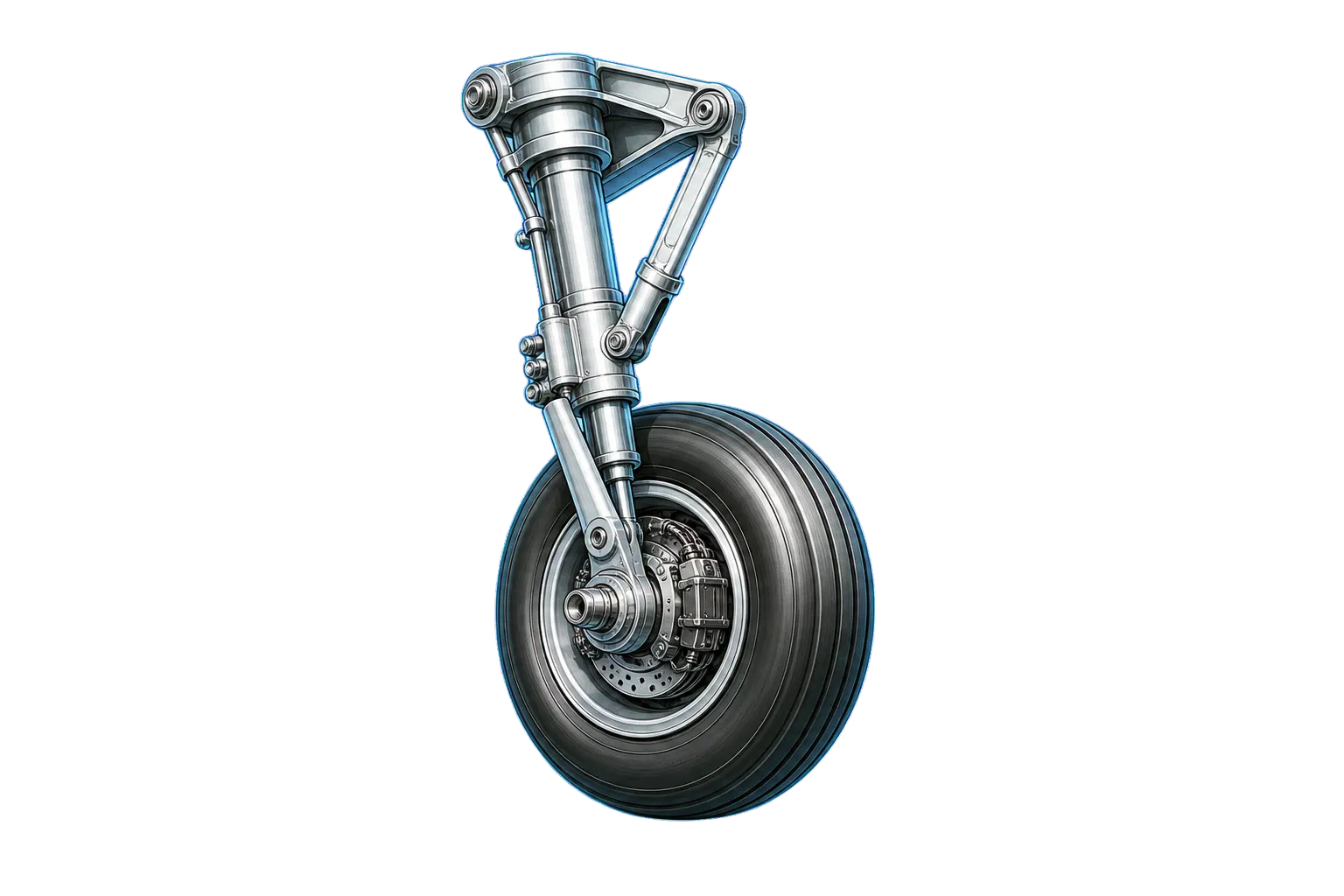
Failure of main landing gear oleo outer cylinders in the area of upper torsion link lugs.
AI-generated summary from the source AD text. Verify against the official source before acting.
Required Actions
Inspect the outer cylinder surface within three inches of the torsion link lugs using fluorescent dye penetrant every 65 hours' time in service. If cracks are found, rework or replace the cylinder as specified. Install spacer Boeing P/N 69-11430 or equivalent and adjust inspections accordingly. Use ultrasonic inspection as an alternative method if approved.
AI-generated summary from the source AD text. Verify against the official source before acting.
Compliance Time
Compliance required as indicated.
AI-generated summary from the source AD text. Verify against the official source before acting.
Affected Aircraft
All Models 707-100 and 707-200 Aircraft with main landing gear oleo cylinders that have experienced 800 flights, and all 707-300 and 707-400 aircraft with cylinders that have experienced 1,000 flights.
AI-generated summary from the source AD text. Verify against the official source before acting.
Federal Register Abstract
Main Landing Gear Oleo Outer Cylinders
Applicability Source Text
Show captured applicability text from the source AD
AD Final Rules - DRS_61-06-01.html
Copy URL
Print/Save as PDF
Document Versions
 Feedback
Details
AD Number:
61-06-01
Document Type:
AD Final Rules
Docket Number:
Unknown
Subject Heading:
BOEING Models 707- 100 and 707-200 Aircraft
Subject:
Main Landing Gear Oleo Outer Cylinders
Status:
Current
Citation:
This information is not available.
Citation Publish Date:
Effective Date:
11/03/1961
Make:
The Boeing Company
Model:
707-100 Long Body | 707-100B Long Body | 707-100B Short Body | 707-200 | 707-300 Series | 707-300B S...Show more
Product Type:
Aircraft
Product Subtype:
Large Airplane
Affected AD:
Superseded AD:
Affected By:
Superseded By:
Service/Office:
Office of Primary Responsibility:
CFR Part Reference:
Part 39
Comments:
AIRWORTHINESS DIRECTIVES FINAL RULES: 61-06-01
CITATION:   This information is not available.

PAGE NUMBER:

DOCKET NUMBER:   Unknown

AMENDMENT:

AD NUMBER:   61-06-01

SUBJECT HEADING:   BOEING Models 707- 100 and 707-200 Aircraft

ACTION:

SUMMARY:

DATES:   Effective November 3, 1961.

ADDRESSES:

FOR FURTHER INFORMATION CONTACT:

SUPPLEMENTARY INFORMATION:

REGULATORY TEXT:   61-06-01 BOEING: Amdt. 265 Part 507 Federal register March 11, 1961. Applies to All Models 707- 100 and 707-200 Aircraft With Main Landing Gear Oleo Cylinders That Have Experienced 800 Flights and All 707-300 and 707-400 Aircraft With Main Landing Gear Oleo Cylinders That Have Experienced 1,000 Flights. (It will be necessary for operators to maintain a record of flights to ascertain compliance with this AD. If past records are unavailable, the number of flights prior to this AD may be estimated.)

Compliance required as indicated.

Due to failure of main landing gear oleo outer cylinders in the area of upper torsion link lugs, the following inspections are required:

(a) The following must be accomplished on Models 707-100 and 707-200 Series aircraft unless spacer, Boeing P/N 69-11430 or equivalent, has been installed in accordance with (c).

(1) Clean and remove paint from the outer cylinder surface within three inches of the outer cylinder torsion link lugs, excluding the area between lugs, using perchloroethylene or FAA approved equivalent.

(2) Using a 10-power glass, conduct a daily inspection of the area described in (a)(1).

(3) Every 65 hours' time in service, inspect the area described in (a)(1) using fluorescent dye penetrant at temperatures of 50 degrees F. or above, or equivalent.

(b) The following must be accomplished every 65 hours' time in service for all Models 707-300 and 707-400 Series aircraft:

(1) Clean and remove paint from the outer cylinder surface within three inches of the outer cylinder solid torsion link lug using perchloroethylene or FAA approved equivalent.

(2) Inspect the outer cylinder lug using fluorescent dye penetrant at 50 degrees F. or above, or equivalent.

(c) When spacer, Boeing P/N 69-11430 or equivalent, is installed between the outer cylinder torsion link lugs to interference fit of 0.001 to 0.005 inch on Models 707-100 and 707-200 Series aircraft, the following inspection may be substituted for the inspection required in (a): At the time of spacer installation, and every 65 hours' time in service thereafter, inspect the outer cylinder lugs using fluorescent dye penetrant at 50 degrees F. or above, or equivalent.

(d) If cracks are found during any of the above inspections, perform the following rework inspections:

(1) Rework the affected area with a hand file and smooth with No. 320 emery paper. Complete removal of crack must be verified by dye penetrant inspection or FAA approved equivalent. If cracks are completely removed as verified by such inspection, remove an additional 0.03 inch of material. After all rework is completed, the maximum allowable depth of material removed is 0.08 inch using a 1.00 inch minimum radius.

Parts previously reworked in accordance with the crack limitations contained in Amendment 136 Part 507 Federal Register April 26, 1960, need not be reworked again to incoporate 0.03 inch insurance material removal. If crack reappears in this reworked area, or a new crack develops, rework must be accomplished in accordance with the above instructions.

(2) Cylinders with defects that cannot be removed within the rework limits given in (d)(1) must be replaced prior to further flight.

(e) When the redesigned outer cylinder, P/N 65-5763 or FAA approved equivalent for Models 707-100 and 707-200 Series aircraft, or P/N 65-5764 or FAA approved equivalent for Models 707-300 and 707-400 Series aircraft, has been installed in accordance with the latest revision of FAA approved Boeing Service Bulletin 979, the inspection intervals noted above may be cancelled and the redesigned outer cylinder inspection interval will revert to normal frequency.

(f) Upon request of the operator, an FAA maintenance inspector, subject to prior approval of the Chief, Engineering and Manufacturing Branch, FAA Western Region, may adjust the repetitive inspection intervals specified in this AD to permit compliance at an established inspection period of the operator if the request contains substantiating data to justify the increase for such operator.

(Boeing Service Bulletin No. 717 (R-1), Boeing Telegraphic Service Bulletin No. 717 (R-1) dated March 7, 1960, and Service Bulletin 979 cover this subject.)

Ultrasonic inspection using Sperry reflectoscope type UR or equivalent with Sperry surface wave crystal, style 50A656, frequency 2.25 MC, may be used in lieu of fluorescent dye penetrant inspection procedures. The ultrasonic inspection instrument should be set per instructions in Boeing Service Letter 6- 7161-6-597 dated March 16, 1960.

This supersedes AD 60-09-01.

This directive effective March 11, 1961.

Revised April 19, 1961.

Revised November 3, 1961.

FOOTER:
Document Text
Show stored source text (verify against official source)
AD Final Rules - DRS_61-06-01.html
Copy URL
Print/Save as PDF
Document Versions
 Feedback
Details
AD Number:
61-06-01
Document Type:
AD Final Rules
Docket Number:
Unknown
Subject Heading:
BOEING Models 707- 100 and 707-200 Aircraft
Subject:
Main Landing Gear Oleo Outer Cylinders
Status:
Current
Citation:
This information is not available.
Citation Publish Date:
Effective Date:
11/03/1961
Make:
The Boeing Company
Model:
707-100 Long Body | 707-100B Long Body | 707-100B Short Body | 707-200 | 707-300 Series | 707-300B S...Show more
Product Type:
Aircraft
Product Subtype:
Large Airplane
Affected AD:
Superseded AD:
Affected By:
Superseded By:
Service/Office:
Office of Primary Responsibility:
CFR Part Reference:
Part 39
Comments:
AIRWORTHINESS DIRECTIVES FINAL RULES: 61-06-01
CITATION:   This information is not available.

PAGE NUMBER:

DOCKET NUMBER:   Unknown

AMENDMENT:

AD NUMBER:   61-06-01

SUBJECT HEADING:   BOEING Models 707- 100 and 707-200 Aircraft

ACTION:

SUMMARY:

DATES:   Effective November 3, 1961.

ADDRESSES:

FOR FURTHER INFORMATION CONTACT:

SUPPLEMENTARY INFORMATION:

REGULATORY TEXT:   61-06-01 BOEING: Amdt. 265 Part 507 Federal register March 11, 1961. Applies to All Models 707- 100 and 707-200 Aircraft With Main Landing Gear Oleo Cylinders That Have Experienced 800 Flights and All 707-300 and 707-400 Aircraft With Main Landing Gear Oleo Cylinders That Have Experienced 1,000 Flights. (It will be necessary for operators to maintain a record of flights to ascertain compliance with this AD. If past records are unavailable, the number of flights prior to this AD may be estimated.)

Compliance required as indicated.

Due to failure of main landing gear oleo outer cylinders in the area of upper torsion link lugs, the following inspections are required:

(a) The following must be accomplished on Models 707-100 and 707-200 Series aircraft unless spacer, Boeing P/N 69-11430 or equivalent, has been installed in accordance with (c).

(1) Clean and remove paint from the outer cylinder surface within three inches of the outer cylinder torsion link lugs, excluding the area between lugs, using perchloroethylene or FAA approved equivalent.

(2) Using a 10-power glass, conduct a daily inspection of the area described in (a)(1).

(3) Every 65 hours' time in service, inspect the area described in (a)(1) using fluorescent dye penetrant at temperatures of 50 degrees F. or above, or equivalent.

(b) The following must be accomplished every 65 hours' time in service for all Models 707-300 and 707-400 Series aircraft:

(1) Clean and remove paint from the outer cylinder surface within three inches of the outer cylinder solid torsion link lug using perchloroethylene or FAA approved equivalent.

(2) Inspect the outer cylinder lug using fluorescent dye penetrant at 50 degrees F. or above, or equivalent.

(c) When spacer, Boeing P/N 69-11430 or equivalent, is installed between the outer cylinder torsion link lugs to interference fit of 0.001 to 0.005 inch on Models 707-100 and 707-200 Series aircraft, the following inspection may be substituted for the inspection required in (a): At the time of spacer installation, and every 65 hours' time in service thereafter, inspect the outer cylinder lugs using fluorescent dye penetrant at 50 degrees F. or above, or equivalent.

(d) If cracks are found during any of the above inspections, perform the following rework inspections:

(1) Rework the affected area with a hand file and smooth with No. 320 emery paper. Complete removal of crack must be verified by dye penetrant inspection or FAA approved equivalent. If cracks are completely removed as verified by such inspection, remove an additional 0.03 inch of material. After all rework is completed, the maximum allowable depth of material removed is 0.08 inch using a 1.00 inch minimum radius.

Parts previously reworked in accordance with the crack limitations contained in Amendment 136 Part 507 Federal Register April 26, 1960, need not be reworked again to incoporate 0.03 inch insurance material removal. If crack reappears in this reworked area, or a new crack develops, rework must be accomplished in accordance with the above instructions.

(2) Cylinders with defects that cannot be removed within the rework limits given in (d)(1) must be replaced prior to further flight.

(e) When the redesigned outer cylinder, P/N 65-5763 or FAA approved equivalent for Models 707-100 and 707-200 Series aircraft, or P/N 65-5764 or FAA approved equivalent for Models 707-300 and 707-400 Series aircraft, has been installed in accordance with the latest revision of FAA approved Boeing Service Bulletin 979, the inspection intervals noted above may be cancelled and the redesigned outer cylinder inspection interval will revert to normal frequency.

(f) Upon request of the operator, an FAA maintenance inspector, subject to prior approval of the Chief, Engineering and Manufacturing Branch, FAA Western Region, may adjust the repetitive inspection intervals specified in this AD to permit compliance at an established inspection period of the operator if the request contains substantiating data to justify the increase for such operator.

(Boeing Service Bulletin No. 717 (R-1), Boeing Telegraphic Service Bulletin No. 717 (R-1) dated March 7, 1960, and Service Bulletin 979 cover this subject.)

Ultrasonic inspection using Sperry reflectoscope type UR or equivalent with Sperry surface wave crystal, style 50A656, frequency 2.25 MC, may be used in lieu of fluorescent dye penetrant inspection procedures. The ultrasonic inspection instrument should be set per instructions in Boeing Service Letter 6- 7161-6-597 dated March 16, 1960.

This supersedes AD 60-09-01.

This directive effective March 11, 1961.

Revised April 19, 1961.

Revised November 3, 1961.

FOOTER:
Source: Official FAA Source ↗
Retrieved: Apr 8, 2026
Rights: U.S. Government Public Domain
This site is not affiliated with or endorsed by the FAA. Always verify with official sources.
Related Airworthiness Directives
2023-12-15
final ruleAirworthiness Directives; The Boeing Company Airplanes
Unsafe Condition: 5G C-Band interference can cause radio altimeters to not perform their intended function, resulting in increased flightcrew workload while on approach with the flight director, autothrottle, or aut...
2023-10-02
final ruleAirworthiness Directives; Transport and Commuter Category Airplanes
Unsafe Condition: Radio altimeter anomalies that are undetected by the automation or pilot, particularly close to the ground (e.g., landing flare), could lead to loss of continued safe flight and landing. Additional...
2022-25-01 Recurring
final ruleAirworthiness Directives; The Boeing Company Airplanes
Unsafe Condition: cracking in fastener holes at the center wing box and at certain positions of the rear spar and lower skin
2020-03-11
final ruleAirworthiness Directives; The Boeing Company Airplanes
Unsafe Condition: The potential for a fuel tank ignition source to occur from the FQIS due to its design architecture, component design details, and installation design details.