AD 60-06-01
Applicability
| Type | Manufacturer | Model | Details |
|---|---|---|---|
| aircraft | The Boeing Company | 707-100 Long Body | BOEING Models 707 and 720 Series Airplanes |
| aircraft | The Boeing Company | 707-100B Long Body | BOEING Models 707 and 720 Series Airplanes |
| aircraft | The Boeing Company | 707-100B Short Body | BOEING Models 707 and 720 Series Airplanes |
| aircraft | The Boeing Company | 707-200 | BOEING Models 707 and 720 Series Airplanes |
| aircraft | The Boeing Company | 707-300 Series | BOEING Models 707 and 720 Series Airplanes |
| aircraft | The Boeing Company | 707-300B Series | BOEING Models 707 and 720 Series Airplanes |
| aircraft | The Boeing Company | 707-300C Series | BOEING Models 707 and 720 Series Airplanes |
| aircraft | The Boeing Company | 707-400 Series | BOEING Models 707 and 720 Series Airplanes |
| aircraft | The Boeing Company | 720 Series | BOEING Models 707 and 720 Series Airplanes |
| aircraft | The Boeing Company | 720B Series | BOEING Models 707 and 720 Series Airplanes |
Unsafe Condition
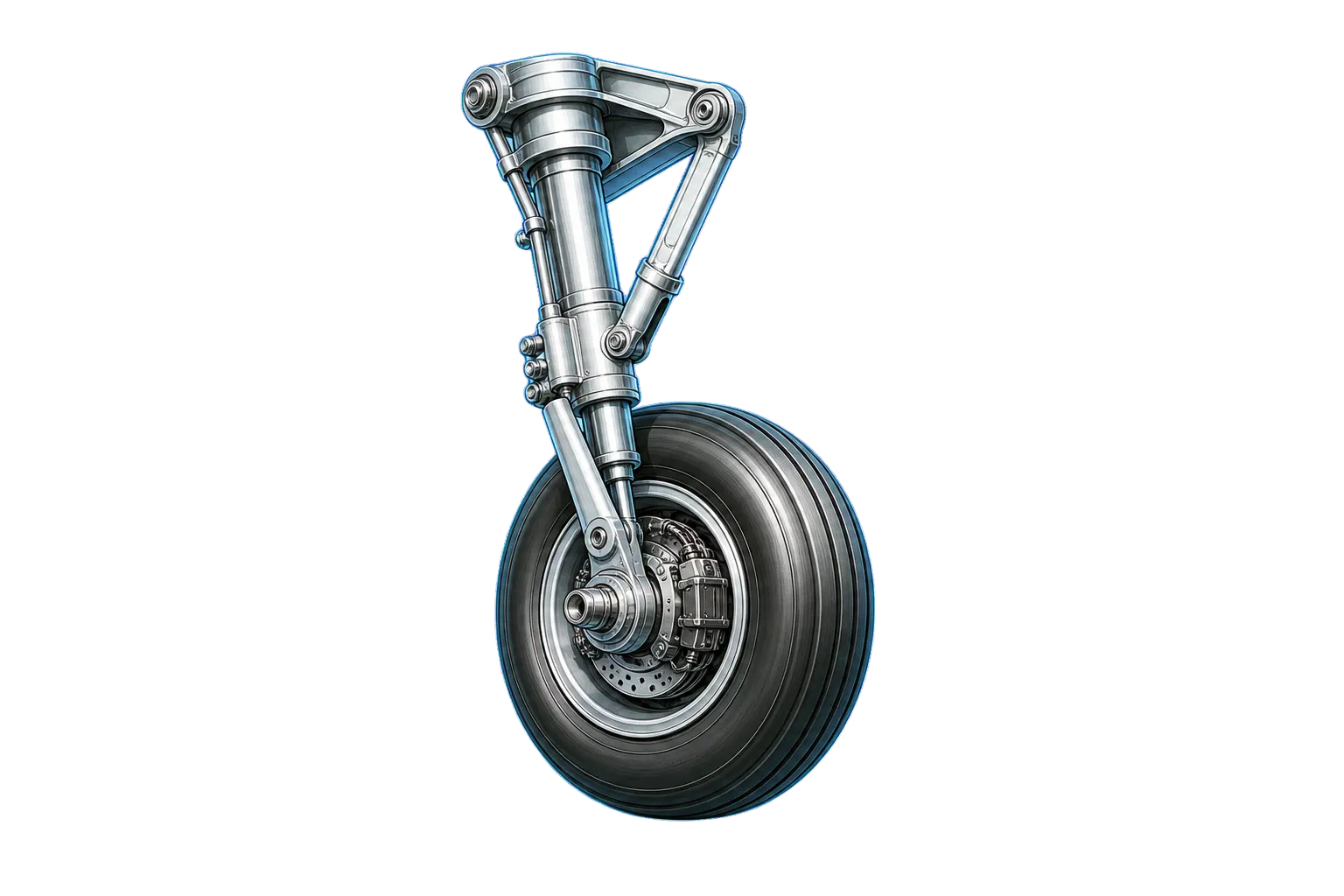
Failures in the nose landing gear outer cylinder due to initial defects, resulting in cracks in the upper barrel area of the trunnion and below the towing collar.
AI-generated summary from the source AD text. Verify against the official source before acting.
Required Actions
Conduct daily visual inspections with a 10-power magnifying glass for cracks on the outer surface. Perform ultrasonic inspections within 20 calendar days and repeat every 20 landings if cracks are found. Conduct dye penetrant inspections every 550 hours' time in service. Replace cylinders with cracks over 1 inch or extending to the outer surface. Inspect interior surfaces within 3,000 hours' time in service or 1,500 landings post-March 8, 1960.
AI-generated summary from the source AD text. Verify against the official source before acting.
Compliance Time
Compliance required as indicated in the AD, with specific actions due within 20 calendar days, every 20 landings, every 550 hours' time in service, and within 3,000 hours' time in service or 1,500 landings subsequent to March 8, 1960.
AI-generated summary from the source AD text. Verify against the official source before acting.
Affected Aircraft
Boeing Models 707 and 720 Series airplanes equipped with Nose Gear Outer Cylinder, Boeing P/N 5-83025-3005.
AI-generated summary from the source AD text. Verify against the official source before acting.
Federal Register Abstract
Nose Landing Gear
Applicability Source Text
Show captured applicability text from the source AD
AD Final Rules - DRS_60-06-01.html
Copy URL
Print/Save as PDF
Document Versions
 Feedback
Details
AD Number:
60-06-01
Document Type:
AD Final Rules
Docket Number:
Unknown
Subject Heading:
BOEING Models 707 and 720 Series Airplanes
Subject:
Nose Landing Gear
Status:
Current
Citation:
This information is not available.
Citation Publish Date:
Effective Date:
05/14/1966
Make:
The Boeing Company
Model:
707-100 Long Body | 707-100B Long Body | 707-100B Short Body | 707-200 | 707-300 Series | 707-300B S...Show more
Product Type:
Aircraft
Product Subtype:
Large Airplane
Affected AD:
Superseded AD:
Affected By:
Superseded By:
Service/Office:
Office of Primary Responsibility:
CFR Part Reference:
Part 39
Comments:
AIRWORTHINESS DIRECTIVES FINAL RULES: 60-06-01
CITATION:   This information is not available.

PAGE NUMBER:

DOCKET NUMBER:   Unknown

AMENDMENT:

AD NUMBER:   60-06-01

SUBJECT HEADING:   BOEING Models 707 and 720 Series Airplanes

ACTION:

SUMMARY:

DATES:   Effective May 14, 1966.

ADDRESSES:

FOR FURTHER INFORMATION CONTACT:

SUPPLEMENTARY INFORMATION:

REGULATORY TEXT:   60-06-01 BOEING: Amdt. 111 Part 507 Federal Register March 8, 1960. Applies to Models 707 and 720 Series Airplanes Equipped with Nose Gear Outer Cylinder, Boeing P/N 5-83025- 3005.

Compliance required as indicated.

Due to failures found in the nose landing gear outer cylinder as a result of initial defects, the following inspections are required unless already accomplished:

(a) Conduct a daily visual inspection with a 10-power magnifying glass for cracks in the outer surface of the nose gear outer cylinder in the upper barrel area of the trunnion, and in the area below the towing collar. Outer cylinders with cracks appearing on the outer surface must be replaced prior to further flight. Further inspection is not required on replacement part. This inspection must be continued until item (b) is accomplished.

(b) Within 20 calendar days, inspect the areas described in (a) with probe type ultrasonic shear wave equipment or equivalent. Outer cylinders with cracks on the outer surface or with crack indications that exceed 1 inch in length must be replaced prior to further flight. Cylinders with crack indications 1 inch or less in length may be retained in service, provided:

(1) A daily visual inspection as in (a) is continued and the ultrasonic inspections or equivalent are repeated every 20 landings.

(2) A dye penetrant inspection or equivalent of the interior surface of the outer cylinder is accomplished within 550 hours' time in service and every 550 hours' time in service thereafter.

(c) If no cracks or crack indications are found by inspections (a) and (b), the nose landing gear may revert to normal inspection procedures and periods except for accomplishing (d).

(d) Conduct a dye penetrant inspection or equivalent for cracks on the interior surface of all nose gear outer cylinders within the next 3,000 hours' time in service. Outer cylinders with cracks on the interior surface that exceed 1 inch in length or that extend to the outer surface must be replaced prior to further flight. Cylinders with cracks 1 inch or less in length on the interior surface may be retained in service provided the cracks do not extend to the outer surface and the cylinders are inspected in accordance with (b)(1) and (b)(2). Operators may accomplish this inspection within the next 1,500 landings occurring subsequent to March 8, 1960, in lieu of the next 3,000 hours' time in service. (It will be necessary for operators to maintain a record of landings to ascertain compliance. If past records are unavailable, the number of prior landings may be estimated.)

(Boeing Wire Service Bulletin No. 739 pertains to the above subject.)

Revised November 18, 1960.

Revised May 14, 1966.


FOOTER:
Document Text
Show stored source text (verify against official source)
AD Final Rules - DRS_60-06-01.html
Copy URL
Print/Save as PDF
Document Versions
 Feedback
Details
AD Number:
60-06-01
Document Type:
AD Final Rules
Docket Number:
Unknown
Subject Heading:
BOEING Models 707 and 720 Series Airplanes
Subject:
Nose Landing Gear
Status:
Current
Citation:
This information is not available.
Citation Publish Date:
Effective Date:
05/14/1966
Make:
The Boeing Company
Model:
707-100 Long Body | 707-100B Long Body | 707-100B Short Body | 707-200 | 707-300 Series | 707-300B S...Show more
Product Type:
Aircraft
Product Subtype:
Large Airplane
Affected AD:
Superseded AD:
Affected By:
Superseded By:
Service/Office:
Office of Primary Responsibility:
CFR Part Reference:
Part 39
Comments:
AIRWORTHINESS DIRECTIVES FINAL RULES: 60-06-01
CITATION:   This information is not available.

PAGE NUMBER:

DOCKET NUMBER:   Unknown

AMENDMENT:

AD NUMBER:   60-06-01

SUBJECT HEADING:   BOEING Models 707 and 720 Series Airplanes

ACTION:

SUMMARY:

DATES:   Effective May 14, 1966.

ADDRESSES:

FOR FURTHER INFORMATION CONTACT:

SUPPLEMENTARY INFORMATION:

REGULATORY TEXT:   60-06-01 BOEING: Amdt. 111 Part 507 Federal Register March 8, 1960. Applies to Models 707 and 720 Series Airplanes Equipped with Nose Gear Outer Cylinder, Boeing P/N 5-83025- 3005.

Compliance required as indicated.

Due to failures found in the nose landing gear outer cylinder as a result of initial defects, the following inspections are required unless already accomplished:

(a) Conduct a daily visual inspection with a 10-power magnifying glass for cracks in the outer surface of the nose gear outer cylinder in the upper barrel area of the trunnion, and in the area below the towing collar. Outer cylinders with cracks appearing on the outer surface must be replaced prior to further flight. Further inspection is not required on replacement part. This inspection must be continued until item (b) is accomplished.

(b) Within 20 calendar days, inspect the areas described in (a) with probe type ultrasonic shear wave equipment or equivalent. Outer cylinders with cracks on the outer surface or with crack indications that exceed 1 inch in length must be replaced prior to further flight. Cylinders with crack indications 1 inch or less in length may be retained in service, provided:

(1) A daily visual inspection as in (a) is continued and the ultrasonic inspections or equivalent are repeated every 20 landings.

(2) A dye penetrant inspection or equivalent of the interior surface of the outer cylinder is accomplished within 550 hours' time in service and every 550 hours' time in service thereafter.

(c) If no cracks or crack indications are found by inspections (a) and (b), the nose landing gear may revert to normal inspection procedures and periods except for accomplishing (d).

(d) Conduct a dye penetrant inspection or equivalent for cracks on the interior surface of all nose gear outer cylinders within the next 3,000 hours' time in service. Outer cylinders with cracks on the interior surface that exceed 1 inch in length or that extend to the outer surface must be replaced prior to further flight. Cylinders with cracks 1 inch or less in length on the interior surface may be retained in service provided the cracks do not extend to the outer surface and the cylinders are inspected in accordance with (b)(1) and (b)(2). Operators may accomplish this inspection within the next 1,500 landings occurring subsequent to March 8, 1960, in lieu of the next 3,000 hours' time in service. (It will be necessary for operators to maintain a record of landings to ascertain compliance. If past records are unavailable, the number of prior landings may be estimated.)

(Boeing Wire Service Bulletin No. 739 pertains to the above subject.)

Revised November 18, 1960.

Revised May 14, 1966.


FOOTER:
Source: Official FAA Source ↗
Retrieved: Apr 8, 2026
Rights: U.S. Government Public Domain
This site is not affiliated with or endorsed by the FAA. Always verify with official sources.
Related Airworthiness Directives
2023-12-15
final ruleAirworthiness Directives; The Boeing Company Airplanes
Unsafe Condition: 5G C-Band interference can cause radio altimeters to not perform their intended function, resulting in increased flightcrew workload while on approach with the flight director, autothrottle, or aut...
2023-10-02
final ruleAirworthiness Directives; Transport and Commuter Category Airplanes
Unsafe Condition: Radio altimeter anomalies that are undetected by the automation or pilot, particularly close to the ground (e.g., landing flare), could lead to loss of continued safe flight and landing. Additional...
2022-25-01 Recurring
final ruleAirworthiness Directives; The Boeing Company Airplanes
Unsafe Condition: cracking in fastener holes at the center wing box and at certain positions of the rear spar and lower skin
2020-03-11
final ruleAirworthiness Directives; The Boeing Company Airplanes
Unsafe Condition: The potential for a fuel tank ignition source to occur from the FQIS due to its design architecture, component design details, and installation design details.