AD 60-03-09
Applicability
| Type | Manufacturer | Model | Details |
|---|---|---|---|
| aircraft | Vickers-Armstrongs (Aircraft Limited) | Viscount 745D | Airworthiness Directives; VICKERS Model 745D and 810 Aircraft |
| aircraft | Vickers-Armstrongs (Aircraft Limited) | Viscount 810 | Airworthiness Directives; VICKERS Model 745D and 810 Aircraft |
Unsafe Condition
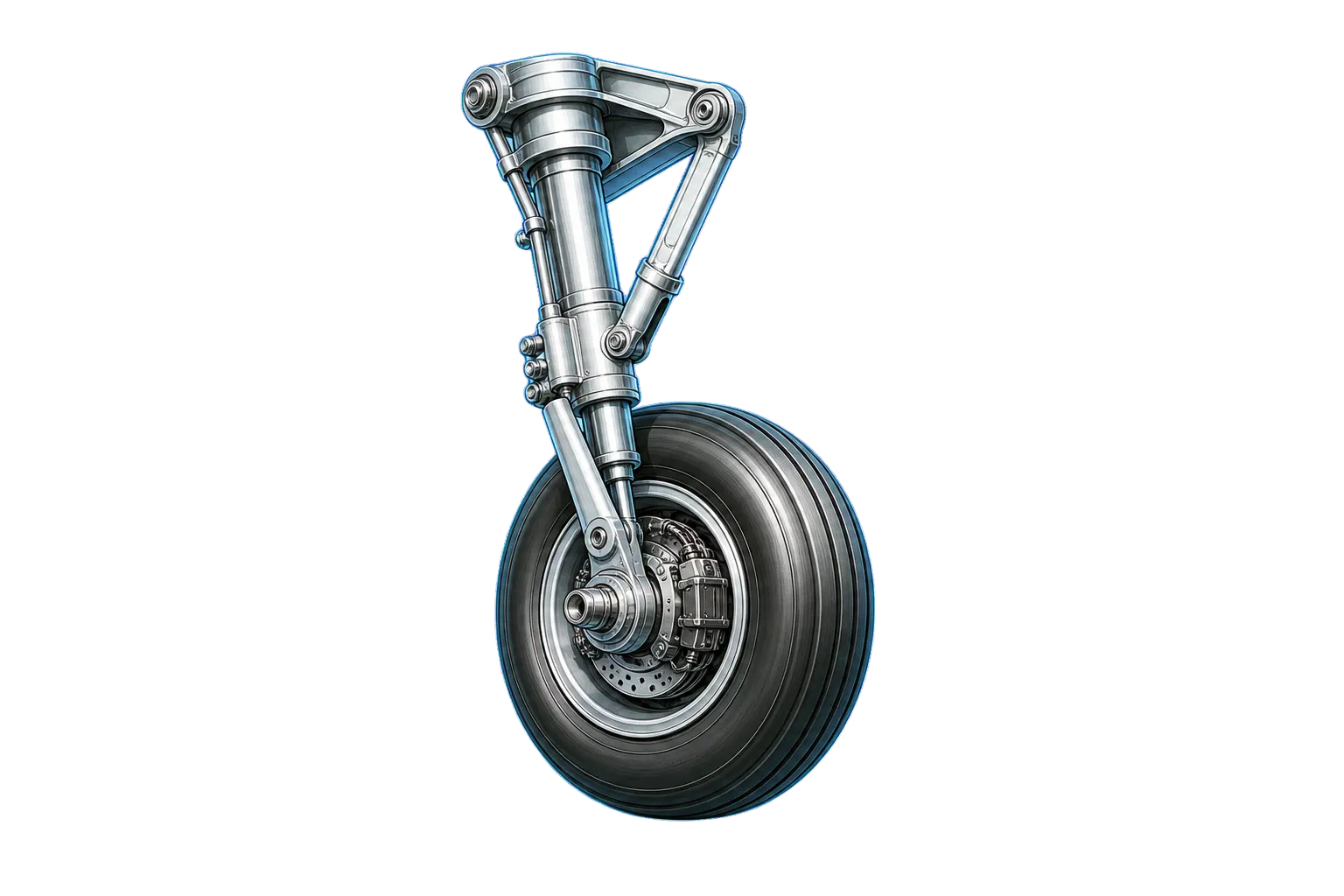
Failures of the main landing gear uplock lever, which prevent extension of the landing gear with the landing gear retracted, have resulted in wheels up landings. Investigation of these incidents disclosed that failures were caused by overloading of the uplock mechanism due to incorrect rigging.
AI-generated summary from the source AD text. Verify against the official source before acting.
Required Actions
Within the next 50 flights and every 50 flights thereafter, conduct visual 'in situ' inspections of main landing gear uplock levers for cracks and loose rivets. Within the next 500 flights, verify uplock mechanism adjustment so the compression spring does not bottom during operation. Remove and inspect uplock levers for cracks, distortion, or misalignment when they reach specified flight limits (2,500 flights for new unreinforced levers, 2,000 flights after reinforcement, or 4,500 flights for pre-reinforced levers). Before August 1, 1961, install strengthened steel uplock lever, spring-loaded actuating rod, and hydraulic release per Vickers modification Bulletin D.2954 and FG.1745, Issue 2.
AI-generated summary from the source AD text. Verify against the official source before acting.
Compliance Time
Compliance required as indicated.
AI-generated summary from the source AD text. Verify against the official source before acting.
Affected Aircraft
Vickers-Armstrongs (Aircraft Limited) Viscount 745D and 810 aircraft.
AI-generated summary from the source AD text. Verify against the official source before acting.
Federal Register Abstract
Landing Gear Uplock
Applicability Source Text
Show captured applicability text from the source AD
AD Final Rules - DRS_60-03-09.html
Copy URL
Print/Save as PDF
Document Versions
 Feedback
Details
AD Number:
60-03-09
Document Type:
AD Final Rules
Docket Number:
Unknown
Subject Heading:
Airworthiness Directives; VICKERS Model 745D and 810 Aircraft
Subject:
Landing Gear Uplock
Status:
Current
Citation:
This information is not available.
Citation Publish Date:
Effective Date:
Make:
Vickers-Armstrongs (Aircraft Limited)
Model:
Viscount 745D | Viscount 810
Product Type:
Aircraft
Product Subtype:
Large Airplane
Affected AD:
Superseded AD:
Affected By:
Superseded By:
Service/Office:
Office of Primary Responsibility:
CFR Part Reference:
Part 39
Comments:
AIRWORTHINESS DIRECTIVES FINAL RULES: 60-03-09
CITATION:   This information is not available.

PAGE NUMBER:

DOCKET NUMBER:   Unknown

AMENDMENT:

AD NUMBER:   60-03-09

SUBJECT HEADING:   Airworthiness Directives; VICKERS Model 745D and 810 Aircraft

ACTION:

SUMMARY:

DATES:

ADDRESSES:

FOR FURTHER INFORMATION CONTACT:

SUPPLEMENTARY INFORMATION:

REGULATORY TEXT:
60-03-09 VICKERS: Amdt. 97 Part 507 Federal Register February 3, 1960. Applies to All Viscount 745D and 810 Aircraft.

Compliance required as indicated.

Failures of the main landing gear uplock lever, which prevent extension of the landing gear with the landing gear retracted, have resulted in wheels up landings. Investigation of these incidents disclosed that failures were caused by overloading of the uplock mechanism due to incorrect rigging. To preclude further failures of the uplock lever, the following must be accomplished.

(a) Within the next 50 flights* and every 50 flights thereafter, conduct visual "in situ" inspection of all unmodified main landing gear uplock levers for cracks and loose or failed rivets in accordance with ACTION paragraph 1, PTL 213, Issue 3 (for 745D) or ACTION paragraph 1, PTL 79, Issue 2 (for 810). Levers with cracks or loose rivets must be replaced or repaired in accordance with the manufacturer's instructions.

(b) Within next 500 flights determine that adjustment of the uplock mechanism is such that compression spring does not bottom at any time during operating cycle, in accordance with numbered paragraphs 5, TNS 223, Issue 2 (for 745D), or numbered paragraph 5, TNS 82, Issue 2 (for 810.)

(c) Remove and inspect uplock levers for cracks, loose rivets, distortion or misalignment in accordance with ACTION paragraphs 2 through 5 of PTL 213, Issue 3. Any lever with loose or failed rivets, cracks, or misalignment in excess of 0.03 inch must be replaced or repaired in accordance with manufacturer's instructions. This inspection shall be accomplished when the levers have reached the following lives and every 500 flights thereafter.

(1) New levers, unreinforced (P/N 74450, sheet 15, 70150 sheet 53 or 59, and 70152-1491); 2,500 flights.

(2) Levers which were free of cracks and reinforced after a period in service, in accordance with either Fig. 1 or 2, PTL 213, Issue 3 (for 745D); or Fig. 1 or 2, PTL 79, Issue 2 (for 810); or Capital Airline drawing V.20132, revisions B or C, or scheme contained in Vickers cable S.S. 4939 dated April 10, 1959: 2,000 flights after reinforcement.

(3) New levers reinforced before initial installation in accordance with any plan in preceding paragraph: 4,500 flights.

(d) Prior to August 1, 1961, incorporate the following parts or equivalent in the main landing gear uplock mechanism in accordance with Vickers modification Bulletin D.2954 and FG.1745, Issue 2:

(1) Strengthened steel uplock lever.

(2) Spring loaded actuating rod.

(3) Hydraulic release for uplock.

The inspections required by (a), (b), and (c) are no longer require after accomplishing this modification. (Vickers-Armstrongs Co. PTL 213, Issue 3 (for 745D); PTL 79, Issue 2 (for 810); TNS 223, Issue 2 (for 745D) and TNS 82, Issue 2 (for 810) cover the same subject.

Revised August 1, 1960.

* This will require operators to maintain a record of flights to ascertain compliance with this AD. If past records are unavailable, the number of flights prior to this AD may be estimated.

FOOTER:
Document Text
Show stored source text (verify against official source)
AD Final Rules - DRS_60-03-09.html
Copy URL
Print/Save as PDF
Document Versions
 Feedback
Details
AD Number:
60-03-09
Document Type:
AD Final Rules
Docket Number:
Unknown
Subject Heading:
Airworthiness Directives; VICKERS Model 745D and 810 Aircraft
Subject:
Landing Gear Uplock
Status:
Current
Citation:
This information is not available.
Citation Publish Date:
Effective Date:
Make:
Vickers-Armstrongs (Aircraft Limited)
Model:
Viscount 745D | Viscount 810
Product Type:
Aircraft
Product Subtype:
Large Airplane
Affected AD:
Superseded AD:
Affected By:
Superseded By:
Service/Office:
Office of Primary Responsibility:
CFR Part Reference:
Part 39
Comments:
AIRWORTHINESS DIRECTIVES FINAL RULES: 60-03-09
CITATION:   This information is not available.

PAGE NUMBER:

DOCKET NUMBER:   Unknown

AMENDMENT:

AD NUMBER:   60-03-09

SUBJECT HEADING:   Airworthiness Directives; VICKERS Model 745D and 810 Aircraft

ACTION:

SUMMARY:

DATES:

ADDRESSES:

FOR FURTHER INFORMATION CONTACT:

SUPPLEMENTARY INFORMATION:

REGULATORY TEXT:
60-03-09 VICKERS: Amdt. 97 Part 507 Federal Register February 3, 1960. Applies to All Viscount 745D and 810 Aircraft.

Compliance required as indicated.

Failures of the main landing gear uplock lever, which prevent extension of the landing gear with the landing gear retracted, have resulted in wheels up landings. Investigation of these incidents disclosed that failures were caused by overloading of the uplock mechanism due to incorrect rigging. To preclude further failures of the uplock lever, the following must be accomplished.

(a) Within the next 50 flights* and every 50 flights thereafter, conduct visual "in situ" inspection of all unmodified main landing gear uplock levers for cracks and loose or failed rivets in accordance with ACTION paragraph 1, PTL 213, Issue 3 (for 745D) or ACTION paragraph 1, PTL 79, Issue 2 (for 810). Levers with cracks or loose rivets must be replaced or repaired in accordance with the manufacturer's instructions.

(b) Within next 500 flights determine that adjustment of the uplock mechanism is such that compression spring does not bottom at any time during operating cycle, in accordance with numbered paragraphs 5, TNS 223, Issue 2 (for 745D), or numbered paragraph 5, TNS 82, Issue 2 (for 810.)

(c) Remove and inspect uplock levers for cracks, loose rivets, distortion or misalignment in accordance with ACTION paragraphs 2 through 5 of PTL 213, Issue 3. Any lever with loose or failed rivets, cracks, or misalignment in excess of 0.03 inch must be replaced or repaired in accordance with manufacturer's instructions. This inspection shall be accomplished when the levers have reached the following lives and every 500 flights thereafter.

(1) New levers, unreinforced (P/N 74450, sheet 15, 70150 sheet 53 or 59, and 70152-1491); 2,500 flights.

(2) Levers which were free of cracks and reinforced after a period in service, in accordance with either Fig. 1 or 2, PTL 213, Issue 3 (for 745D); or Fig. 1 or 2, PTL 79, Issue 2 (for 810); or Capital Airline drawing V.20132, revisions B or C, or scheme contained in Vickers cable S.S. 4939 dated April 10, 1959: 2,000 flights after reinforcement.

(3) New levers reinforced before initial installation in accordance with any plan in preceding paragraph: 4,500 flights.

(d) Prior to August 1, 1961, incorporate the following parts or equivalent in the main landing gear uplock mechanism in accordance with Vickers modification Bulletin D.2954 and FG.1745, Issue 2:

(1) Strengthened steel uplock lever.

(2) Spring loaded actuating rod.

(3) Hydraulic release for uplock.

The inspections required by (a), (b), and (c) are no longer require after accomplishing this modification. (Vickers-Armstrongs Co. PTL 213, Issue 3 (for 745D); PTL 79, Issue 2 (for 810); TNS 223, Issue 2 (for 745D) and TNS 82, Issue 2 (for 810) cover the same subject.

Revised August 1, 1960.

* This will require operators to maintain a record of flights to ascertain compliance with this AD. If past records are unavailable, the number of flights prior to this AD may be estimated.

FOOTER:
Source: Official FAA Source ↗
Retrieved: Apr 8, 2026
Rights: U.S. Government Public Domain
This site is not affiliated with or endorsed by the FAA. Always verify with official sources.