AD 55-24-01
Applicability
| Type | Manufacturer | Model | Details |
|---|---|---|---|
| aircraft | Don Luscombe Aviation History Foundation, Inc. | 8 | Airworthiness Directives; LUSCOMBE Model 8 Series Aircraft |
| aircraft | Don Luscombe Aviation History Foundation, Inc. | 8A | Airworthiness Directives; LUSCOMBE Model 8 Series Aircraft |
| aircraft | Don Luscombe Aviation History Foundation, Inc. | 8B | Airworthiness Directives; LUSCOMBE Model 8 Series Aircraft |
| aircraft | Don Luscombe Aviation History Foundation, Inc. | 8C | Airworthiness Directives; LUSCOMBE Model 8 Series Aircraft |
| aircraft | Don Luscombe Aviation History Foundation, Inc. | 8D | Airworthiness Directives; LUSCOMBE Model 8 Series Aircraft |
| aircraft | Don Luscombe Aviation History Foundation, Inc. | 8E | Airworthiness Directives; LUSCOMBE Model 8 Series Aircraft |
Unsafe Condition
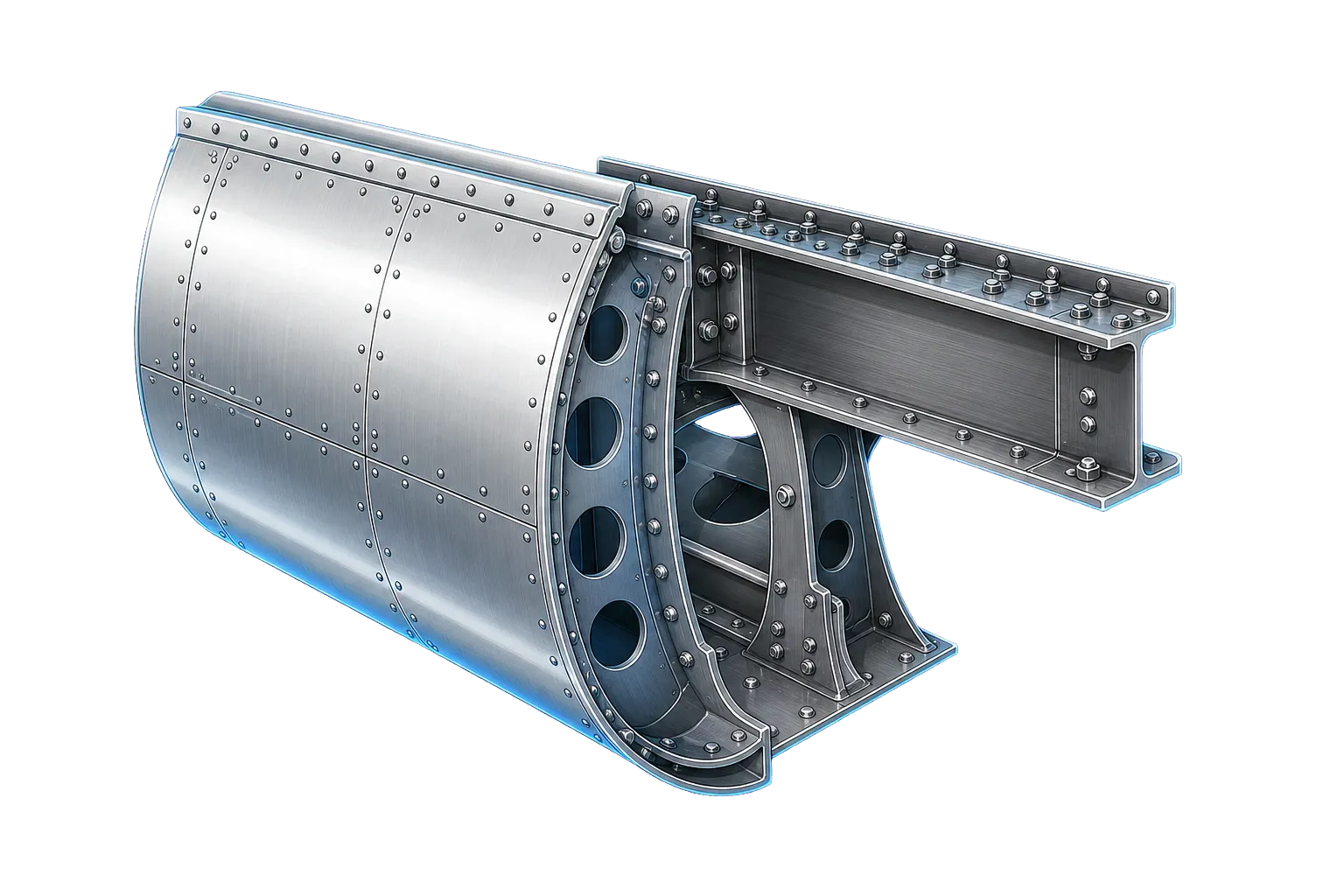
Extreme surface corrosion inside the fuselage spar carry through structures P/N 28018 and 28019 could deteriorate the spar members until structural failure occurs, particularly in aircraft near coastal areas.
AI-generated summary from the source AD text. Verify against the official source before acting.
Required Actions
Inspect the inside surfaces of the spar carry through members by either removing wings and fittings for visual access or drilling 1/2-inch holes in the wing skin for inspection. Address corrosion by replacing affected spars with new parts. Inspections must be repeated every 12 calendar months.
AI-generated summary from the source AD text. Verify against the official source before acting.
Compliance Time
By March 1, 1956, and thereafter at intervals not to exceed 12 calendar months from last inspection.
AI-generated summary from the source AD text. Verify against the official source before acting.
Affected Aircraft
LUSCOMBE Model 8 Series Aircraft except Model 8-F with Serial Numbers S-1 and Up.
AI-generated summary from the source AD text. Verify against the official source before acting.
Federal Register Abstract
Corrosion Inspection
Applicability Source Text
Show captured applicability text from the source AD
AD Final Rules - DRS_55-24-01.html
Copy URL
Print/Save as PDF
Document Versions
 Feedback
Details
AD Number:
55-24-01
Document Type:
AD Final Rules
Docket Number:
Unknown
Subject Heading:
Airworthiness Directives; LUSCOMBE Model 8 Series Aircraft
Subject:
Corrosion Inspection
Status:
Current
Citation:
This information is not available.
Citation Publish Date:
Effective Date:
05/22/1973
Make:
Don Luscombe Aviation History Foundation, Inc.
Model:
8 | 8A | 8B | 8C | 8D | 8E
Product Type:
Aircraft
Product Subtype:
Small Airplane
Affected AD:
Superseded AD:
Affected By:
Superseded By:
Service/Office:
Office of Primary Responsibility:
CFR Part Reference:
Part 39
Comments:
AIRWORTHINESS DIRECTIVES FINAL RULES: 55-24-01
CITATION:   This information is not available.

PAGE NUMBER:

DOCKET NUMBER:   Unknown

AMENDMENT:   39-1640

AD NUMBER:   55-24-01

SUBJECT HEADING:   Airworthiness Directives; LUSCOMBE Model 8 Series Aircraft

ACTION:

SUMMARY:

DATES:   Effective May 22, 1973.

ADDRESSES:

FOR FURTHER INFORMATION CONTACT:

SUPPLEMENTARY INFORMATION:

REGULATORY TEXT:
55-24-01 LUSCOMBE: Published in 21 FR 9540 on December 4, 1956, and as amended in 22 FR 2416 on April 11, 1957, is further amended by Amendment 39-1565 and 39-1640. Applies to All 8 Series Aircraft Except Model 8-F with Serial Numbers S-1 and Up.

To be accomplished by March 1, 1956, and thereafter at intervals not to exceed 12 calendar months from last inspection.

Extreme surface corrosion has been found to exist inside the fuselage spar carry through structures P/N 28018 and 28019 of Luscombe Series 8 aircraft, particularly in those airplanes which are located near coastal areas. If allowed to progress, such corrosion could deteriorate the spar carry through members until a structural failure occurred.

This corrosion is internal and cannot be detected by an external inspection. Therefore, the inside surfaces of the spar carry through members must be inspected. This may be accomplished by either of the two following acceptable methods:

(1) Remove wings from the airplane and also the wing attachment fittings. The ends of both the front and rear spar superstructures will then be open so that an internal inspection of these hat-section members can be made.

(2) Use of this method of inspection will not require the removal of the wings from the airplane. One-half inch holes may be drilled through the top wing skin directly over each spar carry through member so that a visual inspection can be made directly into the bottom of the hat sections. The airframe structure had adequate margins of safety in this area so that the existence of the 1/2-inch inspection holes will not impair the structural integrity of the airplane. Five of these 1/2-inch holes should be drilled over each of the spar carry through hat sections, one hole at the middle of each spar carry through, one hole 5 inches from each outboard end of the wing attachment fittings and one hole approximately centrally located between this latter hole and the middle hole. This will provide a distance of approximately 7 1/2 inches between holes and should render it possible to inspect all of the internal surface of the hat-section spar carry through members. After the inspection has been made, the 1/2-inch holes must be covered with a small patch of aircraft fabric doped to the surface of the wing skin or by the insertion of a rubber or neoprene seal plug, or equivalent. This method will also provide a ready means of rechecking the spar carry through members for corrosion during the time of subsequent inspections.

If any evidence of corrosion is found to exist, the affected spar carry through member should be removed and replaced with an identical new part.

The above inspections may be discontinued if both spar carry through structures are replaced with new parts that are identical to the original and properly anodized and painted to prevent corrosion, or if an equivalent modification is approved by the Chief, Engineering and Manufacturing Branch, FAA Southern Region.

Amendment 39-1565 became effective December 2, 1972.

This Amendment 39-1640 becomes effective May 22, 1973.

FOOTER:
Document Text
Show stored source text (verify against official source)
AD Final Rules - DRS_55-24-01.html
Copy URL
Print/Save as PDF
Document Versions
 Feedback
Details
AD Number:
55-24-01
Document Type:
AD Final Rules
Docket Number:
Unknown
Subject Heading:
Airworthiness Directives; LUSCOMBE Model 8 Series Aircraft
Subject:
Corrosion Inspection
Status:
Current
Citation:
This information is not available.
Citation Publish Date:
Effective Date:
05/22/1973
Make:
Don Luscombe Aviation History Foundation, Inc.
Model:
8 | 8A | 8B | 8C | 8D | 8E
Product Type:
Aircraft
Product Subtype:
Small Airplane
Affected AD:
Superseded AD:
Affected By:
Superseded By:
Service/Office:
Office of Primary Responsibility:
CFR Part Reference:
Part 39
Comments:
AIRWORTHINESS DIRECTIVES FINAL RULES: 55-24-01
CITATION:   This information is not available.

PAGE NUMBER:

DOCKET NUMBER:   Unknown

AMENDMENT:   39-1640

AD NUMBER:   55-24-01

SUBJECT HEADING:   Airworthiness Directives; LUSCOMBE Model 8 Series Aircraft

ACTION:

SUMMARY:

DATES:   Effective May 22, 1973.

ADDRESSES:

FOR FURTHER INFORMATION CONTACT:

SUPPLEMENTARY INFORMATION:

REGULATORY TEXT:
55-24-01 LUSCOMBE: Published in 21 FR 9540 on December 4, 1956, and as amended in 22 FR 2416 on April 11, 1957, is further amended by Amendment 39-1565 and 39-1640. Applies to All 8 Series Aircraft Except Model 8-F with Serial Numbers S-1 and Up.

To be accomplished by March 1, 1956, and thereafter at intervals not to exceed 12 calendar months from last inspection.

Extreme surface corrosion has been found to exist inside the fuselage spar carry through structures P/N 28018 and 28019 of Luscombe Series 8 aircraft, particularly in those airplanes which are located near coastal areas. If allowed to progress, such corrosion could deteriorate the spar carry through members until a structural failure occurred.

This corrosion is internal and cannot be detected by an external inspection. Therefore, the inside surfaces of the spar carry through members must be inspected. This may be accomplished by either of the two following acceptable methods:

(1) Remove wings from the airplane and also the wing attachment fittings. The ends of both the front and rear spar superstructures will then be open so that an internal inspection of these hat-section members can be made.

(2) Use of this method of inspection will not require the removal of the wings from the airplane. One-half inch holes may be drilled through the top wing skin directly over each spar carry through member so that a visual inspection can be made directly into the bottom of the hat sections. The airframe structure had adequate margins of safety in this area so that the existence of the 1/2-inch inspection holes will not impair the structural integrity of the airplane. Five of these 1/2-inch holes should be drilled over each of the spar carry through hat sections, one hole at the middle of each spar carry through, one hole 5 inches from each outboard end of the wing attachment fittings and one hole approximately centrally located between this latter hole and the middle hole. This will provide a distance of approximately 7 1/2 inches between holes and should render it possible to inspect all of the internal surface of the hat-section spar carry through members. After the inspection has been made, the 1/2-inch holes must be covered with a small patch of aircraft fabric doped to the surface of the wing skin or by the insertion of a rubber or neoprene seal plug, or equivalent. This method will also provide a ready means of rechecking the spar carry through members for corrosion during the time of subsequent inspections.

If any evidence of corrosion is found to exist, the affected spar carry through member should be removed and replaced with an identical new part.

The above inspections may be discontinued if both spar carry through structures are replaced with new parts that are identical to the original and properly anodized and painted to prevent corrosion, or if an equivalent modification is approved by the Chief, Engineering and Manufacturing Branch, FAA Southern Region.

Amendment 39-1565 became effective December 2, 1972.

This Amendment 39-1640 becomes effective May 22, 1973.

FOOTER:
Source: Official FAA Source ↗
Retrieved: Apr 8, 2026
Rights: U.S. Government Public Domain
This site is not affiliated with or endorsed by the FAA. Always verify with official sources.
Related Airworthiness Directives
96-24-17 R1
final ruleAirworthiness Directives The Don Luscombe Aviation History Foundation Models 8, 8A, 8B, 8C, 8D, 8E, 8F, T-8F Airplanes; Correction
Unsafe Condition: Wing spar failure from intergranular corrosion, which could result in structural failure of the wings and loss of control of the airplane.
94-16-02
final ruleAirworthiness Directives: Luscombe Model 8 Series Airplanes
Unsafe Condition: Failure of the vertical stabilizer as a result of a cracked aluminum vertical stabilizer forward attach fitting, which could result in loss of control of the airplane.
62-24-03
final ruleAirworthiness Directives; CESSNA and SILVAIRE (LUSCOMBE) Model 120, 140, or 140A Airplanes
Unsafe Condition: Failures of the exhaust stacks have occurred in the area of the cabin heat muffs, causing hazardous carbon monoxide contamination of the cabin when cabin heat is used.
61-03-05
final ruleAirworthiness Directives; LUSCOMBE Model 8 Series Aircraft
Unsafe Condition: Interference between the forward fuel line and the aileron cable and/or aileron pulley in the wing root and forward door post areas.