AD 54-12-02
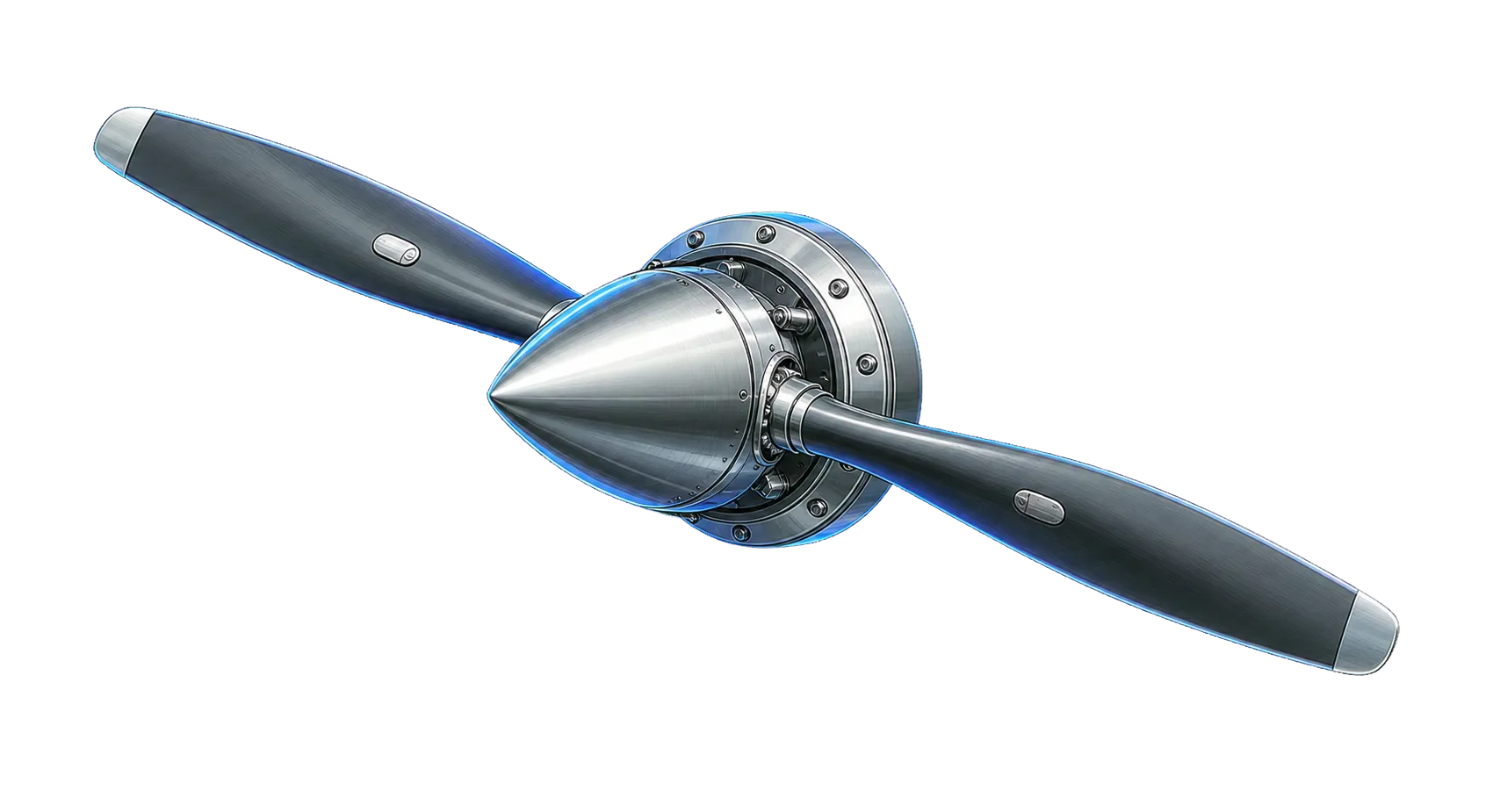
Applicability
| Type | Manufacturer | Model | Details |
|---|---|---|---|
| aircraft | McCauley Propeller Systems | AAF 41D5926 | MCCAULEY Model Propellers Having 41D5926 Hub |
| aircraft | McCauley Propeller Systems | D-1093 | MCCAULEY Model Propellers Having 41D5926 Hub |
| propeller | McCauley Propeller Systems | AAF 41D5926 | MCCAULEY Model Propellers Having 41D5926 Hub |
| propeller | McCauley Propeller Systems | D-1093 | MCCAULEY Model Propellers Having 41D5926 Hub |
Unsafe Condition
Vibratory stresses and corrosion or galling in the blade shank region and/or hub can cause serious failures in McCauley propellers with 41D5926 hub and specific blade configurations when installed outside the 102- to 100-inch diameter limits.
AI-generated summary from the source AD text. Verify against the official source before acting.
Required Actions
Remove from service propellers with diameters outside 102- to 100-inch limits. Disassemble and magnetically inspect hub and blades at intervals not exceeding 100 hours for those within the diameter limits. Ensure propeller surfaces remain free from corrosion.
AI-generated summary from the source AD text. Verify against the official source before acting.
Compliance Time
prior to July 1, 1954
AI-generated summary from the source AD text. Verify against the official source before acting.
Affected Aircraft
McCauley Propeller Systems models AAF 41D5926 and D-1093 with SS-135-6, SS-135-6M, or SS-138-6 blades and 41D5926 hub
AI-generated summary from the source AD text. Verify against the official source before acting.
Federal Register Abstract
Vibratory Stresses
Applicability Source Text
Show captured applicability text from the source AD
AD Final Rules - DRS_54-12-02.html
Copy URL
Print/Save as PDF
Document Versions
 Feedback
Details
AD Number:
54-12-02
Document Type:
AD Final Rules
Docket Number:
Unknown
Subject Heading:
MCCAULEY Model Propellers Having 41D5926 Hub
Subject:
Vibratory Stresses
Status:
Current
Citation:
This information is not available.
Citation Publish Date:
Effective Date:
Make:
McCauley Propeller Systems
Model:
AAF 41D5926 | D-1093
Product Type:
Propeller
Product Subtype:
Affected AD:
Superseded AD:
Affected By:
Superseded By:
Service/Office:
Office of Primary Responsibility:
CFR Part Reference:
Part 39
Comments:
AIRWORTHINESS DIRECTIVES FINAL RULES: 54-12-02
CITATION:   This information is not available.

PAGE NUMBER:

DOCKET NUMBER:   Unknown

AMENDMENT:

AD NUMBER:   54-12-02

SUBJECT HEADING:   MCCAULEY Model Propellers Having 41D5926 Hub

ACTION:

SUMMARY:

DATES:

ADDRESSES:

FOR FURTHER INFORMATION CONTACT:

SUPPLEMENTARY INFORMATION:

REGULATORY TEXT:
54-12-02 MCCAULEY: Applies to All McCauley Propellers Having 41D5926 Hub With SS-135-6 Blades and D-1093 Hub With SS-135-6M or SS-138-6 Blades.

Compliance required as indicated.

On the basis of satisfactory vibration stress surveys conducted on the 102-inch diameter configuration, these propellers were approved vibration wise for installation on the Continental W-670-6A and W-670-6N and Lycoming R680 engines. When installed on the Continental engine, the propeller must be indexed in the 0 degree position (blades in line with the crankthrow) and operation is to be restricted between 1,500 and 1,650 r.p.m.

Additional approval were given for the installation of propellers in reduced diameters at a time when the effects on the vibratory stresses resulting from such a reduction were not generally appreciated. Accordingly, some installations were made where the propeller diameter was reduced, as in the Fairchild M-62C. Service experience with this installation and a more thorough knowledge of the vibration problems indicate that diameters below the normal 2 percent reduction that is usually permissible on the basis of a stress survey have resulted in serious failures. Accordingly, to preclude additional propeller failures, the following should be performed. Compliance required prior to July 1, 1954.

(a) To preclude failures due to vibratory conditions, remove from service all of these propellers in diameters outside the 102- to 100-inch limits.

(b) To preclude fatigue failures due to corrosion or galling in the blade shank region and/or hub, disassemble propellers maintained in service (diameters 102 to 100 inches) and magnetically inspect hub and blades at intervals not exceeding 100 hours. The propeller blade and hub surface must be kept free from corrosion at all times.

If 100 hours operating time has not been accumulated since an inspection was conducted on the propeller as provided in AD 47-43-09, it will be satisfactory to operate until 100 hours have been accumulated.

This supersedes AD 47-43-09.

FOOTER:
Document Text
Show stored source text (verify against official source)
AD Final Rules - DRS_54-12-02.html
Copy URL
Print/Save as PDF
Document Versions
 Feedback
Details
AD Number:
54-12-02
Document Type:
AD Final Rules
Docket Number:
Unknown
Subject Heading:
MCCAULEY Model Propellers Having 41D5926 Hub
Subject:
Vibratory Stresses
Status:
Current
Citation:
This information is not available.
Citation Publish Date:
Effective Date:
Make:
McCauley Propeller Systems
Model:
AAF 41D5926 | D-1093
Product Type:
Propeller
Product Subtype:
Affected AD:
Superseded AD:
Affected By:
Superseded By:
Service/Office:
Office of Primary Responsibility:
CFR Part Reference:
Part 39
Comments:
AIRWORTHINESS DIRECTIVES FINAL RULES: 54-12-02
CITATION:   This information is not available.

PAGE NUMBER:

DOCKET NUMBER:   Unknown

AMENDMENT:

AD NUMBER:   54-12-02

SUBJECT HEADING:   MCCAULEY Model Propellers Having 41D5926 Hub

ACTION:

SUMMARY:

DATES:

ADDRESSES:

FOR FURTHER INFORMATION CONTACT:

SUPPLEMENTARY INFORMATION:

REGULATORY TEXT:
54-12-02 MCCAULEY: Applies to All McCauley Propellers Having 41D5926 Hub With SS-135-6 Blades and D-1093 Hub With SS-135-6M or SS-138-6 Blades.

Compliance required as indicated.

On the basis of satisfactory vibration stress surveys conducted on the 102-inch diameter configuration, these propellers were approved vibration wise for installation on the Continental W-670-6A and W-670-6N and Lycoming R680 engines. When installed on the Continental engine, the propeller must be indexed in the 0 degree position (blades in line with the crankthrow) and operation is to be restricted between 1,500 and 1,650 r.p.m.

Additional approval were given for the installation of propellers in reduced diameters at a time when the effects on the vibratory stresses resulting from such a reduction were not generally appreciated. Accordingly, some installations were made where the propeller diameter was reduced, as in the Fairchild M-62C. Service experience with this installation and a more thorough knowledge of the vibration problems indicate that diameters below the normal 2 percent reduction that is usually permissible on the basis of a stress survey have resulted in serious failures. Accordingly, to preclude additional propeller failures, the following should be performed. Compliance required prior to July 1, 1954.

(a) To preclude failures due to vibratory conditions, remove from service all of these propellers in diameters outside the 102- to 100-inch limits.

(b) To preclude fatigue failures due to corrosion or galling in the blade shank region and/or hub, disassemble propellers maintained in service (diameters 102 to 100 inches) and magnetically inspect hub and blades at intervals not exceeding 100 hours. The propeller blade and hub surface must be kept free from corrosion at all times.

If 100 hours operating time has not been accumulated since an inspection was conducted on the propeller as provided in AD 47-43-09, it will be satisfactory to operate until 100 hours have been accumulated.

This supersedes AD 47-43-09.

FOOTER:
Source: Official FAA Source ↗
Retrieved: Apr 8, 2026
Rights: U.S. Government Public Domain
This site is not affiliated with or endorsed by the FAA. Always verify with official sources.