AD 2020-20-07
Applicability
| Type | Manufacturer | Model | Details |
|---|---|---|---|
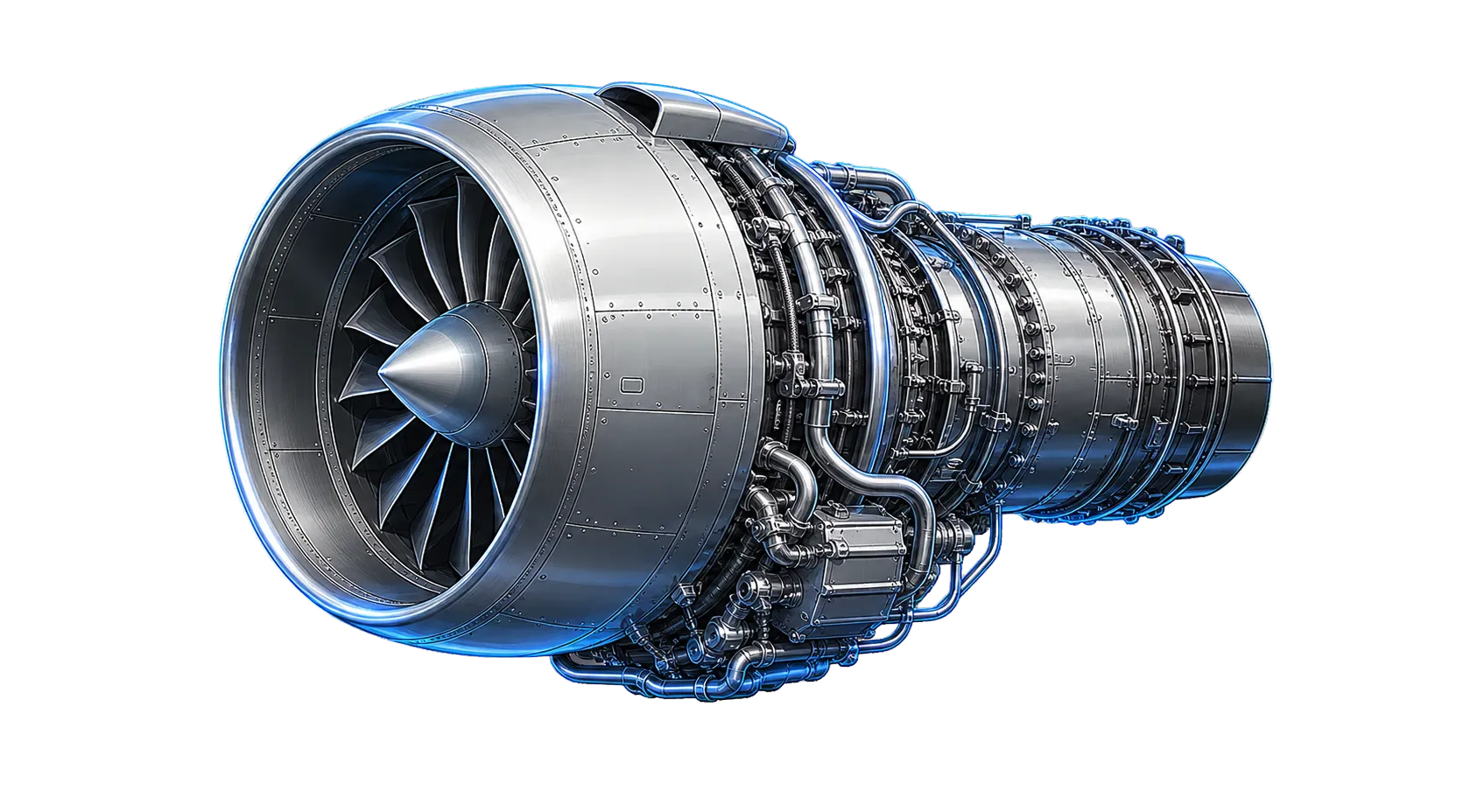
| aircraft | Rolls-Royce plc | Various | Airworthiness Directives; Rolls-Royce Deutschland Ltd & Co KG (Type Certificate Previously Held by Rolls-Royce plc) Turbofan Engines |
Unsafe Condition
crack findings in the front air seal on the intermediate-pressure compressor (IPC) shaft assembly during the stripping of a flight test engine
AI-generated summary from the source AD text. Verify against the official source before acting.
Required Actions
initial and repetitive borescope inspections (BSIs) or visual inspections of the IPC shaft assembly and, depending on the results of the inspection, replacement of the IPC shaft assembly with a part eligible for installation
AI-generated summary from the source AD text. Verify against the official source before acting.
Compliance Time
Before further flight
AI-generated summary from the source AD text. Verify against the official source before acting.
Affected Aircraft
Rolls-Royce Deutschland Ltd & Co KG (RRD) Trent 1000-AE3, Trent 1000-CE3, Trent 1000-D3, Trent 1000-G3, Trent 1000-H3, Trent 1000-J3, Trent 1000-K3, Trent 1000-L3, Trent 1000-M3, Trent 1000-N3, Trent 1000-P3, Trent 1000-Q3, Trent 1000-R3, Trent 7000-72, and Trent 7000-72C model turbofan engines
AI-generated summary from the source AD text. Verify against the official source before acting.
Federal Register Abstract
The FAA is adopting a new airworthiness directive (AD) for all Rolls-Royce Deutschland Ltd & Co KG (RRD) Trent 1000-AE3, Trent 1000- CE3, Trent 1000-D3, Trent 1000-G3, Trent 1000-H3, Trent 1000-J3, Trent 1000-K3, Trent 1000-L3, Trent 1000-M3, Trent 1000-N3, Trent 1000-P3, Trent 1000-Q3, Trent 1000-R3, Trent 7000-72, and Trent 7000-72C model turbofan engines. This AD was prompted by a report of crack findings in the front air seal on the intermediate-pressure compressor (IPC) shaft assembly during the stripping of a flight test engine. This AD requires initial and repetitive borescope inspections (BSIs) or visual inspections of the IPC shaft assembly and, depending on the results of the inspection, replacement of the IPC shaft assembly with a part eligible for installation. The FAA is issuing this AD to address the unsafe condition on these products.
Applicability Source Text
Show captured applicability text from the source AD
(c) Applicability

    This AD applies to all:
    (1) Rolls-Royce Deutschland Ltd & Co KG (RRD) (Type Certificate
previously held by Rolls-Royce plc) Trent 1000-AE3, Trent 1000-CE3,
Trent 1000-D3, Trent 1000-G3, Trent 1000-H3, Trent 1000-J3, Trent
1000-K3, Trent 1000-L3, Trent 1000-M3, Trent 1000-N3, Trent 1000-P3,
Trent 1000-Q3, and Trent 1000-R3 model turbofan engines.
    (2) RRD Trent 7000-72 and Trent 7000-72C model turbofan engines.
Document Text
Show stored source text (verify against official source)
[Federal Register Volume 85, Number 194 (Tuesday, October 6, 2020)]
[Rules and Regulations]
[Pages 62975-62979]
From the Federal Register Online via the Government Publishing Office [<a href="http://www.gpo.gov">www.gpo.gov</a>]
[FR Doc No: 2020-22011]
-----------------------------------------------------------------------
DEPARTMENT OF TRANSPORTATION
Federal Aviation Administration
14 CFR Part 39
[Docket No. FAA-2020-0293; Project Identifier MCAI-2019-00122-E;
Amendment 39-21263; AD 2020-20-07]
RIN 2120-AA64
Airworthiness Directives; Rolls-Royce Deutschland Ltd & Co KG
(Type Certificate Previously Held by Rolls-Royce plc) Turbofan Engines
AGENCY: Federal Aviation Administration (FAA), DOT.
ACTION: Final rule.
-----------------------------------------------------------------------
SUMMARY: The FAA is adopting a new airworthiness directive (AD) for all
Rolls-Royce Deutschland Ltd & Co KG (RRD) Trent 1000-AE3, Trent 1000-
CE3, Trent 1000-D3, Trent 1000-G3, Trent 1000-H3, Trent 1000-J3, Trent
1000-K3, Trent 1000-L3, Trent 1000-M3, Trent 1000-N3, Trent 1000-P3,
Trent 1000-Q3, Trent 1000-R3, Trent 7000-72, and Trent 7000-72C model
turbofan engines. This AD was prompted by a report of crack findings in
the front air seal on the intermediate-pressure compressor (IPC) shaft
assembly during the stripping of a flight test engine. This AD requires
initial and repetitive borescope inspections (BSIs) or visual
inspections of the IPC shaft assembly and, depending on the results of
the inspection, replacement of the IPC shaft assembly with a part
eligible for installation. The FAA is issuing this AD to address the
unsafe condition on these products.
DATES: This AD is effective November 10, 2020.
The Director of the Federal Register approved the incorporation by
reference
[[Page 62976]]
of a certain publication listed in this AD as of November 10, 2020.
ADDRESSES: For service information identified in this final rule,
contact Rolls-Royce Deutschland Ltd & Co KG, Eschenweg 11, 15827
Blankenfelde-Mahlow, Germany; phone: +49 (0) 33 708 6 0; website:
<a href="https://www.rolls-royce.com/contact-us.aspx">https://www.rolls-royce.com/contact-us.aspx</a>. You may view this service
information at the FAA, Airworthiness Products Section, Operational
Safety Branch, 1200 District Avenue, Burlington, MA 01803. For
information on the availability of this material at the FAA, call 781-
238-7759. It is also available on the internet at <a href="https://www.regulations.gov">https://www.regulations.gov</a> by searching for and locating Docket No. FAA-2020-
0293.
Examining the AD Docket
You may examine the AD docket on the internet at <a href="https://www.regulations.gov">https://www.regulations.gov</a> by searching for and locating Docket No. FAA-2020-
0293; or in person at Docket Operations between 9 a.m. and 5 p.m.,
Monday through Friday, except Federal holidays. The AD docket contains
this final rule, the mandatory continuing airworthiness information
(MCAI), any comments received, and other information. The address for
Docket Operations is U.S. Department of Transportation, Docket
Operations, M-30, West Building Ground Floor, Room W12-140, 1200 New
Jersey Avenue SE, Washington, DC 20590.
FOR FURTHER INFORMATION CONTACT: Stephen Elwin, Aerospace Engineer, ECO
Branch, FAA, 1200 District Avenue, Burlington, MA 01803; phone: 781-
238-7236; fax: 781-238-7199; email: <a href="/cdn-cgi/l/email-protection#d8abacbda8b0bdb6f6b4f6bdb4afb1b698beb9b9f6bfb7ae"><span class="__cf_email__" data-cfemail="3d4e49584d55585313511358514a54537d5b5c5c135a524b">[email protected]</span></a>.
SUPPLEMENTARY INFORMATION:
Background
The FAA issued a notice of proposed rulemaking (NPRM) to amend 14
CFR part 39 by adding an AD that would apply to RRD Trent 1000-AE3,
Trent 1000-CE3, Trent 1000-D3, Trent 1000-G3, Trent 1000-H3, Trent
1000-J3, Trent 1000-K3, Trent 1000-L3, Trent 1000-M3, Trent 1000-N3,
Trent 1000-P3, Trent 1000-Q3, Trent 1000-R3, Trent 7000-72, and Trent
7000-72C model turbofan engines. The NPRM published in the Federal
Register on April 2, 2020 (85 FR 18478). The NPRM was prompted by a
report of crack findings in the front air seal on the IPC shaft
assembly during the stripping of a flight test engine. The NPRM
proposed to require initial and repetitive BSIs of the IPC shaft
assembly and, depending on the results of the inspection, replacement
of the IPC shaft assembly with a part eligible for installation. The
FAA is issuing this AD to address the unsafe condition on these
products.
The European Union Aviation Safety Agency (EASA), which is the
Technical Agent for the Member States of the European Community, has
issued EASA AD 2019-0282, dated November 20, 2019 (referred to after
this as ``the MCAI''), to address the unsafe condition on these
products. The MCAI states:
An occurrence was reported of finding cracks in the front air
seal of the IPC shaft assembly during stripping of a flight test
engine. Follow-up inspections of other in-shop engines revealed two
more cracked front air seals of IPC shaft assemblies.
This condition, if not detected and corrected, could lead to IPC
shaft failure, possibly resulting in engine in-flight shut-down and
consequent reduced control of the aeroplane.
To address this potential unsafe condition, Rolls-Royce
developed an inspection method and issued the NMSB, providing those
inspection instructions.
For the reason described above, this [EASA] AD requires
repetitive on-wing inspections of the front air seal of the affected
part at a specific area between the fourth (rearmost) seal fin of
the IPC shaft assembly front air seal and the IPC Stage 1 disc and,
depending on findings, removal from service of the engine for
corrective action(s).
You may obtain further information by examining the MCAI in the AD
docket on the internet at <a href="https://www.regulations.gov">https://www.regulations.gov</a> by searching for
and locating Docket No. FAA-2020-0293.
Comments
The FAA gave the public the opportunity to participate in
developing this final rule. The following presents the comments
received on the NPRM and the FAA's response to each comment.
Request To Update Methods To Gain Access to the IPC Shaft Assembly
Delta Air Lines (DAL) requested that paragraph (g)(1), Required
Actions, of this AD be updated to specify that gaining access to the
front air seal of the IPC shaft assembly to perform the BSI can be
accomplished through the engine inlet and low-pressure compressor (LPC)
fan blades or through the outlet guide vanes (OGVs) regardless of
whether the BSI of the front air seal is performed concurrently with
any other inspections.
DAL cited paragraph 3.B.(2)(b) of Rolls-Royce Trent 1000 Alert Non-
Modification Service Bulletin (NMSB) 72-AK451, Initial Issue, dated
November 14, 2019 (``the NMSB''), that states that accessing the front
air seal may be made through the OGVs ``if performed concurrently with
IP Compressor Stage 1 blade inspections.'' As a result, inspectors may
have less difficulty accessing the inspection area through the OGVs.
Further, DAL reasoned that tooling for entry through the OGVs might be
more readily available in certain stations where the affected aircraft
operate.
The FAA agrees that access to the front air seal of the IPC shaft
assembly can be accomplished through the engine inlet and LPC fan
blades or through the OGVs regardless of any other inspections
occurring at the time. The FAA, however, disagrees with updating
paragraph (g)(1) of this AD because this AD does not require a certain
method to access the front air seal of the IPC shaft assembly.
Request To Remove Engine To Allow for Verification of Cracks
DAL requested that the FAA update paragraph (g)(3), Required
Actions, of this AD to require removal of the engine before further
flight and to allow verification of any cracks prior to mandating
replacement of the IPC shaft assembly. DAL added that the EASA AD,
which states to remove of the engine from service if any crack is
detected and to contact RRD for approved corrective actions, allows for
the possibility that an engine can be removed from the aircraft and
then subsequently cleared for continued service after cleaning and
reassessment of a suspected indication.
The FAA disagrees with updating paragraph (g)(3) of this AD to
require removal of the engine. While the engine can be removed from the
aircraft and subsequently cleared for continued service after cleaning
and reassessment, the engine does not need to be removed from the
aircraft to verify a crack. According to the Accomplishment
Instructions, paragraph 3.B.(2)(e), of the NMSB, if a crack is found,
it is permissible to clean the suspected area and then repeat the BSI
or visual inspection of the IPC shaft assembly. Therefore, no change to
this AD is required.
Request To Allow Visual Inspections of the IPC Shaft Assembly During a
Shop Visit
DAL requested that the FAA update paragraph (g)(2), Required
Actions, of this AD to allow credit for an IPC shaft assembly that
received the BSI using the NMSB or a general visual inspection during
an engine shop visit. DAL reasoned that when the IPC shaft assembly is
exposed during an engine shop visit, the inspection area can be
accessed without a borescope.
[[Page 62977]]
The FAA agrees that visual inspections using standard shop
procedures would provide an equivalent level of safety as an on-wing
BSI if the front air seal of the IPC shaft assembly is exposed. The FAA
updated paragraph (g)(2) of this AD to allow a visual inspection using
FAA-approved maintenance procedures if the part is exposed.
Request To Revise Definition of Part Eligible for Installation
DAL requested that the FAA update the definition of a ``part
eligible for installation'' be revised to also include a part that has
been inspected per standard shop procedures. DAL reasoned that
paragraph (h) of the NPRM only defined a part eligible for installation
to include a new IPC shaft assembly or an IPC shaft assembly that,
before installation, passed an inspection in accordance with referenced
service information, which only includes an on-wing BSI and does not
allow for inspection during an engine shop visit. Therefore, paragraph
(h) of the NPRM, as written, allows only for the reinstallation of the
IPC shaft assembly that had been previously inspected on-wing before
removal from an engine. Additionally, DAL noted that both the RRD Trent
1000 and Trent 7000 Cleaning, Inspection, and Repair Manuals, Section
72-32-31, provide standard manual procedures for identifying cracks on
the IPC shaft assembly.
The FAA agrees and updated the definition of a ``part eligible for
installation'' in paragraph (h)(2) of this AD to include an in-shop BSI
and visual inspection using FAA-approved maintenance procedures.
Request To Remove Reference to Table of Inspection Intervals
DAL requested that the FAA update paragraph (g)(2), Required
Actions, of this AD to remove the reference to Table 1 to paragraph
(g)(1) for inspection intervals. DAL suggested that the FAA mirror the
language of the MCAI that states that in-shop inspections ``may be
substituted for any on-wing BSI as required by paragraph (1) of this
[EASA] AD, provided the compliance time is not exceeded.'' DAL reasoned
that Table 1 to paragraph (g)(1) of the NPRM includes only the initial
inspection intervals, and therefore could be interpreted to exclude
substitution for repetitive inspections.
The FAA agrees that Table 1 to paragraph (g)(1) of this AD provides
the compliance time for the initial inspection, whereas paragraph
(g)(1) of this AD requires repetitive inspections at stated intervals.
The FAA updated paragraph (g)(2) of this AD from ``may be substituted
for any on-wing BSI, provided the compliance time specified in Table 1
to paragraph (g)(1) of this AD is not exceeded'' to ``may be
substituted for any on-wing BSI, provided the compliance time specified
in paragraph (g)(1) of this AD is not exceeded.''
Support for the AD
The Boeing Company expressed support for the AD as written.
Conclusion
The FAA reviewed the relevant data, considered the comments
received, and determined that air safety and the public interest
require adopting this final rule with the changes described previously
and minor editorial changes. The FAA has determined that these minor
changes:
<bullet> [Agr]re consistent with the intent that was proposed in
the NPRM for addressing the unsafe condition; and
<bullet> Do not add any additional burden upon the public than was
already proposed in the NPRM.
The FAA has also determined that these changes will not increase
the economic burden on any operator or increase the scope of this final
rule.
Related Service Information Under 1 CFR Part 51
The FAA reviewed Rolls-Royce Trent 1000 Alert NMSB 72-AK451,
Initial Issue, dated November 14, 2019. The Alert NMSB describes
procedures for initial and repetitive BSIs of the IPC shaft assembly.
This service information is reasonably available because the interested
parties have access to it through their normal course of business or by
the means identified in the ADDRESSES section.
Costs of Compliance
The FAA estimates that this AD affects 14 engines installed on
airplanes of U.S. registry.
The FAA estimates the following costs to comply with this AD:
Estimated Costs
----------------------------------------------------------------------------------------------------------------
Cost per Cost on U.S.
Action Labor cost Parts cost product operators
----------------------------------------------------------------------------------------------------------------
BSI or visual inspection of IPC 3.5 work-hours x $85 per $0 $297.50 $4,165
shaft assembly. hour = $297.50.
----------------------------------------------------------------------------------------------------------------
The FAA estimates the following costs to do any necessary
replacement that are required based on the results of the mandated
inspection. The FAA has no way of determining the number of engines
that might need this replacement:
On-Condition Costs
----------------------------------------------------------------------------------------------------------------
Cost per
Action Labor cost Parts cost product
----------------------------------------------------------------------------------------------------------------
Replace IPC shaft assembly................ 1,080 work-hours x $85 per hour = $1,365,219 $1,457,019
$91,800.
----------------------------------------------------------------------------------------------------------------
Authority for This Rulemaking
Title 49 of the United States Code specifies the FAA's authority to
issue rules on aviation safety. Subtitle I, section 106, describes the
authority of the FAA Administrator. Subtitle VII: Aviation Programs,
describes in more detail the scope of the Agency's authority.
The FAA is issuing this rulemaking under the authority described in
Subtitle VII, Part A, Subpart III, Section 44701: ``General
requirements.'' Under that section, Congress charges the FAA with
promoting safe flight of civil aircraft in air commerce by prescribing
regulations for practices, methods, and procedures the Administrator
finds
[[Page 62978]]
necessary for safety in air commerce. This regulation is within the
scope of that authority because it addresses an unsafe condition that
is likely to exist or develop on products identified in this rulemaking
action.
Regulatory Findings
This AD will not have federalism implications under Executive Order
13132. This AD will not have a substantial direct effect on the States,
on the relationship between the national Government and the States, or
on the distribution of power and responsibilities among the various
levels of government.
For the reasons discussed above, I certify this AD:
(1) Is not a ``significant regulatory action'' under Executive
Order 12866,
(2) Will not affect intrastate aviation in Alaska, and
(3) Will not have a significant economic impact, positive or
negative, on a substantial number of small entities under the criteria
of the Regulatory Flexibility Act.
List of Subjects in 14 CFR Part 39
Air transportation, Aircraft, Aviation safety, Incorporation by
reference, Safety.
Adoption of the Amendment
Accordingly, under the authority delegated to me by the
Administrator, the FAA amends 14 CFR part 39 as follows:
PART 39--AIRWORTHINESS DIRECTIVES
0
1. The authority citation for part 39 continues to read as follows:
Authority: 49 U.S.C. 106(g), 40113, 44701.
Sec. 39.13 [Amended]
0
2. The FAA amends Sec. 39.13 by adding the following new airworthiness
directive (AD):
2020-20-07 Rolls-Royce Deutschland Ltd & Co KG (Type Certificate
previously held by Rolls-Royce plc): Amendment 39-21263; Docket No.
FAA-2020-0293; Project Identifier MCAI-2019-00122-E.
(a) Effective Date
This AD is effective November 10, 2020.
(b) Affected ADs
None.
(c) Applicability
This AD applies to all:
(1) Rolls-Royce Deutschland Ltd & Co KG (RRD) (Type Certificate
previously held by Rolls-Royce plc) Trent 1000-AE3, Trent 1000-CE3,
Trent 1000-D3, Trent 1000-G3, Trent 1000-H3, Trent 1000-J3, Trent
1000-K3, Trent 1000-L3, Trent 1000-M3, Trent 1000-N3, Trent 1000-P3,
Trent 1000-Q3, and Trent 1000-R3 model turbofan engines.
(2) RRD Trent 7000-72 and Trent 7000-72C model turbofan engines.
(d) Subject
Joint Aircraft System Component (JASC) Code 7230, Turbine Engine
Compressor Section.
(e) Unsafe Condition
This AD was prompted by a report of crack findings in the front
air seal on the intermediate-pressure compressor (IPC) shaft
assembly during the stripping of a flight test engine. The FAA is
proposing this AD to prevent failure of the IPC shaft assembly. The
unsafe condition, if not addressed, could result in loss of thrust
control and reduced control of the airplane.
(f) Compliance
Comply with this AD within the compliance times specified,
unless already done.
(g) Required Actions
(1) Within the compliance times specified in Table 1 to
paragraph (g)(1) of this AD, and thereafter, at intervals not to
exceed 200 flight cycles (FCs), perform a borescope inspection (BSI)
of the IPC shaft assembly, part number KH18436, using the
Accomplishment Instructions, paragraph 3.B., of Rolls-Royce (RR)
Trent 1000 Alert Non-Modification Service Bulletin (NMSB) 72-AK451,
Initial Issue, dated November 14, 2019.
[GRAPHIC] [TIFF OMITTED] TR06OC20.002
(2) An in-shop BSI of the IPC shaft assembly using the
Accomplishment Instructions, paragraph 3.A, of RR Trent 1000 Alert
NMSB 72-AK451, Initial Issue, dated November 14, 2019, or visual
inspection of the IPC shaft assembly using FAA-approved maintenance
procedures if the part is exposed, may be substituted for any on-
wing BSI, provided the compliance time specified in paragraph (g)(1)
of this AD is not exceeded.
(3) If, during any initial or repetitive BSI or visual
inspection of the IPC shaft assembly required by paragraph (g)(1) or
(2) of this AD, any crack is detected, before further flight, remove
the IPC shaft assembly and replace it with a part eligible for
installation.
(h) Definitions
For the purpose of this AD, a ``part eligible for installation''
is:
(1) An IPC shaft assembly that is new (not previously installed
on an engine);
(2) An IPC shaft assembly that, before (re)installation, has
passed a BSI (no crack detected) using the Accomplishment
Instructions, paragraph 3.A. or B., of RR Trent 1000 Alert NMSB 72-
AK451, Initial Issue, dated November 14, 2019.
(3) An IPC shaft assembly that, before (re)installation, has
passed a visual inspection of the exposed part (no crack detected)
using FAA-approved maintenance procedures.
(i) No Reporting Requirement
The reporting requirements in the Accomplishment Instructions,
paragraphs 3.A. and 3.B., of RR Trent 1000 Alert NMSB
[[Page 62979]]
72-AK451, Initial Issue, dated November 14, 2019, are not required
by this AD.
(j) Credit for Previous Actions
You may take credit for the initial BSI of the IPC shaft
assembly that is required by paragraph (g)(1) of this AD if you
performed the BSI before the effective date of this AD using RR
Trent 1000 NMSB 72-K452, Initial Issue, dated October 21, 2019.
(k) Alternative Methods of Compliance (AMOCs)
(1) The Manager, ECO Branch, FAA, has the authority to approve
AMOCs for this AD, if requested using the procedures found in 14 CFR
39.19. In accordance with 14 CFR 39.19, send your request to your
principal inspector or local Flight Standards District Office, as
appropriate. If sending information directly to the manager of the
ECO Branch, send it to the attention of the person identified in
paragraph (l)(1) of this AD. You may email your request to: <a href="/cdn-cgi/l/email-protection#a4e5eae189e5e089e5e9ebe7e4c2c5c58ac3cbd2"><span class="__cf_email__" data-cfemail="074649422a46432a464a48444761666629606871">[email protected]</span></a>.
(2) Before using any approved AMOC, notify your appropriate
principal inspector, or lacking a principal inspector, the manager
of the local flight standards district office/certificate holding
district office.
(l) Related Information
(1) For more information about this AD, contact Stephen Elwin,
Aerospace Engineer, ECO Branch, FAA, 1200 District Avenue,
Burlington, MA 01803; phone: 781-238-7236; fax: 781-238-7199; email:
<a href="/cdn-cgi/l/email-protection#0b787f6e7b636e652567256e677c62654b6d6a6a256c647d"><span class="__cf_email__" data-cfemail="f4878091849c919ada98da9198839d9ab4929595da939b82">[email protected]</span></a>.
(2) Refer to European Union Aviation Safety Agency (EASA) AD
2019-0282, dated November 20, 2019, for more information. You may
examine the EASA AD in the AD docket on the internet at <a href="https://www.regulations.gov">https://www.regulations.gov</a> by searching for and locating Docket No. FAA-
2020-0293.
(m) Material Incorporated by Reference
(1) The Director of the Federal Register approved the
incorporation by reference (IBR) of the service information listed
in this paragraph under 5 U.S.C. 552(a) and 1 CFR part 51.
(2) You must use this service information as applicable to do
the actions required by this AD, unless the AD specifies otherwise.
(i) Rolls-Royce (RR) Trent 1000 Alert Non-Modification Service
Bulletin 72-AK451, Initial Issue, dated November 14, 2019.
(ii) [Reserved]
(3) For RR service information identified in this AD, contact
Rolls-Royce Deutschland Ltd & Co KG, Eschenweg 11, 15827
Blankenfelde-Mahlow, Germany; phone: +49 (0) 33 708 6 0; website:
<a href="https://www.rolls-royce.com/contact-us.aspx">https://www.rolls-royce.com/contact-us.aspx</a>.
(4) You may view this service information at FAA, Airworthiness
Products Section, Operational Safety Branch, 1200 District Avenue,
Burlington, MA 01803. For information on the availability of this
material at the FAA, call 781-238-7759.
(5) You may view this service information that is incorporated
by reference at the National Archives and Records Administration
(NARA). For information on the availability of this material at
NARA, email: <a href="/cdn-cgi/l/email-protection#046261607661632a6861636568446a6576652a636b72"><span class="__cf_email__" data-cfemail="741211100611135a1811131518341a1506155a131b02">[email protected]</span></a>, or go to: <a href="https://www.archives.gov/federal-register/cfr/ibr-locations.html">https://www.archives.gov/federal-register/cfr/ibr-locations.html</a>.
Issued on September 22, 2020.
Lance T. Gant,
Director, Compliance & Airworthiness Division, Aircraft Certification
Service.
[FR Doc. 2020-22011 Filed 10-5-20; 8:45 am]
BILLING CODE 4910-13-P
Source: Official FAA Source ↗
Retrieved: Apr 4, 2026
Rights: U.S. Government Public Domain
This site is not affiliated with or endorsed by the FAA. Always verify with official sources.