AD 2018-17-18
Applicability
| Type | Manufacturer | Model | Details |
|---|---|---|---|
| aircraft | Airbus SAS | A330-201 | Airworthiness Directives; Airbus SAS Airplanes |
| aircraft | Airbus SAS | A330-202 | Airworthiness Directives; Airbus SAS Airplanes |
| aircraft | Airbus SAS | A330-203 | Airworthiness Directives; Airbus SAS Airplanes |
| aircraft | Airbus SAS | A330-223 | Airworthiness Directives; Airbus SAS Airplanes |
| aircraft | Airbus SAS | A330-223F | Airworthiness Directives; Airbus SAS Airplanes |
| aircraft | Airbus SAS | A330-243 | Airworthiness Directives; Airbus SAS Airplanes |
| aircraft | Airbus SAS | A330-243F | Airworthiness Directives; Airbus SAS Airplanes |
| aircraft | Airbus SAS | A330-301 | Airworthiness Directives; Airbus SAS Airplanes |
| aircraft | Airbus SAS | A330-302 | Airworthiness Directives; Airbus SAS Airplanes |
| aircraft | Airbus SAS | A330-303 | Airworthiness Directives; Airbus SAS Airplanes |
| aircraft | Airbus SAS | A330-321 | Airworthiness Directives; Airbus SAS Airplanes |
| aircraft | Airbus SAS | A330-322 | Airworthiness Directives; Airbus SAS Airplanes |
| aircraft | Airbus SAS | A330-323 | Airworthiness Directives; Airbus SAS Airplanes |
| aircraft | Airbus SAS | A330-341 | Airworthiness Directives; Airbus SAS Airplanes |
| aircraft | Airbus SAS | A330-342 | Airworthiness Directives; Airbus SAS Airplanes |
| aircraft | Airbus SAS | A330-343 | Airworthiness Directives; Airbus SAS Airplanes |
Unsafe Condition
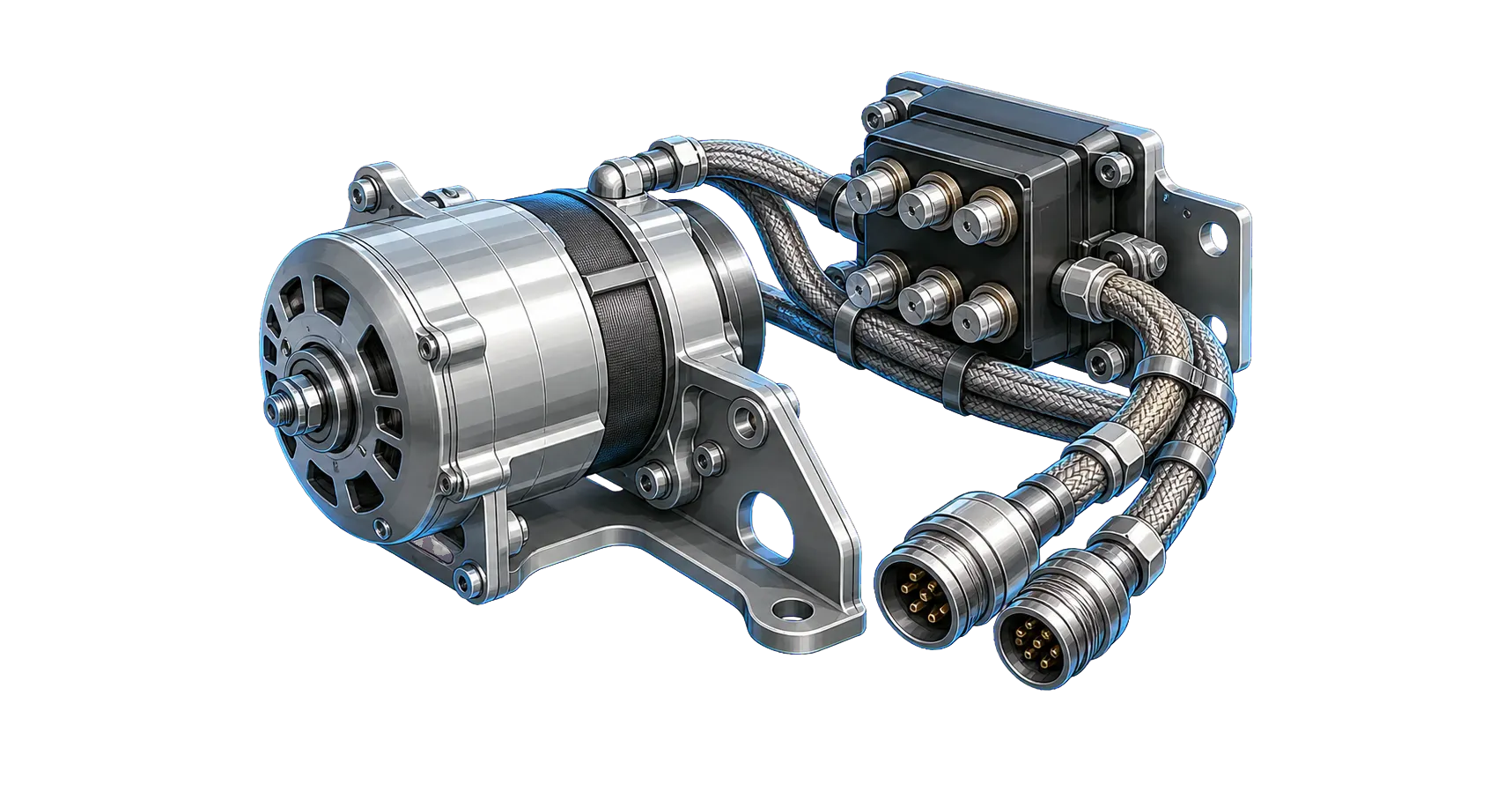
The Constant Speed Motor/Generator (CSM/G), as installed on Airbus A330 aeroplanes, is qualified for an overload condition of 9.5 kVA for 30 minutes. This duration is sufficient to perform safe landing and go-around. However, electrical load analysis revealed that the hydraulic power might not be sufficient to supply the CSM/G during slat/flap extension, when only one engine is running. This condition, if not corrected, and in conjunction with the loss of main system, could lead to a scenario where the crew is not clearly warned that the electrical system has switched on the battery and thus has a limited duration to support a safe landing.
AI-generated summary from the source AD text. Verify against the official source before acting.
Required Actions
Replace or modify the two flight warning computers (FWCs) in accordance with Airbus Service Bulletin A330-31-3232, Revision 01, dated February 14, 2017. Remove the applicable AFM Temporary Revision (TR) once the aeroplane is modified.
AI-generated summary from the source AD text. Verify against the official source before acting.
Compliance Time
Before further flight
AI-generated summary from the source AD text. Verify against the official source before acting.
Affected Aircraft
Airbus Model A330-200, A330-200 Freighter, and A330-300 series airplanes.
AI-generated summary from the source AD text. Verify against the official source before acting.
Federal Register Abstract
We are superseding Airworthiness Directive (AD) 2015-02-17, which applied to all Airbus Model A330-200, A330-200 Freighter, and A330-300 series airplanes. AD 2015-02-17 required revising the electrical emergency configuration procedure in the Emergency Procedures section of the airplane flight manual (AFM) to include procedures for deploying the ram air turbine manually to provide sufficient hydraulic power and avoid constant speed motor/generator (CSM/G) shedding. Since we issued AD 2015-02-17, we have determined that replacement or modification of the two flight warning computers (FWCs) is necessary to address the identified unsafe condition. This AD requires the replacement or modifications of the two FWCs. This AD also removes airplanes from the applicability. We are issuing this AD to address the unsafe condition on these products.
Applicability Source Text
Show captured applicability text from the source AD
(c) Applicability

    This AD applies to the airplanes identified in paragraphs
(c)(1), (c)(2), and (c)(3) of this AD, certificated in any category,
all manufacturer serial numbers, except those airplanes with Airbus
modification 205228 embodied in production.
    (1) Airbus SAS Model A330-201, -202, -203, -223, and -243
airplanes.
    (2) Airbus SAS Model A330-223F and -243F airplanes.
    (3) Airbus SAS Model A330-301, -302, -303, -321, -322, -323, -
341, -342, and -343 airplanes.
Document Text
Show stored source text (verify against official source)
[Federal Register Volume 83, Number 170 (Friday, August 31, 2018)]
[Rules and Regulations]
[Pages 44457-44460]
From the Federal Register Online via the Government Publishing Office [<a href="http://www.gpo.gov">www.gpo.gov</a>]
[FR Doc No: 2018-18736]
-----------------------------------------------------------------------
DEPARTMENT OF TRANSPORTATION
Federal Aviation Administration
14 CFR Part 39
[Docket No. FAA-2018-0169; Product Identifier 2017-NM-095-AD; Amendment
39-19372; AD 2018-17-18]
RIN 2120-AA64
Airworthiness Directives; Airbus SAS Airplanes
AGENCY: Federal Aviation Administration (FAA), Department of
Transportation (DOT).
ACTION: Final rule.
-----------------------------------------------------------------------
SUMMARY: We are superseding Airworthiness Directive (AD) 2015-02-17,
which applied to all Airbus Model A330-200, A330-200 Freighter, and
A330-300 series airplanes. AD 2015-02-17 required revising the
electrical emergency configuration procedure in the Emergency
Procedures section of the airplane flight manual (AFM) to include
procedures for deploying the ram air turbine manually to provide
sufficient hydraulic power and avoid constant speed motor/generator
(CSM/G) shedding. Since we issued AD 2015-02-17, we have determined
that replacement or modification of the two flight warning computers
(FWCs) is necessary to address the identified unsafe condition. This AD
requires the replacement or modifications of the two FWCs. This AD also
removes airplanes from the applicability. We are issuing this AD to
address the unsafe condition on these products.
DATES: This AD is effective October 5, 2018.
The Director of the Federal Register approved the incorporation by
reference of a certain publication listed in this AD as of October 5,
2018.
The Director of the Federal Register approved the incorporation by
reference of certain other publications listed in this AD as of
February 13, 2015 (80 FR 4762, January 29, 2015).
ADDRESSES: For service information identified in this final rule,
contact Airbus SAS, Airworthiness Office--EAW, Rond-Point Emile
Dewoitine No: 2, 31700 Blagnac Cedex, France; telephone +33 5 61 93 36
96; fax +33 5 61 93 44 51; email <a href="/cdn-cgi/l/email-protection#a7c6c4c4c8d2c9d389c6ced5d0c8d5d3cf8ac2c6d4e7c6ced5c5d2d489c4c8ca"><span class="__cf_email__" data-cfemail="c0a1a3a3afb5aeb4eea1a9b2b7afb2b4a8eda5a1b380a1a9b2a2b5b3eea3afad">[email protected]</span></a>;
internet <a href="http://www.airbus.com">http://www.airbus.com</a>. You may view this referenced service
information at the FAA, Transport Standards Branch, 2200 South 216th
St., Des Moines, WA. For information on the availability of this
material at the FAA, call 206-231-3195. It is also available on the
internet at <a href="http://www.regulations.gov">http://www.regulations.gov</a> by searching for and locating
Docket No. FAA-2018-0169.
Examining the AD Docket
You may examine the AD docket on the internet at <a href="http://www.regulations.gov">http://www.regulations.gov</a> by searching for and locating Docket No. FAA-2018-
0169; or in person at Docket Operations between 9 a.m. and 5 p.m.,
Monday through Friday, except Federal holidays. The AD docket contains
this final rule, the regulatory evaluation, any comments received, and
other information. The address for Docket Operations (phone: 800-647-
5527) is Docket Operations, U.S. Department of Transportation, Docket
Operations, M-30, West Building Ground Floor, Room W12-140, 1200 New
Jersey Avenue SE, Washington, DC 20590.
FOR FURTHER INFORMATION CONTACT: Vladimir Ulyanov, Aerospace Engineer,
International Section, Transport Standards Branch, FAA, 2200 South
216th St., Des Moines, WA 98198; telephone and fax 206-231-3229.
SUPPLEMENTARY INFORMATION:
Discussion
We issued a notice of proposed rulemaking (NPRM) to amend 14 CFR
part 39 to supersede AD 2015-02-17,
[[Page 44458]]
Amendment 39-18084 (80 FR 4762, January 29, 2015) (``AD 2015-02-17'').
AD 2015-02-17 applied to all Airbus Model A330-200, A330-200 Freighter,
and A330-300 series airplanes. The NPRM published in the Federal
Register on April 16, 2018 (83 FR 16248). The NPRM was prompted by a
determination that replacement or modification of the two FWCs is
necessary to address the identified unsafe condition. The NPRM proposed
to require the replacement or modification of the two FWCs. The NPRM
also proposed to remove airplanes from the applicability. We are
issuing this AD to address the identified unsafe condition.
The European Aviation Safety Agency (EASA), which is the Technical
Agent for the Member States of the European Union, has issued EASA AD
2017-0105R1, dated July 17, 2017 (referred to after this as the
Mandatory Continuing Airworthiness Information, or ``the MCAI''), to
correct an unsafe condition for all Airbus SAS Model A330-200, A330-200
Freighter, and A330-300 series airplanes. The MCAI states:
The Constant Speed Motor/Generator (CSM/G), as installed on
Airbus A330 aeroplanes, is qualified for an overload condition of
9.5 kVA [kilovolt-ampere] for 30 minutes. This duration is
sufficient to perform safe landing and go-around. However,
electrical load analysis revealed that the hydraulic power might not
be sufficient to supply the CSM/G during slat/flap extension, when
only one engine is running.
This condition, if not corrected, and in conjunction with the
loss of main system, could lead to a scenario where the crew is not
clearly warned that the electrical system has switched on the
battery and thus has a limited duration to support a safe landing.
To initially address this potential unsafe condition, Airbus
issued an Aircraft Flight Manual (AFM) Temporary Revision (TR) to
amend the electrical emergency configuration ``ELEC EMER CONFIG''
procedure to require the pilot to deploy the ram air turbine
manually before setting the Landing Recovery to ``ON'' position,
which provides sufficient hydraulic power and avoids CSM/G shedding
under worst-case operational conditions. Consequently, EASA issued
AD 2014-0273 to require amendment of the AFM by incorporating the
applicable Airbus TR.
After finding that [EASA] AD 2014-0273 contained some incorrect
and incomplete information, EASA issued AD 2014-0281 [which
corresponds to FAA AD 2015-02-17], retaining the requirements of
EASA AD 2014-0273, which was superseded, but correcting the
information related to premod/pre Service Bulletin (SB) or post-mod/
post SB aeroplane configurations.
Since EASA AD 2014-0281 was issued, in order to improve the
``ELEC EMER CONFIG'' procedure, Airbus developed modifications to
install improved FWCs, which is embodied in production through
Airbus modification (mod) 205228, and to be embodied in service with
Airbus SB A330-31-3232 * * *.
For the reasons described above, this [EASA] AD retains the
requirements of EASA AD 2014-0281, which is superseded, and requires
installation of a software standard upgrade [or replacement] of the
two FWCs and removal of the applicable AFM TR once the aeroplane is
modified.
Since EASA AD 2017-0105 was issued, it was identified that there
was no need to require removal of applicable AFM TR, nor
incorporation of a later AFM revision, as the contents are
identical. This revised [EASA] AD deletes the requirement of
paragraph (3) [of EASA AD 2017-0105].
* * * * *
You may examine the MCAI in the AD docket on the internet at <a href="http://www.regulations.gov">http://www.regulations.gov</a> by searching for and locating Docket No. FAA-2018-
0169.
Comments
We gave the public the opportunity to participate in developing
this final rule. The following presents the comments received on the
NPRM and the FAA's response to each comment. The Air Line Pilots
Association, International (ALPA), indicated its support for the NPRM.
Request for Additional Credit
Delta Air Lines requested that paragraph (l) of the proposed AD,
``Credit for Previous Actions,'' include Airbus Service Bulletin A330-
31-3232, Revision 01, dated February 14, 2017, as well as Airbus
Service Bulletin A330-31-3232, dated May 4, 2016.
We disagree this change is necessary. Paragraph (f) of this AD
requires compliance with this AD unless already done. Paragraph (j) of
this AD mandates actions in accordance with Airbus Service Bulletin
A330-31-3232, Revision 01, dated February 14, 2017. Therefore, as
specified in paragraph (f) of this AD, having previously accomplished
the actions specified in Airbus Service Bulletin A330-31-3232, Revision
01, dated February 14, 2017, means compliance with paragraph (j) of
this AD has already been established. In paragraph (l) of this AD, we
give credit to operators that have previously accomplished an earlier
revision of the required service information identified in paragraph
(j) of this AD; therefore, as specified in paragraph (l) of this AD,
having accomplished Airbus Service Bulletin A330-31-3232, dated May 4,
2016, prior to the effective date of this AD means compliance with
paragraph (j) of this AD has already been established. We have not
changed this AD in this regard.
Conclusion
We reviewed the relevant data, considered the comments received,
and determined that air safety and the public interest require adopting
this final rule as proposed, except for minor editorial changes. We
have determined that these minor changes:
<bullet> Are consistent with the intent that was proposed in the
NPRM for addressing the unsafe condition; and
<bullet> Do not add any additional burden upon the public than was
already proposed in the NPRM.
Related Service Information Under 1 CFR Part 51
Airbus SAS has issued A330/A340 Airplane Flight Manual (AFM)
Temporary Revision (TR) TR427, UPDATE OF ELEC--EMER CONFIG PROCEDURE,
Issue 1.0, dated November 7, 2014; and A330/A340 AFM TR TR428, UPDATE
OF ELEC--EMER CONFIG PROCEDURE, Issue 1.0, dated November 7, 2014. This
service information describes updated electrical emergency
configuration procedures in the AFM. This service information is
distinct because it applies to airplanes in different configurations.
Airbus SAS has issued Service Bulletin A330-31-3232, Revision 01,
including Appendix 01, dated February 14, 2017. This service
information describes procedures for replacement or modification of the
FWCs.
This service information is reasonably available because the
interested parties have access to it through their normal course of
business or by the means identified in the ADDRESSES section.
Costs of Compliance
We estimate that this AD affects 105 airplanes of U.S. registry.
We estimate the following costs to comply with this AD:
[[Page 44459]]
Estimated Costs
----------------------------------------------------------------------------------------------------------------
Cost per Cost on U.S.
Labor cost Parts cost product operators
----------------------------------------------------------------------------------------------------------------
4 work-hour x $85 per hour = $340............................ $0 $340 $35,700
----------------------------------------------------------------------------------------------------------------
According to the manufacturer, some of the costs of this AD may be
covered under warranty, thereby reducing the cost impact on affected
individuals. We do not control warranty coverage for affected
individuals. As a result, we have included all costs in our cost
estimate.
Authority for This Rulemaking
Title 49 of the United States Code specifies the FAA's authority to
issue rules on aviation safety. Subtitle I, section 106, describes the
authority of the FAA Administrator. Subtitle VII: Aviation Programs,
describes in more detail the scope of the Agency's authority.
We are issuing this rulemaking under the authority described in
Subtitle VII, Part A, Subpart III, Section 44701: ``General
requirements.'' Under that section, Congress charges the FAA with
promoting safe flight of civil aircraft in air commerce by prescribing
regulations for practices, methods, and procedures the Administrator
finds necessary for safety in air commerce. This regulation is within
the scope of that authority because it addresses an unsafe condition
that is likely to exist or develop on products identified in this
rulemaking action.
This AD is issued in accordance with authority delegated by the
Executive Director, Aircraft Certification Service, as authorized by
FAA Order 8000.51C. In accordance with that order, issuance of ADs is
normally a function of the Compliance and Airworthiness Division, but
during this transition period, the Executive Director has delegated the
authority to issue ADs applicable to transport category airplanes and
associated appliances to the Director of the System Oversight Division.
Regulatory Findings
We determined that this AD will not have federalism implications
under Executive Order 13132. This AD will not have a substantial direct
effect on the States, on the relationship between the national
government and the States, or on the distribution of power and
responsibilities among the various levels of government.
For the reasons discussed above, I certify that this AD:
1. Is not a ``significant regulatory action'' under Executive Order
12866;
2. Is not a ``significant rule'' under the DOT Regulatory Policies
and Procedures (44 FR 11034, February 26, 1979);
3. Will not affect intrastate aviation in Alaska; and
4. Will not have a significant economic impact, positive or
negative, on a substantial number of small entities under the criteria
of the Regulatory Flexibility Act.
List of Subjects in 14 CFR Part 39
Air transportation, Aircraft, Aviation safety, Incorporation by
reference, Safety.
Adoption of the Amendment
Accordingly, under the authority delegated to me by the
Administrator, the FAA amends 14 CFR part 39 as follows:
PART 39--AIRWORTHINESS DIRECTIVES
0
1. The authority citation for part 39 continues to read as follows:
Authority: 49 U.S.C. 106(g), 40113, 44701.
Sec. 39.13 [Amended]
0
2. The FAA amends Sec. 39.13 by removing Airworthiness Directive (AD)
2015-02-2017, Amendment 39-18084 (80 FR 4762, January 29, 2015), and
adding the following new AD:
2018-17-18 Airbus SAS: Amendment 39-19372; Docket No. FAA-2018-0169;
Product Identifier 2017-NM-095-AD.
(a) Effective Date
This AD is effective October 5, 2018.
(b) Affected ADs
This AD replaces AD 2015-02-17, Amendment 39-18084 (80 FR 4762,
January 29, 2015) (``AD 2015-02-17'').
(c) Applicability
This AD applies to the airplanes identified in paragraphs
(c)(1), (c)(2), and (c)(3) of this AD, certificated in any category,
all manufacturer serial numbers, except those airplanes with Airbus
modification 205228 embodied in production.
(1) Airbus SAS Model A330-201, -202, -203, -223, and -243
airplanes.
(2) Airbus SAS Model A330-223F and -243F airplanes.
(3) Airbus SAS Model A330-301, -302, -303, -321, -322, -323, -
341, -342, and -343 airplanes.
(d) Subject
Air Transport Association (ATA) of America Code 24, Electrical
power.
(e) Reason
This AD was prompted by an electrical load analysis that
revealed that hydraulic power might not be sufficient to supply the
constant speed motor/generator (CSM/G) during slat/flap extension
when only one engine is running and a determination that replacement
or modification of the two flight warning computers (FWCs) is
necessary to address the identified unsafe condition. We are issuing
this AD to prevent such a condition which, in conjunction with the
loss of the main electrical system, could lead to the scenario where
the flight crew is not clearly warned that the electrical system has
switched on the battery and thus has a limited duration that would
allow a safe landing.
(f) Compliance
Comply with this AD within the compliance times specified,
unless already done.
(g) Retained Airplane Flight Manual (AFM) Revision, With a New
Exception
This paragraph restates the requirements of paragraph (g) of AD
2015-02-17, with a new exception. Except for airplanes identified in
paragraph (h) of this AD: Within 15 days after February 13, 2015
(the effective date of AD 2015-02-17), revise the Emergency
Procedures section of the Airbus A330/A340 AFM to include the
information in the applicable Airbus temporary revision (TR)
specified in paragraph (g)(1) or (g)(2) of this AD. This may be done
by inserting a copy of the applicable TR specified in paragraph
(g)(1) or (g)(2) of this AD into the AFM. Operate the airplane
according to the procedures in the applicable TR. When the
information in the applicable TR has been included in the general
revisions of the AFM, the general revisions may be inserted into the
AFM, provided the relevant information in the general revision is
identical to that in the TR, and the TR may be removed.
(1) For airplanes in Airbus pre-modification 47930 configuration
and pre-Airbus Service Bulletin A330-28-3067 configuration: Airbus
A330/A340 AFM TR TR427, UPDATE OF ELEC--EMER CONFIG PROCEDURE, Issue
1.0, dated November 7, 2014.
(2) For airplanes in Airbus post-modification 47930
configuration or post-Airbus Service Bulletin A330-28-3067
configuration: Airbus A330/A340 AFM TR TR428, UPDATE OF ELEC--EMER
CONFIG PROCEDURE, Issue 1.0, dated November 7, 2014.
[[Page 44460]]
(h) New Airplanes Not Affected by the Retained AFM Revision
Airplanes operated with an AFM that incorporates the information
in Airbus EMERGENCY PROCEDURES/24-ELECTRICAL POWER/ELEC--EMER CONFIG
Documentary Unit (DU) 00005218.0001001 (for airplanes in Airbus pre-
modification 47930 configuration and pre-Airbus Service Bulletin
A330-28-3067 configuration), or DU 00005218.0002001 (for airplanes
in an Airbus post-modification 47930 configuration or post-Airbus
Service Bulletin A330-28-3067 configuration), as applicable, are
compliant with the requirements of paragraph (g) of this AD,
provided that the applicable DU is not removed from the AFM.
(i) New Definitions
(1) For the purposes of this AD, an affected FWC is an FWC
standard lower than T7-0. An FWC that is not affected is an FWC
standard T7-0 having part number (P/N) LA2E20202T70000, or higher
standard.
(2) For the purposes of this AD: Group 1 airplanes are those
equipped with an affected FWC (as defined in paragraph (i)(1) of
this AD) as of the effective date of this AD. Group 2 airplanes are
those equipped with FWCs that are not affected (as defined in
paragraph (i)(1) of this AD) as of the effective date of this AD.
(j) New Requirement of This AD: FWC Replacement or Modification
For Group 1 airplanes: Within 24 months after the effective date
of this AD: Replace or modify an affected FWC with an FWC that is
not affected, in accordance with the Accomplishment Instructions of
Airbus Service Bulletin A330-31-3232, Revision 01, including
Appendix 01, dated February 14, 2017.
(k) Parts Installation Prohibition
(1) For Group 1 airplanes: After accomplishing the actions
required by paragraph (j) of this AD, no person may install an
affected FWC on the modified airplane.
(2) For Group 2 airplanes: As of the effective date of this AD,
no person may install an affected FWC on any airplane.
(l) Credit for Previous Actions
This paragraph provides credit for actions required by paragraph
(j) of this AD, if those actions were performed before the effective
date of this AD using Airbus Service Bulletin A330-31-3232, dated
May 4, 2016.
(m) Other FAA AD Provisions
(1) Alternative Methods of Compliance (AMOCs): The Manager,
International Section, Transport Standards Branch, FAA, has the
authority to approve AMOCs for this AD, if requested using the
procedures found in 14 CFR 39.19. In accordance with 14 CFR 39.19,
send your request to your principal inspector or local Flight
Standards District Office, as appropriate. If sending information
directly to the International Section, send it to the attention of
the person identified in paragraph (n)(2) of this AD. Information
may be emailed to: <a href="/cdn-cgi/l/email-protection#d9e0f4989794f4e8e8eff49894969af48b9c888c9c8a8d8a99bfb8b8f7beb6af"><span class="__cf_email__" data-cfemail="3f06127e7172120e0e09127e72707c126d7a6e6a7a6c6b6c7f595e5e11585049">[email protected]</span></a>.
(i) Before using any approved AMOC, notify your appropriate
principal inspector, or lacking a principal inspector, the manager
of the local flight standards district office/certificate holding
district office.
(ii) AMOCs approved previously for AD 2015-02-17 are approved as
AMOCs for the corresponding provisions of this AD.
(2) Contacting the Manufacturer: As of the effective date of
this AD, for any requirement in this AD to obtain corrective actions
from a manufacturer, the action must be accomplished using a method
approved by the Manager, International Section, Transport Standards
Branch, FAA; or the European Aviation Safety Agency (EASA); or
Airbus SAS's EASA Design Organization Approval (DOA). If approved by
the DOA, the approval must include the DOA-authorized signature.
(3) Required for Compliance (RC): If any service information
contains procedures or tests that are identified as RC, those
procedures and tests must be done to comply with this AD; any
procedures or tests that are not identified as RC are recommended.
Those procedures and tests that are not identified as RC may be
deviated from using accepted methods in accordance with the
operator's maintenance or inspection program without obtaining
approval of an AMOC, provided the procedures and tests identified as
RC can be done and the airplane can be put back in an airworthy
condition. Any substitutions or changes to procedures or tests
identified as RC require approval of an AMOC.
(n) Related Information
(1) Refer to Mandatory Continuing Airworthiness Information
(MCAI) EASA AD 2017-0105R1, dated July 17, 2017, for related
information. This MCAI may be found in the AD docket on the internet
at <a href="http://www.regulations.gov">http://www.regulations.gov</a> by searching for and locating Docket
No. FAA-2018-0169.
(2) For more information about this AD, contact Vladimir
Ulyanov, Aerospace Engineer, International Section, Transport
Standards Branch, FAA, 2200 South 216th St., Des Moines, WA 98198;
telephone and fax 206-231-3229.
(3) Service information identified in this AD that is not
incorporated by reference is available at the addresses specified in
paragraphs (o)(5) and (o)(6) of this AD.
(o) Material Incorporated by Reference
(1) The Director of the Federal Register approved the
incorporation by reference (IBR) of the service information listed
in this paragraph under 5 U.S.C. 552(a) and 1 CFR part 51.
(2) You must use this service information as applicable to do
the actions required by this AD, unless this AD specifies otherwise.
(3) The following service information was approved for IBR on
October 5, 2018.
(i) Airbus Service Bulletin A330-31-3232, Revision 01, including
Appendix 01, dated February 14, 2017.
(ii) Reserved.
(4) The following service information was approved for IBR on of
February 13, 2015 (80 FR 4762, January 29, 2015).
(i) Airbus A330/A340 Airplane Flight Manual (AFM) Temporary
Revision TR427, UPDATE OF ELEC--EMER CONFIG PROCEDURE, Issue 1.0,
dated November 7, 2014.
(ii) Airbus A330/A340 AFM Temporary Revision TR428, UPDATE OF
ELEC--EMER CONFIG PROCEDURE, Issue 1.0, dated November 7, 2014.
(5) For service information identified in this AD, contact
Airbus SAS, Airworthiness Office--EAW, Rond-Point Emile Dewoitine
No: 2, 31700 Blagnac Cedex, France; telephone +33 5 61 93 36 96; fax
+33 5 61 93 44 51; email <a href="/cdn-cgi/l/email-protection#7f1e1c1c100a110b511e160d08100d0b17521a1e0c3f1e160d1d0a0c511c1012"><span class="__cf_email__" data-cfemail="bedfddddd1cbd0ca90dfd7ccc9d1cccad693dbdfcdfedfd7ccdccbcd90ddd1d3">[email protected]</span></a>; internet
<a href="http://www.airbus.com">http://www.airbus.com</a>.
(6) You may view this service information at the FAA, Transport
Standards Branch, 2200 South 216th St., Des Moines, WA. For
information on the availability of this material at the FAA, call
206-231-3195.
(7) You may view this service information that is incorporated
by reference at the National Archives and Records Administration
(NARA). For information on the availability of this material at
NARA, call 202-741-6030, or go to: <a href="http://www.archives.gov/federal-register/cfr/ibr-locations.html">http://www.archives.gov/federal-register/cfr/ibr-locations.html</a>.
Issued in Des Moines, Washington, on August 17, 2018.
Michael Kaszycki,
Acting Director, System Oversight Division, Aircraft Certification
Service.
[FR Doc. 2018-18736 Filed 8-30-18; 8:45 am]
BILLING CODE 4910-13-P
Source: Official FAA Source ↗
Retrieved: Apr 4, 2026
Rights: U.S. Government Public Domain
This site is not affiliated with or endorsed by the FAA. Always verify with official sources.