AD 2017-12-04
Applicability
| Type | Manufacturer | Model | Details |
|---|---|---|---|
| aircraft | Airbus Helicopters | SA341G | Airworthiness Directives; Airbus Helicopters |
| aircraft | Airbus Helicopters | SA342J | Airworthiness Directives; Airbus Helicopters |
Unsafe Condition
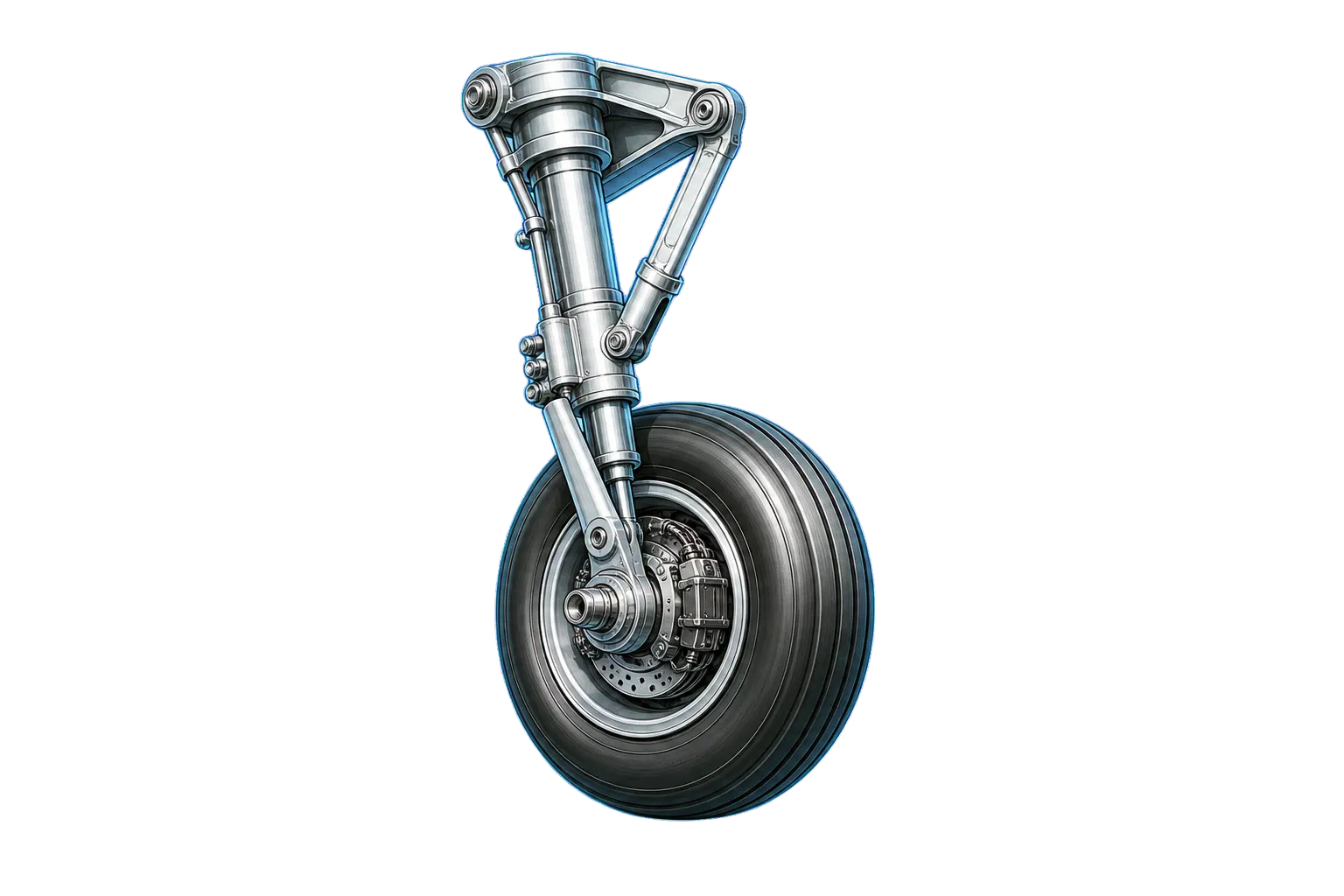
Excessive hardness of the landing gear rear crosstube material, combined with inter-granular corrosion initiation, may affect the structural integrity of the crosstube, leading to crosstube failure and potential helicopter dropping or tipping over.
AI-generated summary from the source AD text. Verify against the official source before acting.
Required Actions
Within 25 hours time-in-service, inspect each crosstube with part-number 341A415201.00, 341A415201.01, or 341A415201.02 to determine if the metal is coated and remove all coating. Inspect the hardness of the crosstube and replace it if it does not meet the specified hardness criteria. Amend the rotorcraft flight manual and install a placard prohibiting autorotation landing training and run-on landing training.
AI-generated summary from the source AD text. Verify against the official source before acting.
Compliance Time
Within 25 hours time-in-service
AI-generated summary from the source AD text. Verify against the official source before acting.
Affected Aircraft
Airbus Helicopters Model SA341G and SA342J helicopters with landing gear rear crosstubes part-numbered 341A415201.00, 341A415201.01, or 341A415201.02.
AI-generated summary from the source AD text. Verify against the official source before acting.
Federal Register Abstract
We are superseding airworthiness directive (AD) 2016-20-04 for Airbus Helicopters Model SA341G and SA342J helicopters. AD 2016-20-04 prohibited autorotation training flights until the landing gear rear crosstube (crosstube) was inspected. This new AD adds additional part- numbered crosstubes to the applicability and revises the hardness criteria for the inspection. This AD is prompted by a determination that an additional part-numbered crosstube may have the same unsafe condition. The actions of this AD are intended to detect and prevent an unsafe condition on these helicopters.
Document Text
Show stored source text (verify against official source)
[Federal Register Volume 82, Number 111 (Monday, June 12, 2017)]
[Rules and Regulations]
[Pages 26843-26846]
From the Federal Register Online via the Government Publishing Office [<a href="http://www.gpo.gov">www.gpo.gov</a>]
[FR Doc No: 2017-11986]
=======================================================================
-----------------------------------------------------------------------
DEPARTMENT OF TRANSPORTATION
Federal Aviation Administration
14 CFR Part 39
[Docket No. FAA-2017-0573; Directorate Identifier 2017-SW-001-AD;
Amendment 39-18919; AD 2017-12-04]
RIN 2120-AA64
Airworthiness Directives; Airbus Helicopters
AGENCY: Federal Aviation Administration (FAA), Department of
Transportation (DOT).
ACTION: Final rule; request for comments.
-----------------------------------------------------------------------
SUMMARY: We are superseding airworthiness directive (AD) 2016-20-04 for
Airbus Helicopters Model SA341G and SA342J helicopters. AD 2016-20-04
prohibited autorotation training flights until the landing gear rear
crosstube (crosstube) was inspected. This new AD adds additional part-
numbered crosstubes to the applicability and revises the hardness
criteria for the inspection. This AD is prompted by a determination
that an additional part-numbered crosstube may have the same unsafe
condition. The actions of this AD are intended to detect and prevent an
unsafe condition on these helicopters.
DATES: This AD becomes effective June 27, 2017.
The Director of the Federal Register approved the incorporation by
reference of a certain document listed in this AD as of June 27, 2017.
We must receive comments on this AD by August 11, 2017.
ADDRESSES: You may send comments by any of the following methods:
<bullet> Federal eRulemaking Docket: Go to <a href="http://www.regulations.gov">http://www.regulations.gov</a>. Follow the online instructions for sending your
comments electronically.
<bullet> Fax: 202-493-2251.
<bullet> Mail: Send comments to the U.S. Department of
Transportation, Docket Operations, M-30, West Building Ground Floor,
Room W12-140, 1200 New Jersey Avenue SE., Washington, DC 20590-0001.
<bullet> Hand Delivery: Deliver to the ``Mail'' address between 9
a.m. and 5 p.m., Monday through Friday, except Federal holidays.
[[Page 26844]]
Examining the AD Docket
You may examine the AD docket on the Internet at <a href="http://www.regulations.gov">http://www.regulations.gov</a> by searching for and locating Docket No. FAA-2017-
0573; or in person at the Docket Operations Office between 9 a.m. and 5
p.m., Monday through Friday, except Federal holidays. The AD docket
contains this AD, the European Aviation Safety Agency (EASA) AD, any
incorporated by reference service information, the economic evaluation,
any comments received, and other information. The street address for
the Docket Operations Office (telephone 800-647-5527) is in the
ADDRESSES section. Comments will be available in the AD docket shortly
after receipt.
For service information identified in this final rule, contact
Airbus Helicopters, 2701 N. Forum Drive, Grand Prairie, TX 75052;
telephone (972) 641-0000 or (800) 232-0323; fax (972) 641-3775; or at
<a href="http://www.airbushelicopters.com/website/technical-expert">http://www.airbushelicopters.com/website/technical-expert</a>. You may
review the referenced service information at the FAA, Office of the
Regional Counsel, Southwest Region, 10101 Hillwood Pkwy., Room 6N-321,
Fort Worth, TX 76177. It is also available on the Internet at <a href="http://www.regulations.gov">http://www.regulations.gov</a> by searching for and locating Docket No. FAA-2017-
0573.
FOR FURTHER INFORMATION CONTACT: Matt Fuller, Senior Aviation Safety
Engineer, Safety Management Group, Rotorcraft Directorate, FAA, 10101
Hillwood Pkwy., Fort Worth, TX 76177; telephone (817) 222-5110; email
<a href="/cdn-cgi/l/email-protection#1875796c6c707d6f367e6d74747d6a587e7979367f776e"><span class="__cf_email__" data-cfemail="84e9e5f0f0ece1f3aae2f1e8e8e1f6c4e2e5e5aae3ebf2">[email protected]</span></a>.
SUPPLEMENTARY INFORMATION:
Comments Invited
This AD is a final rule that involves requirements affecting flight
safety, and we did not provide you with notice and an opportunity to
provide your comments prior to it becoming effective. However, we
invite you to participate in this rulemaking by submitting written
comments, data, or views. We also invite comments relating to the
economic, environmental, energy, or federalism impacts that resulted
from adopting this AD. The most helpful comments reference a specific
portion of the AD, explain the reason for any recommended change, and
include supporting data. To ensure the docket does not contain
duplicate comments, commenters should send only one copy of written
comments, or if comments are filed electronically, commenters should
submit them only one time. We will file in the docket all comments that
we receive, as well as a report summarizing each substantive public
contact with FAA personnel concerning this rulemaking during the
comment period. We will consider all the comments we receive and may
conduct additional rulemaking based on those comments.
Discussion
On September 16, 2016, we issued AD 2016-20-04 (81 FR 67904,
October 3, 2016), which prohibited autorotation training flights by
amending the rotorcraft flight manual (RFM) and installing a placard on
the instrument panel. AD 2016-20-04 also required, within 25 hours
time-in-service (TIS), inspecting each crosstube with part-number (P/N)
341A415201.00 or P/N 341A415201.01 to determine whether the metal is
coated and removing all coating if it is present. Once there is no
coating, AD 2016-20-04 required determining the hardness of the
crosstube, replacing the crosstube if it did not meet the specified
hardness criteria, and then removing the autorotation training flight
prohibition.
AD 2016-20-04 was prompted by Emergency AD No. 2016-0073-E, dated
April 13, 2016 (AD 2016-0073-E), issued by EASA, which is the Technical
Agent for the Member States of the European Union, to correct an unsafe
condition for Airbus Helicopters Model SA341G and SA342J helicopters
with a crosstube P/N 341A415201.00 or P/N 341A415201.01. EASA stated
that two reported failures of a crosstube had occurred during
maintenance and towing operations, which resulted in the helicopters
dropping or tipping over. EASA further stated that excessive hardness
of the crosstube material, combined with inter-granular corrosion
initiation, may have affected the structural integrity of the
crosstube. EASA advised that this condition could lead to failure of
the crosstube and dropping or tipping over of the helicopter. To
address the unsafe condition, EASA AD 2016-0073-E required identifying
the affected crosstubes, implementing a temporary prohibition of
autorotation training flights on affected helicopters by amending the
RFM and installing a placard, inspecting the hardness of each affected
crosstube, and replacing any crosstubes that do not meet the hardness
criteria.
Actions Since AD 2016-20-04 Was Issued
Since we issued AD 2016-20-04, EASA has issued Emergency AD No.
2016-0131-E, dated July 5, 2016 (AD 2016-0131-E), which superseded AD
2016-0073-E. EASA advises that after AD 2016-0073-E was issued, Airbus
Helicopters discovered that crosstubes with P/N 341A415201.02 could be
affected by the same unsafe condition. EASA AD 2016-0131-E adds this
crosstube P/N to the applicability and retains the requirements of AD
2016-0073-E.
Additionally, we determined there is no unsafe condition in most
autorotation training. An unsafe condition exists only if the
helicopter touches the ground or a run-on landing (also called a
running landing, where the helicopter slides to a stop on landing) is
completed.
FAA's Determination
These helicopters have been approved by the aviation authority of
France and are approved for operation in the United States. Pursuant to
our bilateral agreement with France, EASA, its technical
representative, has notified us of the unsafe condition described in
the EASA AD. We are issuing this AD because we evaluated all
information provided by EASA and determined the unsafe condition exists
and is likely to exist or develop on other helicopters of these same
type designs.
Related Service Information Under 1 CFR Part 51
Airbus Helicopters has issued Alert Service Bulletin (ASB) No.
SA341/342-32.08, Revision 2, dated October 18, 2016 (ASB 32.08), which
specifies removing the crosstube, checking its hardness, and replacing
the crosstube if it fails the hardness test. ASB 32.08 also specifies
prohibiting autorotative landing training by installing a placard on
the instrument panel. Finally, this revision of ASB 32.08 extends the
permissible hardness values range for the Vickers test method from
<=434 to <=454.
This service information is reasonably available because the
interested parties have access to it through their normal course of
business or by the means identified in the ADDRESSES section.
Other Related Service Information
We also reviewed Aerospatiale (now Airbus Helicopters) Flight
Manuals SA 341G, Issue 2, dated December 1974, and SA 342J, Issue 1,
dated April 27, 1976. These manuals provide various procedures,
limitations, and performance and loading information.
AD Requirements
This AD prohibits full touchdown autorotation training and run-on
landing training before further flight by amending the RFM and
installing a limitation placard on the instrument panel.
[[Page 26845]]
This AD also requires, within 25 hours TIS, applying a solution to
the crosstube to determine whether the metal is coated and removing all
coating within a specific area. Once there is no coating, this AD
requires inspecting the hardness of the crosstube and replacing the
crosstube if it does not meet the hardness criteria. After replacing
the crosstube or determining the crosstube meets the hardness criteria,
the placard and RFM amendment prohibiting autorotation landing training
and run-on landing training may be removed.
Differences Between This AD and the EASA AD
EASA requires the hardness inspection to be completed within six
months, while we require the hardness inspection to be completed within
25 hours TIS. The EASA AD prohibits all autorotation training flights,
while this AD only prohibits full touchdown autorotation training and
run-on landing training.
Costs of Compliance
We estimate that this AD affects 20 helicopters of U.S. Registry.
We estimate that operators may incur the following costs in order
to comply with this AD. At an average labor rate of $85 per hour,
amending the RFM and installing a placard will require about 0.5 work-
hour, for a cost of $43 per helicopter and $860 for the U.S. fleet.
Inspecting a crosstube will require about 8 work-hours, and the
required materials cost is minimal, for a cost of $680 per helicopter
and $13,600 for the U.S. fleet.
If required, replacing a crosstube will require 8 work-hours, and
required parts will cost $11,952, for a cost of $12,632 per helicopter.
FAA's Justification and Determination of the Effective Date
Providing an opportunity for public comments prior to adopting
these AD requirements would delay implementing the safety actions
needed to correct this known unsafe condition. Therefore, we find that
the risk to the flying public justifies waiving notice and comment
prior to the adoption of this rule because certain operations must be
prohibited before further flight until the required corrective actions
are accomplished. Those corrective actions must then be accomplished
within 25 hours TIS, a short time interval for these model helicopters.
Since an unsafe condition exists that requires the immediate
adoption of this AD, we determined that notice and opportunity for
public comment before issuing this AD are impracticable and that good
cause exists for making this amendment effective in less than 30 days.
Authority for This Rulemaking
Title 49 of the United States Code specifies the FAA's authority to
issue rules on aviation safety. Subtitle I, section 106, describes the
authority of the FAA Administrator. ``Subtitle VII: Aviation
Programs,'' describes in more detail the scope of the Agency's
authority.
We are issuing this rulemaking under the authority described in
``Subtitle VII, Part A, Subpart III, Section 44701: General
requirements.'' Under that section, Congress charges the FAA with
promoting safe flight of civil aircraft in air commerce by prescribing
regulations for practices, methods, and procedures the Administrator
finds necessary for safety in air commerce. This regulation is within
the scope of that authority because it addresses an unsafe condition
that is likely to exist or develop on products identified in this
rulemaking action.
Regulatory Findings
We determined that this AD will not have federalism implications
under Executive Order 13132. This AD will not have a substantial direct
effect on the States, on the relationship between the national
Government and the States, or on the distribution of power and
responsibilities among the various levels of government.
For the reasons discussed, I certify that this AD:
1. Is not a ``significant regulatory action'' under Executive Order
12866;
2. Is not a ``significant rule'' under DOT Regulatory Policies and
Procedures (44 FR 11034, February 26, 1979);
3. Will not affect intrastate aviation in Alaska to the extent that
it justifies making a regulatory distinction; and
4. Will not have a significant economic impact, positive or
negative, on a substantial number of small entities under the criteria
of the Regulatory Flexibility Act.
We prepared an economic evaluation of the estimated costs to comply
with this AD and placed it in the AD docket.
List of Subjects in 14 CFR Part 39
Air transportation, Aircraft, Aviation safety, Incorporation by
reference, Safety.
Adoption of the Amendment
Accordingly, under the authority delegated to me by the
Administrator, the FAA amends 14 CFR part 39 as follows:
PART 39--AIRWORTHINESS DIRECTIVES
0
1. The authority citation for part 39 continues to read as follows:
Authority: 49 U.S.C. 106(g), 40113, 44701.
Sec. 39.13 [Amended]
0
2. The FAA amends Sec. 39.13 by removing Airworthiness Directive (AD)
2016-20-04, Amendment 39-18670 (81 FR 67904, October 3, 2016), and
adding the following new AD:
2017-12-04 Airbus Helicopters: Amendment 39-18919; Docket No. FAA-
2017-0573; Directorate Identifier 2017-SW-001-AD.
(a) Applicability
This AD applies to Airbus Helicopters Model SA 341G and Model SA
342J helicopters with a landing gear rear crosstube (crosstube) part
number 341A415201.00, 341A415201.01, or 341A415201.02, certificated
in any category.
(b) Unsafe Condition
This AD defines the unsafe condition as incorrect hardness of
the crosstube, which could result in failure of the crosstube and
subsequent dropping or tipping of the helicopter.
(c) Affected ADs
This AD supersedes AD 2016-20-04, Amendment 39-18670 (81 FR
67904, October 3, 2016).
(d) Effective Date
This AD becomes effective June 27, 2017.
(e) Compliance
You are responsible for performing each action required by this
AD within the specified compliance time unless it has already been
accomplished prior to that time.
(f) Required Actions
(1) Before further flight:
(i) Amend the rotorcraft flight manual (RFM) by inserting a copy
of this AD or by making pen-and-ink changes in Section 1,
Limitations, by adding the following: AUTOROTATION TRAINING FLIGHTS
TO A LANDING AND RUN-ON (RUNNING) LANDING TRAINING ARE PROHIBITED. A
landing occurs when the skids contact the ground or other surface
and bear the weight of the helicopter regardless of the duration of
the landing and regardless of whether the engine is shut down.
(ii) Install a placard on the instrument panel in full view of
the pilots that states the following: AUTOROTATION TRAINING FLIGHTS
TO A LANDING AND RUN-ON (RUNNING) LANDING TRAINING ARE PROHIBITED.
(2) Within 25 hours time-in-service:
(i) Inspect the crosstube to determine whether the metal is
coated. Make a copper sulfate solution by following the
Accomplishment Instructions, paragraph 3.B.2.b.1., of Airbus
Helicopters Alert Service Bulletin (ASB) No. SA341/342-32.08,
Revision 2, dated October 18, 2016 (ASB
[[Page 26846]]
32.08). Apply 2 to 3 drops of the solution to Area Z in Figure 1 of
ASB 32.08 and wait 10 to 15 seconds. If a dark mark appears as shown
in Area 2 of Figure 3 of ASB 32.08, there is no metal coating. If a
light mark appears as shown in Area 4 of Figure 3 of ASB 32.08,
remove all metal coating in Area Z of Figure 1 of ASB 32.08.
(ii) Inspect the hardness of the crosstube by using the criteria
in the table under Paragraph 3.B.2.c. of ASB 32.08. If the hardness
is not within the value range in the table, before further flight,
replace the crosstube. If the hardness is within the value range in
the table, apply corrosion protectant to Area Z in Figure 1 of ASB
32.08.
(iii) Remove the RFM limitation and the instrument panel placard
required by paragraphs (f)(1)(i) and (f)(1)(ii) of this AD.
(g) Credit for Actions Previously Completed
Compliance with AD 2016-20-04 (81 FR 67904, October 3, 2016)
before the effective date of this AD is considered acceptable for
compliance with this AD.
(h) Alternative Methods of Compliance (AMOCs)
(1) The Manager, Safety Management Group, FAA, may approve AMOCs
for this AD. Send your proposal to: Matt Fuller, Senior Aviation
Safety Engineer, Safety Management Group, Rotorcraft Directorate,
FAA, 10101 Hillwood Pkwy., Fort Worth, TX 76177; telephone (817)
222-5110; email <a href="/cdn-cgi/l/email-protection#10293d5143473d5644473d515d5f533d4275616575636463507671713e777f66"><span class="__cf_email__" data-cfemail="685145293b3f452e3c3f452925272b453a0d191d0d1b1c1b280e0909460f071e">[email protected]</span></a>.
(2) For operations conducted under a 14 CFR part 119 operating
certificate or under 14 CFR part 91, subpart K, we suggest that you
notify your principal inspector, or lacking a principal inspector,
the manager of the local flight standards district office or
certificate holding district office, before operating any aircraft
complying with this AD through an AMOC.
(i) Additional Information
(1) Aerospatiale (now Airbus Helicopters) Flight Manuals SA
341G, Issue 2, dated December 1974, and SA 342J, Issue 1, dated
April 27, 1976, which are not incorporated by reference, contain
additional information about the subject of this AD. For service
information identified in this AD, contact Airbus Helicopters, 2701
N. Forum Drive, Grand Prairie, TX 75052; telephone (972) 641-0000 or
(800) 232-0323; fax (972) 641-3775; or at <a href="http://www.airbushelicopters.com/techpub">http://www.airbushelicopters.com/techpub</a>. You may review the referenced
service information at the FAA, Office of the Regional Counsel,
Southwest Region, 10101 Hillwood Pkwy., Room 6N-321, Fort Worth, TX
76177.
(2) The subject of this AD is addressed in European Aviation
Safety Agency (EASA) AD No. 2016-0131-E, dated July 5, 2016. You may
view the EASA AD on the Internet at <a href="http://www.regulations.gov">http://www.regulations.gov</a> by
searching for and locating it in Docket No. FAA-2017-0573.
(j) Subject
Joint Aircraft Service Component (JASC) Code: 3213 Main Landing
Gear Strut/Axel/Truck.
(k) Material Incorporated by Reference
(1) The Director of the Federal Register approved the
incorporation by reference of the service information listed in this
paragraph under 5 U.S.C. 552(a) and 1 CFR part 51.
(2) You must use this service information as applicable to do
the actions required by this AD, unless the AD specifies otherwise.
(i) Airbus Helicopters Alert Service Bulletin No. SA341/342-
32.08, Revision 2, dated October 18, 2016.
(ii) Reserved.
(3) For Airbus Helicopters service information identified in
this AD, contact Airbus Helicopters, 2701 N. Forum Drive, Grand
Prairie, TX 75052; telephone (972) 641-0000 or (800) 232-0323; fax
(972) 641-3775; or at <a href="http://www.airbushelicopters.com/website/technical-expert">http://www.airbushelicopters.com/website/technical-expert</a>.
(4) You may view this service information at FAA, Office of the
Regional Counsel, Southwest Region, 10101 Hillwood Pkwy., Room 6N-
321, Fort Worth, TX 76177. For information on the availability of
this material at the FAA, call (817) 222-5110.
(5) You may view this service information that is incorporated
by reference at the National Archives and Records Administration
(NARA). For information on the availability of this material at
NARA, call (202) 741-6030, or go to: <a href="http://www.archives.gov/federal-register/cfr/ibr-locations.html">http://www.archives.gov/federal-register/cfr/ibr-locations.html</a>.
Issued in Fort Worth, Texas, on May 26, 2017.
Scott A. Horn,
Acting Manager, Rotorcraft Directorate, Aircraft Certification Service.
[FR Doc. 2017-11986 Filed 6-9-17; 8:45 am]
BILLING CODE 4910-13-P
Source: Official FAA Source ↗
Retrieved: Apr 4, 2026
Rights: U.S. Government Public Domain
This site is not affiliated with or endorsed by the FAA. Always verify with official sources.
Related Airworthiness Directives
2025-25-06 Recurring
final ruleAirworthiness Directives; Airbus Helicopters
Unsafe Condition: Reports were received of the stainless steel leading edge protection disbonding on certain part-numbered main rotor blades (MRBs). This condition, if not detected and addressed, could result in sig...
2025-08-08 Recurring
final ruleAirworthiness Directives; Airbus Helicopters
Unsafe Condition: Corrosion on the contact surfaces of the tail rotor inclined and horizontal drive shaft flanges, which could result in the failure of the tail rotor drive and subsequent loss of control of the heli...
2025-05-05
final ruleAirworthiness Directives; Airbus Helicopters
Unsafe Condition: a pilot collective pitch stick handle grip that broke into two pieces when a maintenance technician pulled the handle grip during helicopter maintenance
2023-13-51
final ruleAirworthiness Directives; Airbus Helicopters
Unsafe Condition: Manufacturing defects on multiple tail rotor blades (TRBs) with visual linear indications, which could result in an in-flight TRB loss, unbalance or damage to the tail or other parts of the helicop...