AD 2016-03-06
Applicability
| Type | Manufacturer | Model | Details |
|---|---|---|---|
| aircraft | The Boeing Company | DC-9-11 | Airworthiness Directives; The Boeing Company Airplanes |
| aircraft | The Boeing Company | DC-9-12 | Airworthiness Directives; The Boeing Company Airplanes |
| aircraft | The Boeing Company | DC-9-13 | Airworthiness Directives; The Boeing Company Airplanes |
| aircraft | The Boeing Company | DC-9-14 | Airworthiness Directives; The Boeing Company Airplanes |
| aircraft | The Boeing Company | DC-9-15 | Airworthiness Directives; The Boeing Company Airplanes |
| aircraft | The Boeing Company | DC-9-15F | Airworthiness Directives; The Boeing Company Airplanes |
| aircraft | The Boeing Company | DC-9-21 | Airworthiness Directives; The Boeing Company Airplanes |
| aircraft | The Boeing Company | DC-9-31 | Airworthiness Directives; The Boeing Company Airplanes |
| aircraft | The Boeing Company | DC-9-32 | Airworthiness Directives; The Boeing Company Airplanes |
| aircraft | The Boeing Company | DC-9-32 (VC-9C) | Airworthiness Directives; The Boeing Company Airplanes |
| aircraft | The Boeing Company | DC-9-32F | Airworthiness Directives; The Boeing Company Airplanes |
| aircraft | The Boeing Company | DC-9-32F (C-9A) | Airworthiness Directives; The Boeing Company Airplanes |
| aircraft | The Boeing Company | DC-9-32F (C-9B) | Airworthiness Directives; The Boeing Company Airplanes |
| aircraft | The Boeing Company | DC-9-33F | Airworthiness Directives; The Boeing Company Airplanes |
| aircraft | The Boeing Company | DC-9-34 | Airworthiness Directives; The Boeing Company Airplanes |
| aircraft | The Boeing Company | DC-9-34F | Airworthiness Directives; The Boeing Company Airplanes |
| aircraft | The Boeing Company | DC-9-41 | Airworthiness Directives; The Boeing Company Airplanes |
| aircraft | The Boeing Company | DC-9-51 | Airworthiness Directives; The Boeing Company Airplanes |
| aircraft | The Boeing Company | DC-9-81 (MD-81) | Airworthiness Directives; The Boeing Company Airplanes |
| aircraft | The Boeing Company | DC-9-82 (MD-82) | Airworthiness Directives; The Boeing Company Airplanes |
| aircraft | The Boeing Company | DC-9-83 (MD-83) | Airworthiness Directives; The Boeing Company Airplanes |
| aircraft | The Boeing Company | DC-9-87 (MD-87) | Airworthiness Directives; The Boeing Company Airplanes |
| aircraft | The Boeing Company | MD-88 | Airworthiness Directives; The Boeing Company Airplanes |
| aircraft | The Boeing Company | MD-90-30 | Airworthiness Directives; The Boeing Company Airplanes |
Unsafe Condition
Ignition sources inside fuel tanks, in combination with flammable fuel vapors, could result in fuel tank explosions and consequent loss of the airplane.
AI-generated summary from the source AD text. Verify against the official source before acting.
Required Actions
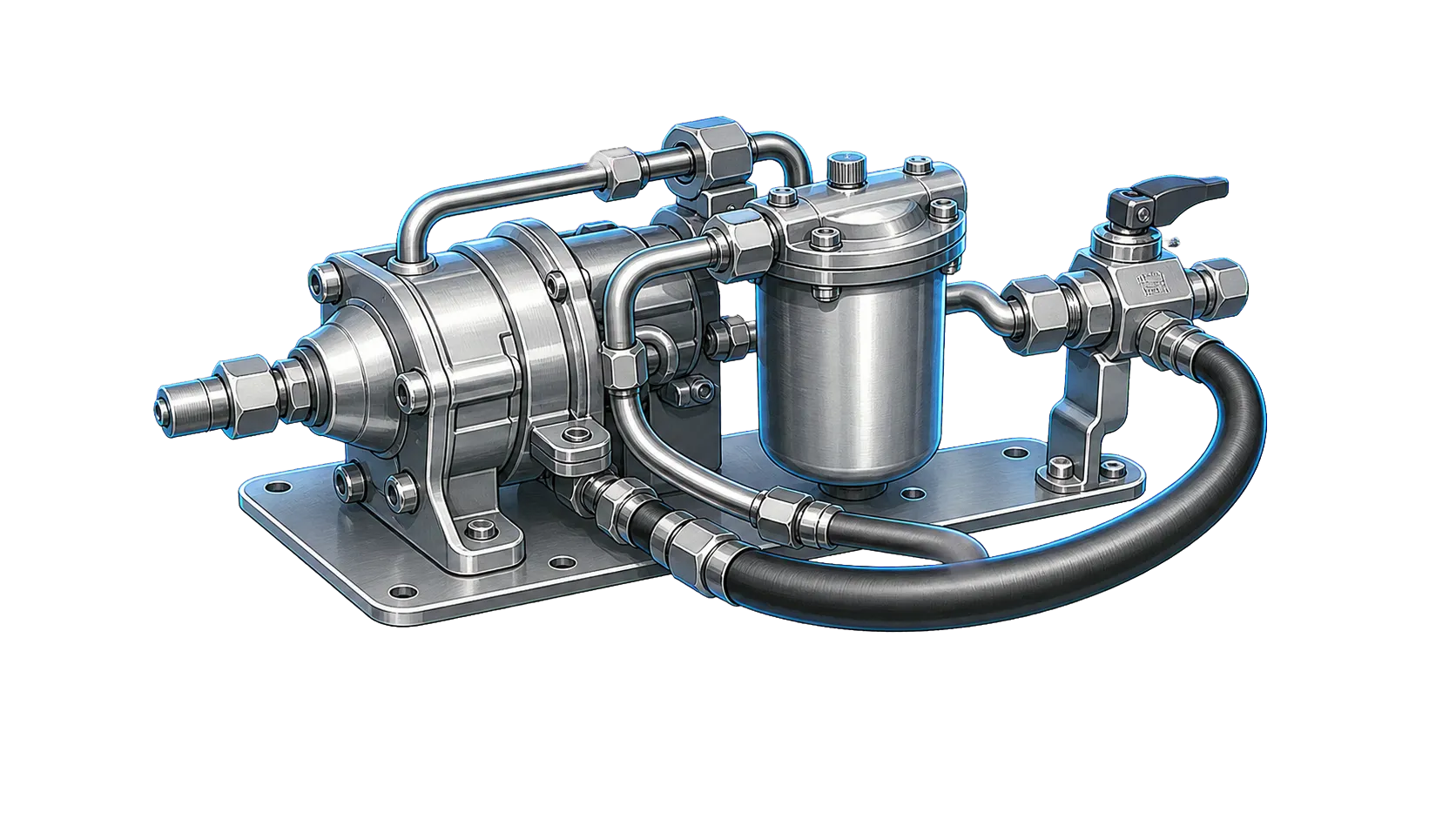
Install ground fault interrupter (GFI) relays and change fuel pump system wiring. Enlarge holes and identify a bracket as required by revised Boeing Service Bulletins MD80-28-228, Revision 1, and MD90-28-013, Revision 1.
AI-generated summary from the source AD text. Verify against the official source before acting.
Compliance Time
Within 12 months of the effective date of this AD.
AI-generated summary from the source AD text. Verify against the official source before acting.
Affected Aircraft
The Boeing Company Model DC-9-10, DC-9-20, DC-9-30, DC-9-40, and DC-9-50 series airplanes; and Model DC-9-81 (MD-81), DC-9-82 (MD-82), DC-9-83 (MD-83), DC-9-87 (MD-87), MD-88, and MD-90-30 airplanes; equipped with a center wing fuel tank and Boeing original equipment manufacturer-installed auxiliary fuel tanks.
AI-generated summary from the source AD text. Verify against the official source before acting.
Federal Register Abstract
We are superseding Airworthiness Directive (AD) 2012-18-05 for The Boeing Company Model DC-9-10, DC-9-20, DC-9-30, DC-9-40, and DC-9- 50 series airplanes; and Model DC-9-81 (MD-81), DC-9-82 (MD-82), DC-9- 83 (MD-83), DC-9-87 (MD-87), MD-88, and MD-90-30 airplanes; equipped with a center wing fuel tank and Boeing original equipment manufacturer-installed auxiliary fuel tanks. AD 2012-18-05 required adding design features to detect electrical faults and to detect a pump running in an empty fuel tank. Since we issued AD 2012-18-05, we have determined that it is necessary to clarify the actions for airplanes on which the auxiliary fuel tanks are removed. This new AD allows certain actions as optional methods of compliance. This AD was prompted by our determination that it is necessary to clarify the actions for airplanes on which the auxiliary fuel tanks are removed. We are issuing this AD to reduce the potential of ignition sources inside fuel tanks, which, in combination with flammable fuel vapors, could result in fuel tank explosions and consequent loss of the airplane.
Applicability Source Text
Show captured applicability text from the source AD
(c) Applicability

    This AD applies to The Boeing Company airplanes, certificated in
any category, that are identified in paragraphs (c)(6) through
(c)(8) of this AD and equipped with center wing fuel tanks; and
those identified in paragraphs (c)(1) through (c)(8) of this AD that
are equipped with Boeing original equipment manufacturer-installed
auxiliary fuel tanks. For airplanes on which the auxiliary fuel
tanks are removed, the actions specified for the auxiliary fuel
tanks are not required.
    (1) Model DC-9-11, DC-9-12, DC-9-13, DC-9-14, DC-9-15, and DC-9-
15F airplanes.
    (2) Model DC-9-21 airplanes.
    (3) Model DC-9-31, DC-9-32, DC-9-32 (VC-9C), DC-9-32F, DC-9-33F,
DC-9-34, DC 9 34F, and DC 9 32F (C-9A, C 9B) airplanes.
    (4) Model DC-9-41 airplanes.
    (5) Model DC-9-51 airplanes.
    (6) Model DC-9-81 (MD-81), DC-9-82 (MD-82), DC-9-83 (MD-83), and
DC-9-87 (MD-87) airplanes.
    (7) Model MD-88 airplanes.
    (8) Model MD-90-30 airplanes.
Document Text
Show stored source text (verify against official source)
[Federal Register Volume 81, Number 31 (Wednesday, February 17, 2016)]
[Rules and Regulations]
[Pages 7967-7971]
From the Federal Register Online via the Government Publishing Office [<a href="http://www.gpo.gov">www.gpo.gov</a>]
[FR Doc No: 2016-02232]
-----------------------------------------------------------------------
DEPARTMENT OF TRANSPORTATION
Federal Aviation Administration
14 CFR Part 39
[Docket No. FAA-2015-0249; Directorate Identifier 2014-NM-174-AD;
Amendment 39-18393; AD 2016-03-06]
RIN 2120-AA64
Airworthiness Directives; The Boeing Company Airplanes
AGENCY: Federal Aviation Administration (FAA), DOT.
ACTION: Final rule.
-----------------------------------------------------------------------
SUMMARY: We are superseding Airworthiness Directive (AD) 2012-18-05 for
The Boeing Company Model DC-9-10, DC-9-20, DC-9-30, DC-9-40, and DC-9-
50 series airplanes; and Model DC-9-81 (MD-81), DC-9-82 (MD-82), DC-9-
83 (MD-83), DC-9-87 (MD-87), MD-88, and MD-90-30 airplanes; equipped
with a center wing fuel tank and Boeing original equipment
manufacturer-installed auxiliary fuel tanks. AD 2012-18-05 required
adding design features to detect electrical faults and to detect a pump
running in an empty fuel tank. Since we issued AD 2012-18-05, we have
determined that it is necessary to clarify the actions for airplanes on
which the auxiliary fuel tanks are removed. This new AD allows certain
actions as optional methods of compliance. This AD was prompted by our
determination that it is necessary to clarify the actions for airplanes
on which the auxiliary fuel tanks are removed. We are issuing this AD
to reduce the potential of ignition sources inside fuel tanks, which,
in combination with flammable fuel vapors, could result in fuel tank
explosions and consequent loss of the airplane.
DATES: This AD is effective March 23, 2016.
The Director of the Federal Register approved the incorporation by
reference of certain publications listed in this AD as of March 23,
2016.
ADDRESSES: For service information identified in this final rule,
contact Boeing Commercial Airplanes, Attention: Data & Services
Management, 3855 Lakewood Boulevard, MC D800-0019, Long Beach, CA
90846-0001; telephone 206-544-5000, extension 2; fax 206-766-5683;
Internet <a href="https://www.myboeingfleet.com">https://www.myboeingfleet.com</a>. You may view this referenced
service information at the FAA, Transport Airplane Directorate, 1601
Lind Avenue SW., Renton, WA. For information on the availability of
this material at the FAA, call 425-227-1221. It is also available on
the Internet at <a href="http://www.regulations.gov">http://www.regulations.gov</a> by searching for and
locating Docket No. FAA-2015-0249.
Examining the AD Docket
You may examine the AD docket on the Internet at <a href="http://www.regulations.gov">http://www.regulations.gov</a> by searching for and locating Docket No. FAA-2015-
0249; or in person at the Docket Management Facility between 9 a.m. and
5 p.m., Monday through Friday, except Federal holidays. The AD docket
contains this AD, the regulatory evaluation, any comments received, and
other information. The address for the Docket Office (phone: 800-647-
5527) is Docket Management Facility, U.S. Department of Transportation,
Docket Operations, M-30, West Building Ground Floor, Room W12-140, 1200
New Jersey Avenue SE., Washington, DC 20590.
FOR FURTHER INFORMATION CONTACT: S[eacute]rj Harutunian, Aerospace
Engineer, Propulsion Branch, ANM-140L, FAA, Los Angeles Aircraft
Certification Office (ACO), 3960 Paramount Boulevard, Lakewood, CA
90712-4137; phone: 562-627-5254; fax: 562-627-5210; email:
<a href="/cdn-cgi/l/email-protection#42312730286c2a23303736372c2b232c022423236c252d34"><span class="__cf_email__" data-cfemail="9fecfaedf5b1f7feedeaebeaf1f6fef1dff9fefeb1f8f0e9">[email protected]</span></a>.
SUPPLEMENTARY INFORMATION:
Discussion
We issued a notice of proposed rulemaking (NPRM) to amend 14 CFR
[[Page 7968]]
part 39 to supersede AD 2012-18-05, Amendment 39-17181 (77 FR 54793,
September 6, 2012). AD 2012-18-05 applied to The Boeing Company Model
DC-9-10, DC-9-20, DC-9-30, DC-9-40, and DC-9-50 series airplanes; and
Model DC-9-81 (MD-81), DC-9-82 (MD-82), DC-9-83 (MD-83), DC-9-87 (MD-
87), MD-88, and MD-90-30 airplanes; equipped with a center wing fuel
tank and Boeing original equipment manufacturer-installed auxiliary
fuel tanks. The NPRM published in the Federal Register on March 26,
2015 (80 FR 15947). The NPRM was prompted by our determination that it
is necessary to clarify the actions for airplanes on which the
auxiliary fuel tanks are removed. The NPRM proposed to allow certain
actions as optional methods of compliance. We are issuing this AD to
correct the unsafe condition on these products.
Explanation of Revised Service Information
The NPRM (80 FR 15947, March 26, 2015) specified Boeing Service
Bulletin MD80-28-228, dated September 27, 2013; and Boeing Service
Bulletin MD90-28-013, dated September 27, 2013; as the appropriate
sources of service information for the required actions. Since the NPRM
was published, both service bulletins have been revised and this AD now
specifies Boeing Service Bulletin MD80-28-228, Revision 1, dated August
27, 2015; and Boeing Service Bulletin MD90-28-013, Revision 1, dated
August 27, 2015, as the source of appropriate service information for
the required actions. Boeing Service Bulletin MD80-28-228, Revision 1,
dated August 27, 2015; and Boeing Service Bulletin MD90-28-013,
Revision 1, dated August 27, 2015; both clarify the required actions
and require enlarging holes and identifying a bracket.
Comments
We gave the public the opportunity to participate in developing
this AD. The following presents the comments received on the NPRM (80
FR 15947, March 26, 2015) and the FAA's response to each comment.
Support for the Comment
Delta Air Lines supported the comments made by Boeing, which are
discussed in the following paragraphs.
Request To Revise the Applicability
Boeing requested that we revise paragraph (c) of the proposed AD
(80 FR 15947, March 26, 2015). Boeing explained that the proposed AD
should apply to the airplanes identified in paragraphs (c)(6) through
(c)(8) of the proposed AD if they are equipped with center wing fuel
tanks, and to airplanes identified in paragraphs (c)(1) through (c)(8)
of the proposed AD if they are equipped with original equipment
manufacturer-installed auxiliary fuel tanks. Boeing reasoned that DC-9
center wing fuel tanks are not affected by the proposed AD, and that
the ``fuel system reviews conducted by the manufacturer'' (i.e.,
Boeing's SFAR 88 system safety assessments (SSA)) cited in paragraph
(e) of the proposed AD concluded that center wing fuel tanks on Model
DC-9 airplanes identified as paragraphs (c)(1) through (c)(5) of the
proposed AD do not require the corrective actions cited in the NPRM.
For airplanes with a CWT identified in paragraphs (c)(1) through (c)(5)
of the proposed AD, the existing design features offer adequate
protection relative to a pump running in an empty fuel tank and new
design features added to the center tank fuel boost pump container
address types of electrical faults cited in the NPRM.
Boeing expressed that the FAA had previously concurred with the
related Boeing SSA findings and approved Boeing Service Bulletin DC9-
28-216, dated March 18, 2008, mandated by FAA AD 2009-03-03, Amendment
39-15804 (74 FR 8150, February 24, 2009), as corrective action for the
electrical arc burn-through.
We agree to revise the applicability of this AD for the reasons
stated by the commenter. We have revised paragraph (c) of this AD
accordingly.
Request To Clarify Certain Optional Requirements
Boeing requested that we revise paragraph (h)(1)(i) of the proposed
AD (80 FR 15947, March 26, 2015) by adding the phrase, ``and change
fuel pump system wiring'' after ``install ground fault interrupter
(GFI) relays.'' Boeing reasoned that in addition to providing
procedures for installing GFI relays, Boeing Service Bulletin MD80-28-
228, dated September 27, 2013, also incorporates wiring changes to
accommodate the GFI's operation and revises low pressure indication
system wiring for center wing and auxiliary fuel tank fuel pumps. The
low pressure indication system wiring changes are required to address
the potential of fuel pumps running for prolonged periods in empty
tanks.
Boeing also requested that we revise paragraph (h)(2) of the
proposed AD (80 FR 15947, March 26, 2015) by removing the phrase,
``install brackets and mod block rails, and'' and adding the phrase,
``and change fuel pump system wiring.'' Boeing reasoned that while
Boeing Service Bulletin MD90-28-013, dated September 27, 2013, does
specify installation of brackets and rails, as does Boeing Service
Bulletin MD80-28-228, dated September 27, 2013, the primary changes
that will address the unsafe condition are the GFI relay and wiring
changes defined in Boeing Service Bulletin MD90-28-013, dated September
27, 2013. Boeing expressed that the brackets and rails can be omitted
from the text of the NPRM, as they are referenced in the service
information. Also, in addition to providing procedures for installing
GFI relays, Boeing Service Bulletin MD90-28-013, dated September 27,
2013, also incorporates wiring changes to accommodate the GFI's
operation and revises low pressure indication system wiring for center
wing and auxiliary fuel tank fuel pumps. Boeing stated that the low
pressure indication system wiring changes are required to address the
potential of fuel pumps running for prolonged periods in empty tanks.
For the reasons stated by the commenter, we agree to revise
paragraphs (h)(1)(i) and (h)(2) of this AD by incorporating the
requested changes. As stated earlier, since the NPRM was published,
both service bulletins have been revised and this AD now specifies
Boeing Service Bulletin MD80-28-228, Revision 1, dated August 27, 2015;
and Boeing Service Bulletin MD90-28-013, Revision 1, dated August 27,
2015, as the appropriate sources of service information for the
required actions.
Request To Revise to the Latest Service Information
Delta requested that we revise paragraph (h)(3) of the proposed AD
(80 FR 15947, March 26, 2015) to include the latest service
information. Delta noted that the proposed AD would require the
incorporation of ``Critical Design Configuration Control Limitations
(CDCCLs), Airworthiness Limitations Instructions (ALIs), and short-term
extensions specified in Appendixes B, C, and D of Boeing Special
Compliance Item Report MDC-92K9145, Revision M'' into the maintenance
and inspection program. Delta noted, however, that the referenced
report has been revised to Revision N, dated June 13, 2014, and it
recommends that the restriction to Revision M be removed from the final
rule.
For the reasons stated by the commenter, we have revised this AD to
refer to the latest service information.
[[Page 7969]]
Request for Credit for Previously Accomplished Installations
Delta requested that we revise paragraph (k) of the proposed AD (80
FR 15947, March 26, 2015) to permit credit for previously accomplished
installations for paragraph (h)(1)(i) or (h)(2) of the proposed AD.
Delta reasoned that paragraph (h)(1)(i) of the proposed AD provides for
the installation of GFI relays on Model MD-80 series airplanes (Model
DC-9-81 (MD-81), DC-9-82 (MD-82), DC-9-83 (MD-83), DC-9-87 (MD-87), and
Model MD-88 airplanes) using the procedures in Boeing Service Bulletin
MD80-28-228, dated September 27, 2013. And similarly, paragraph (h)(2)
of the proposed AD provides for the installation of GFI relays on MD-
90-30 airplanes in accordance with Boeing Service Bulletin MD9028-013,
dated September 27, 2013. Delta explained that it has completed
installation of GFI relays using the procedures in these two service
bulletins on a portion of its fleet, and noted that there is no
practical way to re-accomplish such modifications after the effective
date of the final rule.
For the reasons given by the commenter, and the addition of the
latest service information, we have provided credit for the applicable
actions specified in paragraph (k) of this AD.
Conclusion
We reviewed the relevant data, considered the comments received,
and determined that air safety and the public interest require adopting
this AD with the changes described previously. We have determined that
these minor changes:
<bullet> Are consistent with the intent that was proposed in the
NPRM (80 FR 15947, March 26, 2015) for correcting the unsafe condition;
and
<bullet> Do not add any additional burden upon the public than was
already proposed in the NPRM (80 FR 15947, March 26, 2015).
We also determined that these changes will not increase the
economic burden on any operator or increase the scope of this AD.
Related Service Information Under 1 CFR Part 51
We reviewed Boeing Service Bulletin MD80-28-228, Revision 1, dated
August 27, 2015; and Boeing Service Bulletin MD90-28-013, Revision 1,
dated August 27, 2015. The service information describes procedures for
installing GFI relays that change fuel pump system wiring, installing a
low fuel pressure indication system, and enlarging holes and
identifying a bracket.
We have also reviewed Boeing Twinjet Special Compliance Item Report
MDC-92K9145, Revision N, dated June 13, 2014, including Appendices A
through D. This service information details special compliance items
(SCIs), critical design configuration control limitations (CDCCLs),
airworthiness limitation instructions (ALIs), short-term extensions,
and associated compliance intervals.
Boeing Service Bulletin MD80-28-228, Revision 1, dated August 27,
2015, specifies prior or concurrent accomplishment of the following
service information.
<bullet> McDonnell Douglas MD-80 Service Bulletin 28-53, Revision
1, dated April 16, 1992, which describes procedures for installing a
low fuel pressure indication system.
<bullet> McDonnell Douglas MD-80 Service Bulletin 28-63, Revision
2, dated April 8, 1992, which describes procedures for installing a low
fuel pressure indication inhibit system.
This service information is reasonably available because the
interested parties have access to it through their normal course of
business or by the means identified in the ADDRESSES section.
Costs of Compliance
We estimate that this AD affects 809 airplanes of U.S. registry.
We estimate the following costs to comply with this AD:
Estimated Costs
----------------------------------------------------------------------------------------------------------------
Cost per Cost on U.S.
Action Labor cost Parts cost product operators
----------------------------------------------------------------------------------------------------------------
Installing design features for 50 work-hours x $85 per $35,000 $39,250 $10,322,750
airplanes with center wing and hour = $4,250.
auxiliary tanks (263 airplanes),
using a method approved by the FAA
[retained actions from AD 2012-18-05,
Amendment 39-17181 (77 FR 54793,
September 6, 2012)].
Installing design features for 35 work-hours x $85 per 17,000 19,975 10,906,350
airplanes with center wing tank (546 hour = $2,975.
airplanes), using a method approved
by the FAA [retained actions from AD
2012-1805, Amendment 39-17181 (77 FR
54793, September 6, 2012)].
----------------------------------------------------------------------------------------------------------------
Estimated Costs--New Optional Actions for Installing Design Features
----------------------------------------------------------------------------------------------------------------
Cost per
Action Labor cost Parts cost product
----------------------------------------------------------------------------------------------------------------
For airplanes with center wing and auxiliary 250 work-hours x $85 per hour = $69,000 $90,250
tanks, using service information specified in $21,250.
paragraph (h) of this AD (including revising
the maintenance/inspection program).
For airplanes with center wing tank, using 110 work-hours x $85 = 9,350.... 30,000 39,350
service information specified in paragraph
(h) of this AD (including revising the
maintenance/inspection program).
Installing the supplemental type certificate 35 work-hours x $85 per hour = 17,000 19,975
(STC) specified in paragraph (i) of this AD. $2,975.
----------------------------------------------------------------------------------------------------------------
Authority for This Rulemaking
Title 49 of the United States Code specifies the FAA's authority to
issue rules on aviation safety. Subtitle I, Section 106, describes the
authority of the FAA Administrator. Subtitle VII, Aviation Programs,
describes in more detail the scope of the Agency's authority.
[[Page 7970]]
We are issuing this rulemaking under the authority described in
Subtitle VII, Part A, Subpart III, Section 44701, ``General
requirements.'' Under that section, Congress charges the FAA with
promoting safe flight of civil aircraft in air commerce by prescribing
regulations for practices, methods, and procedures the Administrator
finds necessary for safety in air commerce. This regulation is within
the scope of that authority because it addresses an unsafe condition
that is likely to exist or develop on products identified in this
rulemaking action.
Regulatory Findings
We have determined that this AD will not have federalism
implications under Executive Order 13132. This AD will not have a
substantial direct effect on the States, on the relationship between
the national government and the States, or on the distribution of power
and responsibilities among the various levels of government.
For the reasons discussed above, I certify that this AD:
(1) Is not a ``significant regulatory action'' under Executive
Order 12866,
(2) Is not a ``significant rule'' under DOT Regulatory Policies and
Procedures (44 FR 11034, February 26, 1979),
(3) Will not affect intrastate aviation in Alaska, and
(4) Will not have a significant economic impact, positive or
negative, on a substantial number of small entities under the criteria
of the Regulatory Flexibility Act.
List of Subjects in 14 CFR Part 39
Air transportation, Aircraft, Aviation safety, Incorporation by
reference, Safety.
Adoption of the Amendment
Accordingly, under the authority delegated to me by the
Administrator, the FAA amends 14 CFR part 39 as follows:
PART 39--AIRWORTHINESS DIRECTIVES
0
1. The authority citation for part 39 continues to read as follows:
Authority: 49 U.S.C. 106(g), 40113, 44701.
Sec. 39.13 [Amended]
0
2. The FAA amends Sec. 39.13 by removing Airworthiness Directive (AD)
2012-18-05, Amendment 39-17181 (77 FR 54793, September 6, 2012, and
adding the following new AD:
2016-03-06 The Boeing Company: Amendment 39-18393; Docket No. FAA-
2015-0249; Directorate Identifier 2014-NM-174-AD.
(a) Effective Date
This AD is effective March 23, 2016.
(b) Affected ADs
This AD replaces AD 2012-18-05, Amendment 39-17181 (77 FR 54793,
September 6, 2012).
(c) Applicability
This AD applies to The Boeing Company airplanes, certificated in
any category, that are identified in paragraphs (c)(6) through
(c)(8) of this AD and equipped with center wing fuel tanks; and
those identified in paragraphs (c)(1) through (c)(8) of this AD that
are equipped with Boeing original equipment manufacturer-installed
auxiliary fuel tanks. For airplanes on which the auxiliary fuel
tanks are removed, the actions specified for the auxiliary fuel
tanks are not required.
(1) Model DC-9-11, DC-9-12, DC-9-13, DC-9-14, DC-9-15, and DC-9-
15F airplanes.
(2) Model DC-9-21 airplanes.
(3) Model DC-9-31, DC-9-32, DC-9-32 (VC-9C), DC-9-32F, DC-9-33F,
DC-9-34, DC 9 34F, and DC 9 32F (C-9A, C 9B) airplanes.
(4) Model DC-9-41 airplanes.
(5) Model DC-9-51 airplanes.
(6) Model DC-9-81 (MD-81), DC-9-82 (MD-82), DC-9-83 (MD-83), and
DC-9-87 (MD-87) airplanes.
(7) Model MD-88 airplanes.
(8) Model MD-90-30 airplanes.
(d) Subject
Air Transport Association (ATA) of America Code 28, Fuel.
(e) Unsafe Condition
This AD was prompted by fuel system reviews conducted by the
manufacturer. We are issuing this AD to reduce the potential of
ignition sources inside fuel tanks, which, in combination with
flammable fuel vapors, could result in fuel tank explosions and
consequent loss of the airplane.
(f) Compliance
Comply with this AD within the compliance times specified,
unless already done.
(g) Retained Criteria for Operation, With New Compliance Time
This paragraph restates the actions required by paragraph (g) of
AD 2012-18-05, Amendment 39-17181 (77 FR 54793, September 6, 2012),
with a new compliance time. Except as provided by paragraphs (h) and
(i) of this AD: As of 42 months after the effective date of this AD,
no person may operate any airplane affected by this AD unless an
amended type certificate or supplemental type certificate that
incorporates the design features and requirements described in
paragraphs (g)(1) and (g)(2) of this AD has been approved by the
Manager, Los Angeles Aircraft Certification Office (ACO), FAA, and
those design features are installed on the airplane.
(1) Each electrically powered fuel pump installed in the center
wing tank or auxiliary fuel tank must have a protective device
installed to detect electrical faults that can cause arcing and burn
through the fuel pump housing. The same device must shut off the
pump by automatically removing electrical power from the pump when
such faults are detected. When a fuel pump is shut off as the result
of detection of an electrical fault, the device must stay latched
off until the fault is cleared through maintenance action and
verified that the pump and the electrical power feed are safe for
operation.
(2) Additional design features must be installed to detect when
any center wing tank or auxiliary fuel tank pump is running in an
empty fuel tank. The prospective pump shutoff system must shut off
each pump no later than 60 seconds after the fuel tank is emptied.
The pump shutoff system design must preclude undetected running of a
fuel pump in an empty tank, after the pump was commanded off
manually or automatically.
(h) New Optional Methods of Compliance
For Model DC-9-81 (MD-81), DC-9-82 (MD-82), DC-9-83 (MD-83), DC-
9-87 (MD-87), and Model MD-88 airplanes; and Model MD-90-30
airplanes: In lieu of doing the requirements of paragraph (g) of
this AD, do the applicable actions specified in paragraphs (h)(1),
(h)(2), and (h)(3) of this AD.
(1) For Model DC-9-81 (MD-81), DC-9-82 (MD-82), DC-9-83 (MD-83),
DC-9-87 (MD-87), and Model MD-88 airplanes: Do the applicable
actions specified in paragraphs (h)(1)(i), (h)(1)(ii), and
(h)(1)(iii) of this AD.
(i) For all airplanes identified in paragraph (h)(1) of this AD:
Within the compliance time specified in paragraph (g) of this AD,
install ground fault interrupter (GFI) relays and change fuel pump
system wiring, in accordance with the Accomplishment Instructions of
Boeing Service Bulletin MD80-28-228, Revision 1, dated August 27,
2015.
(ii) For airplanes identified in McDonnell Douglas MD-80 Service
Bulletin 28-53, Revision 1, dated April 16, 1992: Prior to or
concurrently with accomplishing the action specified in paragraph
(h)(1)(i) of this AD, install a low fuel pressure indication system,
in accordance with the Accomplishment Instructions of McDonnell
Douglas MD-80 Service Bulletin 28-53, Revision 1, dated April 16,
1992.
(iii) For airplanes identified in McDonnell Douglas MD-80
Service Bulletin 28-63, Revision 2, dated April 8, 1992: Prior to or
concurrently with accomplishing the action specified in paragraph
(h)(1)(i) of this AD, install a low fuel pressure indication
inhibition system, in accordance with the Accomplishment
Instructions of McDonnell Douglas MD-80 Service Bulletin 28-63,
Revision 2, dated April 8, 1992.
(2) For Model MD-90-30 airplanes: Within the compliance time
specified in paragraph (g) of this AD, install GFI relays and change
fuel pump system wiring, in accordance with the Accomplishment
Instructions of Boeing Service Bulletin MD90-28-013, Revision 1,
dated August 27, 2015.
(3) For all airplanes: Within 30 days after accomplishing the
actions required by paragraph (h)(1) or (h)(2) of this AD or within
30 days after the effective date of this AD, whichever occurs later,
revise the maintenance or inspection program, as
[[Page 7971]]
applicable, to incorporate the Critical Design Configuration Control
Limitations (CDCCLs), Airworthiness Limitation Instructions (ALIs),
and Short-Term Extensions specified in Appendices B, C, and D of
Boeing Twinjet Special Compliance Item Report MDC-92K9145, Revision
N, dated June 13, 2014. The initial compliance time for
accomplishing the actions specified in the ALIs is at the later of
the times in paragraphs (h)(3)(i) and (h)(3)(ii) of this AD. Doing
the revision of the maintenance or inspection program, as
applicable, required by this paragraph terminates the requirements
in paragraphs (g) and (h) of AD 2008-11-15, Amendment 3915538 (73 FR
30746, May 29, 2008).
(i) At the applicable time specified in Appendix C of Boeing
Twinjet Special Compliance Item Report MDC-92K9145, Revision N,
dated June 13, 2014, except as provided by Appendix D of Boeing
Twinjet Special Compliance Item Report MDC-92K9145, Revision N,
dated June 13, 2014.
(ii) Within 30 days after accomplishing the actions required by
paragraph (h)(1) or (h)(2) of this AD, or within 30 days after the
effective date of this AD, whichever occurs later.
(i) New Optional Universal Fault Interrupter (UFI) Installation
In lieu of doing the requirements of paragraph (g) of this AD,
within the compliance time specified in paragraph (g) of this AD
install a TDG Aerospace Inc. UFI using a method approved in
accordance with the procedures specified in paragraph (l) of this
AD.
Note 1 to paragraph (i) of this AD: TDG Aerospace STC ST02502LA
(http://rgl.faa.gov/Regulatory_and_Guidance_Library/rgstc.nsf/0/
4d132827a425d7de86257cd3004dfc02/$FILE/ST02502LA.pdf) provides
additional guidance for installing the TDG UFI.
(j) No Alternative Actions, Intervals, and CDCCLs
After the maintenance or inspection program, as applicable, has
been revised as required by paragraph (h)(3) of this AD, no
alternative actions (e.g., inspections), intervals, or CDCCLs may be
used unless the actions, intervals, or CDCCLs are approved as an
alternative method of compliance (AMOC) in accordance with the
procedures specified in paragraph (l) of this AD.
(k) Credit for Previous Actions
(1) This paragraph provides credit for the actions specified in
paragraphs (h)(1)(ii) and (h)(1)(iii) of this AD, if those actions
were performed before the effective date of this AD using any of the
service information specified in paragraph (k)(1)(i), (k)(1)(ii), or
(k)(1)(iii) of this AD, which are not incorporated by reference in
this AD.
(i) McDonnell Douglas MD-80 Service Bulletin 28-53, dated April
8, 1991.
(ii) McDonnell Douglas MD-80 Service Bulletin 28-63, dated, June
14, 1991.
(iii) McDonnell Douglas MD-80 Service Bulletin 28-63, Revision
1, dated July 19, 1991.
(2) This paragraph provides credit for the actions specified in
paragraphs (h)(1)(i) and (h)(2) of this AD, if those actions were
performed before the effective date of this AD using Boeing Service
Bulletin MD80-28-228, dated September 27, 2013; or Boeing Service
Bulletin MD90-28-013, dated September 27, 2013, which are not
incorporated by reference in this AD.
(l) Alternative Methods of Compliance (AMOCs)
(1) The Manager, Los Angeles Aircraft Certification Office
(ACO), FAA, has the authority to approve AMOCs for this AD, if
requested using the procedures found in 14 CFR 39.19. In accordance
with 14 CFR 39.19, send your request to your principal inspector or
local Flight Standards District Office, as appropriate. If sending
information directly to the manager of the ACO, send it to the
attention of the person identified in paragraph (m)(1) of this AD.
Information may be emailed to: <a href="/cdn-cgi/l/email-protection#536a7e121d1e7e1f1212101c7e121e1c107e0136222636202720133532327d343c25"><span class="__cf_email__" data-cfemail="320b1f737c7f1f7e7373717d1f737f7d711f6057434757414641725453531c555d44">[email protected]</span></a>.
(2) Before using any approved AMOC, notify your appropriate
principal inspector, or lacking a principal inspector, the manager
of the local flight standards district office/certificate holding
district office.
(3) An AMOC that provides an acceptable level of safety may be
used for any repair, modification, or alteration required by this AD
if it is approved by the Boeing Commercial Airplanes Organization
Designation Authorization (ODA) that has been authorized by the
Manager, Los Angeles ACO, to make those findings. To be approved,
the repair method, modification deviation, or alteration deviation
must meet the certification basis of the airplane and the approval
must specifically refer to this AD.
(4) AMOCs approved for AD 2012-18-05, Amendment 39-17181 (77 FR
54793, September 6, 2012), are approved as AMOCs for the
corresponding provisions of this AD.
(m) Related Information
(1) For more information about this AD, contact S[eacute]rj
Harutunian, Aerospace Engineer, Propulsion Branch, ANM-140L, FAA,
Los Angeles ACO, 3960 Paramount Boulevard, Lakewood, CA 90712-4137;
phone: 562-627-5254; fax: 562-627-5210; email:
<a href="/cdn-cgi/l/email-protection#dba8bea9b1f5b3baa9aeafaeb5b2bab59bbdbabaf5bcb4ad"><span class="__cf_email__" data-cfemail="52213720387c3a33202726273c3b333c123433337c353d24">[email protected]</span></a>.
(2) Service information identified in this AD that is not
incorporated by reference is available at the addresses specified in
paragraphs (n)(3) and (n)(4) of this AD.
(n) Material Incorporated by Reference
(1) The Director of the Federal Register approved the
incorporation by reference (IBR) of the service information listed
in this paragraph under 5 U.S.C. 552(a) and 1 CFR part 51.
(2) You must use this service information as applicable to do
the actions required by this AD, unless the AD specifies otherwise.
(i) Boeing Service Bulletin MD80-28-228, Revision 1, dated
August 27, 2015.
(ii) Boeing Service Bulletin MD90-28-013, Revision 1, dated
August 27, 2015.
(iii) Boeing Twinjet Special Compliance Item Report MDC-92K9145,
Revision N, dated June 13, 2014, including Appendices A through D.
(iv) McDonnell Douglas MD-80 Service Bulletin 28-53, Revision 1,
dated April 16, 1992.
(v) McDonnell Douglas MD-80 Service Bulletin 28-63, Revision 2,
dated April 8, 1992.
(3) For Boeing service information identified in this AD,
contact Boeing Commercial Airplanes, Attention: Data & Services
Management, 3855 Lakewood Boulevard, MC D800-0019, Long Beach, CA
90846-0001; telephone 206-544-5000, extension 2; fax 206-766-5683;
Internet <a href="https://www.myboeingfleet.com">https://www.myboeingfleet.com</a>.
(4) You may view this service information at FAA, Transport
Airplane Directorate, 1601 Lind Avenue SW., Renton, WA. For
information on the availability of this material at the FAA, call
425-227-1221.
(5) You may view this service information that is incorporated
by reference at the National Archives and Records Administration
(NARA). For information on the availability of this material at
NARA, call 202-741-6030, or go to: <a href="http://www.archives.gov/federal-register/cfr/ibr-locations.html">http://www.archives.gov/federal-register/cfr/ibr-locations.html</a>.
Issued in Renton, Washington, on January 25, 2016.
Michael Kaszycki,
Acting Manager, Transport Airplane Directorate, Aircraft Certification
Service.
[FR Doc. 2016-02232 Filed 2-16-16; 8:45 am]
BILLING CODE 4910-13-P
Source: Official FAA Source ↗
Retrieved: Apr 6, 2026
Rights: U.S. Government Public Domain
This site is not affiliated with or endorsed by the FAA. Always verify with official sources.
Related Airworthiness Directives
2025-09-11
final ruleAirworthiness Directives; The Boeing Company Airplanes
Unsafe Condition: The discovery of jammed elevators during takeoff could result in the inability of the airplane to rotate at rotation speed V<NF>R<INF>, and lead to a rejected takeoff and high-speed runway excursion.

2024-20-02
final ruleAirworthiness Directives; The Boeing Company Airplanes
Unsafe Condition: cracked and severed structure found in the aft fuselage cant bulkhead at STA 1178.225 and vertical stabilizer rear spar installation, on a Boeing Model 717-200 airplane, and similar structure on Bo...
2023-12-15
final ruleAirworthiness Directives; The Boeing Company Airplanes
Unsafe Condition: 5G C-Band interference can cause radio altimeters to not perform their intended function, resulting in increased flightcrew workload while on approach with the flight director, autothrottle, or aut...
2023-10-02
final ruleAirworthiness Directives; Transport and Commuter Category Airplanes
Unsafe Condition: Radio altimeter anomalies that are undetected by the automation or pilot, particularly close to the ground (e.g., landing flare), could lead to loss of continued safe flight and landing. Additional...