AD 2015-02-15
Applicability
| Type | Manufacturer | Model | Details |
|---|---|---|---|
| aircraft | Quest Aircraft Design, LLC | Kodiak 100 | Airworthiness Directives; Quest Aircraft Design, LLC Airplanes |
Unsafe Condition
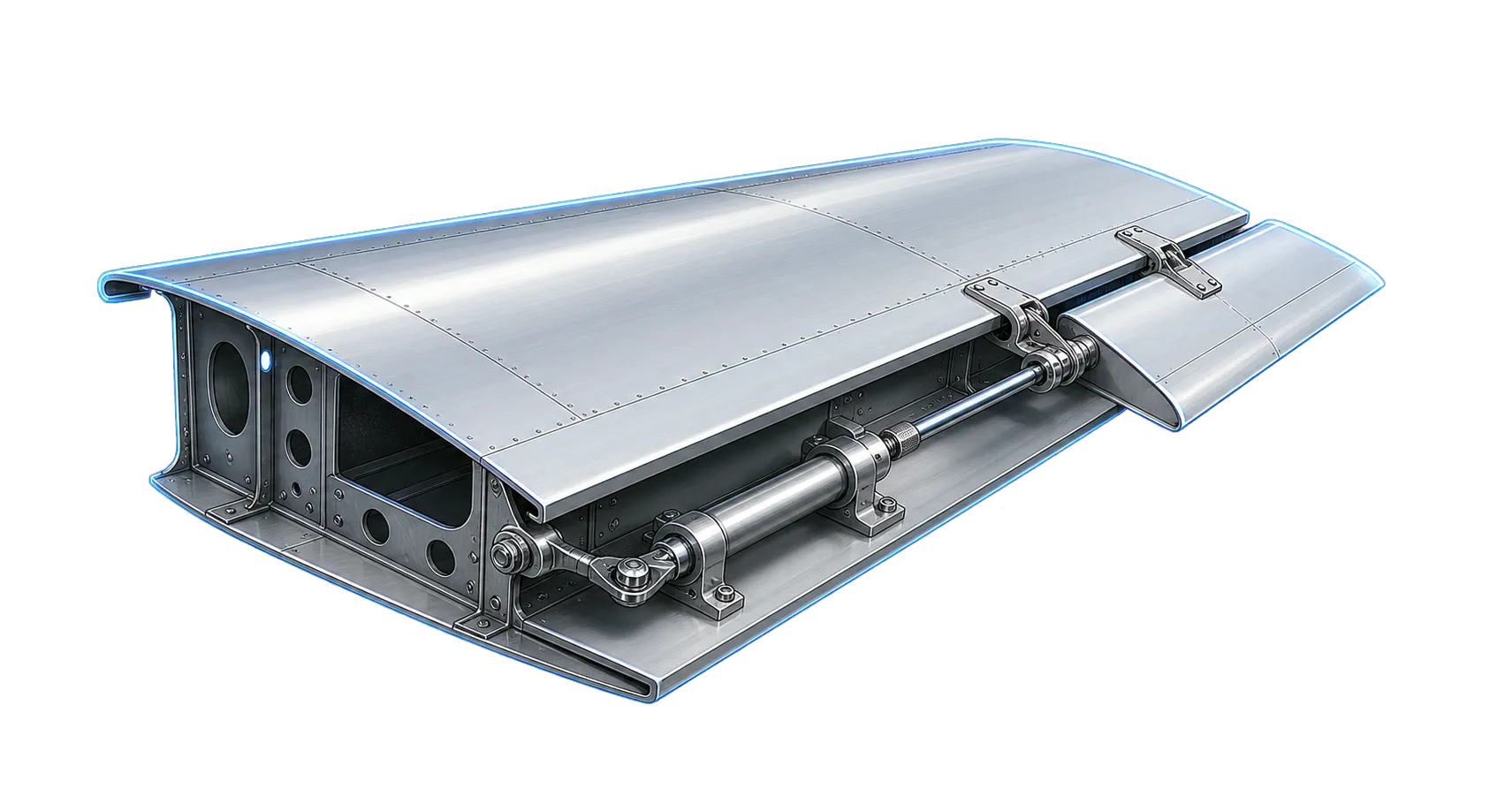
Fatigue cracks were found in the lower elevator skins, caused by secondary bending stresses at a built-in joggle, which could lead to failure of the elevator skins to sustain limit load, resulting in loss of elevator control, elevator flutter, or loss of elevator.
AI-generated summary from the source AD text. Verify against the official source before acting.
Required Actions
Inspect the inboard upper and lower elevator skins for cracking, repair any cracks found, and install doublers as specified in the referenced service information.
AI-generated summary from the source AD text. Verify against the official source before acting.
Compliance Time
Before further flight
AI-generated summary from the source AD text. Verify against the official source before acting.
Affected Aircraft
Quest Aircraft Design, LLC Model KODIAK 100 airplanes, all serial numbers.
AI-generated summary from the source AD text. Verify against the official source before acting.
Federal Register Abstract
We are adopting a new airworthiness directive (AD) for all Quest Aircraft Design, LLC Model KODIAK 100 airplanes. This AD requires inspecting the inboard upper and lower elevator skins for cracking, repairing cracks, and installing doublers. This AD was prompted by a report that fatigue cracks were found in the lower elevator skins. We are issuing this AD to correct the unsafe condition on these products.
Applicability Source Text
Show captured applicability text from the source AD
(c) Applicability

    This AD applies to Quest Aircraft Design, LLC Model KODIAK 100
airplanes, all serial numbers, that are:
    (1) Equipped with elevators with serial numbers 0001 through
0149; and
    (2) certificated in any category.
Document Text
Show stored source text (verify against official source)
[Federal Register Volume 80, Number 23 (Wednesday, February 4, 2015)]
[Rules and Regulations]
[Pages 5900-5902]
From the Federal Register Online via the Government Publishing Office [<a href="http://www.gpo.gov">www.gpo.gov</a>]
[FR Doc No: 2015-01196]
=======================================================================
-----------------------------------------------------------------------
DEPARTMENT OF TRANSPORTATION
Federal Aviation Administration
14 CFR Part 39
[Docket No. FAA-2015-0099; Directorate Identifier 2014-CE-039-AD;
Amendment 39-18082; AD 2015-02-15]
RIN 2120-AA64
Airworthiness Directives; Quest Aircraft Design, LLC Airplanes
AGENCY: Federal Aviation Administration (FAA), DOT.
ACTION: Final rule; request for comments.
-----------------------------------------------------------------------
SUMMARY: We are adopting a new airworthiness directive (AD) for all
Quest Aircraft Design, LLC Model KODIAK 100 airplanes. This AD requires
inspecting the inboard upper and lower elevator skins for cracking,
repairing cracks, and installing doublers. This AD was prompted by a
report that fatigue cracks were found in the lower elevator skins. We
are issuing this AD to correct the unsafe condition on these products.
DATES: This AD is effective February 19, 2015.
The Director of the Federal Register approved the incorporation by
reference of certain publications listed in this AD as of February 19,
2015.
We must receive comments on this AD by March 23, 2015.
ADDRESSES: You may send comments, using the procedures found in 14 CFR
11.43 and 11.45, by any of the following methods:
<bullet> Federal eRulemaking Portal: Go to <a href="http://www.regulations.gov">http://www.regulations.gov</a>. Follow the instructions for submitting comments.
<bullet> Fax: 202-493-2251.
<bullet> Mail: U.S. Department of Transportation, Docket
Operations, M-30, West Building Ground Floor, Room W12-140, 1200 New
Jersey Avenue SE., Washington, DC 20590.
<bullet> Hand Delivery: U.S. Department of Transportation, Docket
Operations, M-30, West Building Ground Floor, Room W12-140, 1200 New
Jersey Avenue SE., Washington, DC 20590, between 9 a.m. and 5 p.m.,
Monday through Friday, except Federal holidays.
For service information identified in this AD, contact Quest
Aircraft Design, LLC, 1200 Turbine Drive, Sandpoint, Idaho 83864;
telephone: (208) 263-1111; toll free: (866) 263-1112; fax: (208) 263-
1511; <a href="/cdn-cgi/l/email-protection#fbb88e888f94969e89a89e898d92989ebbaa8e9e888fba928998899a9d8fd5989496"><span class="__cf_email__" data-cfemail="14576167607b797166477166627d7771544561716760557d6677667572603a777b79">[email protected]</span></a>; <a href="http://www.questaircraft.com">www.questaircraft.com</a>. You may
review copies of the referenced service information at the FAA, Small
Airplane Directorate, 901 Locust, Kansas City, Missouri 64106. For
information on the availability of this material at the FAA, call (816)
329-4148.
Examining the AD Docket
You may examine the AD docket on the Internet at <a href="http://www.regulations.gov">http://www.regulations.gov</a> by searching for and locating Docket No. FAA-2015-
0099; or in person at the Docket Management Facility between 9 a.m. and
5 p.m., Monday through Friday, except Federal holidays. The AD docket
contains this AD, the regulatory evaluation, any comments received, and
other information. The street address for the Docket Office (phone:
800-647-5527) is in the ADDRESSES section. Comments will be available
in the AD docket shortly after receipt.
FOR FURTHER INFORMATION CONTACT: Jason Deutschman, Aerospace Engineer,
Seattle Aircraft Certification Office, FAA, 1601 Lind Avenue SW.,
Renton, Washington 98057; phone: (425) 917-6595; fax: (425) 917-6590;
email: <a href="/cdn-cgi/l/email-protection#254f44564a4b0b4140505156464d48444b654344440b424a53"><span class="__cf_email__" data-cfemail="f39992809c9ddd9796868780909b9e929db3959292dd949c85">[email protected]</span></a>.
SUPPLEMENTARY INFORMATION:
Discussion
We received a report that an operator found two cracks in the lower
elevator skin, one per elevator, while performing a preflight walk-
around inspection on a Quest Aircraft Design, LLC Model KODIAK 100
airplane.
The trailing edge skin has a built-in joggle to maintain the
aerodynamic profile of the surface in the presence of a skin lap. The
joggle causes the skin to straighten under tension loads and buckle
under compression loads. We have determined that secondary bending
stresses at the joggle are the direct cause of the cracking.
This condition, if not corrected, could cause failure of the
elevator skins to sustain limit load, which could result in loss of
elevator control, elevator flutter, or loss of elevator. We are issuing
this AD to correct the unsafe condition on these products.
Relevant Service Information
We reviewed Quest Aircraft KODIAK Mandatory Service Bulletin SB 14-
09,
[[Page 5901]]
Revision 1, dated December 11, 2014, and Quest Aircraft Field Service
Instruction, Elevator Doubler Installation, Elevator Serial Numbers
0001 through 0149, Report No. FSI-106, Revision 02, not dated. The
service information describes procedures for inspecting the inboard
upper and lower skins of the elevator cracking, repairing cracks, and
installing doublers to prevent cracking from occuring. You can find
this information at <a href="http://www.regulations.gov">http://www.regulations.gov</a> by searching for and
locating Docket No. FAA-2015-0099.
FAA's Determination
We are issuing this AD because we evaluated all the relevant
information and determined the unsafe condition described previously is
likely to exist or develop in other products of the same type design.
AD Requirements
This AD requires accomplishing the actions specified in the service
information described previously.
FAA's Justification and Determination of the Effective Date
An unsafe condition exists that requires the immediate adoption of
this AD. The FAA has found that the risk to the flying public justifies
waiving notice and comment prior to adoption of this rule because
failure of the elevator skins to sustain limit load could result in
loss of elevator control, elevator flutter, or loss of elevator.
Therefore, we find that notice and opportunity for prior public comment
are impracticable and that good cause exists for making this amendment
effective in less than 30 days.
Comments Invited
This AD is a final rule that involves requirements affecting flight
safety and was not preceded by notice and an opportunity for public
comment. However, we invite you to send any written data, views, or
arguments about this AD. Send your comments to an address listed under
the ADDRESSES section. Include the docket number FAA-2015-0099 and
Directorate Identifier 2014-CE-039-AD at the beginning of your
comments. We specifically invite comments on the overall regulatory,
economic, environmental, and energy aspects of this AD. We will
consider all comments received by the closing date and may amend this
AD because of those comments.
We will post all comments we receive, without change, to <a href="http://www.regulations.gov">http://www.regulations.gov</a>, including any personal information you provide. We
will also post a report summarizing each substantive verbal contact we
receive about this AD.
Costs of Compliance
We estimate that this AD affects 57 airplanes of U.S. registry.
We estimate the following costs to comply with this AD:
Estimated Costs
----------------------------------------------------------------------------------------------------------------
Cost per Cost on U.S.
Action Labor cost Parts cost product operators
----------------------------------------------------------------------------------------------------------------
Inspect the inboard upper and .5 work-hour x $85 Not applicable....... $42.50 $2,422.50
lower skins of the elevator for per hour = $42.50.
cracking.
Install doublers.................. 4 work-hours x $85 Not applicable....... 340 19,380
per hour = $340.
----------------------------------------------------------------------------------------------------------------
We estimate the following costs to do any necessary repairs that
would be required based on the results of the inspection. We have no
way of determining the number of aircraft that might need this repair:
On-Condition Costs
----------------------------------------------------------------------------------------------------------------
Cost per
Action Labor cost Parts cost product
----------------------------------------------------------------------------------------------------------------
Repair cracks to the inboard upper and .5 work-hour x $85 per Not applicable............ $42.50
lower skins of the elevator. hour = $42.50.
----------------------------------------------------------------------------------------------------------------
According to the manufacturer, some of the costs of this AD may be
covered under warranty, thereby reducing the cost impact on affected
individuals. We do not control warranty coverage for affected
individuals. As a result, we have included all costs in our cost
estimate.
Authority for This Rulemaking
Title 49 of the United States Code specifies the FAA's authority to
issue rules on aviation safety. Subtitle I, section 106, describes the
authority of the FAA Administrator. ``Subtitle VII: Aviation Programs''
describes in more detail the scope of the Agency's authority.
We are issuing this rulemaking under the authority described in
Subtitle VII, Part A, Subpart III, section 44701: ``General
requirements.'' Under that section, Congress charges the FAA with
promoting safe flight of civil aircraft in air commerce by prescribing
regulations for practices, methods, and procedures the Administrator
finds necessary for safety in air commerce. This regulation is within
the scope of that authority because it addresses an unsafe condition
that is likely to exist or develop on products identified in this
rulemaking action.
Regulatory Findings
This AD will not have federalism implications under Executive Order
13132. This AD will not have a substantial direct effect on the States,
on the relationship between the national government and the States, or
on the distribution of power and responsibilities among the various
levels of government.
For the reasons discussed above, I certify that this AD:
(1) Is not a ``significant regulatory action'' under Executive
Order 12866,
(2) Is not a ``significant rule'' under DOT Regulatory Policies and
Procedures (44 FR 11034, February 26, 1979),
(3) Will not affect intrastate aviation in Alaska, and
(4) Will not have a significant economic impact, positive or
negative, on a substantial number of small entities
[[Page 5902]]
under the criteria of the Regulatory Flexibility Act.
List of Subjects in 14 CFR Part 39
Air transportation, Aircraft, Aviation safety, Incorporation by
reference, Safety.
Adoption of the Amendment
Accordingly, under the authority delegated to me by the
Administrator, the FAA amends 14 CFR part 39 as follows:
PART 39--AIRWORTHINESS DIRECTIVES
0
1. The authority citation for part 39 continues to read as follows:
Authority: 49 U.S.C. 106(g), 40113, 44701.
Sec. 39.13 [Amended]
0
2. The FAA amends Sec. 39.13 by adding the following new airworthiness
directive (AD):
2015-02-15 Quest Aircraft Design, LLC: Amendment 39-18082; Docket
No. FAA-2015-0099; Directorate Identifier 2014-CE-039-AD.
(a) Effective Date
This AD is effective February 19, 2015.
(b) Affected ADs
None.
(c) Applicability
This AD applies to Quest Aircraft Design, LLC Model KODIAK 100
airplanes, all serial numbers, that are:
(1) Equipped with elevators with serial numbers 0001 through
0149; and
(2) certificated in any category.
(d) Subject
Joint Aircraft System Component (JASC)/Air Transport Association
(ATA) of America Code 5522; Elevator Skins.
(e) Unsafe Condition
This AD was prompted by a report that fatigue cracks were found
in the lower elevator skins. We are issuing this AD to correct the
unsafe condition on these products.
(f) Compliance
Comply with this AD within the compliance times specified in
paragraphs (g) through (j) of this AD, unless already done.
(g) Inspect the Elevator Skins for Cracking
At or before reaching 1,500 hours time in service (TIS) on the
elevator or within the next 25 hours TIS after February 19, 2015
(the effective date of this AD), whichever occurs later, inspect the
top and bottom of the elevator for cracking in the forward inboard
end of the trailing edge skin, aft of the spar. Do the inspection
following section 4. of Quest Aircraft Field Service Instruction,
Elevator Doubler Installation, Elevator Serial Numbers 0001 through
0149, Report No. FSI-106, Revision 02, not dated, as specified in
Quest Aircraft KODIAK Mandatory Service Bulletin SB 14-09, Revision
1, dated December 11, 2014.
Note 1 to paragraph (g) of this AD: Quest Aircraft Field Service
Instruction, Elevator Doubler Installation, Elevator Serial Numbers
0001 through 0149, Report No. FSI-106, Revision 02, not dated,
references Advisory Circular 43.13-1B, Section 2. The reference
should state Advisory Circular 43.13-1B, chapter 5, section 2. You
may find Advisory Circular 43.13-1B on the Internet at <a href="http://rgl.faa.gov/Regulatory_and_Guidance_Library/rgAdvisoryCircular.nsf/0/99C827DB9BAAC81B86256B4500596C4E?OpenDocument&Highlight=43.13-1b">http://rgl.faa.gov/Regulatory_and_Guidance_Library/rgAdvisoryCircular.nsf/0/99C827DB9BAAC81B86256B4500596C4E?OpenDocument&Highlight=43.13-1b</a>.
(h) Install Doublers
If no cracking was found during the inspection required in
paragraph (g) of this AD, before further flight after the
inspection, install doublers. Do the installation following section
5.1 of Quest Aircraft Field Service Instruction, Elevator Doubler
Installation, Elevator Serial Numbers 0001 through 0149, Report No.
FSI-106, Revision 02, not dated, as specified in Quest Aircraft
KODIAK Mandatory Service Bulletin SB 14-09, Revision 1, dated
December 11, 2014.
(i) Repair Cracked Elevator Skins and Install Doublers
If cracking was found during the inspection required in
paragraph (g) of this AD, before further flight after the
inspection, repair the cracks and install doublers, except as
specified in paragraph (j). Do the repair and installation following
section 5.2 of Quest Aircraft Field Service Instruction, Elevator
Doubler Installation, Elevator Serial Numbers 0001 through 0149,
Report No. FSI-106, Revision 02, not dated, as specified in Quest
Aircraft KODIAK Mandatory Service Bulletin SB 14-09, Revision 1,
dated December 11, 2014.
(j) Cracked Elevator Skins That Exceed Service Bulletin Repair Limits
If the cracking found during the inspection required in
paragraph (g) of this AD exceeds the repair specified in paragraph
(i) of this AD, before further flight, obtain an FAA-approved repair
method from Quest Aircraft by contacting the Manager, Seattle
Aircraft Certification Office (ACO), FAA, as specified in paragraph
(k) of this AD. To use a repair method approved by the Manager of
the Seattle ACO, the approval letter must specifically reference
this AD.
(k) Alternative Methods of Compliance (AMOCs)
(1) The Manager, Seattle ACO, FAA, has the authority to approve
AMOCs for this AD, if requested using the procedures found in 14 CFR
39.19. In accordance with 14 CFR 39.19, send your request to your
principal inspector or local Flight Standards District Office, as
appropriate. If sending information directly to the manager of the
ACO, send it to the attention of the person identified in paragraph
(m) of this AD.
(2) Before using any approved AMOC, notify your appropriate
principal inspector, or lacking a principal inspector, the manager
of the local flight standards district office/certificate holding
district office.
(l) Related Information
For more information about this AD, contact Jason Deutschman,
Aerospace Engineer, Seattle Aircraft Certification Office, FAA, 1601
Lind Avenue SW., Renton, Washington 98057; phone: (425) 917-6595;
fax: (425) 917-6590; email: <a href="/cdn-cgi/l/email-protection#660c07150908480203131215050e0b07082600070748010910"><span class="__cf_email__" data-cfemail="741e15071b1a5a1011010007171c19151a341215155a131b02">[email protected]</span></a>.
(m) Material Incorporated by Reference
(1) The Director of the Federal Register approved the
incorporation by reference (IBR) of the service information listed
in this paragraph under 5 U.S.C. 552(a) and 1 CFR part 51.
(2) You must use this service information as applicable to do
the actions required by this AD, unless the AD specifies otherwise.
(i) Quest Aircraft KODIAK Mandatory Service Bulletin SB 14-09,
Revision 1, dated December 11, 2014.
(ii) Quest Aircraft Field Service Instruction, Elevator Doubler
Installation, Elevator Serial Numbers 0001 through 0149, Report No.
FSI-106, Revision 02, not dated.
(3) For Quest Aircraft service information identified in this
AD, contact Quest Aircraft Design, LLC, 1200 Turbine Drive,
Sandpoint, Idaho 83864; telephone: (208) 263-1111; toll free: (866)
263-1112; fax: (208) 263-1511; <a href="/cdn-cgi/l/email-protection#22615751564d4f4750714750544b4147627357475156634b5041504344560c414d4f"><span class="__cf_email__" data-cfemail="b7f4c2c4c3d8dad2c5e4d2c5c1ded4d2f7e6c2d2c4c3f6dec5d4c5d6d1c399d4d8da">[email protected]</span></a>;
<a href="http://www.questaircraft.com">www.questaircraft.com</a>.
(4) You may view this service information at FAA, Small Airplane
Directorate, 901 Locust, Kansas City, Missouri 64106. For
information on the availability of this material at the FAA, call
(816) 329-4148.
(5) You may view this service information that is incorporated
by reference at the National Archives and Records Administration
(NARA). For information on the availability of this material at
NARA, call 202-741-6030, or go to: <a href="http://www.archives.gov/federal-register/cfr/ibr-locations.html">http://www.archives.gov/federal-register/cfr/ibr-locations.html</a>.
Issued in Kansas City, Missouri, on January 16, 2015.
Kelly A. Broadway,
Acting Manager, Small Airplane Directorate, Aircraft Certification
Service.
[FR Doc. 2015-01196 Filed 2-3-15; 8:45 am]
BILLING CODE 4910-13-P
Source: Official FAA Source ↗
Retrieved: Apr 6, 2026
Rights: U.S. Government Public Domain
This site is not affiliated with or endorsed by the FAA. Always verify with official sources.
Related Airworthiness Directives
2016-06-06 Recurring
final ruleAirworthiness Directives; Quest Aircraft Design, LLC Airplanes
Unsafe Condition: Limited control yoke movement of the elevator control system due to cushion edging jammed in the elevator control anti-rotation guide slot.
2011-25-04
final ruleAirworthiness Directives; Quest Aircraft Design, LLC Airplanes
Unsafe Condition: Reports of five instances where a loose IPS bolt was found on the right-hand side of the engine bypass door attachment. This condition, if not corrected, could lead to an inoperable bypass door, wh...