AD 2013-11-10
Applicability
| Type | Manufacturer | Model | Details |
|---|---|---|---|
| aircraft | Cessna Aircraft Company | LC40-550FG | Airworthiness Directives; Cessna Aircraft Company Airplanes |
| aircraft | Cessna Aircraft Company | LC41-550FG | Airworthiness Directives; Cessna Aircraft Company Airplanes |
| aircraft | Cessna Aircraft Company | LC42-550FG | Airworthiness Directives; Cessna Aircraft Company Airplanes |
Unsafe Condition
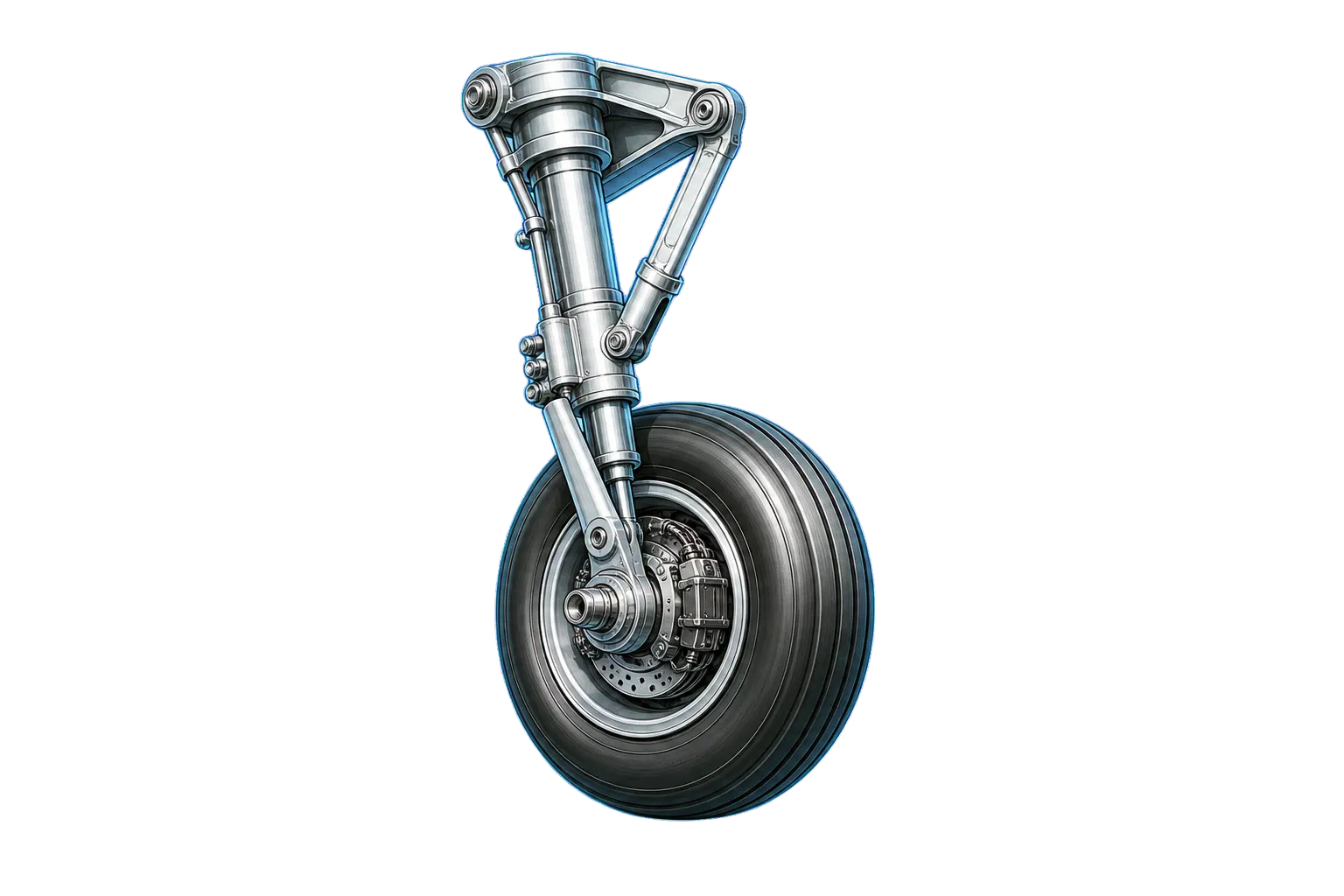
During maximum braking, if the brakes lock up and a skid occurs, a severe oscillatory yawing motion or 'wheel walk' may develop, which could result in further significant structural damage to the airplane.
AI-generated summary from the source AD text. Verify against the official source before acting.
Required Actions
Insertions into the pilot's operating handbook (POH) and the airplane maintenance manuals (AMM) regarding proper use of the brakes and inspection of the aft fuselage must be made. An inspection of the aft fuselage is also required.
AI-generated summary from the source AD text. Verify against the official source before acting.
Compliance Time
Before further flight
AI-generated summary from the source AD text. Verify against the official source before acting.
Affected Aircraft
Cessna Aircraft Company (previously COLUMBIA or LANCAIR) Models LC40-550FG, LC41-550FG, and LC42-550FG airplanes.
AI-generated summary from the source AD text. Verify against the official source before acting.
Federal Register Abstract
We are adopting a new airworthiness directive (AD) for certain Cessna Aircraft Company (Cessna) (previously COLUMBIA or LANCAIR) Models LC40-550FG, LC41-550FG, and LC42-550FG airplanes. This AD was prompted by reports that during maximum braking, if the brakes lock up and a skid occurs, a severe oscillatory yawing motion or "wheel walk" may develop, which could result in further significant structural damage to the airplane. This AD requires insertions into the pilot's operating handbook (POH) and the airplane maintenance manuals (AMM) regarding proper use of the brakes and inspection of the aft fuselage. We are issuing this AD to correct the unsafe condition on these products.
Applicability Source Text
Show captured applicability text from the source AD
(c) Applicability

    (1) This AD applies to the following Cessna Aircraft Company
(previously COLUMBIA or LANCAIR) Models LC40-550FG, LC41-550FG, and
LC42-550FG airplanes that are certificated in any category:
Document Text
Show stored source text (verify against official source)
[Federal Register Volume 78, Number 120 (Friday, June 21, 2013)]
[Rules and Regulations]
[Pages 37448-37452]
From the Federal Register Online via the Government Publishing Office [<a href="http://www.gpo.gov">www.gpo.gov</a>]
[FR Doc No: 2013-14689]
-----------------------------------------------------------------------
DEPARTMENT OF TRANSPORTATION
Federal Aviation Administration
14 CFR Part 39
[Docket No. FAA-2012-1330; Directorate Identifier 2012-CE-006-AD;
Amendment 39-17470; AD 2013-11-10]
RIN 2120-AA64
Airworthiness Directives; Cessna Aircraft Company Airplanes
AGENCY: Federal Aviation Administration (FAA), DOT.
ACTION: Final rule.
-----------------------------------------------------------------------
SUMMARY: We are adopting a new airworthiness directive (AD) for certain
Cessna Aircraft Company (Cessna) (previously COLUMBIA or LANCAIR)
Models LC40-550FG, LC41-550FG, and LC42-550FG airplanes. This AD was
prompted by reports that during maximum braking, if the brakes lock up
and a skid occurs, a severe oscillatory yawing motion or ``wheel walk''
may develop, which could result in further significant structural
damage to the airplane. This AD requires insertions into the pilot's
operating handbook (POH) and the airplane maintenance manuals (AMM)
regarding proper use of the brakes and inspection of the aft fuselage.
We are issuing this AD to correct the unsafe condition on these
products.
DATES: This AD is effective July 26, 2013.
The Director of the Federal Register approved the incorporation by
reference of certain publications listed in the AD as of July 26, 2013.
ADDRESSES: For service information identified in this AD, contact
Cessna Aircraft Company, Customer Service, P.O. Box 7706, Wichita,
Kansas 67277; telephone: (316) 517-5800; fax (316) 517-7271; Internet:
<a href="http://www.cessnasupport.com">www.cessnasupport.com</a>. You may review copies of the referenced service
information at the FAA, Small Airplane Directorate, 901 Locust, Kansas
City, Missouri 64106. For information on the availability of this
material at the FAA, call (816) 329-4148.
Examining the AD Docket
You may examine the AD docket on the Internet at <a href="http://www.regulations.gov">http://www.regulations.gov</a>; or in person at the Docket Management Facility
between 9 a.m. and 5 p.m., Monday through Friday, except Federal
holidays. The AD docket contains this AD, the regulatory evaluation,
any comments received, and other information. The address for the
Docket Office (phone: 800-647-5527) is Document Management Facility,
U.S. Department of Transportation, Docket Operations, M-30, West
Building Ground Floor, Room W12-140, 1200 New Jersey Avenue SE.,
Washington, DC 20590.
FOR FURTHER INFORMATION CONTACT: Gary Park, Aerospace Engineer, Wichita
Aircraft Certification Office (ACO), FAA, 1801 Airport Road, Wichita,
KS 67209; phone: (316) 946-4123; fax: (316) 946-4107; email:
<a href="/cdn-cgi/l/email-protection#e186809398cf9180938aa1878080cf868e97"><span class="__cf_email__" data-cfemail="ddbabcafa4f3adbcafb69dbbbcbcf3bab2ab">[email protected]</span></a>.
SUPPLEMENTARY INFORMATION:
Discussion
We issued a notice of proposed rulemaking (NPRM) to amend 14 CFR
part 39 to include an AD that would apply to the specified products.
That
[[Page 37449]]
NPRM published in the Federal Register on December 21, 2012 (77 FR
75590). That NPRM proposed to require insertions into the pilot's
operating handbook (POH) and the airplane maintenance manuals (AMM)
regarding proper use of the brakes and inspection of the aft fuselage.
Comments
We gave the public the opportunity to participate in developing
this AD. The following presents the comments received on the proposal
and the FAA's response to each comment.
Request To Modify the Landing Gear
Paul Rene LaChance stated that while supportive of the AD, he
believes it to be too late and does not go far enough. He commented
that he had experienced such an incident himself. Maximum braking had
occurred. Afterward, the airplane was flown for a short flight with the
pilot unaware of the severe tail damage, and the tail almost came off.
The commenter states we should require modification of the airplane
with the main landing gear oriented vertical rather than the current
forward tilt.
We do not agree with this comment. The controllability of the
aircraft is not in question if the pilot reduces brake pressure in the
event of a wheel walking event. The procedures in the AD will ensure
pilots are aware of appropriate actions and what inspections are
required if such an event occurs. The commenter may provide
substantiating data and apply for an alternative method of compliance
(AMOC) following the procedures in paragraph (i) of this AD to
implement a design modification.
AD Is Not Necessary and Should Be Withdrawn
Darryl James Taylor, Steven Masters, William Paul Boyd, Paul
Harrington, George Richard Wilhelmsen, Todd Thompson, Larry D. Fenwick,
and Thomas Clare who is President of the Cessna Advanced Aircraft Club
(CAAC), requested we withdraw the NPRM (77 FR 75590, December 21, 2012)
because it is unnecessary, does not add to safety, and is ineffective.
The AD would affect 726 airplanes, and there have only been five
occurrences out of thousands of landings over the past nine years. The
commenters do not feel this is statistically significant. Since the AD
comes several years after an isolated incident, the AD addresses no
real safety concern. Appropriate notices have already been incorporated
in POH manuals per Cessna Service Bulletin SB 10-11-01, dated August
17, 2010. The commenters feel it is unlikely that additional notes to
the POH or placards will be an effective solution.
We do not agree with this comment. The wheel walking
characteristics are highly unusual. We are unaware of any other
airplane model that has experienced such an event. Currently, the
events are relatively well publicized, but they may be forgotten or
unknown to future pilots without previous knowledge about the airplane.
Adding the changes to the POH and maintenance manual and mandating the
aft fuselage inspection will assure that someone does not take off
again after an event without having the airplane inspected. The added
changes will also help the pilot better know how to handle the airplane
if the wheel walk event does occur. The AD process is the only means
where the FAA can require all owner/operators to incorporate all the
necessary changes and conduct the required inspection. However, owner/
operators that have already incorporated the POH changes per the Cessna
service bulletin may receive credit for certain actions required by
this AD.
Engineering Solution Needed
Darryl James Taylor, William Paul Boyd, Paul Herrington, George
Richard Wilhelmsen, and Larry D. Fenwick commented that maximum braking
is considered panic braking where the pilot instinctively reacts to an
adverse condition, and they feel the real issue is proper maintenance
training. The braking issue occurs only when the gear bushings have
slipped completely out, and maintenance shops do not know what they are
looking at. In which case, the solutions in the AD will be ineffective.
Probably, the landings were not made under ideal or normal conditions,
and the pilots may have exceeded operational specifications during
landing. This issue should have an engineering solution such as anti-
lock brakes, which could prevent brake lock-up and avoid the adverse
condition. It would address maximum braking, no matter what the cause.
The anti-lock system would include slotted wheels and Hall sensors and
change the current braking system. The cost would be justified because
of the reduced risk of structural damage.
We do not agree with this comment. Although we would consider a
design change as an AMOC, we have determined that the requirements in
this AD are sufficient to address the unsafe condition. The commenters
may provide substantiating data and apply for an AMOC following the
procedures in paragraph (i) of this AD to implement a modification as
an acceptable level of safety to address the unsafe condition.
Conclusion
We reviewed the relevant data, considered the comments received,
and determined that air safety and the public interest require adopting
the AD as proposed except for minor editorial changes. We have
determined that these minor changes:
<bullet> Are consistent with the intent that was proposed in the
NPRM (77 FR 75590, December 21, 2012) for correcting the unsafe
condition; and
<bullet> Do not add any additional burden upon the public than was
already proposed in the NPRM (77 FR 75590, December 21, 2012).
Costs of Compliance
We estimate that this AD affects 726 airplanes of U.S. registry.
We estimate the following costs to comply with this AD:
Estimated Costs
----------------------------------------------------------------------------------------------------------------
Cost per Cost on U.S.
Action Labor cost Parts cost product operators
----------------------------------------------------------------------------------------------------------------
Insertion into the POH and the 4.5 work-hours x Not applicable.............. $382.50 $277,695
maintenance manuals, and $85 per hour =
inspection of aft fuselage. $382.50.
----------------------------------------------------------------------------------------------------------------
Authority for This Rulemaking
Title 49 of the United States Code specifies the FAA's authority to
issue rules on aviation safety. Subtitle I, section 106, describes the
authority of the FAA Administrator. Subtitle VII: Aviation Programs,
describes in more detail the scope of the Agency's authority.
We are issuing this rulemaking under the authority described in
Subtitle VII,
[[Page 37450]]
Part A, Subpart III, Section 44701: ``General requirements.'' Under
that section, Congress charges the FAA with promoting safe flight of
civil aircraft in air commerce by prescribing regulations for
practices, methods, and procedures the Administrator finds necessary
for safety in air commerce. This regulation is within the scope of that
authority because it addresses an unsafe condition that is likely to
exist or develop on products identified in this rulemaking action.
Regulatory Findings
This AD will not have federalism implications under Executive Order
13132. This AD will not have a substantial direct effect on the States,
on the relationship between the national government and the States, or
on the distribution of power and responsibilities among the various
levels of government.
For the reasons discussed above, I certify that this AD:
(1) Is not a ``significant regulatory action'' under Executive
Order 12866,
(2) Is not a ``significant rule'' under DOT Regulatory Policies and
Procedures (44 FR 11034, February 26, 1979),
(3) Will not affect intrastate aviation in Alaska, and
(4) Will not have a significant economic impact, positive or
negative, on a substantial number of small entities under the criteria
of the Regulatory Flexibility Act.
List of Subjects in 14 CFR Part 39
Air transportation, Aircraft, Aviation safety, Incorporation by
reference, Safety.
Adoption of the Amendment
Accordingly, under the authority delegated to me by the
Administrator, the FAA amends 14 CFR part 39 as follows:
PART 39--AIRWORTHINESS DIRECTIVES
0
1. The authority citation for part 39 continues to read as follows:
Authority: 49 U.S.C. 106(g), 40113, 44701.
Sec. 39.13 [Amended]
0
2. The FAA amends Sec. 39.13 by adding the following new airworthiness
directive (AD):
2013-11-10 Cessna Aircraft Company: Amendment 39-17470 ; Docket No.
FAA-2012-1330; Directorate Identifier 2012-CE-006-AD.
(a) Effective Date
This AD is effective July 26, 2013.
(b) Affected ADs
None.
(c) Applicability
(1) This AD applies to the following Cessna Aircraft Company
(previously COLUMBIA or LANCAIR) Models LC40-550FG, LC41-550FG, and
LC42-550FG airplanes that are certificated in any category:
(i) LC40-550FG (Model 300), serial numbers 40001 through 40079;
(ii) LC41-550FG (Model 400), serial numbers 41001 through 41108,
41501 through 41533, 41563 through 41800, and 411001 through 411161;
and
(iii) LC42-550FG (Model 350), serial numbers 42001 through
42084, 42501 through 42569, and 421001 through 421020.
(d) Subject
Joint Aircraft System Component (JASC)/Air Transport Association
(ATA) of America Code 5300, Fuselage Structure (General).
(e) Unsafe Condition
This AD was prompted by reports that during maximum braking, if
the brakes lock up and a skid occurs, a severe oscillatory yawing
motion or ``wheel walk'' may develop, which could result in
significant structural damage to the airplane. We are proposing this
AD to correct the unsafe condition on these products.
(f) Compliance
Comply with this AD within the compliance times specified,
unless already done.
(g) Required Actions
(1) Within the next 50 hours time-in-service (TIS) after July
26, 2013 (the effective date of this AD) or within the next 3 months
after July 26, 2013 (the effective date of this AD), whichever
occurs first, incorporate figure 1 of paragraph (g)(1) of this AD
into the applicable Pilot's Operating Handbook (POH)/FAA-approved
Airplane Flight Manual (AFM), Section 2, Limitations (Other
Limitations). This may also be done by inserting a copy of this AD
into the POH/AFM.
[GRAPHIC] [TIFF OMITTED] TR21JN13.000
(2) Within the next 50 hours TIS after July 26, 2013 (the
effective date of this AD) or within the next 3 months after July
26, 2013 (the effective date of this AD), whichever occurs first,
insert a copy of this AD into the POH/AFM or incorporate figure 2 of
paragraph (g)(2) of this AD into the applicable POH/AFM at the end
of each of the following sections:
(i) Section 4, Normal Procedures (Amplified Procedures):
Landings, Normal Landings; and
(ii) Section 4, end of paragraph: Short Field Landings.
[[Page 37451]]
[GRAPHIC] [TIFF OMITTED] TR21JN13.001
(3) Within the next 50 hours TIS after July 26, 2013 (the
effective date of this AD) or within the next 3 months after July
26, 2013 (the effective date of this AD), whichever occurs first,
incorporate the following Cessna Aircraft Company maintenance manual
revisions for the appropriate model airplane as specified in
paragraphs (g)(3)(i) through (g)(3)(iii) of this AD into your
maintenance program (maintenance manual).
(i) For Model LC40-550FG (Model 300): Pages 1 through 5, Subject
20-95-00, ``Tap Testing--Description and Operation''; pages 1
through 2, Subject 20-95-02, ``Structural Inspections--Description
and Operation''; and pages 501 through 503, Subject 53-70-00,
``Fuselage Components--Adjustment/Test''; of Cessna Aircraft Company
Maintenance Manual, Model LC40-550FG, 300MM02, Revision 2, dated
July 1, 2012.
(ii) For Model LC41-550FG (Model 400): Pages 1 through 5,
Subject 20-90-00, ``Tap Testing--Description and Operation''; pages
1 through 2, Subject 20-95-00, ``Structural Inspections--Description
and Operation''; and pages 501 through 503, Subject 53-70-00,
``Fuselage Components--Adjustment/Test''; of Cessna Aircraft Company
Maintenance Manual, Model LC41-550FG/T240, 400MM02, Revision 2,
dated July 1, 2012.
(iii) For Model LC42-550FG (Model 350): Pages 1 through 5,
Subject 20-95-00, ``Tap Testing--Description and Operation''; pages
1 through 2, Subject 20-95-02, ``Structural Inspections--Description
and Operation''; and pages 501 through 503, Subject 53-70-00,
``Fuselage Components--Adjustment/Test''; of Cessna Aircraft Company
Maintenance Manual, Model LC42-550FG, 350MM02, Revision 2, dated
July 1, 2012.
Note 1 for paragraph (g)(3) of this AD: We recommend you
replace your current maintenance manual in its entirety with the
updated Cessna Aircraft Company Maintenance Manual applicable to
your model airplane, 300MM02, 350MM02, or 400MM02, all Revision 2,
all dated July 1, 2012.
(4) The actions required by paragraphs (g)(1), (g)(2), and
(g)(3) of this AD may be performed by the owner/operator (pilot)
holding at least a private pilot certificate and must be entered
into the aircraft records showing compliance with this AD in
accordance with 14 CFR 43.9 (a)(1)-(4) and 14 CFR 91.417(a)(2)(v).
The record must be maintained as required by 14 CFR 91.417, 121.380,
or 135.439.
(5) At the next annual inspection after July 26, 2013 (the
effective date of this AD) or within the next 50 hours TIS after
July 26, 2013 (the effective date of this AD), whichever occurs
later, and before further flight if a severe oscillatory yawing
motion as described in figure 1 of paragraph (g)(1) of this AD has
occurred, inspect the aft fuselage following the aft fuselage
inspection procedures for the appropriate model of airplane as
specified in paragraphs (g)(5)(i) through (g)(5)(iii) of this AD.
(i) For Model LC40-550FG (Model 300): Pages 1 through 5, Subject
20-95-00, ``Tap Testing--Description and Operation''; pages 1
through 2, Subject 20-95-02, ``Structural Inspections--Description
and Operation''; and pages 501 through 503, Subject 53-70-00,
``Fuselage Components--Adjustment/Test''; of Cessna Aircraft Company
Maintenance Manual, Model LC40-550FG, 300MM02, Revision 2, dated
July 1, 2012.
(ii) For Model LC41-550FG (Model 400): Pages 1 through 5,
Subject 20-90-00, ``Tap Testing--Description and Operation''; pages
1 through 2, Subject 20-95-00, ``Structural Inspections--Description
and Operation''; and pages 501 through 503, Subject 53-70-00,
``Fuselage Components--Adjustment/Test''; of Cessna Aircraft Company
Maintenance Manual Model LC41-550FG/T240, 400MM02, Revision 2, dated
July 1, 2012.
(iii) For Model LC42-550FG (Model 350): Pages 1 through 5,
Subject 20-95-00, ``Tap Testing--Description and Operation''; pages
1 through 2, Subject 20-95-02, ``Structural Inspections--Description
and Operation''; and pages 501 through 503, Subject 53-70-00,
``Fuselage Components--Adjustment/Test''; of Cessna Aircraft Company
Maintenance Manual, Model LC42-550FG, 350MM02, Revision 2, dated
July 1, 2012.
(6) If any damaged or suspect areas are found during any aft
fuselage inspection required by paragraph (g)(5) of this AD, before
further flight, contact Cessna Customer Service by phone at (316)
517-5800 or fax at (316) 517-7271 for an FAA-approved repair and
perform the repair.
(h) Credit for Actions Accomplished in Accordance With Previous Service
Information
Cessna Aircraft Company released the following POH/AFM Temporary
Revisions via Cessna Service Bulletin SB 10-11-01, dated August 17,
2010. Incorporation of the applicable document specified in
paragraphs (h)(i) through (h)(iii) of this AD is considered
compliance with the POH/AFM change requirements in paragraphs (g)(1)
and (g)(2) of this AD. The applicable POH/AFM Temporary Revisions
are:
(i) Cessna Corvalis 300: RA050001-O TR03-06, dated August 13,
2010;
(ii) Cessna Corvalis 350: RB050005-I TR08-11 (Garmin G1000-
equipped) and RB050000-R TR02-05 (Avidyne Entegra-equipped), dated
August 13, 2010; and
(iii) Cessna Corvalis 400: RC050005-I TR10-13 (Garmin G1000-
equipped) and RC050002-G TR02-05 (Avidyne Entegra-equipped), dated
August 13, 2010.
(i) Alternative Methods of Compliance (AMOCs)
(1) The Manager, Wichita Aircraft Certification Office (ACO),
FAA, has the authority to approve AMOCs for this AD, if requested
using the procedures found in 14 CFR 39.19. In accordance with 14
CFR 39.19, send your request to your principal inspector or local
Flight Standards District Office, as appropriate. If sending
information directly to the manager of the ACO, send it to the
attention of the person identified in the Related Information
section of this AD.
(2) Before using any approved AMOC, notify your appropriate
principal inspector, or lacking a principal inspector, the manager
of the local flight standards district office/certificate holding
district office.
(j) Related Information
(1) For more information about this AD, contact Gary Park,
Aerospace Engineer, Wichita ACO, FAA, 1801 Airport Road, Wichita, KS
67209; phone: (316) 946-4123;
[[Page 37452]]
fax: (316) 946-4107; email: <a href="/cdn-cgi/l/email-protection#224543505b0c52435049624443430c454d54"><span class="__cf_email__" data-cfemail="9ef9ffece7b0eeffecf5def8ffffb0f9f1e8">[email protected]</span></a>.
(2) Cessna Service Bulletin SB 10-11-01, dated August 17, 2010.
(k) Material Incorporated by Reference
(1) The Director of the Federal Register approved the
incorporation by reference (IBR) of the service information listed
in this paragraph under 5 U.S.C. 552(a) and 1 CFR part 51.
(2) You must use this service information as applicable to do
the actions required by this AD, unless the AD specifies otherwise.
(i) Pages 1 through 5, Subject 20-95-00, ``Tap Testing--
Description and Operation''; of Cessna Aircraft Company Maintenance
Manual, Model LC40-550FG, 300MM02, Revision 2, dated July 1, 2012.
(ii) Pages 1 through 2, Subject 20-95-02, ``Structural
Inspections--Description and Operation''; of Cessna Aircraft Company
Maintenance Manual, Model LC40-550FG, 300MM02, Revision 2, dated
July 1, 2012.
(iii) Pages 501 through 503, Subject 53-70-00, ``Fuselage
Components--Adjustment/Test''; of Cessna Aircraft Company
Maintenance Manual, Model LC40-550FG, 300MM02, Revision 2, dated
July 1, 2012.
(iv) Pages 1 through 5, Subject 20-90-00, ``Tap Testing--
Description and Operation''; of Cessna Aircraft Company Maintenance
Manual, Model LC41-550FG/T240, 400MM02, Revision 2, dated July 1,
2012.
(v) Pages 1 through 2, Subject 20-95-00, ``Structural
Inspections--Description and Operation''; of Cessna Aircraft Company
Maintenance Manual, Model LC41-550FG/T240, 400MM02, Revision 2,
dated July 1, 2012.
(vi) Pages 501 through 503, Subject 53-70-00, ``Fuselage
Components--Adjustment/Test''; of Cessna Aircraft Company
Maintenance Manual, Model LC41-550FG/T240, 400MM02, Revision 2,
dated July 1, 2012.
(vii) Pages 1 through 5, Subject 20-95-00, ``Tap Testing--
Description and Operation''; of Cessna Aircraft Company Maintenance
Manual, Model LC42-550FG, 350MM02, Revision 2, dated July 1, 2012.
(viii) Pages 1 through 2, Subject 20-95-02, ``Structural
Inspections--Description and Operation''; of Cessna Aircraft Company
Maintenance Manual, Model LC42-550FG, 350MM02, Revision 2, dated
July 1, 2012.
(ix) Pages 501 through 503, Subject 53-70-00, ``Fuselage
Components--Adjustment/Test''; of Cessna Aircraft Company
Maintenance Manual, Model LC42-550FG, 350MM02, Revision 2, dated
July 1, 2012.
(3) For Cessna Aircraft Company service information identified
in this AD, contact Cessna Aircraft Company, Customer Service, P.O.
Box 7706, Wichita, Kansas 67277; telephone: (316) 517-5800; fax
(316) 517-7271; Internet: <a href="http://www.cessnasupport.com">www.cessnasupport.com</a>.
(4) You may view this service information at FAA, Small Airplane
Directorate, 901 Locust, Kansas City, Missouri 64106. For
information on the availability of this material at the FAA, call
(816) 329-4148.
(5) You may view this service information that is incorporated
by reference at the National Archives and Records Administration
(NARA). For information on the availability of this material at
NARA, call 202-741-6030, or go to: <a href="http://www.archives.gov/federal-register/cfr/ibr-locations.html">http://www.archives.gov/federal-register/cfr/ibr-locations.html</a>.
Issued in Kansas City, Missouri, on May 23, 2013.
Earl Lawrence,
Manager, Small Airplane Directorate, Aircraft Certification Service.
[FR Doc. 2013-14689 Filed 6-20-13; 8:45 am]
BILLING CODE 4910-13-P
Source: Official FAA Source ↗
Retrieved: Apr 6, 2026
Rights: U.S. Government Public Domain
This site is not affiliated with or endorsed by the FAA. Always verify with official sources.
Related Airworthiness Directives
2011-03-04 Recurring
final ruleAirworthiness Directives; Cessna Aircraft Company (Type Certificate Previously Held by Columbia Aircraft Manufacturing (Previously the Lancair Company)) Models LC40-550FG, LC41-550FG, and LC42-550FG Airplanes
Unsafe Condition: Damage in the rudder hinges and the rudder hinge brackets, which could result in failure of the rudder. This failure could lead to loss of control.

2007-07-06 R1
final ruleAirworthiness Directives; Cessna Aircraft Company (Type Certificate Previously Held by Columbia Aircraft Manufacturing) Models LC40-550FG, LC41-550FG, and LC42-550FG Airplanes
Unsafe Condition: The aileron and elevator control systems may have incorrect torque values for the bolts attaching the pushrods to the bellcranks, which could result in the bolts loosening and causing control surfa...
2008-02-06
final ruleAirworthiness Directives; GARMIN International GSM 85 Servo Gearbox Units
Unsafe Condition: Foreign object debris inside the GARMIN GSM 85 servo gearbox units could result in jamming of the gearbox.
2005-01-19
final ruleAirworthiness Directives; GARMIN International Inc. GTX 33, GTX 33D, GTX 330, and GTX 330D Mode S Transponders
Unsafe Condition: The GTX 33/33D/330/330D Mode S transponders may detect the S1 (suppression) interrogating pulse below the minimum trigger level (MTL) and, in some circumstances, not reply. This could lead to inacc...