AD 2013-01-04
Applicability
| Type | Manufacturer | Model | Details |
|---|---|---|---|
| aircraft | Bell Helicopter Textron, Inc. | 412 | Airworthiness Directives; Bell Helicopter Textron, Inc., Helicopters |
| aircraft | Bell Helicopter Textron, Inc. | 412EP | Airworthiness Directives; Bell Helicopter Textron, Inc., Helicopters |
Unsafe Condition
Failure of a high aft crosstube assembly due to fatigue damage from towing and landing, leading to landing gear collapse and subsequent loss of control of the helicopter.
AI-generated summary from the source AD text. Verify against the official source before acting.
Required Actions
Create a component history card or equivalent record and begin counting/recording accumulated landings for each high aft crosstube assembly. Install 'caution' decals regarding towing at or above 8,900 pounds. Confirm crosstube is within horizontal deflection limits and replace if not. Perform recurring fluorescent penetrant inspection (FPI) for cracks, corrosion, nicks, scratches, dents, or other damage. Repair damaged components within acceptable limits, rework crosstubes by bonding abrasion strips, and replace unairworthy crosstubes.
AI-generated summary from the source AD text. Verify against the official source before acting.
Compliance Time
Effective March 11, 2013
AI-generated summary from the source AD text. Verify against the official source before acting.
Affected Aircraft
Bell Helicopter Textron, Inc. Model 412 and 412EP helicopters.
AI-generated summary from the source AD text. Verify against the official source before acting.
Federal Register Abstract
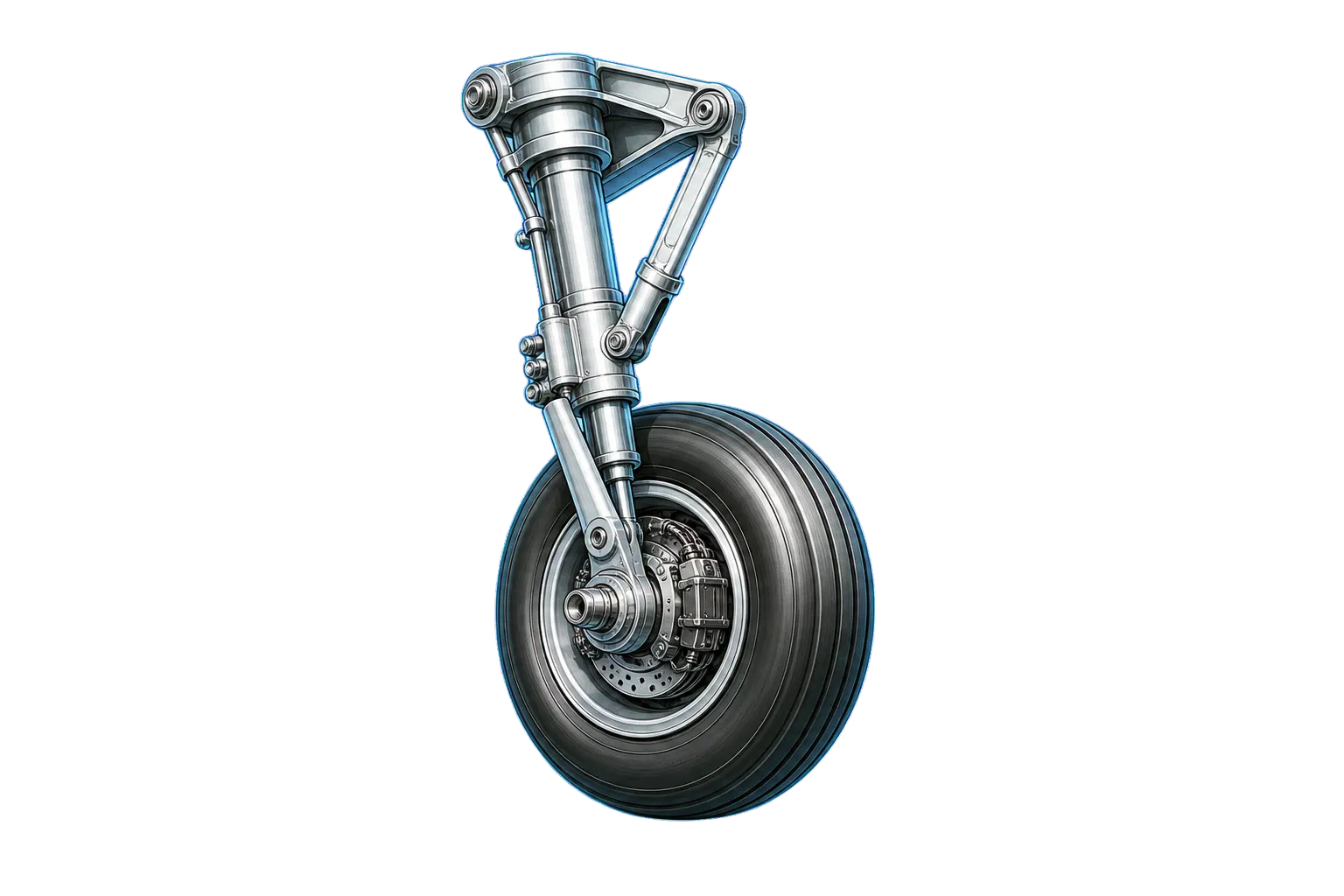
Main Landing Gear
Applicability Source Text
Show captured applicability text from the source AD
AD Final Rules - 2013-01-04.pdf Copy URL Document Versions Feedback DetailsAttachments/Public Comments AD Number: 2013-01-04 Document Type: AD Final Rules Docket Number: FAA-2012-0082 Subject Heading: Airworthiness Directives; Bell Helicopter Textron, Inc., Helicopters Subject: Main Landing Gear Status: Current Citation: Federal Register Volume 78, Number 23 (Monday, February 4, 2013) Citation Publish Date: 02/04/2013 Effective Date: 03/11/2013 Make: Bell Helicopter Textron, Inc. Model: 412 | 412EP Product Type: Aircraft Product Subtype: Rotorcraft Affected AD: Superseded AD: Affected By: Superseded By: Service/Office: Office of Primary Responsibility: CFR Part Reference: Part 39 Comments: Automatic Zoom Actual Size Page Fit Page Width 50% 75% 100% 125% 150% 200% 300% 400% 125% of 7 1 [Federal Register Volume 78, Number 23 (Monday, February 4, 2013)] [Rules and Regulations] [Pages 7645-7647] From the Federal Register Online via the Government Printing Office [www.gpo.gov] [FR Doc No: 2013-02238] –––––––––––––––––––––––––––––––––– DEPARTMENT OF TRANSPORTATION Federal Aviation Administration 14 CFR Part 39 [Docket No. FAA-2012-0082; Directorate Identifier 2010-SW-036-AD; Amendment 39-17318; AD 2013-01-04] RIN 2120-AA64 Airworthiness Directives; Bell Helicopter Textron, Inc., Helicopters AGENCY: Federal Aviation Administration (FAA), DOT. ACTION: Final rule. –––––––––––––––––––––––––––––––––– SUMMARY: We are adopting a new airworthiness directive (AD) for Bell Helicopter Textron, Inc. (Bell), Model 412 and 412EP helicopters. This AD requires creating a component history card or equivalent record and begin counting and recording the number of accumulated landings for each high aft crosstube assembly (crosstube). Also, this AD requires installing ''caution'' decals regarding towing of a helicopter at or above 8,900 pounds. This AD also requires confirming the crosstube is within the horizontal deflection limits and replacing it if it is not. This AD also requires a recurring fluorescent penetrant inspection (FPI) of each crosstube and upper center support for a crack, any corrosion, nick, scratch, dent, or any other damage. This AD requires repairing damaged crosstubes and upper center supports that are within acceptable limits, reworking crosstubes by bonding on abrasion strips, and replacing each unairworthy crosstube with an airworthy crosstube. This AD was prompted by analysis of the crosstubes conducted as a result of recent field failures and corrosion problems of the affected crosstubes. The actions are intended to prevent failure of a crosstube, collapse of the landing gear, and subsequent loss of control of the helicopter. DATES: This AD is effective March 11, 2013. The Director of the Federal Register approved the incorporation by reference of a certain document listed in this AD as of March 11, 2013. ADDRESSES: For service information identified in this AD, contact Bell Helicopter Textron, Inc., P.O. Box 482, Fort Worth, Texas 76101; telephone (817) 280-3391; fax (817) 280-6466; or at http://www.bellcustomer.com/files/. You may review the referenced service information at the FAA, Office of the Regional Counsel, Southwest Region, 2601 Meacham Blvd., Room 663, Fort Worth, Texas 76137. 2 Examining the AD Docket You may examine the AD docket on the Internet at http://www.regulations.gov or in person at the Docket Operations Office between 9 a.m. and 5 p.m., Monday through Friday, except Federal holidays. The AD docket contains this AD, any incorporated-by-reference service information, the economic evaluation, any comments received, and other information. The street address for the Docket Operations Office (phone: 800-647-5527) is U.S. Department of Transportation, Docket Operations Office, M-30, West Building Ground Floor, Room W12-140, 1200 New Jersey Avenue SE., Washington, DC 20590. FOR FURTHER INFORMATION CONTACT: Michael Kohner, Aviation Safety Engineer, Rotorcraft Certification Office, Rotorcraft Directorate, FAA, 2601 Meacham Blvd., Fort Worth, Texas 76137; telephone (817) 222-5170; email 7-avs-asw-170@faa.gov. SUPPLEMENTARY INFORMATION: Discussion On February 3, 2012, at 77 FR 5427, the Federal Register published our notice of proposed rulemaking (NPRM), which proposed to amend 14 CFR part 39 to include an AD that would apply to Bell Model 412 and 412EP helicopters. That NPRM proposed to require counting and recording the number of accumulated landings for each crosstube on a component history card or equivalent record and installing CAUTION decals regarding towing a helicopter that weighs at or above 8,900 pounds. The NPRM also proposed to require confirming that the crosstube is within the horizontal deflection limits and replacing it if it is not. Also, the NPRM proposed to require a recurring FPI of each crosstube and upper center support for a crack, any corrosion, a nick, scratch, dent, or other damage, repairing each damaged crosstube and upper center support if there is damage within acceptable limits, reworking each crosstube by bonding abrasion strips, and replacing each unairworthy crosstube. The affected crosstubes are the older non-anodized configuration and have had a service history of corrosion problems. In response to reports of field failures, Bell has completed a load level survey, material coupon testing, and additional analysis of the crosstubes. The results indicate that fatigue damage can occur during towing and landing. The proposed requirements were intended to prevent failure of a crosstube, collapse of the landing gear, and subsequent loss of control of the helicopter. Comments After our NPRM (77 FR 5427, February 3, 2012) was published, we received comments from one commenter. Request One commenter objected to the proposal because of ''continual noise, pollution and aggravation as a result of low flying planes.'' The commenter expressed concern about additional airplanes operating at lower altitudes for longer periods of time over her home near Peachtree-Dekalb Airport, Georgia. We find that this comment does not pertain to the NPRM (77 FR 5427, February 3, 2012) regarding Bell Model 412 and 412EP helicopters, and believe the comment was attached to the NPRM in error. We find the comment does not warrant extending the comment period or withdrawing the proposed action.
Document Text
Show stored source text (verify against official source)
AD Final Rules - 2013-01-04.pdf Copy URL Document Versions Feedback DetailsAttachments/Public Comments AD Number: 2013-01-04 Document Type: AD Final Rules Docket Number: FAA-2012-0082 Subject Heading: Airworthiness Directives; Bell Helicopter Textron, Inc., Helicopters Subject: Main Landing Gear Status: Current Citation: Federal Register Volume 78, Number 23 (Monday, February 4, 2013) Citation Publish Date: 02/04/2013 Effective Date: 03/11/2013 Make: Bell Helicopter Textron, Inc. Model: 412 | 412EP Product Type: Aircraft Product Subtype: Rotorcraft Affected AD: Superseded AD: Affected By: Superseded By: Service/Office: Office of Primary Responsibility: CFR Part Reference: Part 39 Comments: Automatic Zoom Actual Size Page Fit Page Width 50% 75% 100% 125% 150% 200% 300% 400% 125% of 7 1 [Federal Register Volume 78, Number 23 (Monday, February 4, 2013)] [Rules and Regulations] [Pages 7645-7647] From the Federal Register Online via the Government Printing Office [www.gpo.gov] [FR Doc No: 2013-02238] –––––––––––––––––––––––––––––––––– DEPARTMENT OF TRANSPORTATION Federal Aviation Administration 14 CFR Part 39 [Docket No. FAA-2012-0082; Directorate Identifier 2010-SW-036-AD; Amendment 39-17318; AD 2013-01-04] RIN 2120-AA64 Airworthiness Directives; Bell Helicopter Textron, Inc., Helicopters AGENCY: Federal Aviation Administration (FAA), DOT. ACTION: Final rule. –––––––––––––––––––––––––––––––––– SUMMARY: We are adopting a new airworthiness directive (AD) for Bell Helicopter Textron, Inc. (Bell), Model 412 and 412EP helicopters. This AD requires creating a component history card or equivalent record and begin counting and recording the number of accumulated landings for each high aft crosstube assembly (crosstube). Also, this AD requires installing ''caution'' decals regarding towing of a helicopter at or above 8,900 pounds. This AD also requires confirming the crosstube is within the horizontal deflection limits and replacing it if it is not. This AD also requires a recurring fluorescent penetrant inspection (FPI) of each crosstube and upper center support for a crack, any corrosion, nick, scratch, dent, or any other damage. This AD requires repairing damaged crosstubes and upper center supports that are within acceptable limits, reworking crosstubes by bonding on abrasion strips, and replacing each unairworthy crosstube with an airworthy crosstube. This AD was prompted by analysis of the crosstubes conducted as a result of recent field failures and corrosion problems of the affected crosstubes. The actions are intended to prevent failure of a crosstube, collapse of the landing gear, and subsequent loss of control of the helicopter. DATES: This AD is effective March 11, 2013. The Director of the Federal Register approved the incorporation by reference of a certain document listed in this AD as of March 11, 2013. ADDRESSES: For service information identified in this AD, contact Bell Helicopter Textron, Inc., P.O. Box 482, Fort Worth, Texas 76101; telephone (817) 280-3391; fax (817) 280-6466; or at http://www.bellcustomer.com/files/. You may review the referenced service information at the FAA, Office of the Regional Counsel, Southwest Region, 2601 Meacham Blvd., Room 663, Fort Worth, Texas 76137. 2 Examining the AD Docket You may examine the AD docket on the Internet at http://www.regulations.gov or in person at the Docket Operations Office between 9 a.m. and 5 p.m., Monday through Friday, except Federal holidays. The AD docket contains this AD, any incorporated-by-reference service information, the economic evaluation, any comments received, and other information. The street address for the Docket Operations Office (phone: 800-647-5527) is U.S. Department of Transportation, Docket Operations Office, M-30, West Building Ground Floor, Room W12-140, 1200 New Jersey Avenue SE., Washington, DC 20590. FOR FURTHER INFORMATION CONTACT: Michael Kohner, Aviation Safety Engineer, Rotorcraft Certification Office, Rotorcraft Directorate, FAA, 2601 Meacham Blvd., Fort Worth, Texas 76137; telephone (817) 222-5170; email 7-avs-asw-170@faa.gov. SUPPLEMENTARY INFORMATION: Discussion On February 3, 2012, at 77 FR 5427, the Federal Register published our notice of proposed rulemaking (NPRM), which proposed to amend 14 CFR part 39 to include an AD that would apply to Bell Model 412 and 412EP helicopters. That NPRM proposed to require counting and recording the number of accumulated landings for each crosstube on a component history card or equivalent record and installing CAUTION decals regarding towing a helicopter that weighs at or above 8,900 pounds. The NPRM also proposed to require confirming that the crosstube is within the horizontal deflection limits and replacing it if it is not. Also, the NPRM proposed to require a recurring FPI of each crosstube and upper center support for a crack, any corrosion, a nick, scratch, dent, or other damage, repairing each damaged crosstube and upper center support if there is damage within acceptable limits, reworking each crosstube by bonding abrasion strips, and replacing each unairworthy crosstube. The affected crosstubes are the older non-anodized configuration and have had a service history of corrosion problems. In response to reports of field failures, Bell has completed a load level survey, material coupon testing, and additional analysis of the crosstubes. The results indicate that fatigue damage can occur during towing and landing. The proposed requirements were intended to prevent failure of a crosstube, collapse of the landing gear, and subsequent loss of control of the helicopter. Comments After our NPRM (77 FR 5427, February 3, 2012) was published, we received comments from one commenter. Request One commenter objected to the proposal because of ''continual noise, pollution and aggravation as a result of low flying planes.'' The commenter expressed concern about additional airplanes operating at lower altitudes for longer periods of time over her home near Peachtree-Dekalb Airport, Georgia. We find that this comment does not pertain to the NPRM (77 FR 5427, February 3, 2012) regarding Bell Model 412 and 412EP helicopters, and believe the comment was attached to the NPRM in error. We find the comment does not warrant extending the comment period or withdrawing the proposed action.
Source: Official FAA Source ↗
Retrieved: Apr 8, 2026
Rights: U.S. Government Public Domain
This site is not affiliated with or endorsed by the FAA. Always verify with official sources.
Related Airworthiness Directives
2020-02-11
final ruleAirworthiness Directives; Bell Helicopter Textron Inc. Helicopters
Unsafe Condition: Numerous failures of inverters due to an external connector that caused a short circuit inside inverter P/N 412-375-079-101 and components chafing because of variations in the assembly process and ...
2019-09-02
final ruleAirworthiness Directives; Bell Helicopter Textron, Inc. (Bell) Helicopters
Unsafe Condition: The engine oil check valves and fuel check valves may have a condition induced during assembly that can cause the valve body to crack, resulting in oil or fuel leakage. This condition could result ...

2018-16-14
final ruleAirworthiness Directives; Bell Helicopter Textron Inc., Helicopters
Unsafe Condition: A crack on an EFS tube assembly could result in failure of the emergency floats to inflate during an emergency water landing.
2013-20-18
final ruleAirworthiness Directives; Bell Helicopter Textron, Inc. (Bell) Helicopters
Unsafe Condition: fatigue cracking of a yoke, failure of the yoke, and subsequent loss of control of the helicopter.