AD 2012-23-11
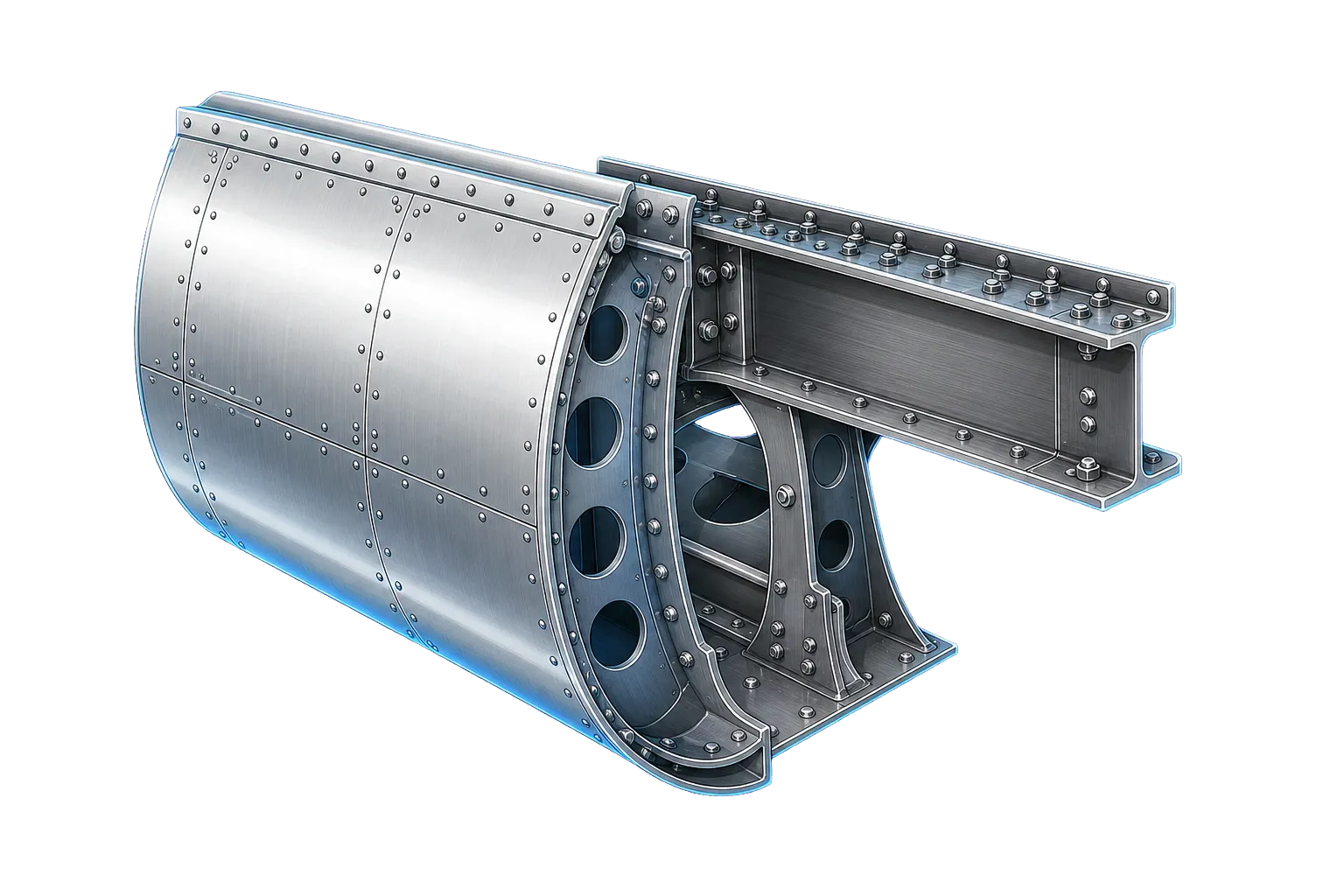
Applicability
| Type | Manufacturer | Model | Details |
|---|---|---|---|
| aircraft | Erickson Air-Crane | S-64F | Airworthiness Directives; Erickson Air-Crane Incorporated Helicopters |
Unsafe Condition
Cracking or working rivets in the left and right splice fitting (transition fitting), pylon bulkhead assembly-canted (bulkhead assembly), and pylon steel strap (strap) due to fatigue, which could lead to failure from static overload and subsequent loss of control of the helicopter.
AI-generated summary from the source AD text. Verify against the official source before acting.
Required Actions
Inspect for cracking or working rivets in each left and right splice fitting, pylon bulkhead assembly-canted, and pylon steel strap. Repair or replace any cracked or damaged part with an airworthy part. Replace any loose or working rivet.
AI-generated summary from the source AD text. Verify against the official source before acting.
Compliance Time
Before further flight
AI-generated summary from the source AD text. Verify against the official source before acting.
Affected Aircraft
Erickson Air-Crane Incorporated Model S-64F helicopters with transition fitting, part number (P/N) 6420-66341-101, -102, -103, or -104; bulkhead assembly, P/N 6420-66340-043 or -044; or a strap, P/N 6420-66301-119 or -127, installed.
AI-generated summary from the source AD text. Verify against the official source before acting.
Federal Register Abstract
We are adopting a new airworthiness directive (AD) for Erickson Air-Crane Incorporated (Erickson) Model S-64F helicopters. This AD requires inspecting for cracking or working rivets in each left and right splice fitting (transition fitting), the pylon bulkhead assembly-canted (bulkhead assembly), and the pylon steel strap (strap). This AD was prompted by several reports of cracking in the transition fittings, the bulkhead assembly, and the pylon. The actions specified by this AD are intended to detect cracking in the rotary rudder boom or pylon due to fatigue, and to prevent failure from static overload and subsequent loss of control of the helicopter.
Document Text
Show stored source text (verify against official source)
[Federal Register Volume 77, Number 237 (Monday, December 10, 2012)]
[Rules and Regulations]
[Pages 73265-73268]
From the Federal Register Online via the Government Publishing Office [<a href="http://www.gpo.gov">www.gpo.gov</a>]
[FR Doc No: 2012-28434]
=======================================================================
-----------------------------------------------------------------------
DEPARTMENT OF TRANSPORTATION
Federal Aviation Administration
14 CFR Part 39
[Docket No. FAA-2008-1243; Directorate Identifier 2007-SW-03-AD;
Amendment 39-17267; AD 2012-23-11]
RIN 2120-AA64
Airworthiness Directives; Erickson Air-Crane Incorporated
Helicopters
AGENCY: Federal Aviation Administration (FAA), DOT.
ACTION: Final rule.
-----------------------------------------------------------------------
SUMMARY: We are adopting a new airworthiness directive (AD) for
Erickson Air-Crane Incorporated (Erickson) Model S-64F helicopters.
This AD requires inspecting for cracking or working rivets in each left
and right splice fitting (transition fitting), the pylon bulkhead
assembly-canted (bulkhead assembly), and the pylon steel strap (strap).
This AD was prompted by several reports of cracking in the transition
fittings, the bulkhead assembly, and the pylon. The actions specified
by this AD are intended to detect cracking in the rotary rudder boom or
pylon due to fatigue, and to prevent failure from static overload and
subsequent loss of control of the helicopter.
DATES: This AD is effective January 14, 2013.
[[Page 73266]]
The Director of the Federal Register approved the incorporation by
reference of a certain document listed in this AD as of January 14,
2013.
ADDRESSES: For service information identified in this AD, contact
Erickson Air-Crane Incorporated, ATTN: Chris Erickson/Compliance
Officer, 3100 Willow Springs Rd., P.O. Box 3247, Central Point, OR
97502; telephone (541) 664-5544; fax (541) 664-2312; email
<a href="/cdn-cgi/l/email-protection#b8dbddcad1dbd3cbd7d6f8ddcad1dbd3cbd7d6d9d1cadbcad9d6dd96dbd7d5"><span class="__cf_email__" data-cfemail="0e6d6b7c676d657d61604e6b7c676d657d61606f677c6d7c6f606b206d6163">[email protected]</span></a>. You may review the referenced service
information at the FAA, Office of the Regional Counsel, Southwest
Region, 2601 Meacham Blvd., Room 663, Fort Worth, Texas 76137.
Examining the AD Docket
You may examine the AD docket on the Internet at <a href="http://www.regulations.gov">http://www.regulations.gov</a>; or in person at the Docket Operations Office
between 9 a.m. and 5 p.m., Monday through Friday, except Federal
holidays. The AD docket contains this AD, any incorporated-by-reference
service information, the economic evaluation, any comments received,
and other information. The street address for the Docket Operations
Office (phone: 800-647-5527) is U.S. Department of Transportation,
Docket Operations Office, M-30, West Building Ground Floor, Room W12-
140, 1200 New Jersey Avenue SE., Washington, DC 20590.
FOR FURTHER INFORMATION CONTACT: Michael Kohner, Aviation Safety
Engineer, Rotorcraft Certification Office, Rotorcraft Directorate, FAA,
2601 Meacham Blvd., Fort Worth, Texas 76137; telephone (817) 222-5170;
email <a href="/cdn-cgi/l/email-protection#8dbaa0ecfbfea0ecfefaa0bcbabdcdebececa3eae2fb"><span class="__cf_email__" data-cfemail="ccfbe1adbabfe1adbfbbe1fdfbfc8caaadade2aba3ba">[email protected]</span></a>.
SUPPLEMENTARY INFORMATION:
Discussion
On November 26, 2008, at 73 FR 71952, the Federal Register
published our notice of proposed rulemaking (NPRM), which proposed to
amend 14 CFR part 39 to include an AD that would apply to Erickson
Model S-64F helicopters with a transition fitting, part number (P/N)
6420-66341-101, -102, -103, or -104; bulkhead assembly, P/N 6420-66340-
041, -043, or -044; or a strap, P/N 6420-66301-119 or -127, installed.
That NPRM proposed to require inspecting for cracking or working rivets
in each transition fitting, the bulkhead assembly, the strap, and the
attaching rotary rudder boom and pylon structure, and repairing or
replacing any cracked or damaged part with an airworthy part. The NPRM
also proposed to require, for any part where you could not visually
determine that a crack does not exist, inspecting using a 10-power or
higher magnifying glass. If you could not determine that a crack does
not exist in the part after inspecting it with a 10-power or higher
magnifying glass, the NPRM proposed to require performing a fluorescent
particle inspection (FPI) of any part other than a strap, and
performing a magnetic particle inspection (MPI) of any strap. The NPRM
also proposed to require replacing any loose or working rivet. The
proposed requirements were intended to detect cracking in the rotary
rudder boom or pylon due to fatigue, and to prevent failure from static
overload and subsequent loss of control of the helicopter.
Comments
After our NPRM (73 FR 71952, November 26, 2008) was published, we
received comments from one commenter.
Request
A commenter from Erickson Air-Crane asked that we delete the
bulkhead assembly, P/N 6420-66340-041, from the applicability and
compliance section of the NPRM (73 FR 71952, November 26, 2008) since
that P/N is not used on Erickson Model S-64F helicopters. We agree and
have revised this AD accordingly.
The commenter also asked that we delete the words ``other than a
strap'' from the requirement to perform an FPI on a part other than a
strap if you cannot determine that a crack does not exist, and delete
the entire requirement to perform an MPI of the strap if you cannot
determine that a crack does not exist. The commenter states that an MPI
cannot be performed on the strap when it is installed on a helicopter;
instead an FPI of the strap would need to be performed with the other
parts. We partially agree. We agree that an MPI cannot be performed on
the strap while it is installed on the helicopter because the strap is
attached to the aluminum pylon section. An MPI for the strap was
initially proposed in the NPRM (73 FR 71952, November 26, 2008) because
this would be the type of inspection normally used for a steel part.
Instead of changing the MPI on the strap to an FPI as requested, after
further review, we determined that deleting this inspection, as well as
the magnifying glass inspection and certain FPIs that were proposed in
the NPRM, will not impact the overall level of safety. These
inspections were included in the event a visual inspection was
insufficient to determine whether a crack exists. If any additional
inspections are necessary to determine if a crack exists, a qualified
individual performing the inspection must make this determination.
FAA's Determination
We have reviewed the relevant information, considered the comments
received, and determined that an unsafe condition exists and is likely
to exist or develop on other products of the same type design and that
air safety and the public interest require adopting the AD requirements
as proposed with the changes described previously and minor editorial
changes. We have also revised the estimated costs of complying with
this AD to reflect an average labor rate of $85 per work-hour instead
of $80 per work-hour. These changes are consistent with the intent of
the proposals in the NPRM (73 FR 71952, November 26, 2008) and will not
increase the economic burden on any operator nor increase the scope of
the AD.
Related Service Information
We have reviewed Erickson Service Bulletin (SB) No. 64B20-6,
Revision A, dated December 12, 2007, which describes procedures for
inspecting the transition fittings, the bulkhead assembly, the strap,
and the attaching rotary rudder boom and pylon structure for cracking
or working rivets. We have also reviewed Erickson SB No. 64F General-3,
Revision C, dated December 12, 2007, which summarizes a listing of a
portion of the Model S-64F helicopter components, their part numbers,
and the corresponding SBs to use when performing the structural
inspections.
Costs of Compliance
We estimate that this AD will affect 7 helicopters of U.S.
Registry. We estimate that operators may incur the following costs in
order to comply with this AD. It will take about 0.75 work-hour to
visually inspect the transition fittings, skin panels, the bulkhead
assembly, strap, and pylon exterior in the strap area; we estimate 30
of these visual inspections per year. It will take about 0.50 work-hour
to visually inspect the pylon interior in the strap area; we estimate 4
of these visual inspections per year. It will take about 0.75 work-hour
to visually and fluorescent penetrant inspect the skin panels at the
transition fitting; we estimate performing these inspections 1 time per
year. It will take about 40 work-hours to repair a pylon structural
assembly. The average labor rate is $85 per work-hour and the cost for
required parts to repair a pylon structural assembly is approximately
$50,000. Based on these figures, we estimate the annual cost of the
inspections will be $2,146 per helicopter and $15,024 for the fleet on
[[Page 73267]]
U.S. operators. The estimated cost to repair a pylon structural
assembly, including the cost for replacement parts and labor, is
$53,400.
Authority for This Rulemaking
Title 49 of the United States Code specifies the FAA's authority to
issue rules on aviation safety. Subtitle I, section 106, describes the
authority of the FAA Administrator. Subtitle VII: Aviation Programs,
describes in more detail the scope of the Agency's authority.
We are issuing this rulemaking under the authority described in
Subtitle VII, Part A, Subpart III, Section 44701: ``General
requirements.'' Under that section, Congress charges the FAA with
promoting safe flight of civil aircraft in air commerce by prescribing
regulations for practices, methods, and procedures the Administrator
finds necessary for safety in air commerce. This regulation is within
the scope of that authority because it addresses an unsafe condition
that is likely to exist or develop on products identified in this
rulemaking action.
Regulatory Findings
This AD will not have federalism implications under Executive Order
13132. This AD will not have a substantial direct effect on the States,
on the relationship between the national government and the States, or
on the distribution of power and responsibilities among the various
levels of government.
For the reasons discussed above, I certify that this AD:
(1) Is not a ``significant regulatory action'' under Executive
Order 12866;
(2) Is not a ``significant rule'' under DOT Regulatory Policies and
Procedures (44 FR 11034, February 26, 1979);
(3) Will not affect intrastate aviation in Alaska to the extent
that it justifies making a regulatory distinction; and
(4) Will not have a significant economic impact, positive or
negative, on a substantial number of small entities under the criteria
of the Regulatory Flexibility Act.
We prepared an economic evaluation of the estimated costs to comply
with this AD and placed it in the AD docket.
List of Subjects in 14 CFR Part 39
Air transportation, Aircraft, Aviation safety, Incorporation by
reference, Safety.
Adoption of the Amendment
Accordingly, under the authority delegated to me by the
Administrator, the FAA amends 14 CFR part 39 as follows:
PART 39--AIRWORTHINESS DIRECTIVES
0
1. The authority citation for part 39 continues to read as follows:
Authority: 49 U.S.C. 106(g), 40113, 44701.
Sec. 39.13 [Amended]
0
2. The FAA amends Sec. 39.13 by adding the following new airworthiness
directive (AD):
2012-23-11 Erickson Air-Crane Incorporated: Amendment 39-17267;
Docket No. FAA-2008-1243; Directorate Identifier 2007-SW-03-AD.
(a) Applicability
This AD applies to Erickson Air-Crane Incorporated (Erickson)
Model S-64F helicopters with a left or right splice fitting
(transition fitting), part number (P/N) 6420-66341-101, -102, -103,
or -104; pylon bulkhead assembly-canted (bulkhead assembly), P/N
6420-66340-043 or -044; or a pylon steel strap (strap), P/N 6420-
66301-119 or -127, installed, certificated in any category.
(b) Unsafe Condition
This AD defines the unsafe condition as cracking in the rotary
rudder boom or pylon due to fatigue, failure from static overload,
and subsequent loss of control of the helicopter.
(c) Effective Date
This AD becomes effective January 14, 2013.
(d) Compliance
You are responsible for performing each action required by this
AD within the specified compliance time unless it has already been
accomplished prior to that time.
(e) Required Actions
(1) Within 20 hours time-in-service (TIS), and thereafter at
intervals not to exceed 20 hours (TIS):
(i) Visually inspect each transition fitting, P/N 6420-66341-
101, -102, -103, or -104, for a crack or working rivets on the
inboard face of the rotary rudder boom and pylon, paying particular
attention to the fastener attachment holes, as depicted in Figure 1,
Detail A, of the Accomplishment Instructions in Erickson Air-Crane
Incorporated Service Bulletin No. 64B20-6, Revision A, dated
December 12, 2007 (SB).
(ii) Visually inspect the outboard face of each rotary rudder
boom and pylon skin panel (skin panel) that attaches to the
transition fittings for a crack or working rivets in the transition
fitting attachment areas, paying particular attention to the
fastener attachment holes, as shown in Figure 1, Detail B, of the
Accomplishment Instructions in the SB.
(iii) Visually inspect the forward and aft sides of each
bulkhead assembly, P/N 6420-66340-043 or -044, for a crack. Pay
particular attention to the circled areas shown in Figure 2 of the
Accomplishment Instructions in the SB.
(iv) Visually inspect the upper 12 inches of each strap, P/N
6420-66301-119 or -127, for a crack or for working rivets as shown
in Figure 3 of the Accomplishment Instructions in the SB.
(v) Visually inspect the pylon for a crack or working rivets on
each side of the upper 12 inches of the strap, and also 6 inches
above the end of the strap as shown in Figure 3 of the
Accomplishment Instructions in the SB.
(2) For any pylon with a strap installed, within 155 hours TIS,
and thereafter at intervals not to exceed 155 hours TIS, remove the
inspection access covers, P/N 6420-66304-109 and P/N 6420-66303-125,
on the forward and aft sides of the pylon and visually inspect the
left-hand cap angle (longeron), P/N 6420-66304-136, and the interior
area of the pylon adjacent to the upper 12 inches of the strap, as
well as 6 inches above the end of the strap, for a crack or working
rivets, as shown in Figure 3 of the Accomplishment Instructions in
the SB.
(3) At each transition fitting replacement, which is required at
intervals not to exceed 8,300 hours TIS:
(i) With each transition fitting removed, visually inspect both
sides of each skin panel for a crack in the areas to which the
transition fitting attaches, paying particular attention to the
fastener attachment holes, as depicted in Details A and B, Figure 1,
of the Accomplishment Instructions in the SB.
(ii) Perform a fluorescent penetrant inspection of each skin
panel for a crack in the areas around the fastener holes where the
transition fittings attach to the rotary rudder boom and pylon.
(4) If there is a crack, before further flight, replace any
cracked part with an airworthy part, or repair the cracked part if
the damage is within the maximum repair damage limits.
Note to paragraph (e)(4) of this AD: The maximum repair damage
limitations are stated in the applicable Component and Repair
Overhaul Manual.
(5) If any loose or working rivets are found, before further
flight, remove the rivets and visually inspect the fastener holes
and surrounding area for a crack or any other damage. Replace any
part that is cracked with an airworthy part; replace any damaged
part with damage exceeding the maximum repair damage limits with an
airworthy part; or repair any damaged part that is within the
maximum repair damage limits. Also, replace any loose or working
rivets.
(f) Special Flight Permits
Special flight permits may be issued in accordance with 14 CFR
21.197 and 21.199 to operate the helicopter to a location where the
inspection requirements of this AD can be accomplished. No special
flight permits will be issued to accomplish replacements or repairs,
or if a crack is suspected.
(g) Alternative Methods of Compliance (AMOCs)
(1) The Manager, Rotorcraft Certification Office, FAA, may
approve AMOCs for this AD. Send your proposal to: Michael Kohner,
Aviation Safety Engineer, Rotorcraft Certification Office,
Rotorcraft Directorate, FAA, 2601 Meacham Blvd., Fort Worth, Texas
76137; telephone (817) 222-5170; email <a href="/cdn-cgi/l/email-protection#98afb5f9eeebb5f9ebefb5a9afa8d8fef9f9b6fff7ee"><span class="__cf_email__" data-cfemail="f7c0da968184da968480dac6c0c7b7919696d9909881">[email protected]</span></a>.
[[Page 73268]]
(2) For operations conducted under a 14 CFR part 119 operating
certificate or under 14 CFR part 91, subpart K, we suggest that you
notify your principal inspector, or lacking a principal inspector,
the manager of the local flight standards district office or
certificate holding district office before operating any aircraft
complying with this AD through an AMOC.
(h) Additional Information
Erickson Air-Crane Service Bulletin No. 64F General-3, Revision
C, dated December 12, 2007, which is not incorporated by reference,
contains additional information about the subject of this AD. For
this service information, contact Erickson Air-Crane Incorporated,
ATTN: Chris Erickson/Compliance Officer, 3100 Willow Springs Rd.,
P.O. Box 3247, Central Point, OR 97502; telephone (541) 664-5544;
fax (541) 664-2312; email <a href="/cdn-cgi/l/email-protection#492a2c3b202a223a2627092c3b202a223a262728203b2a3b28272c672a2624"><span class="__cf_email__" data-cfemail="95f6f0e7fcf6fee6fafbd5f0e7fcf6fee6fafbf4fce7f6e7f4fbf0bbf6faf8">[email protected]</span></a>. You may
also review this service information at the FAA, Office of the
Regional Counsel, Southwest Region, 2601 Meacham Blvd., Room 663,
Fort Worth, Texas 76137.
(i) Subject
Joint Aircraft Service Component (JASC) Code: 5302, Rotorcraft
Tail Boom.
(j) Material Incorporated by Reference
(1) The Director of the Federal Register approved the
incorporation by reference (IBR) of the service information listed
in this paragraph under 5 U.S.C. 552(a) and 1 CFR part 51.
(2) You must use this service information as applicable to do
the actions required by this AD, unless the AD specifies otherwise.
(i) Erickson Air-Crane Incorporated Service Bulletin No. 64B20-
6, Revision A, dated December 12, 2007.
(ii) Reserved.
(3) For Erickson Air-Crane Incorporated service information
identified in this AD, contact Erickson Air-Crane Incorporated,
ATTN: Chris Erickson/Compliance Officer, 3100 Willow Springs Rd.,
P.O. Box 3247, Central Point, OR 97502; telephone (541) 664-5544;
fax (541) 664-2312; email <a href="/cdn-cgi/l/email-protection#debdbbacb7bdb5adb1b09ebbacb7bdb5adb1b0bfb7acbdacbfb0bbf0bdb1b3"><span class="__cf_email__" data-cfemail="ccafa9bea5afa7bfa3a28ca9bea5afa7bfa3a2ada5beafbeada2a9e2afa3a1">[email protected]</span></a>.
(4) You may view this service information at FAA, Office of the
Regional Counsel, Southwest Region, 2601 Meacham Blvd., Room 663,
Fort Worth, Texas 76137. For information on the availability of this
material at the FAA, call (817) 222-5110.
(5) You may view this service information that is incorporated
by reference at the National Archives and Records Administration
(NARA). For information on the availability of this material at
NARA, call (202) 741-6030, or go to: <a href="http://www.archives.gov/federal-register/cfr/ibr-locations.html">http://www.archives.gov/federal-register/cfr/ibr-locations.html</a>.
Issued in Fort Worth, Texas, on November 13, 2012.
Kim Smith,
Directorate Manager, Rotorcraft Directorate, Aircraft Certification
Service.
[FR Doc. 2012-28434 Filed 12-7-12; 8:45 am]
BILLING CODE 4910-13-P
Source: Official FAA Source ↗
Retrieved: Apr 6, 2026
Rights: U.S. Government Public Domain
This site is not affiliated with or endorsed by the FAA. Always verify with official sources.
Related Airworthiness Directives
2023-11-07
final ruleAirworthiness Directives; Various Helicopters
Unsafe Condition: unsafe condition on these products.
2013-23-07
final ruleAirworthiness Directives; Erickson Air-Crane Incorporated Helicopters (Type Certificate Previously Held by Sikorsky Aircraft Corporation)
Unsafe Condition: A crack in the main rotor blade, which could result in blade separation and subsequent loss of control of the helicopter.
2012-26-06
final ruleAirworthiness Directives; Sikorsky Aircraft-Manufactured Model S-64F Helicopters
Unsafe Condition: A fatigue crack in a flight critical component, which could result in component failure from static overload and subsequent loss of control of the helicopter.
2011-21-12
final ruleAirworthiness Directives; Erickson Air-Crane Incorporated Model S-64F Helicopters
Unsafe Condition: Loss of a swashplate due to a fatigue crack, leading to loss of control of the main rotor system and subsequent loss of control of the helicopter.