AD 2012-13-10
Applicability
| Type | Manufacturer | Model | Details |
|---|---|---|---|
| aircraft | PZL-Swidnik S.A. | PZL W-3A | Airworthiness Directives; PZL Swidnik S.A. Helicopters |
Unsafe Condition
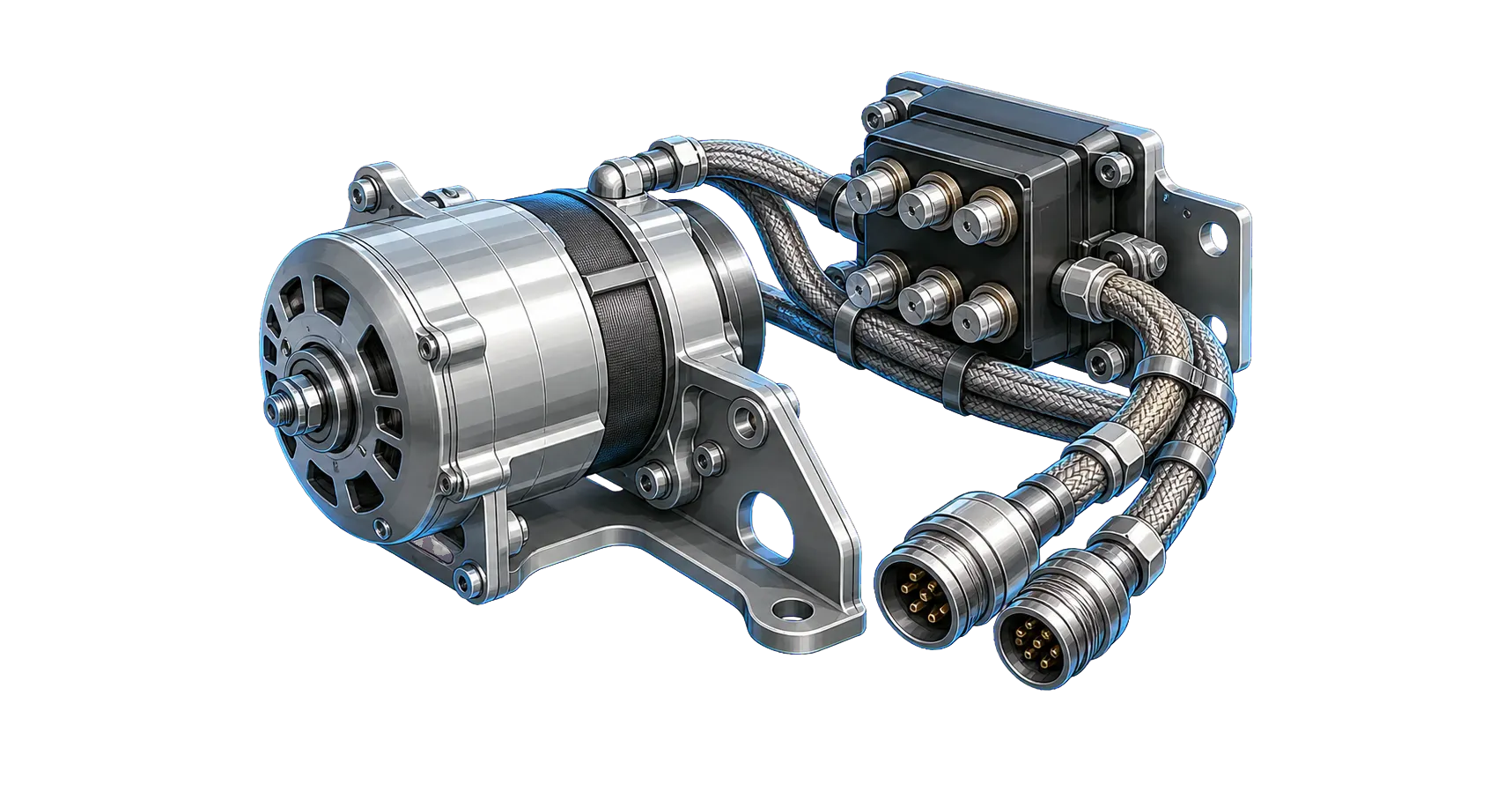
Rotation of the generator air outlet collector, which could lead to restricted cyclic control stick movement and subsequent loss of control of the helicopter.
AI-generated summary from the source AD text. Verify against the official source before acting.
Required Actions
Modify the generator air outlet collector attachments within 100 hours time-in-service, in accordance with Section II and Sketches 1 and 2 of PZL-Swidnik Service Bulletin No. BS-37-09-230, dated October 13, 2009.
AI-generated summary from the source AD text. Verify against the official source before acting.
Compliance Time
Within 100 hours time-in-service.
AI-generated summary from the source AD text. Verify against the official source before acting.
Affected Aircraft
PZL Swidnik S.A. Model PZL W-3A helicopters with a generator air outlet collector, part number (P/N) GT40PCz8B, certificated in any category.
AI-generated summary from the source AD text. Verify against the official source before acting.
Federal Register Abstract
We are adopting a new airworthiness directive (AD) for the PZL Swidnik S.A. (PZL) Model PZL W-3A helicopter with a certain generator air outlet collector (collector) installed. This AD requires modifying the generator air outlet collector attachments (collector attachments). This AD is prompted by an incident where cyclic control stick movement was restricted due to rotation of a loose collector, resulting in locking of the longitudinal control system hydraulic actuator fork end. These actions are intended to prevent rotation of the collector, which could lead to restricted cyclic control stick movement, and subsequent loss of control of the helicopter.
Document Text
Show stored source text (verify against official source)
[Federal Register Volume 77, Number 137 (Tuesday, July 17, 2012)]
[Rules and Regulations]
[Pages 41897-41899]
From the Federal Register Online via the Government Publishing Office [<a href="http://www.gpo.gov">www.gpo.gov</a>]
[FR Doc No: 2012-16939]
-----------------------------------------------------------------------
DEPARTMENT OF TRANSPORTATION
Federal Aviation Administration
14 CFR Part 39
[Docket No. FAA-2012-0703; Directorate Identifier 2010-SW-019-AD;
Amendment 39-17112; AD 2012-13-10]
RIN 2120-AA64
Airworthiness Directives; PZL Swidnik S.A. Helicopters
AGENCY: Federal Aviation Administration (FAA), Department of
Transportation (DOT).
ACTION: Final rule; request for comments.
-----------------------------------------------------------------------
SUMMARY: We are adopting a new airworthiness directive (AD) for the PZL
Swidnik S.A. (PZL) Model PZL W-3A helicopter with a certain generator
air outlet collector (collector) installed. This AD requires modifying
the generator air outlet collector attachments (collector attachments).
This AD is prompted by an incident where cyclic control stick movement
was restricted due to rotation of a loose collector, resulting in
locking of the longitudinal control system hydraulic actuator fork end.
These actions are intended to prevent rotation of the collector, which
could lead to restricted cyclic control stick movement, and subsequent
loss of control of the helicopter.
DATES: This AD becomes effective August 1, 2012.
The Director of the Federal Register approved the incorporation by
reference of certain documents listed in this AD as of August 1, 2012.
We must receive comments on this AD by September 17, 2012.
ADDRESSES: You may send comments by any of the following methods:
<bullet> Federal eRulemaking Docket: Go to <a href="http://www.regulations.gov">http://www.regulations.gov</a>. Follow the online instructions for sending your
comments electronically.
<bullet> Fax: 202-493-2251.
<bullet> Mail: Send comments to the U.S. Department of
Transportation, Docket
[[Page 41898]]
Operations, M-30, West Building Ground Floor, Room W12-140, 1200 New
Jersey Avenue SE., Washington, DC 20590-0001.
<bullet> Hand Delivery: Deliver to the ``Mail'' address between 9
a.m. and 5 p.m., Monday through Friday, except Federal holidays.
Examining the AD Docket
You may examine the AD docket on the Internet at <a href="http://www.regulations.gov">http://www.regulations.gov</a> or in person at the Docket Operations Office
between 9 a.m. and 5 p.m., Monday through Friday, except Federal
holidays. The AD docket contains this AD, any comments received, and
other information. The street address for the Docket Operations Office
(telephone 800-647-5527) is in the ADDRESSES section. Comments will be
available in the AD docket shortly after receipt.
For service information identified in this AD, contact
Transportation Equipment Factory PZL-[Sacute]widnik S.A., A1.
Lotnik[oacute]w Polskich 1, 21-045 [Sacute]widnik, Poland; telephone
(+48 81) 468 09 01, 751 20 71; fax (+48 81) 468 09 19, 751 21 73; or at
www.pzl.swidnik.pl. You may review the referenced service information
at the FAA, Office of the Regional Counsel, Southwest Region, 2601
Meacham Blvd., Room 663, Fort Worth, Texas 76137.
FOR FURTHER INFORMATION CONTACT: Gary Roach, Aviation Safety Engineer,
FAA, Rotorcraft Directorate, Regulations and Policy Group, 2601 Meacham
Blvd., Fort Worth, Texas 76137, telephone (817) 222-5110, email
<a href="/cdn-cgi/l/email-protection#2e494f5c57004c005c414f4d466e484f4f00494158"><span class="__cf_email__" data-cfemail="cdaaacbfb4e3afe3bfa2acaea58dabacace3aaa2bb">[email protected]</span></a>.
SUPPLEMENTARY INFORMATION:
Comments Invited
This AD is a final rule that involves requirements affecting flight
safety, and we did not provide you with notice and an opportunity to
provide your comments prior to it becoming effective. However, we
invite you to participate in this rulemaking by submitting written
comments, data, or views. We also invite comments relating to the
economic, environmental, energy, or federalism impacts that resulted
from adopting this AD. The most helpful comments reference a specific
portion of the AD, explain the reason for any recommended change, and
include supporting data. To ensure the docket does not contain
duplicate comments, commenters should send only one copy of written
comments, or if comments are filed electronically, commenters should
submit them only one time. We will file in the docket all comments that
we receive, as well as a report summarizing each substantive public
contact with FAA personnel concerning this rulemaking during the
comment period. We will consider all the comments we receive and may
conduct additional rulemaking based on those comments.
Discussion
The European Aviation Safety Agency (EASA), which is the Technical
Agent for the Member States of the European Union, has issued EASA AD
No. 2010-0017, dated January 29, 2010, to correct an unsafe condition
for the PZL Model PZL W-3A helicopter with a generator air outlet
collector, part number (P/N) GT40PCz8B, installed. EASA advises there
was a report of an in-flight incident where cyclic control stick
movement was restricted. Post-flight investigation revealed that this
incident was caused by the rotation of a loose collector, resulting in
the locking of the longitudinal control system hydraulic actuator fork
end. This condition, if not detected, could lead to restricted cyclic
control stick movement, and subsequent loss of control of the
helicopter.
FAA's Determination
These helicopters have been approved by the aviation authority of
Poland and are approved for operation in the United States. Pursuant to
our bilateral agreement with Poland, EASA, their technical
representative, has notified us of the unsafe condition described in
their AD. We are issuing this AD because we evaluated all information
provided by EASA and determined the unsafe condition exists and is
likely to exist or develop on other helicopters of this same type
design.
There are no helicopters of this type currently registered in the
United States. However, this rule is necessary to ensure that the
described unsafe condition is addressed if any of these helicopters are
placed on the U.S. Registry in the future.
Related Service Information
PZL has issued Service Bulletin No. BS-37-09-230, dated October 13,
2009 (SB), which specifies modifying the collector attachments to
prevent collector rotation. The SB specifies installing a cable and
reinforcing the welded clamping rings' connections with additional
rivets. EASA classified this SB as mandatory and issued AD No. 2010-
0017 to ensure the continued airworthiness of these helicopters.
AD Requirements
This AD requires modifying the collector attachments with a
protective cable and additional riveting as described in Section II of
the manufacturer's service bulletin.
Differences between this AD and the EASA AD
The EASA AD requires compliance within one month after the
effective date of their AD, while this AD requires compliance within
100 hours time-in-service.
Costs of Compliance
There are no costs of compliance with this AD because there are no
helicopters with this type certificate on the U.S. Registry.
FAA's Justification and Determination of the Effective Date
Since an unsafe condition exists that requires the immediate
adoption of this AD, we determined that notice and opportunity for
public comment before issuing this AD are unnecessary because there are
none of these products on the U.S. Registry and that good cause exists
for making this amendment effective in less than 30 days.
Authority for This Rulemaking
Title 49 of the United States Code specifies the FAA's authority to
issue rules on aviation safety. Subtitle I, section 106, describes the
authority of the FAA Administrator. ``Subtitle VII: Aviation
Programs,'' describes in more detail the scope of the Agency's
authority.
We are issuing this rulemaking under the authority described in
``Subtitle VII, Part A, Subpart III, Section 44701: General
requirements.'' Under that section, Congress charges the FAA with
promoting safe flight of civil aircraft in air commerce by prescribing
regulations for practices, methods, and procedures the Administrator
finds necessary for safety in air commerce. This regulation is within
the scope of that authority because it addresses an unsafe condition
that is likely to exist or develop on products identified in this
rulemaking action.
Regulatory Findings
We determined that this AD will not have federalism implications
under Executive Order 13132. This AD will not have a substantial direct
effect on the States, on the relationship between the national
Government and the States, or on the distribution of power and
responsibilities among the various levels of government.
For the reasons discussed, I certify that this AD:
1. Is not a ``significant regulatory action'' under Executive Order
12866;
[[Page 41899]]
2. Is not a ``significant rule'' under DOT Regulatory Policies and
Procedures (44 FR 11034, February 26, 1979);
3. Will not affect intrastate aviation in Alaska to the extent that
it justifies making a regulatory distinction; and
4. Will not have a significant economic impact, positive or
negative, on a substantial number of small entities under the criteria
of the Regulatory Flexibility Act.
List of Subjects in 14 CFR Part 39
Air transportation, Aircraft, Aviation safety, Incorporation by
reference, Safety.
Adoption of the Amendment
Accordingly, under the authority delegated to me by the
Administrator, the FAA amends 14 CFR part 39 as follows:
PART 39--AIRWORTHINESS DIRECTIVES
0
1. The authority citation for part 39 continues to read as follows:
Authority: 49 U.S.C. 106(g), 40113, 44701.
Sec. 39.13 [Amended]
0
2. The FAA amends Sec. 39.13 by adding the following new airworthiness
directive (AD):
2012-13-10 PZL Swidnik S.A.: Amendment 39-17112; Docket No. FAA-
2012-0703; Directorate Identifier 2010-SW-019-AD.
(a) Applicability
This AD applies to PZL Swidnik S.A. (PZL) Model PZL W-3A
helicopters with a generator air outlet collector, part number (P/N)
GT40PCz8B; certificated in any category.
(b) Unsafe Condition
This AD defines the unsafe condition as rotation of the
generator air outlet collector, which could lead to restricted
cyclic control stick movement and subsequent loss of control of the
helicopter.
(c) Effective Date
This AD becomes effective August 1, 2012.
(d) Compliance
You are responsible for performing each action required by this
AD within the specified compliance time unless it has already been
accomplished prior to that time.
(e) Required Action
Within 100 hours time-in-service, modify the generator air
outlet collector attachments in accordance with Section II and
Sketches 1 and 2 of PZL-Swidnik Service Bulletin No. BS-37-09-230,
dated October 13, 2009.
(f) Special Flight Permits
Special flight permits will not be issued.
(g) Alternative Methods of Compliance (AMOCs)
(1) The Manager, Safety Management Group, FAA, may approve AMOCs
for this AD. Send your proposal to: Gary Roach, Aviation Safety
Engineer, FAA, Rotorcraft Directorate, Regulations and Policy Group,
2601 Meacham Blvd., Fort Worth, Texas 76137, telephone (817) 222-
5110, email <a href="/cdn-cgi/l/email-protection#462127343f682468342927252e0620272768212930"><span class="__cf_email__" data-cfemail="690e081b10470b471b06080a01290f0808470e061f">[email protected]</span></a>.
(2) For operations conducted under a 14 CFR part 119 operating
certificate or under 14 CFR part 91, subpart K, we suggest that you
notify your principal inspector, or lacking a principal inspector,
the manager of the local flight standards district office or
certificate holding district office, before operating any aircraft
complying with this AD through an AMOC.
(h) Additional Information
The subject of this AD is addressed in European Aviation Safety
Agency (EASA) AD 2010-0017, dated January 29, 2010.
(i) Subject
Joint Aircraft Service Component (JASC) Code: 2420: AC
Generation System.
(j) Material Incorporated by Reference
(1) The Director of the Federal Register approved the
incorporation by reference (IBR) of the service information listed
in this paragraph under 5 U.S.C. 552(a) and 1 CFR part 51.
(2) You must use this service information as applicable to do
the actions required by this AD, unless the AD specifies otherwise.
(i) Transportation Equipment Factory PZL-[Sacute]widnik Service
Bulletin No. BS-37-09-230, dated October 13, 2009, to do the actions
required by this AD.
(ii) Reserved.
(3) For PZL service information identified in this AD, contact
Transportation Equipment Factory PZL-[Sacute]widnik S.A., A1.
Lotnik[oacute]w Polskich 1, 21-045 [Sacute]widnik, Poland; telephone
(+48 81) 468 09 01, 751 20 71; fax (+48 81) 468 09 19, 751 21 73; or
at www.pzl.swidnik.pl.
(4) You may view this service information at the FAA, Office of
the Regional Counsel, Southwest Region, 2601 Meacham Blvd., Room
663, Fort Worth, Texas 76137.
(5) You may also view this service information at the National
Archives and Records Administration (NARA). For information on the
availability of this material at NARA, call (202) 741-6030, or go
to: <a href="http://www.archives.gov/federal_register/code_of_federal_regulations/ibr_locations.html">http://www.archives.gov/federal_register/code_of_federal_regulations/ibr_locations.html</a>.
Issued in Fort Worth, Texas, on July 2, 2012.
Kim Smith,
Manager, Rotorcraft Directorate, Aircraft Certification Service.
[FR Doc. 2012-16939 Filed 7-16-12; 8:45 am]
BILLING CODE 4910-13-P
Source: Official FAA Source ↗
Retrieved: Apr 6, 2026
Rights: U.S. Government Public Domain
This site is not affiliated with or endorsed by the FAA. Always verify with official sources.
Related Airworthiness Directives
2026-02-02 Recurring
final ruleAirworthiness Directives; PZL-Swidnik S.A. Helicopters
Unsafe Condition: The detection of corrosion on the main rotor blade (MRB) attachment bolts, which could lead to cracks and failure of one or more of the MRB attachment bolts and result in loss of an MRB and consequ...
2023-11-07
final ruleAirworthiness Directives; Various Helicopters
Unsafe Condition: unsafe condition on these products.
2022-01-03
final ruleAirworthiness Directives; Umlaut Engineering GmbH (Previously P3 Engineering GmbH) HAFEX (Halon-Free) Hand-Held Fire Extinguishers
Unsafe Condition: The spindle geometries of the fire extinguishers were found to be out of tolerance, which could cause a non-detectable seizure of the spindle that could cause the fire extinguisher to be inoperative.
2021-22-07 Recurring
final ruleAirworthiness Directives; Umlaut Engineering GmbH (Previously P3 Engineering GmbH) HAFEX (Halon-Free) Hand-Held Fire Extinguishers
Unsafe Condition: Prolonged exposure to high temperature conditions can dislodge the spindle in the fire extinguisher head, subsequently making the fire extinguisher inoperative.